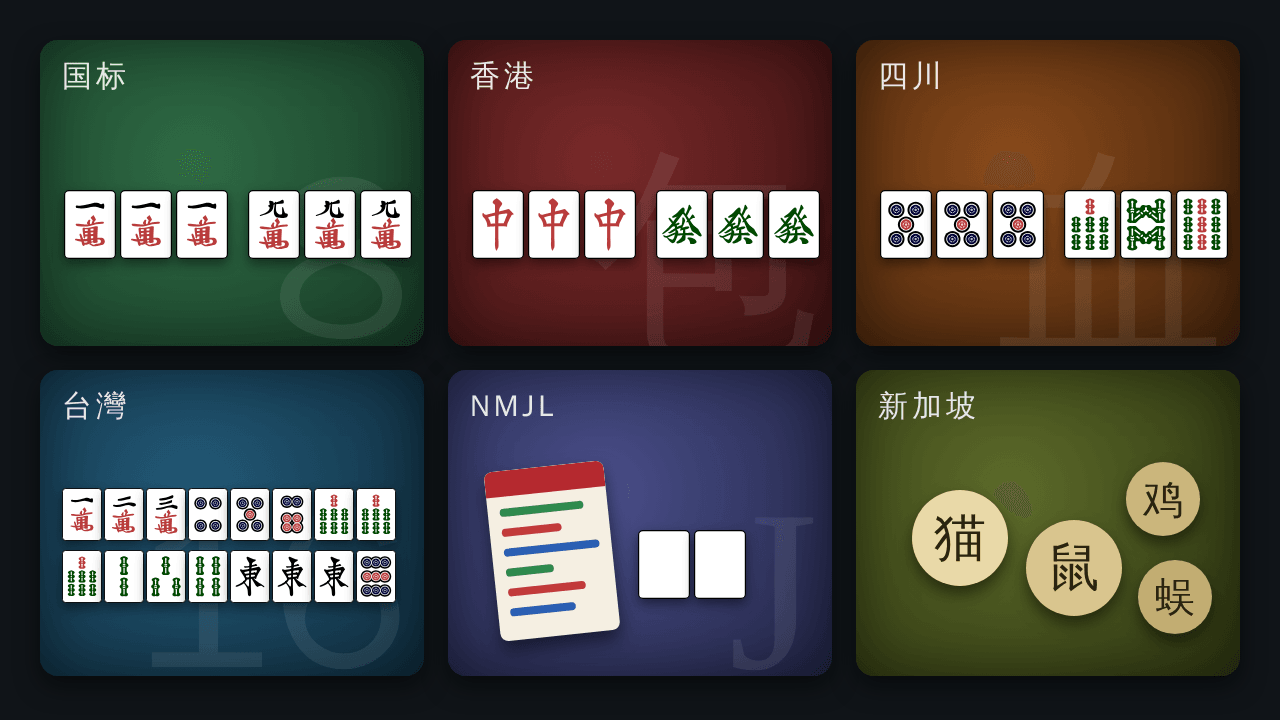
Types of mahjong: six games that aren't riichi
Chinese Official, Hong Kong, Sichuan, Taiwanese, American, and Singapore mahjong share the tiles and little else. Here's one strange rule from each, with its source, and what it tells a riichi player.


Follows your device setting.
Posts and lessons in one serif column, like a printed page.
White face, black outline.
Plain faces, no corner index.
Follows your device setting.
Posts and lessons in one serif column, like a printed page.
White face, black outline.
Plain faces, no corner index.
Riichi mahjong guides from a pro in Japan: furiten, dora, tenpai, suji, sanma, the glossary, and the free tools that teach you the rules.
Chinese Official, Hong Kong, Sichuan, Taiwanese, American, and Singapore mahjong share the tiles and little else. Here's one strange rule from each, with its source, and what it tells a riichi player.
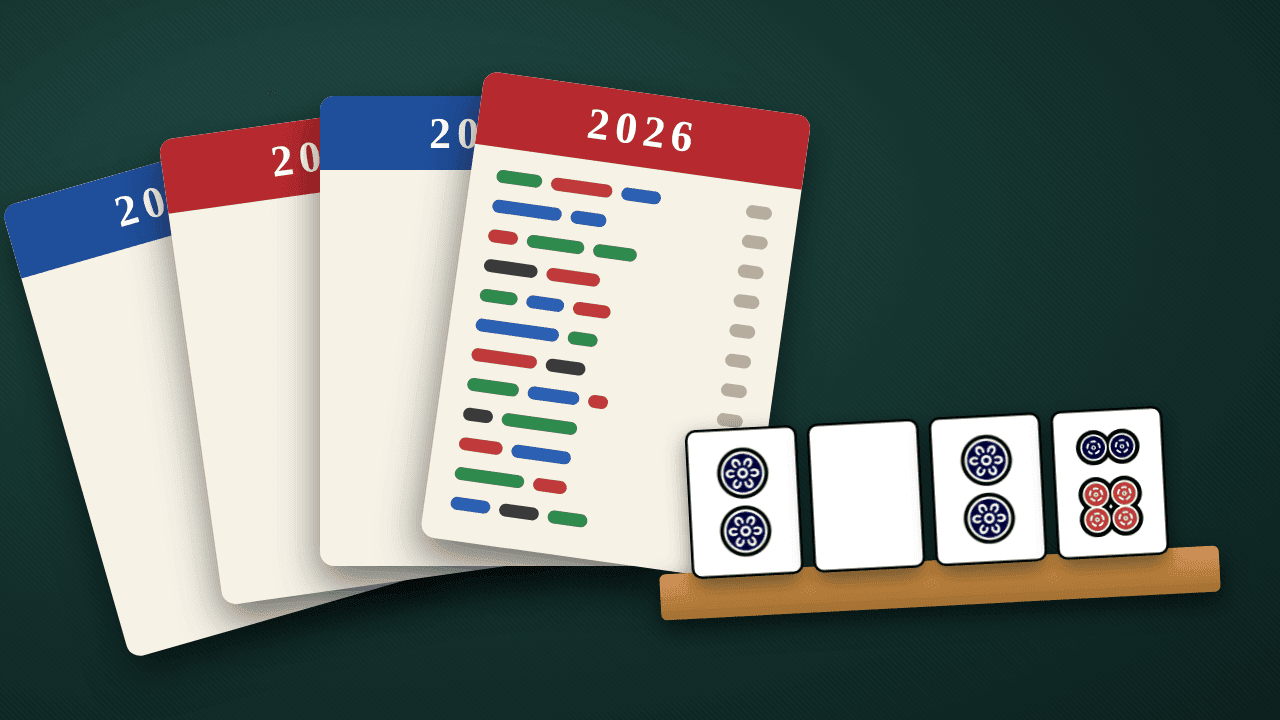
The National Mah Jongg League mails out a new card every spring, and only the hands printed on it win. Here's how the card, its jokers, and the Charleston work, seen from a riichi table.
Mahjong's name comes from máquè, the Chinese word for sparrow, and the game took shape in the second half of the 19th century, decades after the first commercial telegraph line. The sources all put it in the 1800s, and none of them back the Confucius story.
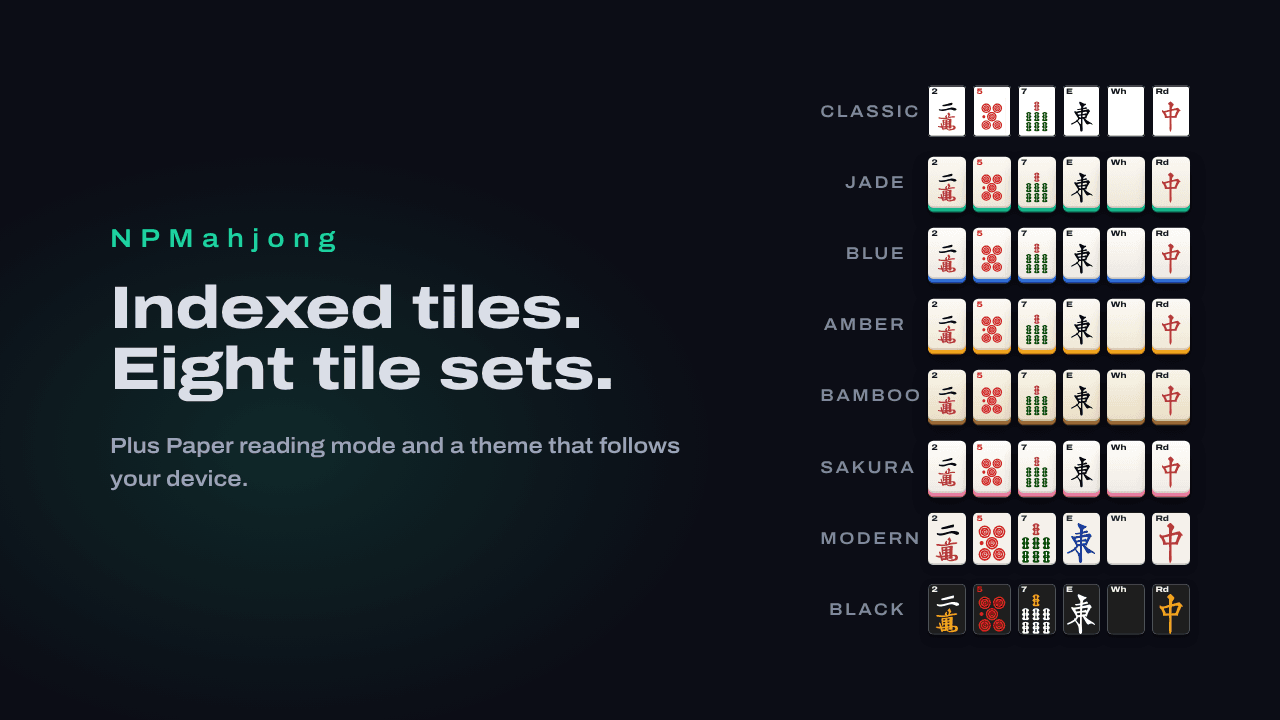
Indexed tiles print the number or letter in the corner of every tile you read here, so you can follow a hand before you know the faces. The same Display menu holds the Paper reading mode, an Auto theme, and eight tile sets, six of them new.
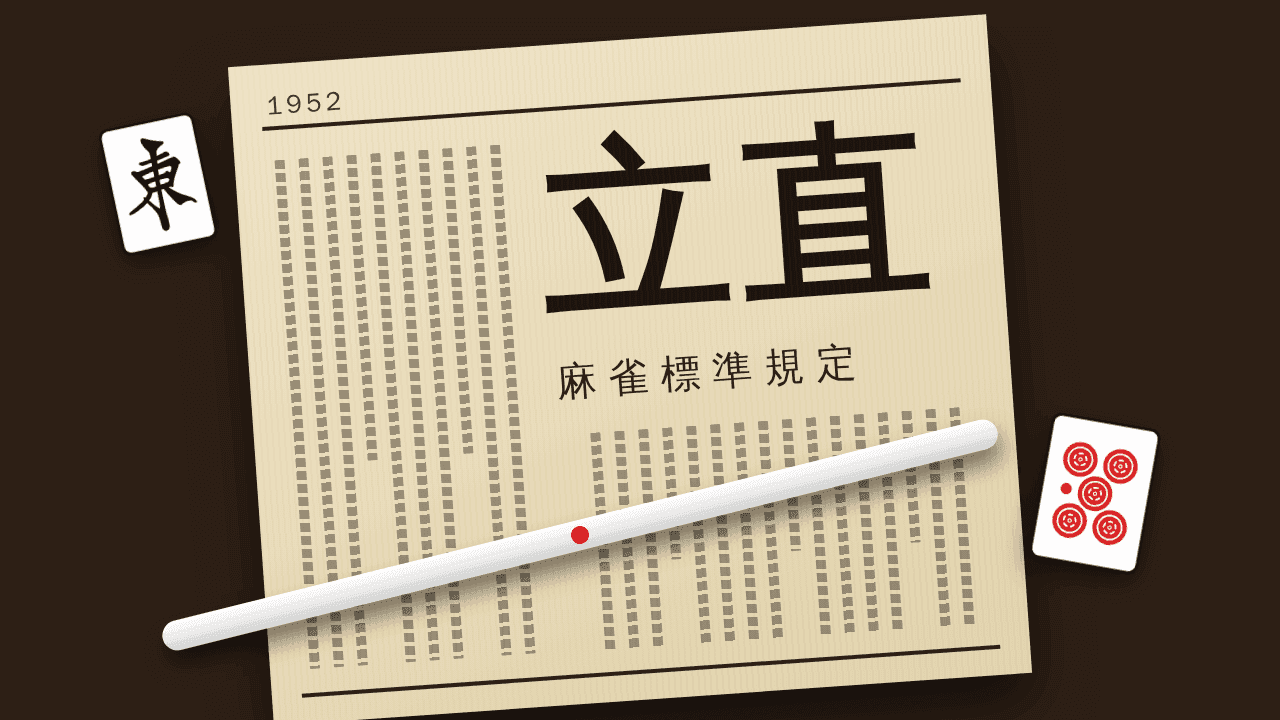
Riichi has no inventor anyone can name: it began as a first-discard rule said to come from northeast China. A 1952 newspaper rulebook set down riichi as it's played today, and dora, red fives, ura dora, and ippatsu grew up around it.
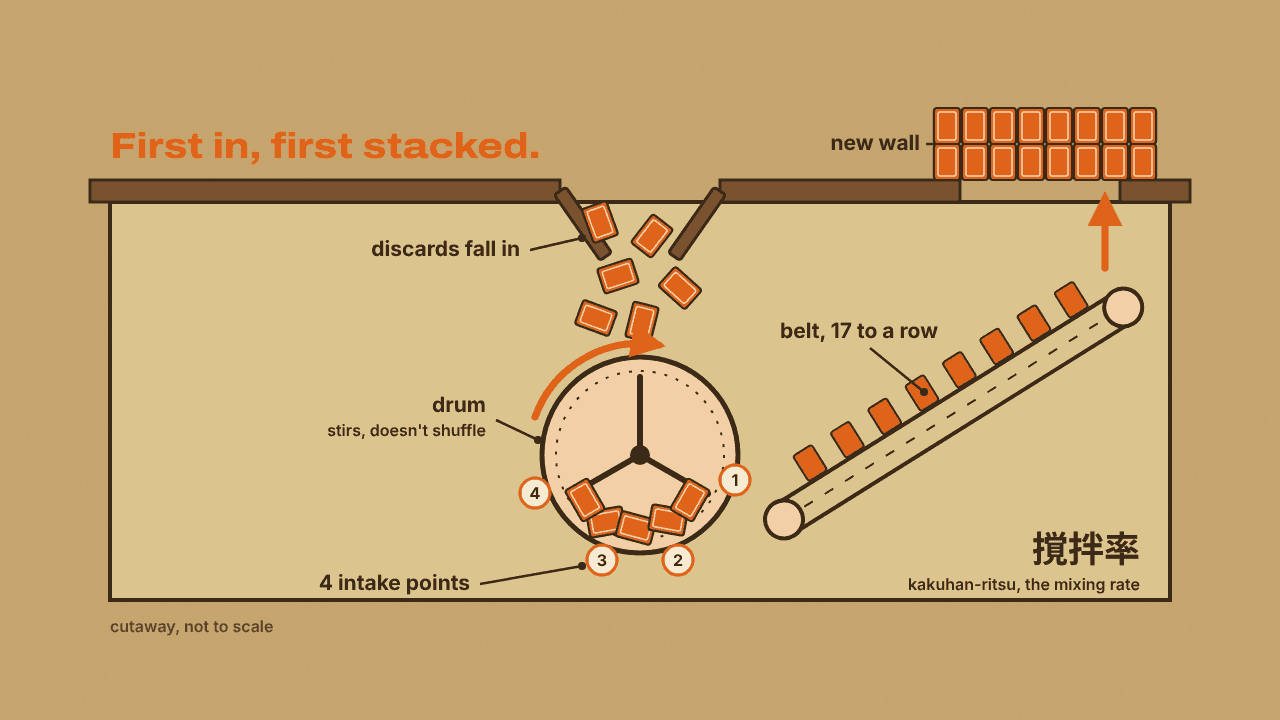
The tile you cut keeps coming back, and it isn't the flow. Automatic tables stack the wall in the order tiles fall into the drum. Here's the bias, what Maru-Jan says to do about it, and why the honest label is plausible, unmeasured.

Osaka has dozens of mahjong parlors and almost nothing written about them in English. Here's where a visitor can sit down without gambling, how Kansai three-player mahjong works, and what to say at the door.
A mahjong efficiency trainer, a riichi scoring trainer, and chinitsu wait drills. What each one grades.

I worked the floor of an Osaka mahjong parlor as a member. Here's what the job looks like from behind the counter, how a jansou makes money on every game, and why the smart way to play is no-rate.
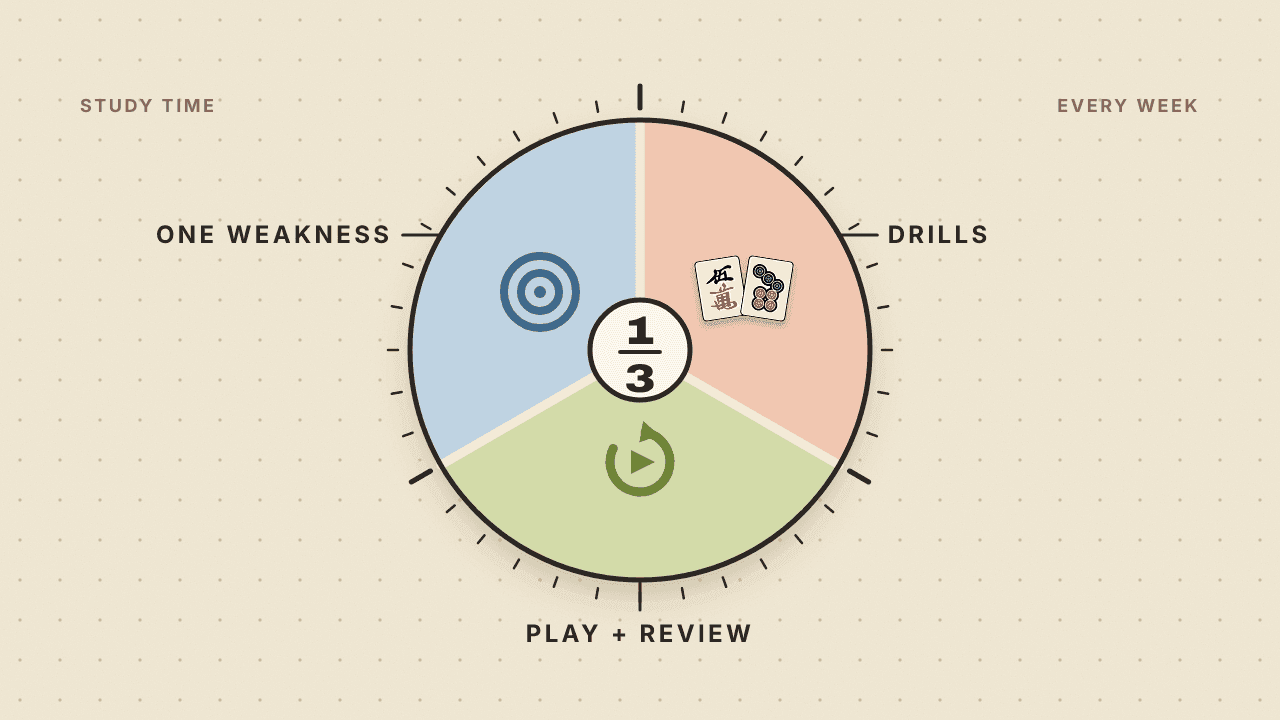
Split your mahjong study time in three. Drills, play plus a review of every log, and one weak area for the month. A chess grandmaster's rule, translated to riichi, with a 3-hour and a 6-hour weekly plan.
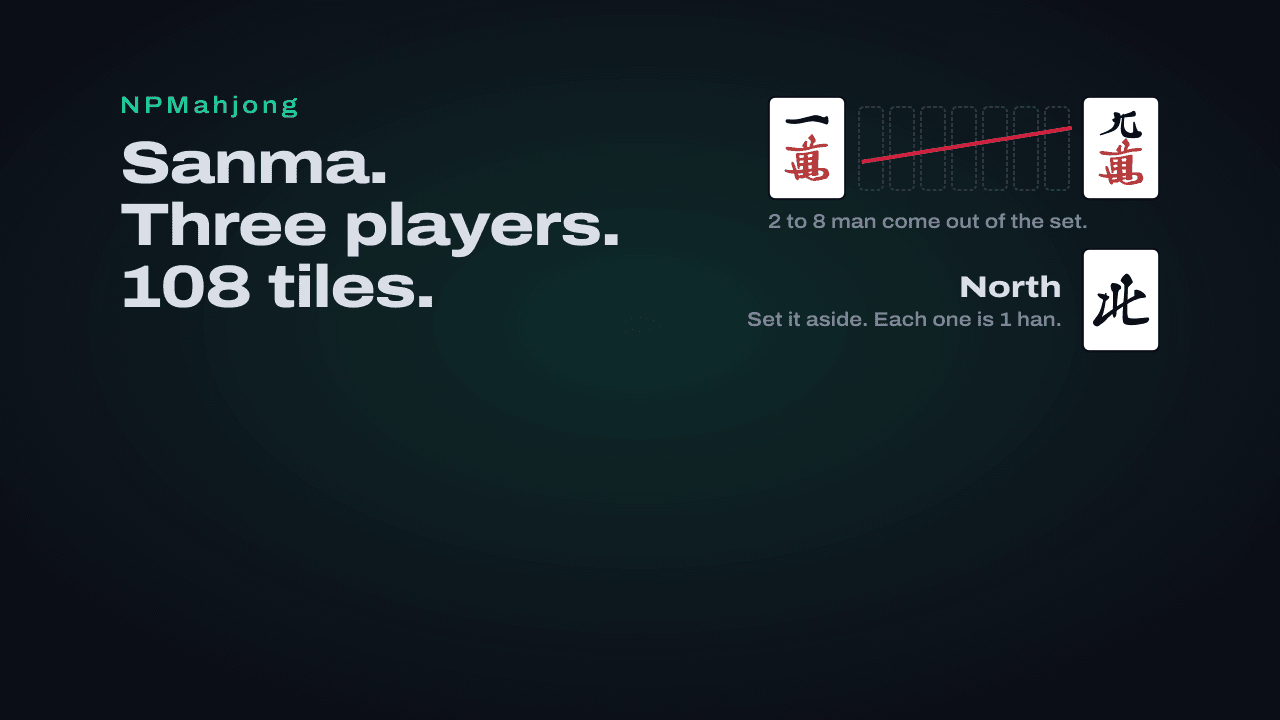
Three players, 108 tiles, and no chii. On Tenhou and Mahjong Soul, North is a dora you set aside and a tsumo pays less than a ron. The two pay honba differently.

A suji tile can't deal into a two-sided wait. A kanchan, penchan, tanki, or shanpon still can. How to read suji, kabe, and genbutsu, and where the traps sit.
Riichi every tenpai, fold every riichi, call nothing without a yaku. Those rules are right at one rank and wrong two ranks later. Here's the rule-by-rule ladder, with the number that says when you've earned the exception.
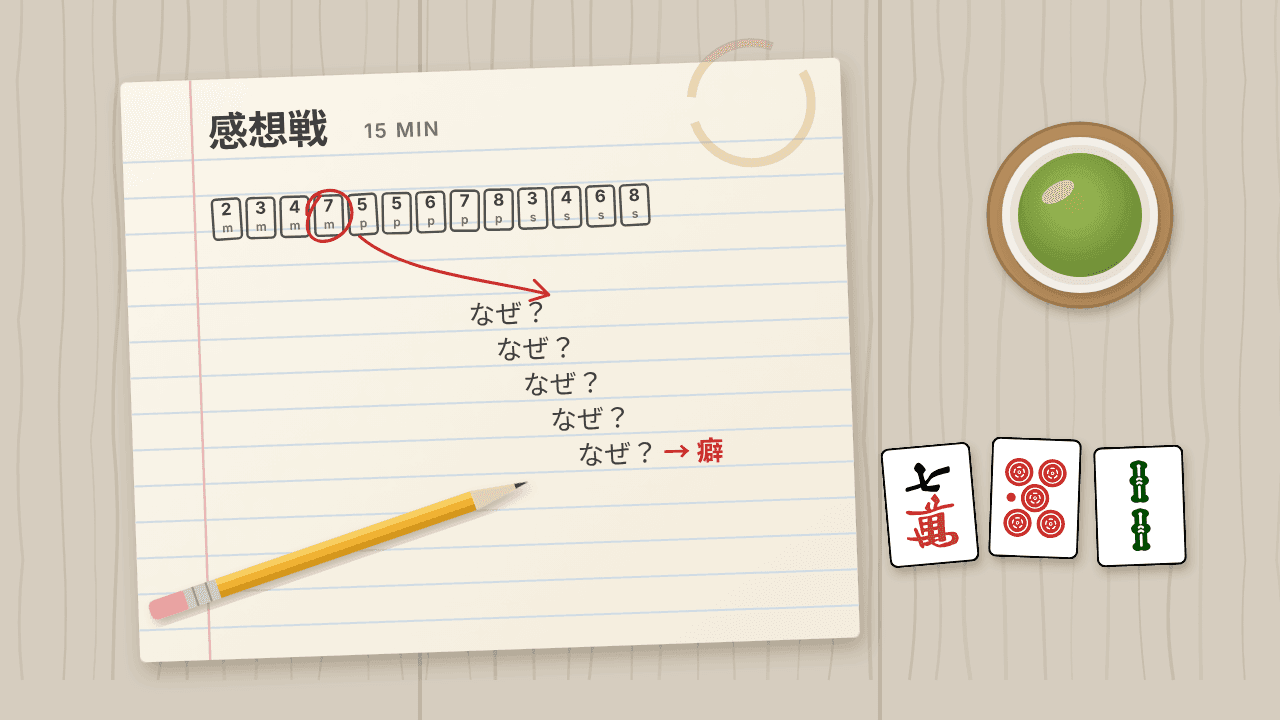
Shogi pros replay the game they lost before they leave the board. Mahjong players close the app and queue again. Here's a 15-minute kansousen routine for one hanchan a day, with two hands, five whys, and Mortal opened last.
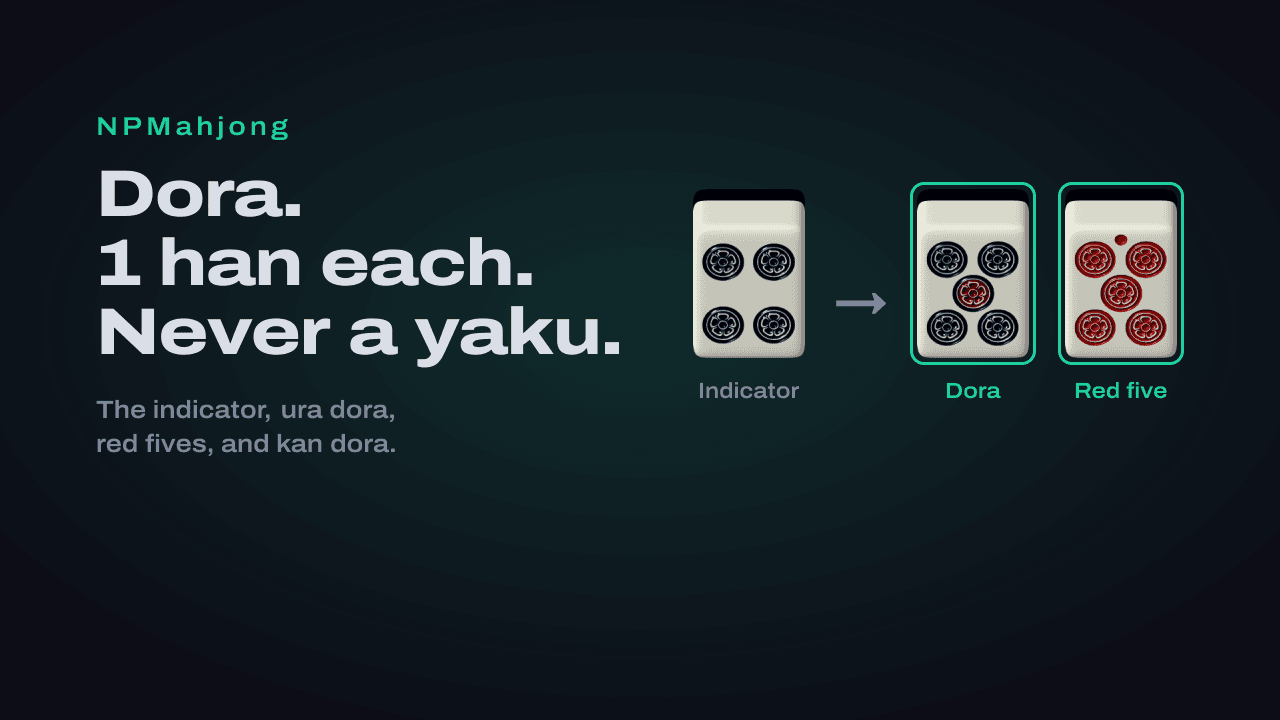
Dora are bonus tiles worth 1 han each, not a yaku. How to read the indicator, when ura and kan dora count, and how many red fives each ruleset plays.
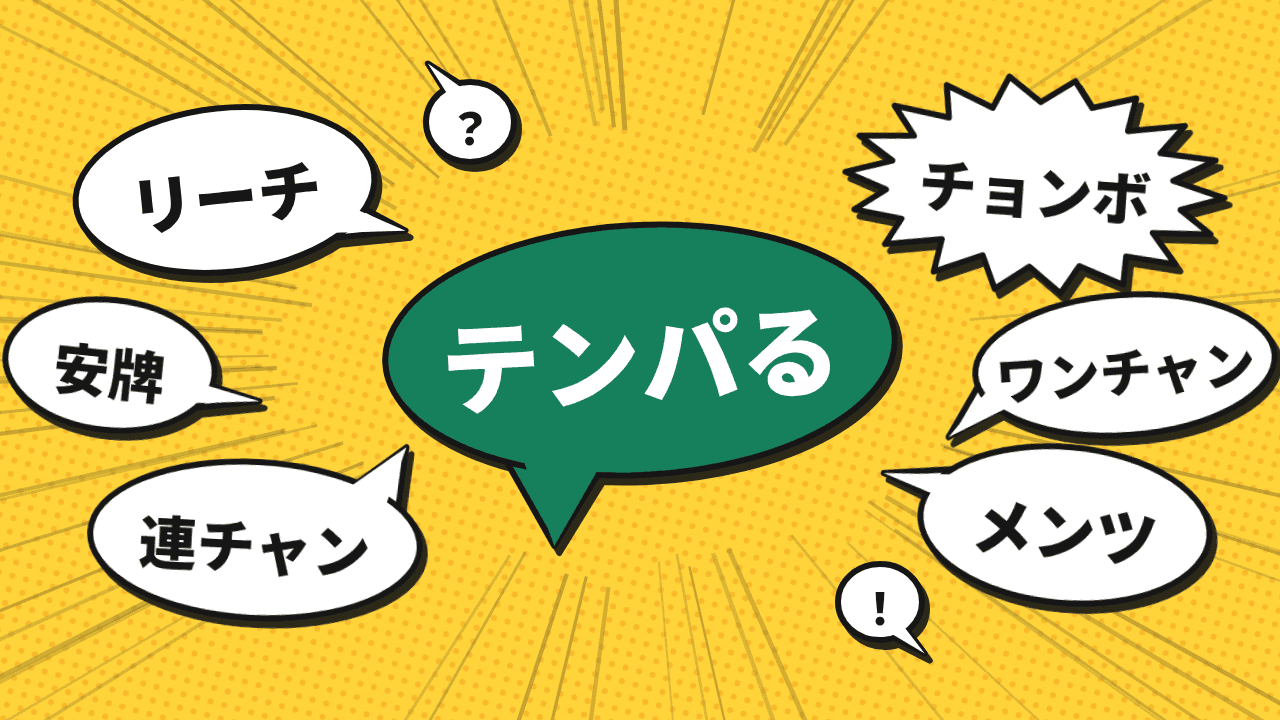
Japanese people say テンパる, リーチ, and チョンボ every day without touching a tile. Here are seven words that walked out of the mahjong parlor into ordinary Japanese, what each meant at the table, and what it means now.
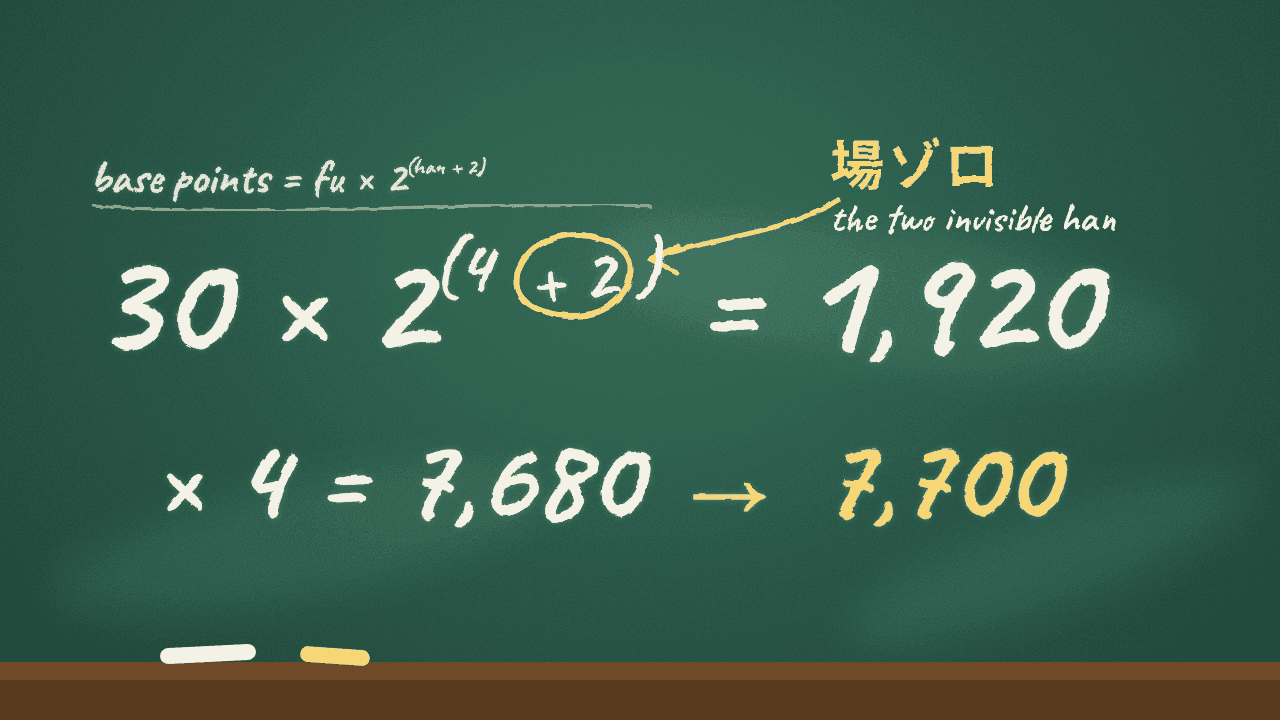
A riichi pinfu ron pays 2,000 because the scoring formula adds two han nobody announces. Here's where that pair of doubles came from, the full 30-fu column worked by hand, and why the limit hands have the names they do.
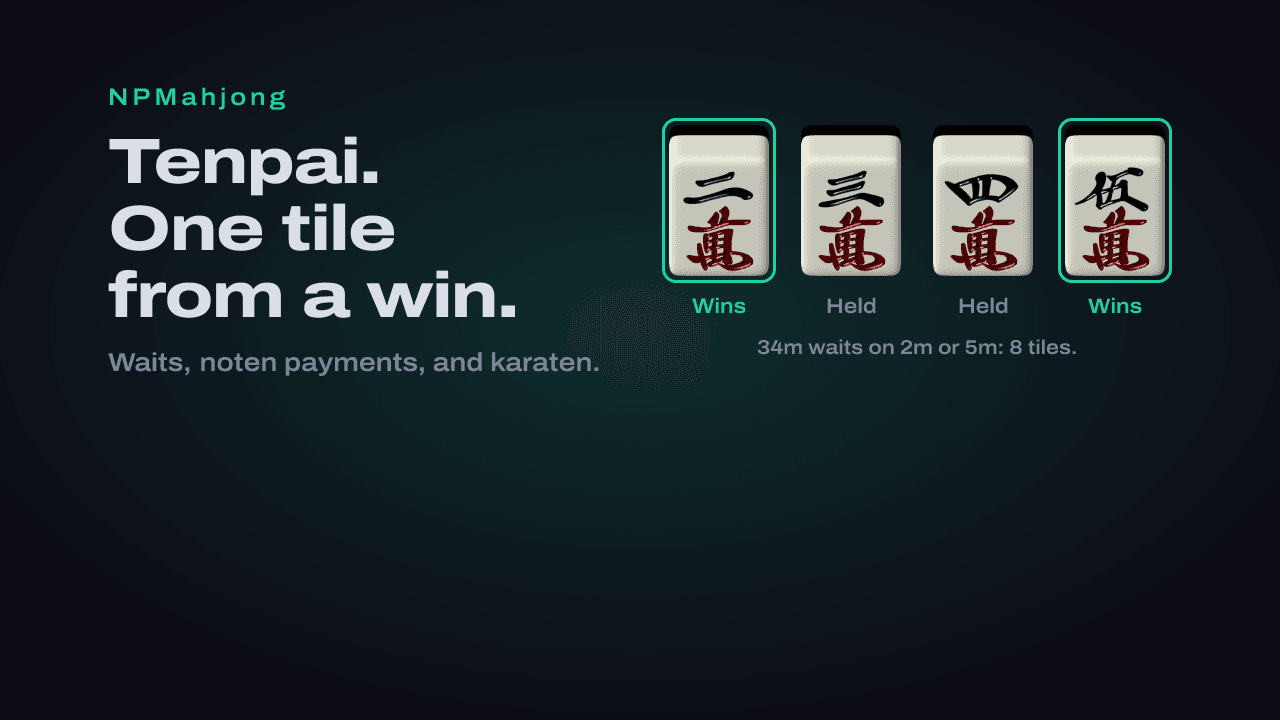
Tenpai means your hand is one tile from a win. How to read and count your wait, what tenpai pays when the wall runs out, and when a tenpai hand still counts as noten.
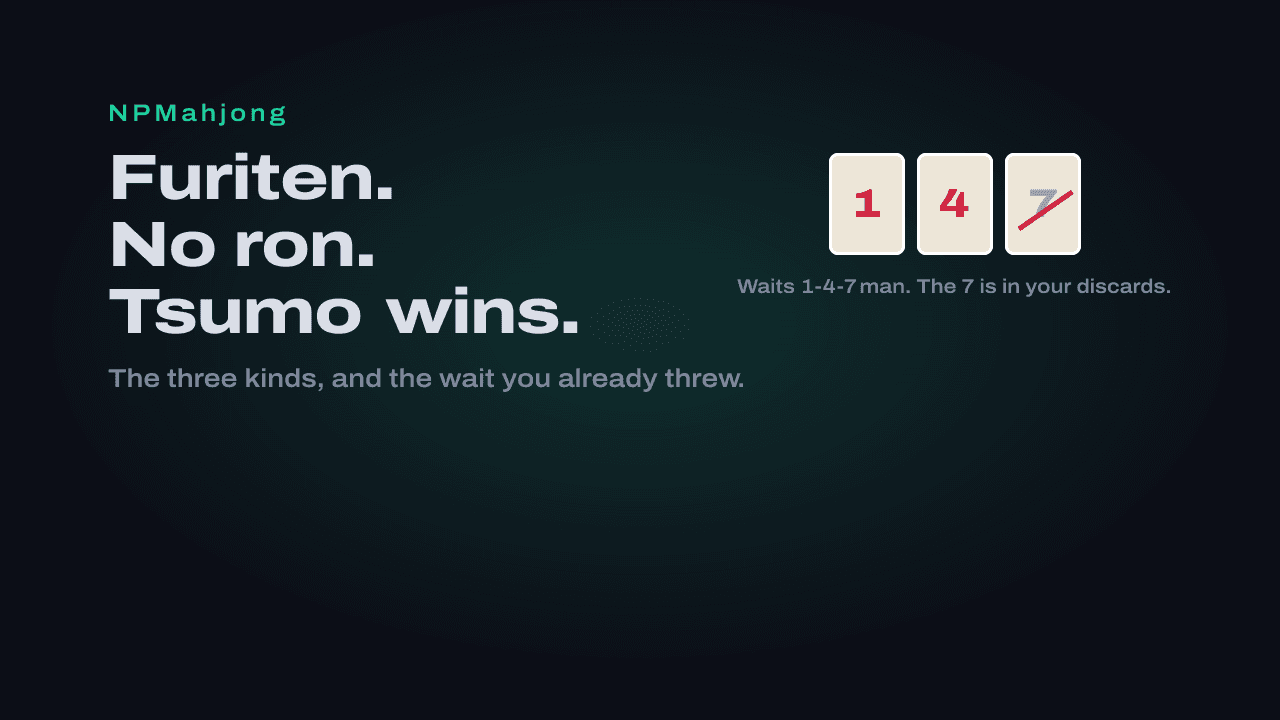
Furiten blocks ron once you've discarded a winning tile, after you pass a win, or for the rest of the hand in riichi. Tsumo still wins.
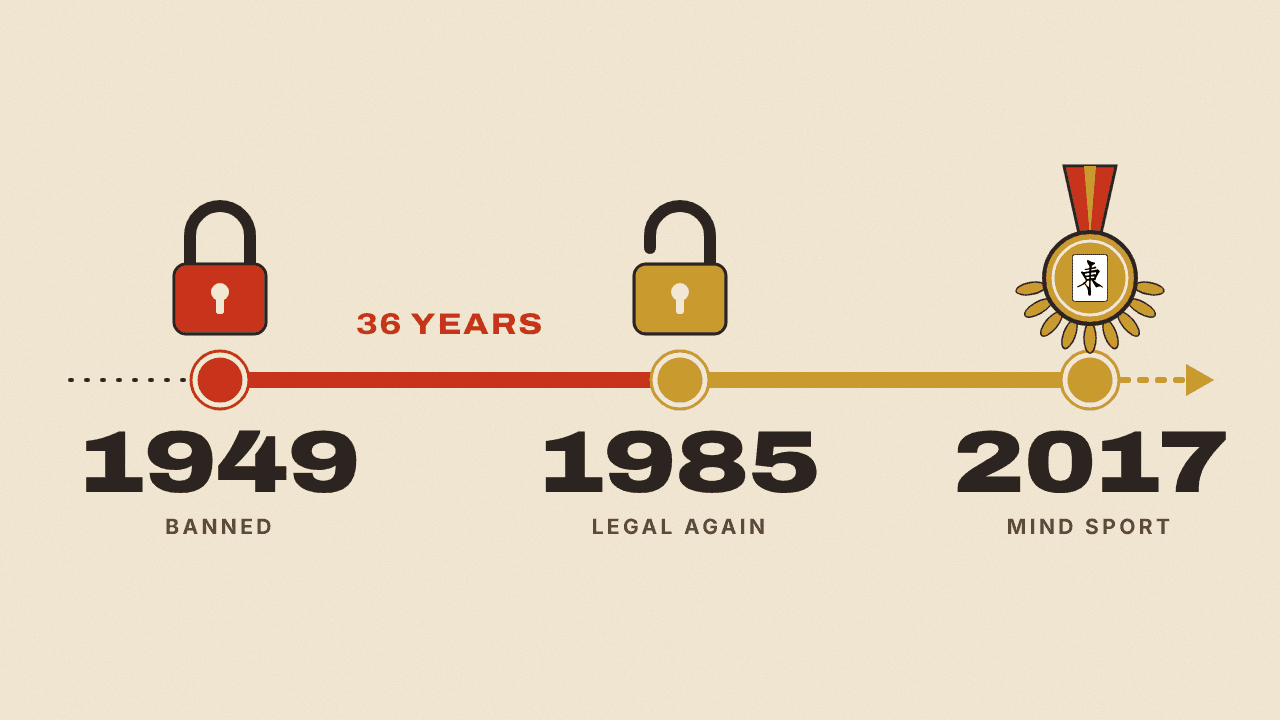
The country that invented mahjong banned it with gambling in 1949 and made it legal again in 1985. Thirty years later it had a federation in Lausanne, a seat beside chess at the mind sports table, and a format built to remove luck. Here's the story, and what it means for riichi.
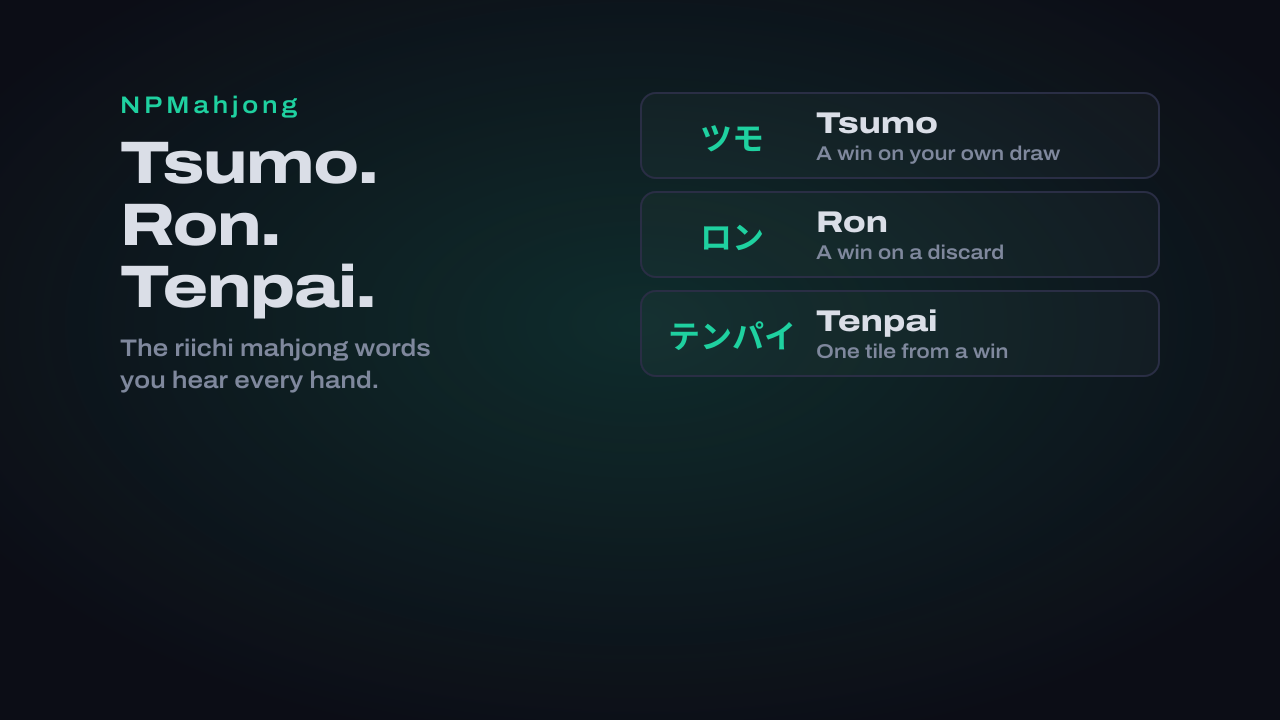
Tsumo, ron, and tenpai in a line each, the eight terms to learn first, and a searchable glossary of 216 riichi mahjong terms.
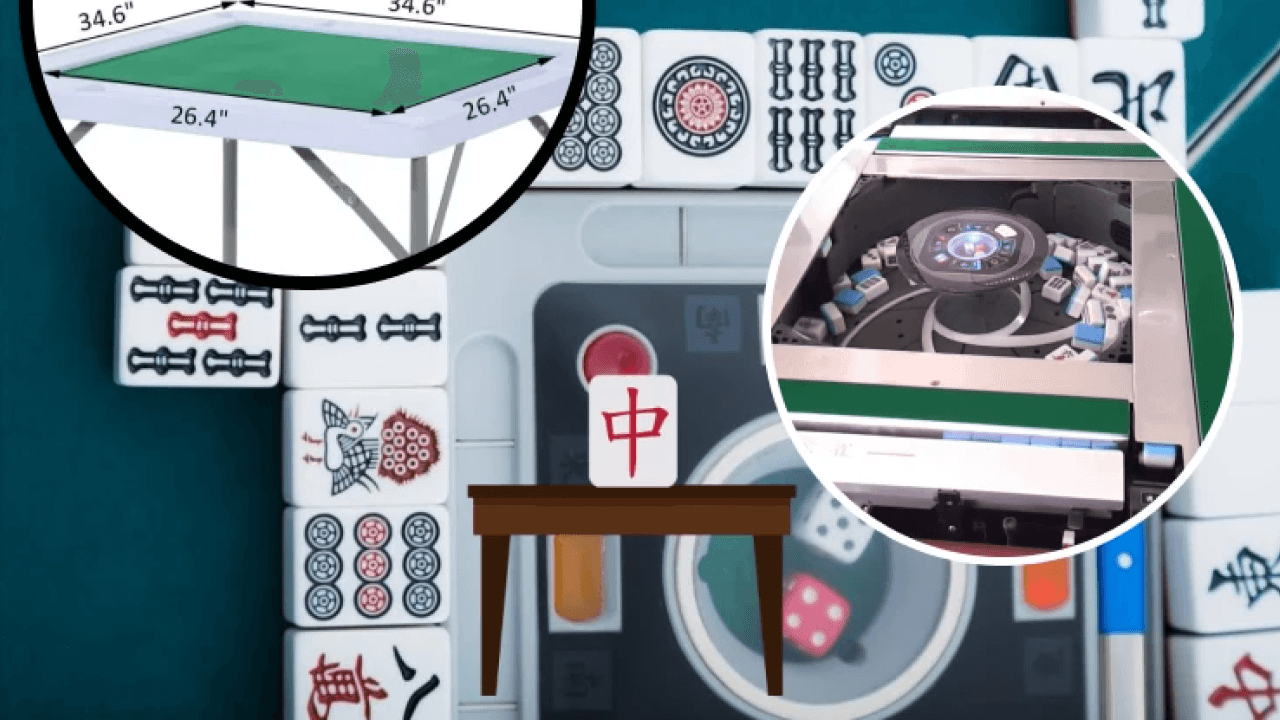
From DIY builds to $1,000+ automatic shufflers, mahjong tables range wildly in price and functionality. Before you buy, understand the options. I'll cover every type with their ideal use cases, dimensions, pros, and cons so you pick the right one for your situation.

Free riichi mahjong tools in English, most of them built here. I've played for 17 years and spent the last 10 as a pro in Japan. Here are the calculators, trainers and stats tools on this site, and the best free resources other people made. No affiliates, no fluff.

Professional mahjong players pay hundreds to thousands of dollars yearly to keep their title. Most of them don't make a living from the game. So why do they do it? Here's an insider's look at what being a pro means and how you can become one if you're serious.
Want to hear whenever there's new mahjong content? Pre-subscribe to the upcoming newsletter and I will email you what you always wanted to know about Japanese mahjong before anybody else!