![Mahjong table size, dimensions and buying guide [2026]](/_next/image?url=%2Fimg%2Fposts%2Fmahjong-table%2Fmahjong-table.png&w=3840&q=75&dpl=dpl_72kWNMezRqSKAEmiYTPcMH1FugRQ)
A mahjong table is a square table built for four players: a soft playing surface that dampens tile noise, a raised rim that keeps tiles from sliding off, and often drawers for . Automatic tables add a machine underneath that shuffles and builds the walls for you.
You're probably using a mat, rug, or desk as your playing surface. That works, but understanding your options helps you make the right investment when you're ready to upgrade.
Mahjong table size
A standard mahjong table is 83–94 cm (33–37 in) square and 76 cm (30 in) tall, the range Japanese automatic tables are built to. For a hand-shuffled table, aim for a playing surface of 80–90 cm (31–35 in) square.
| What you're measuring | cm | inches | Source |
|---|---|---|---|
| Playing surface, DIY or manual table (my pick) | 90 × 90 (80–100) | 35.4 × 35.4 (31.5–39.4) | My recommendation, below |
| Smallest tabletop for playing on a mat | 70 × 70 | 27.6 × 27.6 | Taiyo Giken |
| Japanese mahjong mat | 69 × 69 | 27.2 × 27.2 | AMOS Junk Mat |
| Japanese manual folding table | 74 × 74 or 88 × 88, 42 or 76 tall | 29.1 or 34.6 square, 16.5 or 29.9 tall | Rakuten listing |
| Japanese floor table (座卓) | 67 × 67, 33.5 tall | 26.4 × 26.4, 13.2 tall | Sasaki Miyabi |
| Hong Kong table | 91.6 × 91.6 overall, 88 × 88 , 70–75 tall | 36.1 overall, 34.6 top, 27.6–29.5 tall | ALOT × DOTO MJ88 |
| Western folding card table | 87.6 × 87.6, 73.7 tall | 34.5 × 34.5, 29 tall | Flash Furniture Silas |
| Home automatic table footprint | 83 × 83 to 90 × 90 | 32.7 × 32.7 to 35.4 × 35.4 | AMOS JP2, AMOS JP-EX COLOR |
| Parlor automatic table footprint | 94 × 94 | 37 × 37 | AMOS REXX III |
| Automatic table height (standing / floor mode) | 76 / 39 | 29.9 / 15.4 | AMOS JP2 |
| Clearance from table edge to wall | 91 | 36 | Castlery (dining-table guidance) |
| Room for a 94 cm table with that clearance | about 277 × 277 | about 109 × 109 (9.1 ft) | Derived: table + 2 × clearance |
Automatic-table makers publish the outer footprint, not the size of the felt inside the rim. Expect the playing area to be smaller than the footprint.
For context, Taiyo Giken shows its AMOS JP-EX set up in an 8-tatami room, about 3.6 m (11.8 ft) square (source). That's a typical Japanese living room, and it fits the table, four chairs, and side tables.
Want the specs of every automatic table side by side? I compare them in my automatic mahjong table buyer's guide.
DIY mahjong tables: size, plans and how to build one
Building your own table saves money.
Here's what matters:
If you're playing Japanese mahjong, I'd recommend a surface of 90x90 cm at most. Include borders (margins) with no more than 1 or 2 cm of height.
This border will allow you to sort and arrange your tiles with ease.
A simple plan for a homemade mahjong table:
- Cut a square board for the playing surface, 80–90 cm per side (see the sizes below).
- Frame it with a rim no taller than 1–2 cm.
- Glue or staple felt over the playing area.
- Mount it on legs that put the surface around 76 cm high, the height Japanese tables use, or on top of a dining table you already own.
- Add drawers or trays at each seat for point sticks if you have the skills.
Mahjong table ideal dimensions
I recommend a size of 90 cm2 for self-made mahjong tables.
This size guarantees that you'll be able to play both Chinese and Japanese mahjong without fighting for space or going too wide.
If your tiles are small and your group's arms are short, or your chairs are low and you can't extend your arms far, you can go for 85cm or down to 80cm. If the tiles are huge, you can try going up to 1m square.
Mahjong table materials
Wood and felt. Don't skip the felt; bare wood is deafeningly loud and damages tiles.
Do not skip the soft cloth on the playing area. The sound of tiles slamming on wood will be so loud the game becomes unplayable. You'll also risk ruining the table.
Placing felt on top of a glass table is not recommended.
Wood and felt are your best friends.
You don't need to spend a fortune on the soft cloth felt. Consider that you will have to change it every now and then. These wear down.
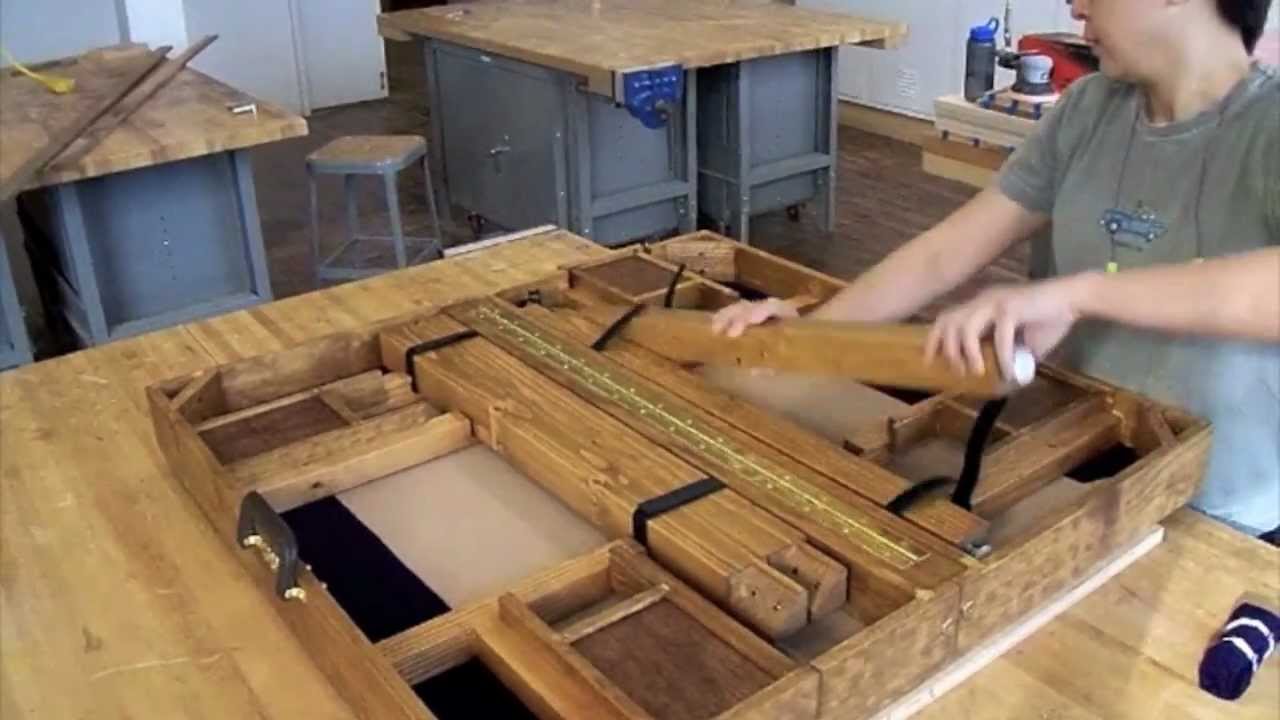
Check out how Jackie Chin engineered and built this homemade mahjong table, complete with drawers for point sticks:
Mahjong table tops, mats and rugs
Mats are the next best thing to a dedicated table. A mat turns any square table into a mahjong table top.
Unfold on any flat surface and you're ready to play.
Without a table underneath, a mat won't help much.
There's plenty of square furniture you can purchase in combination with your mat. Make sure they're at least 90 cm2, or you risk your mat not fitting on top.
If you play Chinese Mahjong with Chinese tiles, there's a good chance your tiles are too big for the mat. If that's what you use to play, skip this option.
Otherwise, a mat is good value, and it's portable.
The mat I recommend:
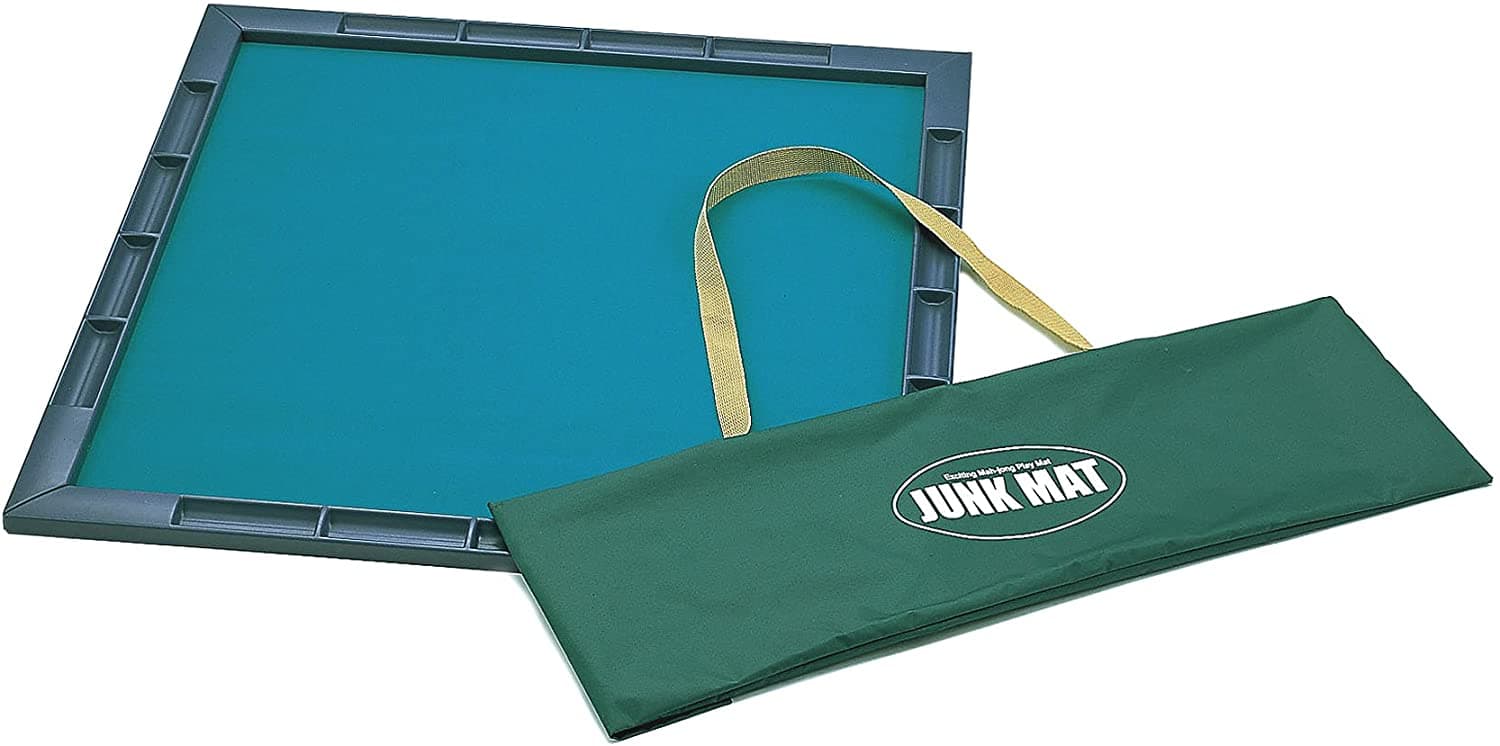
Mahjong mat junk mat (japan import)
The standard choice among mahjong players. Use this mahjong mat to play your favorite game anywhere.
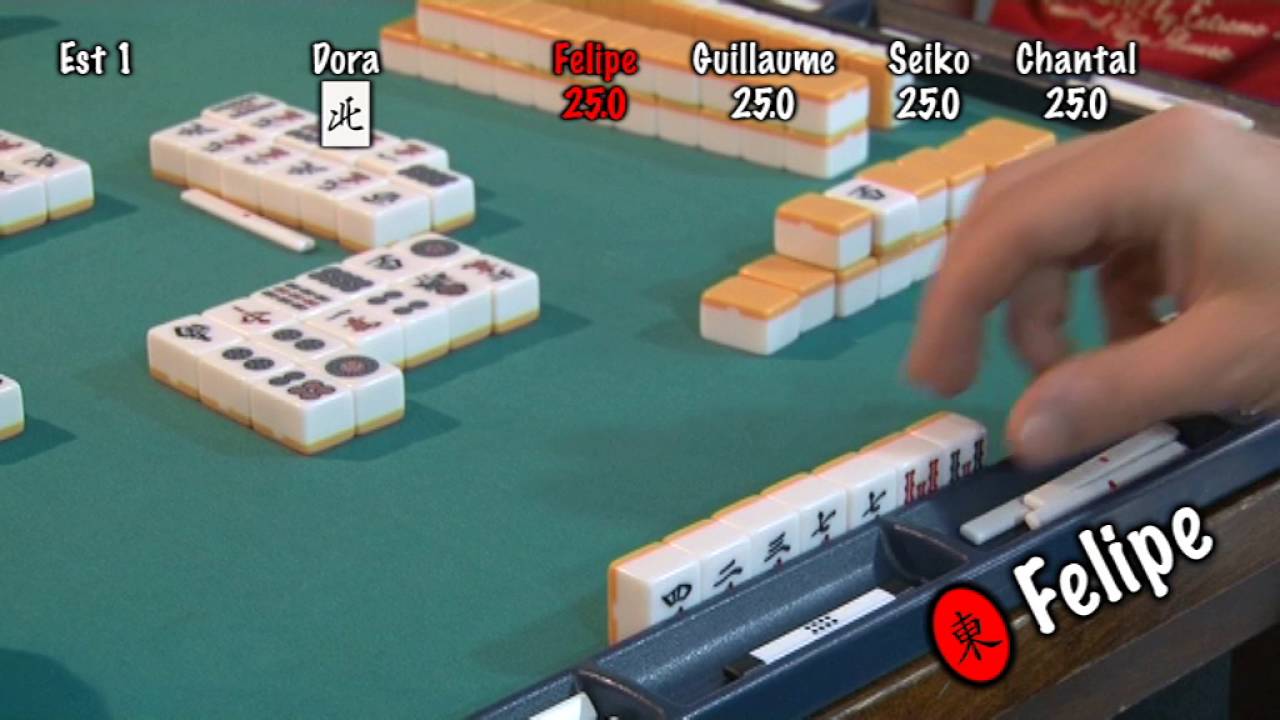
Mahjong Club Potos in France played their finals on a Junk Mat like the above.
Folding mahjong tables with drawers
Purpose-built for mahjong.
You can get cheap folding mahjong tables made mostly of plastic (and cloth felt). This makes them lighter, so shipping will be cheaper too.
Folding mahjong table with drawers
You can find plenty of these online with cheap shipping because of their light weight.
I like the following table because while it is light, inexpensive, and portable, it is also surprisingly durable (check the hinges on the folding part). You can see at all times the points other players are holding, and play other games besides mahjong with it.
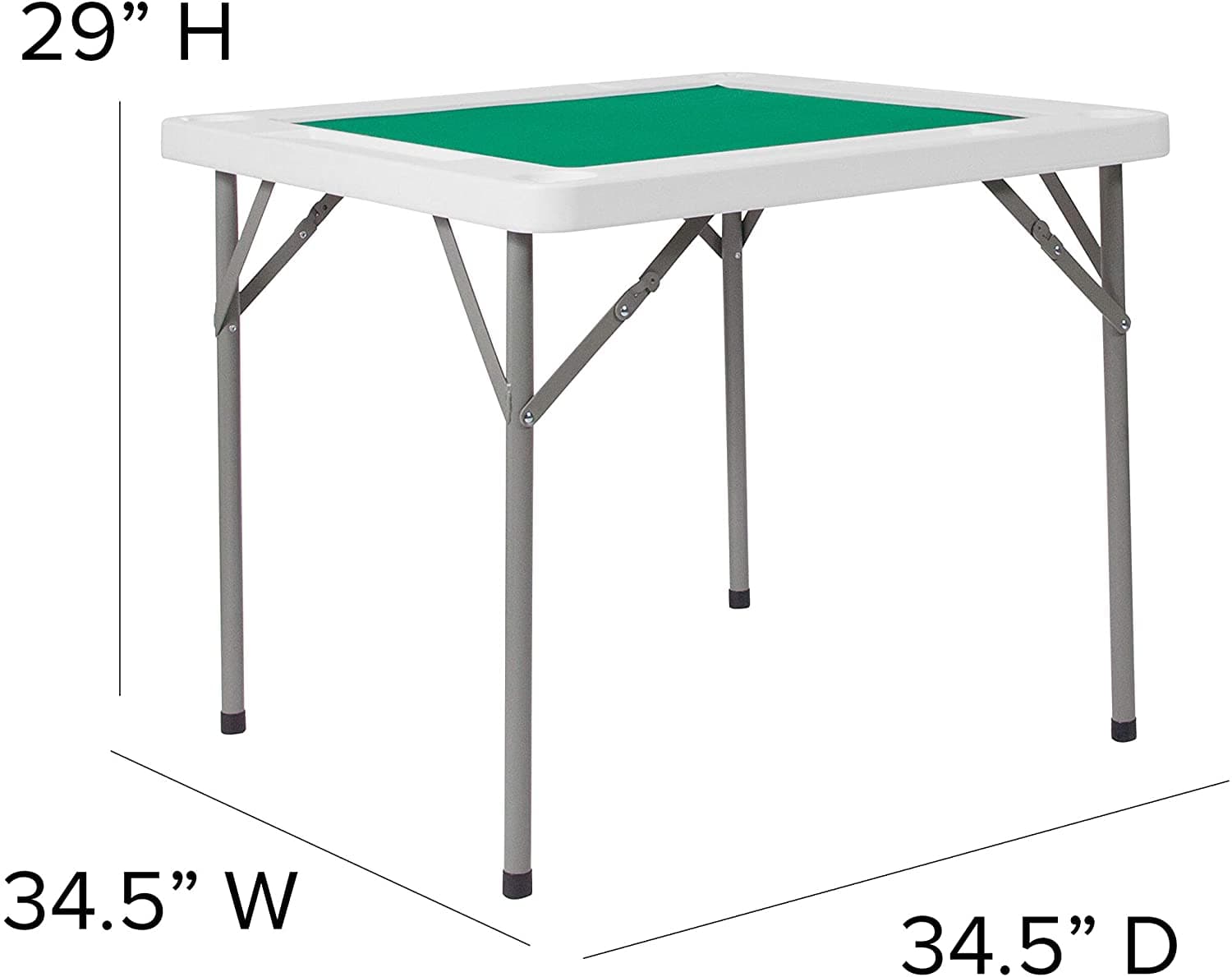
Flash Furniture 34.5" Square 4-Player Folding Card Game Table with Green Playing Surface and Cup Holders
Whether you're hosting poker night with friends or an epic board game tournament with the family, this folding game table has you covered. Gray powder coated locking legs hold up to 220 lb. static load capacity. Overall Size: 34.5"W x 34.5"D x 29"H
Semi-automatic mahjong tables
Also called partially automatic tables.
These tables will flip (mostly) all your tiles face down and shuffle them. You need magnetic tiles with the table for this to work.
It's only a small aid since you still have to build the wall by hand.
It still works as a mahjong table and is nice to have. Check it in action:

Scary, isn't it?
Automatic mahjong tables: which is the best?
They're also called self-sorting mahjong tables or "electric mahjong tables."
If you've wondered how an automatic mahjong table works:
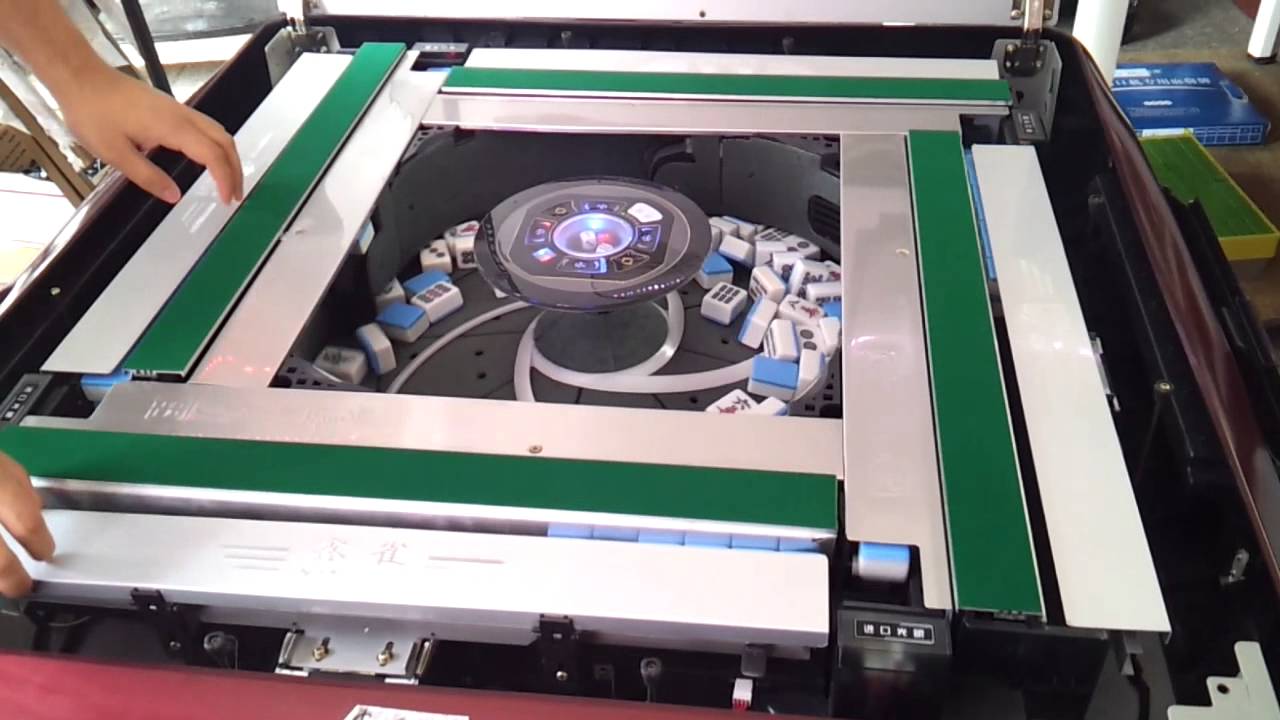
As you can see in the video, automatic mahjong tables use two mahjong tile sets at once so they can shuffle a second set while you play.
The backs of both tilesets are painted in different colors to prevent both mistakes and cheating.
After you finish a hand, push all the tiles into the central hole. A newly built set of walls will rise up ready to play.
The technology employed by these tables makes them one of the most expensive choices out there. They can be noisy. They do save considerable time building the wall.
These tiles are also magnetic. You need to purchase tiles compatible with the table. These tables include tiles when you purchase them, but this matters if you lose or break some tiles.
Which is the best? It depends on where you live and how much you'll play. I compare the main models, specs, prices, voltage, and shipping in a separate buyer's guide to the best automatic mahjong tables. The table I own is an Aotomo, and I wrote up how I bought and assembled it.
Let's cover what types of tables exist, then their merits and demerits.
Home automatic tables
These are automatic tables meant to be used at home.
Their light weight, cheaper entry price, and ease of installation makes them the perfect choice for house games.
Some are designed to be as silent as possible.
If you're in Japan, AMOS JP II is an excellent model to order. It can be lowered to the ground and is super silent.
Amos JP II
These are only available in Japan.
If you're in the US and you'd like a decent table that's easy to assemble, you prefer tiles that include an index, and you prefer variations other than riichi (like American mahjong, Chinese, or Philippine styles), the following table could work for you:
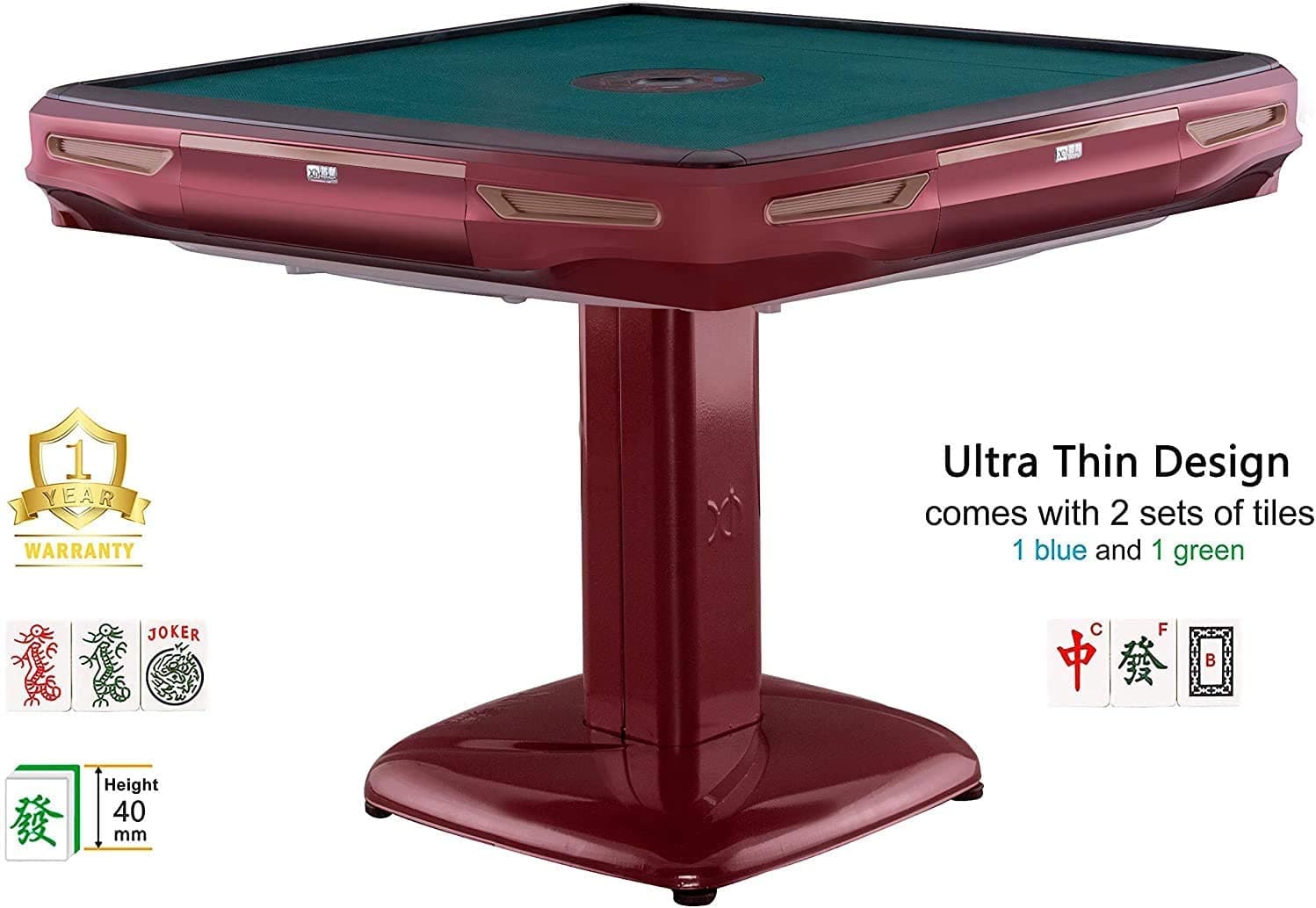
40mm Numbered Tiles Ultra Thin Unfoldable Automatic Mahjong Table with Wheels - Chinese Philippine and American Mahjong Style , 1 Year Warranty
Ultra thin design, thinner than regular tables. High quality auto mahjong table comes with 2 sets of 39mm(height) x 28mm(length) x 20mm(width) standard size magnetic tiles, 144 tiles (1 Blue and 1 Green) plus 2 sets of jokers for American Mahjong.
Professional mahjong tables
They're different from your usual self-sorting mahjong tables because they can also keep scores.

They rely on IC technology or magnetism to count players' points.
On top of that, most can tell you the score differences between players.
The score function is indispensable for professional matches. Many professional mahjong players feel uncomfortable playing on a table with no score display.
By professional organization standards, you still need to count your point sticks and state your actual points in the final hand to prevent mistakes and miscounts.
Professional mahjong table scoring
Commercial mahjong tables
They're like professional mahjong tables except they have extra functions ideal for mahjong parlors.
They can calculate money payments, deal initial hands, and even reveal tiles for Japanese mahjong.
Any big mahjong parlor chain will use these tables.

Should I get an automatic mahjong table? Which one should I get?
Automatic mahjong tables are fantastic because you save time on wall building and get to play more games.
They also save you wall building fatigue, shoulder and finger strain, and they're a headache-saver when teaching someone new to the game.
But before you rush and order a table or two, keep the following in mind:
- Mahjong auto-dealers are noisy. If you have sensitive neighbors, get a folding table instead.
- Automatic tables require daily maintenance. If you'll use them once a month and they'll gather dust in a corner, choose a semi-auto table instead.
- If they malfunction, it can be difficult to fix them. If you buy online from a local importer, they can probably help. If you decide to import the table yourself, you'll be on your own if the table breaks down or you need replacement parts.
- If you decide to import, customs regulations and shipping fees (especially by courier services) are likely to take a big hit on your pocket.
If you still think you can manage and you prefer riichi mahjong tiles, you can grab the following mahjong table from a USA importer on Amazon (saving you the pain of having to import yourself):
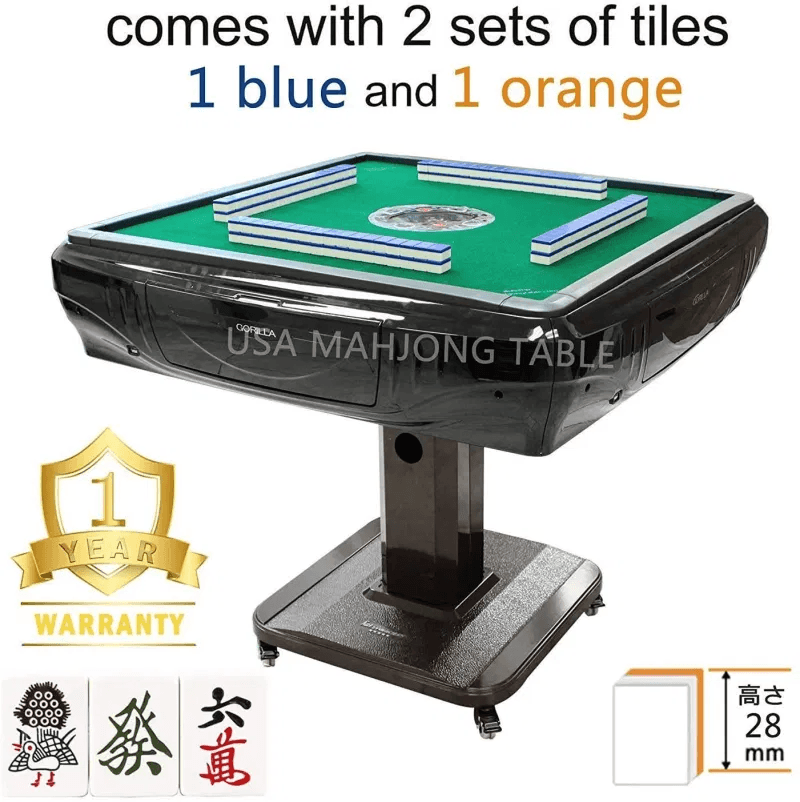
Japanese Style Automatic Mahjong Table Magnetic 28mm Mini Size Riichi Mahjong Tiles with 2 Sets of Japanese Tiles + One Year Warranty Easy Assembly in 30mins
1 Year Warranty included and in USA. Magnetic Japanese Mahjong Set with 148 cream white/blue melamine mini tiles to replace ones in your existing set or mix and match with a case. Measure each one is Length 21mm x Width 16mm x Height 28mm. Comes with 36 characters, 36 bamboos, 36 circles, 12 dragons(green, red, white), 4 flowers, 16 winds (N,E,S,W), 8 red fives. Special version for automatic mahjong table use.
Chinese vs Japanese mahjong tables
The table is the same idea everywhere. The tiles aren't.
- Tile size. Chinese-style tiles run bigger. The Chinese and Philippine-style automatic table further down this page ships with 39 mm tiles. Japanese hand-play tiles are about 26 mm tall, and automatic-table tiles are 28 or 30 mm (Taiyo Giken). Big tiles need a bigger surface, which is why a mat sized for riichi tiles can be too small for a Chinese set.
- Table size. A Hong Kong table like the ALOT × DOTO MJ88 has an 88 × 88 cm top (ALOT). Japanese home automatic tables measure 83–90 cm square overall (AMOS JP2, AMOS JP-EX COLOR).
- Automatic tables. An automatic table only accepts the magnetic tiles it was built for. A Chinese machine set up for Chinese tiles won't deal riichi walls. Some factories, Aotomo among them, sell versions with Japanese tiles and Japanese wall settings.
- Extras. Japanese tables usually have point-stick drawers. Parlor and pro models add score displays.
If you play riichi, buy a table sold with Japanese tiles. The glossary covers the Japanese terms you'll see in table manuals, like and .
Novelty LCD mahjong table
This is an absolute novelty. It replaces ordinary tiles with LCD screens. It went viral on social media for its elegance, though it's probably impractical.

The biggest table dealers in Japan
Matsuoka (CEO) is famous in West Japan as the owner of the nifty URL mahjong.co.jp
He owns "MATSUOKA", a company that distributes mahjong goods for mahjong parlors and classrooms in Japan. If you get a table from them, the guarantee will hold.
In East Japan, SASAKI is a well-known brand. They've been around for practically forever and can be found at sasaki-mj.co.jp/
If you're set on getting a table in Japan, contact me and I could connect you with them.
Rounding up
There are many different types of mahjong tables for all sorts of purposes and tastes.
It would be impossible to list or rank them all. If you want a personal recommendation from a professional player in Japan, drop me a message with your current situation and I'll figure out which one fits your needs best.
What table do you like the best? Let me know.
If you want help with your game itself, not only the furniture, I coach riichi players one on one.
Was this article helpful?