
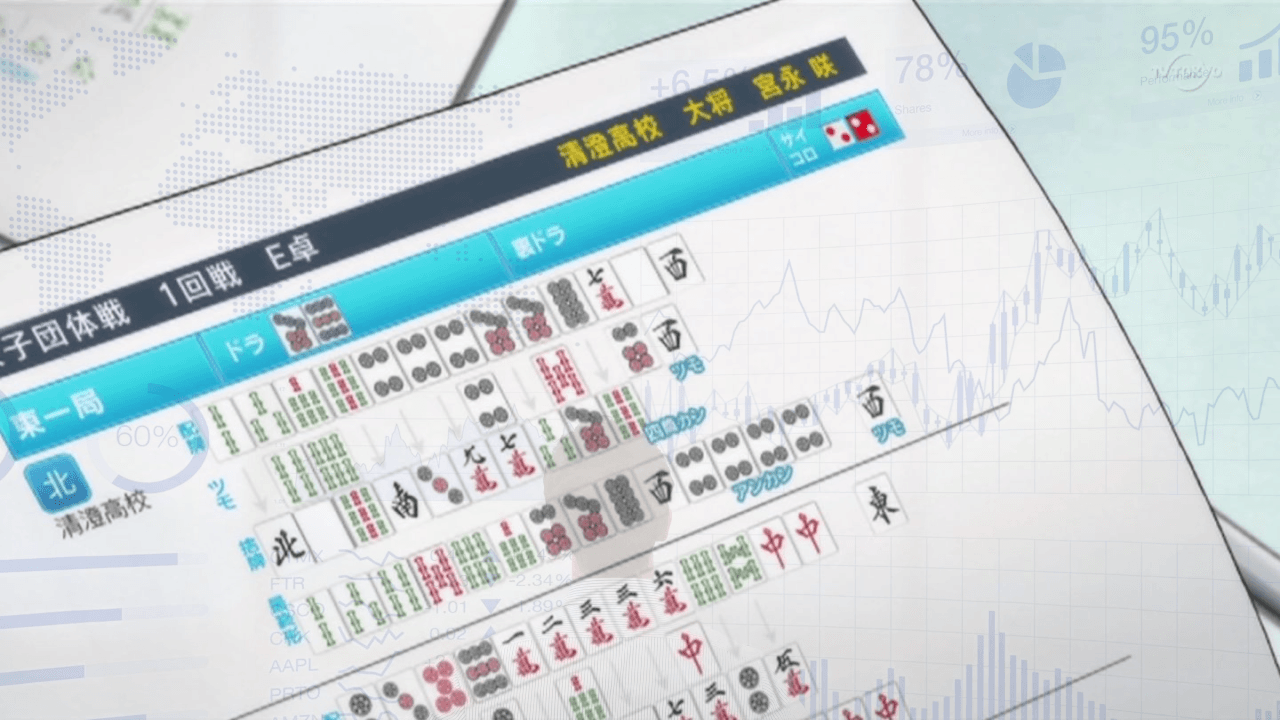
How important are data and statistics in Japanese riichi mahjong? Do professional players rely only on numbers?
Players collect many statistics when they play mahjong online. These statistics can teach you about the game and how it's played. But nothing replaces advice from experienced players in person.
If you're not sure which data to trust, this post will clarify whether to take stats collected by others at face value or rely on your own instincts and experience.
What do you mean by "mahjong statistics" here?
I'm talking about probabilistic data other players have gathered.
Two types:
- Probabilistic: The pure mathematical approach to calculating event likelihood. For example, there are 34 types of tile. If you draw one random tile from all 136 tiles in a pit, you have a 1 in 34 chance. Nothing changes that. This is reliable data.
- Statistical: Based on what happened in data samples from games. The winning rates of certain waits by a certain turn number, the likelihood someone is tenpai by a certain point in the game, and more. This is useful, but not always reliable.
Online mahjong sparked a data-collection boom in Japan and the West.
But how important are they?
Should you take the time to learn and memorize all the edge cases, or play and let your intuition build up?
If you've wondered about the importance of statistics in mahjong, you're not alone. Japanese mahjong is a game where you can play the odds and still lose many games. I'd like to clear up some misconceptions about data and how professional mahjong players (myself included) think about the game.
Do mahjong players use "feeling" or "statistics and data"?
The old debate: occult or digital?
Do strong players constantly calculate optimal moves using data?
Yes and no.
Betting on zero-probability events is always wrong. You cannot ignore the math.
But experienced players read situational cues: waiting patterns, tenpai tells, behavioral habits. Pure math cannot capture these. Once you've read your opponents, the charts become secondary.
A riichi mahjong aficionado can see through certain tells such as waiting patterns or whether a player is tenpai based off how they play.
Many of the strongest players today lean towards a "humanistic" approach. They take into account not only data but significantly more meta-information. They adopt bluffs and other strategies in the heat of the moment, much like poker players have been doing for decades.
Statistics and data pave the path for having a stable, "standard" choice when everything else is equal.
Orthodox digital players might tell you the right way of playing mahjong is simulating or calculating the Expected Value of every single discard. They say this analysis will always yield "the one holy, correct discard." Don't worry; that is not what real "digital" play is all about.
EV (in a vacuum) is a vital factor for deciding discards, but it's not the only one. Years of experience will teach you about additional factors that can't yet be accurately measured in the middle of a round.
Mahjong statistics and hand reading
Hand reading is often overlooked by "1-Player Mahjong" enthusiasts. See:

Say for example:
Do you know the probability for hon itsu tenpai for somebody with 2 calls of the same suit during the second row of discards?
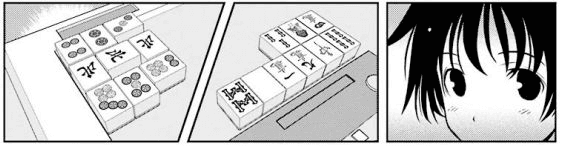
Reading a Hon Itsu hand
Easy; there's probably a chart for that.
But here's the catch: many other factors matter.
What if she changed her hand 4 times after her last call?
How about if she discarded a dora ryanmen shape early on?
What if she did both?
Wait, there's more: What if you have seen, and you know, she's not the type of player who usually calls twice for less than 3900 points?
Did the chance now get any higher?
What if, while she's right-handed, she's discarding everything from the right end of her hand? (The likelihood of hon itsu increases in these cases.)
What if she hesitates before discarding each yakuhai? And what if she doesn't? What if that yakuhai she discarded was the 4th one of its type? What if it was a live yakuhai instead? What if she stutters whenever the person to her left drops a tile in that suit?
And we haven't even started with what tiles in particular she called, didn't call, or what her discard area might look like. You see where I'm going with this.
The point: there's a lot of meta-information on the table. Although statistics and data help, they cannot yet take an exact measure that accounts for all this data overload.
No dataset covers every combination. Even if one existed, memorizing it all would be impossible.
Any given mahjong hand comes with much more data than you can hope to process as a player
Use this information to draw your own conclusions, or fall back on static numbers.
If you're inexperienced, rely on proven data. You'll miss some wins, but you won't actively lose from bad reads.
Less experienced players are better off relying on data than on their experience
If you want more examples of reading Hon Itsu hands, you can subscribe to my Patreon and get access to special posts like that.
Statistics come from different sources: the source of the data matters
Most data comes from Houou (Phoenix) tables on Tenhou.net: a completely different ruleset and player base than your average tournament or club.
Phoenix players represent less than 1% of the community. Most real-life opponents won't play as strong a defense, and will behave differently under different rules.
You'll encounter more sakigiri (early defensive discards) and betaori (full defense) on Tenhou than in high-stakes parlors.
Pick your statistics carefully. Use data from the same ruleset you're playing.
Mahjong has a lot of "gray" areas when it comes to decisions. Strong players are good at telling apart the whiter shades of gray from the darker ones. -Asapin
How much should I rely on mahjong statistics?
When you have no other relevant information, data and statistics should come first.
So yes, learn basic statistics, like ryanmen tsumo rates and ippatsu frequency. This also helps manage expectations.
You can find all sorts of amazing statistical data in Amber's blog.
As you grow stronger and read more reliable information, you can bend the numbers. You shape the matrix.
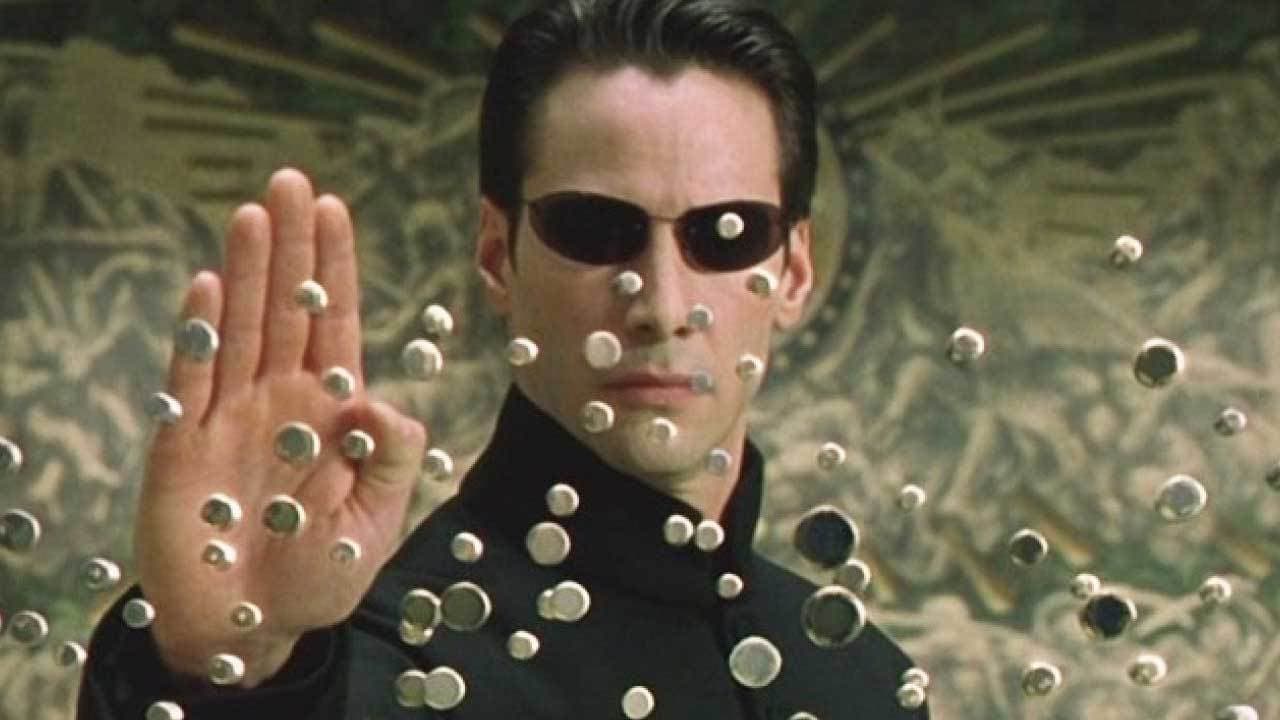
"What are you trying to tell me? That I can dodge expensive hands?"
No, friend. I'm trying to tell you that when you're ready, you won't have to.
Deviating from statistics isn't a mistake; it's a privilege earned through experience.
Deviating from statistics is not a mistake, it is a privilege
You'd be surprised at how legendary mahjong players manage to turn the tides in their favor and beat the odds thanks to their experience. Legendary Meijin Tsuchida Kosho is one such example.
He plays unorthodox mahjong but knows probability and statistics deeply. He chooses to ignore them once he's onto something.
Learn the rules like a pro so you can break them like an artist. -Picasso
In the end, use both data and instinct. Don't be afraid to blend them.
Need more practice? Try these riichi mahjong tools and resources.
If you'd like personal guidance, schedule a lesson with me.
Share this post if it helped. Good luck at the tables.
![Tenhou mahjong server: a warning for new players [online vs offline]](/_next/image?url=%2Fimg%2Fposts%2Ftenhou-players-pro-tips%2Ftenhou-warning.png&w=3840&q=75)