
is a , open or closed. You hold triplets or quads of all three dragons. The fourth set and the pair can be anything.
The name players use is daisangen (大三元). This site's glossary also lists it as Big Three Dragons, and the EMA 2025 rules use the same English name.
Three dragon triplets
The dragons are white  , green
 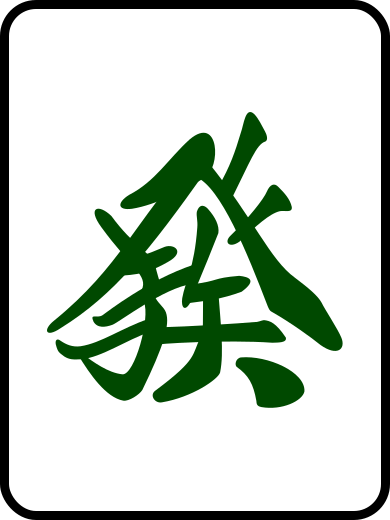 , and red
 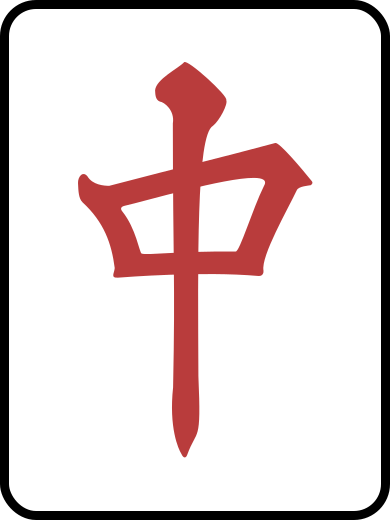 . Each one needs three or four copies, in your hand or in your calls. them, them, or draw them yourself. A call costs the yakuman nothing.
Two dragon triplets and a pair of the third is shousangen: 2 , plus the two dragon yakuhai. One tile separates the two hands.
The glossary entry is the short form: triplets or quads of all three dragons.
One tile short
You called pon on and on : and . These seven tiles are still in your hand.
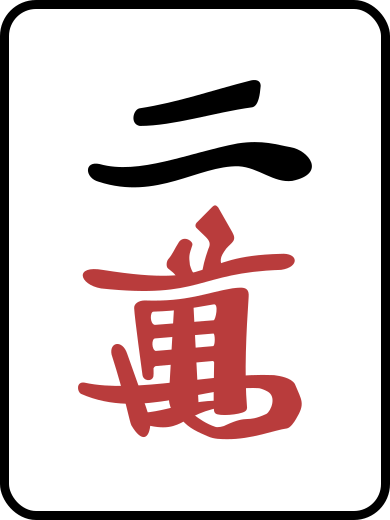
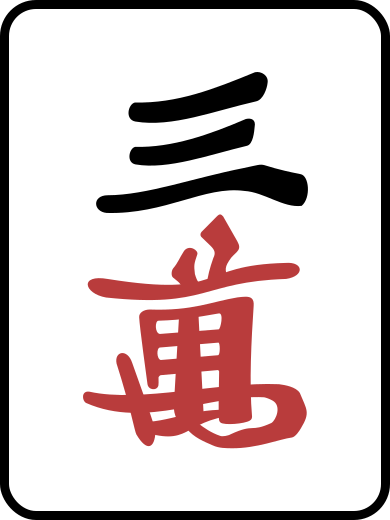
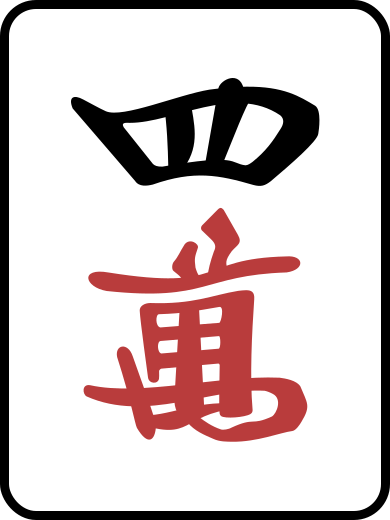
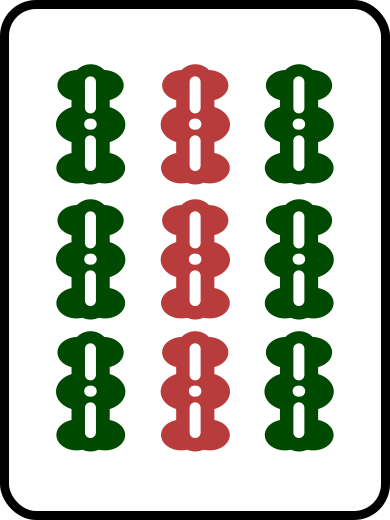
The hand waits on or , a wait on two pairs.
makes the red triplet. That's daisangen. A collects 32,000. The dealer collects 48,000. Fu don't count once a hand reaches the limit.
makes a 9 sou triplet and leaves the reds as the pair. That's : 2 han, plus 1 han each for the white and green triplets. The fu are the base 20, plus 4 for each open dragon triplet, plus 4 for the 9 sou triplet the discard finished, plus 2 for the dragon pair. 34 rounds up to 40, and 4 han 40 fu is paid as a . A non-dealer collects 8,000. The dealer collects 12,000.
Same , same calls, and one tile pays four times the other. Those payments have no and no sticks. The scoring guide shows where 4 han 40 fu meets the mangan cap.
Pao: one player pays
Call the third dragon off an opponent's discard, and that opponent can end up paying for your yakuman. The rule is , also called sekinin barai (責任払い).
The EMA 2025 rules (section 3.3.7) spell out the trigger: a player who feeds the last dragon triplet or quad when the other two are already called. If that opponent wins by tsumo, the feeder pays the whole hand. If a third player deals in, the feeder and the discarder split it.
Tenhou's rules and Mahjong Soul's ranked rules both use pao for daisangen and for big four winds. A tsumo is paid in full by the feeder. A ron is split in half between the feeder and the discarder. Both put the honba on the feeder. Under the EMA 2025 rules, only the discarder pays the counters on a ron.
All three dragons called
You called all three dragons: , , and . The red pon came off one opponent's discard. These four tiles are still in your hand.
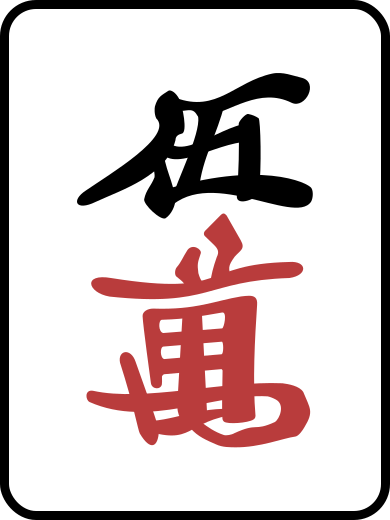
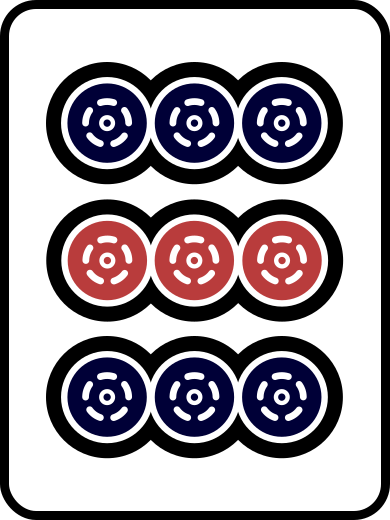
The hand waits on or 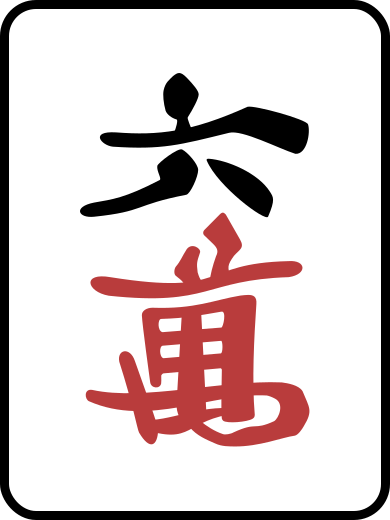 , a . Either tile finishes daisangen.
Draw it yourself and the opponent who fed the pays all 32,000. The other two pay nothing. Win it off a different player's discard, and that player and the feeder pay 16,000 each. If the feeder deals in, they pay the whole 32,000 as a normal ron.
As the dealer, the tsumo is 48,000 from the feeder alone, and the split ron is 24,000 from each of the two.
Daisangen with all honors
Keep the three dragon calls, with the red still fed by the same opponent. Swap the four tiles in your hand for winds.
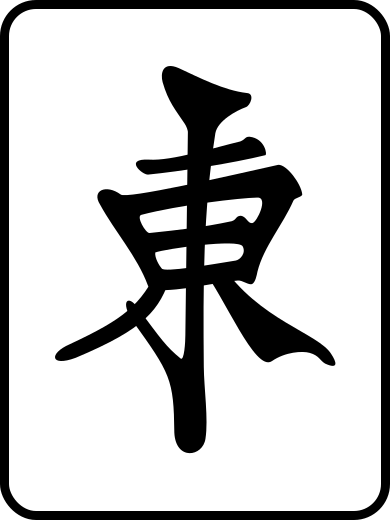
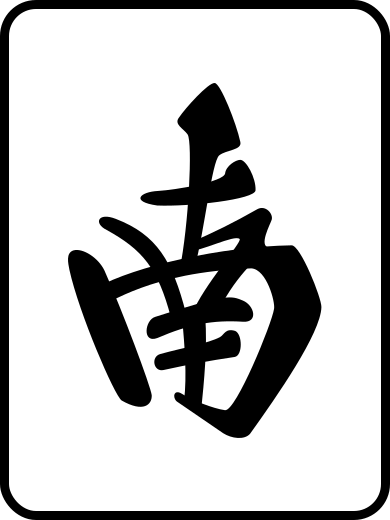
The hand waits on or . Either tile makes daisangen and all honors, two yakuman. Tenhou and Mahjong Soul stack them, so a non-dealer ron is worth 64,000, and a dealer ron 96,000. Now a different player deals in, and the platforms part ways.
- Tenhou: pao covers the whole score, the second yakuman included. The feeder and the discarder pay 32,000 each.
- Mahjong Soul: pao covers only the daisangen. The feeder and the discarder split that 32,000 into 16,000 each, and the discarder pays the all-honors 32,000 alone. The discarder hands over 48,000 in all.
- EMA 2025: yakuman don't stack, so the hand is worth 32,000, split 16,000 and 16,000.
The World Riichi Championship rules split it the Mahjong Soul way: the feeder shares only the yakuman they fed.
Open or closed
Mahjong Soul's in-game yaku list marks , , and as closed only, and leaves daisangen unmarked. The EMA 2025 rules write their liability rule around three called dragon sets, so the yaku counts with calls. That's the row on this site: yakuman, open or closed.
What sits with it
Ordinary yaku and add nothing to a yakuman. Another yakuman does, on Tenhou and Mahjong Soul. All honors fits when the fourth set and the pair are winds. Suuankou fits when all four sets are concealed triplets. The EMA 2025 rules don't stack yakuman, so two of them still pay one. The scoring guide lists that difference with the others.
Common mistakes
- Scoring shousangen as a yakuman. Two dragon triplets and a dragon pair is 4 han.
- Feeding the third dragon. With two dragon sets showing, the pon you allow can put the whole yakuman on you.
- Looking for pao in the first hand. The red triplet there comes from the ron itself, so the discarder pays the 32,000 like any ron.
- Splitting the honba. On Tenhou and Mahjong Soul the feeder pays all of them.
- Adding dora. A yakuman pays the same with no dora or with ten.
Price a daisangen
The score calculator pays one yakuman at 32,000 or 48,000 on a ron, and two at 64,000 or 96,000. The shousangen miss is 4 han 40 fu: 8,000.
Open the score calculator