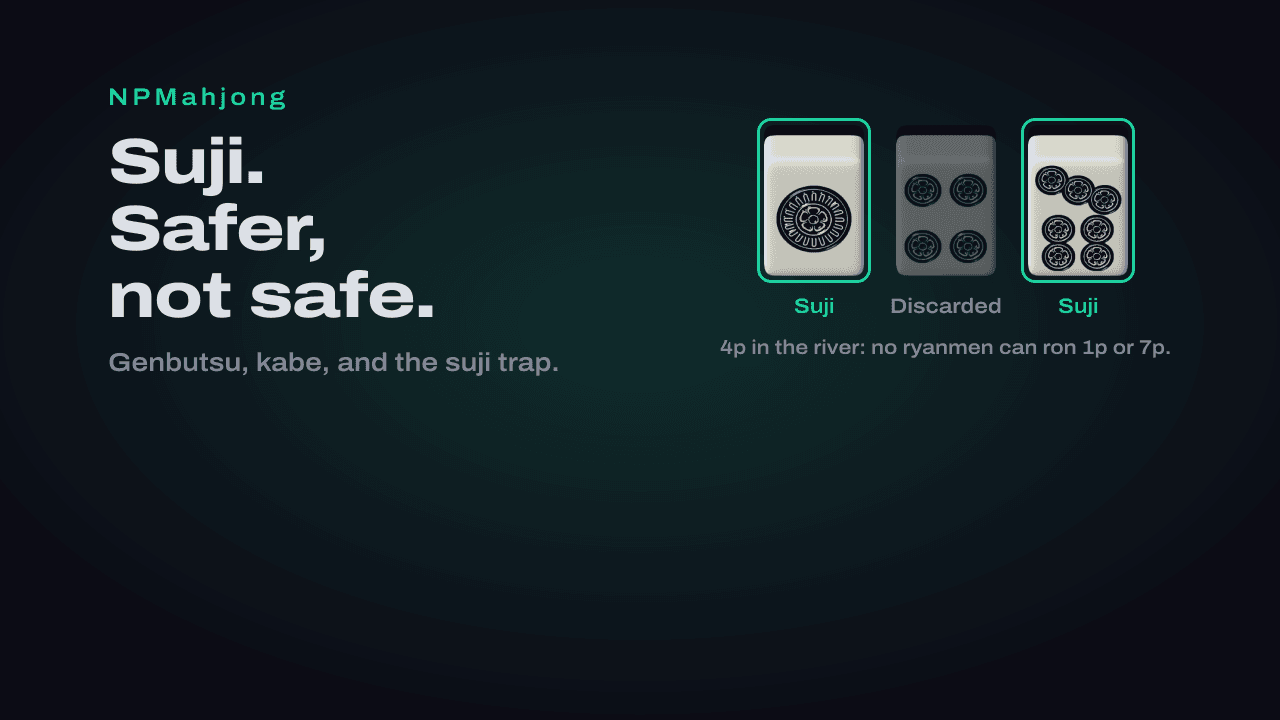
(筋) are tiles three apart in the same suit: 1-4-7, 2-5-8, and 3-6-9. Once a player has discarded a 4, they can't a 1 or a 7 with a . That's all suji tells you. A , , , or on that 1 or 7 still wins.
| Read | What you see | What it rules out |
|---|---|---|
| The tile is in their river, or it passed after their riichi | Every wait | |
| Suji | The tile three away is in their river, on both sides for a 4, 5, or 6 | Ryanmen and |
| You can see all four copies of a tile its waits would need | Any wait built with that tile |
What is suji in mahjong?
A two-sided wait always waits on two tiles three apart. waits on 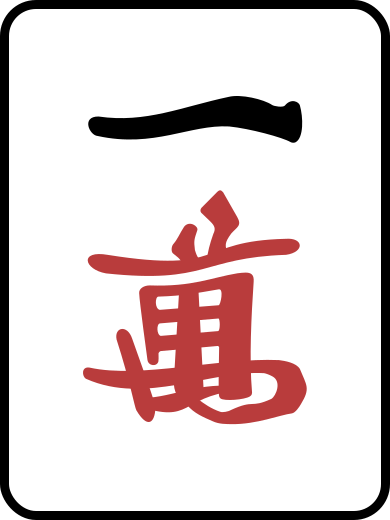 and
and 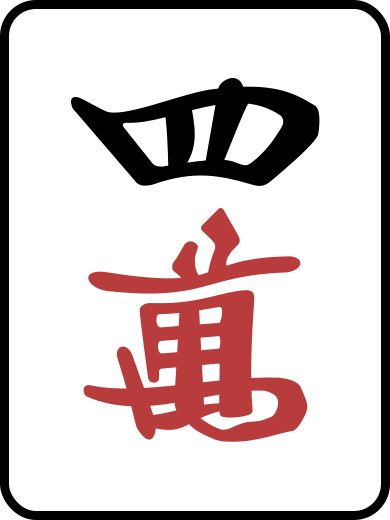 . waits on and
 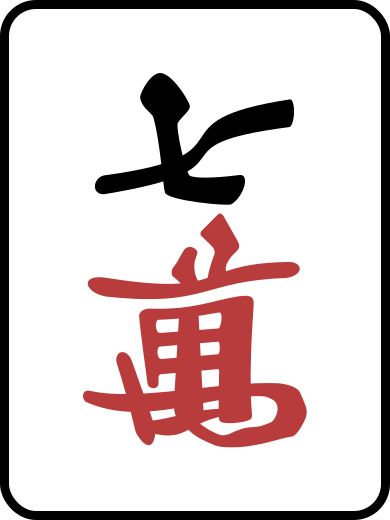 . covers every winning tile, so a player who discarded the 4m can't ron with either shape. That's why a 4m in their river makes the 1m and the 7m suji.
Tiles near the edge need one discard. A 1 is suji once the 4 is out, and a 9 once the 6 is out. A 2 and an 8 both need the 5. A 3 needs the 6, and a 7 needs the 4.
The middle tiles need two. Two different ryanmen can win on a 4: 23 waits on 1-4, and 56 waits on 4-7. With the 1 and the 7 both out, the 4 is full suji (中筋, nakasuji). With only one of them out, it's half suji (片筋, katasuji), and one ryanmen still wins on it. A 5 works the same way with the 2 and the 8, and a 6 with the 3 and the 9.
Which waits does suji stop?
Only the two-sided ones. Say a 6p sits in their river and you're holding a 3p. These are the waits that could win on it.
| Wait | Shape | Rons your 3p? |
|---|---|---|
| Ryanmen | No, it also waits on 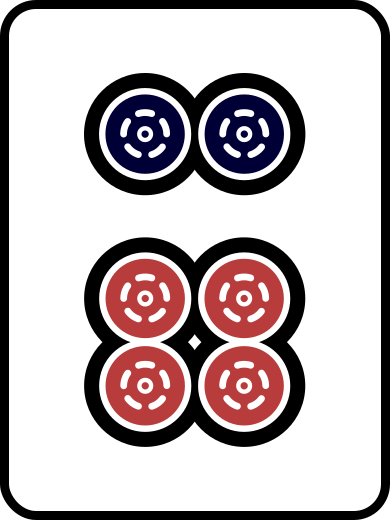 | |
| Sanmenchan | No, it also waits on | |
| Kanchan | Yes | |
| Penchan | Yes | |
| Tanki | Yes | |
| Shanpon | Yes |
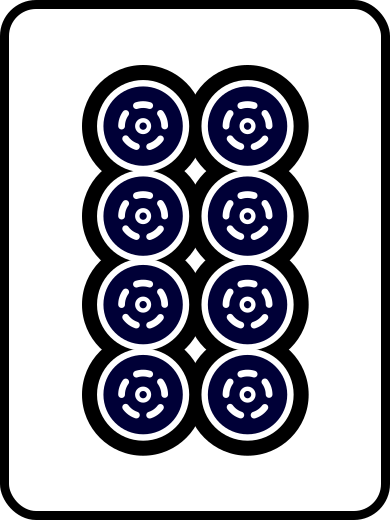
Run every number through the same check and you get the table below. It was counted with the engine behind the hand analyzer, over every one-suit wait of up to eight tiles.
| Your tile | Suji once they've discarded | Still loses to |
|---|---|---|
| 1 or 9 | The 4, or the 6 | Tanki, shanpon |
| 2 or 8 | The 5 | Kanchan, tanki, shanpon |
| 3 or 7 | The 6, or the 4 | Kanchan, penchan, tanki, shanpon |
| 4, 5, or 6, full suji | Both: 1 and 7, 2 and 8, or 3 and 9 | Kanchan, tanki, shanpon |
| 4, 5, or 6, half suji | Only one of the two | Ryanmen, kanchan, tanki, shanpon |
How much does suji cover? In Tenhou logs from 2016 to 2020, analysis by chienshyong, 59% of riichi hands waited on a ryanmen or a sanmenchan. Suji covers those. 37% waited on a kanchan, penchan, tanki, or shanpon, and the rest on mixed shapes. Open hands at were 45% two-sided or three-sided and 53% the other four.
Genbutsu: the only tile that can't deal in
Genbutsu (現物) is a tile the riichi player has already discarded. A winning tile in their own river would leave them furiten, unable to ron anything, so that tile can't deal into them. Nothing else is 100% safe. The furiten guide covers the rule in full.
Tiles that pass after the riichi count too. Another player discards a tile and the riichi player doesn't call ron: that tile is genbutsu until the hand ends. Had it been a winning tile, passing it would have left them furiten for the rest of the hand. Its suji count as suji for the same reason.
Genbutsu belongs to one player. A tile in the riichi player's river can still deal into a second riichi, or into a closed or open hand that never declared. Against a hand that hasn't declared riichi, a tile they pass is safe only until their next turn.
Kabe: when you can see all four
Kabe (壁, wall) reads the tiles you can see: your hand, every river, open melds, and the indicator. When all four copies of a tile are visible, nobody can hold one, so no wait built with that tile exists. Players call the tiles it covers (ノーチャンス).
Say you hold two 8p, a third 8p is in a river, and the dora indicator is the fourth. Nobody has , the only ryanmen that waits on 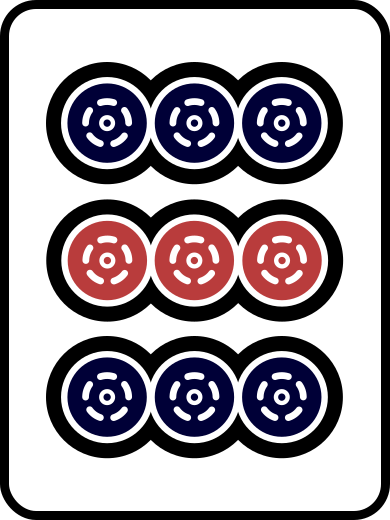 . The 9p now loses only to tanki or shanpon.
| All four of | No ryanmen on |
|---|---|
| 2 | 1 |
| 3 | 1, 2 |
| 4 | 2, 3 |
| 5 | 3, 7 |
| 6 | 7, 8 |
| 7 | 8, 9 |
| 8 | 9 |
Four 3s or four 7s cover two tiles completely. They also rule out the kanchan 13 or 79, so the 1 and 2, or the 8 and 9, lose only to tanki or shanpon. Four 4s say nothing about the 1: waits on it without holding a 4.
Three copies visible is (ワンチャンス). The last copy can still be in their hand, so a one-chance tile is less likely to deal in, not safe.
Read a river tile by tile
The declares riichi with their sixth discard. Their river is 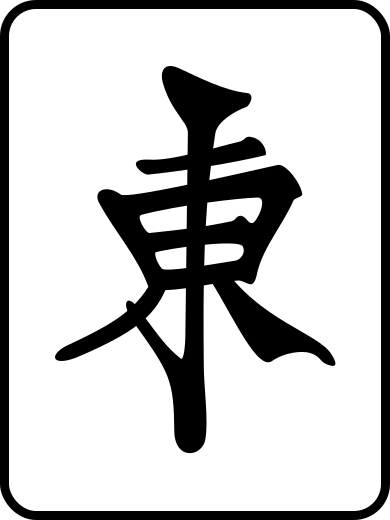
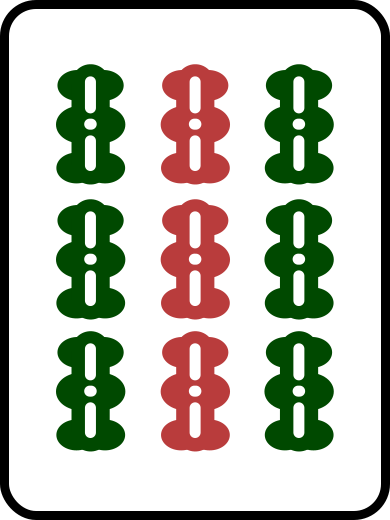
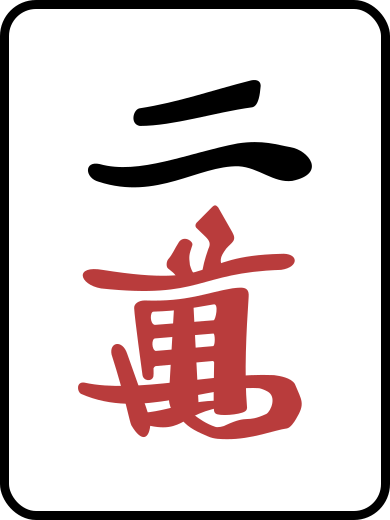
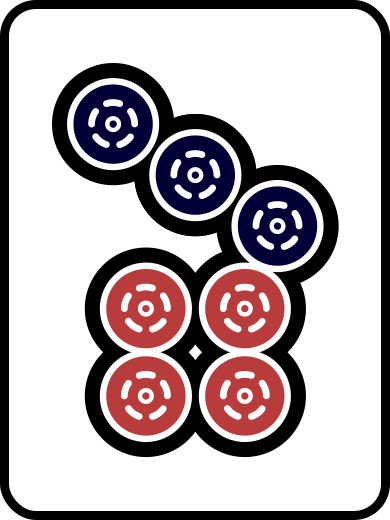
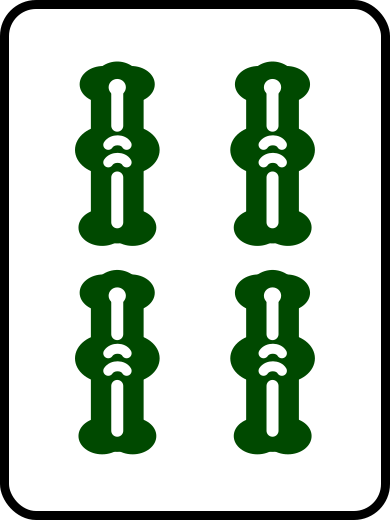
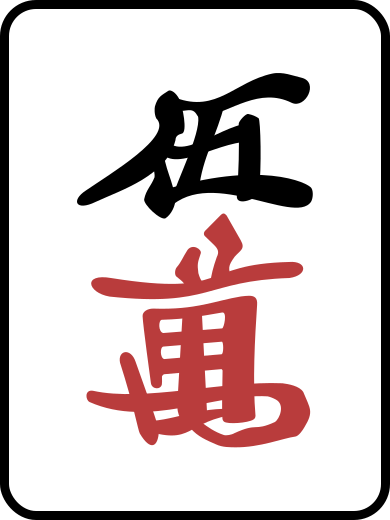 , and the 5m declared the riichi. You draw a 2m and decide to fold. Your hand:
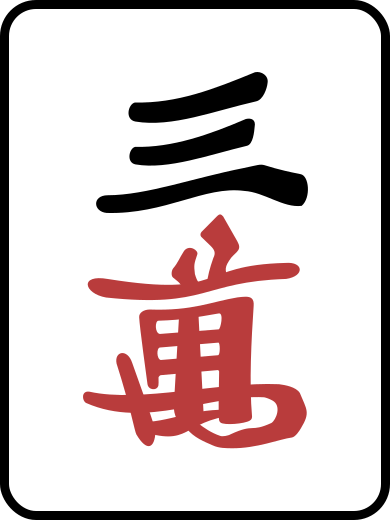
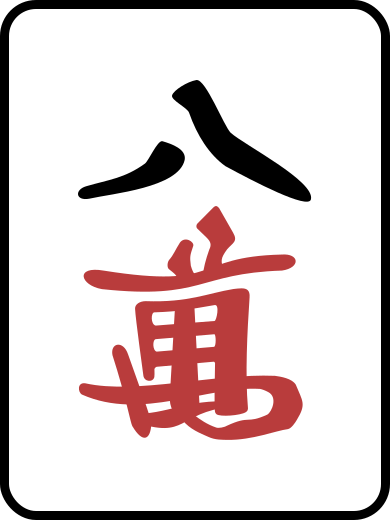
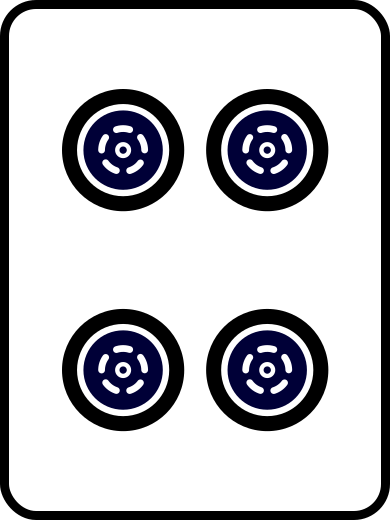
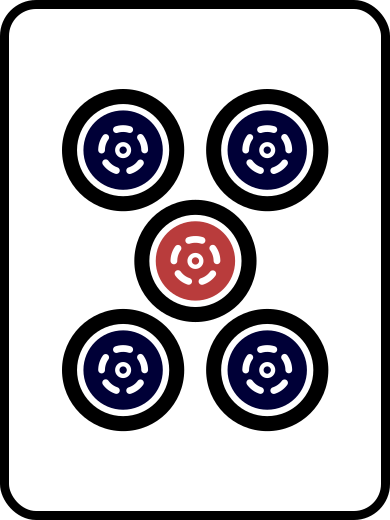

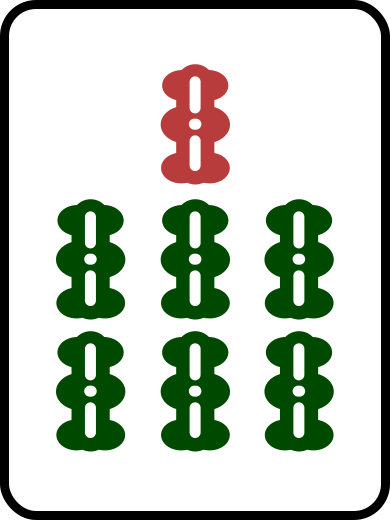
Each tile gets its read from their river and from the tiles you can see.
| Tile | Read | Still loses to |
|---|---|---|
| Genbutsu | Nothing |
| Suji: the 4s is out | Tanki, shanpon |
| Suji: the 5m is out | Kanchan, tanki, shanpon |
| Suji: the 4s is out | Kanchan, penchan, tanki, shanpon |
| No suji: the 6p isn't out | Ryanmen, tanki, shanpon |
| Half suji: the 7p is out, the 1p isn't | Ryanmen, kanchan, tanki, shanpon |
| No suji: the 6m isn't out | Ryanmen, kanchan, penchan, tanki, shanpon |
| No suji: neither the 3p nor the 9p is out | Ryanmen, kanchan, tanki, shanpon |
| No suji: neither the 2p nor the 8p is out | Ryanmen, kanchan, tanki, shanpon |
Fold with the two 2m first. Then the 1s pair: a 1 loses only to tanki or shanpon. After that, the 8m beats the 7s. Both are suji, but a 7 also loses to a penchan 89s. A ryanmen can still win on each of the last five. The 9p pair and the 4p share a step in the safety order below. Then the 3m. The 6p and the 5p go last, since two ryanmen can win on each: 45p or 78p on the 6p, 34p or 67p on the 5p.
Here's what they held.
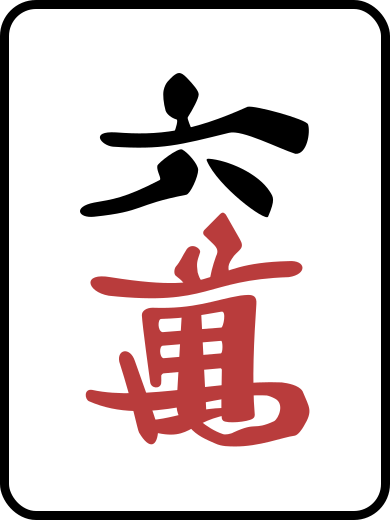
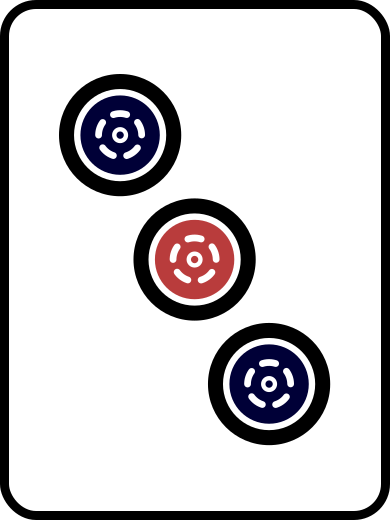
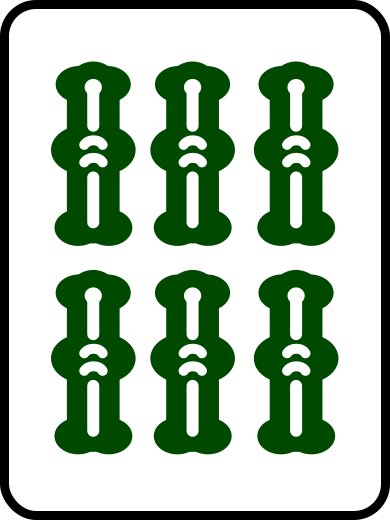
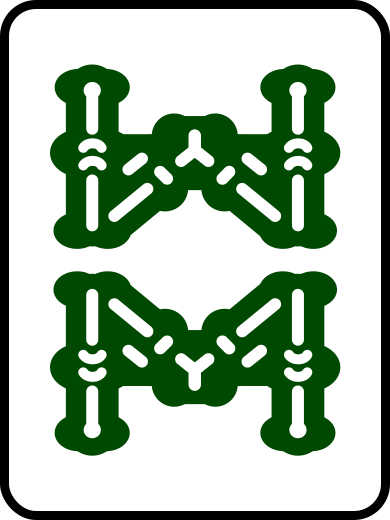
It waits on one tile, the 7s, with a kanchan 68s. Their 4s came out of 4-6-8s. Cutting the 4 left the 68s, and it made the 7s look safe. Against this hand, the 2m, 1s, and 8m never could have dealt in. Throw the 7s and you deal in.
Suji traps
A suji trap (, hikkake) is a wait on a tile the river makes look safe. Any kanchan, penchan, tanki, or shanpon on a suji tile is one. The 68s above was an accident of shape. Players also build them on purpose.
You hold this hand and you're ready to declare riichi.
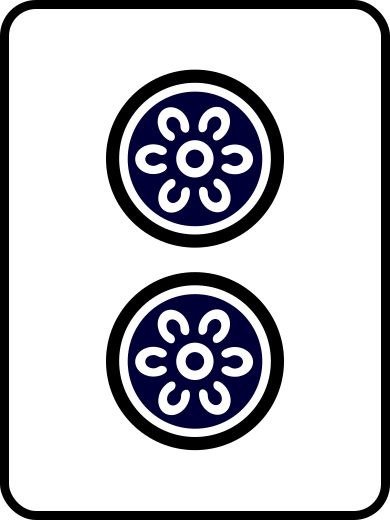
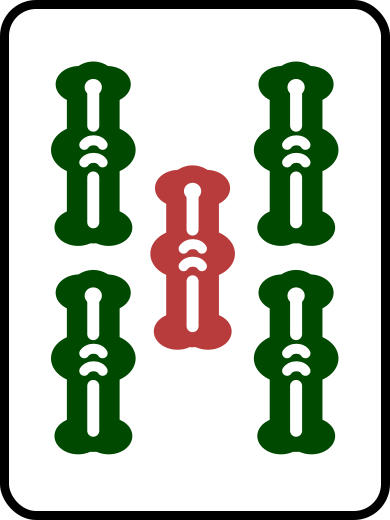
Cut the 2p and you wait on the 5p with 46p. Cut the 6p and you wait on the 3p with 24p. Both are one-tile kanchan waits. The second puts a 6p in your river, so the 3p looks like suji to everyone reading it. Watch the riichi tile: here it's the 6p, and the trap sits on its suji.
No tell catches every trap. Treat a suji 2, 3, 7, or 8 as safer than a tile with no read, not as safe.
When folding by suji fails
- The wait isn't two-sided. That was 37% of Houou riichi hands. Suji does nothing against them.
- Half suji. A 4, 5, or 6 with one suji out still loses to a ryanmen. The next river shows one.
- A suji trap. The 68s in the worked river was one.
- The wrong river. Suji and genbutsu come from the riichi player's own discards and the tiles that passed after their riichi. A 4 another player threw before the riichi doesn't make the 1 or the 7 suji. It only counts as a visible tile for kabe. Against two riichi, a tile needs a read on both rivers.
- An open hand. Fewer of its waits are two-sided, and a tile it passes is safe only until its next turn.
Half suji: the 4p that wasn't safe
Another riichi, another river: 
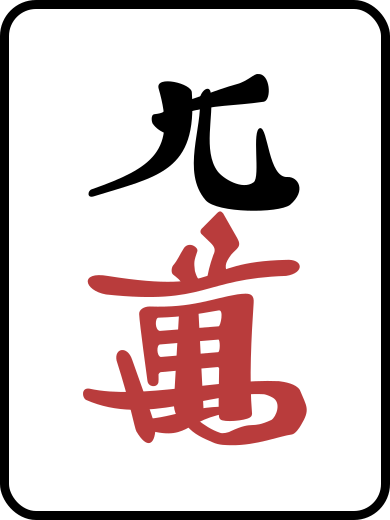
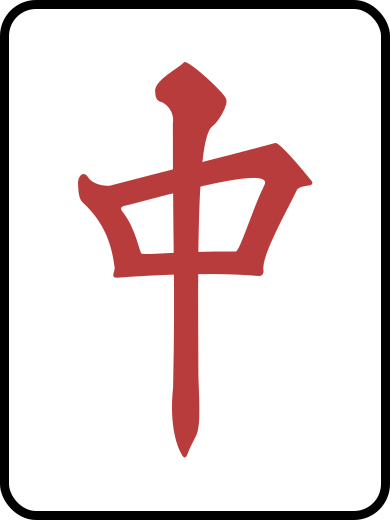 . The 1p is out, so a 4p looks like suji. It's half suji. The 1p rules out , not .
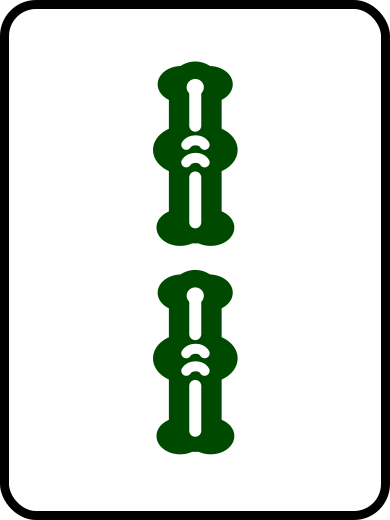
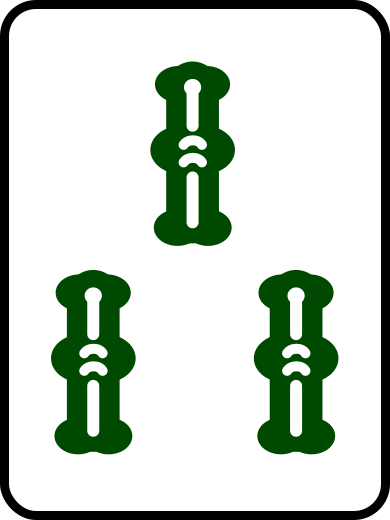
This hand waits on the 4p and the 7p. Neither is in its river, so it isn't furiten, and your 4p deals in.
A short safety order
When you fold against a riichi, throw in roughly this order. It follows the waits each tile can still lose to and how often Houou riichi hands wait on it.
- Genbutsu, including every tile that passed after the riichi.
- An honor whose other three copies are all visible. Only can win on it.
- An honor with two other copies visible. It loses only to a tanki or kokushi.
- Suji 1 and 9, and an honor with one other copy visible. Each loses only to a tanki, a shanpon, or kokushi.
- The other suji tiles and the kabe tiles.
- An honor with no other copy visible, a 1 or 9 with no read, half-suji 4, 5, and 6, and one-chance tiles.
- The other tiles with no read, with the middle tiles last.
Tiles with no read rank by position. Before you read anything, a 5 is in 8.0% of Houou riichi waits, and a 1 or a 9 is in 4.1%. A half-suji 4, 5, or 6 is in about as many waits as that 1 or 9, so they share step 6.
Honors rank by the copies you can see. A fresh honor, with no other copy visible, loses to the same shapes as one with a copy visible: tanki and shanpon. The Houou data still tells them apart. It splits honors by discarded copies only when the honor is the dora, and a fresh honor dora is in 6.9% of riichi waits. That's between a 9 dora (6.3%) and a 1 dora (7.0%), so a fresh honor shares step 6 with the 1 or 9.
One copy out drops an honor dora to 2.1%. That's about half a 1 or 9 with no read that isn't the dora (4.1%). Two copies out, 0.6%. The deal-in danger tool gives the number for every number tile, how much it climbs when the tile is the dora, and an honor dora by copies out.
Folding isn't always right. The push or fold calculator sorts the tile you'd cut into five classes, from genbutsu to non-suji 4, 5, and 6, and tells you when your hand is worth the risk.

Practice the reads
Suji and genbutsu come from one rule, furiten. Kabe, one-chance, and the honor reads come from counting the tiles you can see. The furiten guide covers all three kinds of furiten. The glossary has the short versions: suji, kabe, genbutsu, and hikkake.
Reading suji in a table is easy. Reading it on turn 12 with a hand you want to push is harder. Send me a game and I'll mark the discards where the read was there and you missed it.
Was this article helpful?