You have three hours a week for mahjong. Most players spend them the same way: two and a half hours of ranked games, twenty minutes of a strategy video, ten minutes staring at a 4th. A year later the rank hasn't moved. The folder of bookmarked articles has.
Noël Studer, Switzerland's youngest grandmaster at 20 and now a coach, has a rule for this. He calls it the One-Third Rule: split your training time in three. One third tactics. One third playing and analysing your own games. One third one area, picked from your weaknesses. Nothing else gets a slot.
It moves to almost line for line. The middle third changes most, and in mahjong's favour: you need the review more than a chess player does, because the tiles hide your mistakes.
Where the one-third rule comes from
Studer gives three reasons. Simplicity: a rule you can remember is a rule you can check, so you notice the week you drifted. Fear of missing out: there are more courses and videos than anyone could finish, and without a plan each new one looks like the missing piece. Study a little of everything, he writes, and you end up good at nothing.
The third reason sets the proportions: spend the time on what decides games. He quotes the Woodpecker Method's count that 42% of grandmaster games are decided by tactics, and 72% of games between players rated 1800 to 2000. So tactics get a full third. Playing gets one because solving a puzzle at the kitchen table isn't finding it with the clock running. Openings, the product chess marketing sells hardest, get at most a third, and some players need none.
What "tactics" means in riichi
Chess tactics come up in every game and decide most of them. Two riichi decisions have that profile: which tile to cut while your hand is building, and which tile is safe once someone else's is done. Shape efficiency and defense reads. A in , Tenhou's room, runs about 10.7 hands by kobalab's count of 159,798 hanchan from 2016, and every one of them asks both questions, turn after turn.
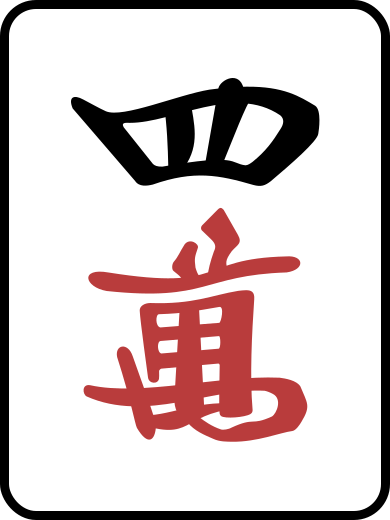
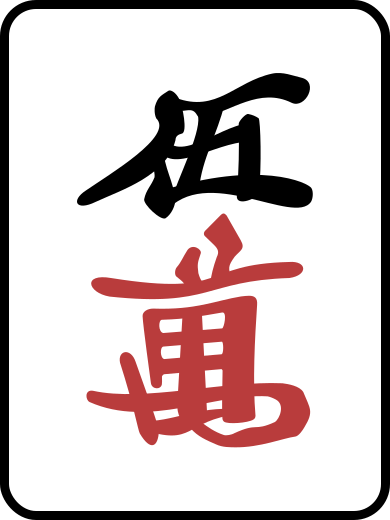
The efficiency half is counting. A accepts eight tiles, four 3s and four 6s. A accepts four. and are the whole drill, and the only way to make them fast is repetition until they're boring. The defense half is the same counting from the other side of the table: first, then and , then honors with copies out. Neither is deep. Both separate the player who times out on Tenhou from the one with ten seconds left to think about the score.


Yaku trivia and odds are riichi's openings: fun to study, easy to find videos about, and almost never why you finished 4th. You don't need the odds of this year. If they get time at all, it's in the last third, after calls and .
Four free drills cover this third. The efficiency trainer deals one hand, you cut one tile, and it shows the full acceptance table. The daily discard problem, 何切る, is the same question on the day's shared hand. The wait quiz deals a hand and marks you wrong if you miss a single winning tile. Deal-in danger covers defense: pick the tile you're about to throw against a riichi and see how often a hand waits on it.
Why riichi needs the review third more than chess does
Studer's students analyse every game for the moments where the engine shows a decisive swing. In chess that works: lose, and there's a mistake in the game, every time.
Riichi results lie. Push a 1,300-point into the dealer's riichi and win, and the table says you were right. Fold a 7,700 hand correctly, watch the riichi player tsumo anyway, and the table says you were wrong. The losing-streaks post has the arithmetic: top players take 1st about 30% of games, so a 30% player goes five games without a 1st 16% of the time, almost three times the 6% chance of an on a wait. Intermediate players take 4th about 20% of the time: two in a row about 4%, three about 1%. A week of placements can't tell you whether you played well. The hands can.
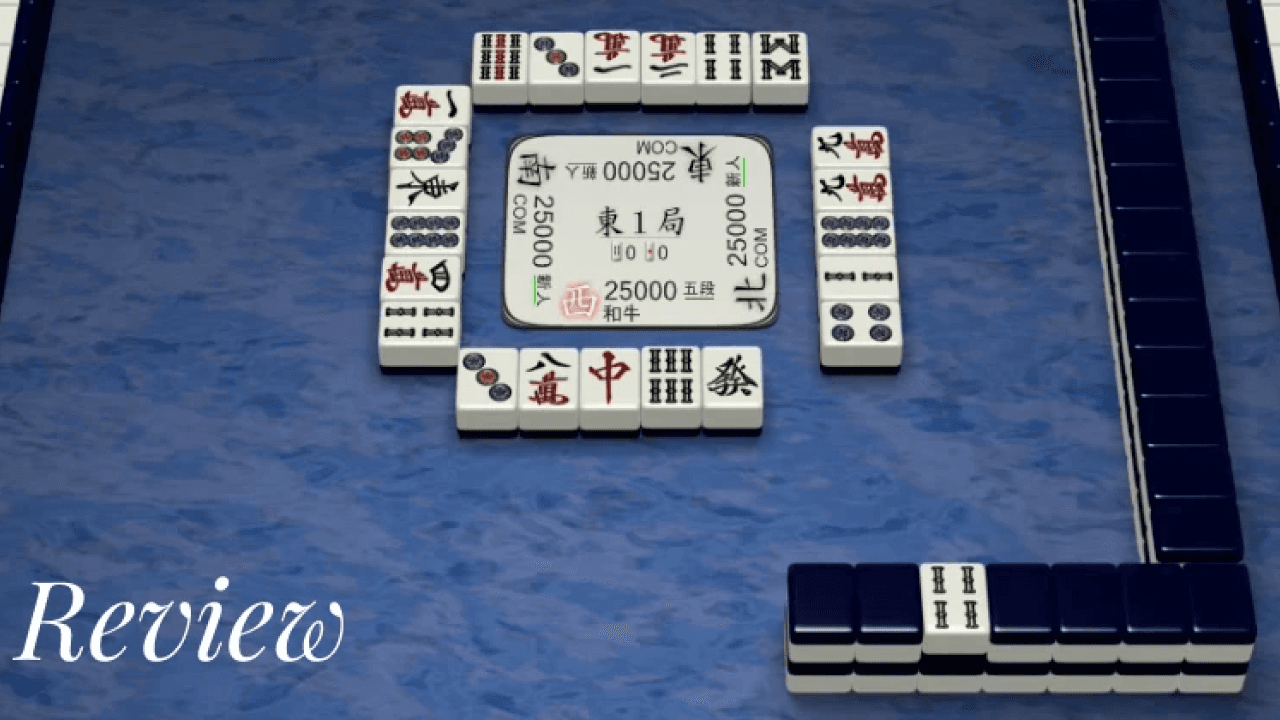
Every log gets reviewed, not only the bad ones. The tool is Mortal, free and open source, built by Equim: paste a Tenhou log URL or a Mahjong Soul share link and it returns a verdict on every discard, usually in under ten seconds.
Don't read the match rate. Mortal and NAGA both report how often your discards agreed with the AI, and every decision counts once, so the honor you cut on turn 2 weighs the same as the South 4 push that decided the game. Go hand by hand instead and find the two or three decisions that moved your placement: the deal-in, the hand that decided the game, the fold that gave up a win. Write one line for each: hand, turn, what you did, what you'd do next time. Three lines a . That's the journal.
The third third: one weakness for one month
Studer's last third goes to openings, endgames, or positional play, one at a time, chosen by weakness. The riichi menu is short: calling, , reading a riichi, push or fold. Pick one for the month, or let your journal pick: after ten reviews, one kind of decision repeats.
For calling, start with how often an open hand is tenpai. For All Last, the conditions tool does the arithmetic and the 4th-place post has the odds. For reading a riichi, start with suji. For push or fold, what folding costs prices the fold and the push-or-fold calculator checks a hand before you play it.
One area, one month, then re-evaluate. Studer's warning transfers whole: it's more fun to study what you're good at, nearly everyone does, and it doesn't work.
Two weekly plans
Studer wants calendar slots, not intentions. Here's the rule at three hours a week.
| Slot | Third | What you do |
|---|---|---|
| Mon, 20 min | Drills | Efficiency trainer, ten hands, count out loud. Then the wait quiz until you miss twice. |
| Wed, 20 min | Drills | The daily discard problem, then deal-in danger on five tiles from your last game. |
| Fri, 20 min | Drills | Efficiency trainer, then the wait quiz. Same order every week. |
| Sat, 60 min | Play and review | One hanchan. Mortal on the log straight after, while you remember your reasons. Three lines. |
| Sun, 60 min | One area | Thirty minutes reading on the month's area, thirty on its tool. |
At six hours the thirds double and the shape stays.
| Slot | Third | What you do |
|---|---|---|
| Mon, Wed, Fri, 20 min each | Drills | Efficiency trainer and the wait quiz, as above. |
| Tue, Thu, Sat, 20 min each | Drills | The daily discard problem and deal-in danger, one slot defense only. |
| Tue, 60 min | Play and review | One hanchan, reviewed in the same sitting. Three lines. |
| Sat, 60 min | Play and review | One hanchan, reviewed in the same sitting. Three lines, then reread the week's six. |
| Thu, 60 min | One area | Reading and notes on the month's area. |
| Sun, 60 min | One area | Its tool, with this week's journal hands as test cases. |
Two hanchan a week looks thin. It is, on purpose: ranked games are the one part you'd do without a plan. Studer's playing rules transfer as written: play only when fresh, set the number of games before you start, and stop after a big blunder. The trainer guide maps every drill, here and elsewhere.
What the stats tell you after a month
Less than you'd hope. Across those 159,798 hanchan, kobalab counted a 21.1% win rate, a 12.5% deal-in rate, a 17.0% riichi rate, and a 34.4% call rate. On Nodocchi, the middle half of players with 500 or more Houou games deal in 11.9 to 13.3% of hands and win 20.5 to 21.7%. The number that separates that room from the ones below is the gap, win rate minus deal-in rate: 7.8 to 9.2 points.
Those are the targets, and you can't measure yourself against them in a month. After 100 games, about 1,070 hands, a 12.6% deal-in rate carries a 95% margin of about ±2 points. The margin grows with the square root of the shrinking sample, so a month on the six-hour plan, eight hanchan and about 85 hands, is three and a half times wider: ±7 points. A month at 10% and a month at 18% are the same month as far as the stat can tell. The log stats tool shows your Tenhou numbers next to how much that many hands can say.
So judge the month on the journal. Twelve to twenty-four lines. If one kind of decision shows up in five of them, you've found next month's third third. If none does, the plan worked.
Where the analogy breaks
Chess has no hidden tiles and no dice, so Studer can tell a student to trust the engine and move on. Mortal's choice is an average over tiles you couldn't see. When it disagrees with you, ask whether your read of the table beat that average. Sometimes it did. Judge the decision, never the result, Mortal's included.
A chess puzzle grades the whole move. A riichi drill grades one thing. The efficiency trainer ignores value and safety on purpose, so a month of it teaches the widest cut and nothing about when to break it. That comes from the review third. Don't ask a drill to be a coach.
A chess improver picks one opponent. You get three you didn't, and a quarter of the table. The rule can't remove variance. It can stop you from studying around it.
Start with the calendar, not the resource
Put next week's five slots from the three-hour table in your calendar before you open a single tool. The rule works because it's boring, and boring survives a losing week. Then take the first slot: ten hands on the efficiency trainer, count out loud before every click. If you'd rather have someone pick your third third from your logs, that's what coaching is for.
Was this article helpful?