A mahjong trainer is a scored drill. It is not a client, and it is not a book.
trainer, mahj trainer, and riichi mahjong trainer are that same drill. The grade is what changes. Efficiency, scoring, one-suit waits, or defense.
Those grades disagree on purpose. Hold a and throw a tile that accepts more, and an efficiency trainer marks you wrong. That is the drill working.
I opened every page below on October 3, 2026. This is a map of what each one scores. It is not a ranking. None of the pages showed a price.
Mahjong efficiency trainer
, ukeire, counts the tiles still available that lower your . At , those are your winning tiles. Four copies of a kind, minus the copies already in your hand. The widest discard is the one with the most of those tiles, at the lowest .
That count ignores dora, yaku, and an opponent who just declared riichi. Learn the number until it is boring. Then learn when to break it.
The same drill gets called a tile efficiency trainer, a riichi efficiency trainer, or a mahjong discard trainer. You are still picking the cut.
The tile efficiency trainer on this site deals a random hand at 1, 2, or 3 shanten. You discard once. Every option comes back ranked by tile acceptance. Ties count as right. Value and safety stay out of the grade.
The hand analyzer is the calculator next to it. You type the hand. It reports shanten, the discards by acceptance, and the waits if the hand is . It does not deal the next problem.
Same limit as every other acceptance tool. The widest cut is the default. It is not always the play.
Mahjong Efficiency Trainer by Euophrys plays a hand out until tenpai. Each discard is scored by how many tiles improve your shanten. The page says it does not look ahead, and it does not score hand value. The project README defines efficiency the same way. Ukeire now. Nothing else.
The interface is in English, and it runs in the browser, including on a phone. A devlog from November 10, 2025 adds a hand-size setting, a German translation, and a fix for the defense timer. You can strip suits, turn on three-player rules, set the red fives, and ignore and so those shapes stop "correcting" a normal hand. Leave the hand unsorted if you want to read a mess.
The same app has a folding page. Opponents are in riichi. You discard until the wall runs out, and the trainer grades the safety of the cuts. The README also lists an all-last trainer for comeback spots, and a replay analyzer that checks the efficiency of discards in a log. Buttons along the switch pages. Folding is the defense trainer.
The four-player efficiency tool and the three-player version from 点数計算ラボ are calculators, not drills. You enter the hand. They show shanten and the useful tiles, with or without seven pairs and . The buttons are in Japanese. They do not deal the next problem.
When you want expected value instead
None of these efficiency trainers score point expected value. They score the count of tiles, not the points on a dora. That's by design.
When you already have a 14-tile hand and you want the point estimate, use 何切るシミュレーター by nekobean. Version 0.9.8, updated June 28, 2026. You enter the hand. It reports acceptance, point expected value, win rate, and tenpai rate.
The model is one player against a wall. It can count red fives, ura dora, stepping back in shanten, a change of shape, riichi, seven pairs, and kokushi. It does not count a , a call, how likely a tile is to come, danger, , riichi sticks, a penalty, , , or double riichi. There is a three-player switch. The buttons are in Japanese. Read those limits on the page before you treat the top discard as the play.
Riichi mahjong trainer
RiichiMahjong.com's trainer is the one that bundles the jobs. The page ranks the efficiency answers by ukeire, the count of tiles that can advance the hand. It also posts a daily set of ten discard problems, the same ten for everyone that day.
Defense is its own drill there. Someone has declared riichi. You pick the safest discard. is fully safe. Then , walls, , and honor visibility. only rules out a . A , a , a , or a dual pair wait on that tile stays live. A wall rules out every sequence wait that needs the walled tile, but a pair wait or a dual pair wait still stays live. That is why nothing on the page outranks a tile you have already seen them throw.
I have not played a scored session there. The description is what that page says it grades.

Riichi scoring trainer
Scoring is a different quiz from the efficiency trainer. Closed hands, open hands, seven pairs, and kans. You call the exact points.
That quiz is on the same RiichiMahjong.com trainer. It is the riichi scoring trainer, and the mahjong scoring trainer, in one place. A calculator you fill in after the hand is over is not this drill. It will not deal the next hand, and it will not tell you that you were 100 points off.
Chinitsu trainer
Naming one winning tile is the easy half. A trainer is right only when every winning tile is marked.
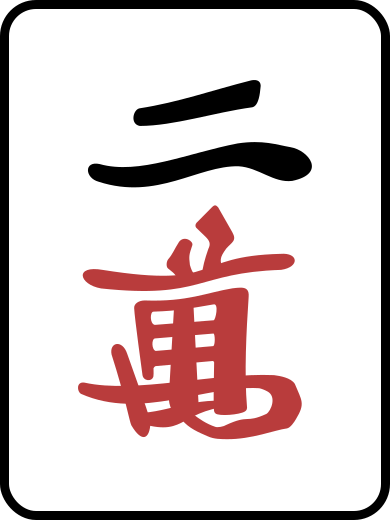
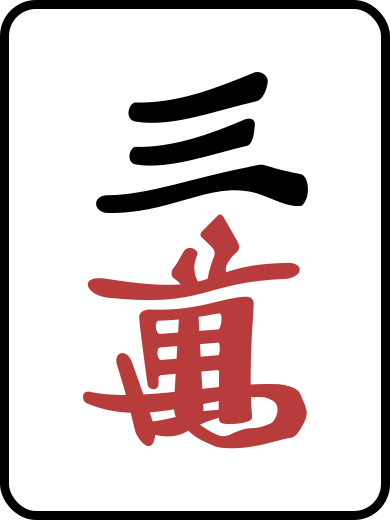
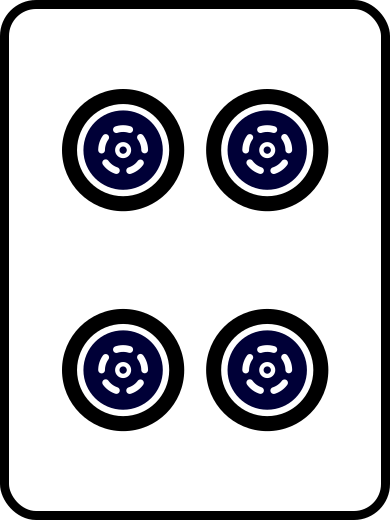
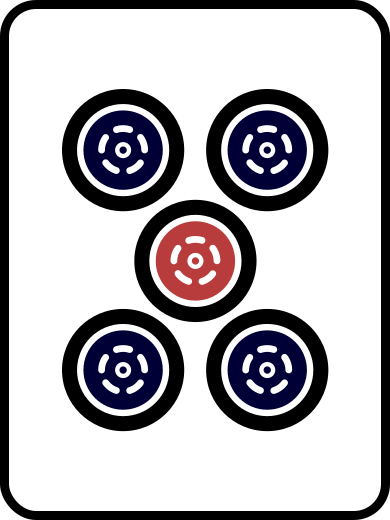
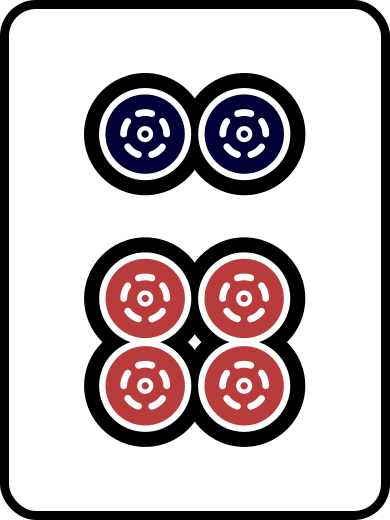
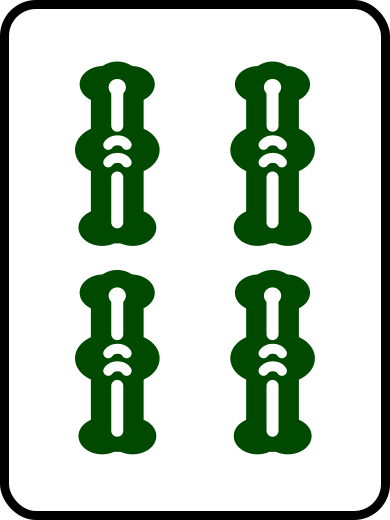
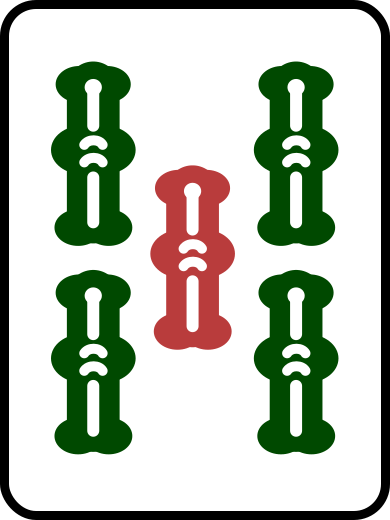
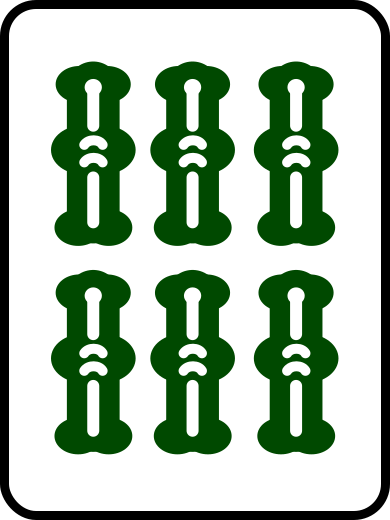
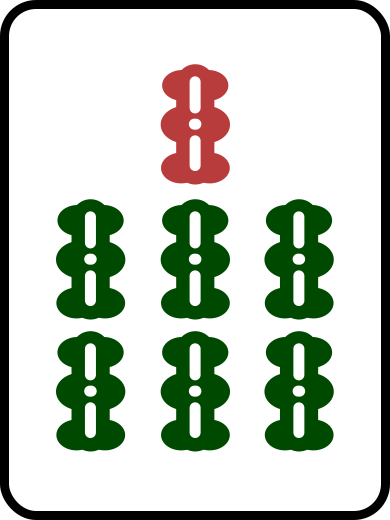

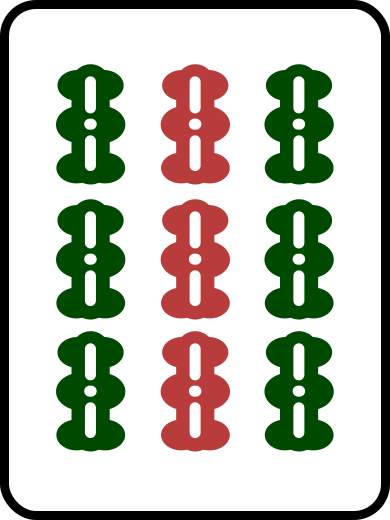
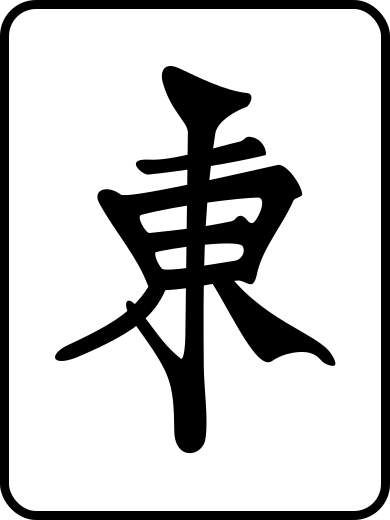
That hand is tenpai. 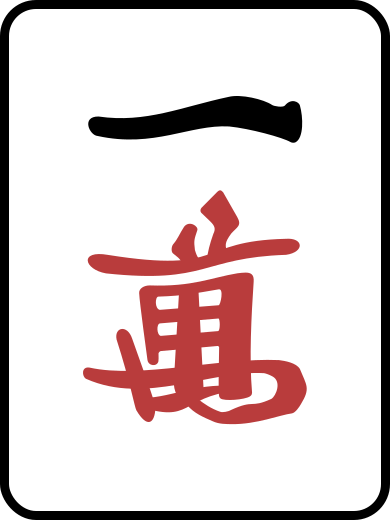 and
and 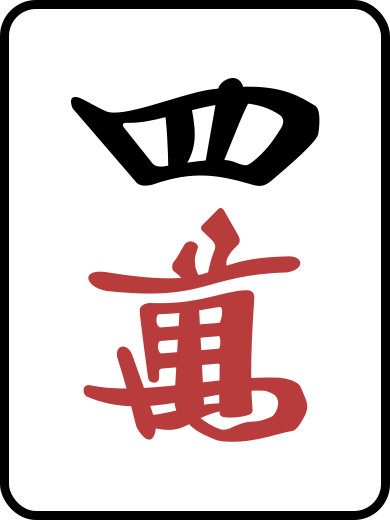 both win. Mark the 1 man and skip the 4 man, and you missed half the .
Ozball's Riichi Mahjong Wait Quiz stays on one suit. You can switch the suit in the settings. Green is a tile you got right. Red is a wait you missed. A crossed-out tile is one you marked that does not win. If the hand is not tenpai, leave every tile blank. The itch page marks the quiz "In development."
Inzoum's Riichi Mahjong Wait Trainer asks the same question in English. What are the waits? Hands use one suit, so you are reading a flush or a half-flush. The settings cover hand size (4, 7, 10, or 13 tiles), how often the hand is forced into tenpai, whether honors show up, and how many calls to allow. You can leave the hand unsorted.
点数計算ラボ by タケオしゃん has the Japanese chinitsu drills. The buttons are in Japanese. The problems are tiles.
- Chinitsu wait drill (チンイツ待ち当て練習). Random one-suit hands of 7, 10, or 13 tiles. You name the waits. No clock. Seven pairs are out of scope. Characters, dots, or bamboo.
- Chinitsu waits with the 1s and 9s removed (19牌抜きチンイツ待ち当て練習). The same quiz, with the kept out of the hand, so the waits get wider.
Mahjong waits trainer
A mahjong waits trainer is the same question on a hand that is not stuck in one suit.
The wait quiz on this site deals a tenpai hand, one suit or mixed, and you mark every winning tile. Miss one and the answer is wrong.
Complex-wait drill (多面待ちブートキャンプ) asks you to name the winning tiles. Hands run from 4 tiles to 13. Build-a-tenpai sandbox (テンパイを作ろう) lets you assemble 4, 7, 10, or 13 tiles and check whether the hand is tenpai. Not a scored quiz. Shanten quiz (シャンテン数当てゲーム) asks for the shanten of a dealt hand, from 4 tiles up to 13, and it can show the useful tiles. Standard hands only. All three use Japanese buttons.
Riichi mahjong practice
Ten minutes on the efficiency trainer, until the wide discard is obvious. Ten minutes on a chinitsu trainer, naming every wait, including the second tile. Ten minutes on the scoring trainer, calling the points out loud. Then ten minutes folding against a riichi.
Stop there. Mixing value into an efficiency grade makes the trainer look wrong, and then you stop trusting the number that was right.
Playing a full game is a different hour. Where to play riichi online picks the client. The book and the cheat sheet are in the riichi tools list, and the strategy essays are on riichi strategy and tips. The terms these drills throw at you sit in the glossary. When a drill can't tell you why you keep losing placements, send me a game.
Was this article helpful?