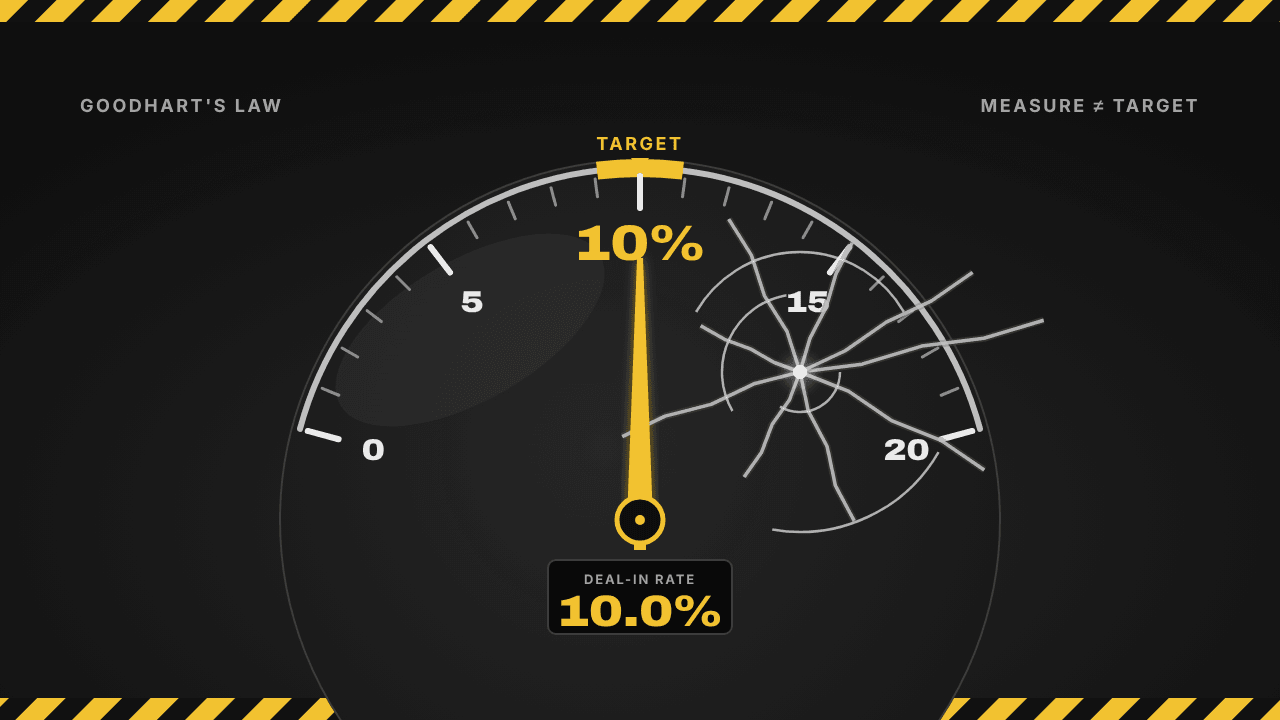
Your rate is 10%. The median regular on Tenhou sits at 12.6%, so on paper you defend better than the room. You also took 4th twice tonight, and the rate went down both times.
Nothing broke. The number did what you asked. For a month you've folded every hand that wasn't by turn 6, cut the wait on anything under the moment a came, and watched the figure fall. Your win rate fell with it. Your placement followed.
Economists have a name for this: Goodhart's law. When a measure becomes a target, it stops being a good measure. rate is the mahjong case. So are win rate and the match rate at the top of your AI review. Each one measures something real right up to the day you start playing for it.
Where Goodhart's law comes from
The economist Charles Goodhart wrote it down in 1975, in a paper on UK monetary policy. His wording is drier than the one people quote: "Any observed statistical regularity will tend to collapse once pressure is placed upon it for control purposes."
The anthropologist Marilyn Strathern gave it its memorable shape in 1997, in a paper on auditing British universities: "When a measure becomes a target, it ceases to be a good measure." Wikipedia's examples run from the h-index in academia to hospital length-of-stay targets. The mechanism never changes. A number stands in for the thing you want. You chase the number. The number and the thing come apart.
Deal-in rate: the easiest number to fake
Start with what a good deal-in rate looks like. Nodocchi's Phoenix DB keeps hand-level stats for every Houou game, and among players with 500 or more of them the room is narrow.
| Stat | Middle half | Median |
|---|---|---|
| Win rate | 20.5 to 21.7% | 21.1% |
| Deal-in rate | 11.9 to 13.3% | 12.6% |
| Win rate minus deal-in rate | 7.8 to 9.2 points | 8.5 points |
| Call rate | 31.4 to 36.4% | 33.9% |
| Average placement | 2.48 to 2.53 | 2.50 |
Two other counts land in the same place. kobalab's 天鳳統計 covers all 159,798 Houou hanchan of 2016: win rate 21.1%, deal-in rate 12.5%, call rate 34.4%. Path of Houou's 2020 study of 5,626 players with 100 or more Houou hanchan puts 68% of them between 11.48% and 14.24% deal-in. The best players on Tenhou deal in about one hand in eight. Not one in ten.
Now the fake. Folding is cheap per hand, and the deal-in rate never bills you for it. In the Houou fold-price data, a who folds cleanly against a non-dealer riichi loses 1,120 points on average at turn 8, and the dealer loses 1,890. A deal-in into that riichi costs about five clean folds. So one deal-in fewer per 40 hands looks like progress on the stats page. If it came from five extra folds of hands you should have pushed, you broke even. If it came from ten, you paid for the prettier number.
Here's the hand that pays for it. East 3, you're South, turn 8. West declared riichi two turns ago.






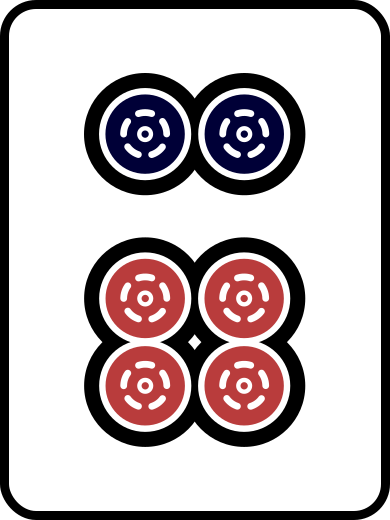
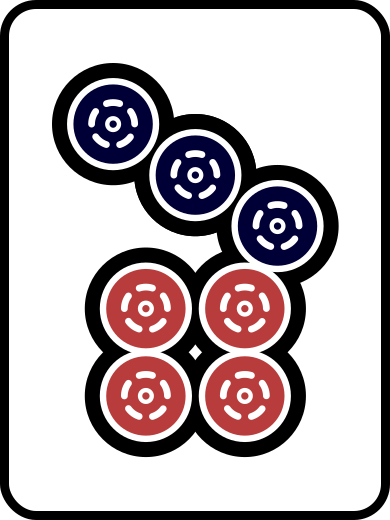
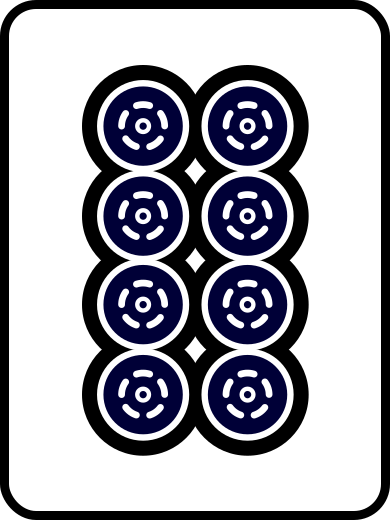
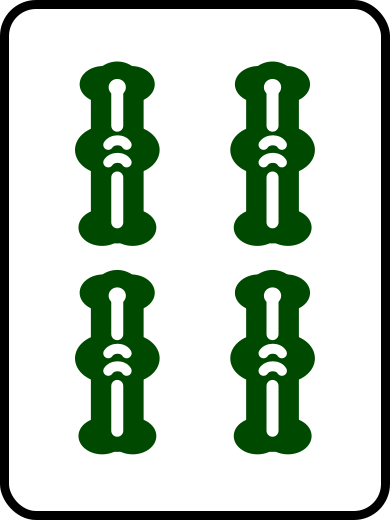
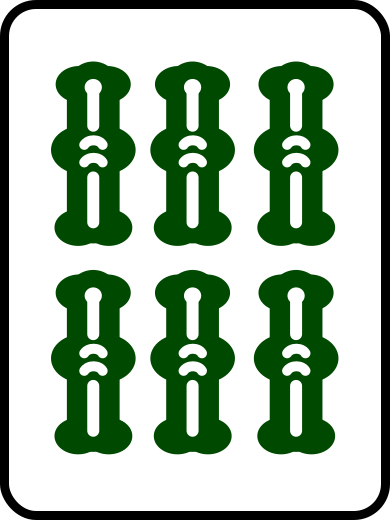
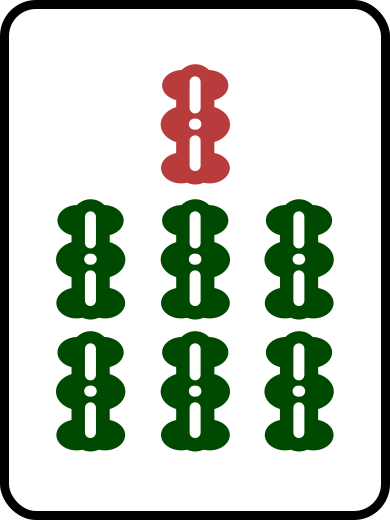

You're on 5s and 8s, a , only. The is a fresh tile. Your pair of is . A player protecting a deal-in rate cuts a 4s, then the other, and folds to the end. The logs say a two-sided tenpai against a non-dealer riichi wins about half the time and deals in about a fifth, and that in rough math the chase beats folding by about 3,300 points. The deal-in rate improves. The points you gave away appear in no rate at all.
That's why the number to read is the gap. Win rate minus deal-in rate moves against every trick. Fold more and both rates drop, so the gap holds or shrinks. Call more and both rise. The gap grows only when you push the hands that should push and fold the ones that should fold, which is the skill the deal-in rate was supposed to stand in for. Take two players. One deals in 10% and wins 17%: a 7-point gap, under the Houou band. The other deals in 13% and wins 22%: 9 points, the top of it. The second player has the worse deal-in rate and the better game.

Match rate: agreeing on the easy tiles
The AI review has the same trap with a cleaner interface. Mortal, Equim's free, open-source engine, prints matches over total decisions at the top of every review. NAGA, Dwango's paid service from ¥550 a month, prints three numbers in its summary: 類似度 similarity, 悪手率 bad-move rate, and 一致率 match rate. Its FAQ says all three cover 打牌選択, discard choice, only. Riichi, call, and kan decisions sit outside them.
Every discard counts once. A hanchan gives you a couple of hundred, and most are nothing: the lone guest wind on turn 2, the that connects to nothing, the obvious safe tile into a riichi. Any Adept agrees with Mortal on those. The decisions that moved your placement, the South 4 push, the call that opened a 1,000-point hand from 2nd place, number three or four a game. Agree on 190 discards out of 200 and miss those four, and you hold a 95% match rate and a 4th place. In NAGA's numbers, a riichi you shouldn't have declared doesn't show at all.
Mortal's author has watched this happen with the rating, the other number on the page. His note next to the checkbox:
I am concerned that this rating value is diverting everyone's attention from more important matters - those individual wwyd scenes.
He calls rating "a commonly misused value with high variance" and moved it under advanced options because it "requires knowledge of the background to use correctly." The match rate has the same defect in milder form: an average over decisions that aren't worth the same. The fix is the one he names. Skip the number, open the three biggest disagreements, decide again before you reveal the bars, and write one line. This hand-by-hand Tenhou review shows what the lines look like once you've got ten of them.
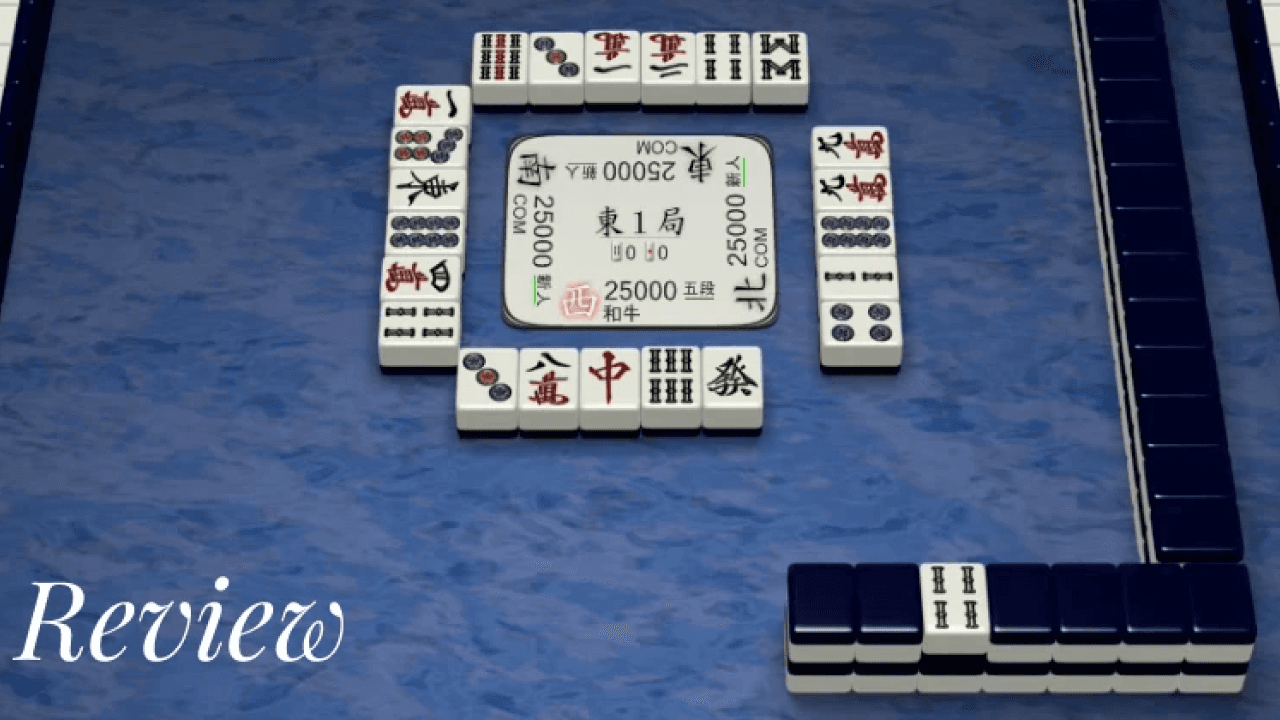
Win rate: call everything and watch it climb
Win rate fakes the other way. the first , for , take every 1,000-point tenpai, and you win more hands. Calling isn't the problem by itself; the median Houou regular calls in a third of hands. The problem is what an open 1,000-point hand does to the rest of the hand. No riichi, no ura, no . Fewer tiles in hand when the riichi comes, so fewer safe ones. payments too small to move the scoreboard. Win rate climbs while hand value and defense sink, and the deal-in rate rises behind it. The gap catches it again. Each cheap call that adds a win adds a risk.
A one-point change is noise
Even if you don't game it, the rate moves on its own. A Houou hanchan runs about 10.7 hands; kobalab counted 1,710,645 hands in those 159,798 games. A hundred hanchan is about 1,070 hands. At 12.6%, a plain binomial 95% interval over 1,070 hands is ±2.0 points: 1.96 × √(0.126 × 0.874 / 1,070). Win rate at 21.1% carries ±2.4. After 1,000 hanchan the margins fall to ±0.6 and ±0.8. Hands aren't independent, so the real margins are a little wider.
A deal-in rate that went from 13.4% to 12.4% over the last 100 games sits inside its own margin. A decision you made tonight is visible tonight. That asymmetry is the whole argument: the rates take months to say anything, and the decisions speak now.
The Tenhou log stats tool draws that margin for you. Paste up to five replay links and each rate comes with a 95% bar. Over one game the bar is wide, and it's wide on purpose.

What to target instead
Three things, in this order.
The decisions. After each hanchan, before any stats page, pick the two hands that moved your placement. Replay each from the first discard, then write one line: round, hand, the tile, what you'd play now. Run Mortal only after the line exists.
Average placement over 300 games or more. It's the number the ranking pays, on Tenhou and on Mahjong Soul, so it can't come apart from the thing. It's also noisy: on luck alone it drifts about ±0.22 after 100 games and ±0.13 after 300. Read it at 300, not at 30.
The gap. Once a month, open your stats and read win rate minus deal-in rate with both rates next to it. Under 7 points with both rates below the Houou band, you fold too much. Under 7 with both above it, you push too much. Then close the page.
Where the analogy breaks
Goodhart's law describes people gaming a measure someone else imposed on them: a central bank's target, a university's audit. Nobody imposed a deal-in rate on you. You picked it, which means you can put it down.
The rate isn't worthless either. It lies inside the band, where you start steering by it. Outside the band it still talks. A deal-in rate above 14% is higher than about nine Houou regulars in ten and says push less. A rate at 10% with a win rate at 17% says fold less. Read the extremes and ignore the decimals.
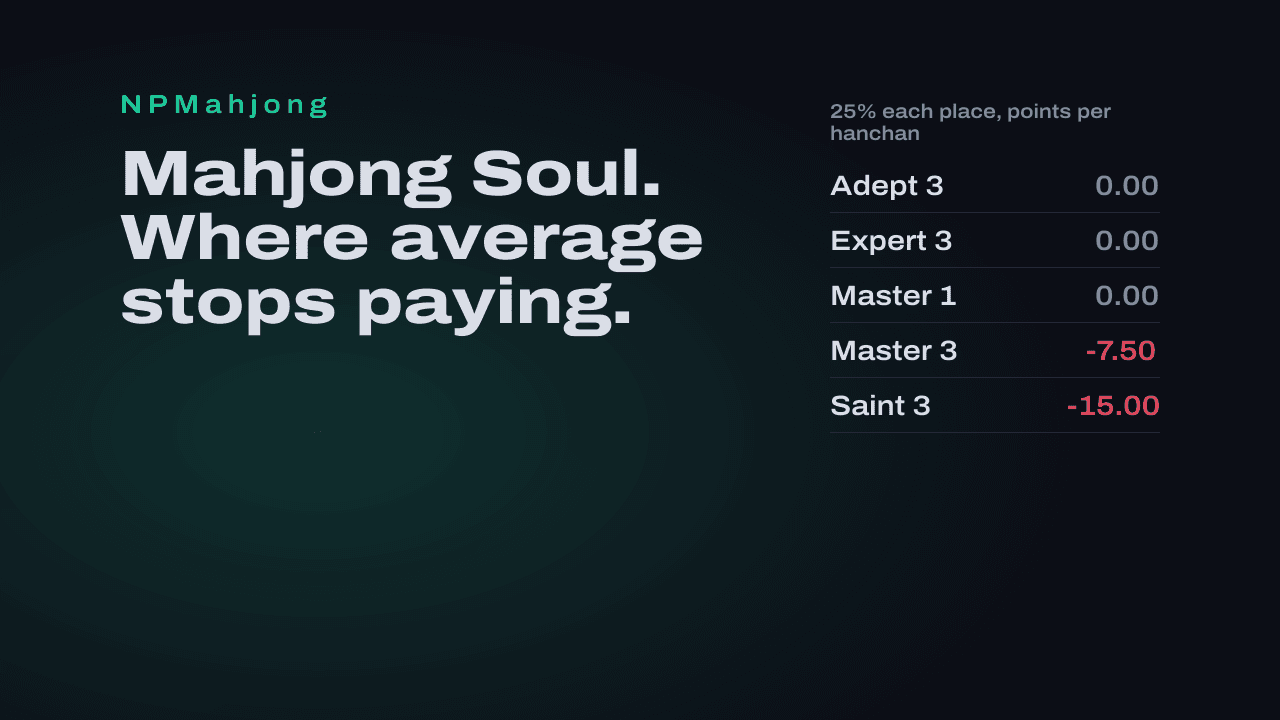
And one number is immune. Goodhart bites proxies, measures that stand in for the thing. Average placement doesn't stand in for anything. It's what the ranking pays on, and from Master 1 up on Mahjong Soul, cutting 4ths is worth more than adding 1sts. Chase that one as hard as you like.
Open your last five Tenhou logs in the log stats tool, look at the bars rather than the dots, then pick one hand from each game and write its line. If you want the why behind those five hands, send them in for a game review.
Was this article helpful?