You're South in the East round with a lone 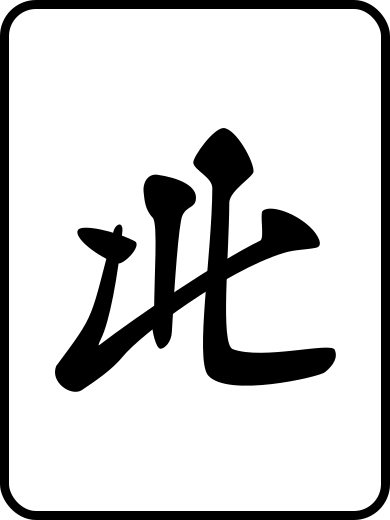 , a lone
  and a lone
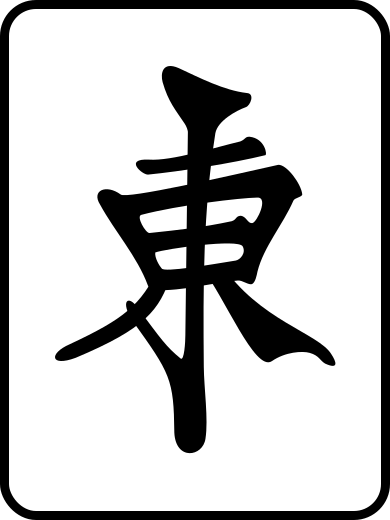
 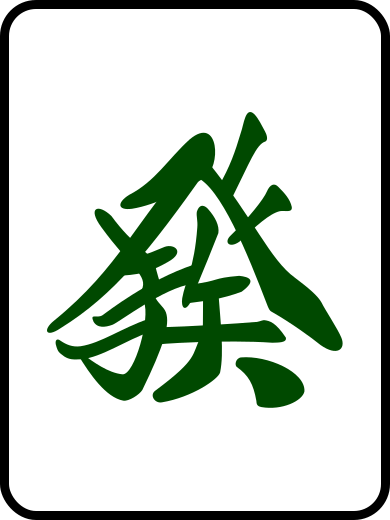 . All three are useless right now. They aren't equal. North gives you nothing. is a yaku for you. East is a yaku for you and two for the dealer.
Cut them in the wrong order and you pay a little every hand: an extra for the wrong opponent, a skipped draw, a yaku you threw away.
I first wrote this order down in 2011. The core still holds. A few parts have shifted since strong AI and big log databases arrived, and I'll show you where.
The short answer: the honor tile discard order
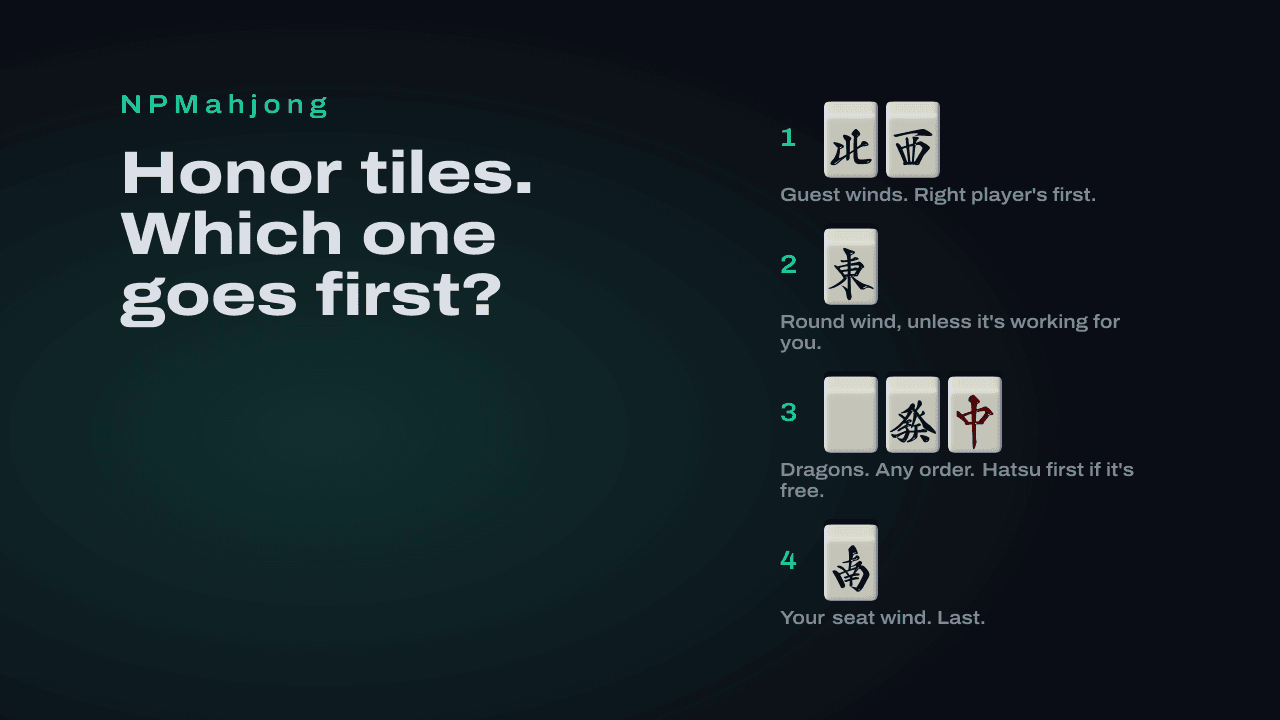
With no honors discarded yet and an ordinary hand, cut isolated honors in this order.
| Order | Tile | Why it goes here |
|---|---|---|
| 1 | Guest winds | for you. Start with the wind of the player on your right. |
| 2 | Isolated 1s and 9s | Two ways to become a meld, but no yaku when paired. |
| 3 | Round wind | A yaku for you, and two han for the player whose seat wind it is. |
| 4 | Dragons | A yaku for everyone. Pick one order and keep it. |
| 5 | Your seat wind | Only you can use it. A double wind goes dead last. |
Here's the same order applied to every seat. The round wind and your own wind sit in the same slots every time. Only the guest winds move.
| Round | Your seat | Guest winds | Then | Last |
|---|---|---|---|---|
| East | East (dealer) | 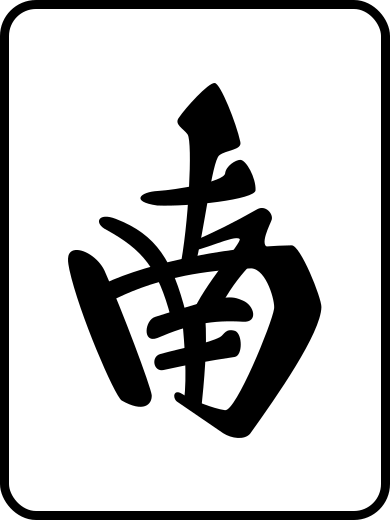 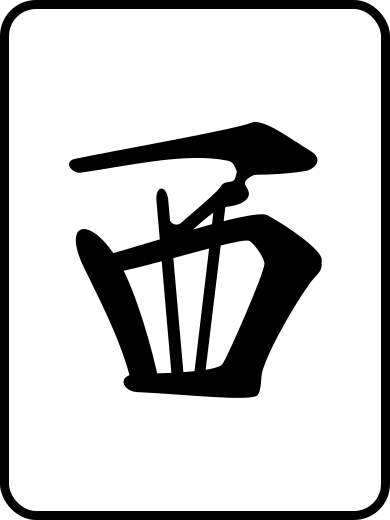 | dragons | (double) |
| East | South | | , dragons | |
| East | West | | , dragons | |
| East | North | | , dragons | |
| South | East (dealer) | | , dragons | |
| South | South | | dragons | (double) |
| South | West | | , dragons | |
| South | North | | , dragons | |
Why honors leave before number tiles
A lone honor has exactly one way to become a meld: you draw two of the three copies left. A 1 or a 9 has two ways, a 2 or an 8 has three, and anything from 3 to 7 has four. So the honor is usually the weakest tile in your hand, and it goes first.
That includes your first discard of the hand. Some old-school advice says never to open with an honor. Following it as a rule makes no sense: in most starting hands, a lone guest wind is the weakest tile you hold.
Holding honors to squeeze opponents, called , rarely pays early in the hand. You keep a dead for five turns to stop someone's pon. Then another player draws the second copy, cuts it, and the pon happens anyway. You've slowed your own hand for nothing.
It also traps you later. Your hand improves, you reach , and you're stuck with a live dragon that has turned into the most dangerous tile on the table. Cutting it on turn 2 costs you almost nothing. Cutting it on turn 12 into an open hand can cost you the game. That's the idea behind : release the tile while it's cheap.
The rule I gave in 2011 still stands. If you're going to squeeze, squeeze to the end. If you're not, let the honor go now. A 2022 strategy column on the Japanese site mj-news makes the same call about a live East. The dealer starts with a pair of East less than 5% of the time, and the odds climb every turn. Squeezing East used to be common. Today the standard advice is: if you're going to cut East, cut it early.
Guest winds first, but which one?
A gives you no yaku. It helps your hand only as a pair or a plain triplet, with no han attached. That's why it goes first.
When you hold two or three guest winds, each one belongs to an opponent. Who calls it changes the turn order. If your (the player on your right) pons a tile from anyone but you, your draw gets skipped. If your (the player on your left) pons, you draw right after their discard, so your turn never gets skipped and often comes sooner.
So the modern order cuts the right-hand player's wind first, then the , then the player on your left. Japanese strategy sites teach it this way, and a 2025 English guide from a Tenhou player calls it "counter clockwise by default." The kamicha's wind stays in your hand longest, because their pon helps you.
In 2011, I taught the reverse: kamicha's wind first, shimocha's wind last. My reasoning was that if the pons your discard, you skip two players and draw at once, while a pon of your discard changes nothing. Both arguments are about the same thing, turn order. They weigh different pons.
Today I teach the modern order, for a reason the 2011 post missed. Cut the right player's wind first, before they can pair it and call it. Keep the left player's wind longest: whoever they call it from, the turn lands on you right away, and holding it a little longer gives them time to pair it so the pon costs you nothing. The dealer's double East comes out first from any seat that doesn't own it, so the dealer never gets the time to pair it.
Before any of that, ask four questions about the hand. Does it want , so the honors are leaving anyway? Does it need a safe tile more than a fast one? Would a yakuhai pon make you happy, or would it cheapen the hand? And who is your actual rival in this game? The seat order decides ties. Those four decide the hand.
Japanese guides add one override: cut the wind of the opponent you least want to see win. In the South round, the dealer's East is a guest wind for you but a yaku for the dealer, and a dealer win pays 1.5 times. A dealer pon of East plus one more han is a 2,900-point .
The round wind: deny the double or keep your yaku?
The round wind is a yaku for every player at the table. For one player it's also the seat wind, so a pon is worth two han. In the East round that player is the dealer, and two han for the dealer means at least 2,900 points on a ron.
Here's a slow hand. You're South in the East round, turn 1.
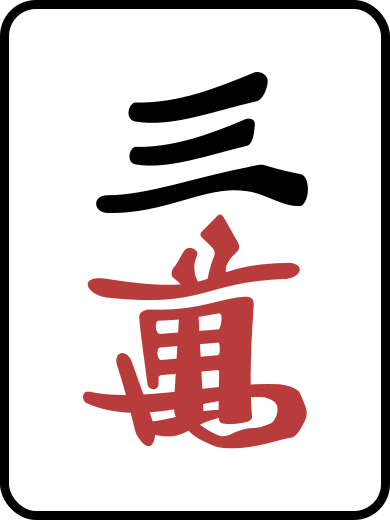
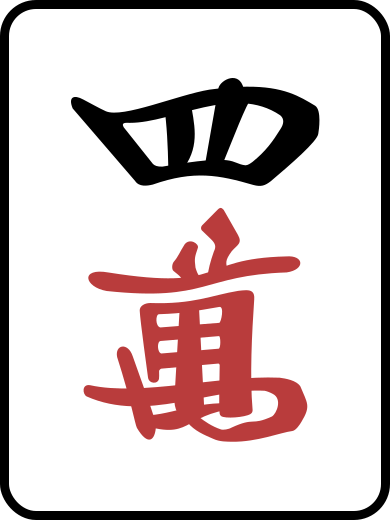
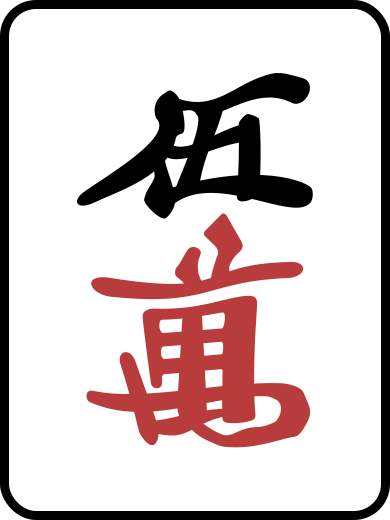
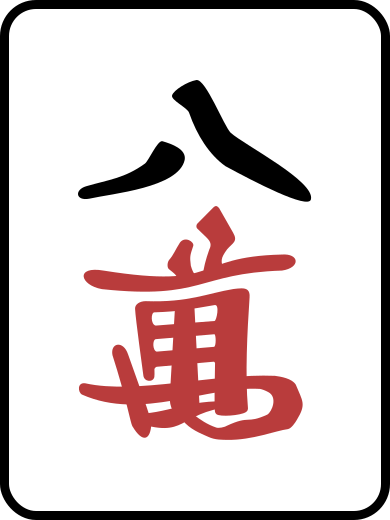
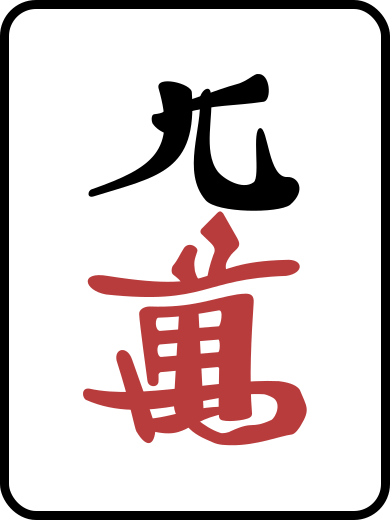
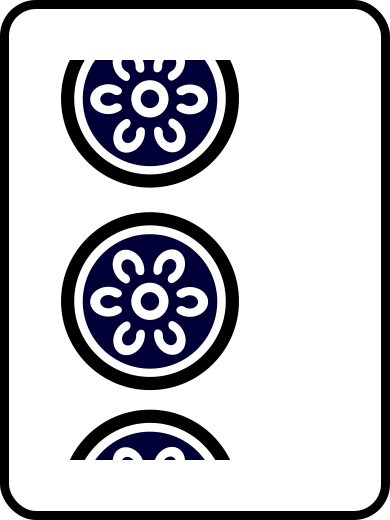
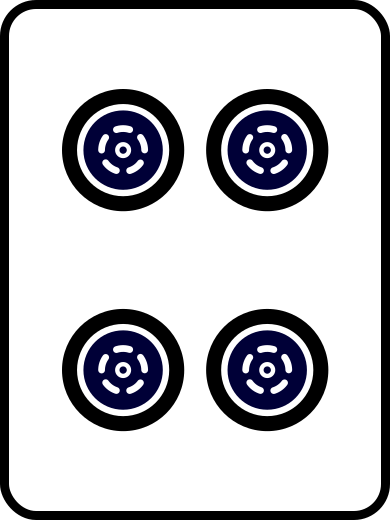
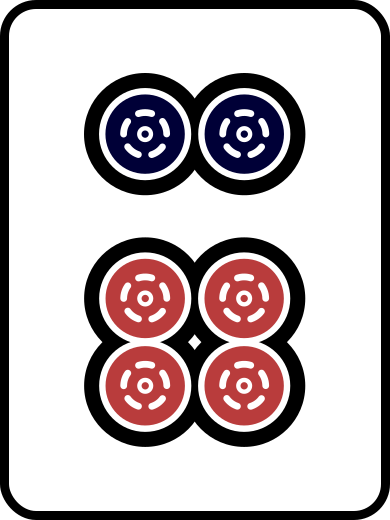
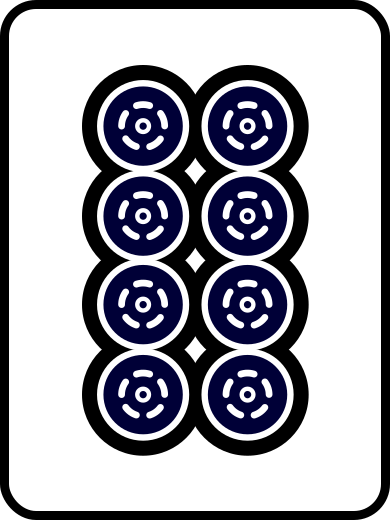
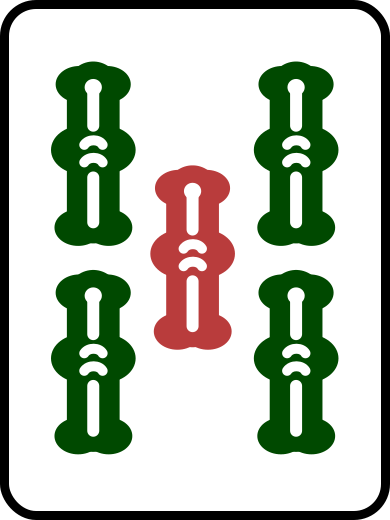
You're 2-shanten. Cutting or leaves the same 37 tiles that improve the hand. Nothing else matches it: cut a number tile and you either drop to 3-shanten or shrink to 24 tiles or fewer. So the choice comes down to the honors.
The modern default cuts , a guest wind, and keeps . This hand has a , two and no yaku yet, so a pon of East is one of its few fast routes to a win. NAGA's pattern and most Japanese guides put guest winds before the round wind. A 2016 guide adds a note that fits this exact hand: hold the round wind when your hand is weak.
In 2011 I cut the round wind first from almost every seat that didn't own it. In the East round, the dealer's double East is the most expensive pon on the table, and if the dealer does pon it from you, the dealer sits on your left, so you draw next. A 2025 Japanese guide still teaches East first from the South seat for the same reason.
My rule now: keep the round wind only when it's doing real work for your own hand. Otherwise it comes out before any other yakuhai, because of what the dealer's double East does to the table. A slow 2-shanten hand like this one is the exception that proves the rule. It has no yaku and no speed, so a pon of East is one of the few things that would rescue it. Here, keep it a while longer.
Dragons: the order matters less than you think
All three dragons are a yaku for everyone. None of them is a double. Between them, the difference is close to nothing.
In 2011 I recommended  , then
 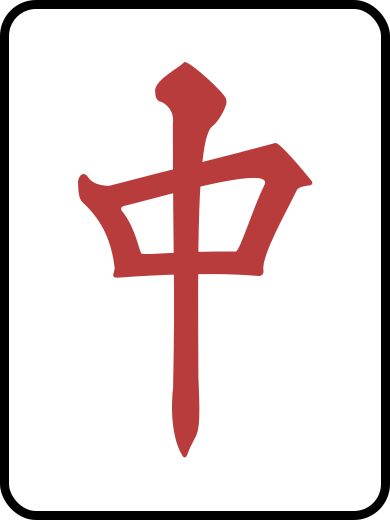 , then , based on research I'd read at the time that linked saving Hatsu for last to a slightly higher win rate. Current sources don't back any single order. Different AIs rank the dragons differently, and Japanese writers who've looked at it conclude that you should choose an order and stick to it.
I've dropped the fixed order. These days I mix up which dragon goes first so my discards don't read the same way every hand. One exception: when it costs nothing, goes first, so nobody gets to build off my discards.
Whichever way you go, don't spend turns on it. The choice is worth nothing. Spend that time reading the table.
Your seat wind goes last
Your own seat wind is a yaku for you and a guest wind for the other three players. Nobody else gets a yaku from it, so holding it costs you the least, and pairing it helps you the most.
Tenhou's room shows that last part. The numbers in this post come from Tenhou logs 2016–2020, analysis by chienshyong (fork of Euophrys/houou-analysis). They cover Houou-level 4-player , so your table may differ. The analysis counts turns from zero, so its turn 8 is your ninth discard.
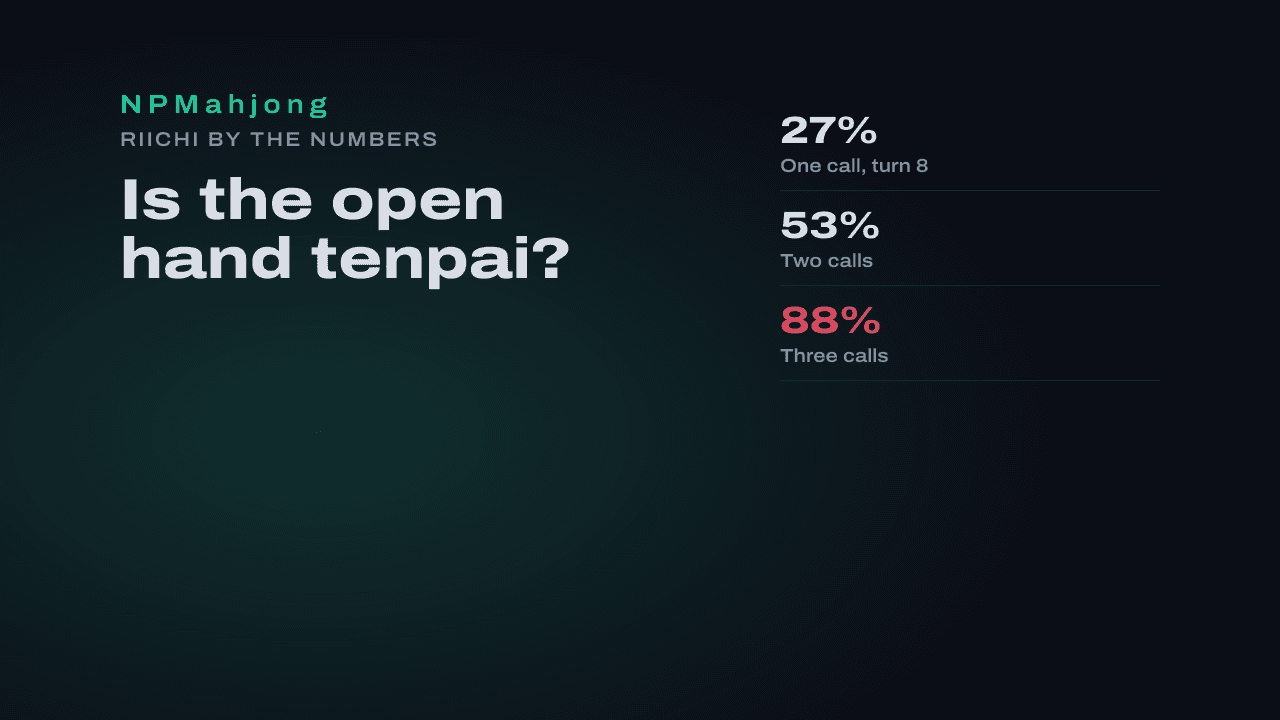
From turn 1 to turn 4, a closed pair of your seat wind and a closed pair of a dragon or the round wind find their third tile at rates within two points of each other. By turn 8, the gap has opened. Your seat-wind pair got its third copy 49% of the time, either from someone's discard or from your own draw. A dragon or round-wind pair got it 42% of the time, a double wind 40%, and a yakuhai that was also 27%. Opponents let go of a tile that's a guest wind to them. They sit on tiles that give them a yaku.
When your seat wind is also the round wind, it's a double: two han from one pon. The dealer's East in the East round and South's South in the South round are the two you'll see. Hold a double longest of all.
Yakuhai or an isolated terminal?
Here the modern view goes further than my 2011 article did. You're South in the East round, turn 3.
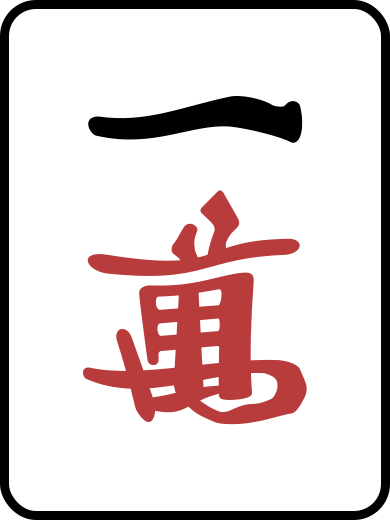
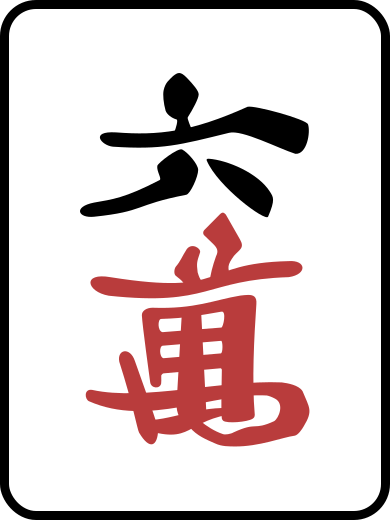
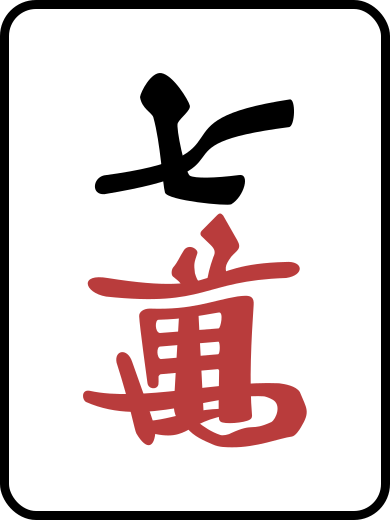
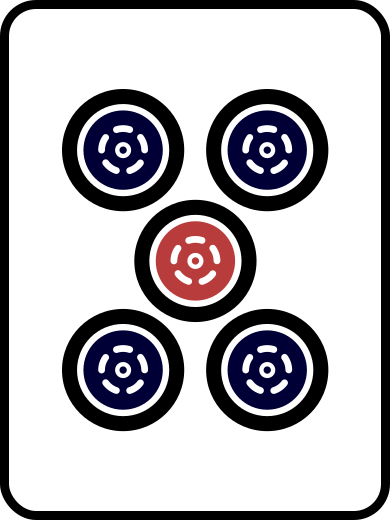
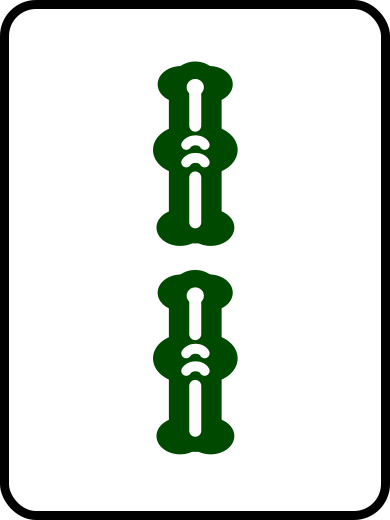
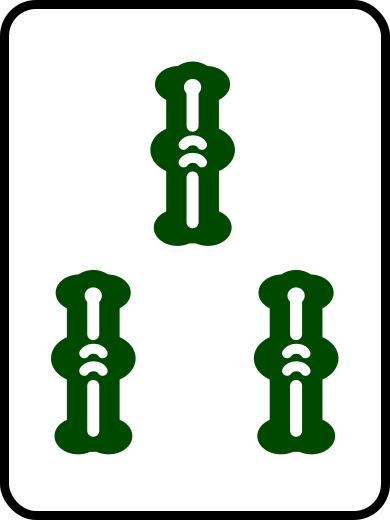
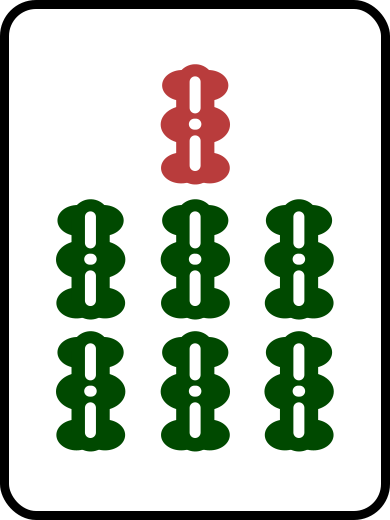
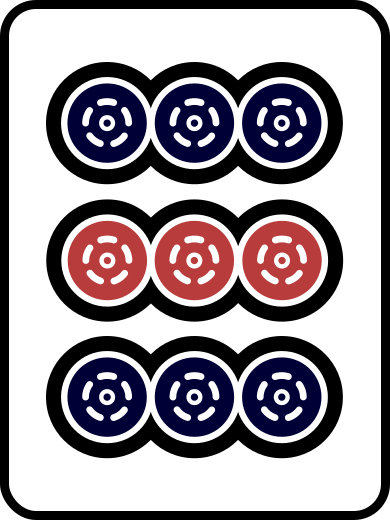
You're 2-shanten. Cut , or and you stay 2-shanten with the same 20 tiles to improve: 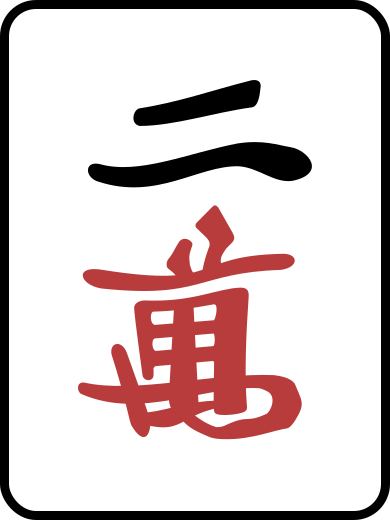 ,
, 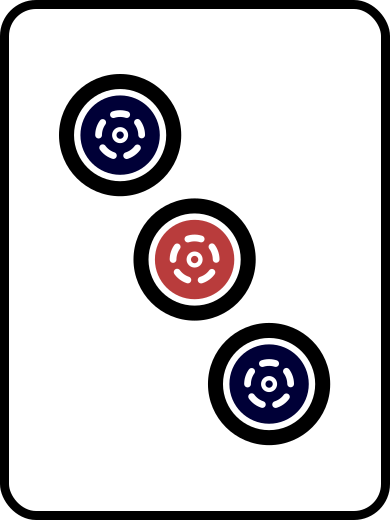 , ,
, , 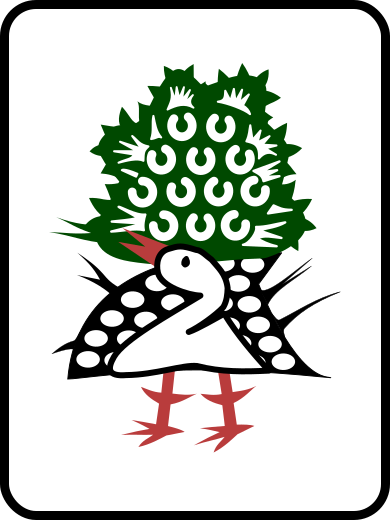 and
and 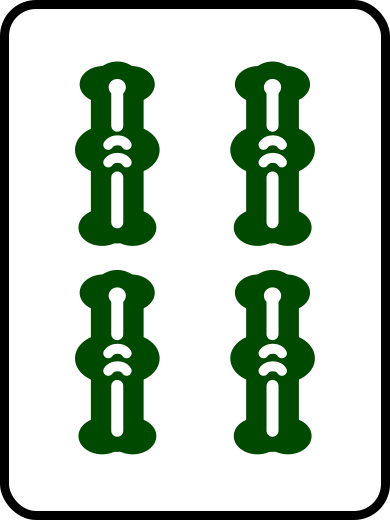 . The tile count is a tie. What each tile can become breaks it.
- is a guest wind for you. Paired, it gives you nothing. Cut it first.
- can grow into or , but your hand already has enough blocks. It goes second.
- can become a pon, and a pon gives this hand a yaku and speed. The makes unlikely, so that yaku matters. Keep it longest.
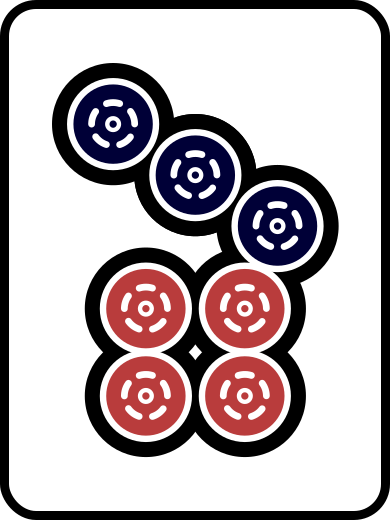
That's the order NAGA follows in the opening turns in about nine hands out of ten, according to a 2020 study of its logs: guest winds, then isolated 1s and 9s, then dragons, then your own wind. As a , NAGA also cuts a round wind that's worth two han to someone else before its other yakuhai. A 2025 English floating-tile guide ranks it the same way: yakuhai over 1 and 9, because being able to call is strong and terminals mostly make bad shapes.
What I teach now sits closer to NAGA than to my 2011 post. If the hand already holds a 4 or a 6 in that suit, the isolated 1 or 9 usually isn't needed, and it goes before the honors. It stays situational, and the same four questions apply: pinfu, safety, whether a yakuhai pon helps, and who you're racing.
When to break the order
The default order fits an ordinary hand. These hands change it.
Pinfu and tanyao hands: cut the yakuhai first. You're West in the East round.
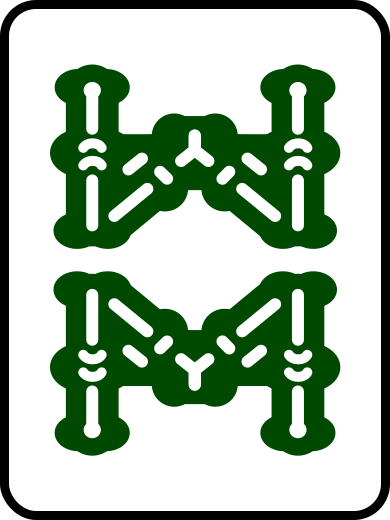
Cut or and you keep the same 45 tiles. The difference is the pair. A pair is a guest wind for you, so stays alive. A pair adds fu and kills pinfu. With three two-sided shapes, this hand wants and pinfu, not a cheap pon. Cut the Chun now, while it's still cheap to let go.
I wrote the same exception in 2011, and the current guides agree. The 2022 mj-news column goes further: in a strong tanyao or pinfu hand, cut the round wind and the dragons first and keep the guest wind for last, as a pair candidate or a safety tile.
: keep every yakuhai. In a one-suit hand, honors are part of the plan. Off-suit tiles leave first. Guest winds go before yakuhai, because a yakuhai triplet adds a han on top of .
. Seven pairs gets no extra han from a yakuhai pair, and the yakuhai is the tile your opponents want to pon. In 2011 I grouped it with pinfu: when you're building toward , cut yakuhai first and keep guest winds as pair candidates. The mj-news column adds that a chiitoitsu hand usually keeps its honors over number tiles, because an honor with one copy out makes a good wait and a safe tile to hold.
The same Houou logs back the wait half. Take a first riichi declared on turn 8. Waiting on a single honor with one copy already discarded, it won 55% of the time. Waiting on a fresh honor, it won 48%. A single-tile wait on a 4, 5, or 6 won only 33% to 36%. Honors pair well, too: a on two honor pairs won 59%, and a shanpon on two pairs of 2s through 8s won 41%.
Copies already on the table. A tile with one copy discarded can only be ponned if one player holds two of the remaining three. Cut the next live tile ahead of it. A once-cut honor also turns into a good safety tile later, and Houou players throw it like one. From turn 8, a closed dragon or round-wind pair with one copy already discarded still got its last copy 51% of the time. A fresh pair, with two copies still unseen, got one only 42% of the time. Defensive guides note that once one copy is out, a yakuhai is less likely to deal in than a guest wind, because a player holding a yakuhai pair would usually have ponned it.
Dora. If the indicator shows , then is the dora. Keep it longer, and don't let it become the tile you have to cut into a riichi on turn 12.
A slow hand. The same mj-news column flips the order here. With a hand that's still worth playing, such as one with dora, it cuts the guest wind first and keeps East and Hatsu, hoping one of them pairs into a yaku. With a hand that's even worse, it suggests a defensive plan: cut no honors at all and keep them as future safe tiles. NAGA mostly doesn't hold honors for safety in the opening turns. It values its yakuhai, and those turn into safe tiles on their own once a copy shows up.
In a hopeless hand, keep them. Sometimes they pair, sometimes they turn into an ankou or a chiitoitsu, and the hand you'd written off comes back with value and a way to strike back. In a hand with hope, the 2011 advice stands: cut them early.
Order is a tiebreaker, so think first
Every rule above breaks ties between tiles that are close in value. Shape and value come first. Cut a guest wind before you break a . Choosing between a guest wind and a dragon is a much smaller edge.
That small edge still matters. The order exists so you can make the call fast and save your thinking for the score, the dora and what the dealer is doing. Use it, but don't play it on autopilot. Look at the discards before every honor you cut.
If the 4th-place math behind small edges is new to you, read how ranking rules change what winning means and why Tenhou punishes 4th. On Mahjong Soul, the rank-up guide and the rank calculator show what a few points of 4th rate are worth. Look up any unfamiliar term in the glossary.
Get your honor discards checked
Most players don't know their own honor order until someone points at their discard pile. If you want a pro to go through your logs and mark the honors you cut in the wrong order, send me your games for a review.
Was this article helpful?