South 4. You're in 4th, 900 points behind 3rd, and the player on your left just discarded the 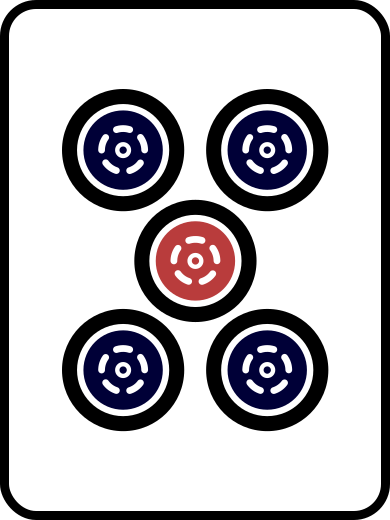 that puts your hand in for 1,000 points. You let it pass. A 1,000-point hand feels like nothing from down here. You want the , the tsumo, the , the hand that fixes the whole game.
Two hands earlier, the player in 1st sat on a two-sided , saw a from 2nd, and folded it. 2nd needed a direct to pass. The fold felt safe. It threw away a hand that would have ended the game.
Both players made the same mistake from opposite ends of the table. Daniel Kahneman and Amos Tversky described the pattern in 1979 and called it prospect theory. Behind, you gamble. Ahead, you grab the sure thing. A hands you both seats, and the logs show where each reflex is right.
Where prospect theory comes from
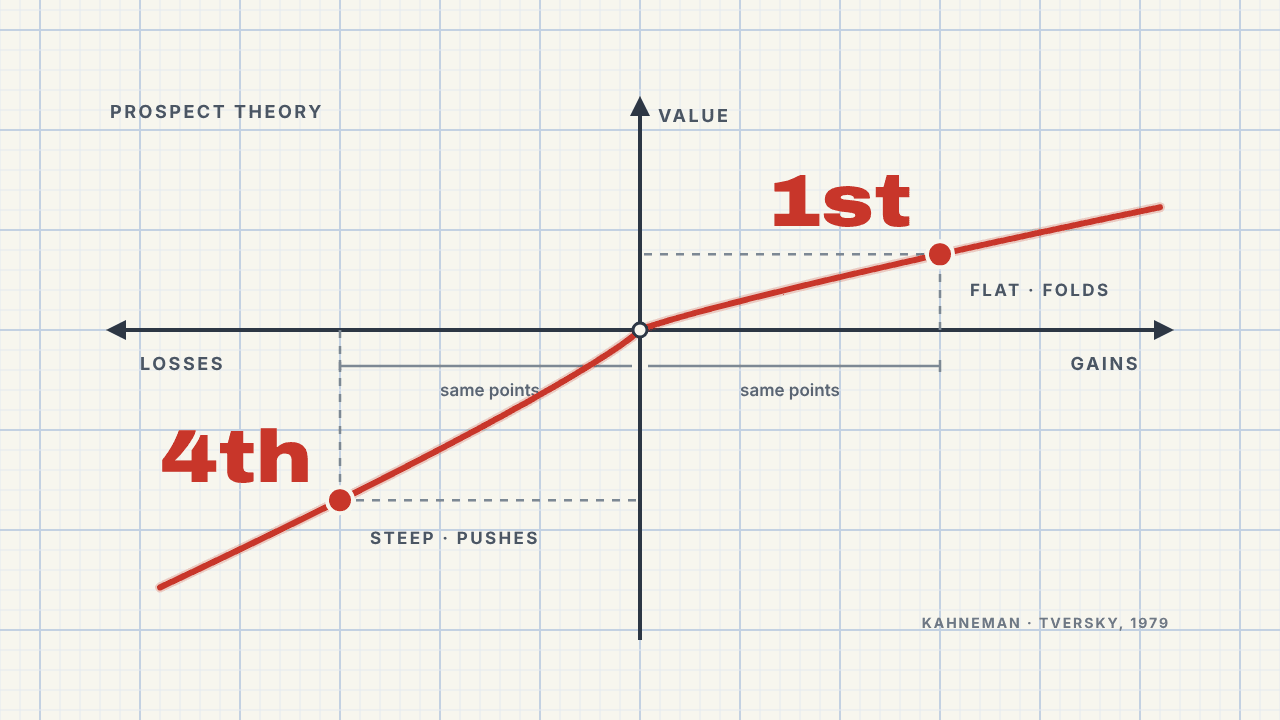
Kahneman and Tversky published "Prospect Theory: An Analysis of Decision under Risk" in Econometrica in 1979, and the paper was cited when Kahneman received the 2002 Nobel in economics. People don't judge an outcome by where it leaves them. They judge it against a reference point, usually where they stand right now, and code everything above that point as a gain and everything below it as a loss.
Two things follow. Losses hurt more than gains feel good: in the Wikipedia summary, the pain of losing $1,000 takes a gain of about $2,000 to cancel. And the appetite for risk flips with the sign. Offer people $450 for sure or a 50% shot at $1,000 and most take the $450. Offer them a sure loss of $500 or a 50% shot at losing $1,100 and most take the gamble. Same shape of choice, opposite answer. The article calls the flip the reflection effect: risk-averse with gains, risk-seeking with losses.
The reference line a hanchan draws for you
In a money gamble the reference point is your wallet. In a it's your placement, and in nothing else exists. Nobody sits in 4th on South 4 thinking about the 25,000 points they started with. They think about 3rd.
That puts 4th in the loss frame and the other three seats in the gain frame. From 4th, every result short of climbing is the same loss, so a draw and a 1,000-point win feel identical and only the big hand feels like winning. From 1st, 2nd, or a comfortable 3rd, you're holding a gain, and the sure thing looks better than any gamble: fold, take the draw, settle.
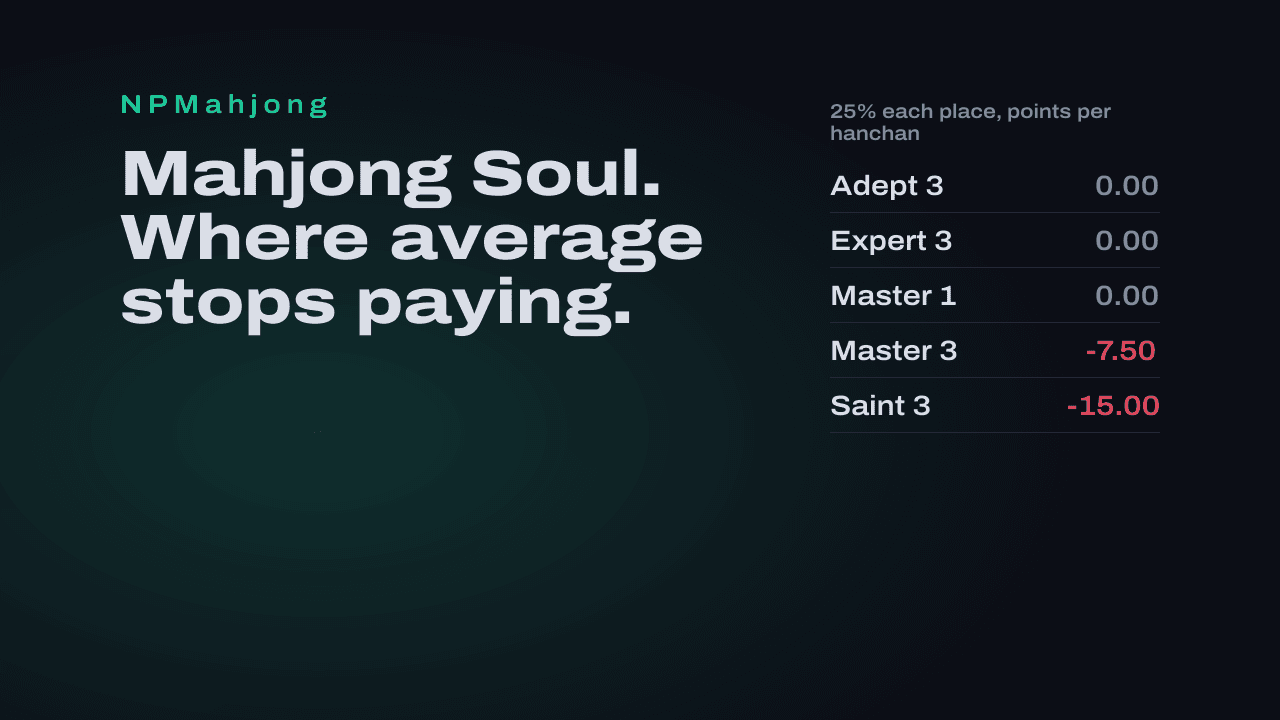
The ranking systems sharpen that frame on purpose. On Tenhou, the 4th-place penalty grows with your while the rewards for 1st and 2nd stay flat within each room: 1st pays +30 in , +60 in , +75 in , and +90 in Houou, as the Tenhou post lays out. On Mahjong Soul, a 25/25/25/25 record breaks even at Adept 3, Expert 3, and Master 1 in hanchan and loses points at every rank above Master 1. From Master 1 up, cutting 4ths is worth more than adding 1sts. The system has drawn the line at 3rd and told you 4th is a loss. Your brain agrees, then overshoots.
The baiman chase from 4th
Back to the you let pass. Turn 6, South 4, no sticks on the table. You're a in 4th, 900 behind a non-dealer in 3rd, holding this:
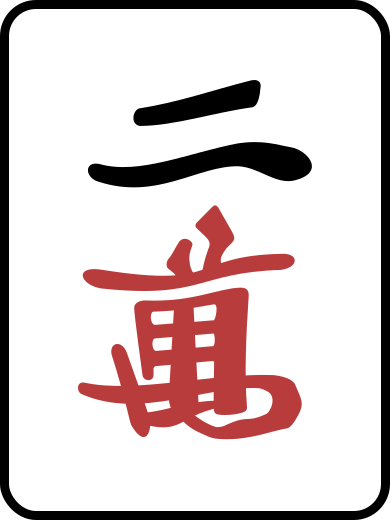
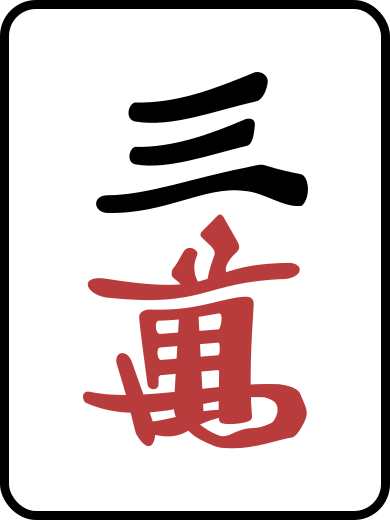
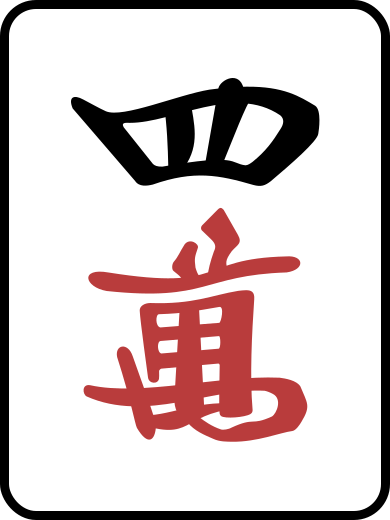
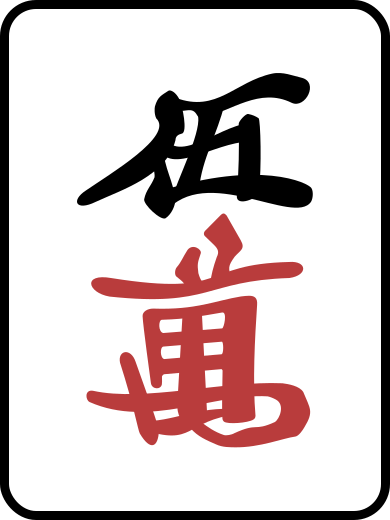
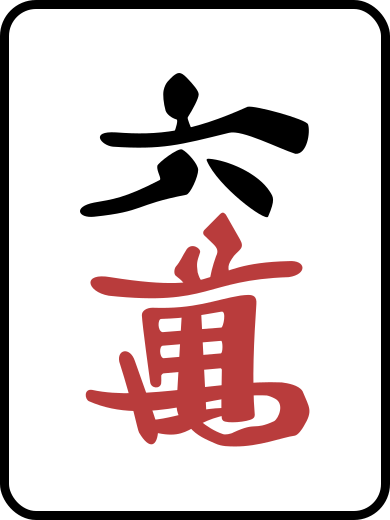
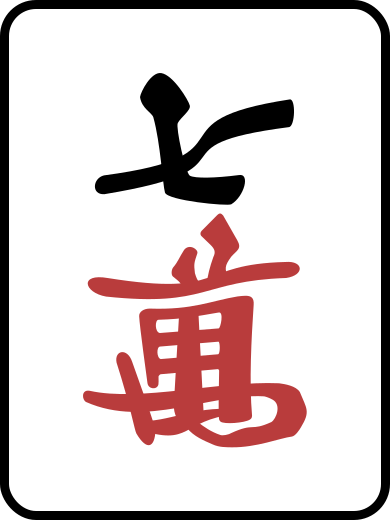
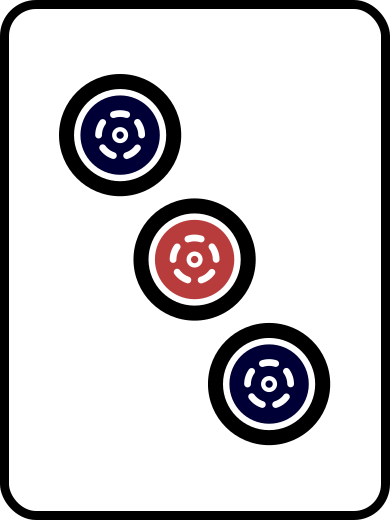
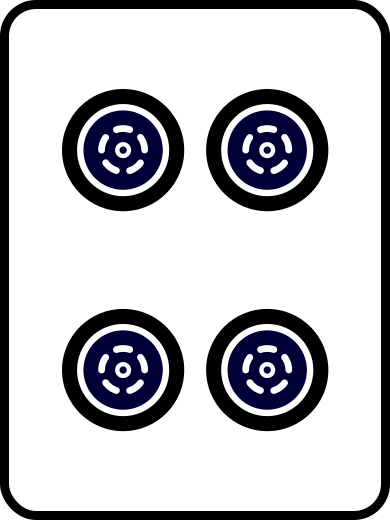
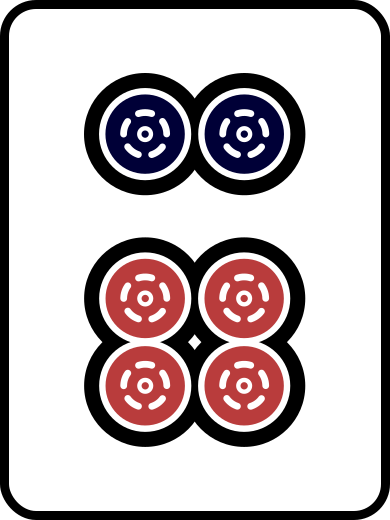
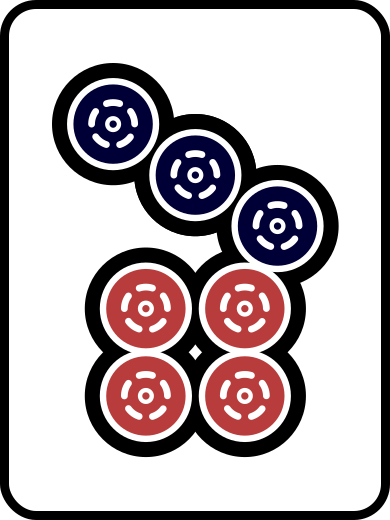
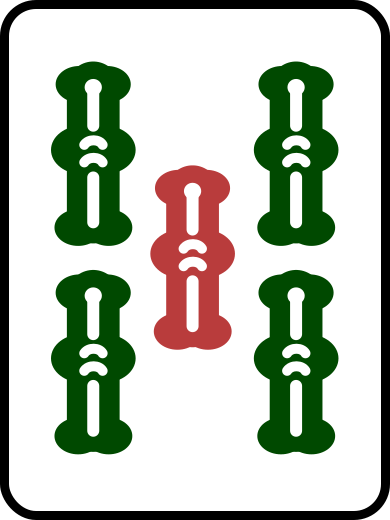

Call the and you're tenpai for a 1,000-point on a wait. The gap is 900. A off anyone passes 3rd. A 300/500 passes 3rd. Keep the hand closed, riichi it later, and it's 3,900 on a ron, or a if the tsumo and an ura both land. That second hand is the one the loss frame wants. It finishes in the same place as the first.
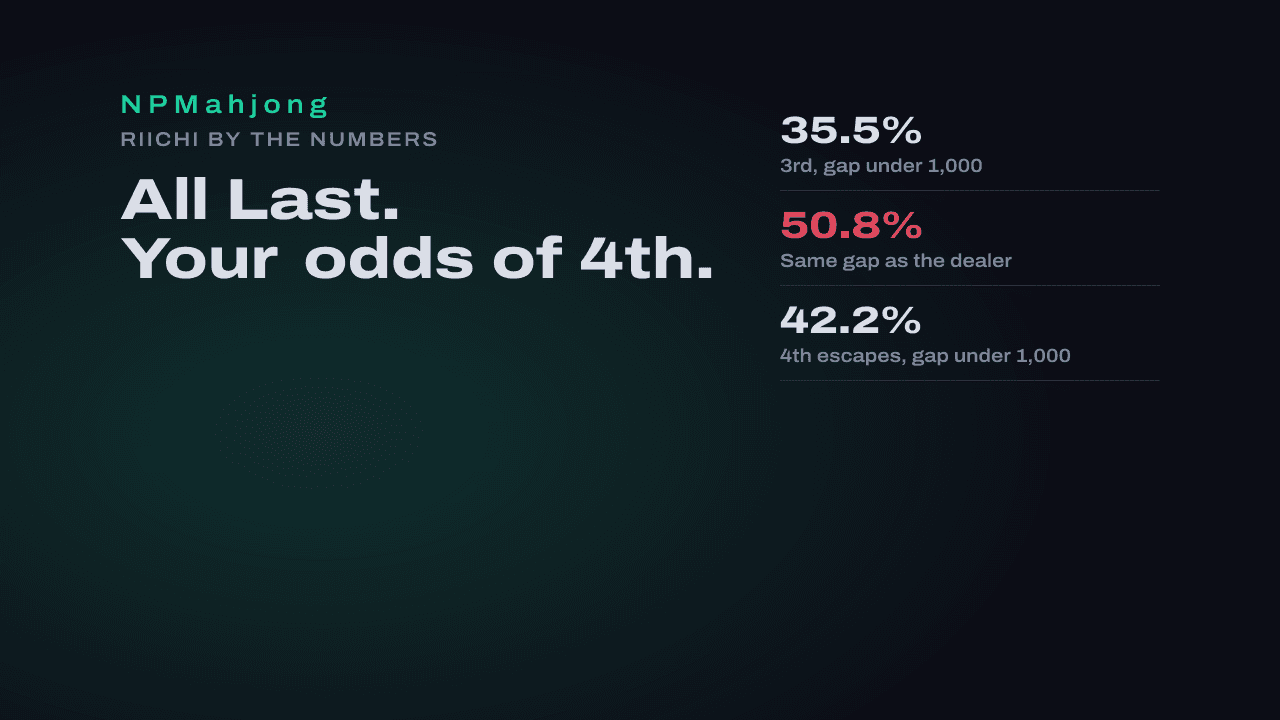
Here's what the Houou logs say about the seat. A non-dealer in 4th, under 1,000 behind, climbs out 42% of the time, and 58% when the player in 3rd is the dealer, because a cheap tsumo bills the dealer double. Most of those escapes stop at 3rd: from under 1,000 behind, 4th finishes 2nd or better only 10.4% of the time. Plan to pass one player. The 1,000-point hand passes one player now. The passes the same player four turns later, if nobody else wins first.
| Gap between 3rd and 4th | 3rd falls to 4th | 3rd falls to 4th as the dealer | 4th climbs out | 4th climbs out when 3rd is the dealer |
|---|---|---|---|---|
| Under 1,000 | 35.5% | 50.8% | 42.2% | 57.7% |
| 2,000 to 2,900 | 27.7% | 33.8% | 32.2% | 39.0% |
| 4,000 to 4,900 | 18.0% | 20.3% | 21.4% | 24.0% |
| 8,000 to 8,900 | 9.5% | 10.9% | 11.8% | 12.8% |
Read the right half of the table down the column. From under 1,000 behind, the gamble that pays is speed: 42 chances in 100, and any win counts. From 4,000 behind, a 1,000-point hand passes nobody, so the hand has to grow and the odds fall to 21%. From 8,000 behind, nothing below a mangan works, and the mangan has to be a tsumo or a direct hit on 3rd. There prospect theory and the math agree: build the mangan and only the mangan. The theory never said the gamble from behind is wrong. It said you'll take it when it's wrong too. The gap tells the two cases apart, and from under 1,000 the wrong gamble is the slow hand.
The "safe" fold from 3rd
Now the other seat. You're in 3rd, 800 above 4th, and 2nd declares riichi. You hold a cheap tenpai. The sure thing is the fold, and the gain frame makes it feel like keeping what you have.
It isn't sure. From 3rd with a gap under 1,000, a non-dealer finishes 4th 35% of the time and the dealer 51%, and scores still move about 4,800 points from the start of to the end. Your fold doesn't freeze the table. It removes the one player who can end the game with you in 3rd, which is you, and leaves 4th drawing freely for the 1,000 points that pass you. Kahneman's sure $450 is a real $450. Your "sure" 3rd is about two chances in three.
The cushion changes the answer. Each thousand points buys 2 to 6 points of safety up to a 4,000 gap, where the risk is 18%, and it drops under 10% only around 8,000. With a thick cushion and a riichi from a player who can pass you, fold. With a thin one, your own win is the safe play, because it ends the game.
The same frame produces the fold from 1st. A riichi comes from 2nd and you drop a tenpai that would have closed the hanchan, without counting what 2nd needs to pass you. Count it first. When their best realistic hand still leaves you in 1st, the fold protects nothing and costs you the win.
Make the choice before the frame exists
Prospect theory is about the frame you're in when you choose. The fix is to choose before the frame arrives. Before South 4 is dealt, write three things: the player you need to pass, the score that does it, and the smallest hand that gets there by ron off each player and by tsumo. Then play that hand and no other.
The All Last calculator does the arithmetic. Type the four scores, your seat, the , and the sticks, and it names the smallest hand that works by ron off each player and by tsumo. When the answer is "any 1,000," call the first tile that gives you tenpai. When it's "mangan," build the mangan and don't riichi the 2,600 that passes nobody. When it's "nothing short of a ," play the hand you have and stop pretending.

Mid-hand, when a riichi lands and your written target says push, the push-or-fold calculator checks the gamble against a simulated chart: hand shape, value, turn, seat, and the tile you'd cut. Run it after the session on the hands where you pushed from 4th or folded from 1st, and compare its verdict with what you did. The pattern you find will follow your seat more than your hand.

Where the analogy breaks
Kahneman and Tversky's subjects chose between gambles with known odds, once, for money. You choose eighteen times a hand with odds you estimate, and the "sure thing" has a loss rate built in: 35% for the fold from a thin 3rd. So prospect theory can't tell you which play is right. The logs do that. The theory tells you which way your reflex leans from each seat, so you know which of your own decisions to distrust before the tiles come out.
And the loss frame from 4th gets one thing right. On Tenhou's table and Mahjong Soul's, 4th is a real loss, bigger than 1st is a gain, so taking on variance from 4th is correct play. The bias is in which variance. From under 1,000 behind, the reflex reaches for the slow big hand when the fast cheap one has the better odds. Under a ruleset that pays an for 1st, the reference line moves up and the picture shifts with it. How ranking rules change what winning means covers that side.
Get your South 4 decisions reviewed
Next hanchan, write the target before the last hand is dealt. Then, when the comes out, call it.
If you want a second pair of eyes on the hands where your seat chose for you, send me your games for a review. You'll get the South 4 hands where a different target, push, or fold would have kept you out of 4th, with what to play instead.
Was this article helpful?