
Every payment comes from two counts. come from yaku and . Fu come from the shape of the hand and the way it won. One formula turns the two into base points, and the base points decide what each player pays.
You can play without the formula. You need it to read the score table, catch a wrong payment, and see why a hand that looks cheap pays 1,300 instead of 1,000.
How a hand is scored
- Count the han. Each yaku adds han, and so does each dora. Dora aren't a yaku, so a hand with only dora can't win. The yaku list gives every yaku with its han closed and open.
- Count the fu. Start at 20, add the extras from the fu section below, and round up to the next 10. stays at 25.
- Turn han and fu into base points: fu x 2^(2 + han).
- Multiply the base points by what each player owes, then round each payment up to the next 100.
A 3 han 30 fu hand has 30 x 32 = 960 base points. The rest of this page follows that number.
Who pays: dealer, non-dealer, ron, and tsumo
The dealer is the East seat. A dealer win pays half again as much as a win. When someone else wins by tsumo, the dealer pays a double share.
- Non-dealer : the discarder pays base x 4.
- Dealer ron: the discarder pays base x 6.
- Non-dealer tsumo: the dealer pays base x 2, and each other non-dealer pays base x 1.
- Dealer tsumo: each other player pays base x 2.
Each payment rounds up to the next 100 on its own. Here is the 960-point hand every way it can win:
- Non-dealer ron: 960 x 4 = 3,840. The discarder pays 3,900.
- Dealer ron: 960 x 6 = 5,760. The discarder pays 5,800.
- Non-dealer tsumo: the dealer owes 1,920 and pays 2,000. The other two owe 960 and pay 1,000 each. The table writes this as 1,000/2,000, and you collect 4,000.
- Dealer tsumo: each player owes 1,920 and pays 2,000. The table writes this as 2,000 all, and you collect 6,000.
The tsumo collects 4,000 against 3,900 for the ron. The extra 100 comes from rounding three payments instead of one.
Limit hands: mangan to yakuman
Base points stop at 2,000. That cap is . From 5 han up, the fu stop mattering, and each limit pays a fixed amount.
| Limit | Han | Non-dealer ron | Non-dealer tsumo | Dealer ron | Dealer tsumo |
|---|---|---|---|---|---|
| Mangan 満貫 | 5 | 8,000 | 2,000/4,000 | 12,000 | 4,000 all |
| Haneman 跳満 | 6-7 | 12,000 | 3,000/6,000 | 18,000 | 6,000 all |
| Baiman 倍満 | 8-10 | 16,000 | 4,000/8,000 | 24,000 | 8,000 all |
| Sanbaiman 三倍満 | 11-12 | 24,000 | 6,000/12,000 | 36,000 | 12,000 all |
| Yakuman 役満 | 13+ | 32,000 | 8,000/16,000 | 48,000 | 16,000 all |
Mangan also covers 4 han 40+ fu and 3 han 70+ fu.
Below 5 han, a hand still reaches mangan once its base points pass 2,000. 4 han 40 fu is 2,560 base points, and 3 han 70 fu is 2,240. Both pay a mangan.
Kiriage mangan
4 han 30 fu and 3 han 60 fu both land on 1,920 base points, 80 short of the cap. A non-dealer ron pays 7,700. A dealer ron pays 11,600. rounds those two hands up to a mangan: 8,000 and 12,000.
Tenhou's ranked games don't play kiriage. Its rules list it only for the parlor-rule lobby, 雀荘戦. The EMA 2025 rules do play it (section 4.1.2). Their 2016 edition didn't. Clubs vary, so ask before the first hand.
Kazoe yakuman
Yaku and dora that add up to 13 han or more make a on Tenhou and Mahjong Soul. That pays 32,000 to a non-dealer and 48,000 to the dealer. The EMA 2025 rules score the same hand as a : 24,000 or 36,000. The yakuman page covers the named hands.
The score table
Rows are fu. Columns are han. The top number in each cell is the ron. The bottom number is the tsumo: non-dealers/dealer in the first table, and what each player pays in the second. Both tables come from the same code as the score calculator.
| Fu | 1 han | 2 han | 3 han | 4 han |
|---|---|---|---|---|
| 20 | No ron at this valueNo tsumo at this value | No ron at this value400/700 | No ron at this value700/1,300 | No ron at this value1,300/2,600 |
| 25 | No ron at this valueNo tsumo at this value | 1,600No tsumo at this value | 3,200800/1,600 | 6,4001,600/3,200 |
| 30 | 1,000300/500 | 2,000500/1,000 | 3,9001,000/2,000 | 7,700†, mangan if the table plays kiriage2,000/3,900†, mangan if the table plays kiriage |
| 40 | 1,300400/700 | 2,600700/1,300 | 5,2001,300/2,600 | Mangan |
| 50 | 1,600400/800 | 3,200800/1,600 | 6,4001,600/3,200 | Mangan |
| 60 | 2,000500/1,000 | 3,9001,000/2,000 | 7,700†, mangan if the table plays kiriage2,000/3,900†, mangan if the table plays kiriage | Mangan |
| 70 | 2,300600/1,200 | 4,5001,200/2,300 | Mangan | Mangan |
| 80 | 2,600700/1,300 | 5,2001,300/2,600 | Mangan | Mangan |
| 90 | 2,900800/1,500 | 5,8001,500/2,900 | Mangan | Mangan |
| 100 | 3,200800/1,600 | 6,4001,600/3,200 | Mangan | Mangan |
| 110 | 3,600No tsumo at this value | 7,1001,800/3,600 | Mangan | Mangan |
| Fu | 1 han | 2 han | 3 han | 4 han |
|---|---|---|---|---|
| 20 | No ron at this valueNo tsumo at this value | No ron at this value700 all | No ron at this value1,300 all | No ron at this value2,600 all |
| 25 | No ron at this valueNo tsumo at this value | 2,400No tsumo at this value | 4,8001,600 all | 9,6003,200 all |
| 30 | 1,500500 all | 2,9001,000 all | 5,8002,000 all | 11,600†, mangan if the table plays kiriage3,900 all†, mangan if the table plays kiriage |
| 40 | 2,000700 all | 3,9001,300 all | 7,7002,600 all | Mangan |
| 50 | 2,400800 all | 4,8001,600 all | 9,6003,200 all | Mangan |
| 60 | 2,9001,000 all | 5,8002,000 all | 11,600†, mangan if the table plays kiriage3,900 all†, mangan if the table plays kiriage | Mangan |
| 70 | 3,4001,200 all | 6,8002,300 all | Mangan | Mangan |
| 80 | 3,9001,300 all | 7,7002,600 all | Mangan | Mangan |
| 90 | 4,4001,500 all | 8,7002,900 all | Mangan | Mangan |
| 100 | 4,8001,600 all | 9,6003,200 all | Mangan | Mangan |
| 110 | 5,300No tsumo at this value | 10,6003,600 all | Mangan | Mangan |
A dash marks a han and fu pair no hand can have. 20 fu is tsumo, so that row has no ron and starts at 2 han. 25 fu is seven pairs: a ron from 2 han, and a tsumo from 3, because a closed tsumo adds the han. 1 han 110 fu has a ron and no tsumo. The † marks the two kiriage cells.
The printable cheat sheet puts both tables, the limits, and fu counting on one page, with every yaku on the second.
Counting fu, step by step
Fu pay for the parts of a hand that are harder to build: closed triplets, , and waits on one tile. Count them in this order.
- Seven pairs? The hand is 25 fu. Stop, and don't round.
- Pinfu won by tsumo? The hand is 20 fu. Stop.
- Start at 20. This is the base, called futei.
- Add 10 for a that wins by ron. Add 2 for a tsumo instead.
- Add each triplet and quad from the table below. Sequences add nothing.
- Add the pair: 2 for a dragon, 2 for your , and 2 for the . A pair that is both your seat wind and the round wind is 4 on Tenhou. Some clubs pay 2.
- Add 2 when the winning tile filled an , a , or a . A and a wait on two pairs add nothing.
- Round up to the next 10. An open hand that is still at 20 counts as 30.
| Triplet or quad | Tiles 2 through 8 | Terminals and honors |
|---|---|---|
| Open triplet | 2 | 4 |
| Closed triplet | 4 | 8 |
| Open quad | 8 | 16 |
| Closed quad | 16 | 32 |
Two rules settle the hard cases. A triplet finished by ron counts as open, even in a closed hand. When the winning tile fits more than one reading, you score the reading that pays most.
Not sure of a count? The score calculator has a fu helper. Press Help me count fu, describe the wait, the pair, and the four melds, and it lists every line.
Worked examples
Each hand below belongs to a non-dealer and has no dora unless the text adds some. The dealer's payment follows each one.
Riichi and pinfu: 30 fu, then 20
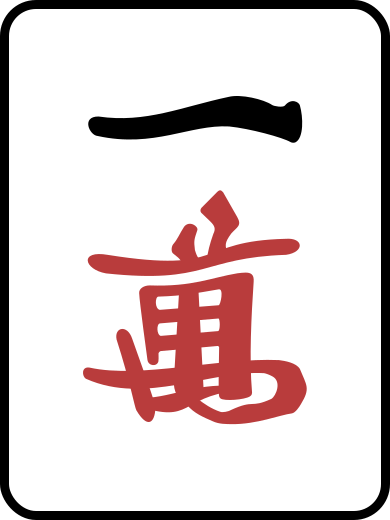
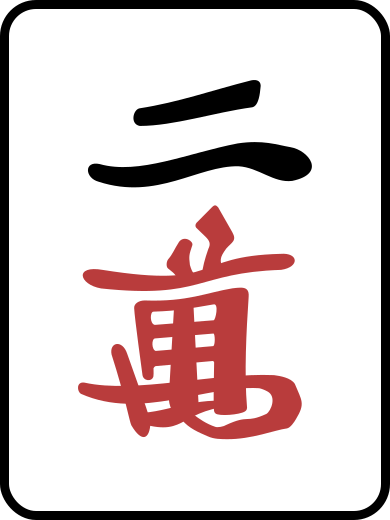
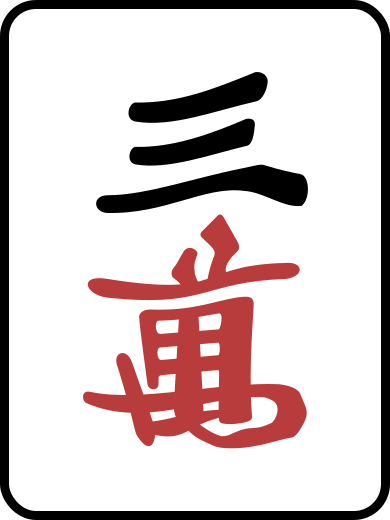
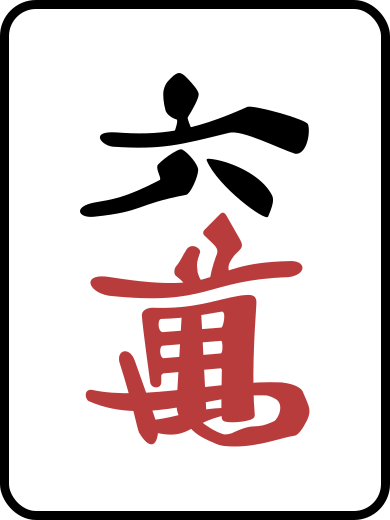
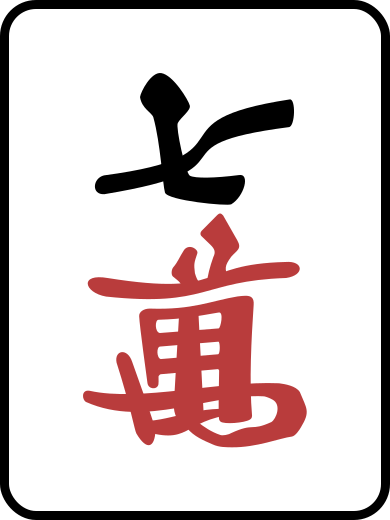
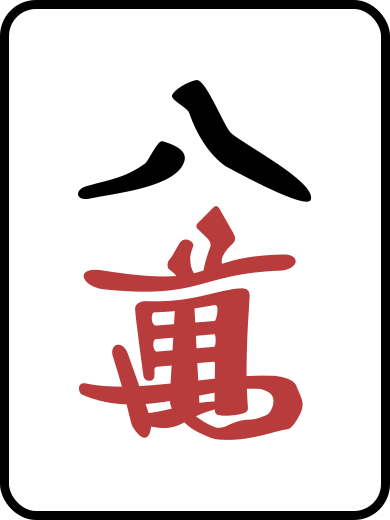
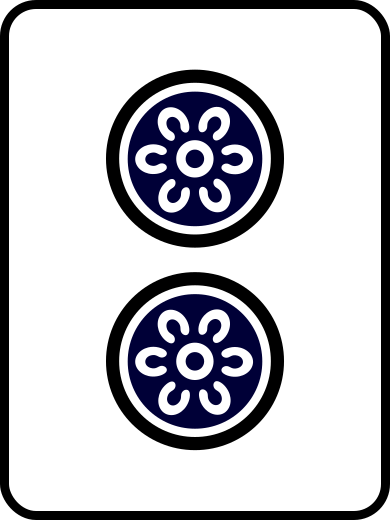
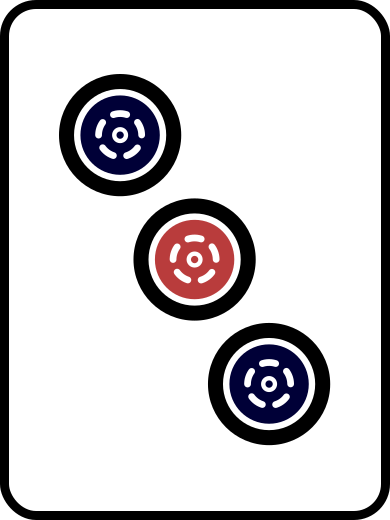
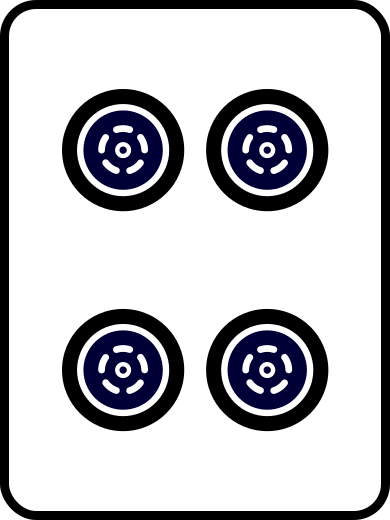
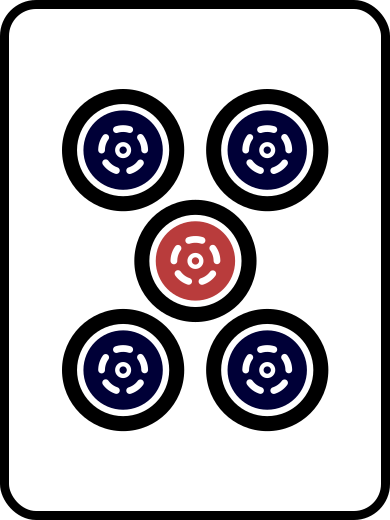
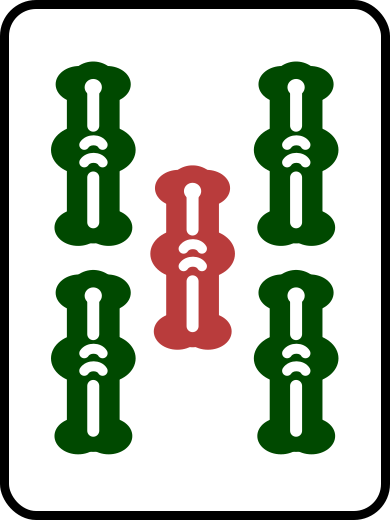
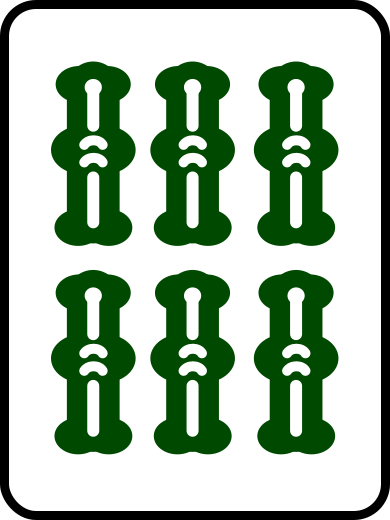
The hand is closed: three sequences, a pair of , and 56s. It waits on 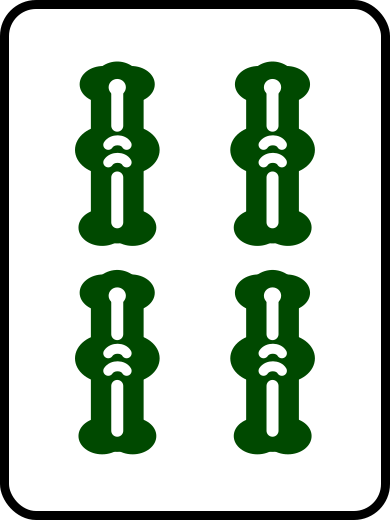 or
or 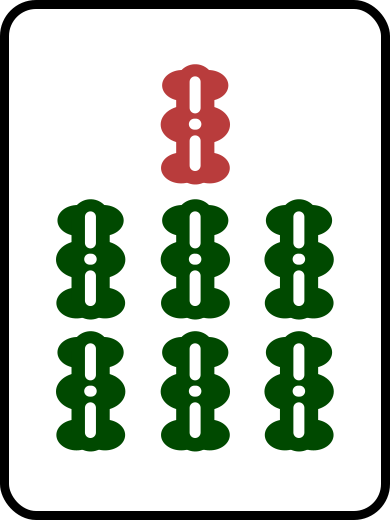 , from both sides. You declared riichi.
Ron on 7s. Riichi and pinfu make 2 han. The fu are 20, plus 10 for the closed ron: 30. At 2 han 30 fu the discarder pays 2,000. A dealer would collect 2,900.
Tsumo on 7s. Pinfu tsumo is a flat 20 fu, and menzen tsumo adds a han. At 3 han 20 fu each non-dealer pays 700 and the dealer pays 1,300, so you collect 2,700. A dealer's tsumo is 1,300 all.
Riichi on a middle wait: 40 fu
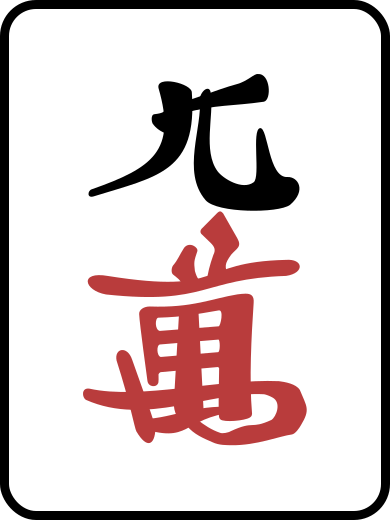
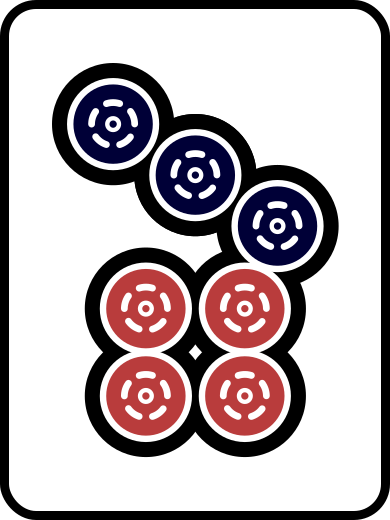
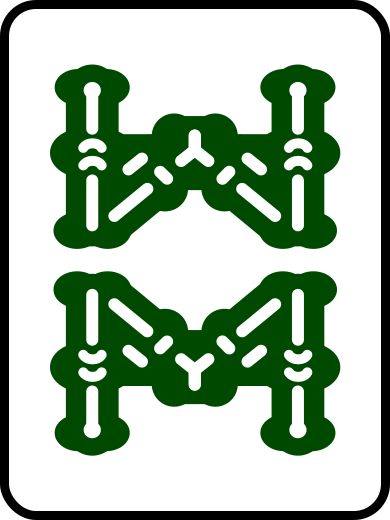
The hand is closed: a triplet of , 234p, a pair of , 678s, and 46s. Only wins. You declared riichi.
Ron on 5s:
- 20 for the base.
- 10 for the closed ron.
- 8 for the closed triplet of 9m, a terminal.
- 2 for the middle wait.
That's 40 fu. Riichi is the only yaku, so the hand is 1 han 40 fu. The discarder pays 1,300. A dealer would collect 2,000. One dora makes it 2 han 40 fu: 2,600, or 3,900 for the dealer.
Tsumo on 5s. The count is 20 + 2 + 8 + 2 = 32, which rounds up to 40. Riichi and menzen tsumo make 2 han 40 fu. Each non-dealer pays 700 and the dealer pays 1,300. A dealer's tsumo is 1,300 all.
An open dragon hand: 30 fu
You called a of red dragons, 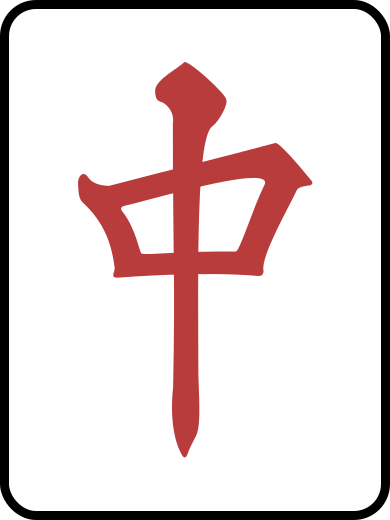 , and a of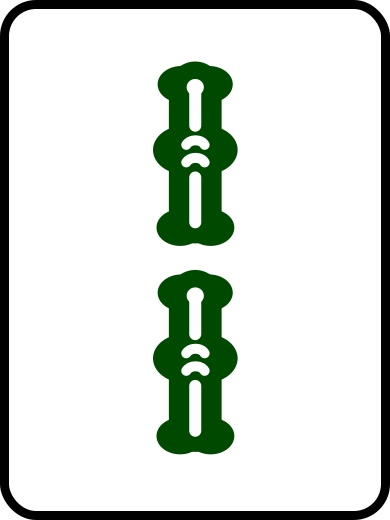
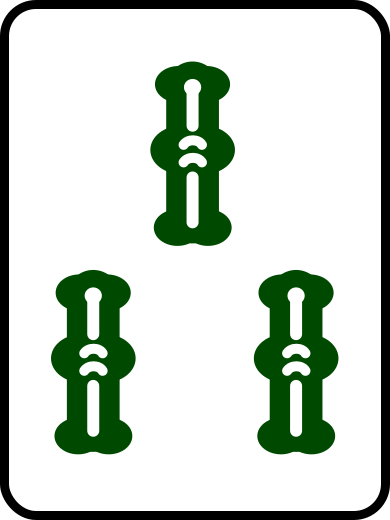 . The rest of the hand:
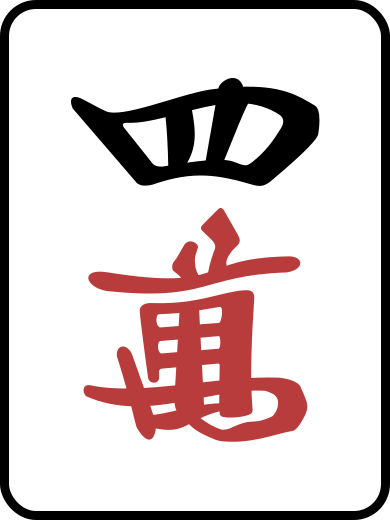
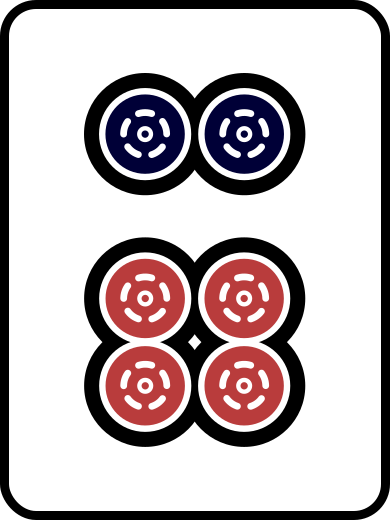
The 34m waits on or 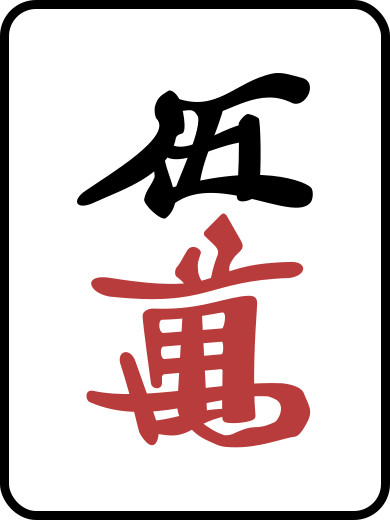 . The pair of 8m adds nothing.
Ron on 5m. The base is 20. There's no 10, because the hand is open. The open dragon triplet adds 4. That's 24, which rounds up to 30. Red dragons are , worth 1 han. At 1 han 30 fu the discarder pays 1,000. A dealer would collect 1,500. Two dora make it 3 han 30 fu: 3,900, or 5,800 for the dealer.
Honba and riichi sticks
Two kinds of sticks add to what a win collects.
A is a counter. One goes down after every hand the dealer wins and after every drawn hand. Each honba adds 300 to the next win. On a ron, the discarder pays all of it. On a tsumo, each payer adds 100. The counters clear when a non-dealer wins.
A riichi stick is the 1,000 points you put down when you declare. It stays on the table until someone wins, and the winner takes every stick there, their own included. Sticks left when the game ends go to , both on Tenhou and under the EMA 2025 rules. EMA splits them between players tied for first.
Say you win the 3 han 30 fu hand by ron, with 2 honba and one riichi stick on the table. The discarder pays 3,900 + 600 = 4,500. Add the 1,000 stick and you collect 5,500.
Win the same hand by tsumo. Each non-dealer pays 1,000 + 200 = 1,200, and the dealer pays 2,000 + 200 = 2,200. With the stick, you collect 5,600.
Where the rule sets differ
This page uses the rules Tenhou plays in its ranked games. Most differences between rule sets come down to five questions.
- Kiriage mangan: off on Tenhou's ranked tables, so 4 han 30 fu pays 7,700. EMA 2025 and some clubs turn it on.
- 13 han or more: kazoe yakuman on Tenhou and Mahjong Soul. Sanbaiman in EMA 2025.
- Two yakuman in one hand: Tenhou adds them together. EMA 2025 pays one.
- A pair of your seat wind that is also the round wind: 4 fu on Tenhou. EMA 2025 and some clubs pay 2.
- Riichi sticks left at the end of the game: first place takes them on Tenhou and in EMA 2025. EMA 2025 splits them when players tie for first.
The score calculator follows Tenhou. Kiriage starts off, with a switch to turn it on. 13 han pays a kazoe yakuman, and yakuman stack. The fu helper can pay the double-wind pair 2 instead of 4.
Common mistakes
Calling a closed ron 30 fu. A closed ron is 30 fu only when the hand is pinfu, or 25 when it's seven pairs. Any other closed ron has at least 2 more fu, and 32 rounds up to 40. A riichi-only ron pays at least 1,300, not 1,000. A dealer's ron pays at least 2,000, not 1,500.
Scoring a ron-finished triplet as closed. The triplet counts as open. The hand stays closed, so the 10 for the closed ron stays. Say you're in riichi with three sequences and a wait on two pairs, 55p and 88s. A ron on 8s counts 20 + 10 + 2 = 32, which rounds up to 40 fu.
Adding the tsumo 2 to pinfu. Pinfu tsumo stays at 20 fu.
Rounding seven pairs. 25 fu stays 25. Riichi and seven pairs on a ron is 3 han 25 fu: 3,200, or 4,800 for the dealer.
Paying a mangan for 4 han 30 fu. That only happens with kiriage. Without it, the ron is 7,700.
Charging 300 per honba to each player on a tsumo. Each payer adds 100, so the winner still gets 300 per honba.
Counting dora as a yaku. Dora add han to a hand that already has a yaku. Four dora and is no win.
Price any hand
The score calculator takes han and fu, the seat, ron or tsumo, honba, and sticks. Its fu helper counts the fu line by line.
Open the score calculator