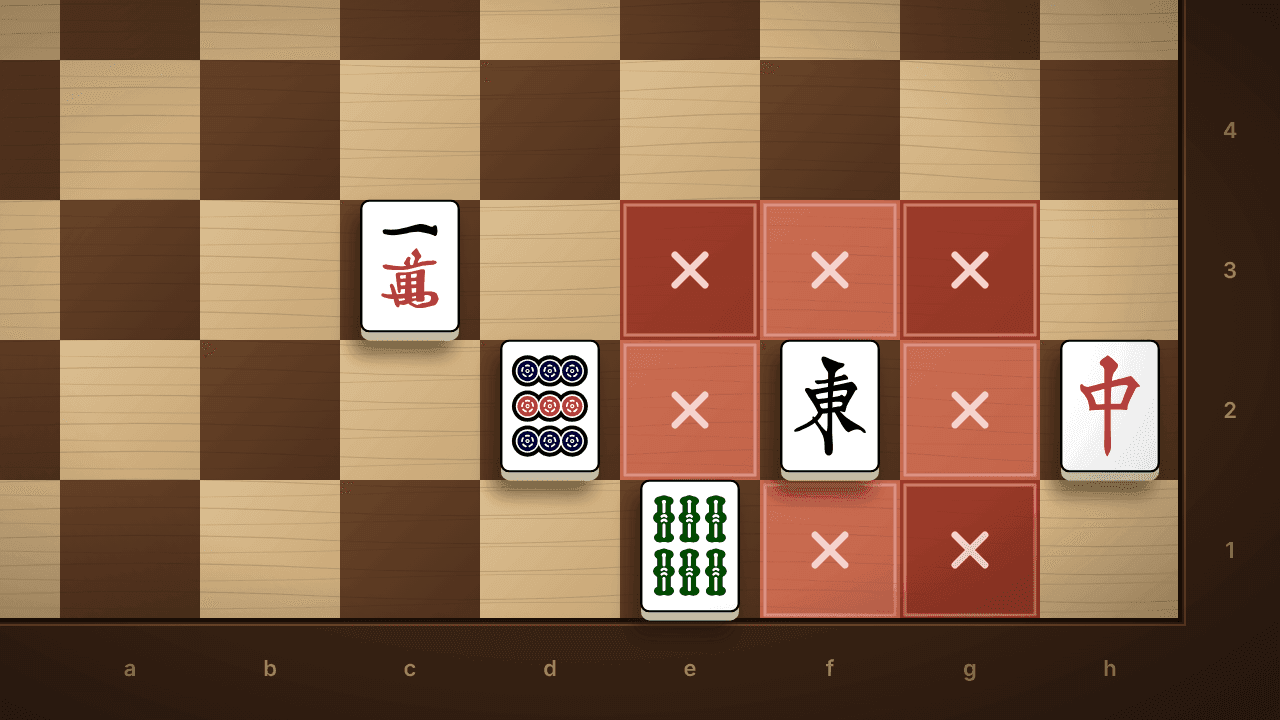
Turn 8, East round. You're South, a . West declared on turn 6, and two turns later you draw the 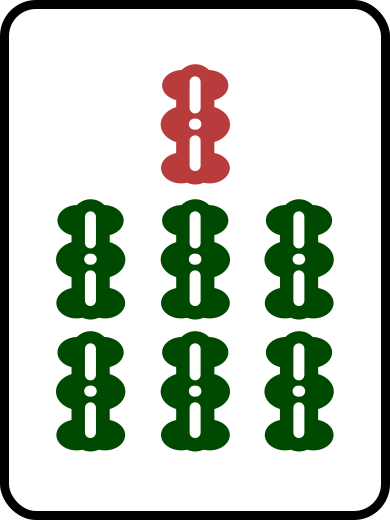 that puts you in on a , worth 3,900 with . The tile you have to cut is a
 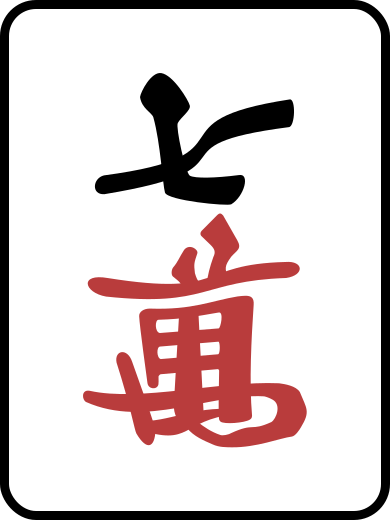 : fresh, no , nothing in West's pond to recommend it. Most players cut a safe tile instead and watch the hand die.
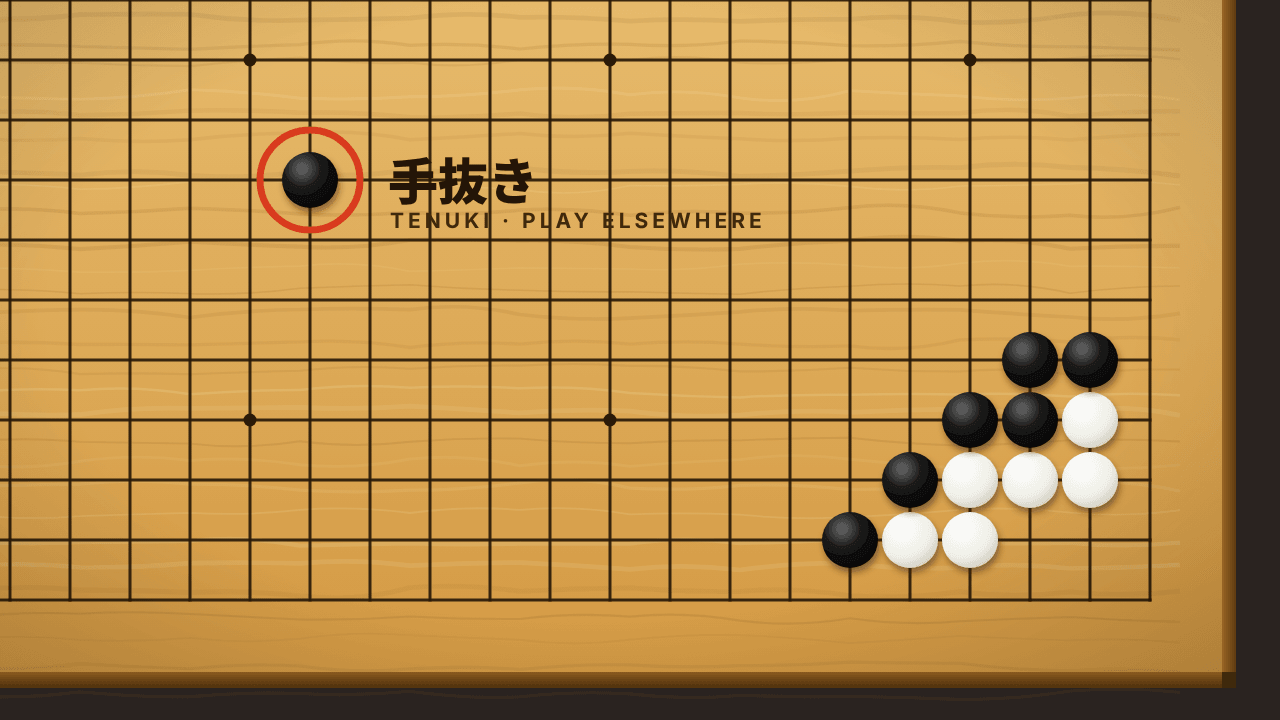
Go players have a name for the other choice. (手抜き) means leaving your opponent's last move unanswered and playing somewhere bigger. Sensei's Library calls getting locked into the local fight "one of the most common novice mistakes," and adds the line this post is built on: "Tenuki is always an option."
A riichi is a threat. It isn't a command. Whether you answer it depends on what your own move is worth, and Tenhou's logs put numbers on both sides.
Where tenuki comes from
In go, every move carries a question: answer here, or play elsewhere? A strong player answers when the local loss is bigger than the best move on the rest of the board, and leaves when it isn't. Wikipedia's entry describes the weak player's failing as "following the opponent around," answering every move because it was made, and notes that a player will tenuki even after a damaging move when their own move hurts the opponent more.
A threat has a size. Your move has a size. Play the bigger one. The go player sees both sizes on the board. You estimate yours from the hand value, the wait, and the seat, and theirs from the turn and who declared. The numbers below come from Tenhou Houou logs 2016 to 2020, analysis by chienshyong (fork of Euophrys/houou-analysis). They describe the room, so your table may differ.
What answering a riichi costs
Folding is the mahjong answer, and it has a price. In the Houou logs, a non-dealer who folds cleanly against a non-dealer riichi loses 1,120 points on average at turn 8. The loses 1,890 and gives up the dealership on top. A non-dealer facing the dealer's riichi pays 1,750. Across the hand the non-dealer's price runs 1,090 to 1,250 and the dealer's 1,450 to 1,950. The full table by turn is in what folding costs.
Those prices count payments and , not deal-ins. The is the other side of the ledger, and one deal-in into a riichi costs about five clean folds. That ratio is why folding is the default with a weak hand. It's also why a riichi can't be a command: five folds is a lot to hand over for a hand that was going to win.
When your move is bigger
The two-sided tenpai
Back to the hand from the top.
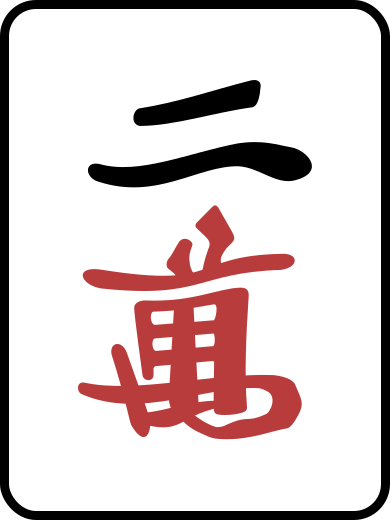
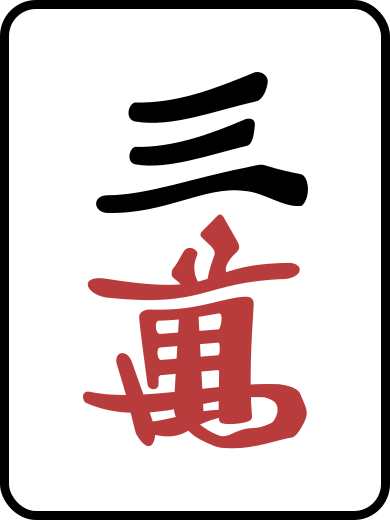
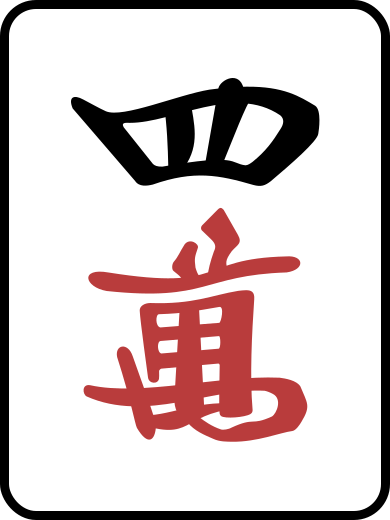
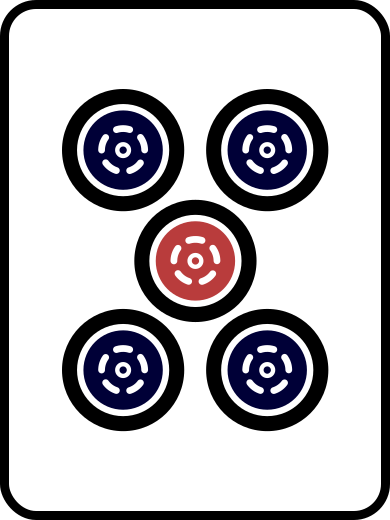
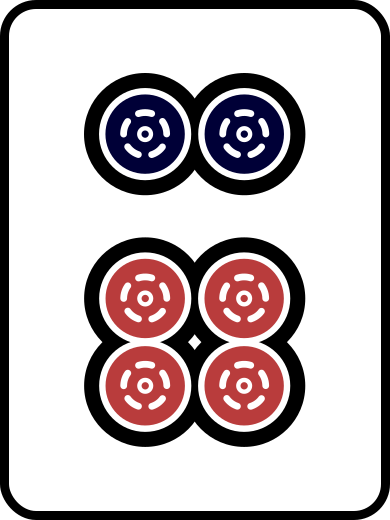
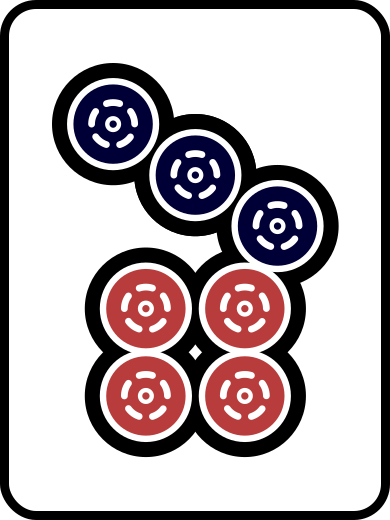
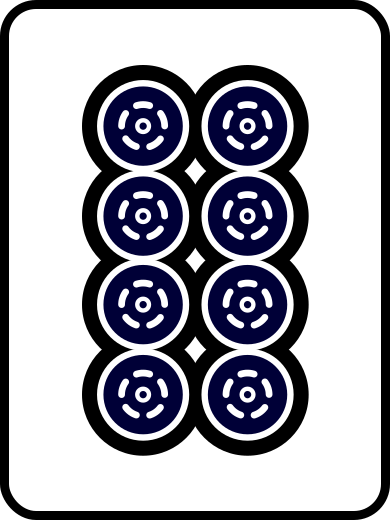
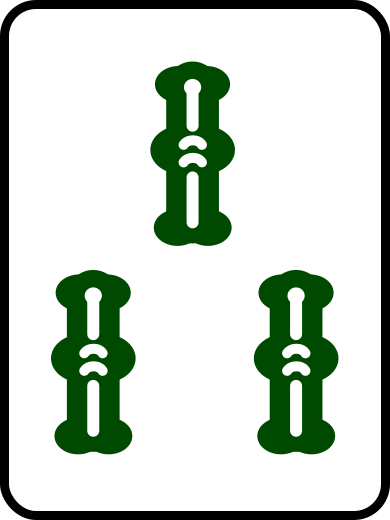
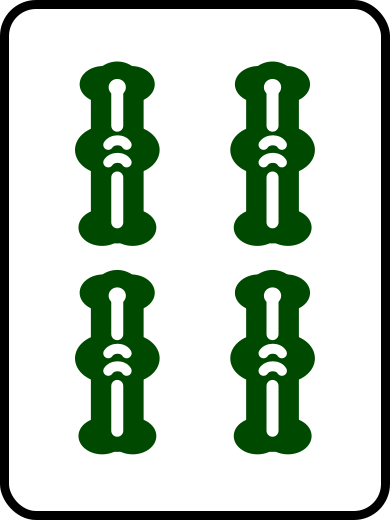
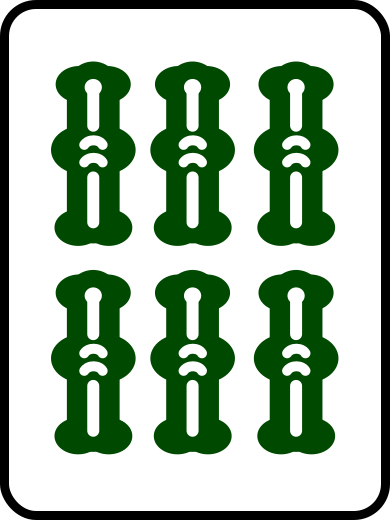
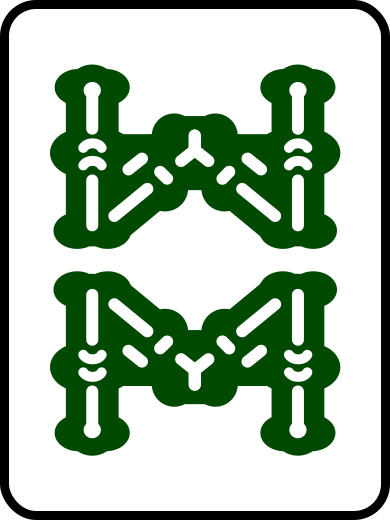
The completes 678s and leaves you waiting on 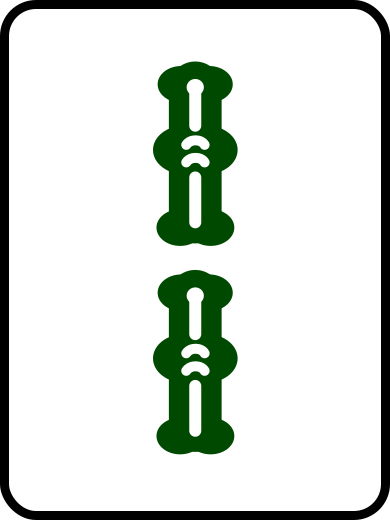 and
and 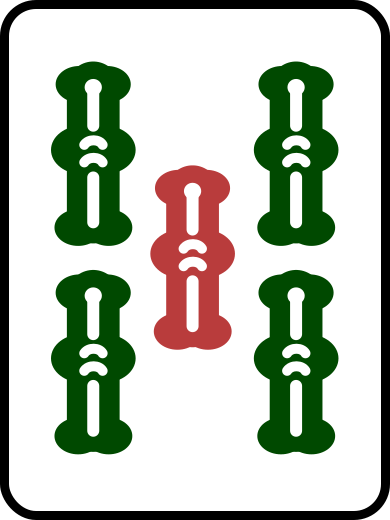 . Riichi, , : 3,900 on a , more on a tsumo. The 7m is the cost of declaring.
A two-sided tenpai a non-dealer riichi wins about half the time and deals in about a fifth. Your fold would cost 1,120. Put the Houou average win and deal-in values into the folding post's rough math and the chase comes out about 3,300 points ahead of the fold. The break-even hand for a two-sided chase is about 440 points, less than the cheapest hand in the game. So the hand value barely matters here. The wait does.
Cut the 7m and declare. That's tenuki. West's riichi asked a question, and your answer is a bigger threat.
The dealer's seat
As dealer, every reason to tenuki gets stronger. Your fold costs 1,890 at turn 8, the highest price on the table, and that figure doesn't count the dealership you give up with it. Your win pays 1.5 times, and your tsumo collects from three players. The folding post quotes Nemata's rule for the seat, and it's the one I use: as dealer, a tenpai with a pushes against a non-dealer riichi every time. The only reasons to fold are a tile that's plainly the wait, or a score where you can't afford the deal-in.
The late riichi
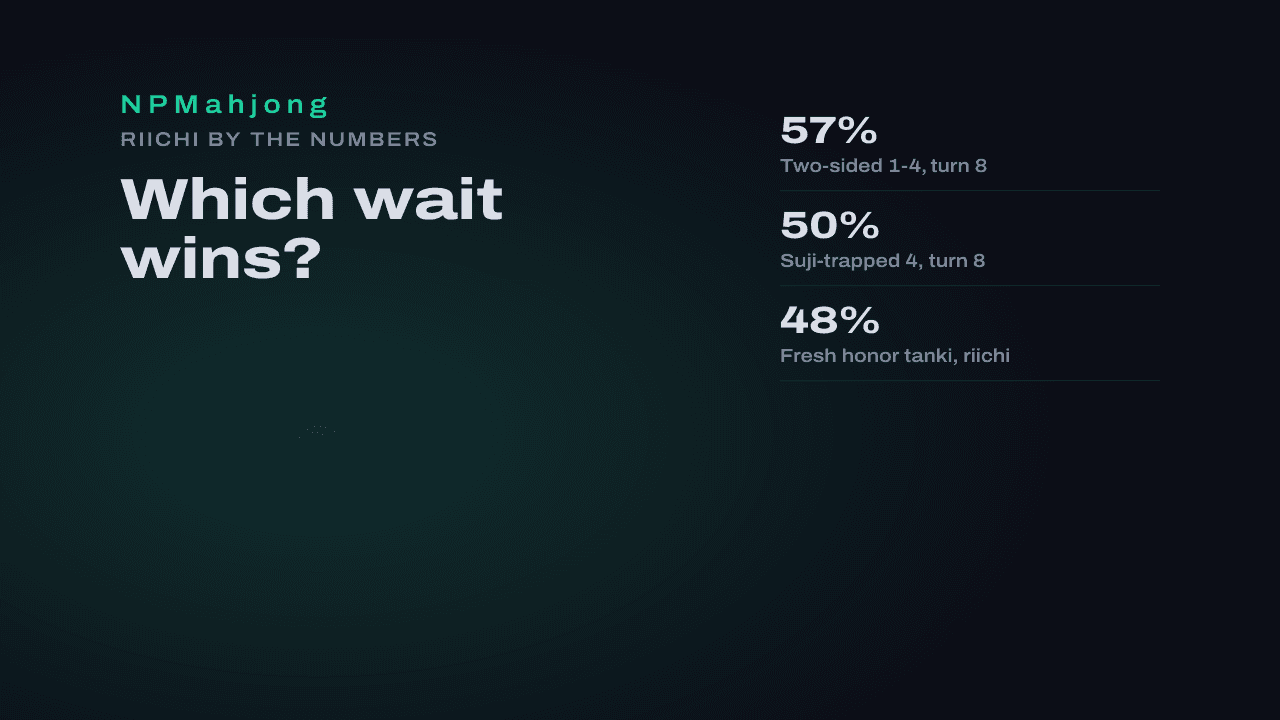
A riichi's threat shrinks with every turn it waits. A first riichi on a two-sided 1-4 wait wins 79% of the time when declared on turn 2, 57% on turn 8, and 47% on turn 11, as the wait win rate data shows. An early riichi is the bigger threat, and it leaves you the rest of the hand to get through. A late riichi is weaker, and the fold against it buys less: the non-dealer's fold price creeps up as the hand goes on while the riichi hand's odds fall.
Your own clock runs the same way. A two-sided riichi declared one turn later wins 3 to 4 points less. Each turn you spend cutting a safe tile to see what happens takes that off your own hand. If you're going to tenuki, tenuki now.
When to answer
Go has a proverb for the other side, listed on Sensei's Library's proverbs page.
Urgent points before big points.
Some threats are urgent, and answering them is the big move. Three come up every .
A narrow wait under 2,000. A , , , or chase wins about a third of the time and deals in about one time in five. Run the folding post's math and a narrow-wait chase needs a hand worth about 2,000 to break even against a non-dealer riichi. A 1,000-point is not a bigger move than West's riichi. , cleanly: first, then .
The dealer's riichi. The fold costs 1,750, and the deal-in pays 1.5 times. A 2,000-point hand has to win 1.7 times as often as it deals in to push, and few narrow waits do. The folding post's rule for a one-sided wait against the dealer's riichi is a . A two-sided 3,900 still pushes. The ratio clears with room to spare.
| Your hand is worth | vs a non-dealer riichi | vs the dealer's riichi |
|---|---|---|
| 2,000 | 1.5× | 1.7× |
| 3,900 | 0.9× | 1.1× |
| 7,700 | 0.5× | 0.7× |
| 12,000 | 0.4× | 0.5× |
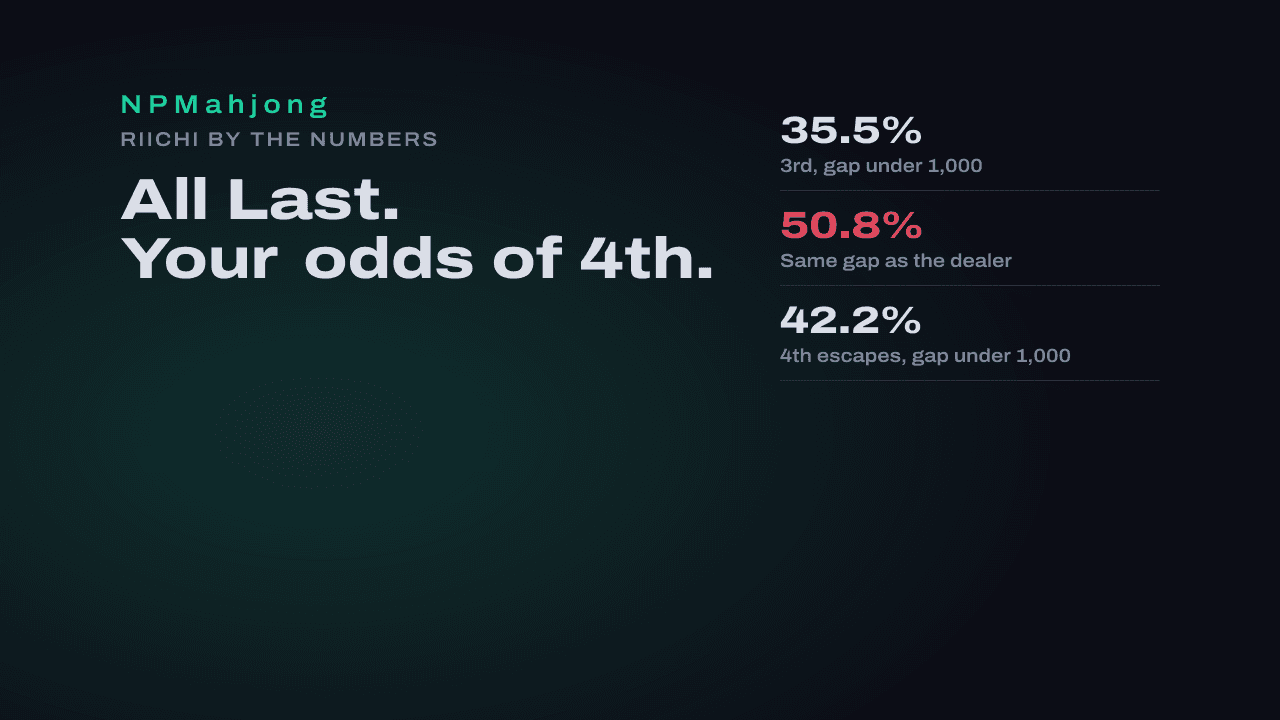
. In the last hand, the size of a move is placement, not points. In 3rd with a gap under 1,000, a non-dealer finishes 4th 35% of the time, and scores still move about 4,800 points between the start of the last hand and the end, as the All Last numbers show. If a deal-in drops you a place and your hand doesn't lift you one, the riichi is urgent and your hand isn't. Answer it.
When the case isn't one of these three, plug your own hand into the push-or-fold calculator.

Open hands are threats too
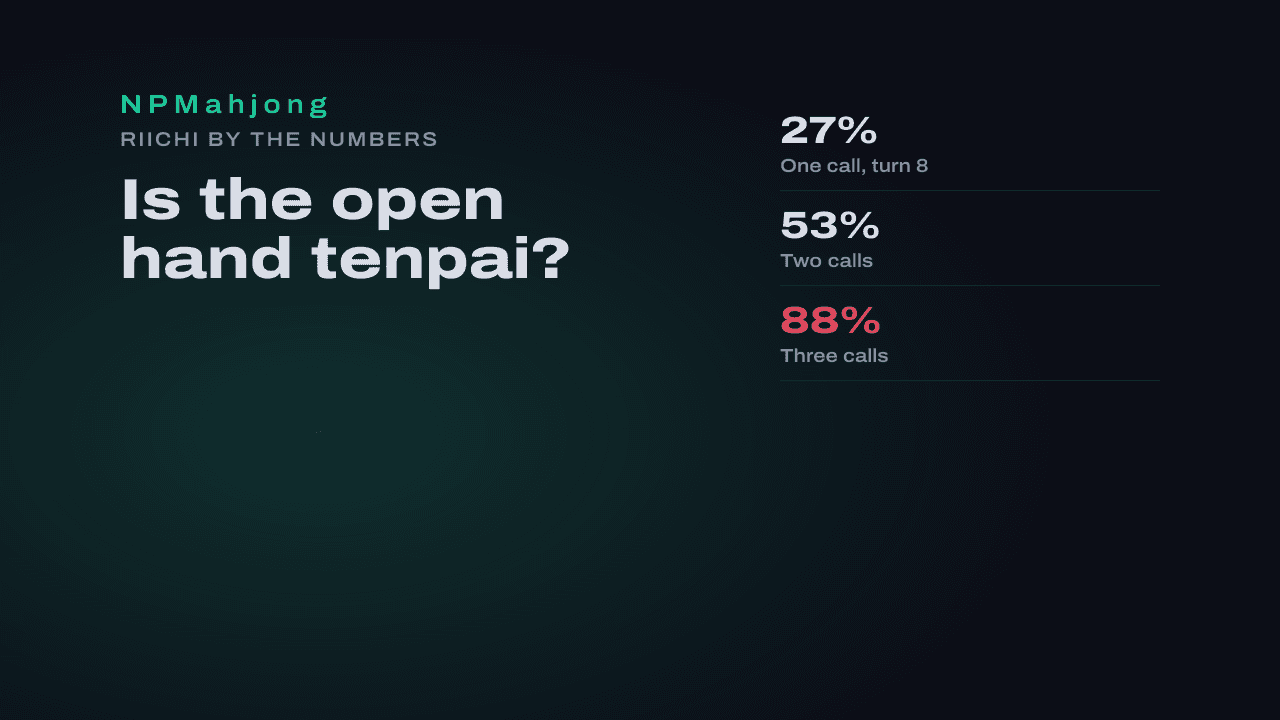
A riichi announces itself. An open hand doesn't, and players who price every riichi give a three-call hand a free pass. The Houou logs say otherwise: at turn 8, a called hand is tenpai 27% of the time with one call, 53% with two, and 88% with three. From turn 6 on, three calls means tenpai more than 80% of the time. The open hand tenpai data has the full table by turn and hand type.
So the same question applies. Three calls is a riichi without the stick: price your hand against it like one. Two calls is a coin flip: read it, don't retreat from it. One call at turn 8 is a one-in-four shot. A or thrown from that hand, a discard right after the call, or three in a row all push the odds up. A hand runs slow, 14% tenpai with one call at turn 8, and it's expensive when it arrives.
The drill: say the size out loud
Before every discard against a riichi, say two things, out loud at home and under your breath at a parlor: the wait type and the hand value. "Two-sided, 3,900." "Kanchan, 1,000." ", two live tiles to cut." Then decide.
It sounds silly. It works because the words force the comparison a go player makes by habit. "Two-sided, 3,900" against a non-dealer riichi is a push every time, and saying it stops the hand from folding on reflex. "Kanchan, 1,000" is a fold, and saying it stops the hand from pushing out of stubbornness. Away from tenpai, the folding post's rule is one tile: push one dangerous tile from a good , and if the next discard would be another, fold.
And before the first fold tile, count your safe tiles. Three by the middle of the hand, or two in the last turns, or the fold is a push with worse tiles.
Where the go analogy breaks
In go the board is open. You see the local loss, count it, and know it won't grow. In mahjong the threat is hidden. The chase numbers above are averages over every two-sided wait in the Houou room, and your risk sits in the one tile you're about to throw. A 7m into a pond full of is not the average 7m.
In go a tenuki is one move, and you can come back and answer later. In mahjong a thrown tile stays thrown, and the decision repeats every draw. Tenuki against a riichi is a plan for the hand, and each new tile retests it.
In go you have one opponent. Mahjong gives you three, and the player you ignore isn't always the one who rons you. The quiet three-call hand across the table doesn't care who declared.
And the deal-in rates in the chase data leave out rons on the riichi tile itself. The real cost of a push runs higher than the table says, which is one more reason the two-sided wait earns the tenuki and the narrow wait doesn't.
Get your pushes checked
The hands where you folded a two-sided 3,900 and the hands where you pushed a kanchan 1,000 are both in your logs, and neither feels like a mistake at the time. Send me your games for a review and you'll get the riichi decisions where answering or playing elsewhere cost you points, with the number next to each one.
Was this article helpful?