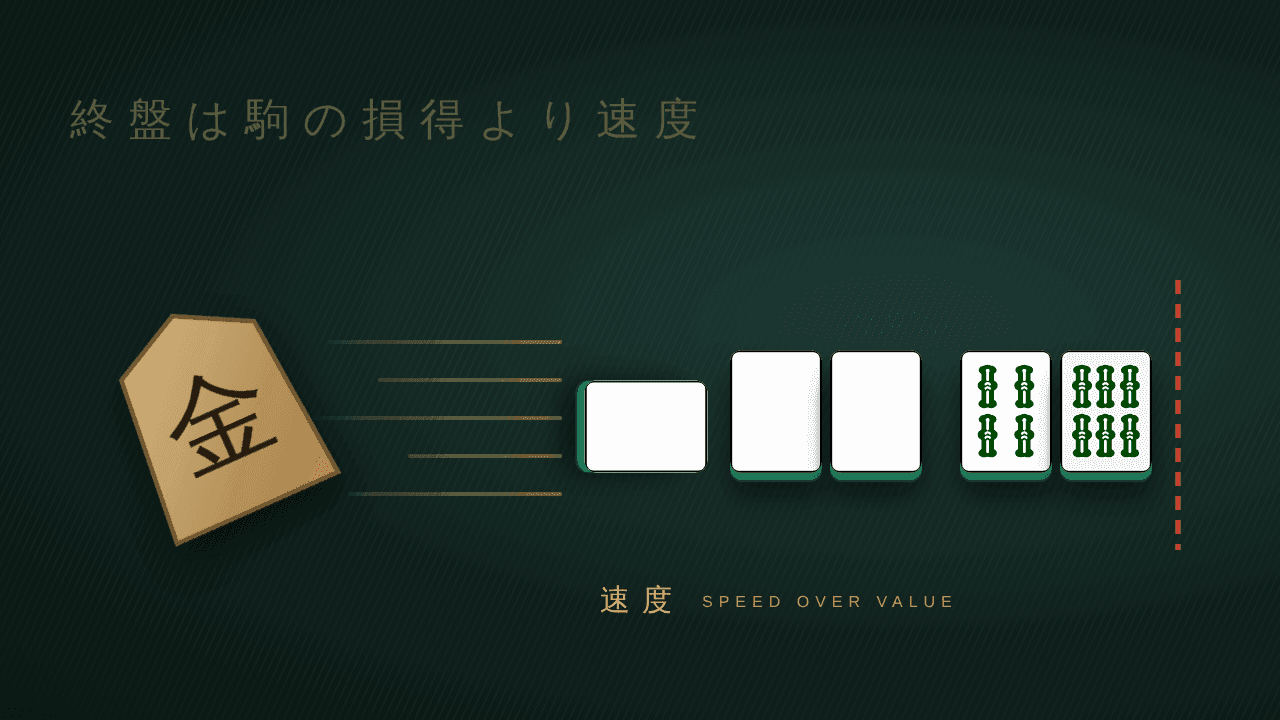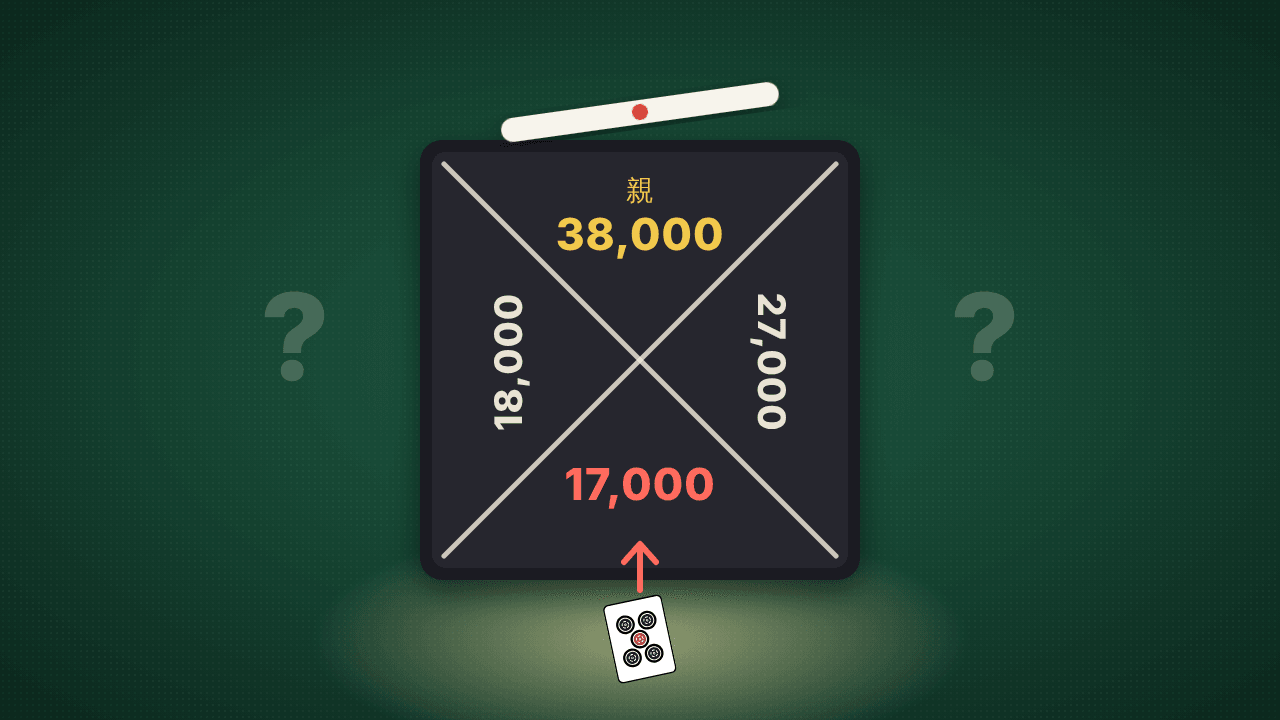
South 1, turn 7. You're a in 1st with 41,200. 2nd has 27,200, 14,000 behind you. You draw into :
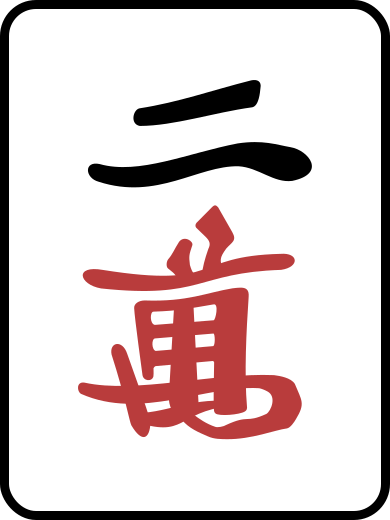
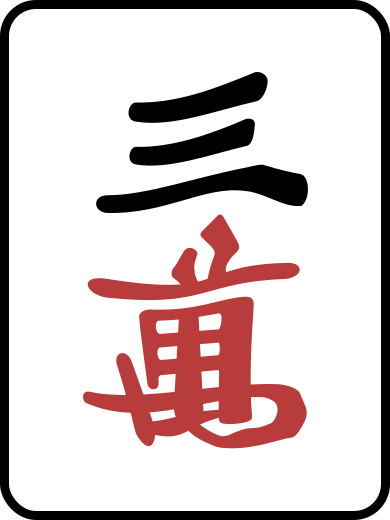
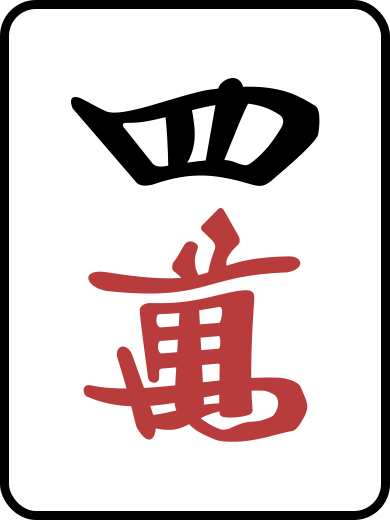
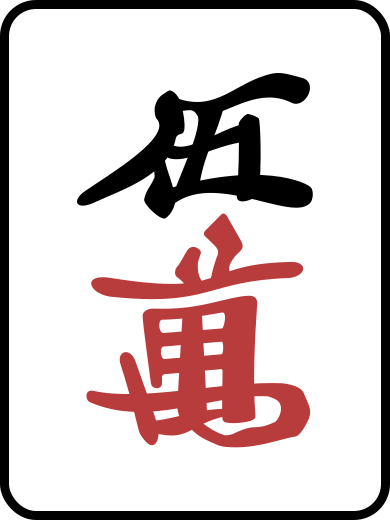
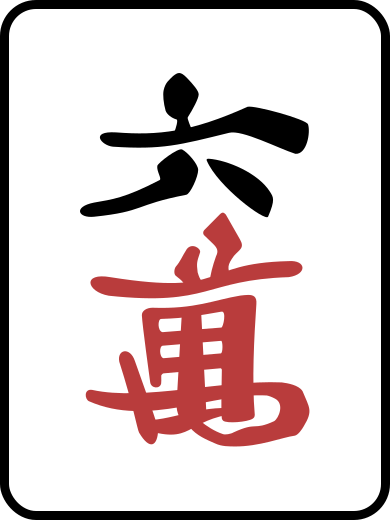
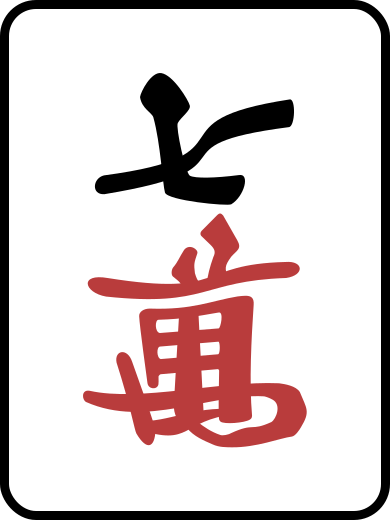
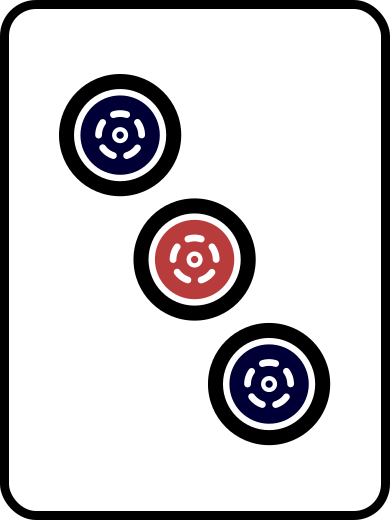
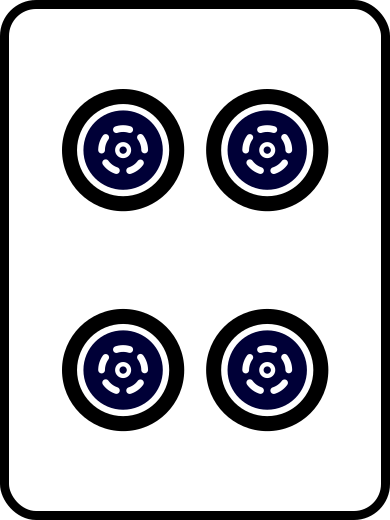
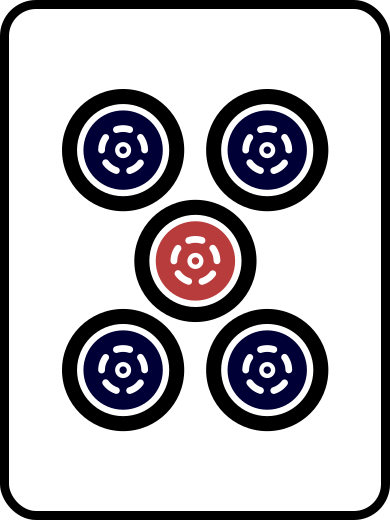
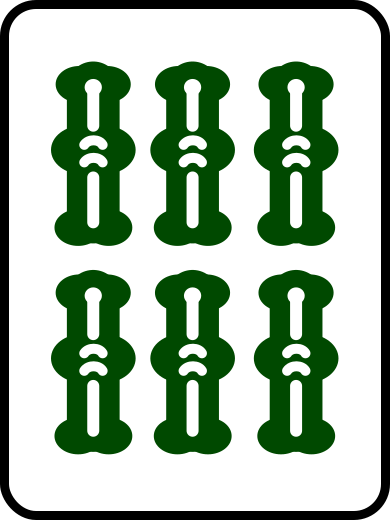
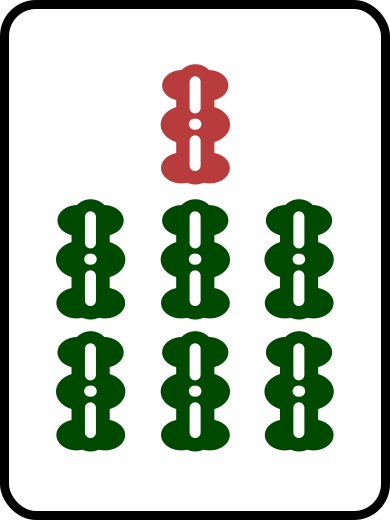
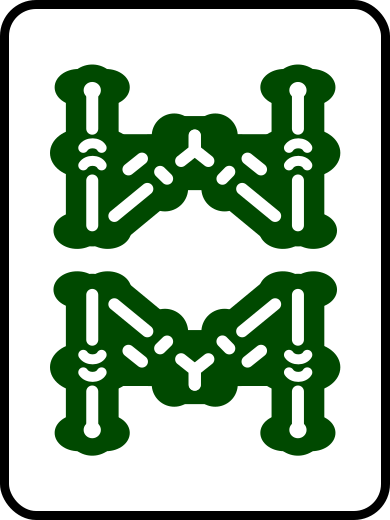
and on a two-sided 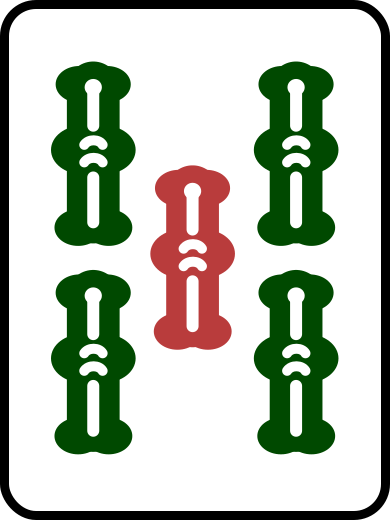 and wait. Play it , with no , and it's 2,000 on a . Declare and it's 3,900 before ura. The reflex is to declare. It's an extra and a stick on the table to scare the others. Stay quiet.
Japanese has a proverb for the player who stays quiet. Kanemochi kenka sezu, "the rich don't pick fights" (金持ち喧嘩せず). The riichi is a fight. Once the stick is down you can't fold, and 2nd still has three hands to come at you.
Where the proverb comes from
The Daijisen dictionary on kotobank gives two readings of kanemochi kenka sezu (金持ち喧嘩せず). The rich are quick to see their own interest, and a fight would cost them, so they don't fight. Or: "a person in an advantageous position avoids fights so as not to lose that position" (有利な立場にある者は、その立場を失わないために、人とは争わないようにする). The second reading is the one for games.
Go players borrow it. Sensei's Library lists kanemochi kenka sezu, "a rich man should not pick quarrels" (金持ちケンカせず), among other Japanese proverbs that may apply to go, and its page on the proverb explains it: the player ahead on the board shouldn't start complicated, risky fights. "He should strive to settle the shapes and decrease the complexity of the game." The player behind wants the opposite, a messy board with chances to win points back.
Mahjong may have a closer claim. A Mynavi explainer repeats a claim that the proverb comes from mahjong, where kanemochi (金持ち) means the , the player in 1st. The top skips risky showdowns, folds bad hands to move the game along, and leaves with the win. It gives no source, and the Daijisen entry doesn't mention it. Treat it as a story. The advice holds up either way.
The chess version: trade down when you're ahead
Chess has the same rule under a plainer name. Wikipedia's chess strategy article puts it this way: "Exchanging pieces is usually desirable to a player with an existing advantage in material, since it brings the endgame closer and thereby leaves the opponent with less ability to recover ground." The chess glossary calls it simplification: exchanging pieces "when having the advantage to reduce the opponent's counterplay."
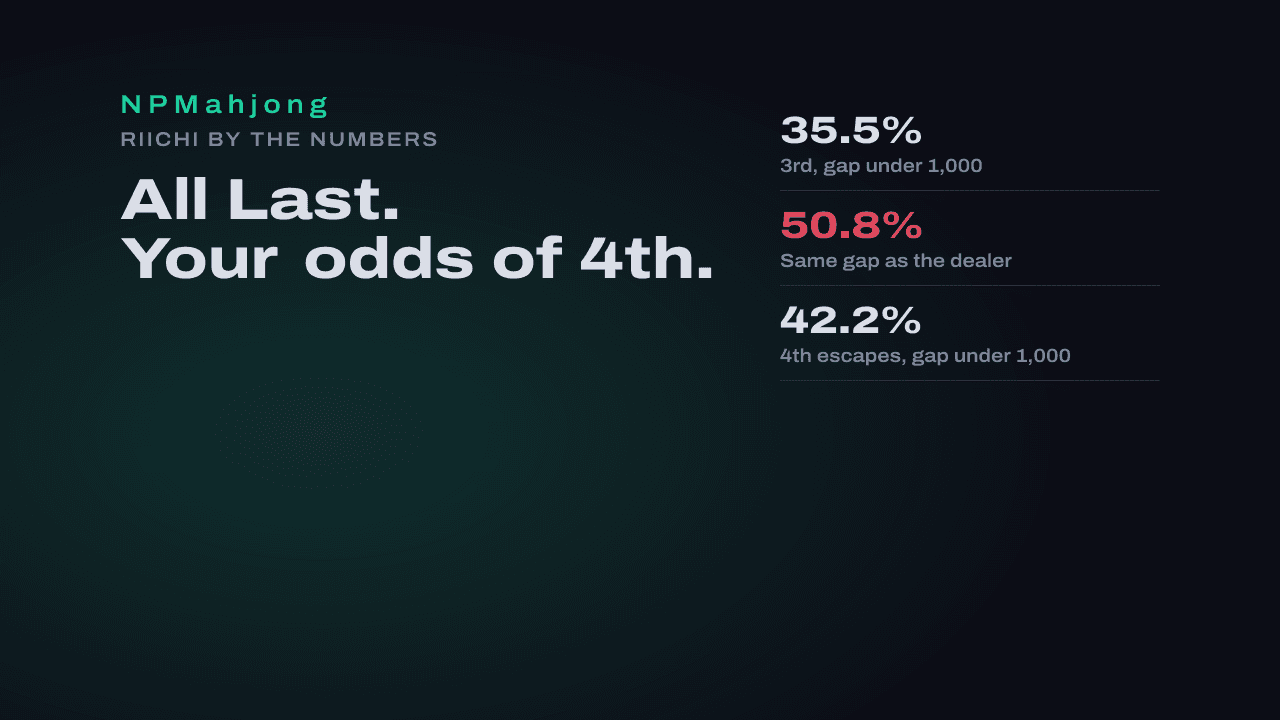
Mahjong doesn't let you swap pieces. It lets you end hands. Every hand that ends is one fewer chance for 2nd to catch you, and Tenhou logs from 2016 to 2020 show how fast the chances run out. Measured as one standard deviation, a score moves about 14,650 points from East 1 to the end of the game, 10,123 from South 1, 7,078 from South 3, and 4,831 from South 4, as the All Last numbers lay out. In the player in 1st moves least of all, 4,087.
A cheap win is the trade. It ends the hand on your terms, takes points from someone, and leaves nobody else a hand to build. A fold leaves the hand to the others: it runs on to someone else's win, or to a draw that may keep the dealer going.
A deal-in to 2nd counts twice
Say 2nd declares riichi against your 14,000 lead. Their stick goes on the table, so the lead is 15,000 while the hand runs. An average non-dealer riichi ron at turn 8 is 5,869 points, per what folding costs. If that ron comes off you:
- You lose 5,869.
- 2nd gains 5,869 plus their own stick back, 6,869.
- The lead drops by 12,738, from 15,000 to about 2,300.
One tile, and the lead that needed a tsumo to overcome now falls to almost any win. Fold instead, and say the same riichi wins off someone else. 2nd gains 6,869, and you're still 8,131 up, more than a ron off anyone else.
A deal-in to 3rd or 4th costs you points. A deal-in to 2nd also hands them to the one player who can take your place. It cuts both ways: your win against 2nd's riichi also kills the hand that would close your lead.
Count what 2nd needs
Before every hand once you're clearly ahead, work out how 2nd catches you. With you and 2nd both non-dealers, these are the swings between you and 2nd for their win, riichi sticks aside:
| 2nd's win | Closes the lead by |
|---|---|
| ron off someone else | 8,000 |
| Mangan tsumo (2,000 / 4,000) | 10,000 |
| tsumo (3,000 / 6,000) | 15,000 |
| Mangan ron off you | 16,000 |
| Haneman ron off you | 24,000 |
At a 14,000 lead, a mangan off someone else or a mangan tsumo leaves you in 1st. The ways 2nd passes you in one hand are a haneman tsumo, a , or a 7,700 or more thrown by you. The one way to lose 1st this hand that you control is a tile you throw.
When the likeliest hand that passes you comes through your discards, your job is not dealing in, and every other goal is second. Cheap wins are welcome, because they end the hand. Pushes are not, unless the hand you're pushing ends the hand too.
How the leader plays a hand
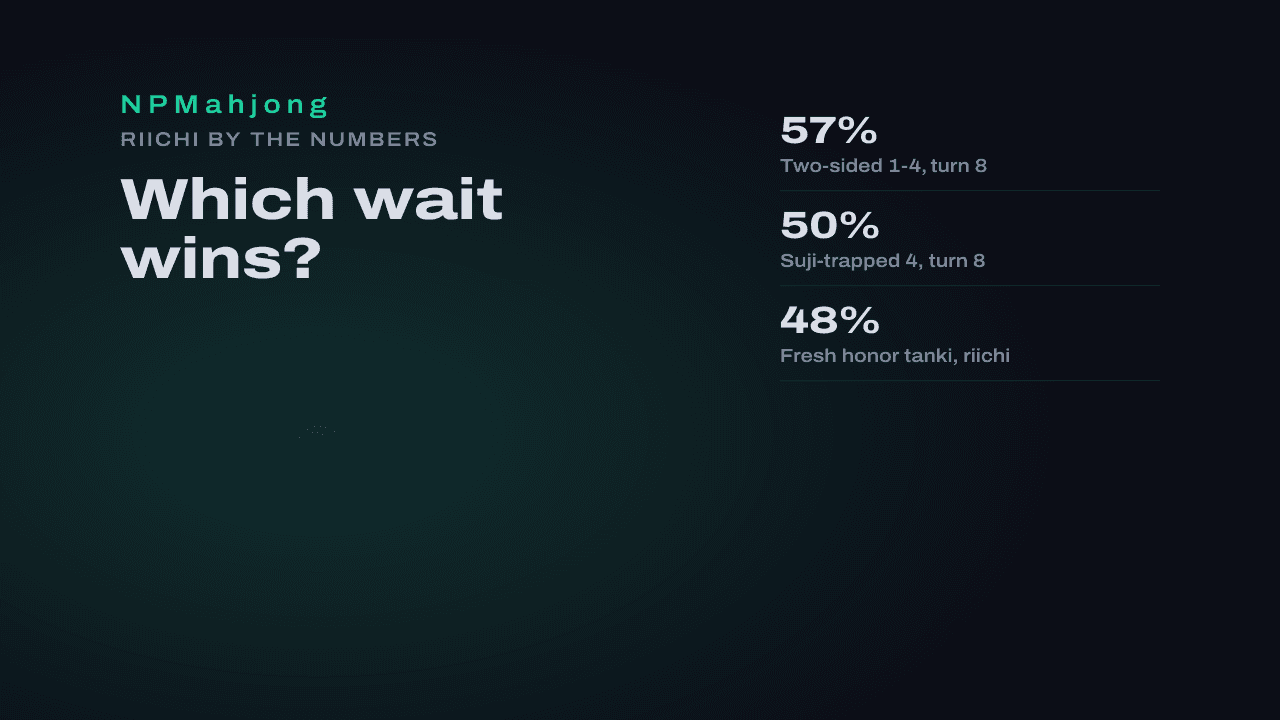
Dama over riichi. Back to the hand from the top. Riichi turns 2,000 into 3,900, and those 1,900 points barely change a 14,000 lead, which makes a cheap two-sided hand the leader's exception to the usual "riichi the tenpai" default. What riichi gives away is the choice. A two-sided riichi at turn 8 deals in 10% to 11% of the time, per the wait win rate data, and once 2nd declares on top, a riichi'd hand has to throw whatever it draws. The dama doesn't fold by default. It's still a two-sided tenpai that ends the hand, so it pushes. It keeps what riichi gave away: it can hold back the one tile that's plainly 2nd's wait, and fold if it's forced to throw a tile that could be their 7,700.
Cheap hands, early. A call that gives you tenpai on a 1,000-point hand is the leader's best trade. Open hands get there fast: in the open hand tenpai data, a hand with two calls is tenpai 53% of the time at turn 8. It ends the hand before 2nd builds the haneman they need, and the points you skip don't move your placement.
Fold against the rival, earlier. Against a riichi from 3rd or 4th, a deal-in costs you points and little else, so the ordinary push-or-fold math applies. Against 2nd it costs double. A narrow wait that would break even against an ordinary riichi is a fold against 2nd's. Keep three safe tiles in hand once 2nd starts discarding like a player in tenpai.

Rich isn't lazy
Sensei's Library adds a warning to the proverb: "There is a fine line between settling shapes by playing solid moves, and squandering points by playing slack moves." Mahjong's slack move is the reflex fold.
A two-sided tenpai against a non-dealer riichi wins about half the time and deals in about one time in six. In the rough math from what folding costs, which ignores placement, a two-sided chase breaks even on a hand worth about 440 points, so even a 2,000-point tanyao comes out ahead of the fold. Placement doubles what a deal-in to 2nd costs, and it raises what your win is worth too, since the win ends 2nd's riichi. When that tenpai would end the hand, push it even from 1st, holding back only the tile that's plainly 2nd's wait: the win is the cheapest trade you'll get. The prospect theory post opens on a leader folding a two-sided tenpai to a riichi from 2nd, when 2nd needed a direct haneman to pass. The fold protected nothing.
Folding isn't free either. A clean fold costs about 1,120 points on average, about what any hand you don't win costs. A leader who folds every hand pays that toll every hand and lets three players take turns at the lead.
Where go and chess don't fit
Even in go, the player behind gets a say. Sensei's Library quotes Barry Phease: "your opponent could choose to fight and the only way to avoid fighting is to play moves that don't give them the opportunity." Go at least has those moves, at a price. At a mahjong table you can't take the opportunity away. 2nd can riichi, and the dealer can keep dealing, no matter how quietly you play. The players behind you are running their own count of who pushes against the leader. Quiet play lowers your risk, and 2nd still gets to pick the fight.
Chess trades are permanent. Mahjong hands aren't: a draw with the dealer in tenpai adds a hand instead of removing one. On Tenhou, a game where nobody has 30,000 after South 4 goes on into the West round, as the All Last speed post explains. The trade you control is your own win.
Your next lead
Next time you're clearly in 1st from South 1 on, make the count before every hand: the lead, and what 2nd needs. Then let the count pick your fights. When a riichi lands and you're not sure, put the hand into the push-or-fold calculator, then ask the question it can't: is that riichi from 2nd?
Leads leak one tile at a time, and the leaks look like bad luck in the result screen. Send me your games for a review and I'll mark every hand where your lead walked into a fight it didn't need, plus the quiet play that would have kept it.
Was this article helpful?