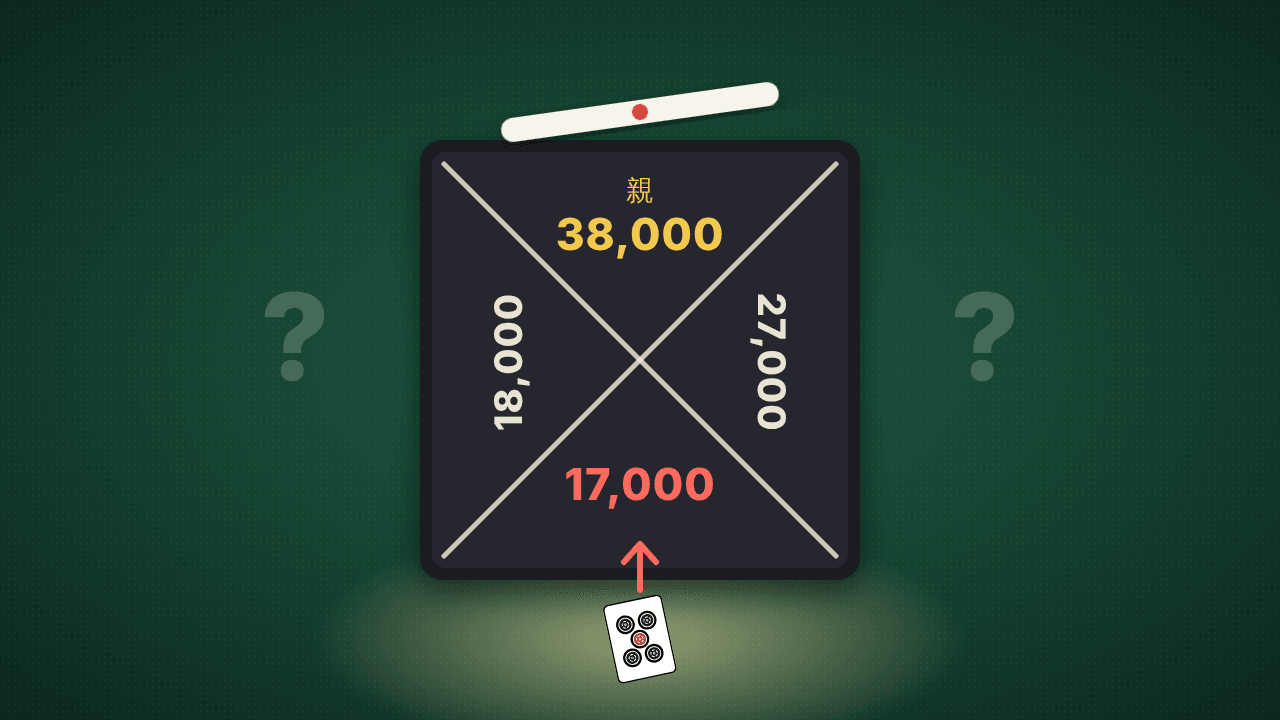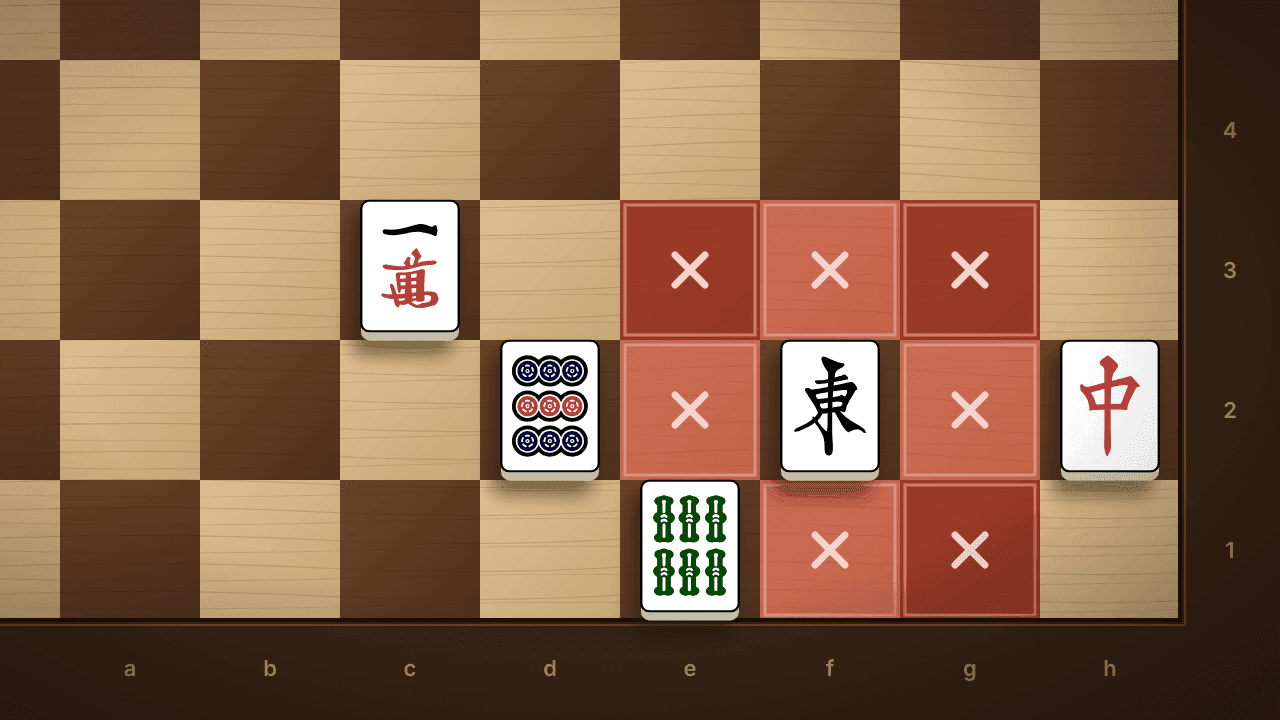
South 4, turn 5. You're a in 3rd with 13,900. The player in 4th has 12,300. 2nd has 31,200, and the dealer leads. Someone throws a  , and you hold the pair.
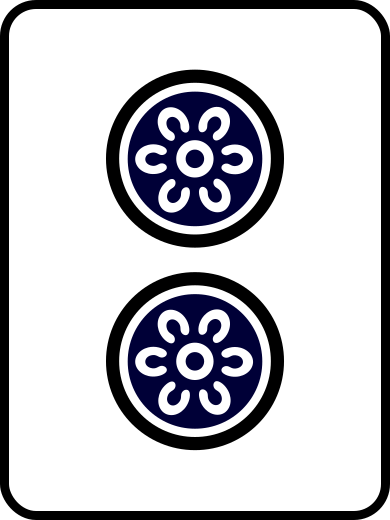
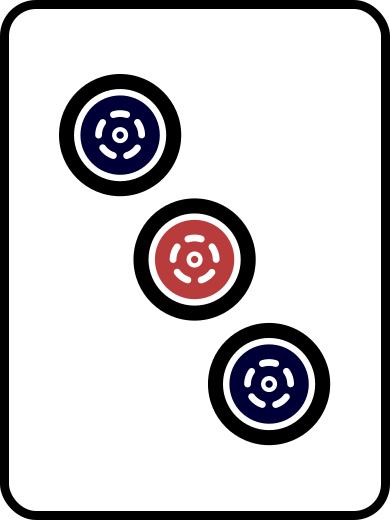
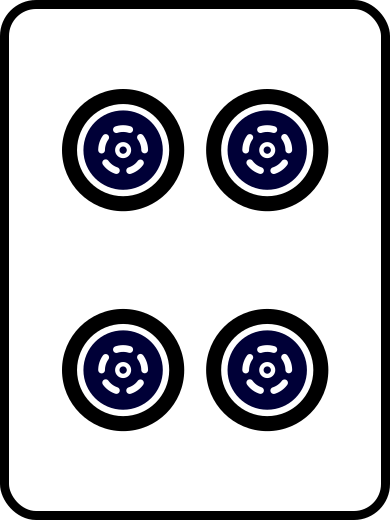
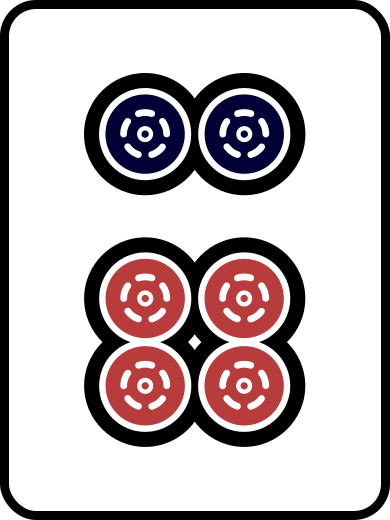
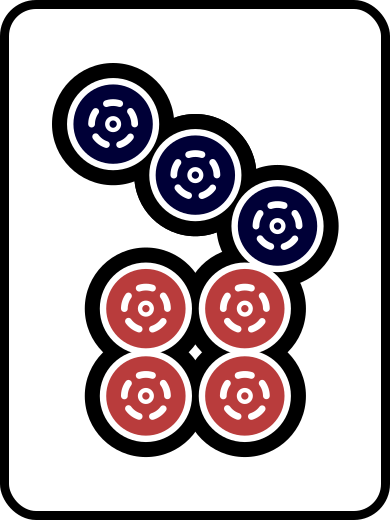
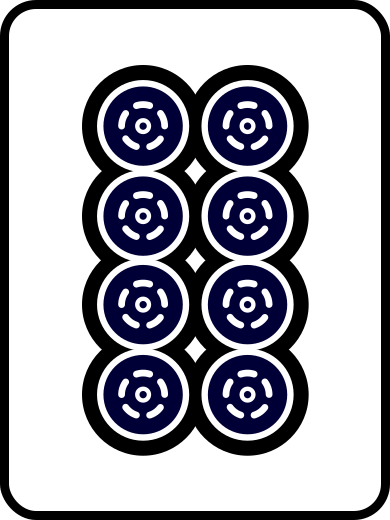
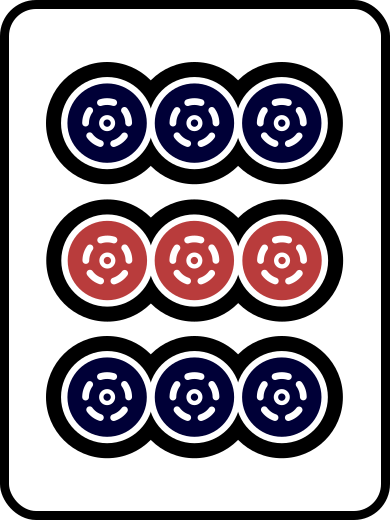
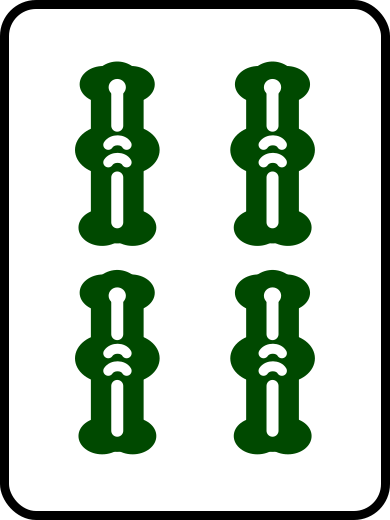
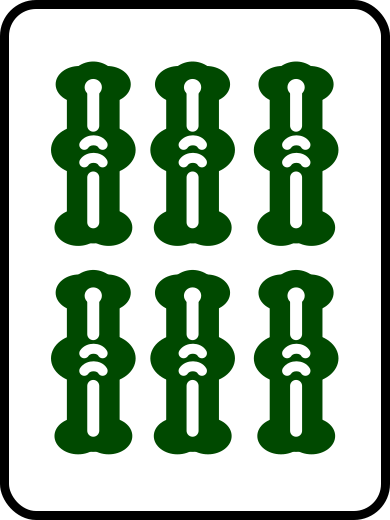
it, cut the , and you're right now: only, waiting on a 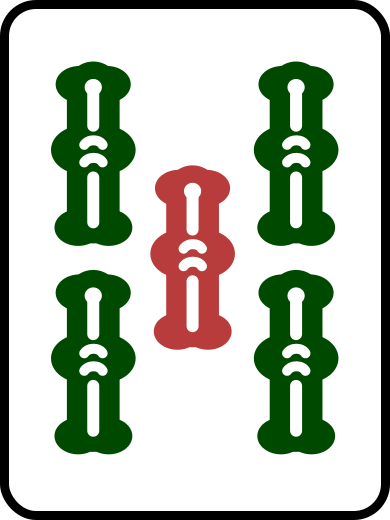 , 1,000 points. Or let it go, keep the hand closed, cut the two , and build a . and a closed is 7,700 at worst and a with a or a third . Plenty of players let it go. The hand looks too good to sell for 1,000. Sell it anyway.
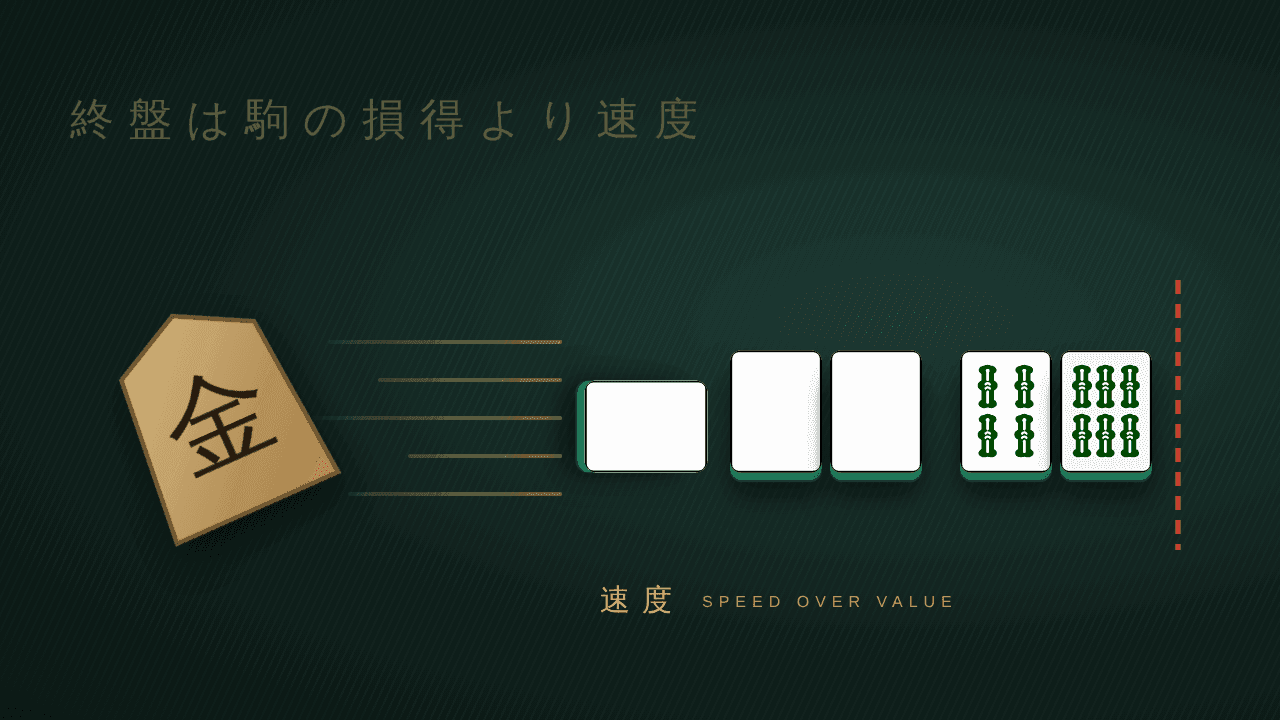
Shogi players have a proverb for this hand. Shūban wa koma no sontoku yori sokudo (終盤は駒の損得より速度): "in the endgame, speed over gains and losses of pieces." Japanese Wikipedia's list of shogi proverbs glosses it as: in the endgame, pay attention to closing in on the king quickly, not to taking more pieces. In , points are the pieces and placement is the mate.
Where the proverb comes from
Shogi teaches its endgame through kakugen (格言), short proverbs, and many of the endgame ones are about tempo. A Mynavi shogi lesson, built on diagrams from Ueno Hirokazu's book Shōgi shūban kanzen gaido: sokudo keisan hen (将棋・終盤完全ガイド 速度計算編; Mynavi, 2022), a complete guide to counting speed in the shogi endgame, opens by assuming you've heard this one, then warns that it's harder to apply than it sounds. You have to judge both kings at once.
The lesson's first diagram shows the idea in one move. Both sides are racing to mate. Copy your opponent's attack and you get mated one move first. Throw a gold away instead, a sacrifice that loses material outright, and you mate the enemy king first.
The lesson then builds its method on two words. Tsumi (詰み) is mate. Tsumero (詰めろ) is a threat of mate: a position where your king is mated if your opponent gets one more move. From those come three rules, and all three count moves. The first is a quote, and the other two are paraphrased:
- Tsumi wa tsumero ni kachi (「詰み」は「詰めろ」に勝ち). Mate beats a mate threat.
- If your king is under a threat and you have none on theirs, you have to defend.
- If your king isn't under a threat, put one on theirs, and they have to answer it.
The material doesn't count
Tenhou's manual says it in one line. Under its dan system, points change by placement, not by the game score: gēmu no tokuten de wa naku (ゲームの得点ではなく), "not the score of the game." At 7 in a , 3rd earns 0 and 4th costs 135. Your 1,000-point haku and your honitsu mangan both finish the game in 3rd. Both are worth 0. The mangan is a rook taken on the move that could have been mate.
Mahjong Soul counts a little material. Your final score minus 25,000, divided by 1,000, goes into your rank points, as the rank-up guide shows. So the mangan's extra 7,000 points buy at most 7 rank points. At Master 1 in the Jade room, 3rd pays -5 and 4th pays -180 before raw score. The placement is worth 175 points. The material is worth 7.
Meanwhile your own placement is at risk. In the Houou All Last data, a non-dealer in 3rd, 1,000 to 1,900 points above a non-dealer in 4th, finishes the game in 4th 33.2% of the time. Your 1,600-point cushion sits in that row. As a non-dealer, any win of yours ends the game with you in 3rd. That's mate. And the game ends on anyone else's win too, so each extra turn is another draw for the player trying to pass you.
| Gap to 4th | Finishes 4th |
|---|---|
| Under 1,000 | 35.5% |
| 1,000 to 1,900 | 33.2% |
| 2,000 to 2,900 | 27.7% |
| 4,000 to 4,900 | 18.0% |
| 8,000 to 8,900 | 9.5% |
Speed has a price list
The honitsu is at least two turns behind the call. To be a closed honitsu, the hand has to replace both souzu with or honors, and that takes two draws at the very best. Run every pair of pinzu and honor kinds through the site's engine and only 22 of the 136 pairs reach in two turns. The rest take longer. Then the riichi has to win.
The wait win rate data prices each turn. A two-sided riichi on 1-4 wins 79% when declared on turn 2 and 47% on turn 11, about 3.6 points lost per turn, or 3 to 4 points for each turn you wait. Two turns is about 7 points, and that's if the draws come on schedule.
The riichi itself costs a stick. Put out 1,000 and your cushion drops to 600, so any 1,000 by 4th passes you. And until the honitsu is tenpai, a draw with 4th tenpai drops you to 4th as well.
The call has a weak spot of its own. A one-tile wait on a 5 is the worst wait in that table, 39% as a riichi declared on turn 5. But it can still improve. Draw a 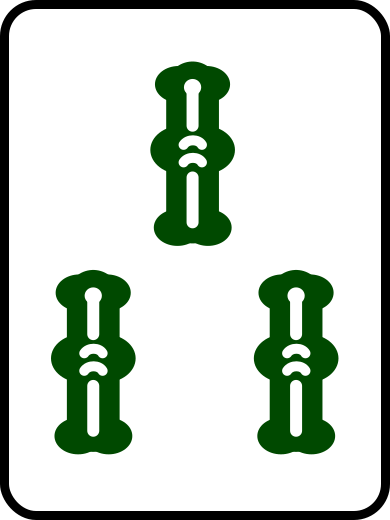 and cut the 6s for a two-sided 2-5s wait. Draw a
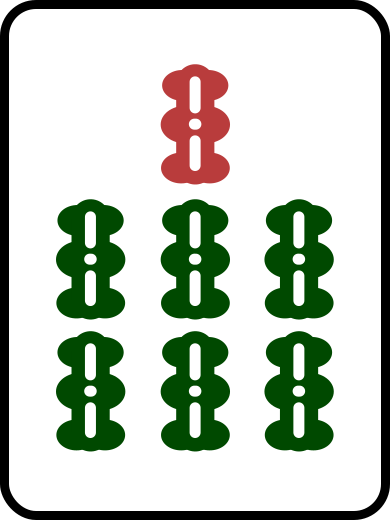 and cut the 4s for 5-8s. Take the speed now and fix the shape on the way. Value only matters if it crosses a line.
Value still counts in the East round
The proverb is about the endgame only. Wikipedia's list of shogi proverbs has an opening one about material, joban wa hisha yori kaku (序盤は飛車より角): in the opening, the side that gets the bishop in a rook-for-bishop trade comes out ahead, because a bishop, moving on the diagonals, is often active from the start. Material is worth weighing that early, while the game is still long enough for it to turn into a mate.
Points work the same way in mahjong. The same logs measure how far a score moves from the start of a hand to the end of the game, and the spread shrinks every round.
| Hand | All players |
|---|---|
| East 1 | 14,650 |
| South 1 | 10,123 |
| South 3 | 7,078 |
| South 4 | 4,831 |
In East 1 a mangan is a little over half of what the rest of the game will move, so it still has time to become placement. In South 4 the spread is under 5,000 and every hand might be the last. The 7,000 extra points of a mangan only matter if they cross a line. When they don't, they're points you'll never get to use.
One exception keeps points alive. On Tenhou, a where nobody has 30,000 at the end of South 4 continues into the West round. Check the scores before you sell a hand. If the game won't end on your win, the cushion you'd build still has a job.
Count the race before you discard
The shogi lesson's three rules carry over almost word for word. In All Last, the mate is a win that settles your placement, and tenpai on it is your threat. A riichi from the player who can pass you is the threat on your king.
- Your mate beats their threat. If a tile comes that settles your placement, take it. Don't let a go by for a bigger tsumo the placement doesn't need.
- Under threat with no threat of your own, defend. You're 3rd, , and 4th declares riichi. Almost any win of theirs passes you: a riichi tsumo does, and so does any ron with a second . Yours doesn't exist yet. Fold, cleanly.
- No threat on you, make yours. Nobody has declared, so call the haku and be tenpai. Now the player in 4th has to beat a hand that's already tenpai.
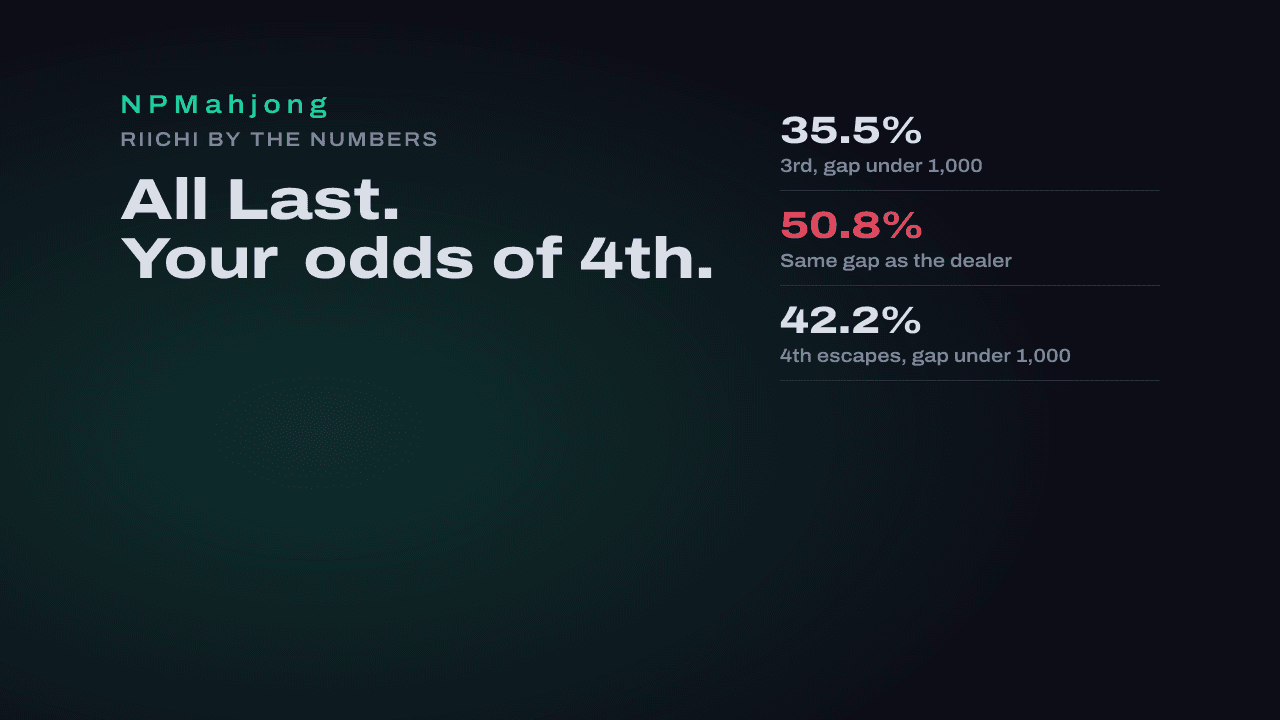
The count changes with your seat. As the dealer in 3rd, a win doesn't end the game unless it makes you top with 30,000 or more. It keeps you dealing, and the extra points become a cushion for the next hand. That's the likely reason the dealer in 3rd with a lead under 1,000 finishes 4th 50.8% of the time: every extra hand is another race. From 4th, the mate is passing one player, and the smallest hand that does it is the one to build. The All Last calculator names that hand from the four scores.

Where the analogy breaks
Shogi is a race between two kings. All Last has four players, and the race you're in is with the player one place away. The player in 2nd can end the game too, and their tsumo, or a ron off anyone else, leaves you in 3rd. A riichi from 2nd can't pass you. Only your deal-in to it can: with a 1,600 cushion, a 2,000 ron off you drops you to 4th, and a 1,600 ties, which Tenhou breaks by East 1 seat order. So don't throw 2nd a tile they can ron. But don't fold the whole hand either. Keep your tenpai with safe tiles, because folding hands the player in 4th free draws.
Shogi's endgame can be read out. A strong player counts the moves to mate exactly, down to hisshi (必至), a threat that can't be answered. Mahjong has no hisshi. Any tenpai can be stopped, and any draw can miss. You're counting odds, which is why the numbers above are rates.
Your next South 4
Before the last hand is dealt, name the mate: the smallest win that settles your placement, from each player and by tsumo. Then race to it and ignore every han beyond it. To see how often your gap turns into 4th, look it up in the All Last 4th-place calculator.

The All Last hands where you built a mangan you didn't need are easy to find in a log and easy to miss at the table. Send me your games for a review and you'll get the last hands where speed would have kept your placement, with the faster line next to each one.
Was this article helpful?