You're looking at a coaching page. You've read the books, you run every through Mortal, and your rank hasn't moved in months. Somewhere you've read that one-to-one tutoring makes students two standard deviations better. That would turn an average player into a top one.
The number is real. It comes from Benjamin Bloom's 1984 paper "The 2 Sigma Problem". It's also the high-water mark. The studies that came after found a smaller effect that is still large, and that's the one to plan around.
Where the two sigma comes from
Bloom's numbers came from the dissertations of two of his University of Chicago doctoral students, Joanne Anania and Joseph Burke. Students in grades four, five, and eight were randomly put into three groups and taught probability or cartography for 11 periods over three weeks. One group had a conventional class of about 30 students per teacher. One had the same class with mastery learning: frequent tests, then corrective work on whatever the test showed they'd missed. The third had a tutor for each student, or for two or three at a time, with the same tests and corrections.
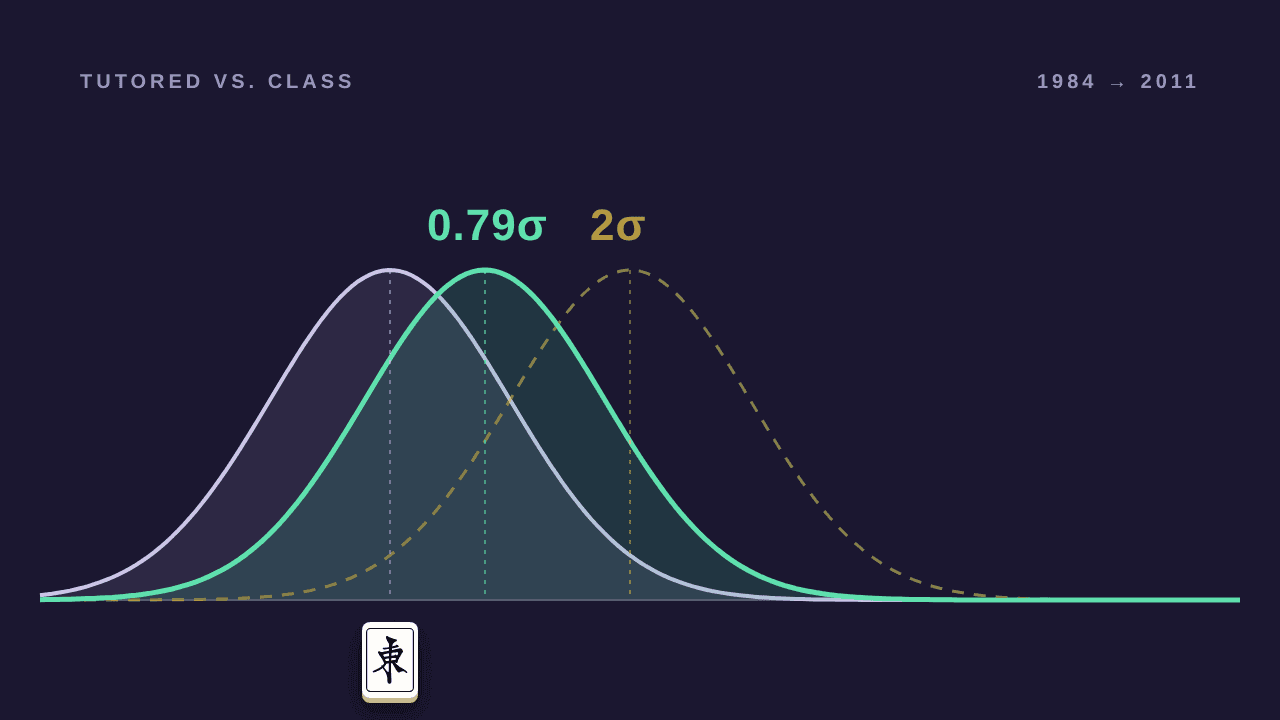
The paper reports that the average tutored student was about two standard deviations above the average of the regular class, "above 98% of the students in the control class." The mastery learning student was about one standard deviation above, ahead of 84%. About 90% of the tutored students reached the level only the top 20% of the regular class reached.
Bloom didn't present this as an ad for tutors. He called one-to-one tutoring "too costly for most societies to bear on a large scale," and set researchers a problem: find group methods that work as well. That's the "problem" in the title.
What later studies found
The two sigma didn't hold up at full size.
VanLehn's 2011 review compared human tutoring, computer tutoring, and no tutoring across the experiments he could find. The belief at the time, his abstract says, was that adult human tutors had an effect of 2.0. "This review did not confirm these beliefs. Instead, it found that the effect size of human tutoring was much lower: d = 0.79."
In 2020, Andre Nickow, Philip Oreopoulos, and Vincent Quan pooled 96 randomized studies of tutoring from preschool to grade 12. They found "consistent and substantial positive impacts on learning outcomes, with an overall pooled effect size estimate of 0.37 SD." Programs run by teachers and paraprofessionals did better on average than those run by volunteers or parents. The peer-reviewed version, published in the American Educational Research Journal in 2024, revised the pooled estimate down to 0.29, across 89 studies.
Matthew Kraft's 2020 paper on effect sizes collected 1,942 effects from 747 randomized trials of education programs. The median was 0.10 standard deviations. He proposed calling anything under 0.05 small, 0.05 to 0.20 medium, and 0.20 or more large. On that scale, tutoring at 0.29 or 0.37 is large, and 0.79 is far past the line.
| Source | What it measured | Effect |
|---|---|---|
| Bloom (1984) | Tutoring with corrective feedback, 3-week units | 2.0 |
| Bloom (1984) | Mastery learning, no tutor | 1.0 |
| VanLehn (2011) | Human tutoring against no tutoring, review | 0.79 |
| Nickow, Oreopoulos and Quan (2020 working paper) | 96 randomized tutoring studies, preK to 12 | 0.37 |
| Nickow, Oreopoulos and Quan (AERJ 2024) | 89 randomized tutoring studies, preK to 12 | 0.29 |
| Kraft (2020) | Median of 747 randomized education trials | 0.10 |
Why did Bloom's number shrink? Kraft's data points at two reasons. Small studies produce bigger effects: trials with 100 students or fewer had a median of 0.24, trials with more than 2,000 had 0.03. And narrow tests produce bigger effects than broad ones: 0.17 against 0.10. Bloom's studies were small, and they tested the unit that had just been taught. Kraft says the two sigma studies "helped to anchor education researchers' expectations for unrealistically large effect sizes."
Why coaching works: the zone of proximal development
The psychologist Lev Vygotsky (1896 to 1934) gave a useful account of why a teacher helps at all. His zone of proximal development is, in Wikipedia's words, "the range where the learner is able to perform, but only with support from a teacher or a peer with more knowledge or expertise." Below the zone, you don't need help. Above it, help doesn't land.
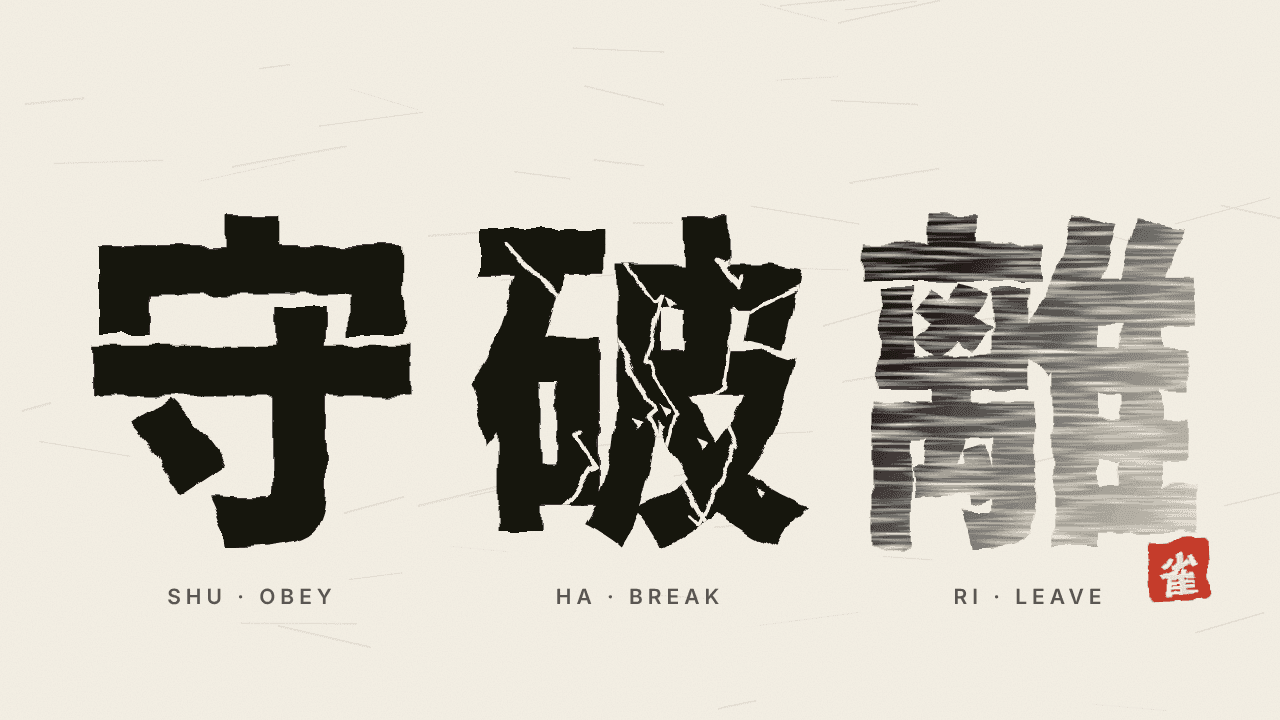
Mahjong has the same three bands, and they move with your rank. A player who still loses track of their waits can't use a lesson on placement math. A Master who still folds every doesn't need another efficiency drill. The shuhari ladder makes the same point from the other side: the right rule at one rank is the wrong one two ranks later.
Knowing more mahjong than you helps, but it's the easy part. A coach's real job is picking the one thing you can learn next and keeping you on it until you can do it alone. Bloom's tutored groups had the same ingredient: test, find the gap, correct it, test again. His mastery learning group ran that loop with no tutor and got half the effect, 1.0 against 2.0. You can run part of the loop yourself.
Can Mortal do a coach's job?
VanLehn's review has a second finding. Intelligent tutoring systems, computer tutors that mostly give feedback on each step of a problem, came in at 0.76, nearly as effective as human tutors at 0.79. One reading: much of the benefit comes from feedback on every step, and a machine can give that.
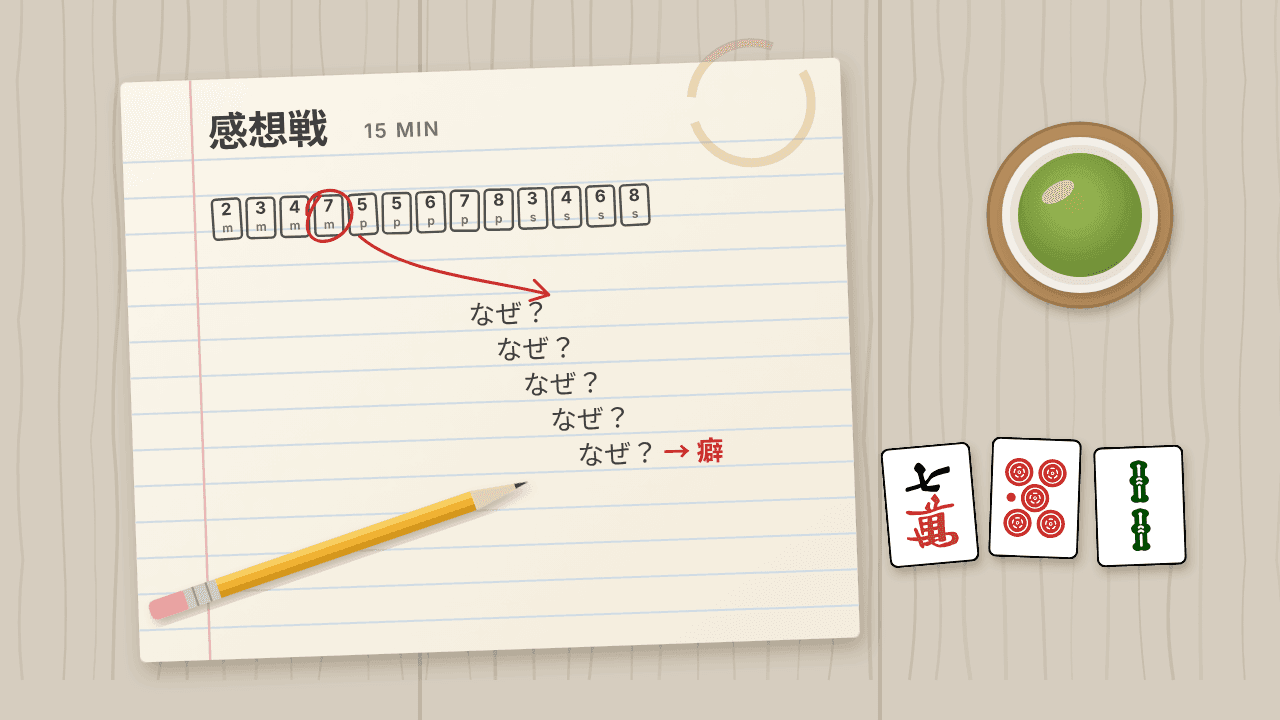
Mahjong already has the machine. Mortal and NAGA rate every discard in a log. If the bottleneck were feedback alone, they'd have closed it. What they don't do is the zone work. They flag 40 discards and don't tell you which three come from the same habit, or which one you're ready to fix. They show the better tile, not the reason in words you can use at the table tomorrow. A coach fills that gap. If you can fill it yourself with a 15-minute kansousen, you need one less.
What coaching can't do
It can't play the hands. Bloom's students did the work every period. A review that you read once and never practice is a 0.00.
It can't beat variance. Results are slow to show anything. Per the rank-up guide, a player whose true 4th rate is 22% will show anything from about 14% to 30% over 100 games, and 17% to 27% over 300. A real improvement can hide inside that range for months.
It can't skip the zone. If you're for a lesson, paying for it doesn't make you ready.
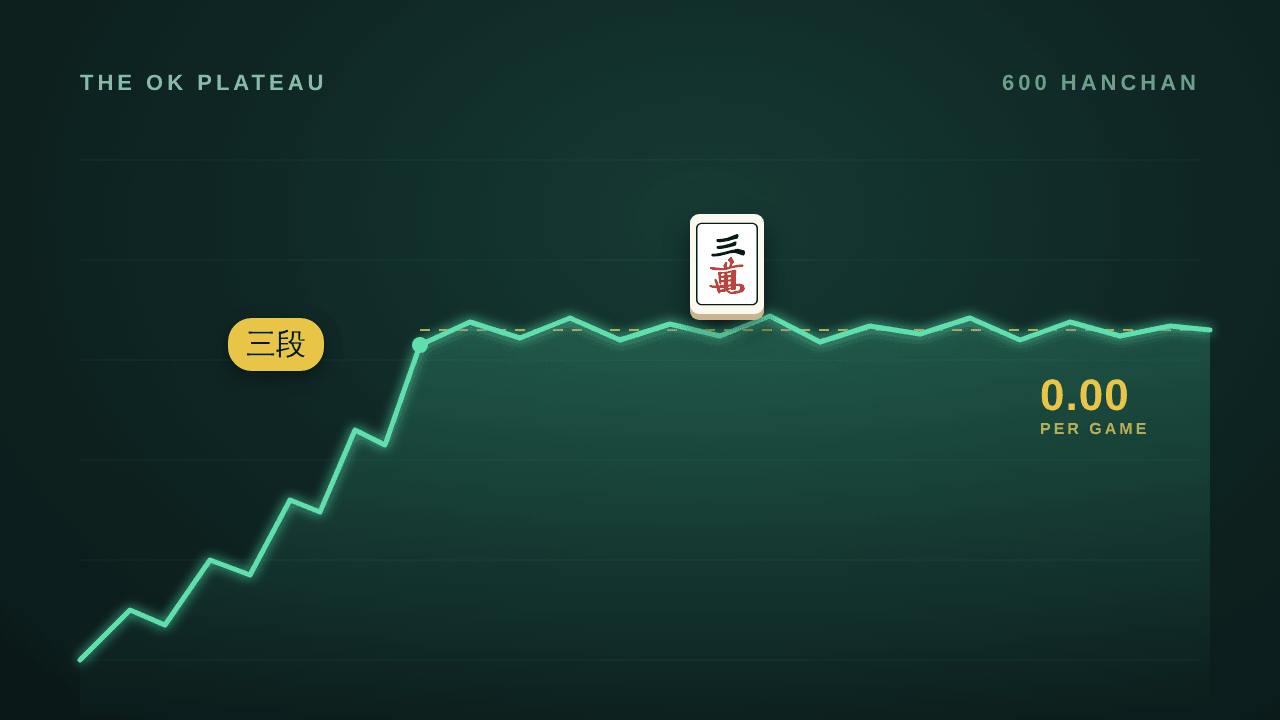
Take this as an illustration, the same one the rank-up guide and the OK plateau post use. Say coaching fixes one habit, and that habit is worth four placements per hundred games. At Master 1 in the Mahjong Soul Jade room, a 25/25/25/25 record earns 0.00 a . Turn four 4ths per hundred into 2nds and 3rds, a 25/27/27/21 record, and it earns +8.30, about 169 hanchan to Master 2. That's enough to get you off a wall.
How to get your money's worth
- Bring logs, not questions. A coach needs to see your decisions. Ten recent hanchan from your current rank beat a list of things you think you do wrong. For a single review, pick the game that hurt most.
- Ask for one habit. Three at most. A review that lists 40 mistakes is Mortal with a bigger bill.
- Measure the habit, not the rank. If the habit was pushing hands into , count those pushes in your next 20 logs. That number moves in weeks. Your rank moves in months.
- Don't judge it by placements. Even after 300 games, a gain of four placements per hundred can hide in the noise. The habit count from step 3 is your result.
Where the analogy breaks
Bloom's students were children learning a three-week unit, graded on a test of that unit. You're an adult learning a game with luck in every hand, graded by a ladder that lies to you over 100 games. None of these studies measured mahjong. Treat the effect sizes as a range of what tutoring does, not a promise.
Start with your logs
I offer game reviews and coaching in English, Japanese, and Spanish. A game review takes one log, annotates the key decisions, and names your three biggest leaks. Coaching means live sessions on your own games: we drill the spots that cost you placements, and you leave with a plan.
If your rank has been flat for 300 games, send me a log or book a coaching session.
Was this article helpful?