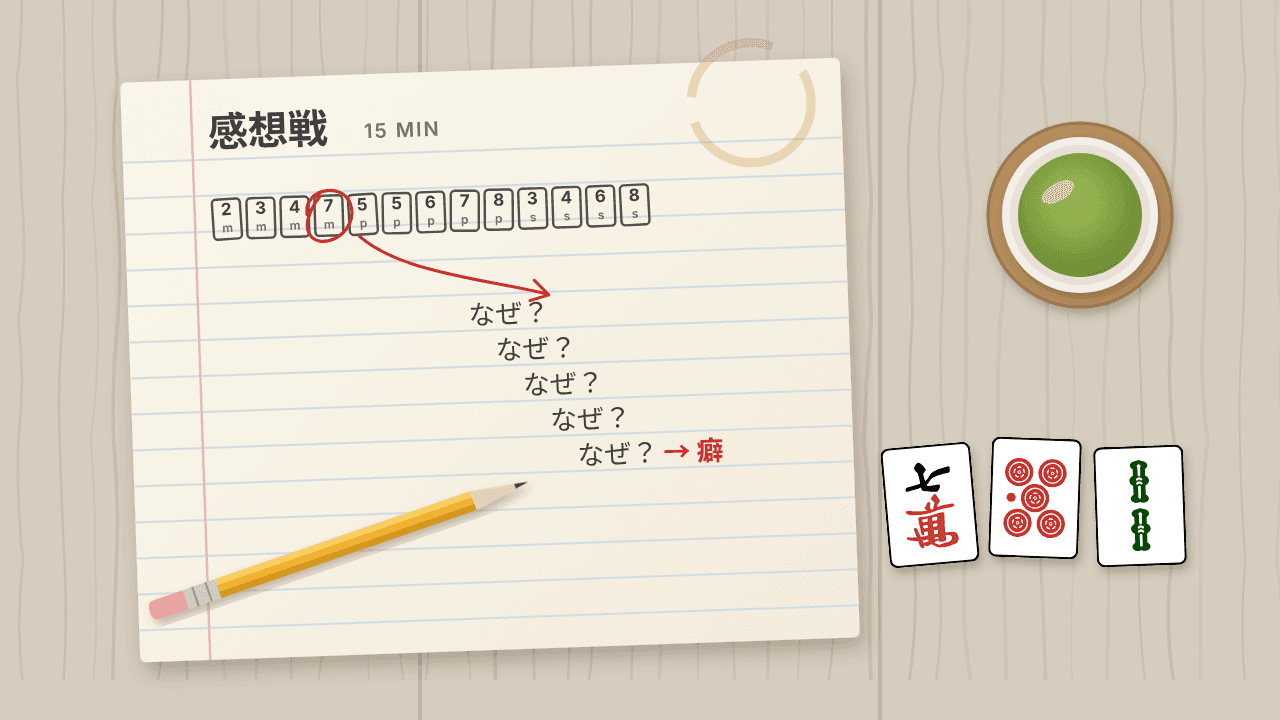
every closed . Fold completely against every . Never call a tile that doesn't give you a . Those three rules carry a player from Novice to Expert. Then that player watches a stream, sees a from a hand that never declared, and starts keeping quiet at Adept 2. The 4th rate climbs, and nobody at the table can say why.
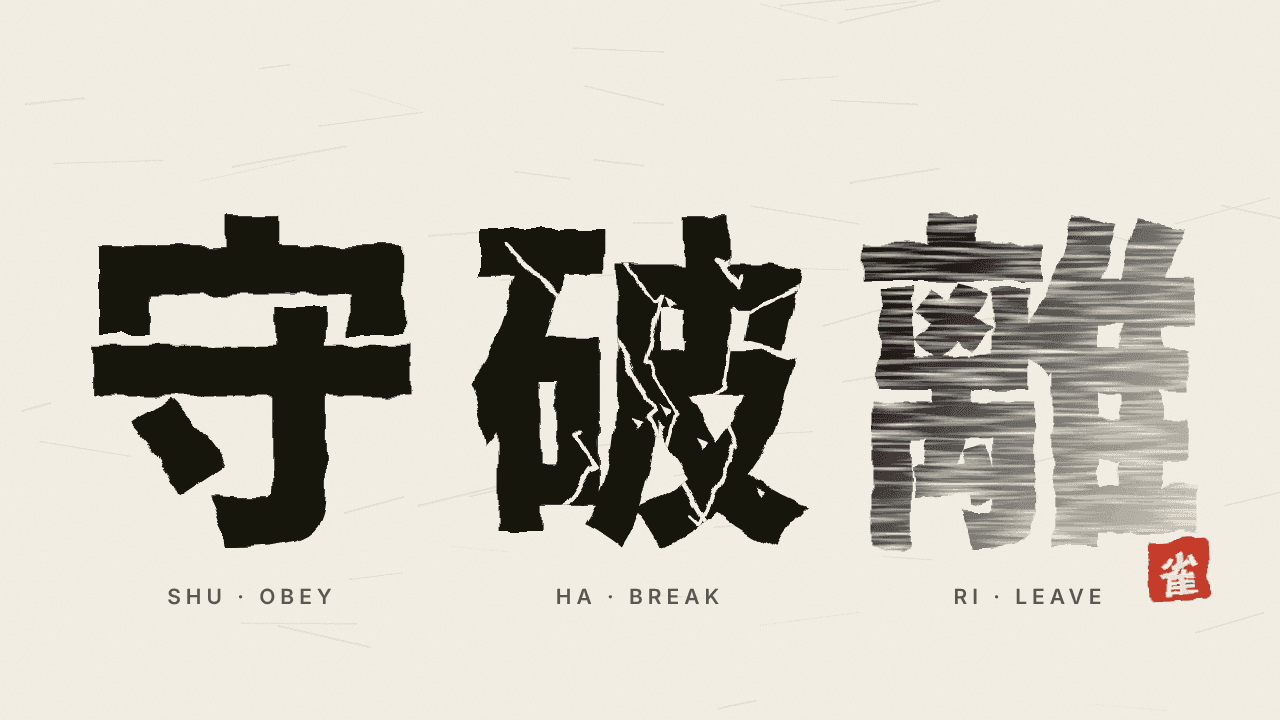
The rule wasn't wrong. The timing was. Japanese arts have a word for this: 守破離, shu-ha-ri, which Wikipedia translates as "follow the rules, break the rules, transcend the rules." The riichi rank ladder follows those three stages almost rank for rank, and most stalled players are breaking a rule one stage before they've earned it.
Where shuhari comes from
The phrase is usually credited to Sen no Rikyū, the 16th-century tea master. One of his teaching verses in the 利休道歌 reads 規矩作法 守り尽くして破るとも 離るるとても本を忘るな: keep the rules and forms to the end, then break them, then leave them, but never forget the root (Japanese Wikipedia, 守破離). A 19th-century tea master, Fuhaku Kawakami, built the three-stage version on the writings of the Noh master Zeami.
規矩作法 守り尽くして破るとも 離るるとても本を忘るな
Shu (守, protect) is repetition of one form under one teacher until your body has it. Ha (破, break) is finding where the form fails and trying something else. Ri (離, leave) is movement that's your own. Wikipedia draws the three as concentric circles, shu inside ha and both inside ri. The Western cousin is Noel Burch's four stages of competence from the 1970s, unconscious incompetence through unconscious competence (Wikipedia), whose last stage is where ri begins.
The ladder: which rank is which stage
Mahjong Soul's ranks line up with the three stages. The rank-up guide names the skill each rank demands: Novice and Adept, efficiency and yaku; Expert, folding; Master, push/fold and calls; Saint, reading and placement. Novice through Expert is shu. Master and Saint are ha. Houou, Tenhou's room, is where ri lives.
The point math enforces the order. A 25/25/25/25 record breaks even at Adept 3, Expert 3, and Master 1 in , and loses points at every rank above Master 1. From Master 1 up, cutting 4ths is worth more than adding 1sts. Each wall checks that you've learned the stage you're standing on.

Shu: the rules you obey without thinking
Riichi every closed tenpai. At turn 8 a two-sided riichi wins 52 to 57% of the time in Houou logs, and a three-sided one 65 to 66%, per the wait win rate data. Declaring one turn later costs 3 to 4 points. At Adept you can't yet read when a quiet hand wins more. Riichi.
Fold completely against every riichi. means first, then and dead honors. What folding costs has the reason in one line: one costs about five clean folds. The full-fold rule is how you learn to fold cleanly.
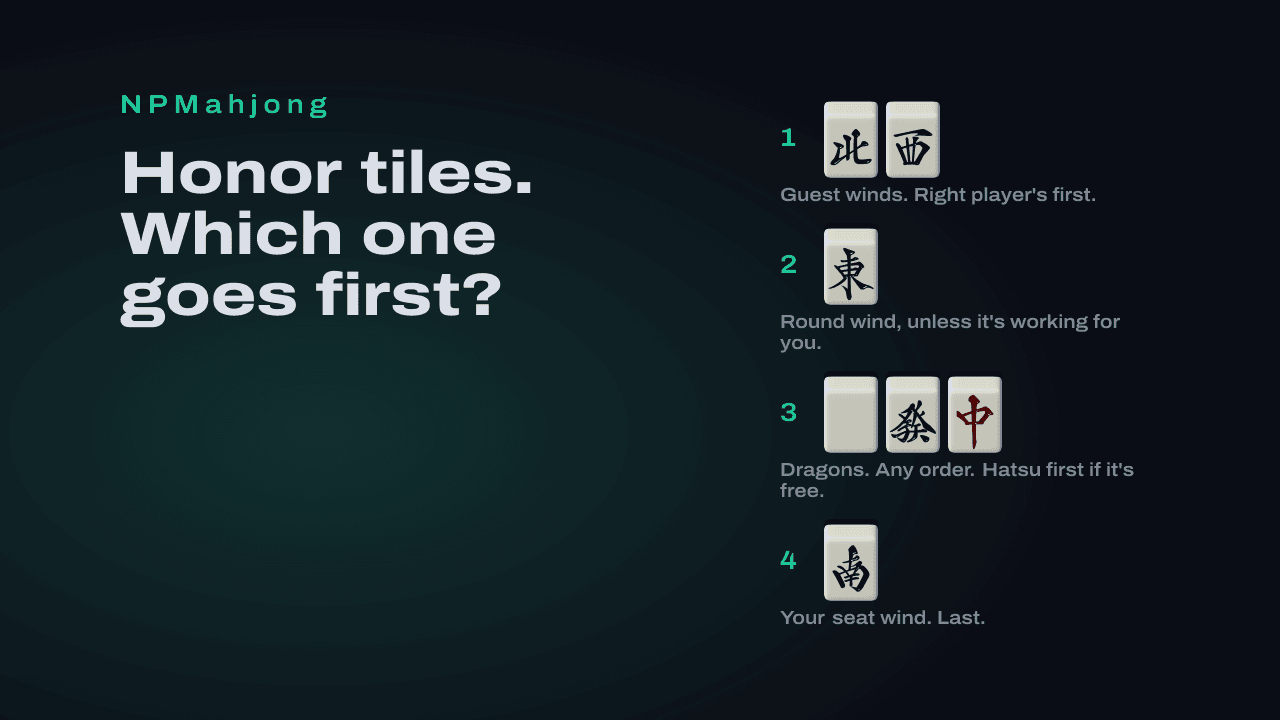
No call without a yaku. A hand that opens without , , or a flush plan can't win, and it has thrown away riichi, the one yaku every can add. Beside it sits the honor order: guest winds, isolated 1s and 9s, the , dragons, your own wind last. Follow it every hand.
Give those rules the whole of Novice, Adept, and Expert. A Houou player still obeys them on most hands. The difference is knowing which hands are the exceptions.
Ha: the exceptions, each with its number
Ha begins at Master, where 25% each is worth exactly zero. Every exception below has a Houou figure. If you can't say the figure, you aren't in ha. You're guessing.
Dama when the hand is big enough or the wait is bad. A closed tenpai with that stays quiet wins more than the same wait with riichi: a two-sided 1-4 wait wins 57% with riichi and 67% as at turn 8, and a single-tile wait on a 5 wins 33% against 39%. My rule, from Nemata's comparison: a two-sided mangan stays dama from turn 13 on, a two-sided 6,400 from turn 10. Earlier than that, riichi, because the stick, , and are worth more than the 10 points of win rate you give up. And the exception has an exception: a fresh honor wins 48% with riichi and 40% without, because a riichi makes three players throw their honors at you. Riichi the honor wait every time.

Push a two-sided tenpai against a non-dealer riichi. The fold price for a non-dealer at turn 8 is 1,120 points. A two-sided tenpai chasing a non-dealer riichi wins about half the time and deals in about a fifth. The chase beats the fold by about 3,300 points. Break the fold rule only with a . A narrow wait needs a hand worth about 2,000 to break even, and the dealer's riichi, with a fold price of 1,750, raises every bar.
Call for speed. At Master the yaku rule becomes a speed rule: call when the call gives you a yaku and real speed, like a on a hand with dora, and skip calls that leave a cheap hand with no safe tiles. The open-hand tenpai data prices that speed: at turn 8 a called hand is tenpai 27% of the time with one call, 53% with two, and 88% with three.
Break the honor order on purpose. The honor tile discard order lists its own exceptions. A -shaped hand cuts the yakuhai first and keeps the guest wind as its pair candidate. A slow hand with holds the round wind, because a of East is one of its few ways to win. keeps its honors over number tiles. Why your own wind goes last: by turn 8 a seat-wind pair had found its third tile 49% of the time, a dragon or round-wind pair 42%.
| Rule | Obey it at | Break it from | The number |
|---|---|---|---|
| Riichi every closed tenpai | Novice to Expert | Master: two-sided mangan dama from turn 13, 6,400 from turn 10 | Two-sided 1-4 dama wins 67% at turn 8, the same riichi 57% |
| Fold completely against every riichi | Expert | Master: push a two-sided tenpai against a non-dealer riichi | Wins about half, deals in about a fifth, beats the fold by about 3,300 |
| Never push a narrow wait | Expert and Master | Saint: a hand worth about 2,000 or more, and a tile you can read | Wins 32%, deals in 21%, breaks even at about 2,000 |
| No call without a yaku | Novice to Expert | Master: call for speed when the call brings a yaku and dora | Tenpai at turn 8: 27% with one call, 88% with three |
| Guest winds first, last | Novice to Expert | Master: cuts yakuhai first, slow hands keep East | Seat-wind pair finds its third tile 49% by turn 8, dragon pair 42% |
Ri: no rule to name
Ri is Houou judgment. The wait data post has an example: a choice between a 1-4 wait and a 3-6 wait, same tile count, the table says 1-4 by about 5 points, and the player takes 3-6 because the opponent on their right has cut two 1s and kept a 4 through three discards. No rule covers that. The rules are all still there, inside the decision, the way shu sits inside ri in those circles.
Don't study for ri. You arrive by obeying long enough and breaking carefully enough.
The common failure: breaking a rule a stage early
The player stuck at Adept 3 or Master 1 is nearly always breaking a rule that belongs to the stage above.
Dama at Adept. The 10-point dama bonus above comes from Houou hands with dora, in a room where everyone reads the table. At Adept the same quiet hand is a 2,000-point tenpai with one dora, kept closed because riichi "shows your hand", and it gives up the ura dora, the , and the three folds a stick would have bought. Riichi it.
Pushing single-tile waits at Expert. You're Expert 2, turn 9, and the declared riichi two turns ago. You draw a 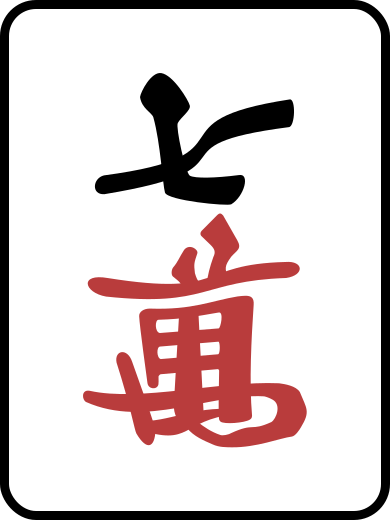 nobody has cut.
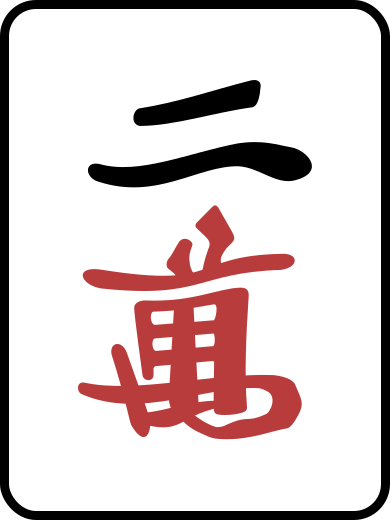
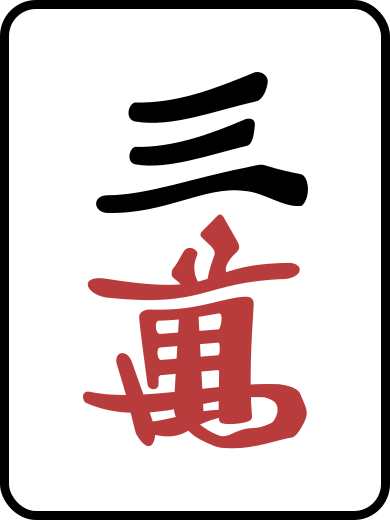
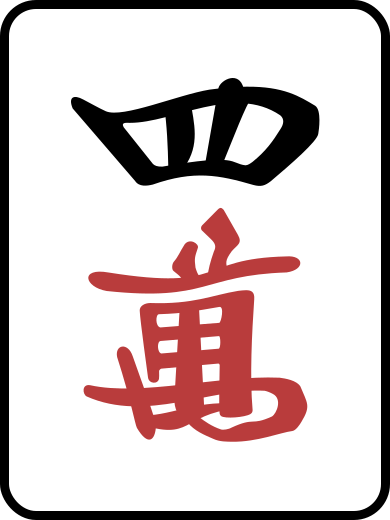
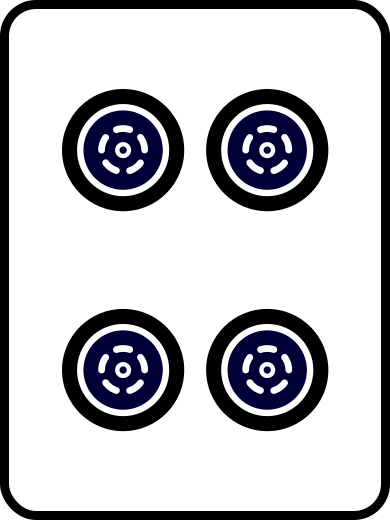
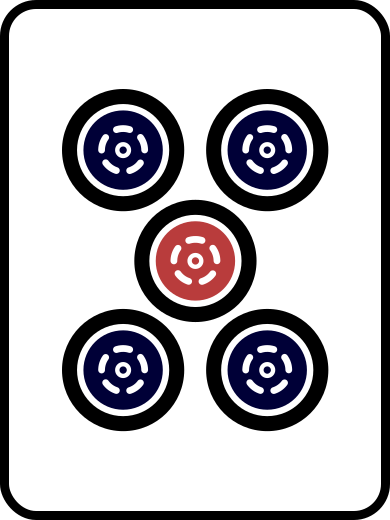
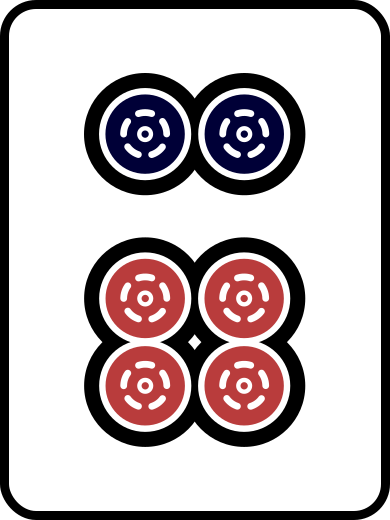
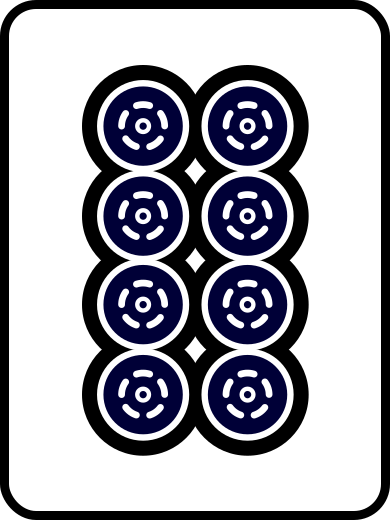
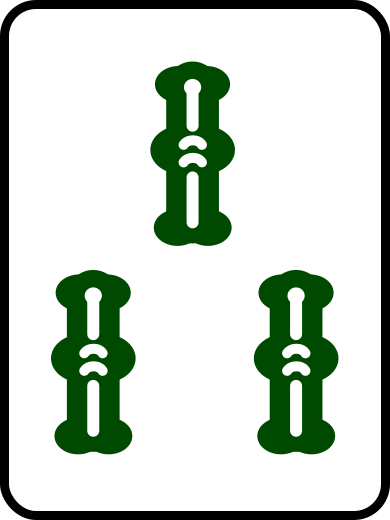
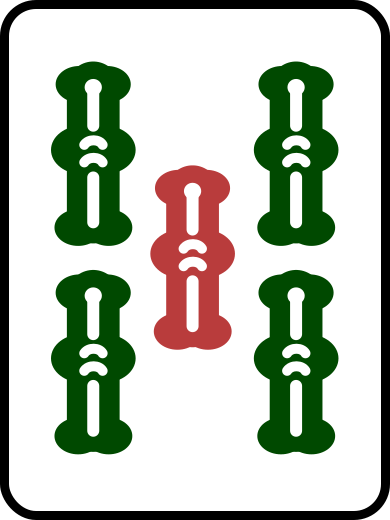
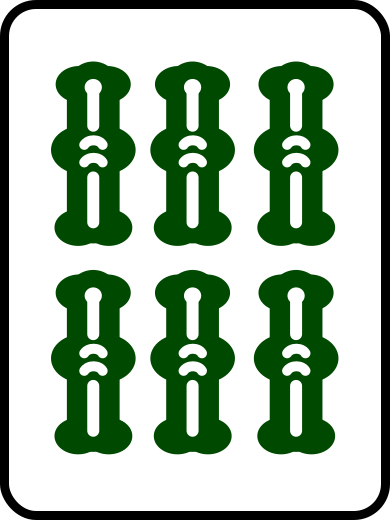
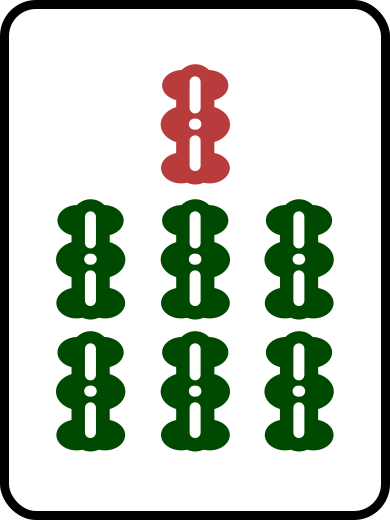
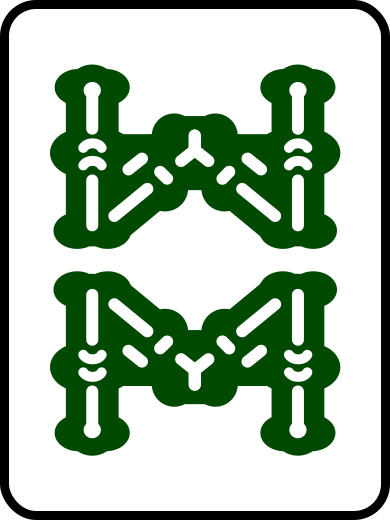
, no dora, 1,300 points, on 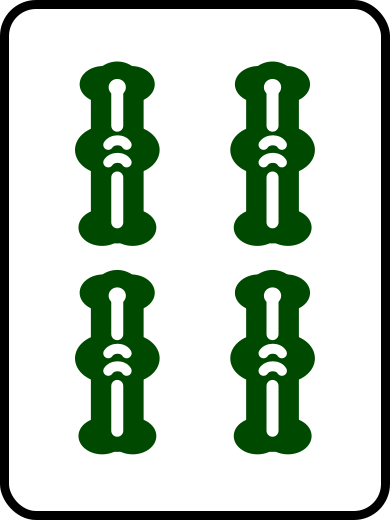 . Keep tenpai and the 7m goes out, a fresh middle tile into a riichi. A narrow chase wins 32% and deals in 21%, and its break-even hand is about 2,000. This one is 700 short. Fold it. The narrow push belongs to Saint, where you can read the tile.
A drill: ten hanchan of pure shu
For your next ten , play pure shu, whatever your rank. Riichi every closed tenpai. Fold completely against every riichi. Call only for a yaku. Honor order by the book. Each time a rule feels wrong, write the hand down in one line: turn, wait, hand value, and the rule you wanted to break.
After ten games, check each line against the table. If the number is there (a two-sided wait, a mangan, turn 13 or later), you've found an exception you've earned. If it isn't, you've found the reflex that's holding your rank down. Expect more of the second kind.
Where the analogy breaks
Shuhari was built for arts with a teacher in the room and a form that fails the same way every time. Mahjong gives you variance instead. A top player takes 1st in about 30% of games and still goes five games without one 16% of the time. A bad push wins a mangan on Tuesday, so a broken rule can look right for a month. The table of numbers has to play the teacher, because your results can't.
The stages also don't match the badges for everyone: a parlor player can have Saint reads and Adept efficiency. The rule you're breaking without a number is your stage, whatever the ladder says.
Pick your stage tonight
Below Master: write the shu rules on a card and obey them for the next ten games. At Master or above: before the next close push, run it through the push-or-fold calculator and see whether the figure is there. Either way, keep Rikyū's last clause. Break the form, leave the form, and never forget the root.
Was this article helpful?