A shogi game ends. The loser bows, and then nobody leaves. Both players put the pieces back and replay the game from move one, out loud, until they find the move that lost it. Observers lean in. In Japanese this is , kansousen, and a professional game almost always has one.
A ends. You check the placement, swear, and queue the next one. 4th place came down to two hands, and you could name them if you tried. You won't try. The next game is one click away and the review isn't.
That gap is the cheapest edge in mahjong. This post borrows the shogi habit and fits it into 15 minutes, with a template you can run tonight.
Where kansousen comes from
The word is shogi's. Japanese Wikipedia defines kansousen as replaying all or part of a finished game from the start and discussing which moves were good, which were bad, and what the best move would have been. No rule requires it. Pros do it anyway, from memory, because they remember every move. Skipping one is rare enough that the article lists the exceptions by player and year. The stated purpose is plain: 一局を客観的に見直すことができ、棋力の向上につながる. You get to look at the game objectively, and that raises your strength.
Other fields built the same ritual on their own. The US Army's after-action review starts by comparing what was supposed to happen with what did, and its article is blunt about tone: "Assigning blame or issuing reprimands is antithetical to the purpose of an AAR." Toyota's five whys, credited to Sakichi Toyoda, asks "why" until the answer is a process and not a part. Google's blameless postmortem "assumes that everyone involved in an incident had good intentions." Same idea in four uniforms: replay it, find the cause, skip the self-flagellation.
Why mahjong needs it more than shogi does
In shogi the result grades you. Lose, and a mistake exists somewhere in the record. Mahjong grades you wrong on purpose. A narrow-wait push into a wins about a third of the time, and a clean fold gets tsumo'd on. In shogi the mistake and the loss arrive together. In mahjong they arrive months apart, and if you grade yourself by results, a third of your bad pushes come home with a gold star.
The stats don't rescue you either. Among players with 500 or more Houou games, the median deal-in rate is 12.6%. In Path of Houou's look at 5,626 players with 100 or more Houou hanchan, 68% of the room sits between 11.48% and 14.24%. The whole middle of the strongest lobby on Tenhou fits in a band under three points wide. Now play 100 hanchan, about 1,000 hands. At 12.6%, the 95% margin on your rate is still about ±2 points. Your number can't tell you whether you belong in that band for months.
Streaks hide it too. A player who takes 1st 30% of the time, which is top-player territory, goes five games without a 1st 16% of the time. One bad week is noise. One bad push is not, and it's sitting in tonight's log.

The 15-minute kansousen
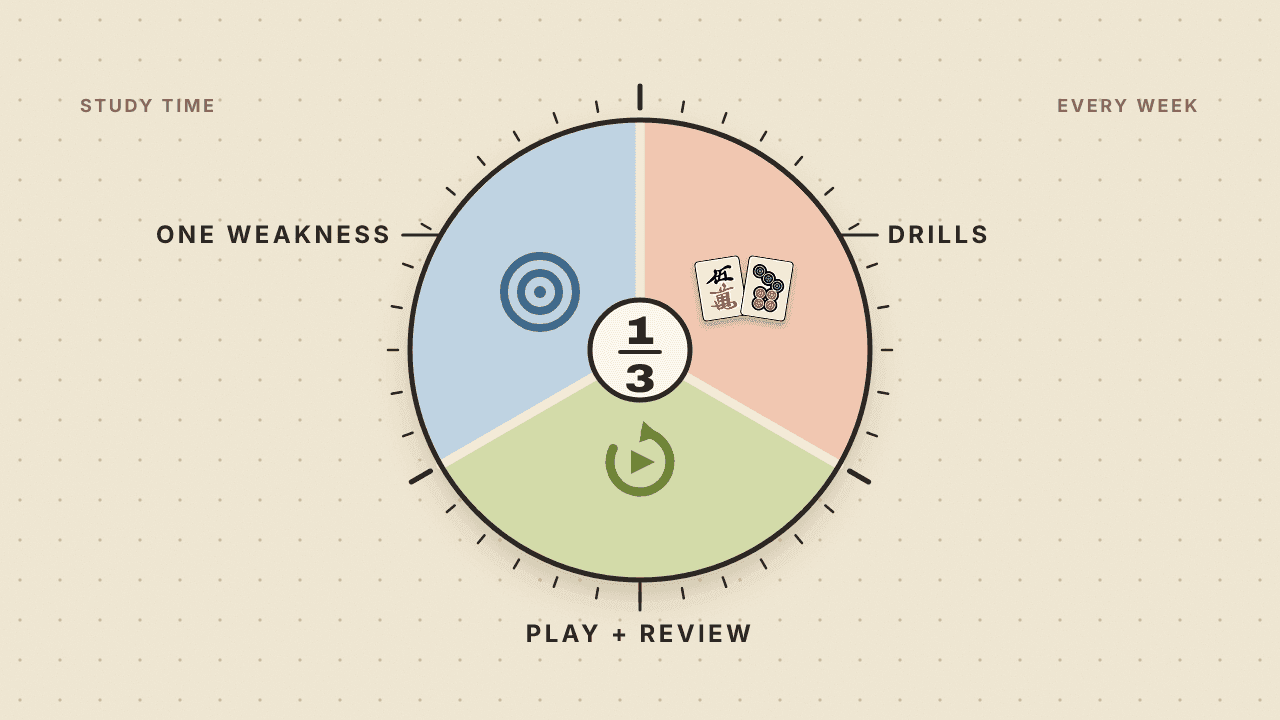
One hanchan, two hands, a timer. Do it right after the game, while you still remember what you were thinking. That's the one part no log records.
- Minutes 0 to 2: pick two hands. The first is your deal-in. If you dealt in twice, take the expensive one. The second is the hand that decided your placement, often the hand, or the one where you dropped from 2nd to 4th. No deal-in? Take the hand where you folded the most expensive .
- Minutes 2 to 6: replay the deal-in from the first discard. Step through your own turns. At each one, before you look at what you cut, say what you'd cut now. Stop at the first turn where today's answer differs from what you did. Write that turn down in one line.
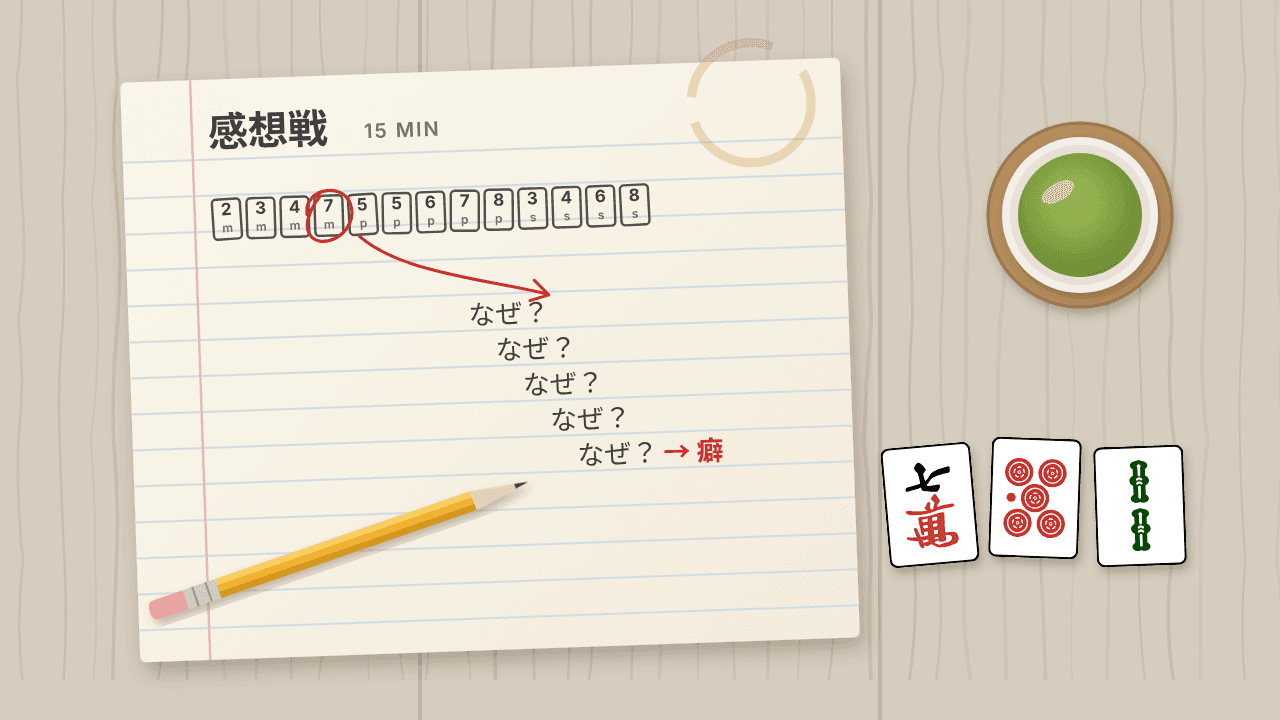
- Minutes 6 to 10: five whys on the deal-in. Tile, push, value, read, habit. The chain below shows what it looks like.
- Minutes 10 to 13: replay the placement hand the same way. One line.
- Minutes 13 to 15: open Mortal. Go to those two turns only. Compare its tile with yours. If you disagree and can't say why in one sentence, write both tiles down and move on. Don't flip your answer because a bar is taller.
That's the whole routine. Fifteen minutes, two lines in a notebook, and then the next game.
The five whys on a deal-in
You're South, turn 8. The dealer declared two turns ago. You're on a , only, worth 1,300 on a , and you draw a 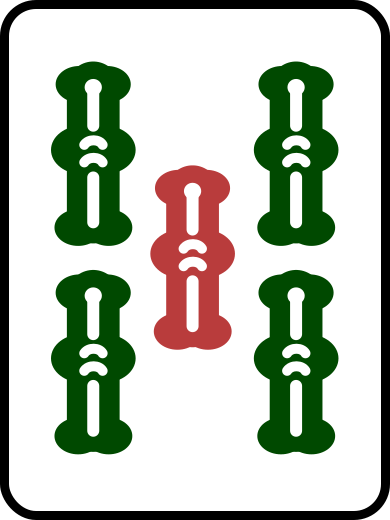 .
.


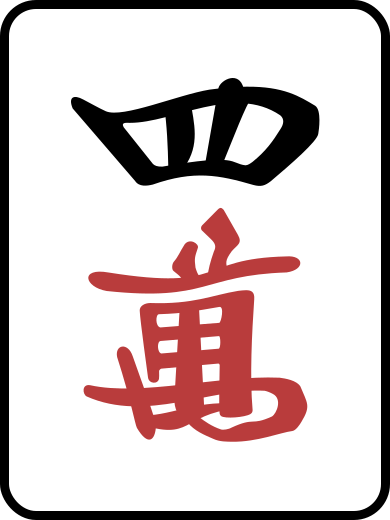

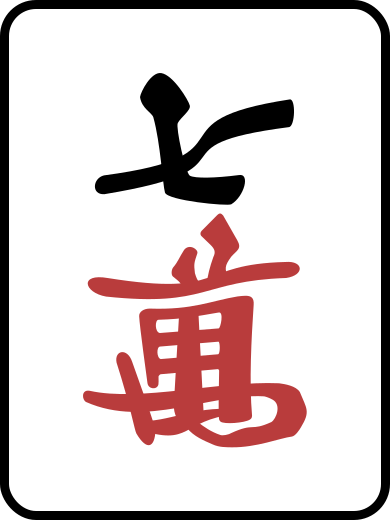

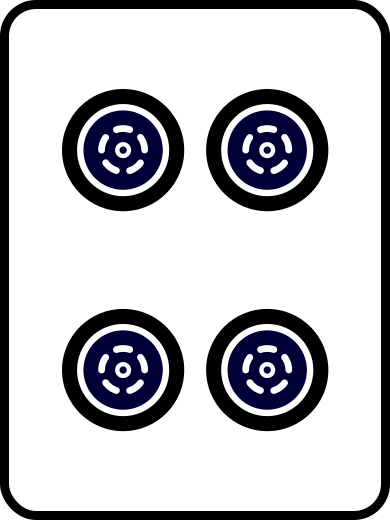
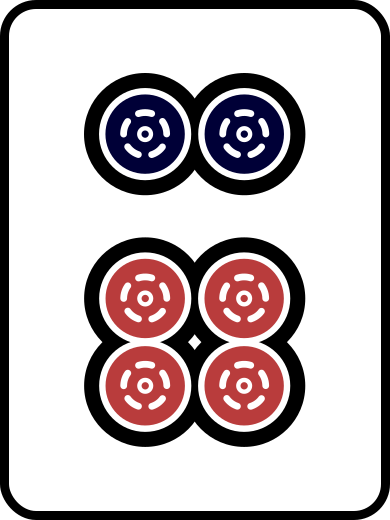
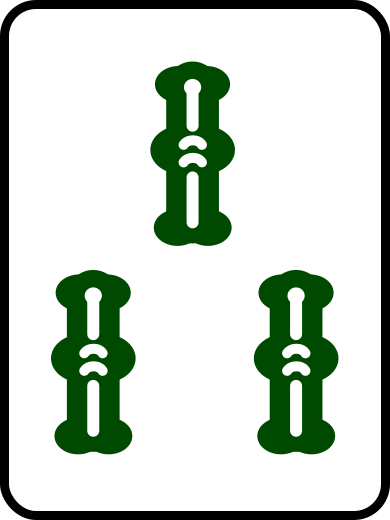
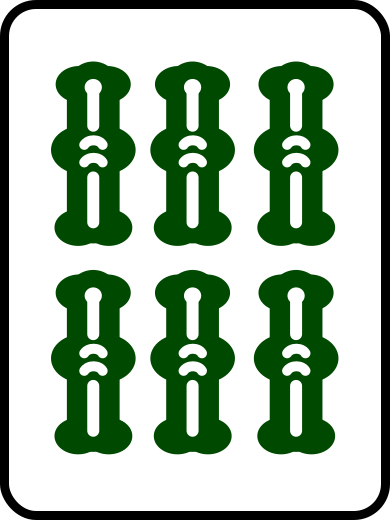
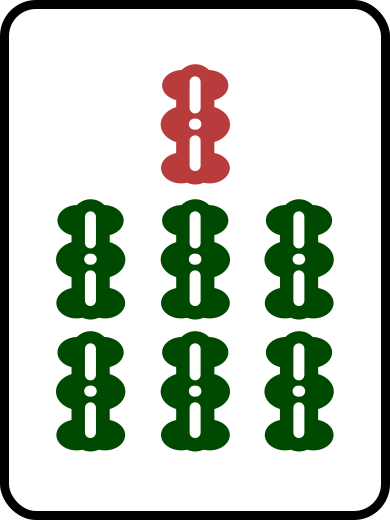
Neither 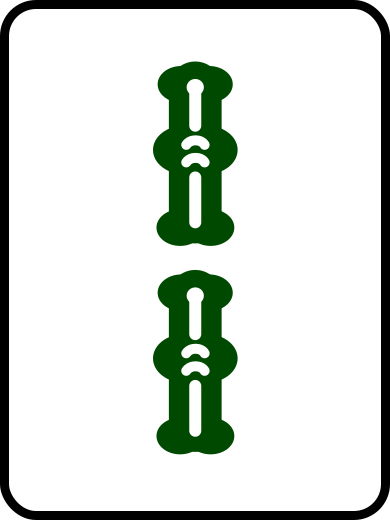 nor
nor  is in the dealer's river, so the 5s is a fresh middle tile with no . The dealer did cut a early, so your pair is two , and cutting one ends your tenpai. You cut the 5s and deal in.
- Why did you deal in? I cut a fresh 5s into a dealer riichi.
- Why that tile? It was the only tile that kept my tenpai.
- Why keep a 1,300-point tenpai against the dealer? Because I was tenpai, and tenpai felt like permission.
- Why did it feel like permission? Because I never priced it. A single-tile wait on a 4, 5, or 6 wins 33 to 36% of the time at turn 8, and that's with riichi behind it. Folding against the dealer's riichi costs about 1,750 points at turn 8, and even against a riichi a narrow-wait chase needs a hand worth about 2,000 to beat folding. This was the dealer, and the hand was 1,300.
- Why don't you price it? Because I decide push or fold by whether I'm tenpai, not by what the hand is worth.
The chain ends at a habit, "tenpai means push," and a habit is something you can change. "I got unlucky" ends at the tile, and nothing changes. The standard criticism of the five whys is that people stop at a symptom. Keep asking until the answer describes you, not the hand.
The one-line journal entry
Every review produces one line per hand. Keep the format fixed so you can scan a month of them in a minute.
game, hand, turn: what I cut, what I'd cut now, the habit
2, S3, t8: 5s into dealer riichi with a 1,300 kanchan. Fold with 3s. Habit: tenpai means push.
After twenty lines the habits start repeating. That's the review no stats page can give you, and it costs nothing.
| Minutes | Step | What you write |
|---|---|---|
| 0 to 2 | Pick the deal-in and the placement hand | Two hand numbers |
| 2 to 6 | Replay the deal-in from the first discard | The turn you'd change |
| 6 to 10 | Five whys on the deal-in | The habit at the end of the chain |
| 10 to 13 | Replay the placement hand | The turn you'd change |
| 13 to 15 | Open Mortal on those two turns | Its tile next to yours, if they differ |
Why Mortal goes last
Mortal is free, open source, and built by Equim. Opened first, it ruins the review. You look at the bars, you nod at the tall one, and you learn that Mortal would have cut the 3s. You knew that. What you needed was the reason you didn't.
So form your view, then check it. The KillerDucky viewer on mjai.ekyu.moe has a setting for exactly this. In its own words, "Click on discard bars to toggle spoiler-free WWYD mode", which hides Mortal's evaluations until you click to show them. Decide, reveal, compare.
Ignore the match rate while you're at it. It counts every decision once, so a turn-2 honor cut weighs the same as the South 4 push, and agreeing with the AI on every easy discard tells you nothing about the two hands that decided the game.
A human review goes further than the bars. This review of a Tenhou log walks a full game hand by hand and names the habit behind each mistake, which is where your five whys should land on their own.
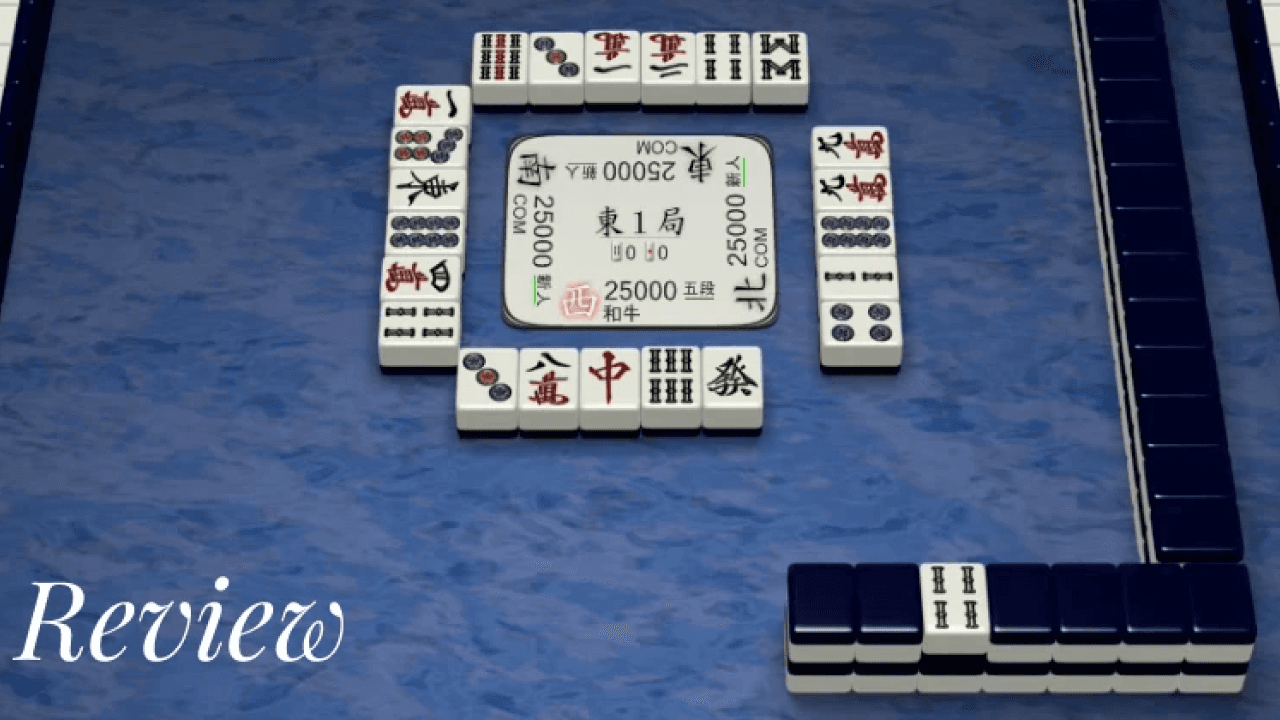
Where the analogy breaks
Shogi players review together. Online, nobody stays. Your opponents are three usernames who have already queued again, so you review alone, and alone it's easier to go easy on yourself. Reading the line out loud helps. So does a friend who plays, once a week.
The log shows you too much. In shogi both players saw the whole board. Your replay shows the dealer's hand, so you now know the 5s was the wait. You didn't know that at turn 8. Grade the push by what you could see then: the river, the turn, the value, the wait. A push that was right and dealt in stays right. Write it down as right, and don't invent a lesson.
Fifteen minutes finds the loud leaks: pushes, folds, choices. It misses the quiet ones, like calling too often or declaring riichi a turn late, which only show up over hundreds of hands. For those, paste five logs into the Tenhou log stats tool once a month and read the range on each bar, not the point. The range is what that many hands can honestly tell you.

Tonight, after the last hanchan
Don't queue. Pick the deal-in and the placement hand, replay them, run the whys, write two lines, then open Mortal. Fifteen minutes.
If you want a second pair of eyes on those lines, send me the games and the notebook. I'll tell you which habit is costing you the most and what to play instead.
Was this article helpful?