
is paid as a , open or closed on Tenhou. It needs no winning hand. The hand ends in an , every tile you discarded is a terminal or an honor, and nobody called any of them. You collect a mangan as if you had won by tsumo.
The Japanese is 流し満貫. This site's glossary lists it as Mangan at Draw and marks it a house rule. Tenhou and Mahjong Soul both play it in ranked games. The EMA 2016 rules don't.
What the discards need
Every discard is a 1, a 9, or an honor. One 2 through 8 in your pond ends it. So does one call on your discards: a , a , or a by any opponent, even on a 9 or a dragon.
A pond that still qualifies at the draw:
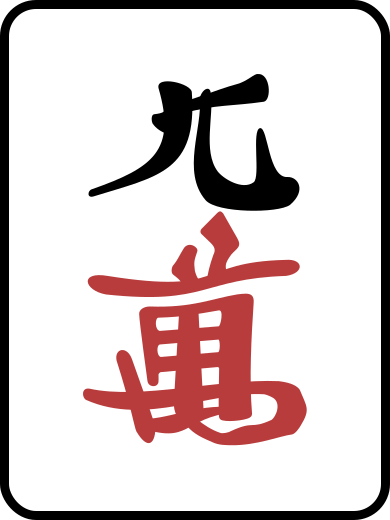
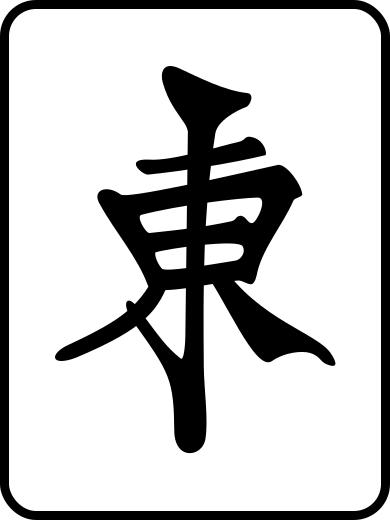

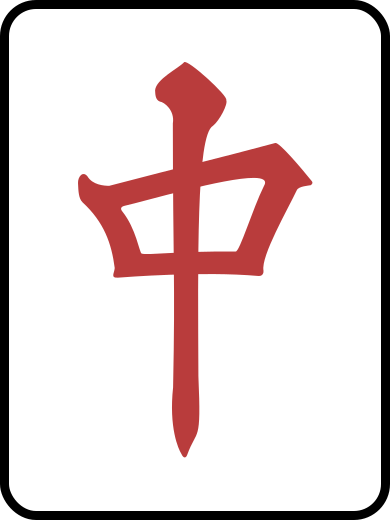
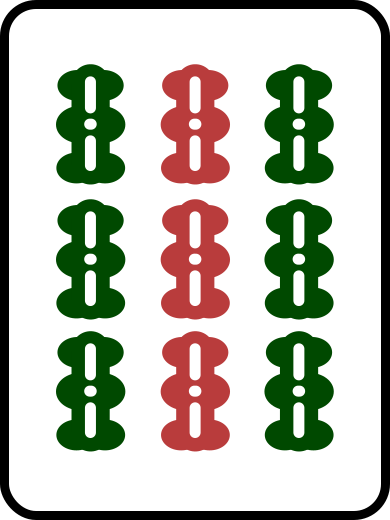
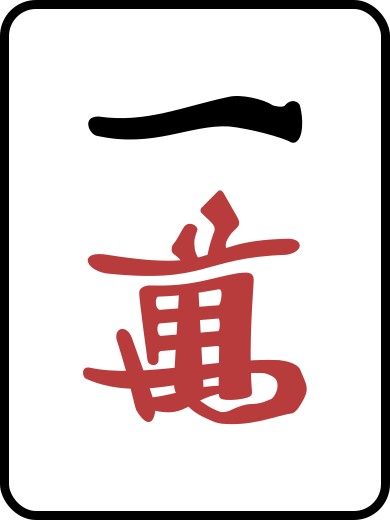
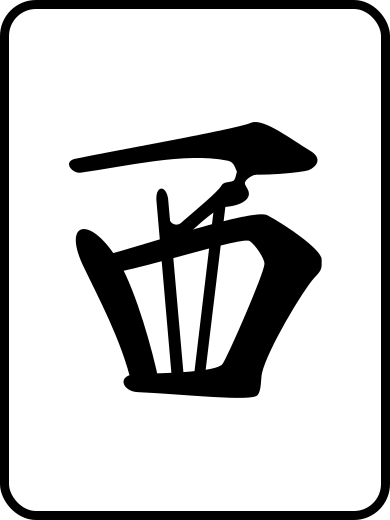

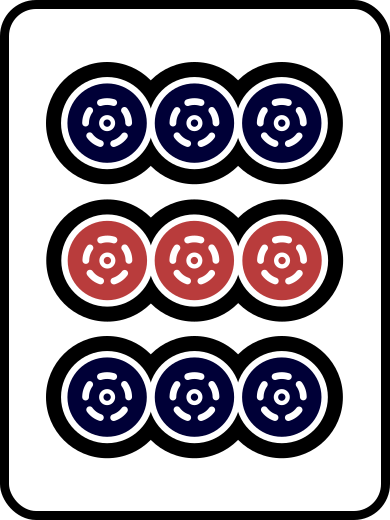
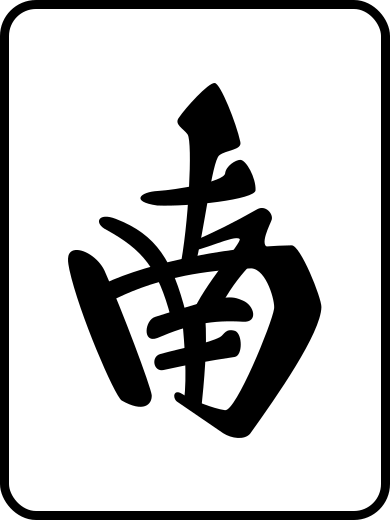
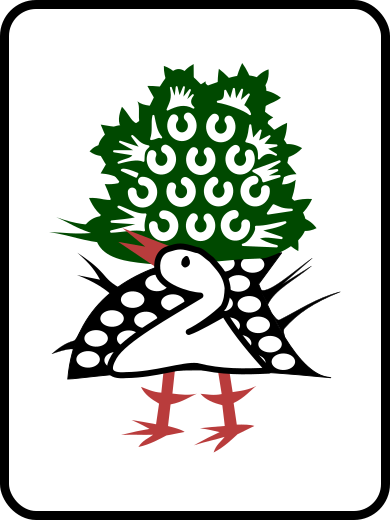
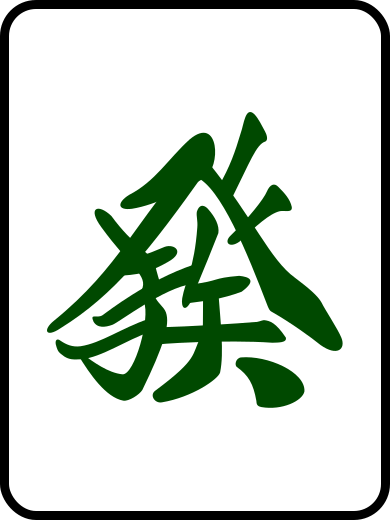
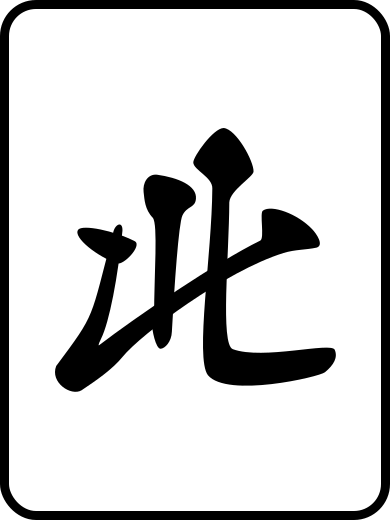
Seventeen discards, and each one is a terminal or an honor. If an opponent had called pon on that , the pond would stop counting. A 5 pin thrown in the middle would do the same.
The hand in front of you doesn't matter. You don't have to be , and the hand doesn't need a yaku. The pond is the whole condition.
How it is paid
Nagashi mangan pays like a mangan tsumo. The other three players all pay you, as if you had drawn your winning tile.
| You are | Dealer pays | Each pays | You collect |
|---|---|---|---|
| Non-dealer | 4,000 | 2,000 | 8,000 |
| Dealer | You deal | 4,000 | 12,000 |
As a non-dealer, that's 4,000 from the dealer and 2,000 from each of the other two: 8,000 in all. As the dealer, it's 4,000 from each of the three non-dealers: 12,000 in all. These are the same numbers the scoring guide gives for any mangan tsumo.
No noten payments
On an ordinary exhaustive draw, the players pay the tenpai players 3,000 in all. The tenpai guide has the table. Nagashi mangan takes that payment's place.
Tenhou's rules put it as 聴牌清算を満貫清算に代替: the mangan settlement replaces the tenpai settlement. Mahjong Soul's ranked rules use the same words. Tenpai players collect nothing extra, and noten players pay nothing extra.
Who deals next
Tenpai still decides the deal. Both Tenhou and Mahjong Soul write 親の聴牌で連荘: the dealer deals again if the dealer is tenpai. A dealer who scores nagashi mangan with a noten hand passes the deal. A tenpai dealer keeps it, whoever collected the mangan.
Your own calls
Tenhou answers this in one line: 自分の河が鳴かれていない場合に成立。自分が鳴いた場合でも成立. Your pond must have no calls on it, and your own chi or pon doesn't disqualify you.
Mahjong Soul's Japanese FAQ states the condition as 自分の捨て牌がすべて么九牌で他家に1枚もポン・チー・カンをされなかった: every discard a terminal or honor, and none called by another player. It names no rule about your own calls, and its ranked rules page doesn't either.
The EMA 2016 rules describe a stricter version, with a concealed hand as one of the conditions. The glossary card notes that some rules want a too.
Abortive draws
Mahjong Soul's ranked rules add one exception. After an abortive draw on four or , nagashi mangan doesn't count and nobody settles anything. It needs the wall to run out.
Honba and riichi sticks
Tenhou's rules and Mahjong Soul's ranked rules don't say whether add to a nagashi mangan, or who takes the riichi sticks on the table. The payment table above leaves both out. The scoring guide covers how they work on an ordinary win.
The EMA 2016 rules, in the section on obsolete hands, describe the house rule as payment equal to a self-drawn mangan, plus counters and riichi bets. That is how the house rule reads there, not an EMA rule.
Tenhou, Mahjong Soul, and EMA 2016
- Tenhou: played in ranked games. Replaces the tenpai payments. Your own calls are allowed.
- Mahjong Soul: played in ranked games. Replaces the tenpai payments. Not paid after a four-riichi or four-kan abortive draw.
- EMA 2016: not used. The revision notes say "Nagashi Mangan is removed", and section 4.2.6 lists it under obsolete hands.
Common mistakes
- Counting it as a win. Nothing is ever won. The hand still ends in an exhaustive draw.
- Paying noten payments on . On Tenhou and Mahjong Soul, the mangan replaces them.
- Keeping the deal on nagashi alone. The dealer needs tenpai to deal again.
- Forgetting one call kills it. A pon on your 9 man counts as much as a middle tile in the pond.
- Expecting it after four riichi on Mahjong Soul. That draw is abortive, and nobody settles anything.
What sits with it
Nothing. The EMA 2016 description says the hand can't be combined with any other hand, and no winning shape exists to add yaku or to. The last draw that ends the wall is also where haitei and houtei live: if someone wins on that tile, the hand isn't a draw, and nagashi mangan never comes up.
Price a mangan tsumo
The score calculator pays a mangan tsumo the same way: 2,000 and 4,000 for a non-dealer, 4,000 from each player for the dealer.
Open the score calculator