Mahjong solitaire is a computer game. A Stanford student named Brodie Lockard wrote the first version in 1981 on the PLATO system and called it Mah-Jongg. Five years later Activision sold it as Shanghai and told buyers it was a centuries-old Chinese pastime. Lockard never said that. The puzzle shares the pictures on its tiles with the game it's named after, and nothing else.
It's a good puzzle with a better origin story than most. The story first, then the real game.
Where mahjong solitaire comes from
A Stanford student and a borrowed terminal
Brodie Lockard grew up in Tucson and went to Stanford as an English major. He added math and computer science courses for the job prospects. A friend told him about PLATO, a computer system Stanford didn't have, and he built a tutorial on it for his father, a professor at the University of Arizona.
In December 1979 he was hurt dismounting a trampoline. He woke in hospital on a breathing apparatus with his arms and legs paralyzed. The Stanford Daily headline the next month read "Gymnast remains paralyzed after December accident."
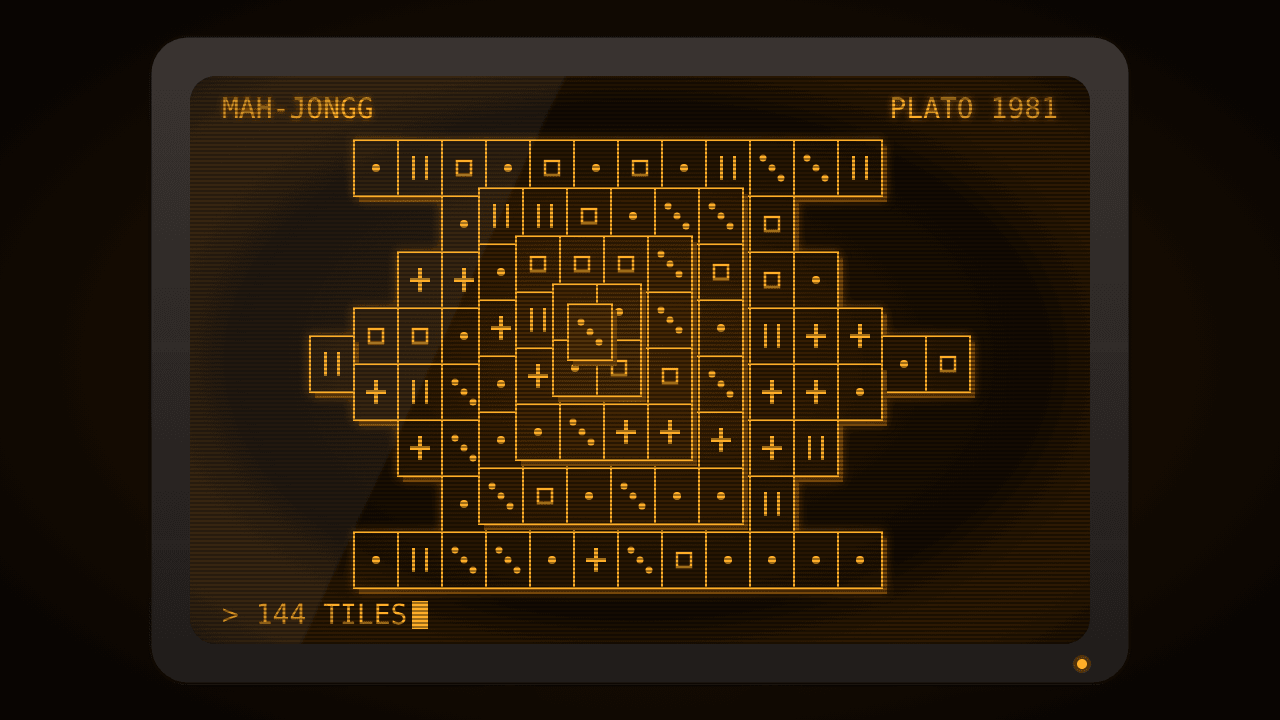
He learned to type with a stick held in his mouth. His father called Control Data Corporation, the company behind PLATO, and a CDC employee named Cindy Poulson brought him her own terminal. On it, about two years after the accident, he wrote a solitaire game with mahjong tiles. He released it free, and players ran it on a CDC-721 touch screen terminal. Brian Dear, who wrote the history of PLATO, put it this way:
PLATO was a meeting of minds, pure and simple, and Brodie's mind was fine.
Shanghai, the Turtle, and a legend Activision wrote
Activision released the game as Shanghai in July 1986, with Lockard as programmer and Brad Fregger of Activision carrying it to market. It ran on the Amiga, Atari ST, Macintosh, Apple IIGS, MS-DOS, and Commodore 64, and the ports and sequels kept coming into the 1990s.
The box copy said the game was based on a centuries-old Chinese game called "the Turtle". Lockard never made that claim. The turtle was the layout: 144 tiles face up in four layers. You remove matching tiles two at a time, and a tile is free only when it can slide out left or right without disturbing its neighbors. Clear the board and the screen collapses to show a dragon.
Critics split. Computer Gaming World's reviewer wrote that he "couldn't believe [Activision] had wasted their resources on putting it out." Charles Ardai called it "probably the best game of the year." Players sided with Ardai. Activision had sold more than 500,000 copies by 1991, and across every port and sequel the figure usually given is around 10 million. Lockard's contract meant the royalties didn't arrive at first. Dear writes that he went on to make a comfortable life for himself, and that "given severe constraints and limitations, he overcame them."
Activision trademarked the name, which is why everyone who copied the game needed a new one.
Taipei, Mahjong Titans, and the puzzle on your phone
Microsoft's copy arrived in the first Windows Entertainment Pack in 1990 as Taipei, written by David Norris. It made the Best of Microsoft Entertainment Pack in 1994, got a remake called Mahjong Titans in Windows Vista and 7, and became Microsoft Mahjong in Windows 8. Other names for the same puzzle include Shanghai Solitaire, Kyodai, and The Turtle. "Mahjong solitaire" is the one that stuck.
The puzzle is harder than it looks. An analysis of ten million deals of the default turtle found that about 3 percent can't be cleared even when you're allowed to peek under the tiles. Most versions dodge that by dealing only boards they know can be cleared, and many add an undo.
What riichi mahjong looks like
Japanese mahjong, the riichi game played in Japan's parlors and on Mahjong Soul and Tenhou, uses 136 tiles: 34 kinds, four of each. Three suits numbered 1 to 9, four winds, three dragons. No flowers, no seasons. Four players sit around a table, build walls from the tiles, and take 13 each.
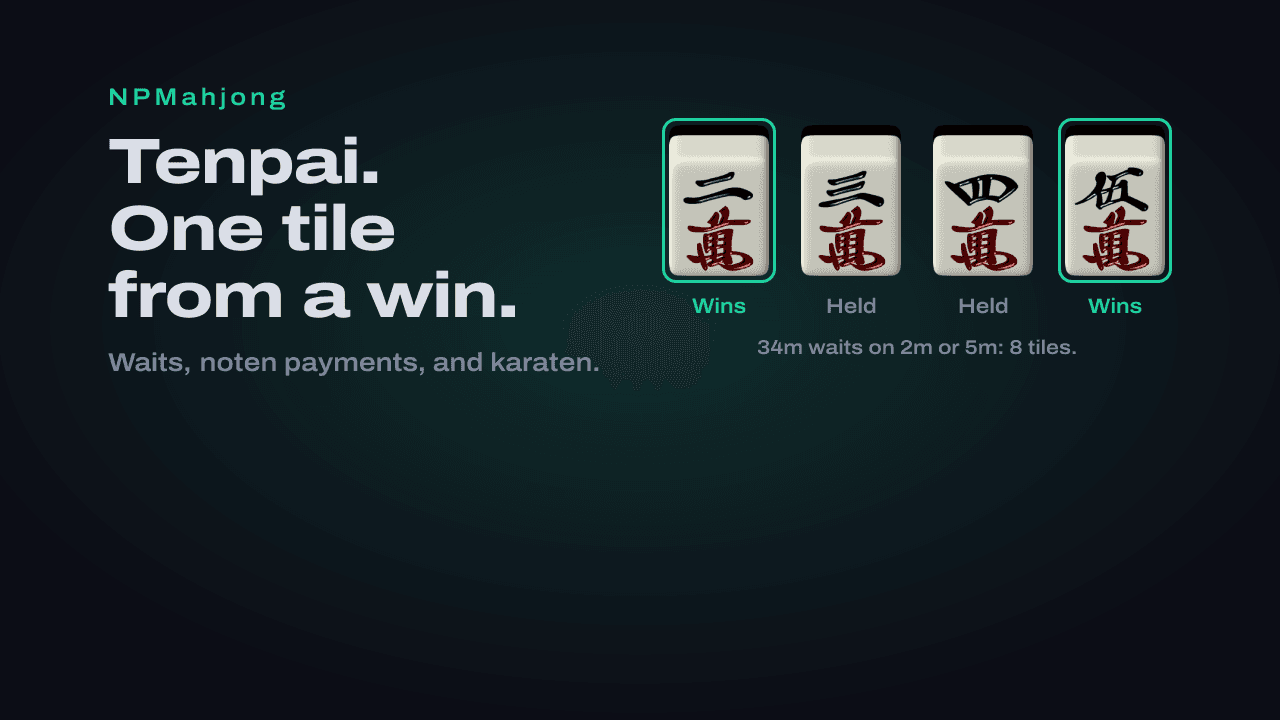
Each turn you draw a 14th tile and discard one. The goal is to turn the 14 into four sets and a pair, and the hand needs at least one before it counts. One tile away from that, you're . If your hand is still closed, you can declare : you put a 1,000-point stick on the table, your hand locks, and riichi itself is the yaku, so you win on any tile that completes the hand.
Here's a hand. It wins on 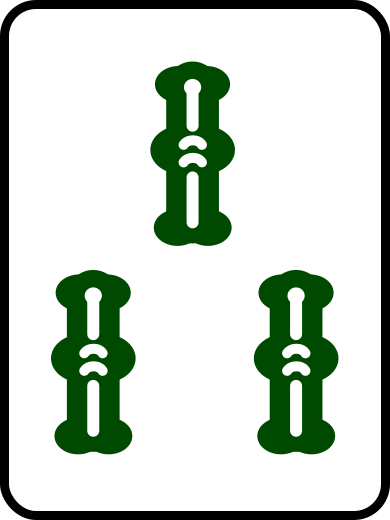 or
or 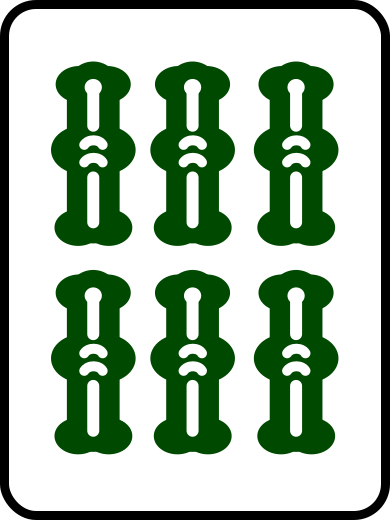 , and with riichi declared it has its yaku.
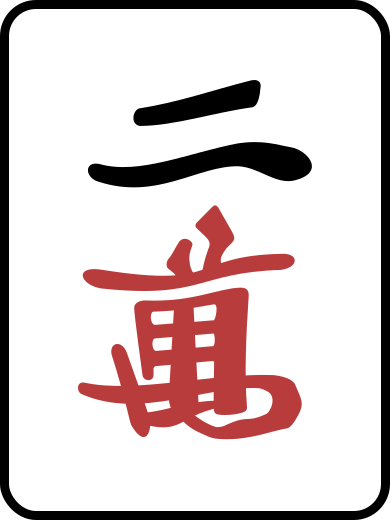
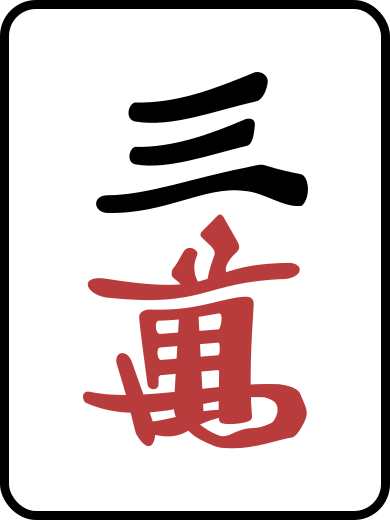
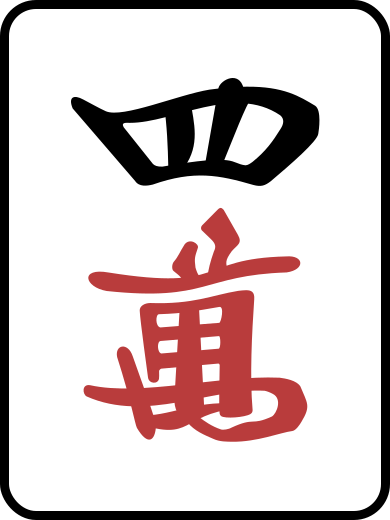
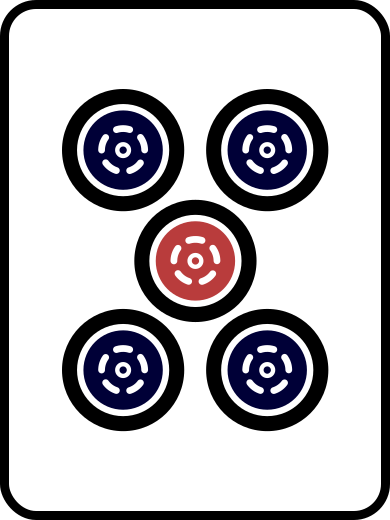
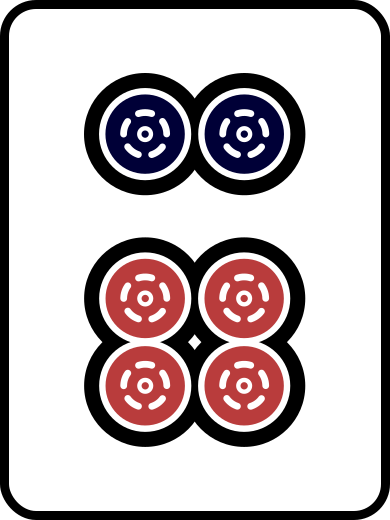
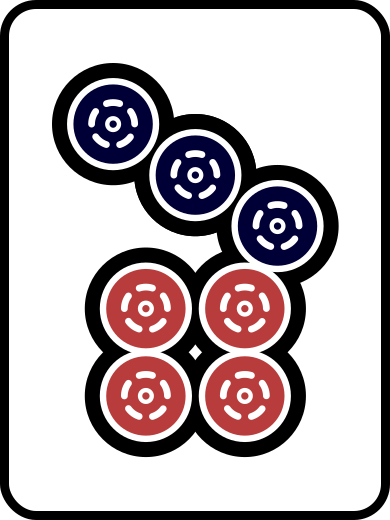
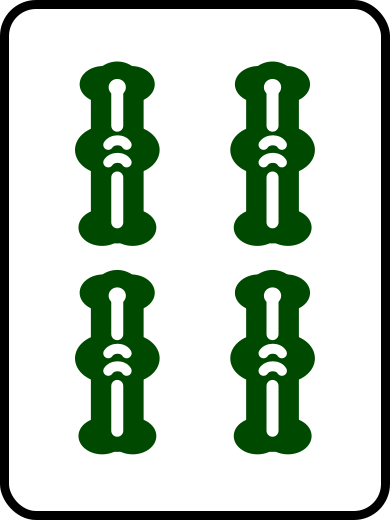
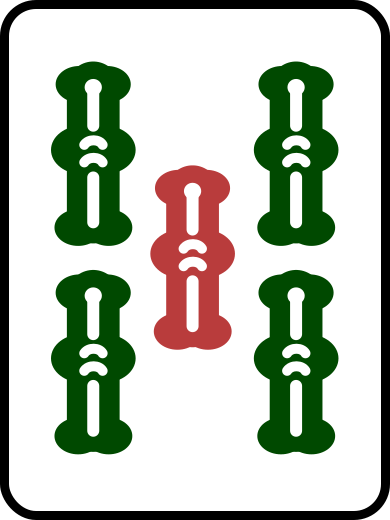
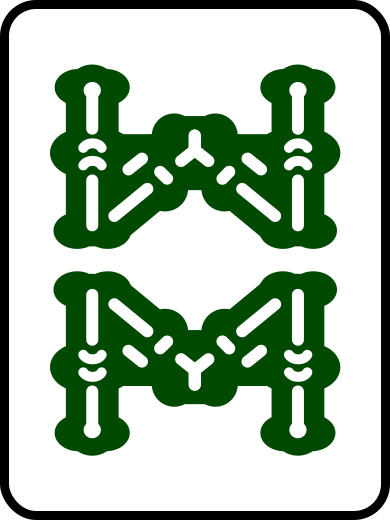
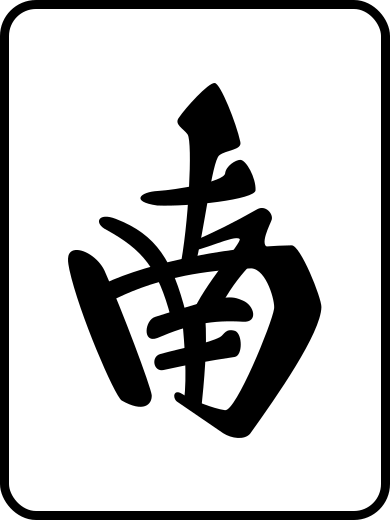
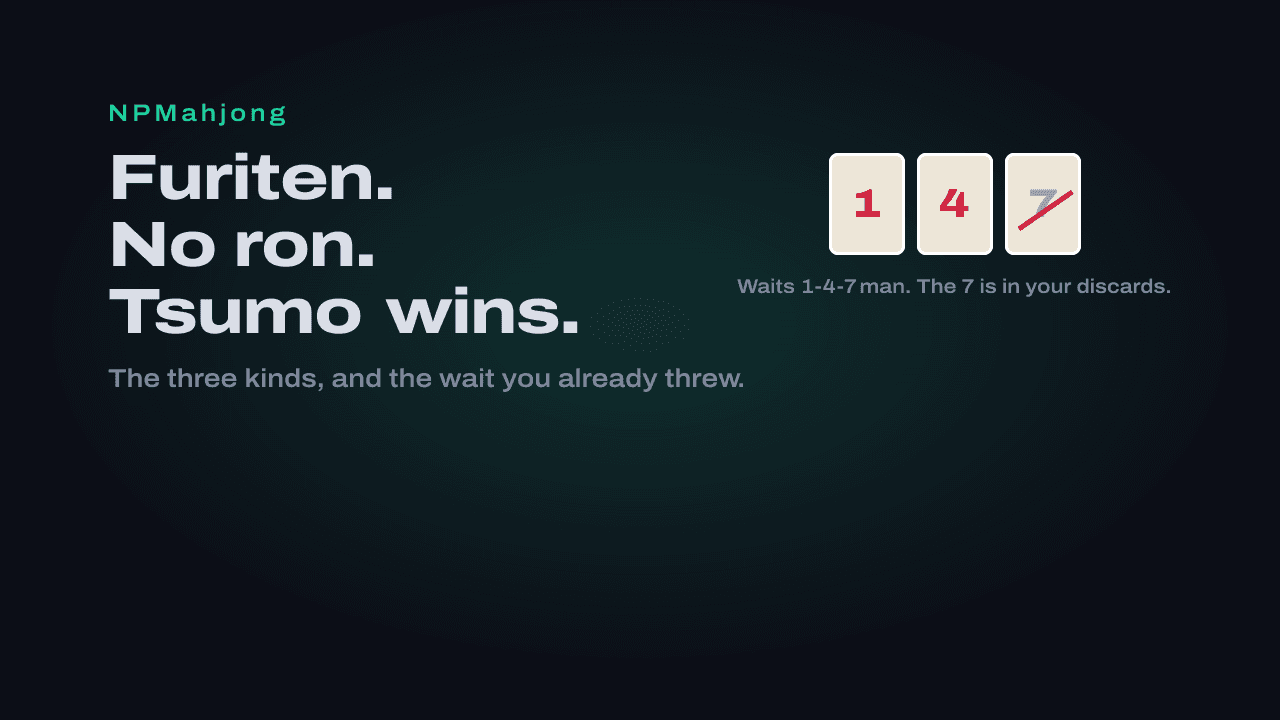
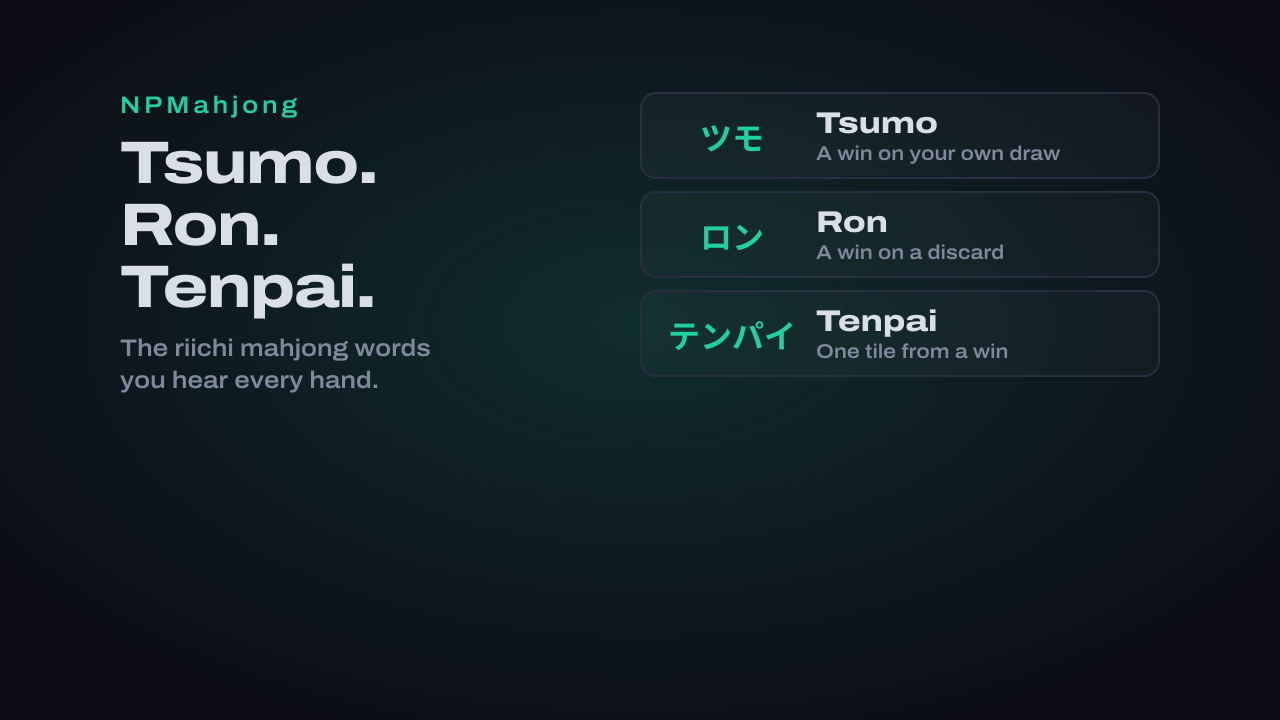
You can win on your own draw, , and every opponent pays. Or you can win on a tile an opponent throws away, , and that player pays alone. That second rule is the whole game. Every discard you make is a tile three other people might be waiting for, so you spend half your attention reading their discards and the other half building your hand.
A full game runs through an East round and a South round and is called a . It can end early when someone's score drops below zero. Placement at the end, 1st to 4th, is what the online ranking systems reward and punish.
What the two games share
The tile faces. That's the list.
Solitaire lays out 144 tiles because it keeps the flowers and seasons, which pair with each other in Shanghai. A riichi set has 136 and leaves them out. The bamboos, characters, circles, winds, and dragons are the same pictures, so a solitaire player sits down at a riichi table already able to tell a 7 of bamboo from an 8 at a glance. That's worth something on day one.
Everything else is different. Solitaire is you against a layout, with every tile face up and nobody to beat. Riichi is three opponents with hidden hands, a wall nobody can see, and points moving between you on every win. In solitaire a wrong move leaves you with no pairs. In riichi a wrong discard pays an opponent 8,000 points and drops you to 4th. The skill in solitaire is seeing which pair to free first. The skill in riichi is deciding what to throw away when any tile in your hand might be someone's winning tile. Those are different muscles, and the second one takes years.
None of that is a knock on the puzzle. Lockard wrote a game with a handful of rules that people have played since 1981, and he wrote it with a stick in his mouth. The real game is a different game.
Where to start with the real game
If the puzzle made you curious, three doors are open and none of them costs anything.
Rules first. Riichi Book 1, by Daina Chiba, is a free PDF, but it's a strategy book written for people who already play, up through about Tenhou 4-dan. Chiba sends complete beginners to Jenn Barr's Reach Mahjong for the rules. Learn the rules, play a few hands, then open Chiba for the five-block method and tile efficiency.

Words second. Riichi runs on Japanese: tsumo, , tenpai, , , , . The glossary holds 216 of them, searchable in Japanese, romaji, or English, and the eight to learn before your first game are listed in the terms post.
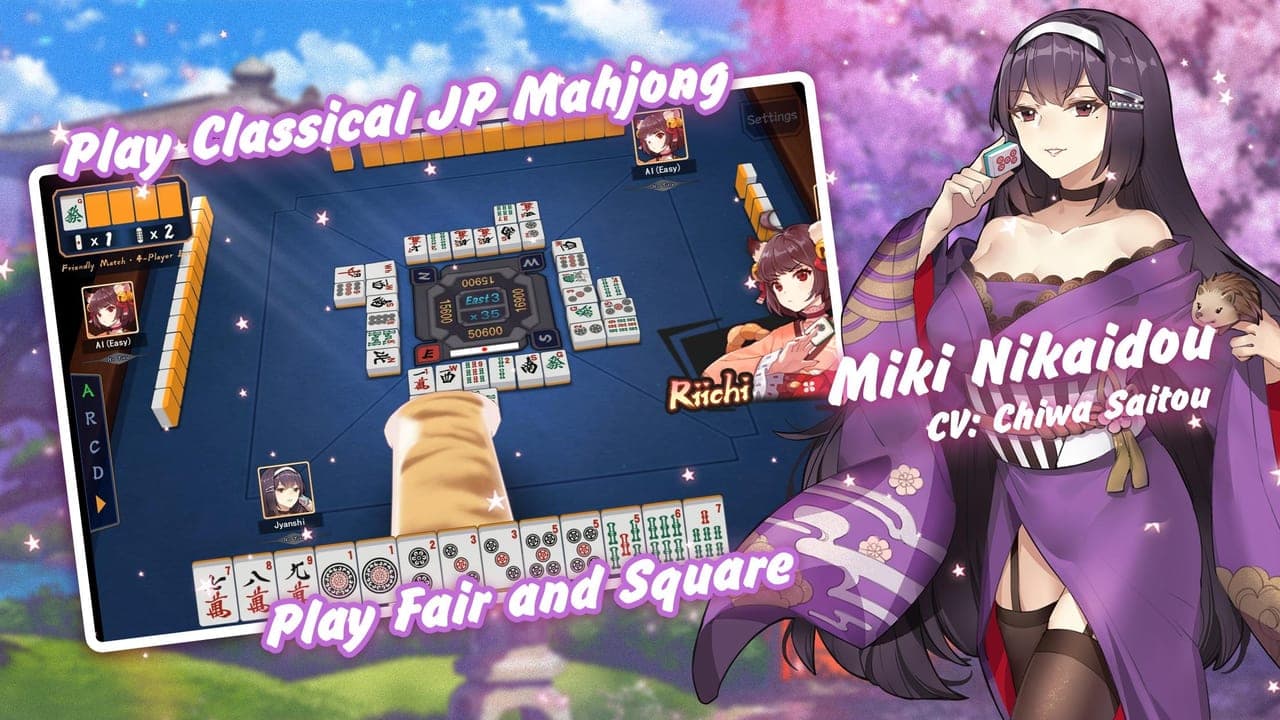
A table third. Mahjong Soul is the client I open with a new player: free, in English, with a log you can hand to someone stronger. Riichi City is the alternative. Tenhou is the ladder that punishes 4th, free through . Play one . You'll lose, you'll call a wrong , and you'll want to know what the other three were doing. That's the game.
Lockard turned the tiles into a game one person can play alone. The game they came from needs three other people. Go find them.
Was this article helpful?