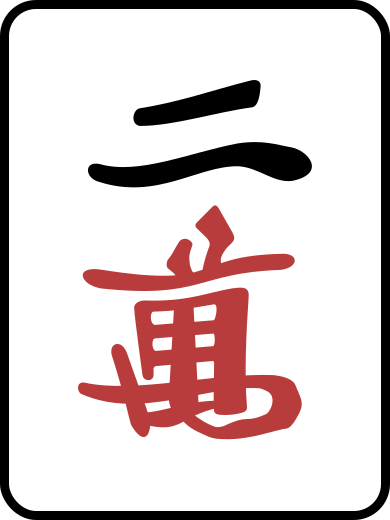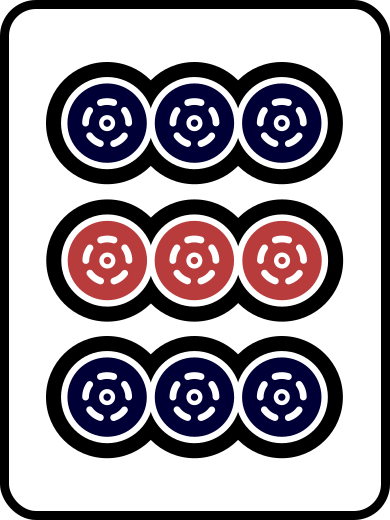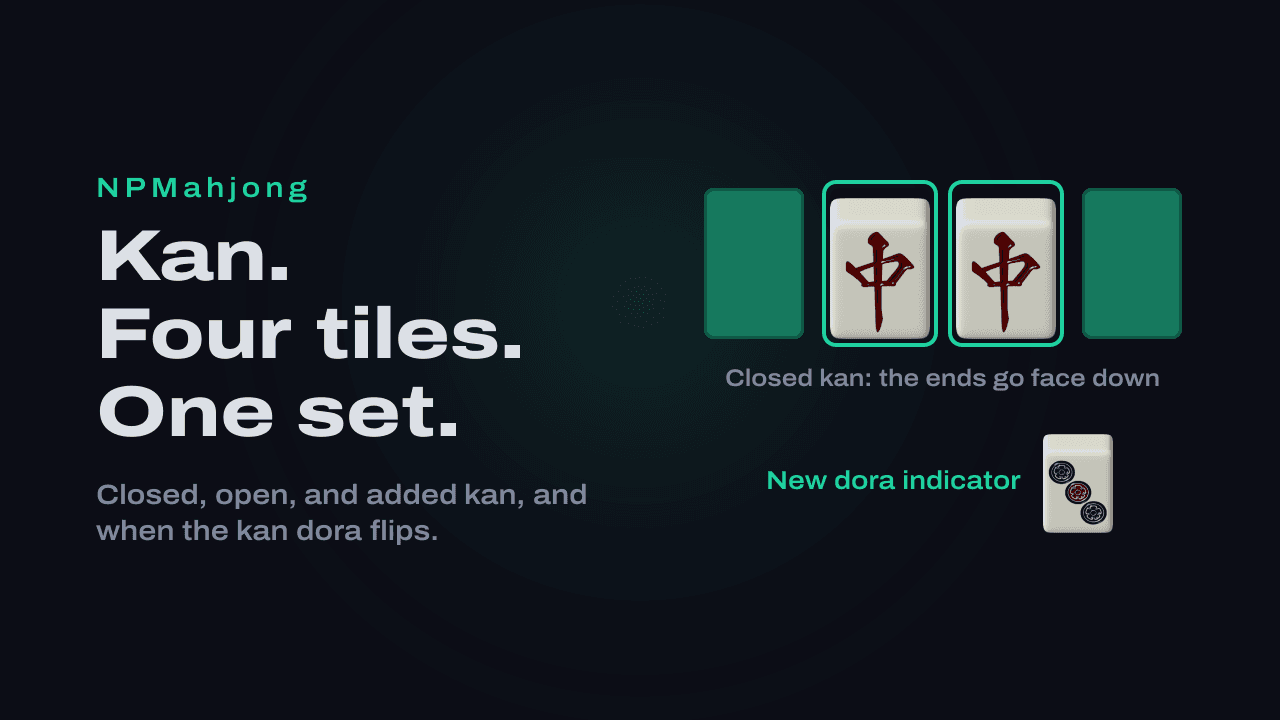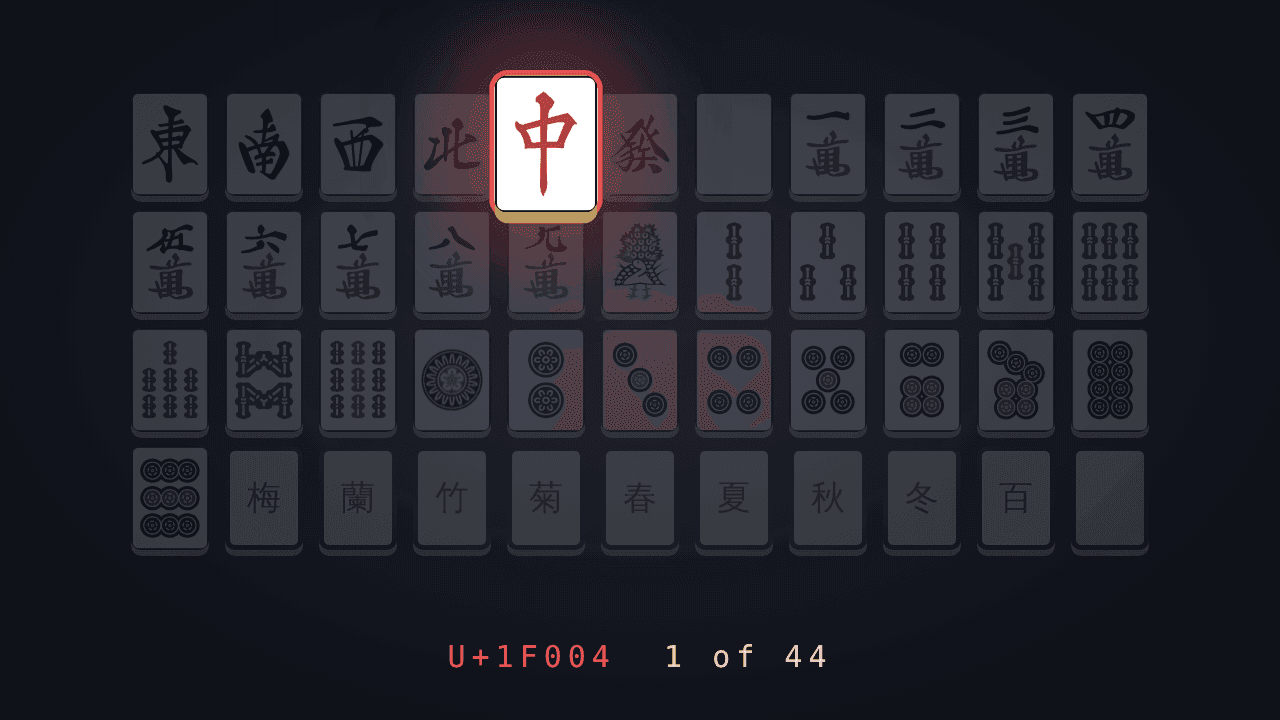
🀄 is U+1F004, MAHJONG TILE . Unicode encodes 44 mahjong tiles, and that's the only one your phone draws as an emoji. The other 43 are plain text. If no font on your device has them, you see blank boxes. The red dragon got its color because two Japanese phone carriers put a mahjong tile in their symbol sets, and when Unicode absorbed those sets in 2010, the tile was already sitting at U+1F004.
All of that is checkable in the Unicode Character Database, which is plain text you can download.
Forty-four tiles, encoded in 2008
The Unicode 5.1 release came out on 4 April 2008 with new symbol sets for dominoes and mahjong. The release page says the mahjong symbols "encode a set of tiles used to play the popular Chinese game of Mahjong." The Blocks.txt file reserves U+1F000 to U+1F02F for them, and DerivedAge.txt dates U+1F000 to U+1F02B, 44 code points, to version 5.1. The last four slots are still empty.
| Code points | Unicode name | In riichi |
|---|---|---|
| U+1F000 to U+1F003 | East, South, West, North wind | (1z to 4z) |
| U+1F004 to U+1F006 | Red, green, | chun, , haku (7z, 6z, 5z) |
| U+1F007 to U+1F00F | One to nine of characters | (1m to 9m) |
| U+1F010 to U+1F018 | One to nine of bamboos | (1s to 9s) |
| U+1F019 to U+1F021 | One to nine of circles | (1p to 9p) |
| U+1F022 to U+1F025 | Plum, orchid, bamboo, chrysanthemum | flowers, not used |
| U+1F026 to U+1F029 | Spring, summer, autumn, winter | seasons, not used |
| U+1F02A | Joker | not used |
| U+1F02B | Back | the face-down tile |
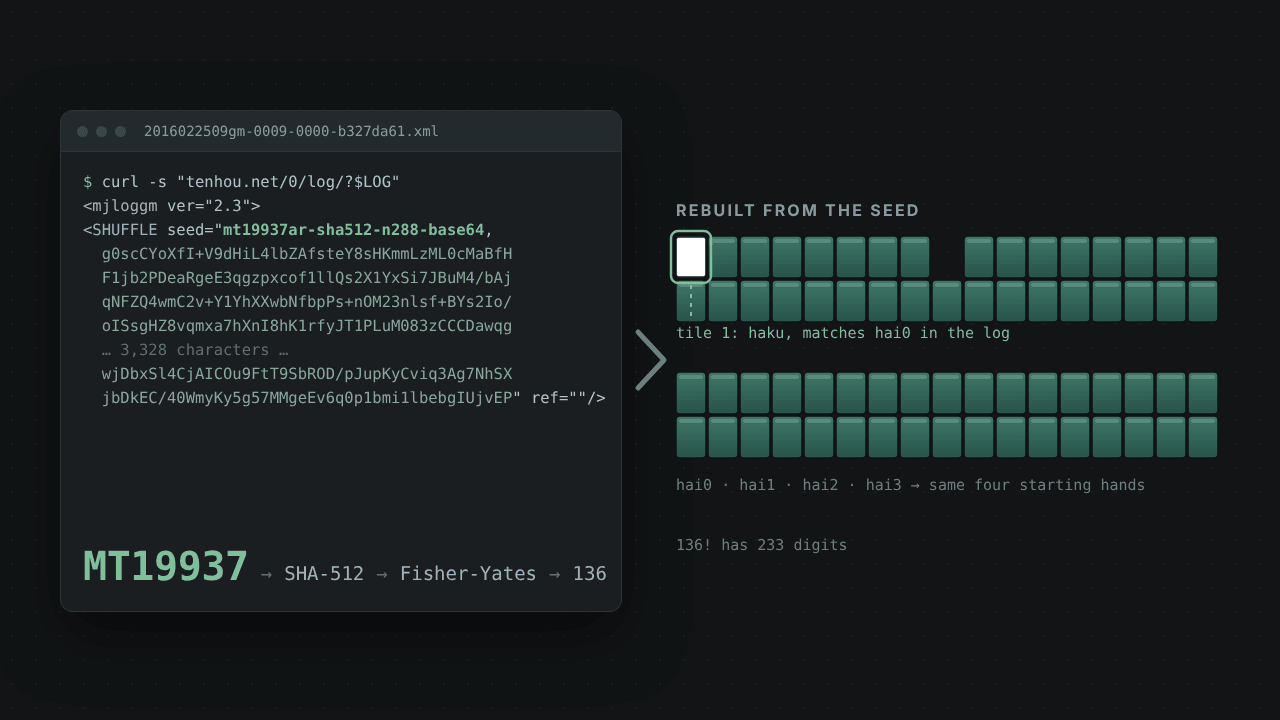
Riichi uses 34 of the 44. Two orderings in that table don't match a riichi player's habits. Unicode orders the suits characters, bamboos, circles. Riichi sorts them man, pin, sou: characters, circles, bamboos. And Unicode lists the dragons red, green, white. Tenhou's tile numbering, the order its shuffle sorts the 136 tiles in, runs the other way and ends on the red dragon. So the emoji tile is first in Unicode's list of dragons and last in Tenhou's.
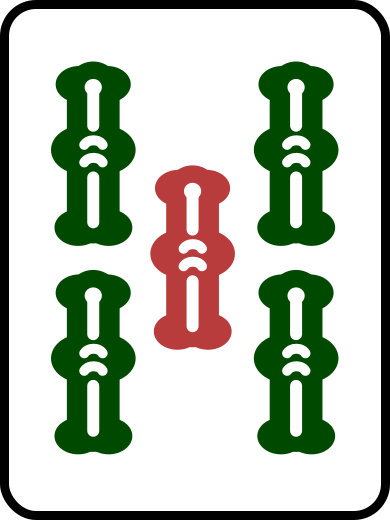
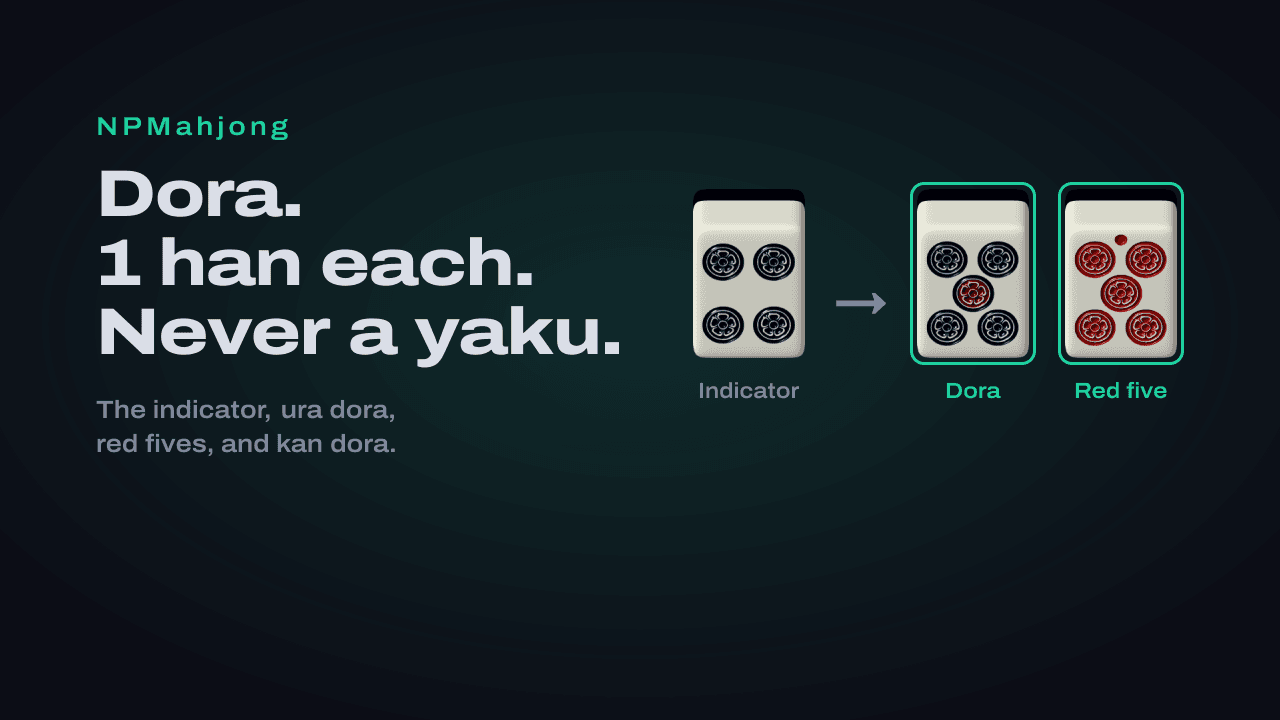
There's one more gap. The block has no red five. Red fives () are standard on Tenhou and Mahjong Soul and absent from Unicode, so a hand with a red 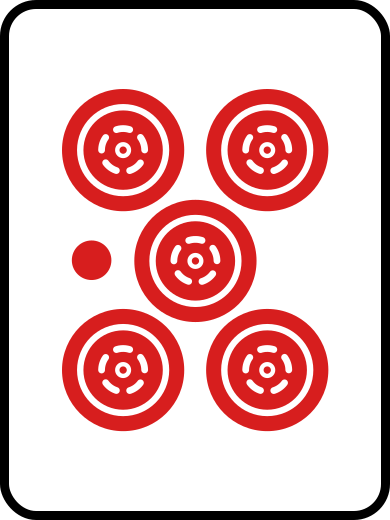 can't be spelled out in mahjong characters.
Where emoji came from
The Unicode emoji standard, UTS #51, tells the history in its introduction. Emoji arrived on Japanese mobile phones in 1999. Each carrier built its own set with its own incompatible encoding, and the sets only partly overlapped. A symbol sent to another network could arrive as 〓, the geta mark, or get dropped on the way. Google started converting Japanese emoji to private-use codes in 2006, and in 2007 Unicode agreed to encode emoji properly.
The result shipped in Unicode 6.0 on 11 October 2010, along with a data file, EmojiSources.txt, that maps each emoji back to its carrier source. Each line gives a Unicode character, then the matching code on docomo, KDDI, and SoftBank phones. The mahjong line reads:
1F004;;F344;F76D
The docomo column is empty, and the file fills a column only when that carrier had an equivalent symbol. KDDI, the company behind the au network, had the tile at Shift-JIS code F344. SoftBank had it at F76D.
Why it's the red dragon and nothing else
The carriers had one mahjong tile, and it stood for the game. Google's emoji4unicode mapping table, whose contributors include the authors of the Unicode emoji proposals, gives many carrier symbols a text fallback for screens that can't draw them. The mahjong tile's fallback is [麻雀]: maajan (麻雀), the name of the game. The phone symbol meant "mahjong", and Unicode counts it as the same character as chun (中), the red dragon.
When Unicode mapped the carrier sets, it already had a red dragon, encoded two years earlier at U+1F004. So the carrier symbol pointed there instead of getting a new code point. Its neighbors in the same table show the other path. KDDI also had a hanafuda card and a joker, and the table marks both as new characters to propose. They became U+1F3B4 🎴 and U+1F0CF 🃏 in Unicode 6.0. The mahjong tile needed no new character, only the emoji label.
That label is a property. In emoji-data.txt, U+1F004 has both Emoji and Emoji_Presentation, which tells your phone to draw it in color by default. No other code point in the block has either. The file tags it E0.6, the label UTS #51 uses for emoji added with Unicode 6.0, including those from the Japanese carrier sets. Emojipedia files it under Emoji 1.0 (2015), a later numbering for the same character.
The red dragon also has two variation sequences. Add U+FE0F after it for the color emoji, or U+FE0E for the black-and-white text glyph, if your font supports it.
The red dragon at the table
In riichi the tile is , one of the three . A triplet of it is , one by itself, enough to win with an open hand. Collect triplets of all three dragons and you have , a .
The emoji keyboard gives you one tile and no way to write the other 33. The site's notation does it in a few characters: 123m for a run of characters, 456p for circles, 789s for bamboos, 777z for a triplet of red dragons. In Unicode, that triplet is 🀄🀄🀄.
Type any hand in that notation into the hand analyzer and it tells you how far from you are and which discard keeps the most tiles alive. It reads red fives too, as 0m, 0p, and 0s. Unicode still can't.
Was this article helpful?