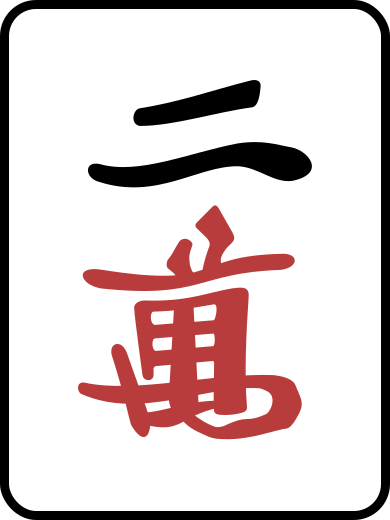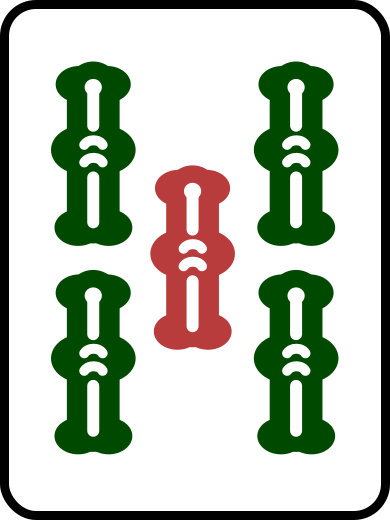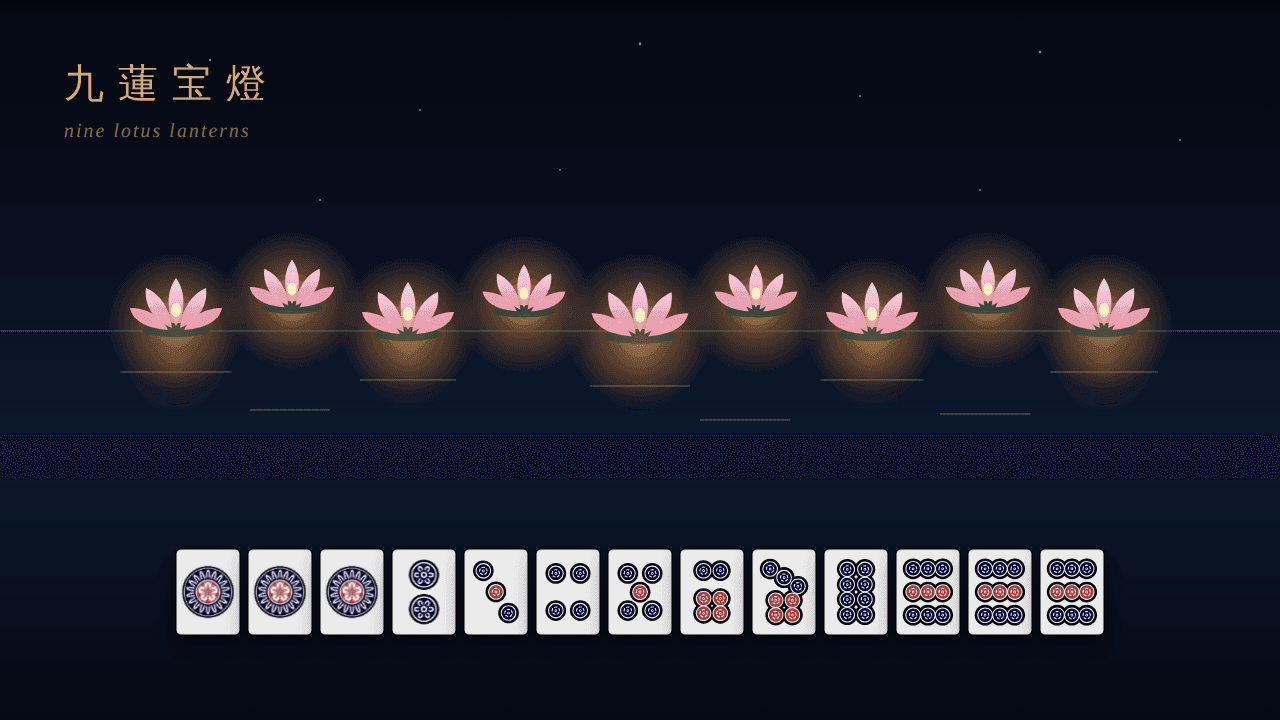
Fourteen tiles of one suit: three 1s, one each of 2 through 8, three 9s, and one more. That's (), nine gates, one of the rarest in the game. In Japan it comes with a warning. Win it, the saying goes, and you'll die soon after.
Japanese Wikipedia's article on the hand files it under superstition, meishin (迷信), and gives the reasoning in one line: completing the ultimate uses up all of your luck. Nobody can tell you who said it first. What you can check is where the story shows up in print and how rare the hand is.
The oldest version is a 1969 novel
The best-known death by nine gates is fiction. Asada Tetsuya (阿佐田哲也) serialized Mahjong Hourouki (麻雀放浪記) in the weekly magazine Shuukan Taishuu (週刊大衆) from January to June 1969, according to Japanese Wikipedia's entry on the novel. Near the end of that first volume, the veteran gambler Deme-toku (出目徳) plays a marathon game on hiropon, the postwar methamphetamine. He wins a nine gates in , the circle suit, and dies on the spot. The other players strip his body of his belongings and clothes, keep playing as a three-player game with the pinzu removed in his honor, and before dawn roll him into a ditch near his house.
Director Wada Makoto filmed that first volume in 1984, which put the death on screen as well as on the page. Decades later, in Weekly Gendai's 2023 roundtable on the film, the actress Kaga Mariko (加賀まりこ) says the moment Deme-toku dies at the table with nine gates drawn moved her as someone who loves the game.
Whether the book started the belief or borrowed it, nobody has shown. In 2009 a player asked on Yahoo! Chiebukuro where "win nine gates and die" came from. The answers pointed at the film, at the mahjong manga Tetsuya (哲也), and at the idea of spending a lifetime's luck in one hand. No one named a first source, and two of the answerers said they'd won the hand themselves and were fine. So far the novel is the oldest written version on record.
One counterexample is easy to find. Kojima Takeo (小島武夫), "Mister Mahjong" and the first chairman of the Japan Professional Mahjong League, won nine gates in a televised match. He died in 2018 at 82, of heart failure.
Maru-Jan, the paid Japanese online client, celebrates the win instead. Its yakuman kinenkan (役満記念館), a yakuman memorial hall, puts a commemorative trophy on display for every yakuman you win, and clicking it opens the game log of the hand.
How rare is nine gates, really?
Game8's guide quotes nine gates at about 0.0005%, roughly 1 in 200,000. It gives that number as what "is said" and names no source.
You can check it against real games. Kobayashi Satoshi, the programmer who runs the Majiang (電脳麻将) site, tallied Tenhou's room, east-south games with red fives, for two full years and published the counts: 2016 and 2023.
| Yakuman | 2016 | 2023 | Both years |
|---|---|---|---|
| Nine gates | 7 | 10 | 17 |
| Heavenly hand (tenhou) | 7 | 6 | 13 |
| (chiihou) | 17 | 15 | 32 |
| 282 | 289 | 571 | |
| 0 | 1 | 1 |
Seventeen nine gates in 3,501,731 hands is one every 205,984 hands. That's one every 19,328 across the whole room. Measured per win it's one in 173,797. The unsourced 1 in 200,000 turns out to be a fair rounding of the per-hand rate.
Thirteen orphans came up 571 times over the same two years, about 34 for every nine gates. Two yakuman were rarer still. The heavenly hand came up 13 times. Four kans came up once: none in 2016, and in 2023 a single one that Kobayashi calls probably the first ever in the Houou room.
(天和) is the control case: the dealer's 14 starting tiles are complete or they aren't, so its rate is known in advance. The starting-hand odds post counts every 14-tile deal: the dealer's hand is complete 1 time in 330,530. Over 3,501,731 hands that predicts about 10.6 heavenly hands, and the logs show 13, well inside normal variance for an event that rare. Only the dealer can score it, and you deal about a quarter of your hands, so your own odds are nearer 1 in 1.3 million hands played.
What nine gates pays when you live to collect
The pure form is the nine-sided wait. Hold this and every pinzu tile wins:

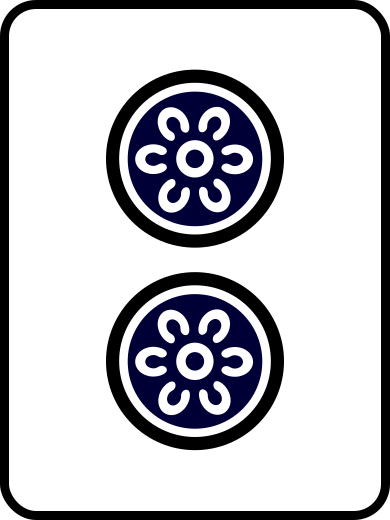
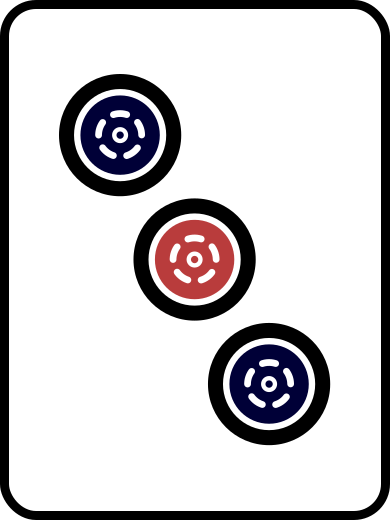
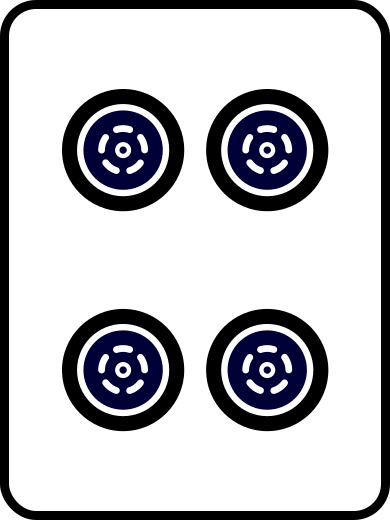
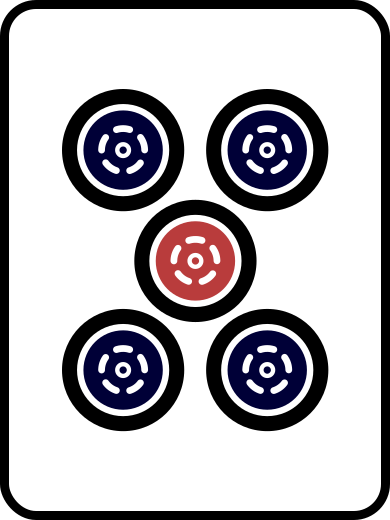
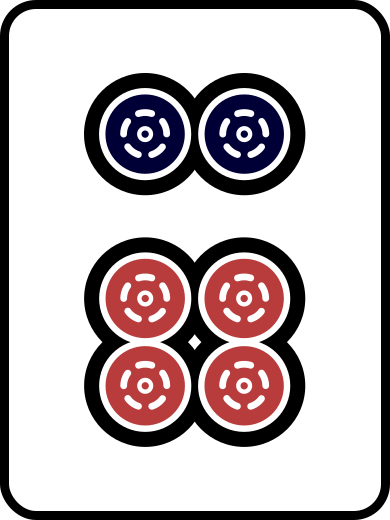

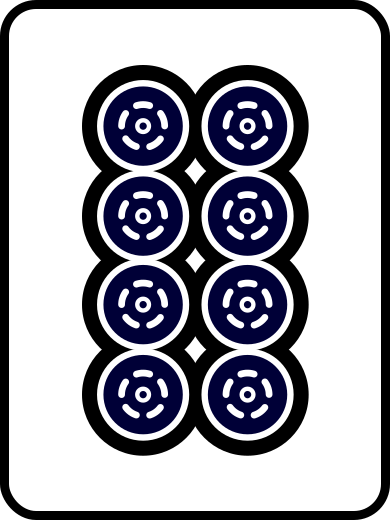
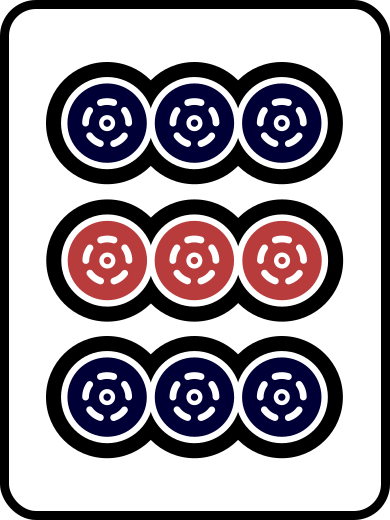
What it's worth depends on where you sit. Tenhou's rules pay the nine-sided wait as a single yakuman, like every yakuman on Tenhou: 32,000 on a , nine-sided or not. Mahjong Soul pays the nine-sided version as a double, 64,000 on a non-dealer ron, per Game8's guide. I play under the rules of the Japan Pro Mahjong Association (日本プロ麻雀協会, NPM), and its official rule counts double and triple yakuman only when separate yakuman combine. A nine-sided wait isn't a second yakuman, so pure nine gates is one there.
The nine gates guide has the rest: the one-suit shape, why a closed on the 1s or 9s kills it, and the where only one of three winning tiles makes the yakuman.
Keep the log
The curse is a story about luck being a fixed supply you can spend. The nagare post covers luck that runs in streaks, and the illusion of control post covers what the wall does. In the Houou logs, nine gates turns up about once in 206,000 hands. The logs don't record who died afterwards.
If you ever win it, save the log before you do anything else. Then open the hand analyzer, type in the 13 tiles you held, add the tiles you saw in the discards, and count how many winning tiles were still live when you drew yours.
Was this article helpful?