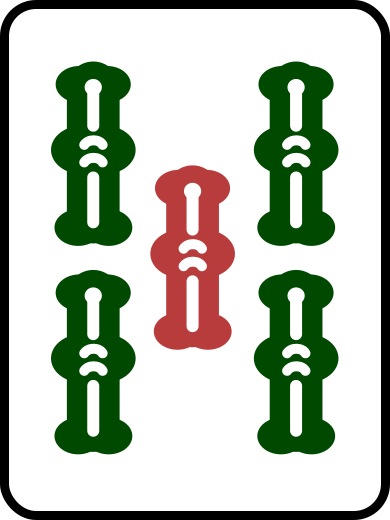
You hold your discard for a beat before you click it. The last time you clicked fast, the dealer called , and the time before that too. At the parlor you take the seat you won from last week, and when it's your turn to roll, you press the dice button hard. Then, about to declare , you draw a fresh 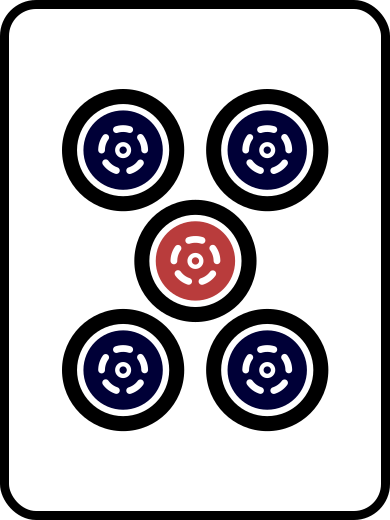 while you're on a lone
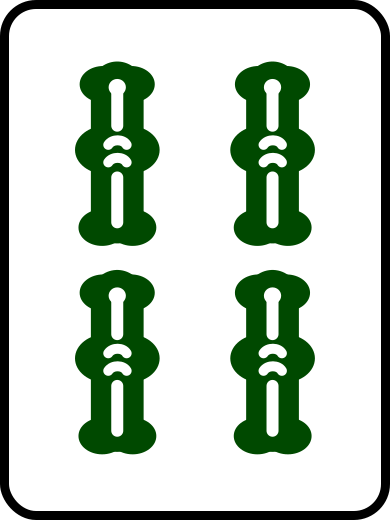
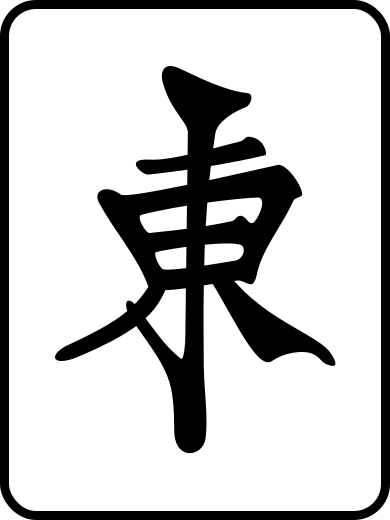 , and the 5p feels like it wants to be your wait.



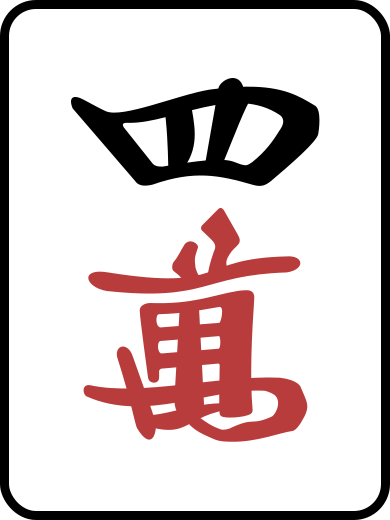
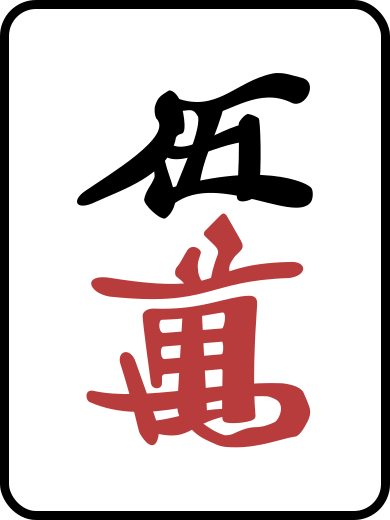

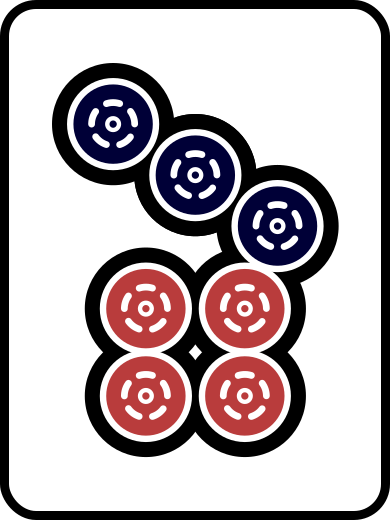
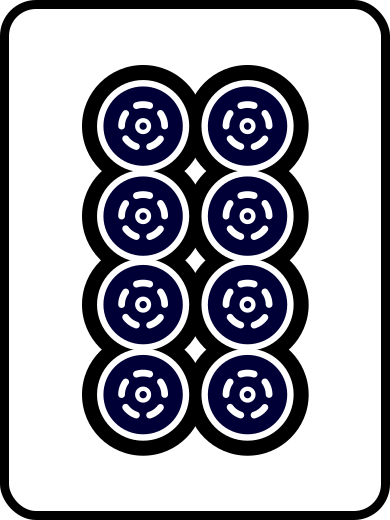
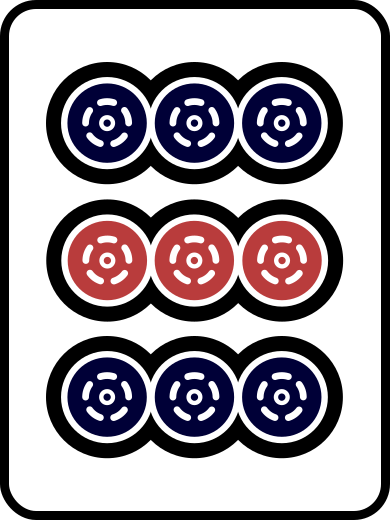
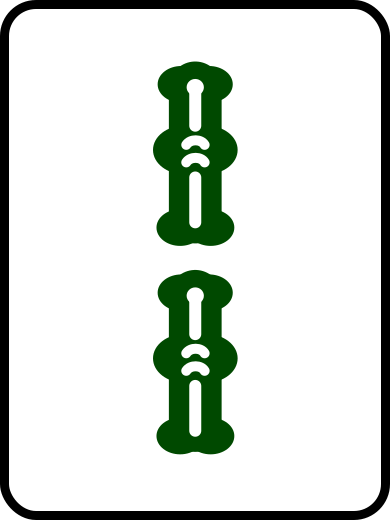
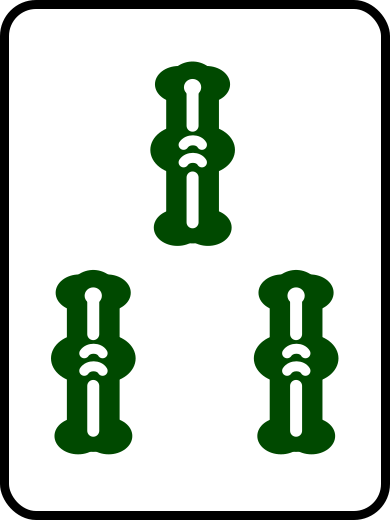
None of those moves touches the tiles. Psychologists call the feeling behind them the illusion of control: the habit of acting as if your own actions steer an outcome that chance decides. Ellen Langer named it in 1975. The last move in that list, the wait swap, is the only one with a cost you can measure, and it runs against you.
Langer's lottery: a chosen ticket priced four times higher
Ellen Langer published "The illusion of control" in the Journal of Personality and Social Psychology in 1975. She defined it as "an expectancy of a personal success probability inappropriately higher than the objective probability would warrant." In plain words: a sense that your odds are better than they are, because you're the one acting.
Her best-known experiment, as Luke Clark and Michael Wohl recount it in a 2021 review for Addiction, sold $1 lottery tickets to office workers. The tickets were cards with football players on them. Twenty-seven people picked their own card; 26 were handed one. Before the draw, each was asked what they'd take to sell the ticket back. The pickers asked $8.67 on average. The others asked $1.96. In another study, people who learned their lottery numbers over several days were more likely to keep their ticket instead of trading it for one in a lottery with plainly better odds, 64% against 32%.
Across six studies, Langer pinned the effect on four ingredients that make chance feel like skill: choice, involvement, competition, and familiarity. Put skill cues into a game of chance and people start playing it like a game of skill. She also cited Henslin's earlier field notes on craps players, who blew on the dice and threw harder when they needed high numbers and softer for low ones.
Choice didn't cause the illusion
The lottery result is famous. Nobody has rerun it exactly, and the biggest test of its idea came up mostly empty. In 2021 Joowon Klusowski, Deborah Small, and Joseph Simmons ran 17 experiments with 10,825 participants in Psychological Science, testing whether choosing makes people feel luckier. Mostly it didn't. Their conclusion: choice does not seem to cause an illusion of control.
Clark and Wohl accept the finding and add a caveat. Real lottery players may pick family birthdays, or avoid runs of consecutive numbers, because of beliefs they walked in with. That version fits a mahjong table well. You don't come to believe in a seat because you picked it. You pick it because you already believe in it.
The cost side has evidence of its own, though it rests on one study. In a 2003 study of 107 traders at four trading firms, the ones more prone to the illusion on a computer task got lower ratings from their managers and earned less. It's a correlation, and the authors note that causation could run the other way: poor results can feed the illusion too.
Tenhou's wall is fixed before you log in
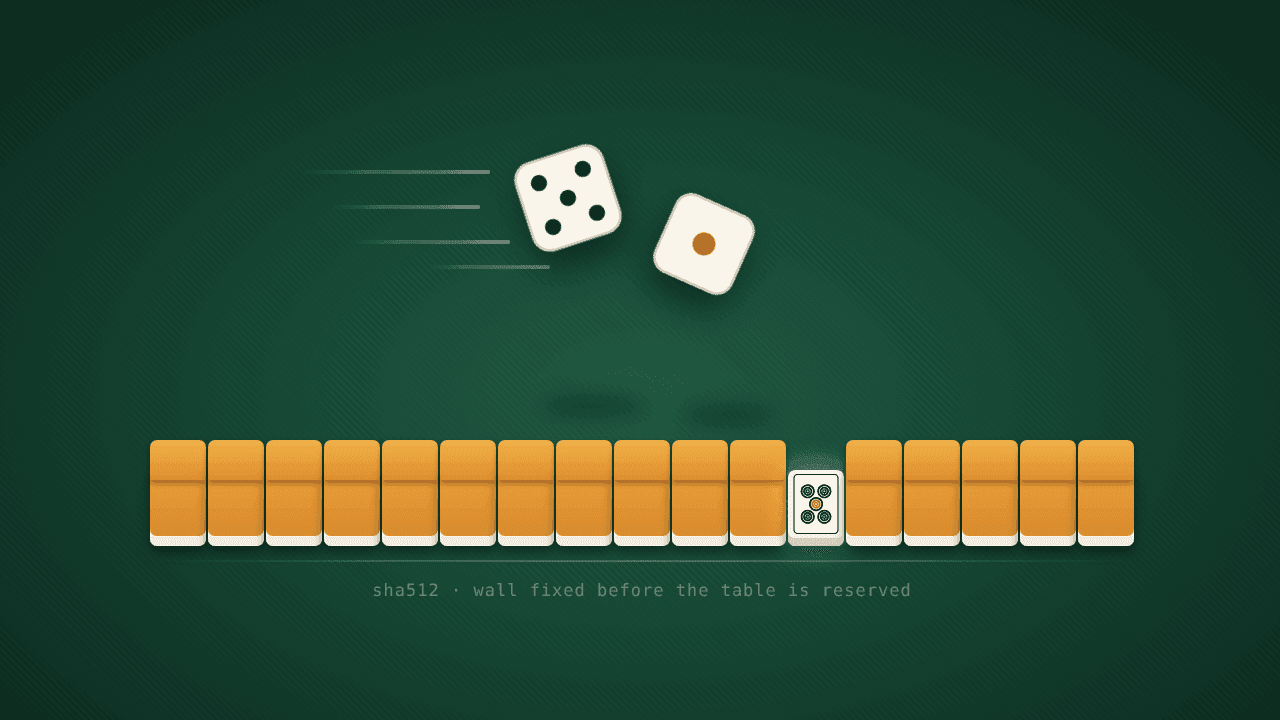
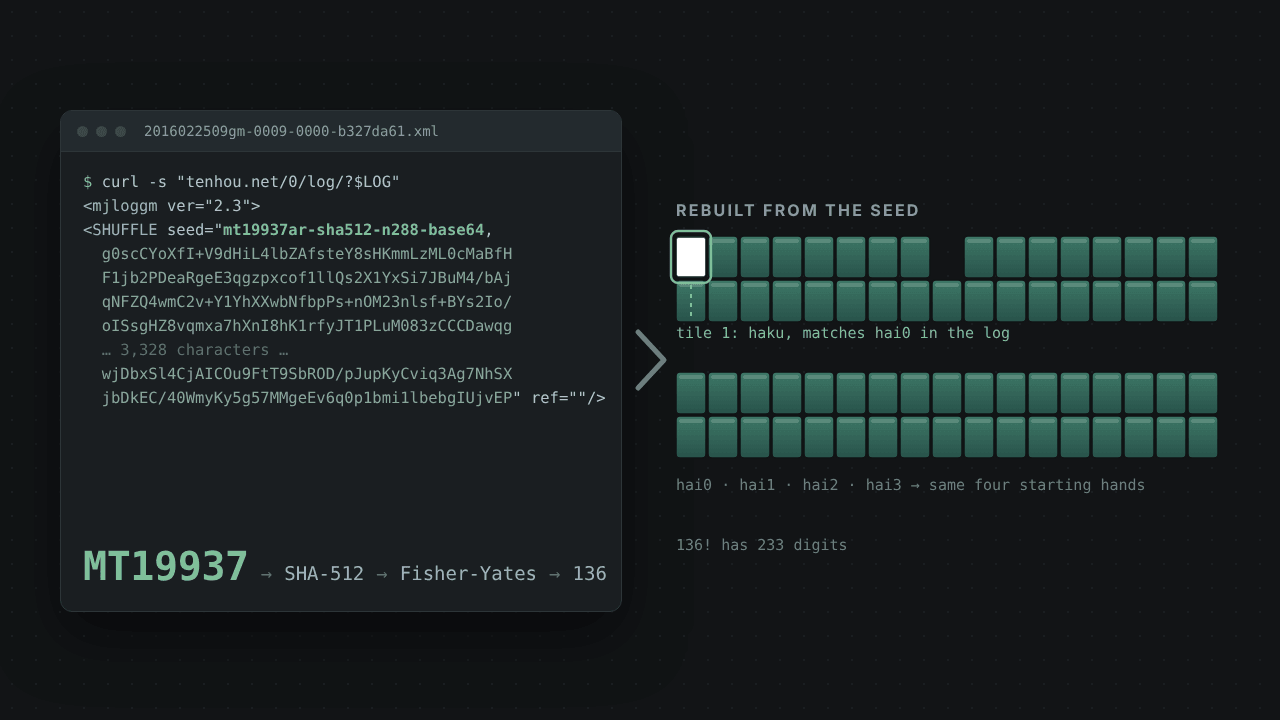
On Tenhou the answer is public. Every game log opens with the seed, and Tenhou publishes the recipe that turns it into the wall. For ranked games, Tenhou also posts a SHA-512 hash of each upcoming seed in advance. It says the seeds are fixed before the game, before the table forms, and before you log in. Every tile you'll draw that hand exists before your first discard.
So run the superstitions through it:
- Click timing. The next tile is already sitting in the array. A fast click and a slow click draw the same tile.
- The dice. In Tenhou's recipe the dice are two more numbers from the same hash as the wall, numbers 136 and 137 of 144. They're decided in the same instant as every tile, and no one rolls them.
- Your seat. The seed is fixed before the seats are, so whichever seat you land in, the wall was already there.
The call rules give you one real lever on the order. A call changes whose turn comes next. a tile from the the table and the player on your left, who was due to draw next, loses a draw. Every tile after that lands with a different player. That's actual control of who draws what. It's also blind: you can't see whether the tiles you pushed to someone else were good or bad. Whether the shift helps is noise, so judge the call on its own value.
Mahjong Soul is a different case. As the Tenhou post explains, it shows a hash of each hand's wall at the deal and reveals the wall in the replay. That proves the wall didn't change during the hand, so no click, pause, or tap can have reached it. It doesn't publish the shuffle that built the wall, so nobody outside the company can prove how the wall was made. Until someone shows a mechanism, timing is a ritual.
One online game is the exception. Maru-Jan copies the automatic table's bias on purpose.
An automatic table clumps tiles, but not at you
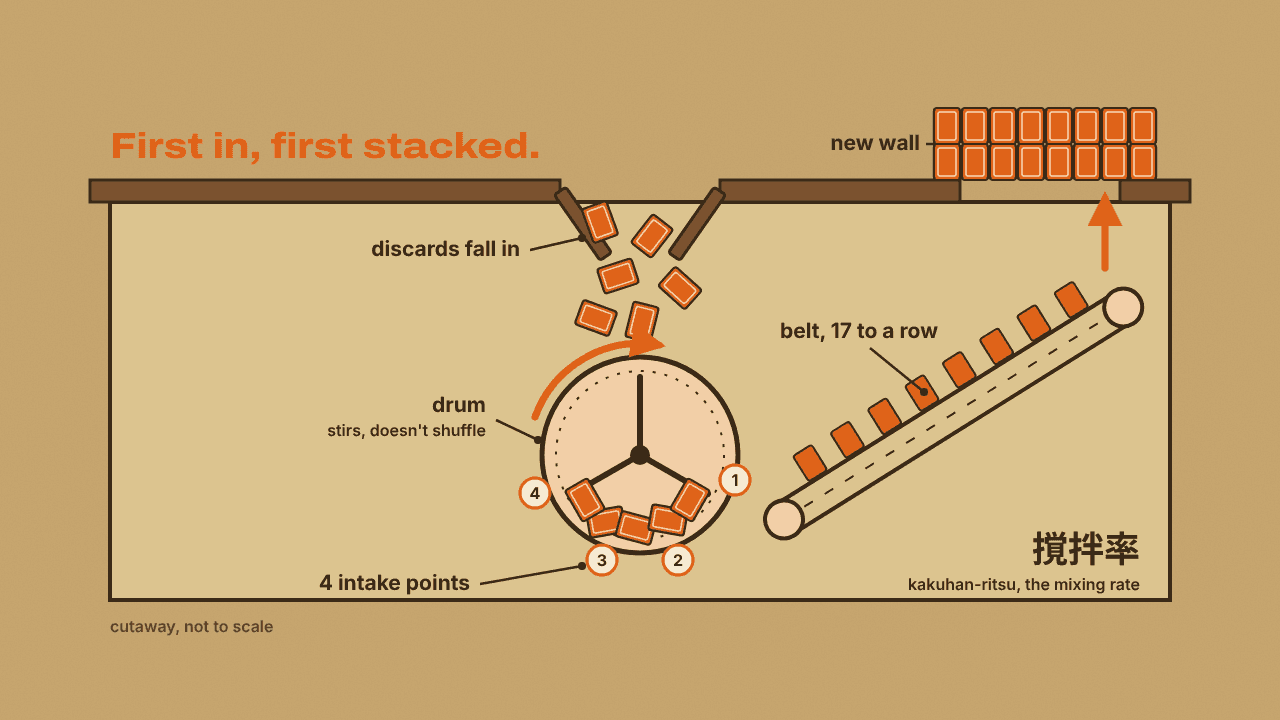
A physical automatic table is different. The automatic table post covers the details. The table drops the used tiles into a drum and stacks them roughly in the order they fall in. It runs two tile sets, so the wall you draw from now was built from the tiles that went down the hole two hands ago. The engineering head of the AMOS maker told ABEMA Times in 2020 that however much you stir the tiles, the first to fall in are the first stacked.
So the tiles on a real table can clump. Maru-Jan lists three plays it says work, like waiting on the fresh tile you just drew in a tanki. It attaches "sometimes" to each, gives no numbers, and says the bias can't be aimed at one player. Neither source measured the size of the effect.
Your seat doesn't aim it at you. Your press on the dice button doesn't change it either: the wall was stacked before the dice stopped, and the roll only picks a starting point on tiles that are already in place. The clumping is a property of the table, and all four players share it. It's plausible and unmeasured, and the AMOS maker says its REXX III fixed it. Use it as a tiebreaker between equal waits and nothing more.
Your control is in the wait: 48% against 33%
The hand at the top is on a fresh East, a single-tile wait, and on turn 8 it draws a fresh 5p. Keep the East or switch to the 5p? The 5p arrived just now and feels lucky. The wait win-rate data from Tenhou's Houou room prices both.
| Your wait | Wins |
|---|---|
| Single-tile wait on a 5 | 33% |
| Single-tile wait on a 5, behind a trap (2 and 8 of that suit cut first) | 46% |
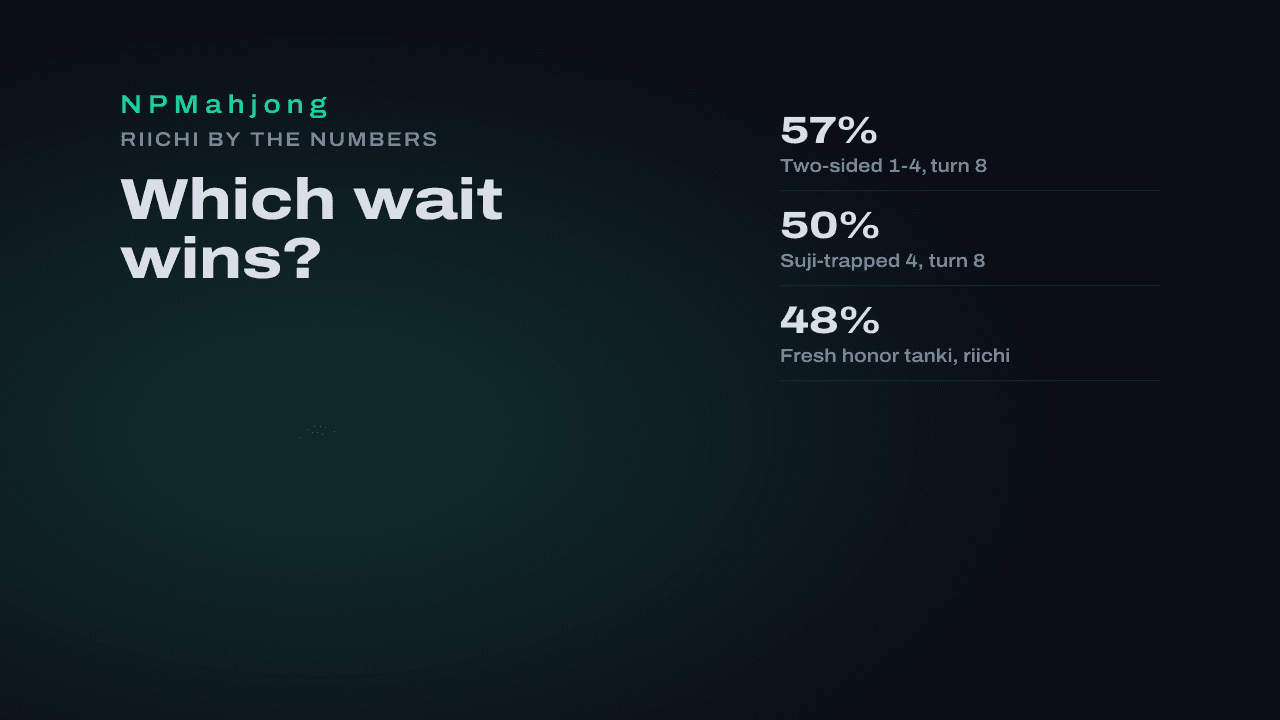
| Fresh honor | 48% |
| on 1-4 | 57% |
Swap to the 5p on feel and you give up 15 points of win rate. The seat and the dice press cost nothing. The swap is the first ritual on the list with a price.
The same table shows what control looks like. A trapped 5 wins 13 points more than a plain one because you shaped the discards. A two-sided 1-4 beats a single-tile wait on a 5 by 24 points, and that gap is the shape you built. It deals in less, too: 10% at turn 8 in the same post, against 15% for the wait on a 5.
The nagare post deals with the other half of the superstition: the belief that luck runs in streaks. The illusion of control is the belief that you can steer it. The same fixed wall answers both.
Audit each ritual by the decision it touches
Write down every ritual you have at the table. The seat, the dice, the pause before a click, the order you sort your hand, the drink you only order when you're losing.
Next to each one, write the decision it touches. Most will touch nothing. Keep those. A ritual that costs no decision is harmless. Langer's later work, as Clark and Wohl note, found that a sense of control helps well-being in people who've lost it in their lives.
Then circle the rituals that do touch a decision. "I don't on the tile I just cut." "I switch to the tile I just drew, even when it's the worse wait." "I fold early when the tiles feel cold tonight." Those are the ones the illusion is billing you for. From your next session on, every time a circled ritual pulls on a decision, write down the choice the ritual wanted and the choice the numbers wanted, and play the numbers.
Real control is what hides the illusion
Langer's subjects had no real control at all. You do. A mahjong player who says they control the outcome is partly right, which is what makes the illusion so hard to spot: the effort is real, so the sense of steering spreads from the decisions to everything around them.
Before your next riichi, price the wait in the wait win rate calculator. If you want someone to find the decisions your rituals are steering, send your logs for a game review. I'll show you which calls a feeling made and what the numbers wanted instead.
Was this article helpful?