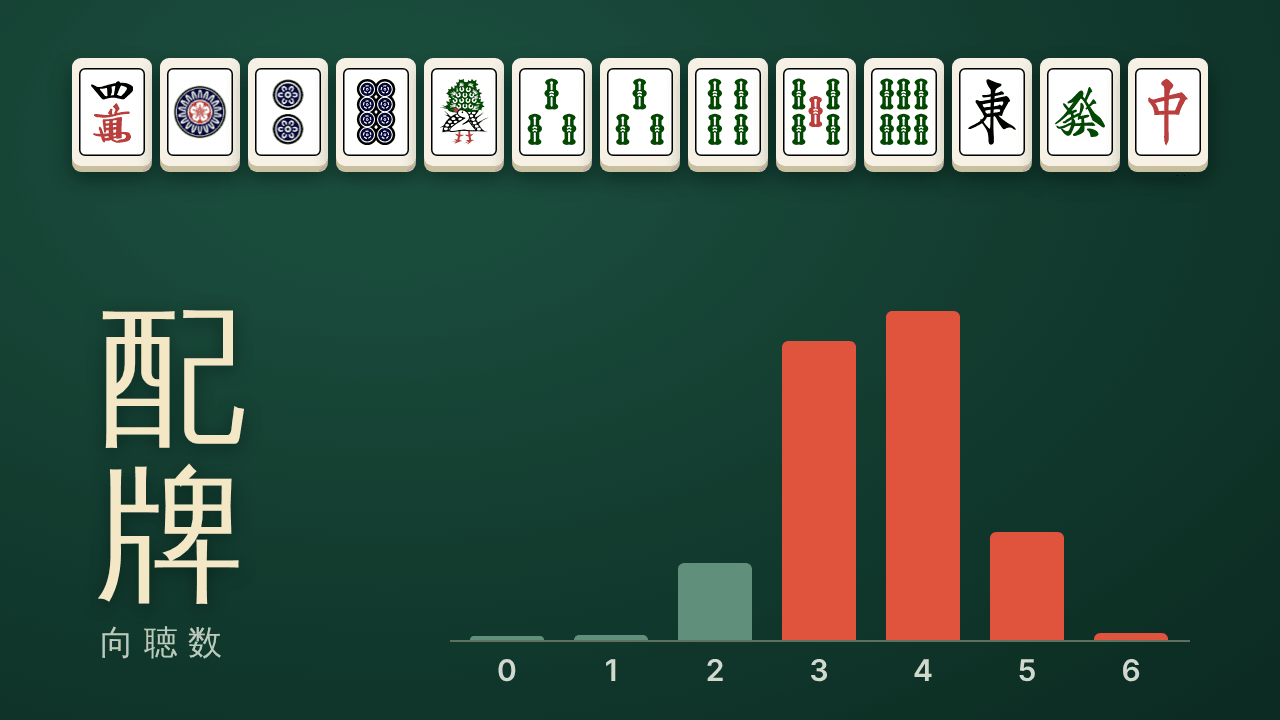
You pick up 13 tiles and start sorting. A lonely 4m, a 12p and an 8p, a run of , three honors that match nothing. It feels like a bad deal. It's the most common deal there is.
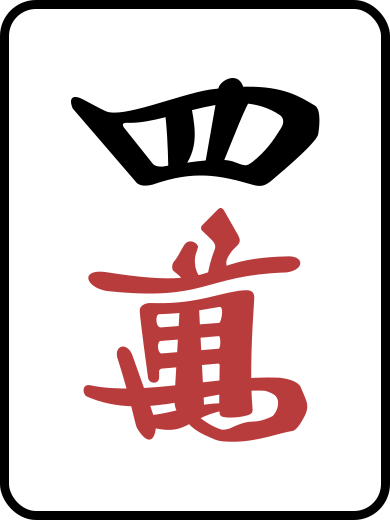

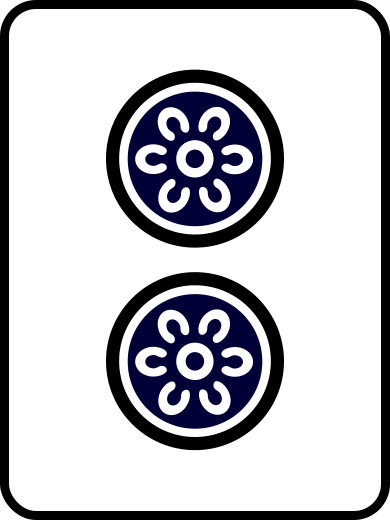
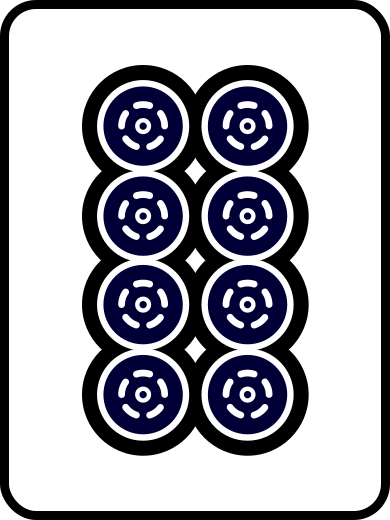

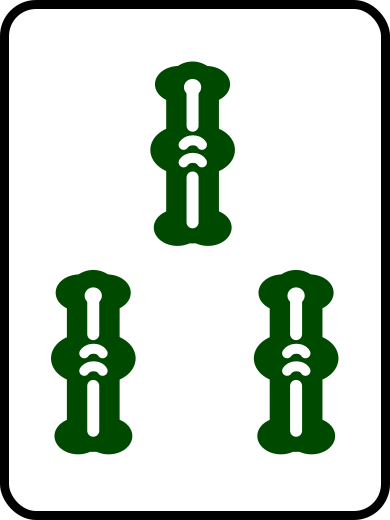
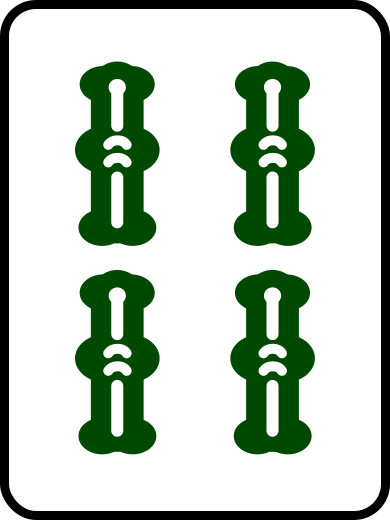
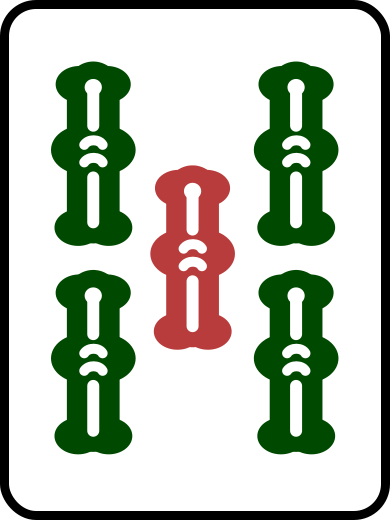
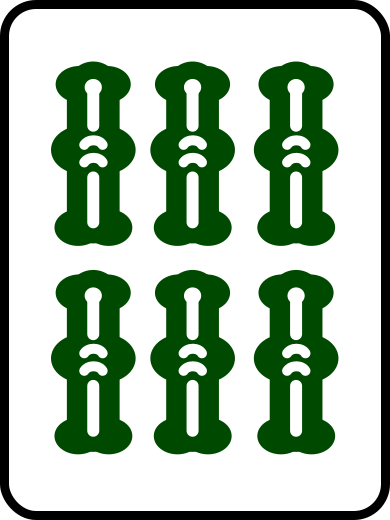
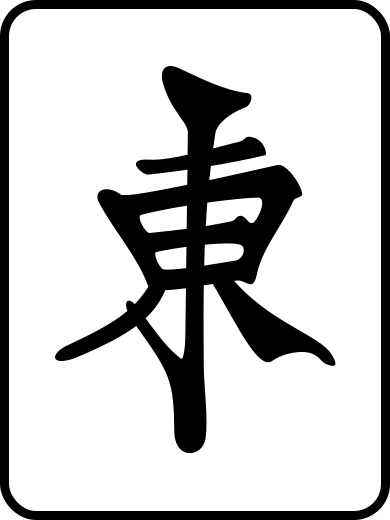
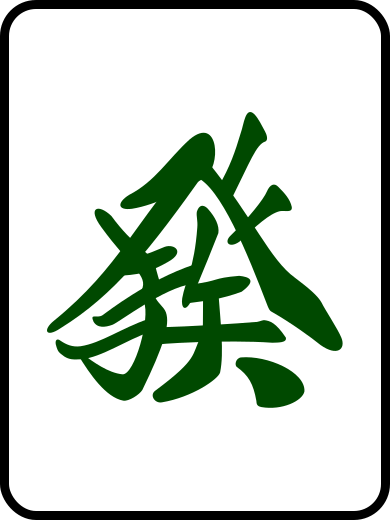

That hand is 4-: four useful tiles from , at best. To put a number on "normal", I measured ten million of them. Four-shanten is the most likely result, 3-shanten a close second, and everything better is rare.
Ten million deals, and how I counted them
The method is plain. Take the 136 tiles, four of each kind, and shuffle them. The first 13 tiles are a non-dealer's . The next 14 are a dealer's, a separate hand with no tile in common. Measure the shanten of both, write it down, shuffle again. Ten million times.
The shuffle and the shanten function are the ones in this site's own engine, the code behind the hand analyzer and the efficiency trainer. It counts three forms: four sets and a pair, (), and (). Red fives don't change shanten, so they don't change anything here.
On the biggest rows, the 95% margin of error is about 0.03 percentage points either way. Rare events are fuzzier, and I flag them where they come up.
The shanten distribution of a starting hand
The first column is what you're dealt as a non-dealer. The second column takes the same hands and ignores seven pairs and thirteen orphans. The 's 14 tiles get their own table below.
| Shanten | Non-dealer | Standard form only |
|---|---|---|
| Tenpai | 0.008 | 0.007 |
| 1 | 0.62 | 0.51 |
| 2 | 9.35 | 7.65 |
| 3 | 36.22 | 31.11 |
| 4 | 39.87 | 38.31 |
| 5 | 13.10 | 18.56 |
| 6 | 0.84 | 3.61 |
| 7 | none | 0.25 |
| 8 | none | 0.004 |
| Average | 3.58 | 3.79 |
Read the first column top to bottom. Tenpai on the deal: 848 hands out of ten million, about 1 in 11,800. That's rare enough for the sample to wobble, so I also counted it exactly, with the suit-by-suit method in the tenhou section below. The exact figure is 1 in 12,317. on the deal: 1 in 161. Two-shanten: about 1 in 11. Then the mass of the table. Three-shanten and 4-shanten together hold 76% of all deals, and 3-shanten or worse adds up to 90%.
A good deal by these numbers looks like this one. It's 2-shanten, with a complete 678p, a 999p triplet, and pairs to spare.
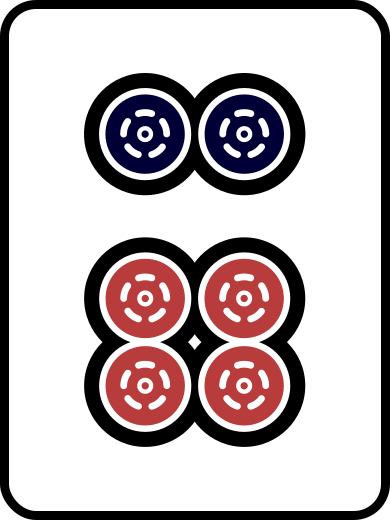
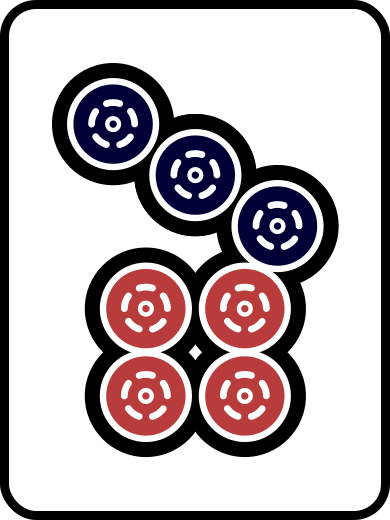
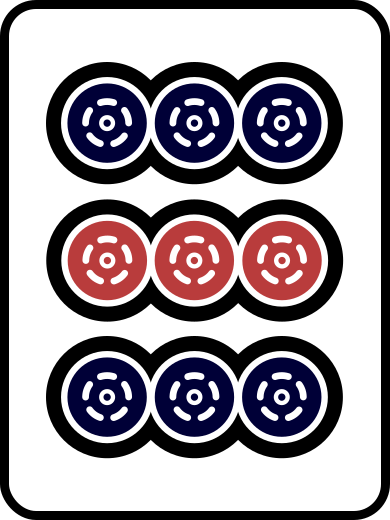
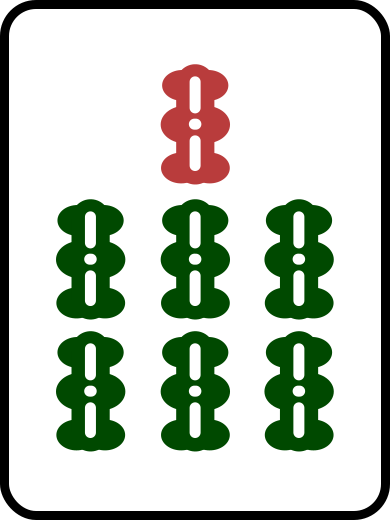
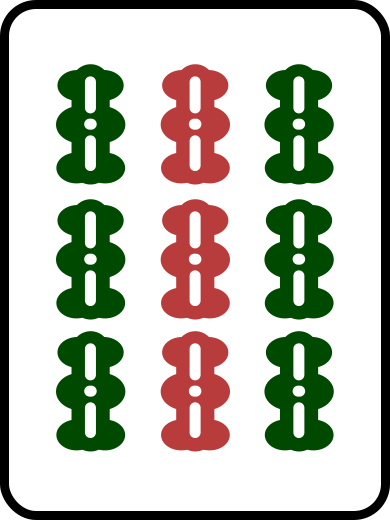

That's a top-10% hand.
The second column shows what the two odd forms are worth. Without seven pairs, 3.9% of hands sit at 6-shanten or worse. With it, 0.84% do, and nothing goes past 6. Seven pairs puts a floor under the deal: 13 tiles can always start collecting pairs. It also turns some 5-shanten hands into 4-shanten ones. When a pile of pairs makes your hand look hopeless, count it both ways.
The dealer's 14 tiles are one draw, not a better hand
| Shanten | Dealer, 14 tiles |
|---|---|
| Win | 0.0003 |
| Tenpai | 0.071 |
| 1 | 2.33 |
| 2 | 19.50 |
| 3 | 43.92 |
| 4 | 28.51 |
| 5 | 5.51 |
| 6 | 0.16 |
| 7 | none |
| 8 | none |
| Average | 3.16 |
The dealer's table looks healthier: average 3.16 instead of 3.58, and 2-shanten or better in 22% of deals instead of 10%. A non-dealer holds 14 tiles too, the moment they draw their first tile, and those 14 tiles have exactly the dealer's distribution. The dealer's edge is one draw of tempo, worth about 0.4 shanten on average.
A dealer whose 14 tiles are tenpai can discard and declare on the first turn. The table puts that at 0.071%. An exact count gives 0.070%, about 1 in 1,430. Every other player gets the same chance on their first draw, as long as no call comes before their discard. Across four seats, roughly one hand in 360 has a double available to someone.
Tenhou: 1 in 330,530, and the only yaku you can compute
(, the heavenly hand) is the dealer's 14 tiles already complete. It's a , and the Japanese Wikipedia article on it gives the odds: the chance that 14 tiles chosen at random from 136 form a winning hand is about 1 in 330,000 (およそ33万分の1). It adds that tenhou is the only yaku whose rate can be calculated mathematically. Every other yaku depends on what players choose to do. This one is decided before anyone discards.
Ten million deals can't measure a 1-in-330,000 event well. My simulation produced 31 complete dealer hands, 1 in 322,581. The true rate predicts about 30, and any count from roughly 20 to 41 would be ordinary noise. So I counted it exactly instead.
Sequences never cross suits, so a standard hand is complete when three of its four groups (, , souzu, honors) split into sets and one splits into sets plus a pair. I listed all 5^9 count patterns for a single suit, marked the ones that split, and weighted each by the ways to pick those tiles from four copies. Combining the four groups gives every complete standard hand. Seven pairs and thirteen orphans are simple counts, and the 223344-style hands that read both ways are subtracted once.
| Form | Odds, 1 in |
|---|---|
| Four sets and a pair | 374,373 |
| Seven pairs | 2,822,345 |
| Thirteen orphans | 3,247,922,070 |
| Any form | 330,530 |
The total, 1 in 330,530, is the same figure Wikipedia's footnote credits to a site called Maajan no Suugaku, "the mathematics of mahjong" (麻雀の数学). Its fraction is mine with both numbers divided by six. Same ratio.
The article also turns it into a lifetime: at three dealer hands per and five a day, it puts one tenhou at every 61 years. , the non-dealer's version on the first draw, starts from the same 14-tile odds, but the article notes it can't be computed the same way: a call before your turn cancels it, and so does an abortive draw.
How long a starting hand takes to reach tenpai
Shanten on the deal is a start line. The question that matters at the table is when you get there. To estimate it, I ran 50,000 more deals through the engine as solitaire. Each turn the hand draws from the rest of the wall and discards whatever the engine ranks first: lowest shanten, then the most accepted tiles. No calls, no riichi, no opponents, no defense. The run stops at tenpai or after 18 draws. A hand that goes all the way to the exhaustive draw gives each player 17 or 18 draws: 136 tiles, minus 14 in the , minus 52 dealt, leaves 70.
| Start | Tenpai by draw 8 / 12 / 18 | Median draw |
|---|---|---|
| 1 | 69 / 82 / 93% | 6th |
| 2 | 37 / 60 / 81% | 11th |
| 3 | 20 / 44 / 72% | 14th |
| 4 | 11 / 33 / 65% | 15th |
| 5 | 6 / 25 / 59% | 17th |
| 6 | 2 / 17 / 55% | 18th |
| All | 17 / 39 / 68% | 15th |
The model is crude in both directions. Real players call, which speeds hands up. Real players also chase value, hold safe tiles, and fold, which slows them down. The shape of the table still holds. A 4-shanten hand, the most common deal, is tenpai by the 8th draw about one time in nine. Its median tenpai lands on the 15th draw, when the wall is nearly gone.
What the deal means for how you play
Most of your hands start slow. Even alone at the table, with nobody calling or racing you, only 39% of deals are tenpai by the 12th draw, and the 3- and 4-shanten starts that make up three deals in four get there a third to just under half the time.
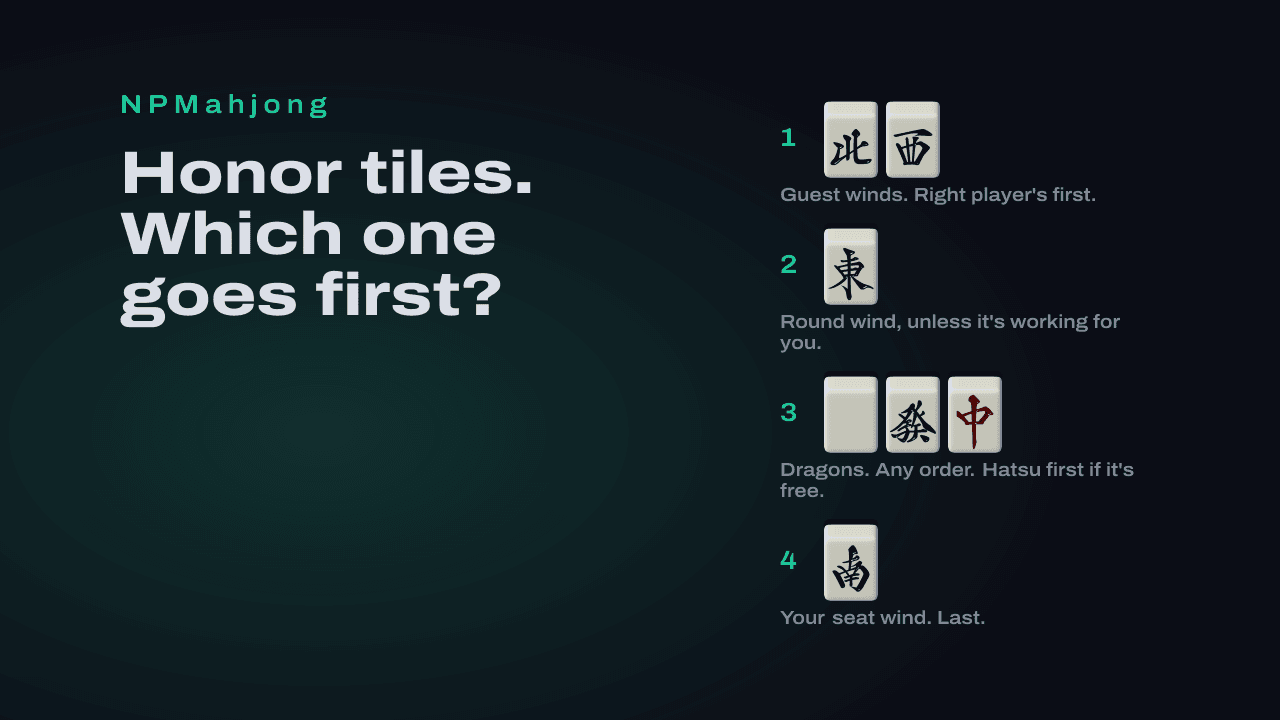
So build them with defense in mind from the first discard. Someone else will often get there first. In Tenhou's logs from 2016 to 2020, a clean fold against a non-dealer riichi at turn 8 costs a non-dealer about 1,120 points, and dealing into a non-dealer riichi from turn 8 costs 5,869 before and sticks, as worked out in what folding costs. A 4-shanten hand facing that riichi is choosing between those two prices, and the tiles you kept decide which one you pay. Cut the lone guest wind first, as you would in most hands. With a slow 4-shanten start, note which tiles will be your safe tiles once a riichi comes, and don't cut all of them early.
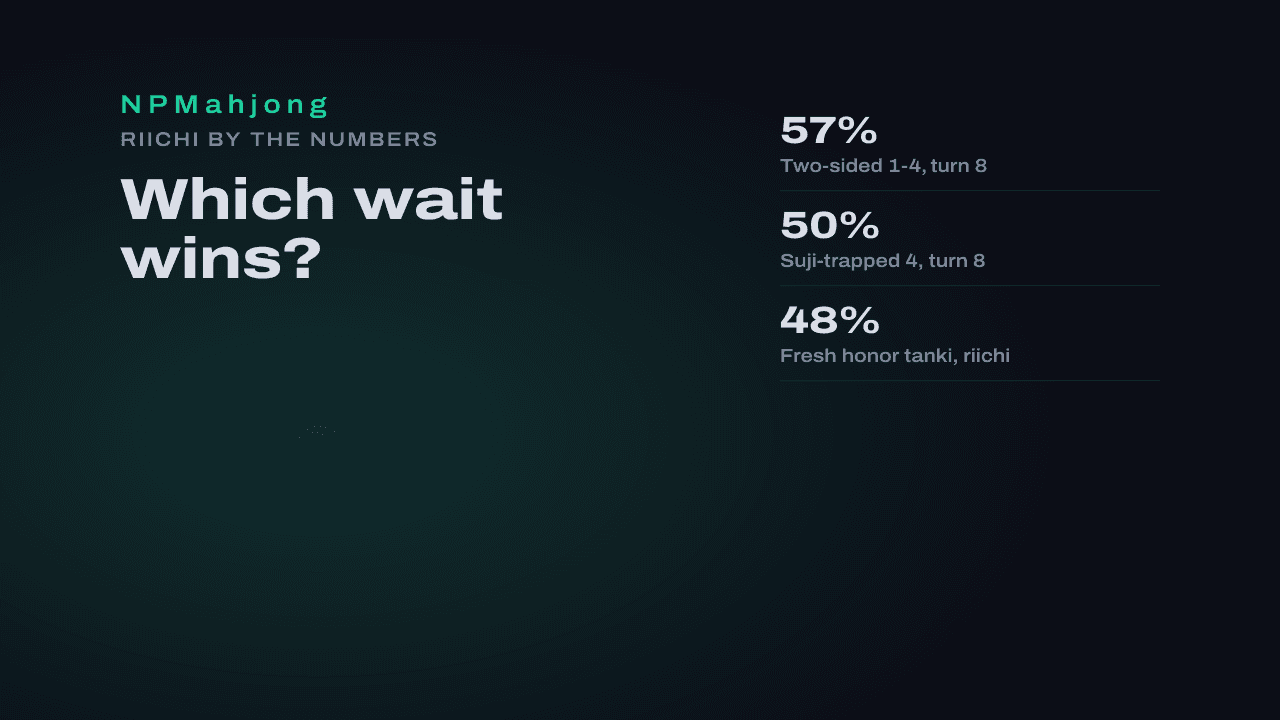
The flip side is the 10% of deals at 2-shanten or better. Those are the hands that race. Two-sided riichi waits win far more often early, 79% at turn 2 against 47% at turn 11 for a 1-4 wait, about 3.6 points per turn. A 1-shanten start is tenpai by the 6th draw half the time. A 2-shanten start needs until the 11th. Play them for speed and push them harder.
Check your own deal
Next hanchan, look at your starting hand before your first discard and call the shanten out loud. Then check it in the hand analyzer, which runs the same engine as this simulation. After twenty hands you'll stop calling a 4-shanten deal unlucky. It's the median.

Was this article helpful?