You're on turn 7 with a closed and two . On Tenhou or Mahjong Soul you without thinking. The stick buys a , a shot at , and a peek at the , and the red fives in the wall fatten every hand on top of that. Play the same hand in the pro league of the Japan Professional Mahjong League (日本プロ麻雀連盟, JPML) and riichi buys one han, and that's all it buys. On a , that han is worth 300 points. On a tsumo, it's worth 4,000.
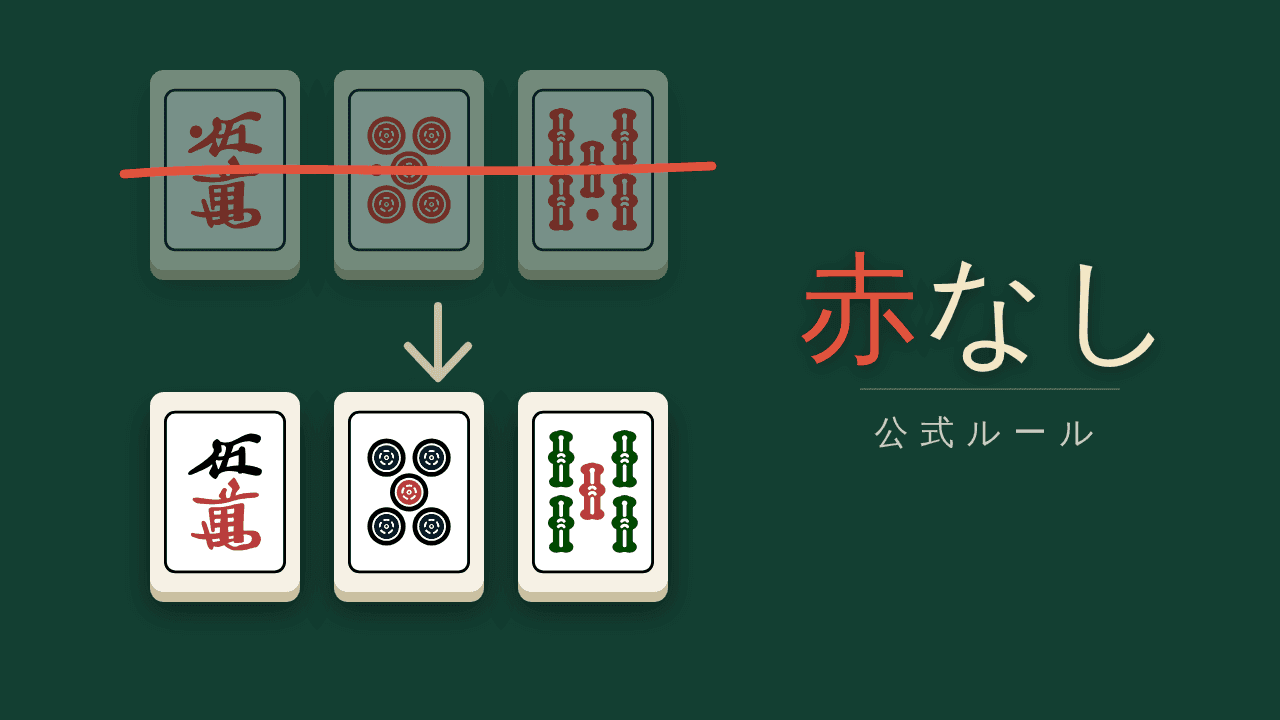
The JPML publishes its rules as a table, one column per rule set, and its official rule, the koushiki ruuru (公式ルール), removes the exact bonuses that make riichi automatic online. In that column, the rows for ura , , ura dora, red fives, and all read nashi (なし), none. The JPML isn't alone, either. Three of Japan's pro organizations play their main rule with no red fives.
Red fives, ura, and ippatsu in four rulebooks
I'm a pro of the Japan Professional Mahjong Association (日本プロ麻雀協会, NPM), so the Kyoukai rule is the one I play under. The table puts it beside the JPML official rule, the rule of Saikouisen (最高位戦日本プロ麻雀協会), and the rules of M.League, the team league. Saikouisen is its own organization, separate from the NPM, even though its full Japanese name contains the NPM's.

| Rule | JPML official | NPM | Saikouisen | M.League |
|---|---|---|---|---|
| Red fives | None | None | None | 3, one per suit |
| Ippatsu | No | Yes | Yes | Yes |
| Ura dora | No | Yes | Yes | Yes |
| Kan dora | No | Yes | Yes | Yes |
| No | Yes | Yes | Yes | |
| Start / return | 30,000 / 30,000 | 25,000 / 30,000 | 30,000 / 30,000 | 25,000 / 30,000 |
| Placement points | Set by floaters | +50 / +10 / -10 / -30 | +30 / +10 / -10 / -30 | +50 / +10 / -10 / -30 |
| Abortive draws | None | None | None | None |
| Source | JPML rule table | NPM official rule | Saikouisen rules | M.League rules |
The NPM and Saikouisen summaries don't mention red fives at all. The full regulations do. Article 9 of the NPM regulations and Article 24 of Saikouisen's (a PDF on its rules page) each list three kinds of dora, the indicator, kan dora, and ura dora, and red fives aren't one of them. The NPM has a red-five rule too, for its Champion Road events, but its official rule leaves them out. M.League's rules mark one each of 5m, 5p, and 5s as red, and its uma line reads 1st +50,000, 2nd +10,000, 3rd -10,000, 4th -30,000. None of the four has abortive draws.
The JPML runs more than one rule. Its sheet has columns for the WRC rule, which adds ura dora, kan dora, ippatsu, and kiriage, and for WRC-R, which adds red fives on top. The WRC-R league page gives the reason it exists. More and more games, M.League among them, use red tiles, so the JPML created a title that uses them too. Its pro league and top title, the Houou-sen (鳳凰戦, the Phoenix title), stays on the official rule, which the Japanese Wikipedia page on the Houou-sen describes as the rule with no ippatsu, no ura dora, and no kan dora. It has nothing to do with Tenhou's room, where the win-rate data below comes from.
Saikouisen keeps a stripped rule of its own, too. Its rules page lists a second, "Classic" rule with the first dora indicator only, no ippatsu, no , no kiriage, and placement points of +12, +4, -4, -12.
What riichi is worth when it only buys one han
Here's the hand from the opening. The dora indicator is 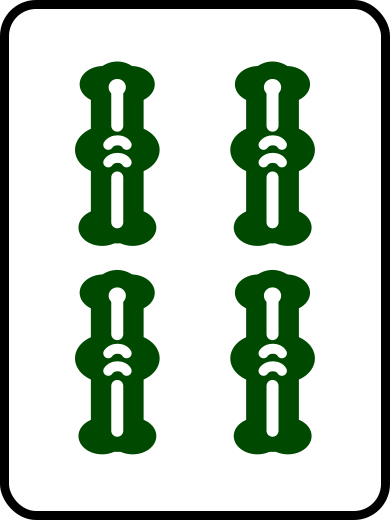 , so the 5s pair is two dora.
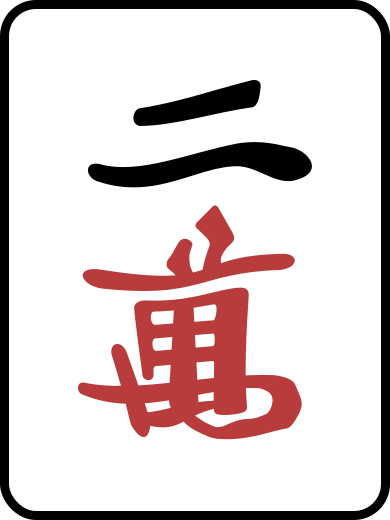
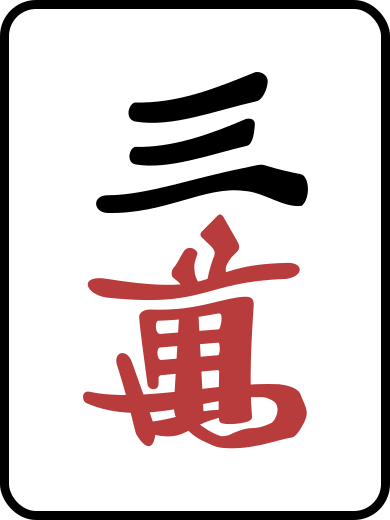
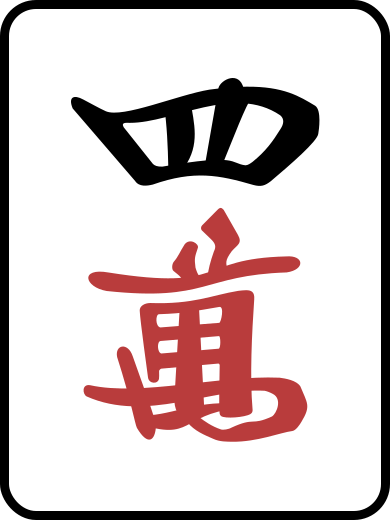
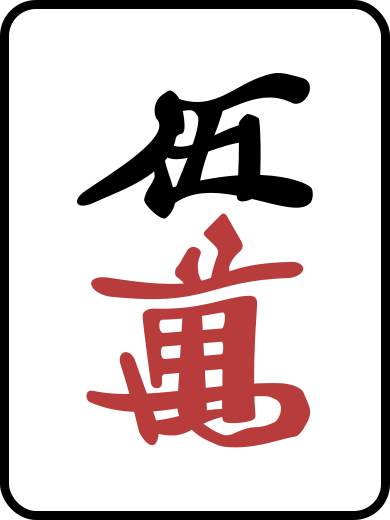
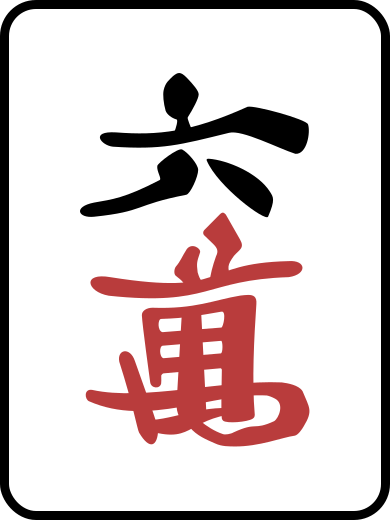
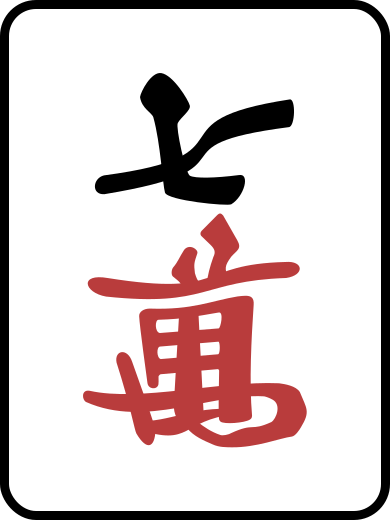
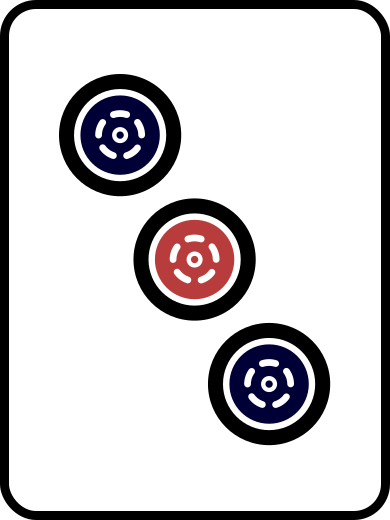
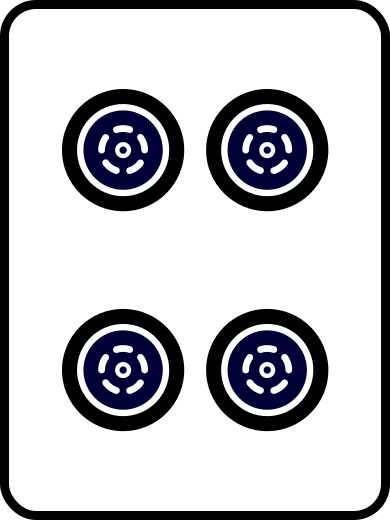
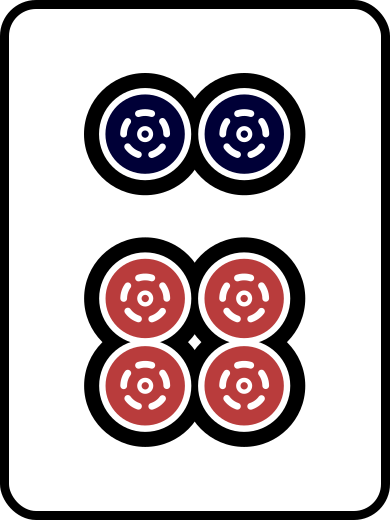
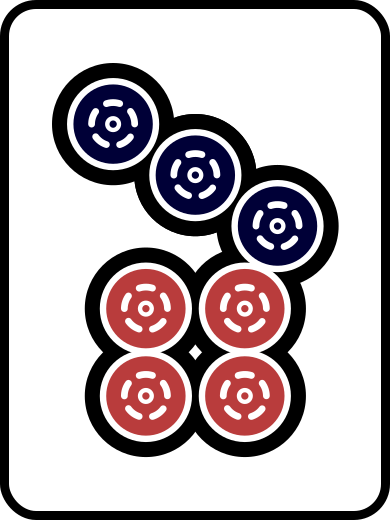
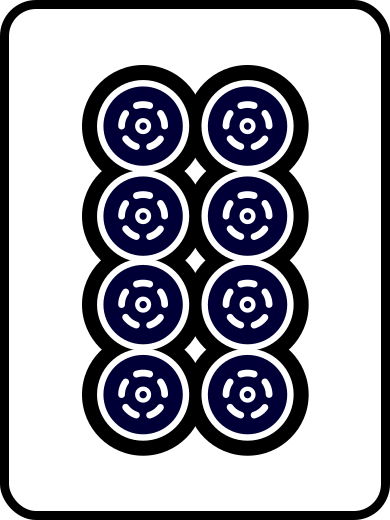
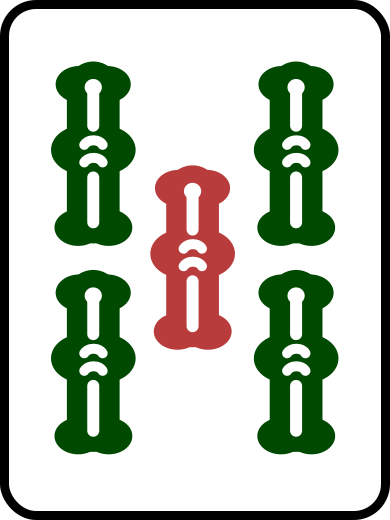
It waits on 2p and 5p, both simples, so it's and . , it's 4 han 30 on a ron. On a tsumo it's 5 han, because the JPML rule counts pinfu with tsumo. Now price riichi under each rule, on a ron and on a tsumo.
- JPML official. On a ron, dama pays 7,700, because the rule doesn't round 4 han 30 fu up to a . Riichi makes it 5 han, a mangan: 8,000. The stick costs 1,000 and comes back when you win, so the gain is 300 points. On a tsumo, dama is already 5 han and a mangan, and riichi makes it 6 han, a : 12,000 against 8,000.
- NPM, Saikouisen, and M.League. All three round 4 han 30 fu up to a mangan (the rule), so a dama ron already pays 8,000. On a ron, riichi changes nothing unless ura dora or ippatsu push it to 6 han. On a tsumo, riichi alone makes it a haneman.
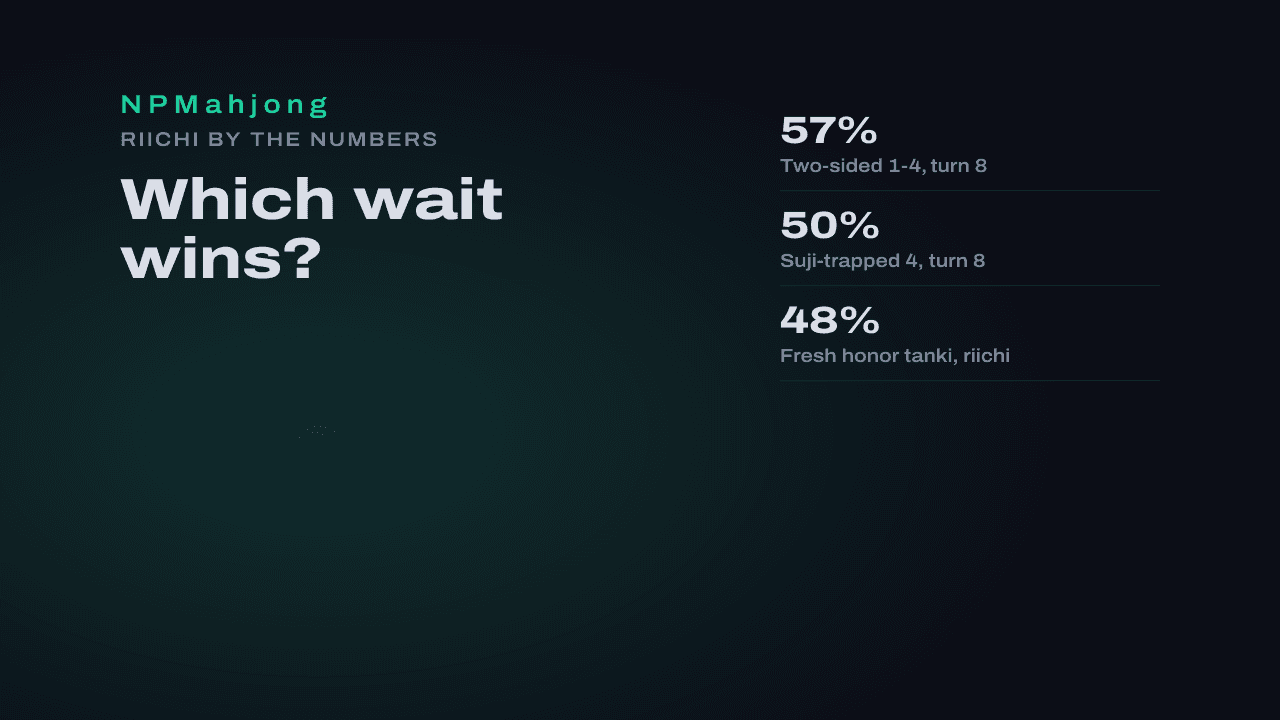
In both cases riichi costs the same things. You announce that you're tenpai, you lose the option to fold, and you can't change your wait. The riichi wait win rate data shows what the announcement costs in wins. In Tenhou logs, a two-sided 1-4 wait at turn 8 won 57% as a riichi and 67% as a hand with dora. The dama table has no row for this hand's 2-5 wait, so 1-4 is the nearest, and the 3-6 row shows the same 10-point gap. The post calls the comparison rough, and those logs have red fives. The reason for the gap carries over anyway. Opponents fold against a riichi and keep throwing tiles into a quiet hand.
Under the JPML official rule, that trade is ten points of win rate for 300 points on a ron and 4,000 on a tsumo. The same data has half of a two-sided 1-4 riichi's wins coming by tsumo, so the haneman isn't a long shot. That makes it a close call. Online, ura and ippatsu tip it to riichi. Under the official rule nothing does.
The riichi that's clearly right is the one that doubles a cheap hand. Swap the indicator to 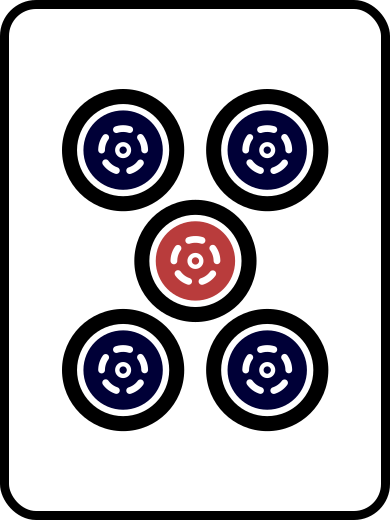 and the same tiles carry one dora. Dama pays 3,900 on a ron and riichi pays 7,700. That han is worth 3,800 points, and you riichi. A tsumo tells the same story, 5,200 dama against 8,000 with riichi.
Fewer dora means yaku do the work
Red fives are the other half of the change. With three red fives in a 136-tile set, there are seven dora tiles in play from the first draw: four copies of the indicated tile plus three red fives. Without them there are four.
Do the math and a 13-tile deal holds 0.38 dora on average without red fives and 0.67 with them. About one hand in three has a dora without reds, and about half do with them. The working, by my arithmetic: the deal comes from the 135 tiles you can't see, so the averages are 13 × 4 / 135 and 13 × 7 / 135. The chance of holding at least one dora is 1 - C(131,13) / C(135,13), about 34%, without red fives, and 1 - C(128,13) / C(135,13), about 52%, with them. That ignores the rare deal where the dora itself is a five and a red five doubles up.
So under the official JPML rule, two hands in three start with no dora at all, and nothing hidden turns up later, because there's no ura and no kan dora. A hand gets its value from what you build. Tanyao and pinfu together, a , an , a , a value pair turned into a triplet. A cheap open hand that would carry a red five on Mahjong Soul is a 1,000-point hand here, and it stays one.
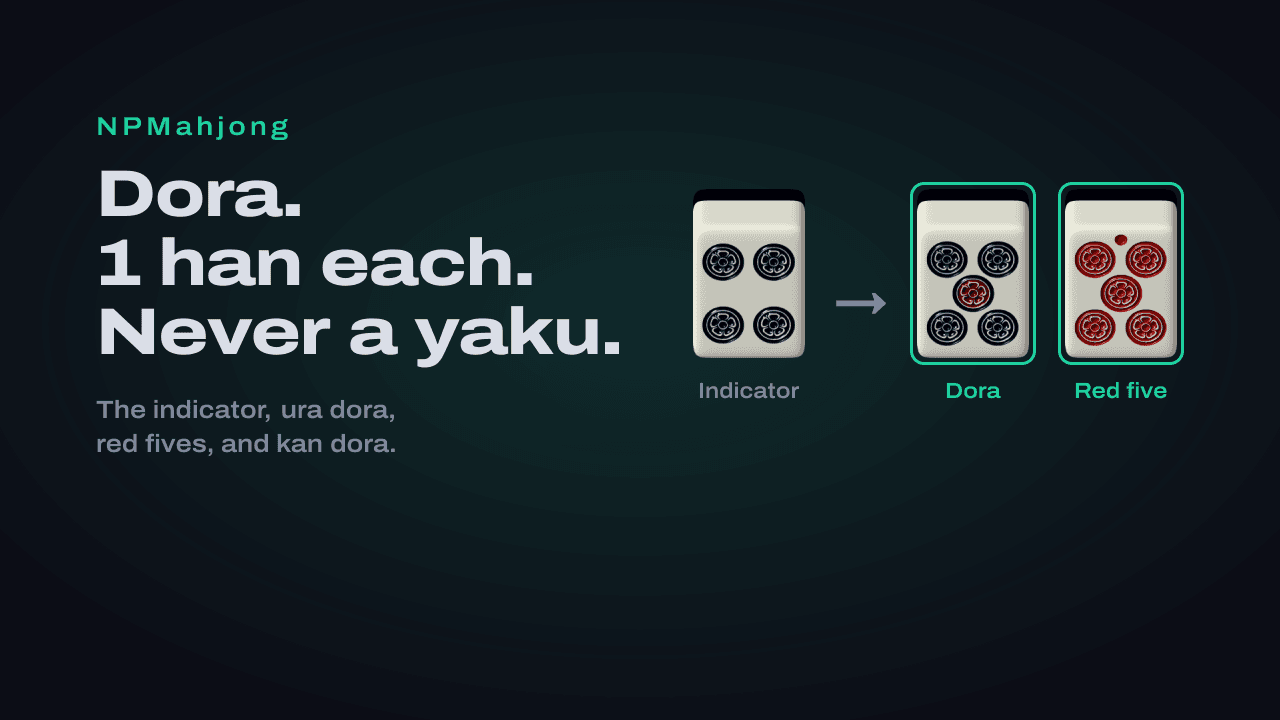
That changes defense too. When an opponent riichis under the official rule, almost every han is already in the hand at the moment they declare: their yaku, the dora they hold, and one han for riichi. Only the winning tile and a tsumo can add more. No ura indicator turns a 2,600 riichi into 5,200 after you've dealt in. What you read from the indicator and the discards is what you pay.
The JPML pays you for staying above 30,000
The JPML's placement bonus works differently too. Every player starts at 30,000, and the bonus depends on how many finish above that line, the floaters, or uki (浮き). The JPML sheet lists it in a separate table. Japanese Wikipedia's JPML article gives the same numbers.
| Floaters | 1st | 2nd | 3rd | 4th |
|---|---|---|---|---|
| One | +12 | -1 | -3 | -8 |
| Two | +8 | +4 | -4 | -8 |
| Three | +8 | +3 | +1 | -12 |
Read the first row. With only one player above 30,000, 2nd and 3rd are 2 points apart. Now put yourself in 2nd at 29,000 in the last hand, with the leader the only floater. Win 2,000 off 3rd or 4th without changing seats and you finish at 31,000, a second floater. Your placement points go from -1 to +4. That 2,000-point hand is worth 7 points to you: 2 in raw score and 5 in bonus. Under the NPM rule I play, Saikouisen's, or M.League's, the same hand is worth 2.
So the line at 30,000 works like a seat of its own.
Price riichi before you declare it
Most of what you learned online still holds at a pro table. The price of riichi is what moves. Put the opening hand into the score calculator with the kiriage switch off, four ways: dama and riichi, on a ron and on a tsumo. Then swap the indicator to 5p and run it again.

One hand is a close call and the other isn't, and one dora is the whole difference.
Was this article helpful?