Nobody can tell you who invented , the rule that gave the Japanese game its name. The Daijisen dictionary entry for riichi (立直) is three lines long. Chinese mahjong has by that name. It caught on in Japan after the Second World War. It's said to come from a local rule in northeast China.
That "is said to" is where the origin story stops. What the record does name is the man who wrote down riichi as you play it today: Amano Daizou (天野大三), in a 1952 newspaper. The police summoned him over it.
Riichi started as a first-discard rule
Japanese Wikipedia's riichi article hedges on the origin. Today's riichi may come from northeast China, the former Manchuria. In that account, officers of the Kwantung Army played a Manchurian mahjong with a riichi rule, and people returning from Manchuria after the war brought it home.
The first riichi was a different rule. It was the same thing as today's double riichi: you could only declare it on your first discard. Over time players came up with a version you could declare later in the hand. At first it had its own name, tochuu riichi (途中リーチ), "mid-hand riichi," to keep it apart from the real thing. After the war the mid-hand version spread so fast that it took over the word riichi. The old first-discard rule got a new name, , for short.
The sources disagree on when the mid-hand version appeared. The riichi article only says it came as time went on and spread rapidly after the war. The double riichi article says that under the pre-war arushiaru (アルシーアル) rules, what we call double riichi was simply called riichi, and it cites a 1925 rulebook for that. In its telling, the mid-hand rule was devised after the war. 浅見了, the writer the riichi article cites, puts it earlier: around 1940, among Japanese players living in Manchuria. All three agree on the part you play. Riichi on any turn became standard after the war.
You'll also hear that "riichi" comes from the English "reach." The riichi article calls that nonsense, or a strained fit.
1952: a newspaper wrote down the modern rules
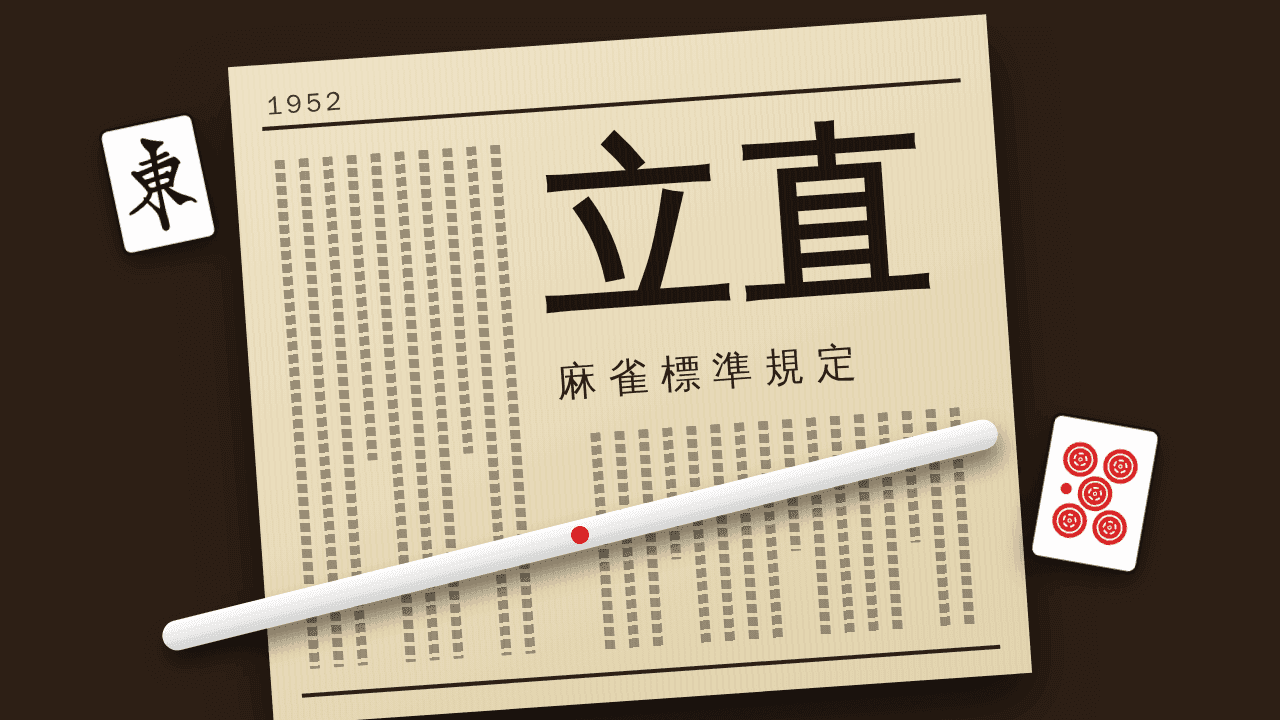
The modern rule had no standard text until a newspaper printed one. In 1952, Amano Daizou (天野大三, 1904 to 1982) published the Riichi Mahjong Hyoujun Kitei (立直麻雀標準規定), the "standard rules of riichi mahjong," in the Houchi Shimbun (報知新聞), today's Sports Hochi. Japanese Wikipedia's section on him sits in the article on the Nihon Paikiin (日本牌棋院), the competitive mahjong group he founded. It calls the rules Japan's first written codification of riichi and dora. That means riichi on any turn. The first-discard rule was already in print before the war. Players called the new text the Houchi rules (報知ルール), and it's said to have shaped the rules that came after the war.
It also got him reported to the police. The rules came out at the end of 1952. The Japan Mahjong Federation (日本麻雀連盟), which is not the JPML (日本プロ麻雀連盟) despite the similar Japanese name, didn't accept mid-hand riichi. Someone connected to it went to the police with a mix of true and false claims about the rules, including mid-hand riichi. The Tokyo Metropolitan Police summoned Amano. He argued that riichi mahjong made the game more competitive, and the police accepted that and dropped the matter.
Amano belonged to that federation, as a sixth and a standing director. After the episode he decided to leave. The board stripped him of both the rank and the title, with a hardline remark along the lines of "if the federation ever takes up riichi, we'll come to you for lessons" (「連盟がリーチを採りあげることがあれば君の膝下に教えを乞う」). In 2016, 34 years after his death, the federation recognized riichi mahjong as its second official rule set.
Dora started in Kansai parlors
is older than the Houchi rules and just as hard to credit. Japanese Wikipedia's dora article cites the writer 浅見了: the rule began in the early Showa 20s, the mid-to-late 1940s, in the buu mahjong (ブー麻雀) played in Kansai parlors. He offers two theories for its origin. Returnees brought it from Manchuria, or the buu parlors invented it themselves.
Early dora didn't add . Each one added a fixed amount to the score. The switch to 1 han per tile came around Showa 22 or 23, 1947 or 1948. The 1952 Houchi rules then wrote dora into their section of special rules.
The word itself is said to come from "dragon." Daijisen hedges it. Japanese Wikipedia states it flatly, then notes the problem. In English mahjong terms, "dragon" means the white, green, and red tiles, not a bonus tile.
Red fives, ura dora, and ippatsu came later
The three bonuses that make a modern riichi expensive all show up after the 1952 rules. A Japanese Wikipedia article dates each one, and most dates come with a "said to be."
| Rule | When | Detail |
|---|---|---|
| Riichi on the first discard only | Before the war | Pre-war arushiaru rules, in print by 1925; Manchurian theory |
| Dora | Late 1940s; 1 han per tile from 1947 or 1948 | Kansai buu parlors, per 浅見了 |
| Mid-hand riichi becomes "riichi" | After the war | Spread rapidly; codified in 1952 |
| Red fives | Two red 5-pin made in 1964 | An Osaka maker, ミズノ丸一, for the Tokyo Olympics |
| Ura dora | Kansai by the Showa 30s; Kanto in the Showa 40s | Amano's 1967 rules use it on tsumo only |
| Ippatsu | Precursor around 1955; settled as ippatsu in the Showa 50s, 1975 to 1984 | Precursor dated by Amano's 1962 book |
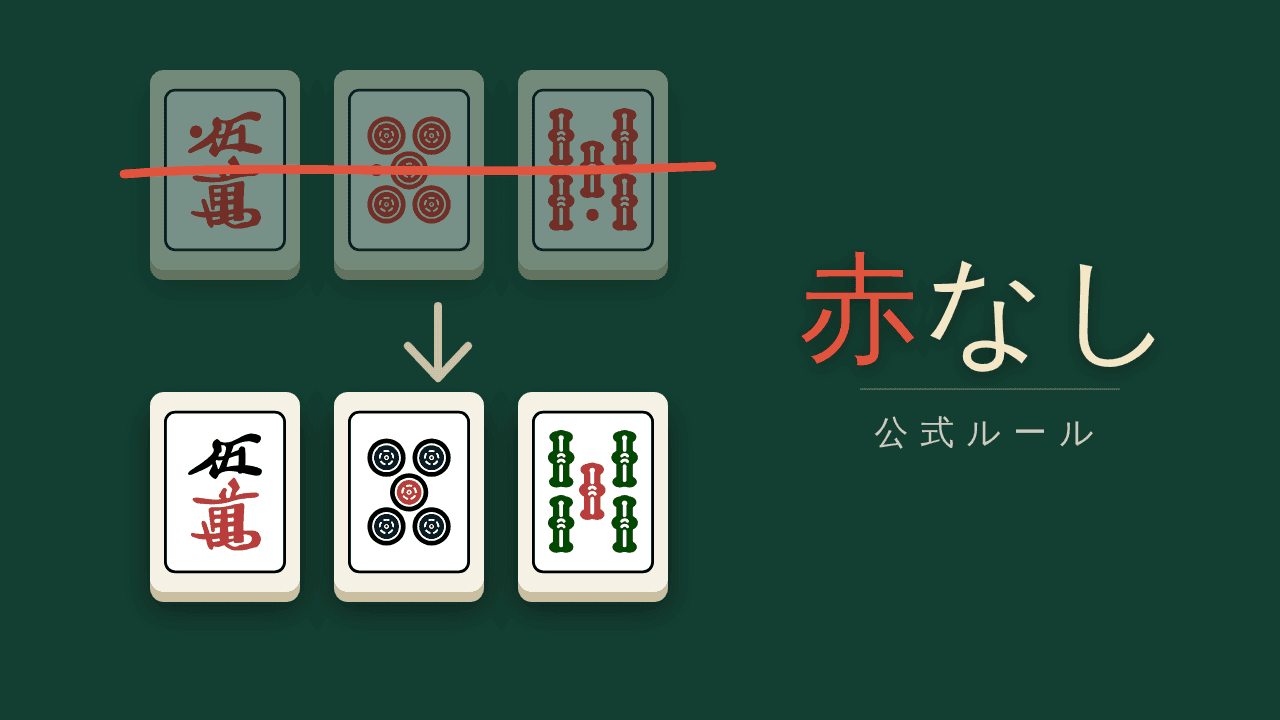
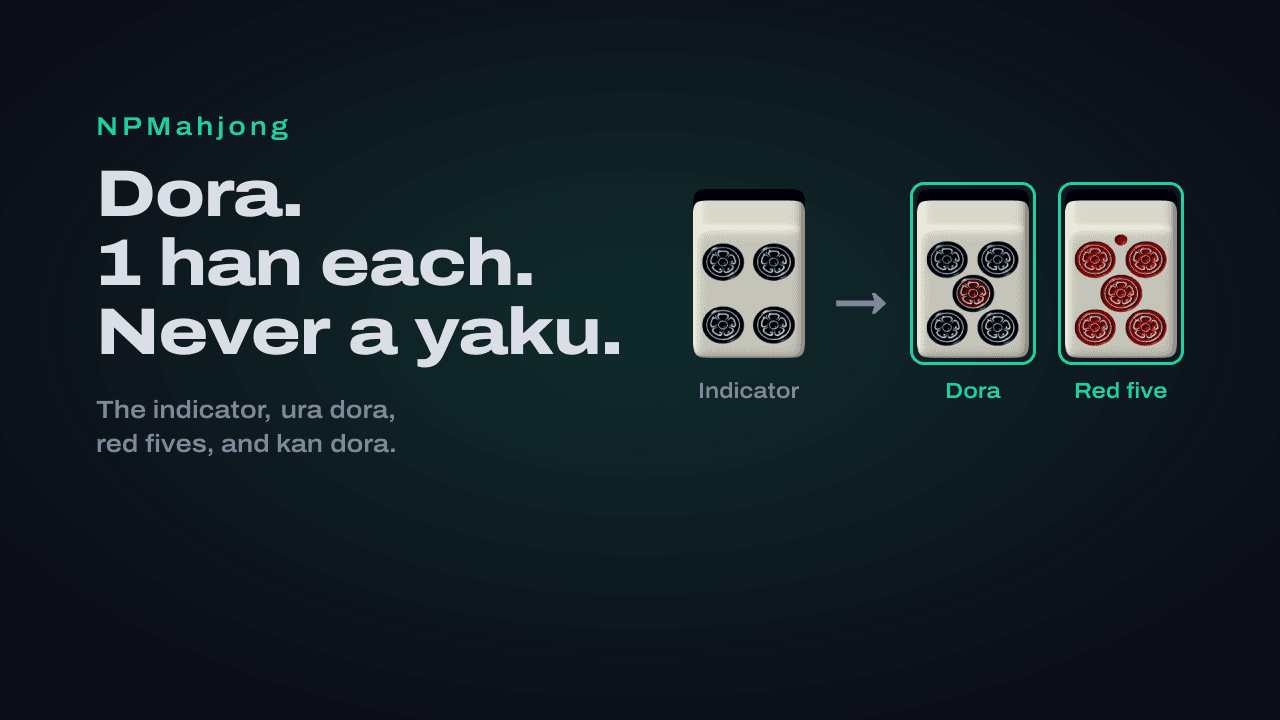
Red fives. The dora article says were long thought to have been invented in Kansai around the 1970 Osaka Expo. Then a reporting manga moved the date back. Mantori (まんトリ), short for "mahjong trivia," found in the September 2004 issue of Kindai Mahjong Original that an Osaka company, ミズノ丸一, first made two red 5-pin tiles for the 1964 Tokyo Olympics. That's the earliest date the article gives.
Ura dora. Kansai is said to have had by the Showa 30s, and Kanto picked it up in the Showa 40s, 1965 to 1974. Amano's own 1967 rule set, the gendai ruuru (現代ルール), "modern rules," added ura dora for tsumo wins only.
Ippatsu. The ippatsu article dates a precursor of , riichi ichijun (リーチ一巡), "riichi one go-around," to around Showa 30, 1955. A later rule voided it when anyone called, and it settled as ippatsu in the Showa 50s. That makes it the newest of the common yaku. Competitive leagues traditionally didn't count it, and some only adopted it from the late 1990s.
What the add-ons are worth
Take a riichi waiting on 1s and 4s, with a red 5-pin:
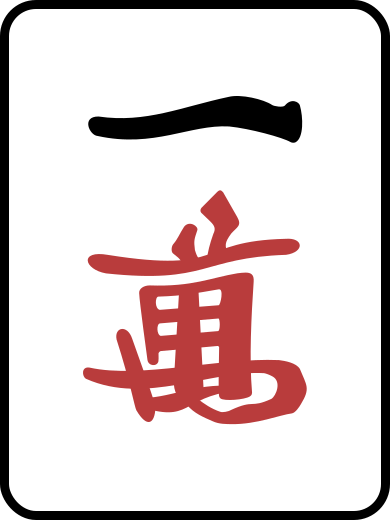
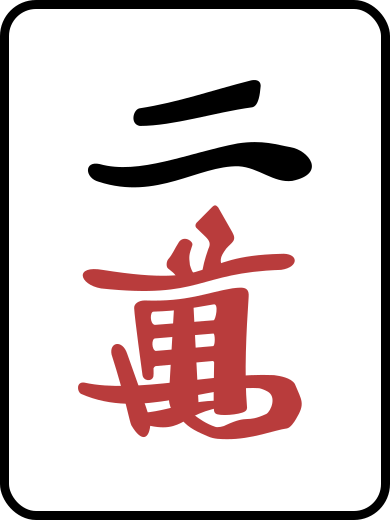
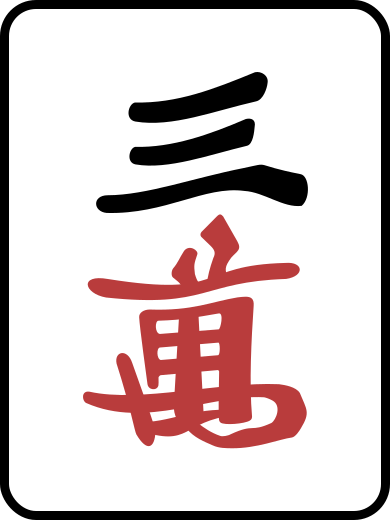
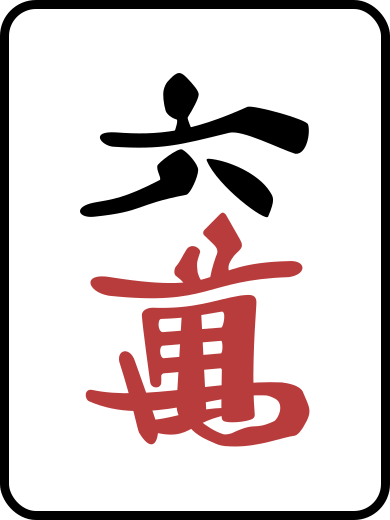
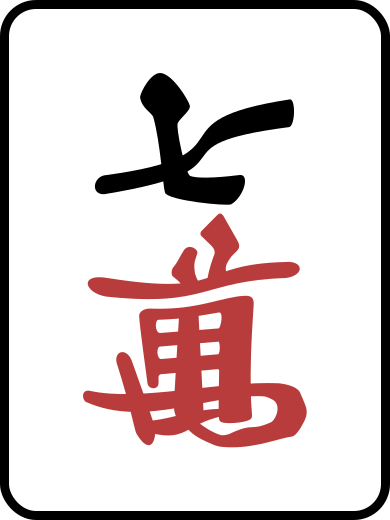
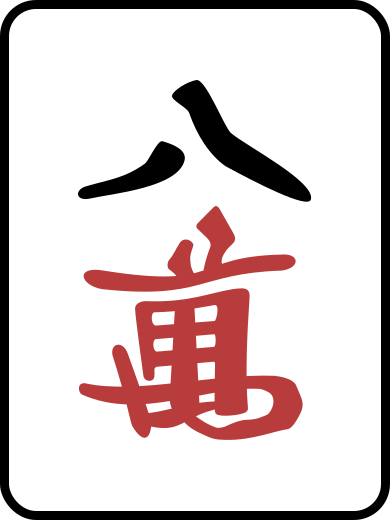
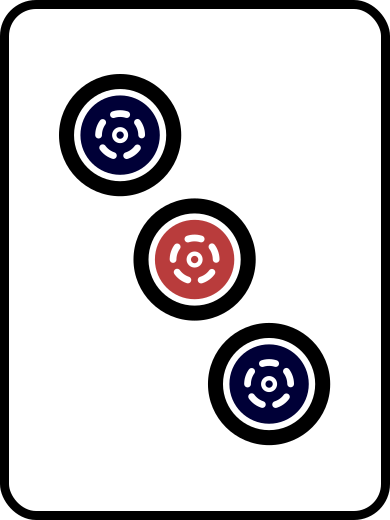
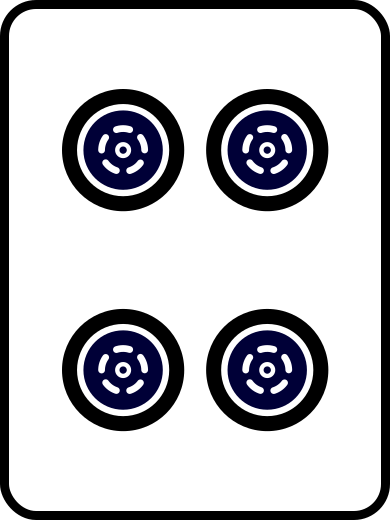
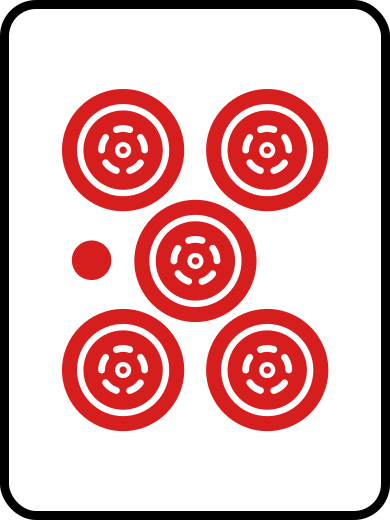
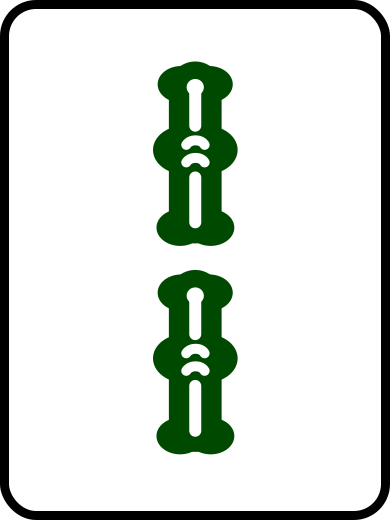
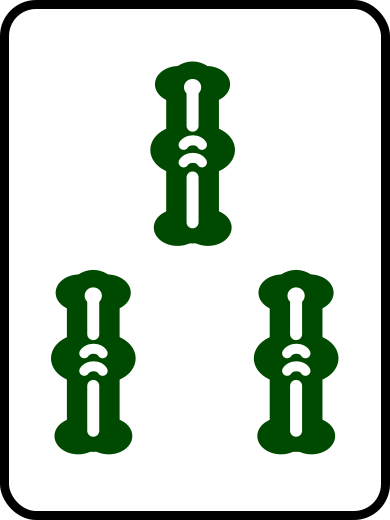
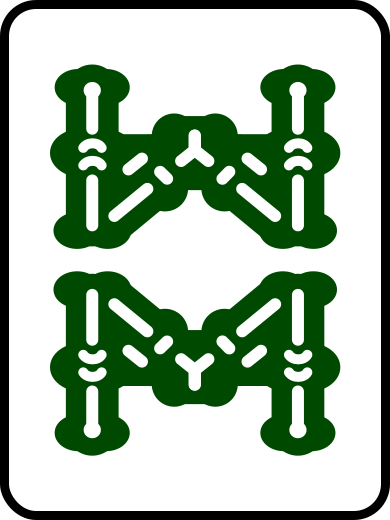
Win it by as a . Riichi and are 2 han at 30 fu, which pays 2,000 on the scoring table. Now add the three later bonuses: ippatsu, one ura dora, and the red five. That's 5 han, a , 8,000: four times the price for the same 13 tiles. Three quarters of that payment comes from rules that arrived after the 1952 rulebook.
Yaku guide
Riichi
1 han, closed only. Declare on a closed tenpai hand and put out a 1,000-point stick.
Tenhou's usual four-player ranked rules, the ones I climbed to 7-dan on, play every one of those bonuses, with one red five in each suit. The NPM rule I play keeps ippatsu and ura dora but has no red fives, and the JPML's official rule drops all three.
Before your first game at a club or in a league, ask which of the three they play: ippatsu, ura dora, red fives. Without them, that 8,000 hand is back to 2,000.
Was this article helpful?