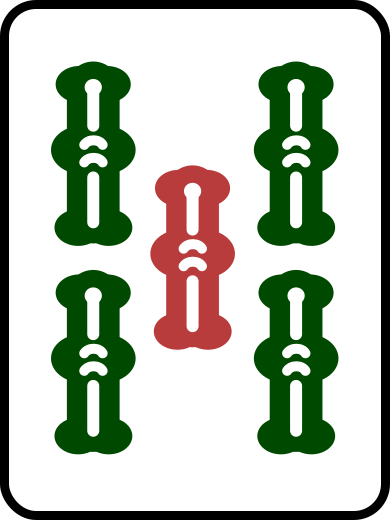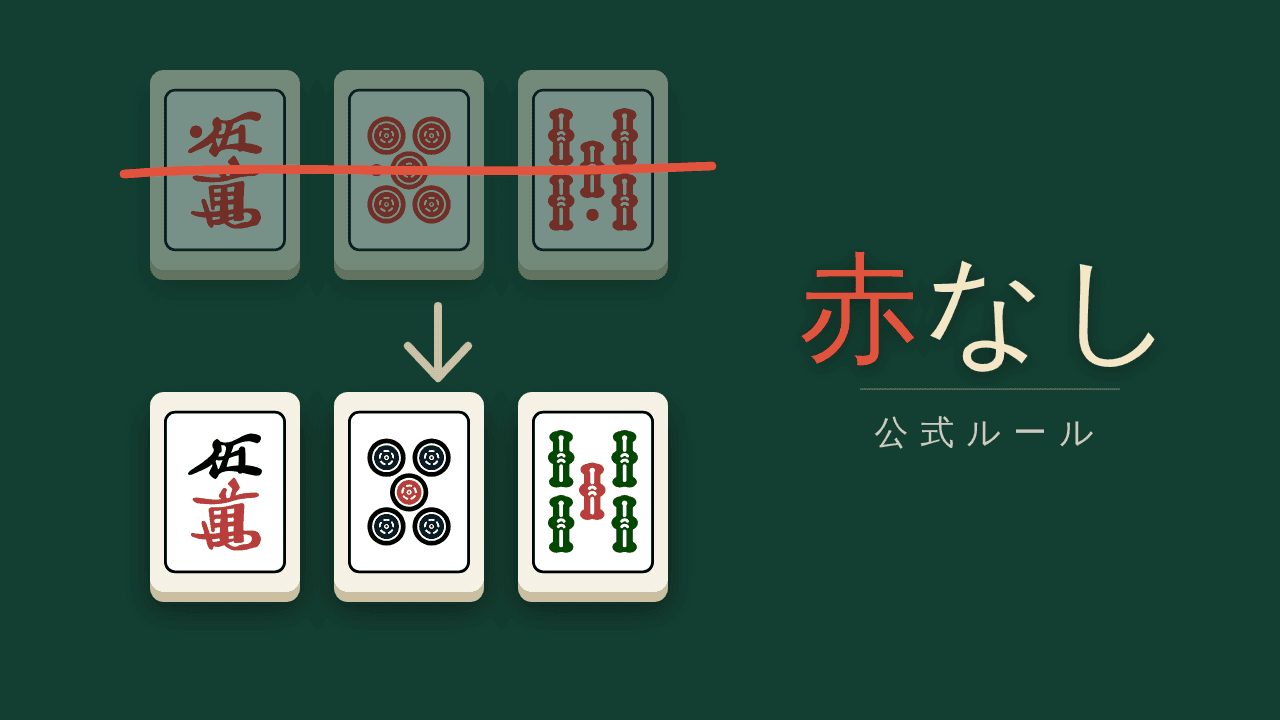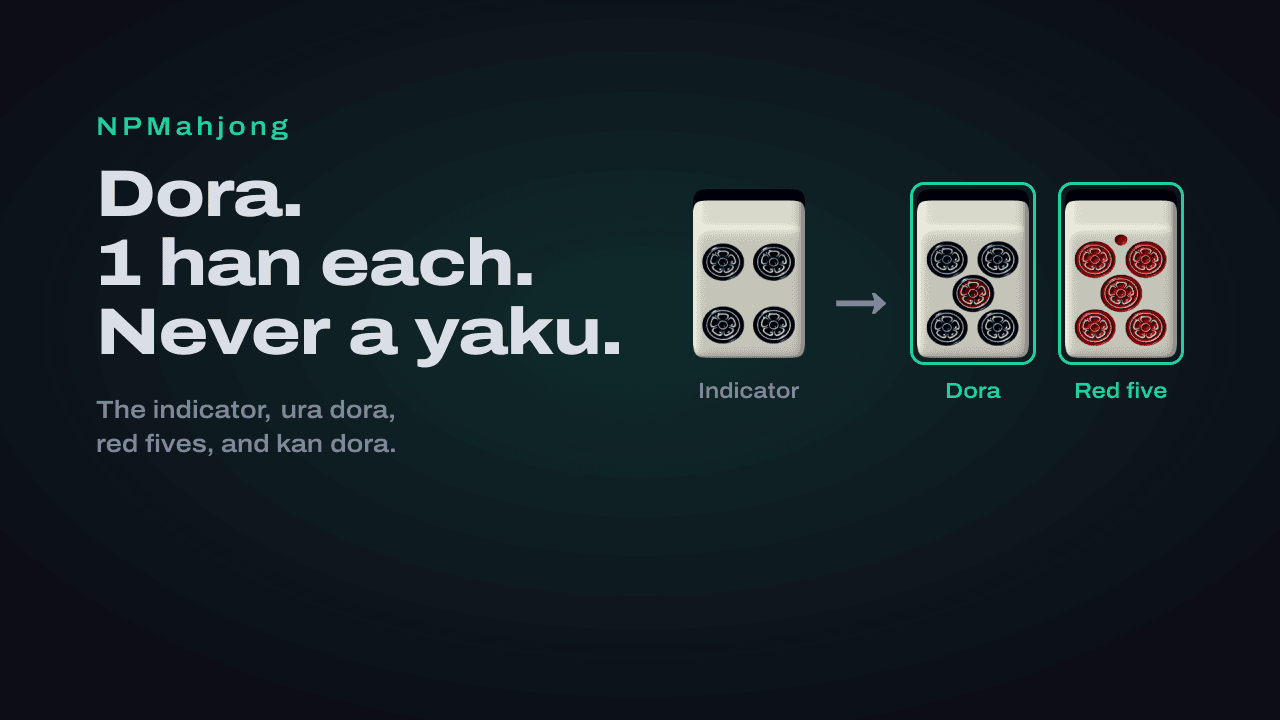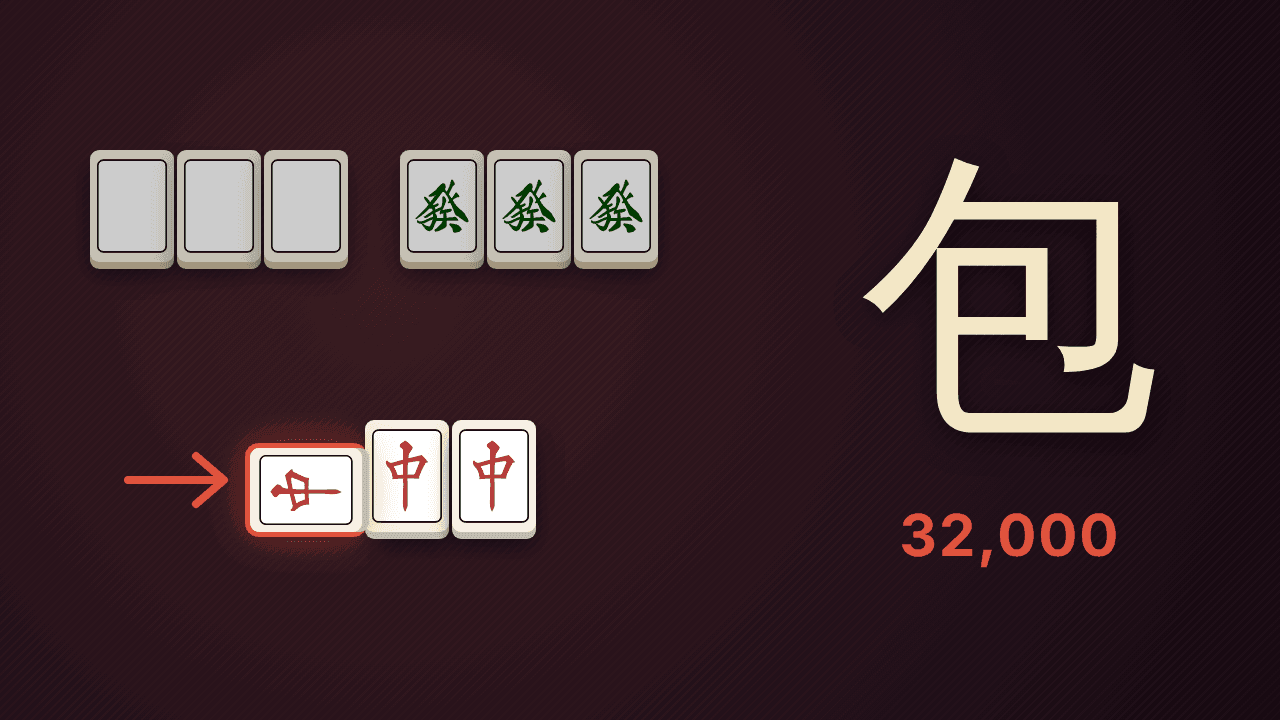
The across has called on and on . You draw a , the only one you've seen. You're , so you cut it, and they call pon. Eight turns later they draw their winning tile. The other two players pay nothing. You pay 32,000.
That's (), also called sekinin barai (責任払い): liability payment. You didn't deal into the hand. You fed the call that locked it in, and on Tenhou and Mahjong Soul that makes the yours to pay for.
What locks in the bill
Tenhou applies pao to two hands, and (大三元/大四喜のパオあり). Mahjong Soul's rule reads パオ(責任払い)あり(大三元/大四喜のみ), the same two hands and nothing else. The trigger is a call that completes the yakuman's last set. For daisangen, that's the third dragon, with two dragon sets already showing. For daisuushii, it's the fourth wind, with three already showing. Pon or , it doesn't matter.
After that call, every tile that completes the hand pays a yakuman. , , gets no pao. Its fourth wind is the pair, and nobody can call a pair, so pao never triggers. The big four winds page covers that case.
Should you cut the third dragon?
The opening scene, as tiles: your opponent shows  and
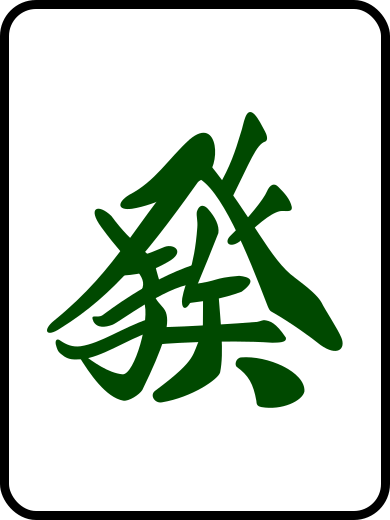 . You hold this, and you've drawn the red dragon.
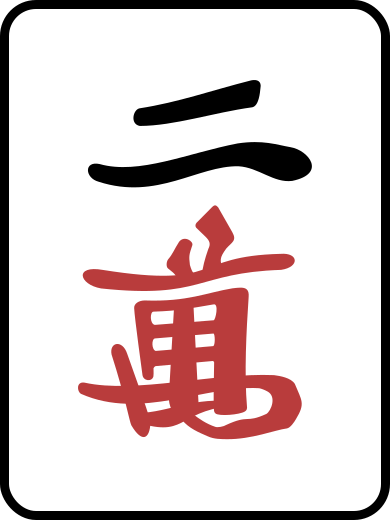
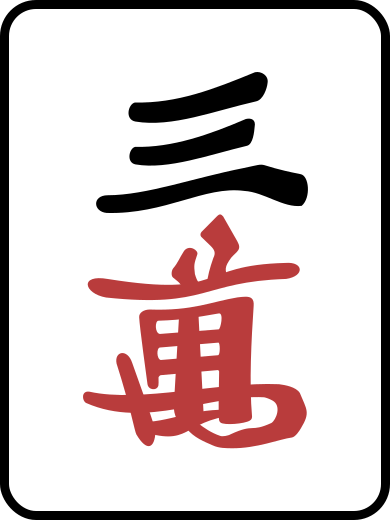
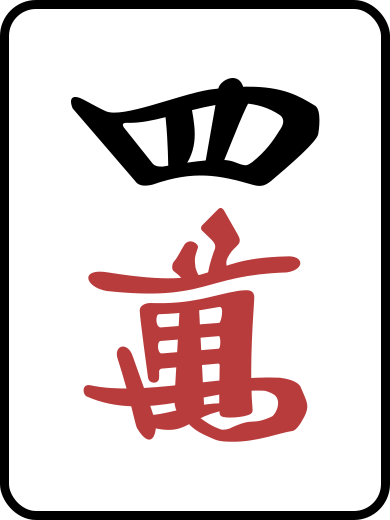
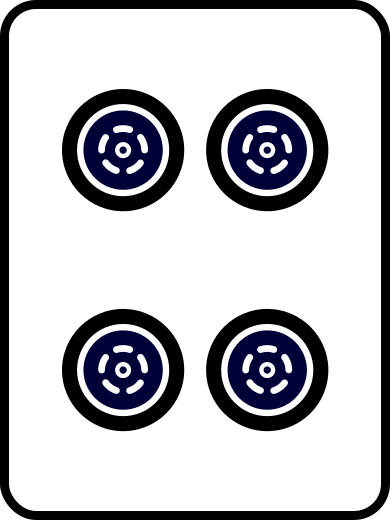
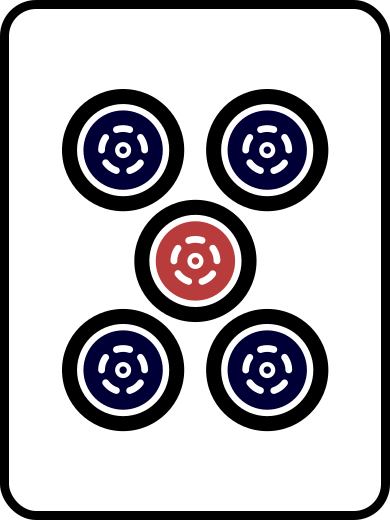
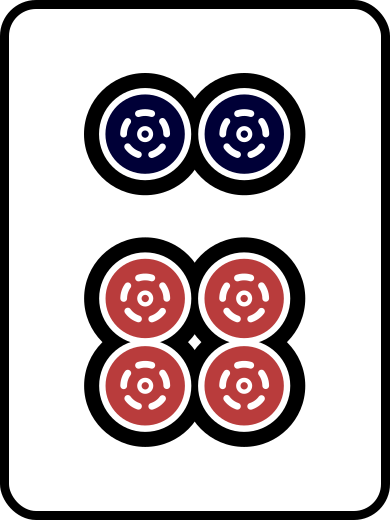
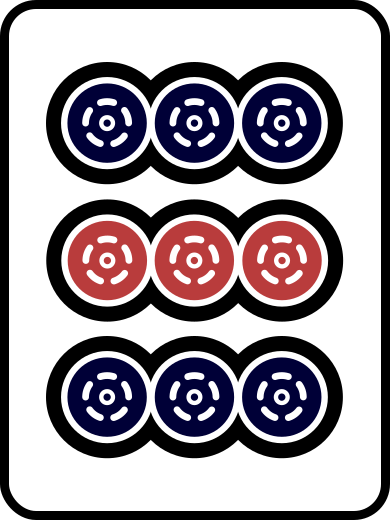
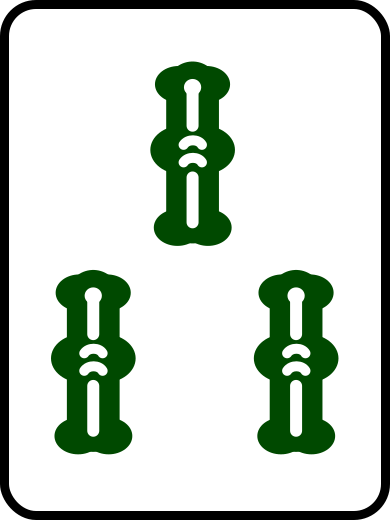
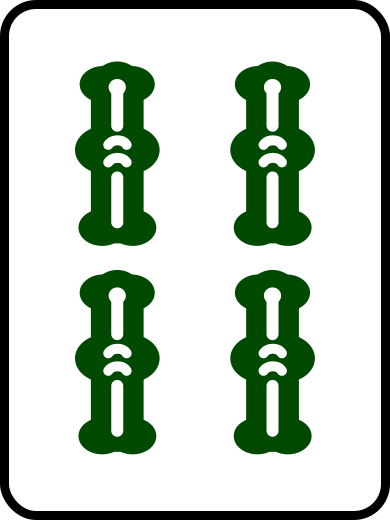
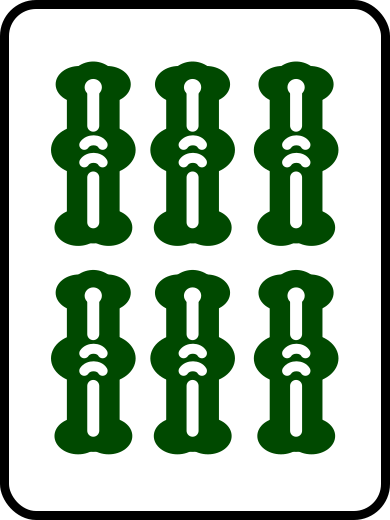
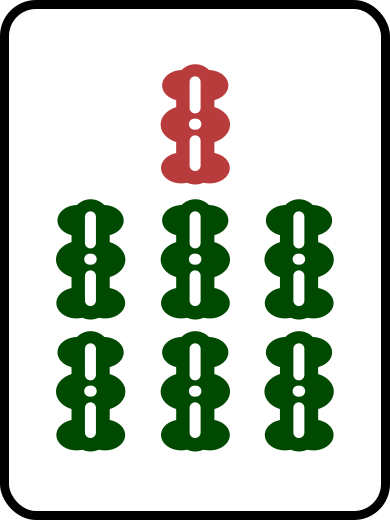
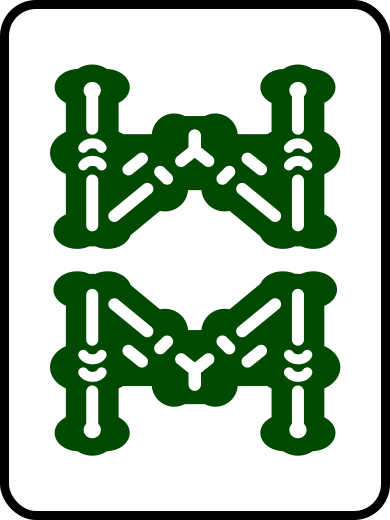
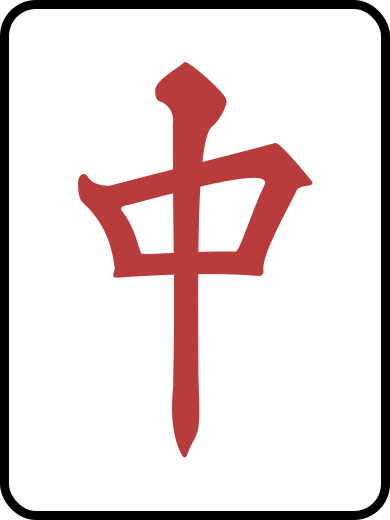
Without the red, the hand is tenpai on 2s and 5s, and it's : 1,000 points dama, 2,000 with . Now look at what the red dragon can do. If your opponent's seven hidden tiles are 234m, 99p, and a pair of reds, they're waiting on or , and your discard is a ron for 32,000 with no pao involved. If they hold the pair of reds and a different wait, it's a pon, and the yakuman is on your bill: all of a tsumo, half of a ron off someone else. Either way you're risking 32,000 to keep a 1,000-point hand alive. Keep the red and cut a safe tile. Giving up a cheap tenpai is the smaller bill.
The arithmetic, worked out
A yakuman pays 8,000 base points. A non-dealer ron collects four times that, 32,000, and a dealer ron six times, 48,000. Pao changes who pays, not how much.
| How the yakuman wins | Non-dealer winner | Dealer winner |
|---|---|---|
| Tsumo | Feeder pays 32,000. Others pay 0 | Feeder pays 48,000. Others pay 0 |
| Ron off the feeder | Feeder pays 32,000 | Feeder pays 48,000 |
| Ron off a third player | Feeder 16,000, discarder 16,000 | Feeder 24,000, discarder 24,000 |
| No pao, for comparison: tsumo | 8,000 / 8,000 / 16,000 from the dealer | 16,000 all |
Without pao, a non-dealer's yakuman tsumo costs you 8,000, or 16,000 if you're the dealer. With pao it costs you the whole 32,000. If you're not the dealer, that's four times your normal share. Mahjong Soul scores big four winds as a double yakuman, so its pao bill there is twice the table's figures.
Honba: who pays the extra 300
Add one and the rule sets split. A honba adds 300 to a ron and 100 per payer on a tsumo. Tenhou's line ends 積み棒は包: the liable player pays the honba. Mahjong Soul uses the same words. M.League's rule reads 積み場は鳴かせた者が負担, the player who allowed the call pays the honba. The JPML's rule page says the opposite for its own rule: 積み場は放銃者の負担, the discarder pays them. The EMA 2025 rules, section 3.3.7, agree with the JPML: "only the discarder pays for any counters".
So a non-dealer yakuman at one honba, won off a third player:
- Tenhou, Mahjong Soul, M.League: the feeder pays 16,000 + 300 = 16,300. The discarder pays 16,000. On a tsumo at one honba, Tenhou's feeder pays 32,300.
- JPML, EMA 2025: the feeder pays 16,000. The discarder pays 16,300.
Two yakuman in one hand
Now give the winner a second yakuman, say , . Tenhou's rule says pao covers the score 複合役満を含む, double yakuman included. Mahjong Soul's says the opposite: only the pao yakuman is billed to the feeder, and the rest settles normally.
M.League follows the Mahjong Soul way and prints its own example in its rules. One honba. West fed South's third dragon. South wins by tsumo with daisangen and all honors, a double yakuman worth 64,000 to a non-dealer. West pays the daisangen alone: 32,000 plus the 300 honba. Then the all honors settles as a normal tsumo: 16,000 from the dealer, 8,000 from each non-dealer. The rulebook's totals: East 16,000, West 32,300 + 8,000, North 8,000. That's 64,300 in all, and 40,300 of it from the player who fed one dragon.
The daisangen page works the same hand as a ron, where Tenhou splits 64,000 down the middle and Mahjong Soul leaves the discarder paying 48,000.
Who plays pao, and who doesn't
| Rule set | Four kans | Split-ron honba |
|---|---|---|
| Tenhou | No | Feeder |
| Mahjong Soul | No | Feeder |
| M.League | Yes | Feeder |
| JPML official | Yes | Discarder |
| WRC 2022 | Yes | Discarder |
| EMA 2025 | No | Discarder |
| NPM | No | No pao |
| Saikouisen | No | No pao |
Tenhou once had four-kan pao too. Its change log records dropping 「四槓子の包」 on 1 March 2007, as the four kans page notes.
The WRC 2022 rule summary lists liability for "Big Three Dragons, Big Four Winds and Four Quads", and its worked examples put the honba on the discarder of a ron.
The NPM rule is the one I play under, and it has none of this. Its summary says 役満・明カンの包なし, no pao for yakuman or open kans. Its regulations put it in one line: liability falls only on the player who deals in, and there's no special rule for any yaku. The Saikouisen rules read パオ 無し. The pro rules post compares the rest of those rulebooks.
The kan that billed you for someone's rinshan
The other liability rule is stranger. Call an open kan on someone's discard, win on the , and the player who discarded the kanned tile pays as if they'd dealt in. Its Japanese name is daiminkan no sekinin barai (大明槓の責任払い), liability for the open kan.
The JPML played it until April 2023. The longer rule text further down its rule page still carries the old rule: a off an open kan is paid by the player who allowed the kan, and the same goes for a chain of kans and for a win while . Fukuchi Makoto's note on the 2023 revision lists 大明槓のパオ あり→なし.
The summary at the top of the JPML page now reads 大明槓の嶺上開花は責任払いなし: no liability. It's a tsumo, and all three pay.
Say a non-dealer wins a on the replacement tile. As a tsumo, the dealer pays 4,000 and the other two pay 2,000 each. Under the old rule, the player whose discard you kanned paid all 8,000.
None of the other rule sets above list it. Mahjong Soul says 大明槓の責任払いはなし. The WRC 2022 summary says "There is no liability for feeding an After a Quad yaku." M.League and the NPM both write that a win on a replacement tile is a tsumo, and the NPM spells the payment out as sanka pao (三家包): all three players pay.
The word is older than the rule
Pao (包) hasn't always meant a punishment for feeding calls. Japanese Wikipedia's page on the rule says the word once also meant the discarder paying for everyone on a ron. Two rulebooks still use it that way. M.League's payment rule and the NPM regulations both describe a ron as ikka pao (一家包), one player covers the whole payment, and a tsumo as sanka pao (三家包), all three cover their own share.
The same page says Japanese rules once applied liability to any call that locked in three or more.
Count the dragons before you cut
You can see pao coming. Before every discard, look at the open melds. Two dragon sets showing makes the third dragon a pao tile. Three wind sets makes the fourth wind one. Then price your own hand in the score calculator and ask whether it's worth a yakuman to keep.

Was this article helpful?