
Double is 2 . You declare riichi with the first discard of your hand, before anyone has called a tile. It replaces riichi's 1 han. It doesn't add to it.
The Japanese is , daburu riichi. This site's glossary lists it under that name, with Double Riichi as the English.
The conditions
- It's your first discard of the hand. The dealer's first discard counts the same as anyone else's.
- Nobody has made a , a , or a before it. A closed kan counts as an interruption too.
- Everything a normal riichi needs: a in and a 1,000-point stick.
Miss the first discard, or let a call come first, and you can still declare a normal riichi later for 1 han.
After the declaration, double riichi works like riichi. The hand is locked, the window opens, and a win turns over the ura .
Double riichi on a pinfu hand
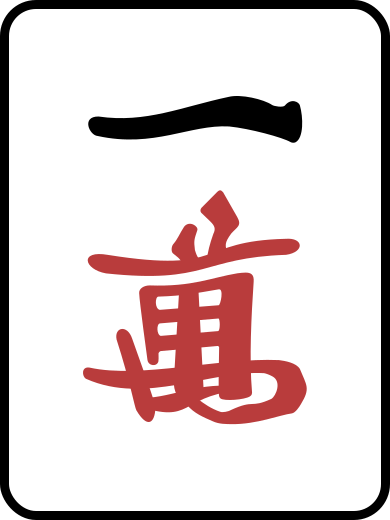
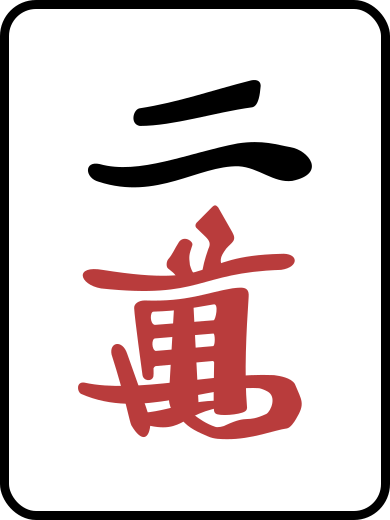
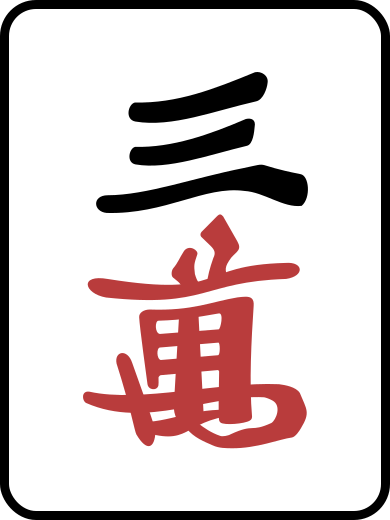
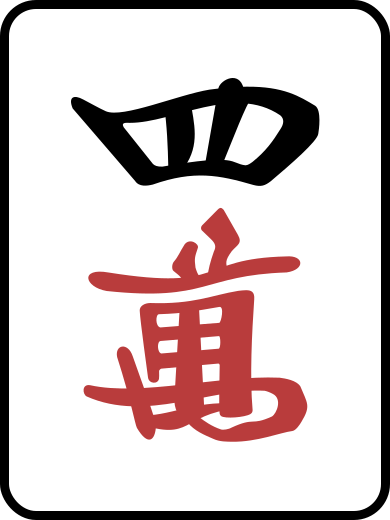
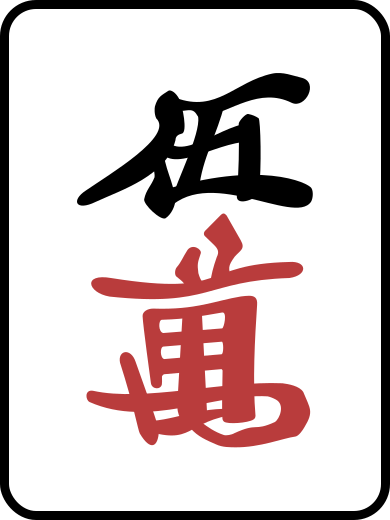
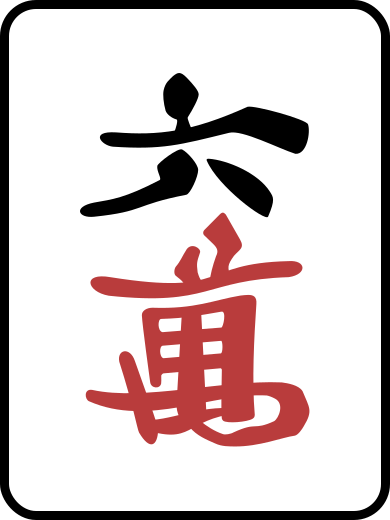
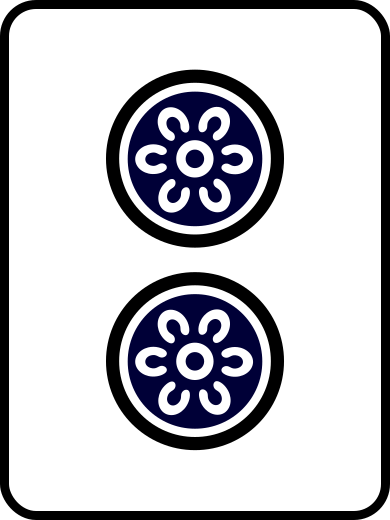
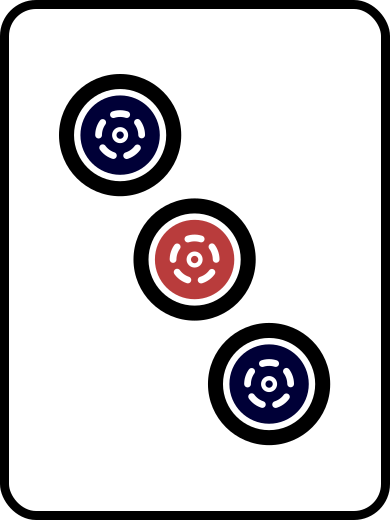
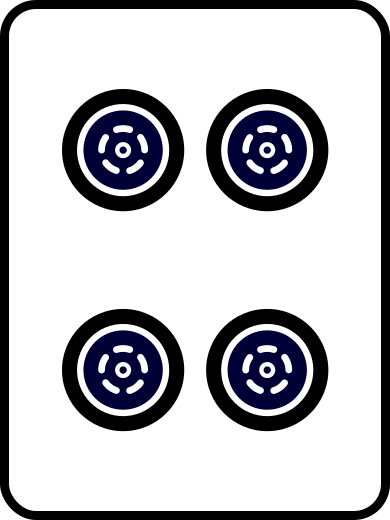
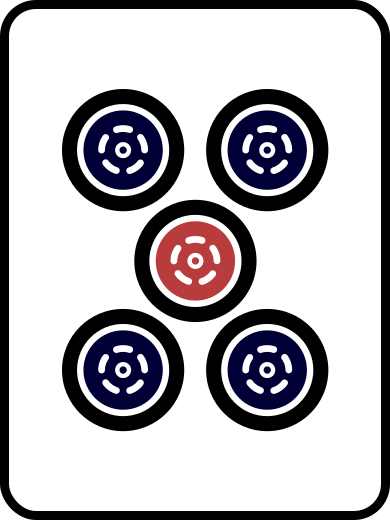
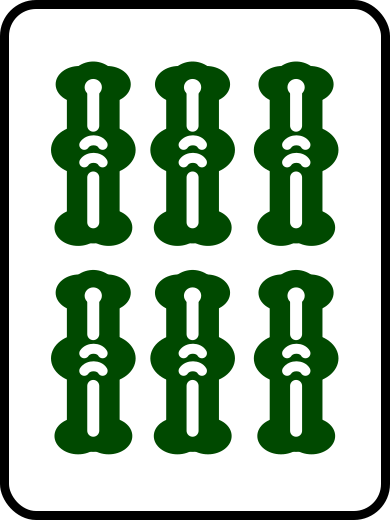
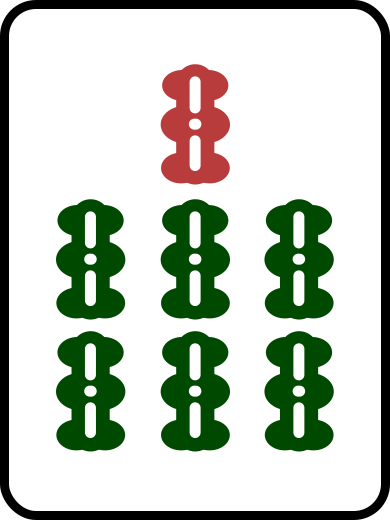
On your first turn you draw, then declare double riichi with your discard. These are the 13 tiles you keep. They wait on 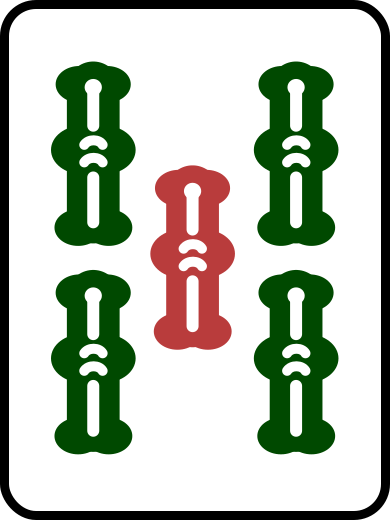 or
or 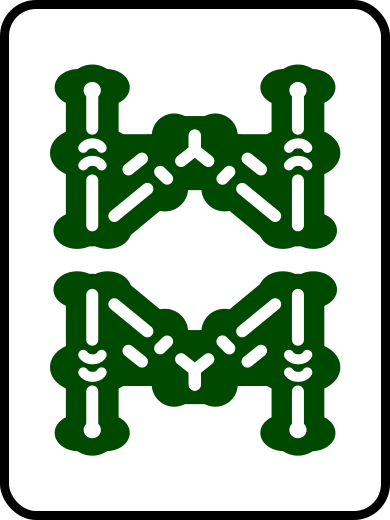 , from both sides, with four runs and a pair of 2 pin. That's pinfu too.
A later in the hand is double riichi and : 3 han 30 fu. A collects 3,900. The dealer collects 5,800.
A plain riichi on the same tiles would be 2 han 30 fu: 2,000, or 2,900 for the dealer.
Double riichi with ippatsu
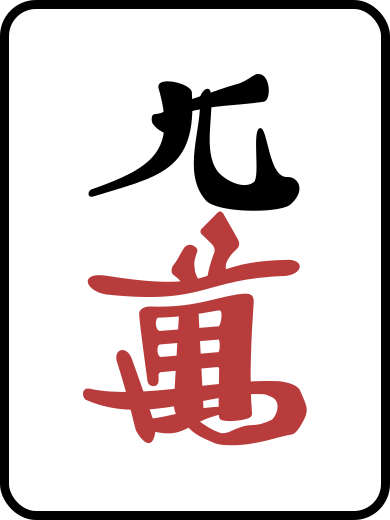
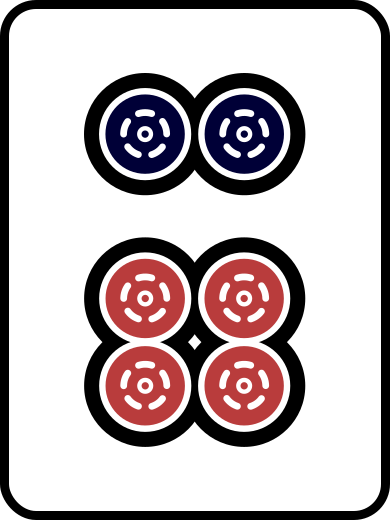
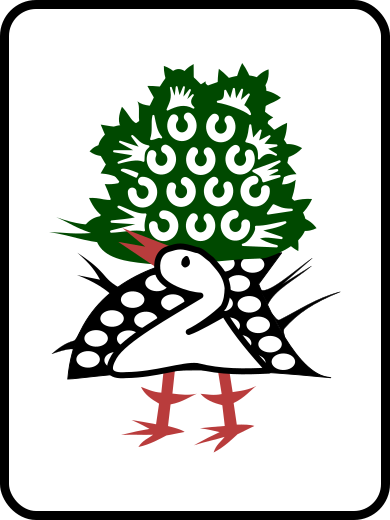
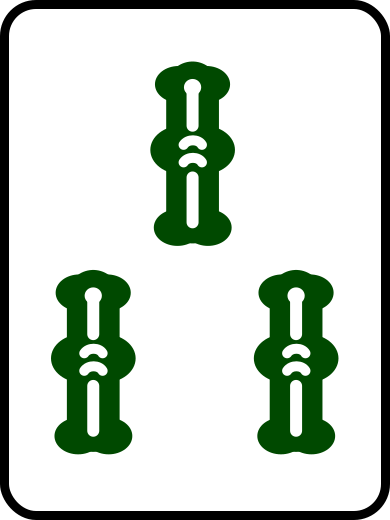
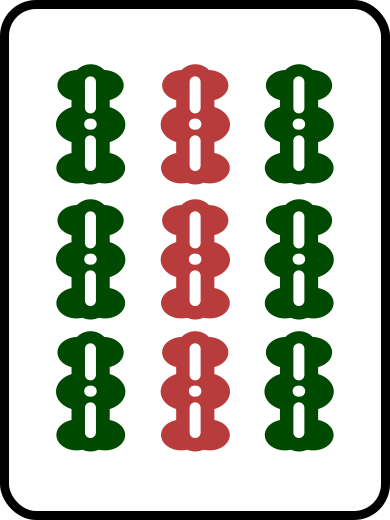
This hand waits on 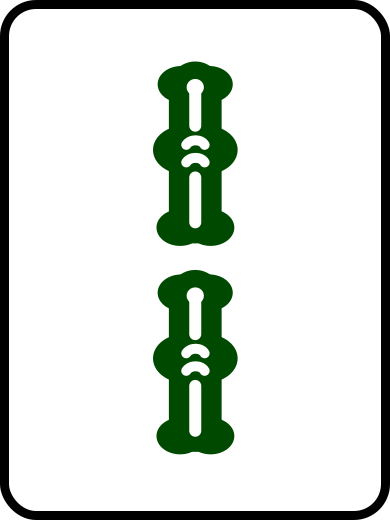 only, a . Double riichi is its only yaku until it wins.
You draw on your next turn, before anyone calls. That's double riichi, ippatsu, and menzen tsumo: 4 han. The fu are the base 20, plus 2 for the tsumo, plus 2 for the middle wait. 24 rounds up to 30.
At 4 han 30 fu, a non-dealer collects 2,000 from each other non-dealer and 3,900 from the dealer, 7,900 in all. A dealer collects 3,900 from each player. That's the table value. Without kiriage, 4 han 30 fu doesn't round up to a .
The same draw after a plain riichi, outside the ippatsu window, is 2 han 30 fu: 500 from each non-dealer and 1,000 from the dealer.
A ron on after the window is double riichi alone. The fu are 20, plus 10 for a closed ron, plus 2 for the middle wait. 32 rounds up to 40. At 2 han 40 fu, a non-dealer collects 2,600. The dealer collects 3,900.
Those payments have no dora, no , and no riichi sticks.
Tenhou, Mahjong Soul, and EMA 2025
Tenhou's rules list 両立直 as a 2 han yaku of its own, apart from riichi's 1 han entry.
Mahjong Soul's Japanese FAQ defines it as riichi on your own first discard with no pon, chi, or kan from anyone before it.
The EMA 2025 rules list it as a 2 han yaku that doesn't combine with riichi, so the total is the same 2 han. Any declared quad before it blocks it, a closed one included.
In three-player games, a north pulled before your first discard blocks it. Tenhou treats the north as a call, and Mahjong Soul's English FAQ says a north call in the first go-around blocks double riichi for anyone who hasn't discarded yet.
The glossary entry is the short form: 2 han, declared on your first turn before any calls.
Common mistakes
- Counting 3 han. Double riichi replaces riichi. The declaration is worth 2 han in all.
- Declaring after someone's call. One chi, pon, or kan before your first discard, and it's a normal riichi.
- Missing a closed kan. It blocks double riichi as much as a pon does.
- Forgetting ippatsu. Double riichi has the same one go-around window.
- Declaring it on a later turn because nobody has called yet. It has to be your first discard.
What sits with it
Ippatsu and menzen tsumo stack with it, as in the second hand. So does anything the closed tiles hold, such as pinfu or tanyao. It never sits with riichi itself, because it takes riichi's place.
Price a double riichi
The score calculator turns 3 han 30 fu, double riichi and pinfu on a ron, into 3,900 or 5,800. A plain riichi on the same tiles is 2 han.
Open the score calculator