
is 1 for winning fast after . The window runs from your declaration through your next draw. A on any discard in that go-around counts, and so does a tsumo on your next tile. A , a , or a from anyone closes it.
The name is 一発, "one shot". This site's glossary lists it as One-Shot. It only exists on top of riichi or double riichi, so it's closed only.
What closes the window
- Your next discard. Draw, miss, discard, and the chance is gone.
- A chi or a pon by any player.
- A kan by any player, closed kans included. The EMA 2025 rules say any declared quad breaks it.
- Your own closed kan. Riichi lets you make one when the wait stays the same, but it costs the ippatsu. Tenhou's rules say ippatsu and rinshan kaihou never combine.
If an opponent rons the tile you turn sideways, the ron stands. Your riichi declaration doesn't count and the 1,000 points come back, so the window never opens.
One kan leaves the window open: a kan someone robs. With chankan, the kan never happens. Tenhou's rules say ippatsu and combine.
Ippatsu on a pinfu hand
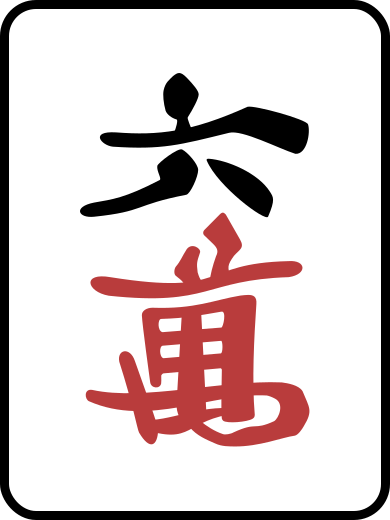
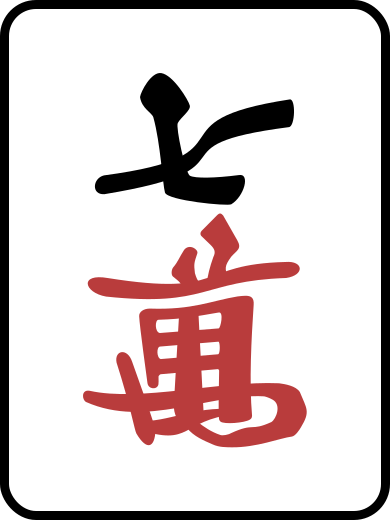
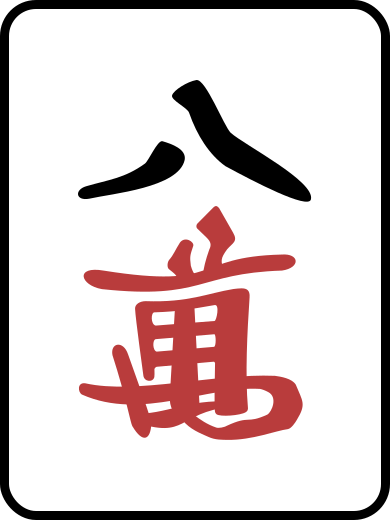
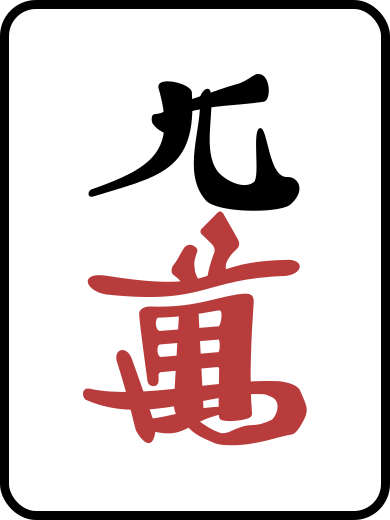

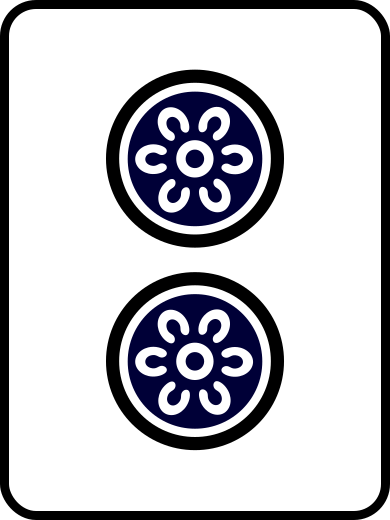
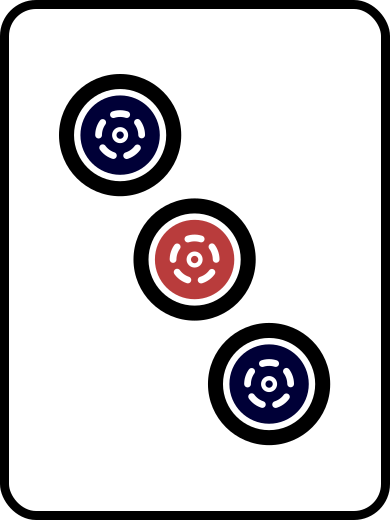
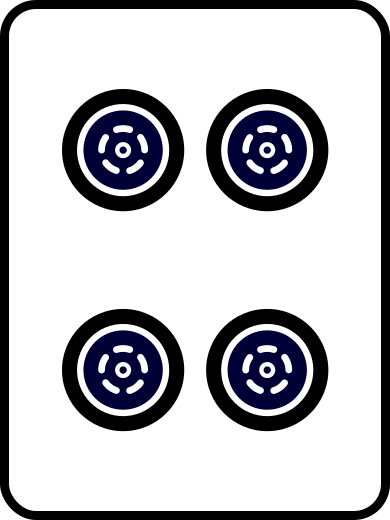
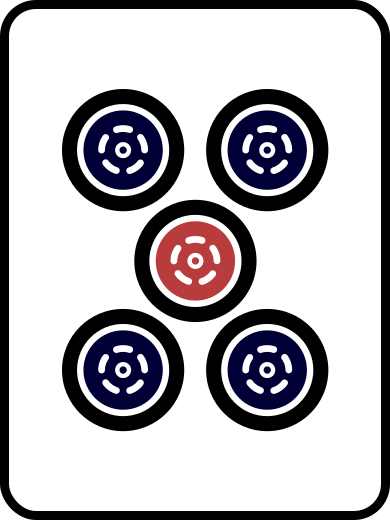
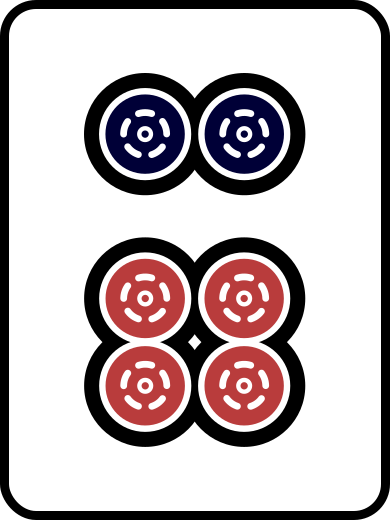
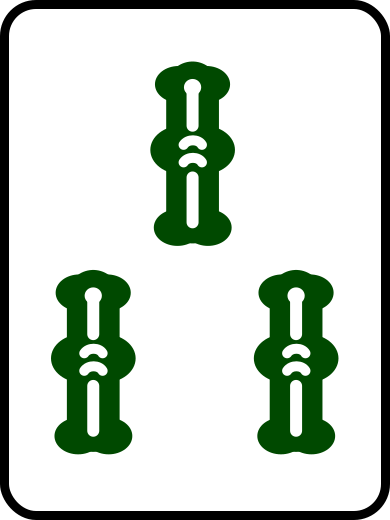
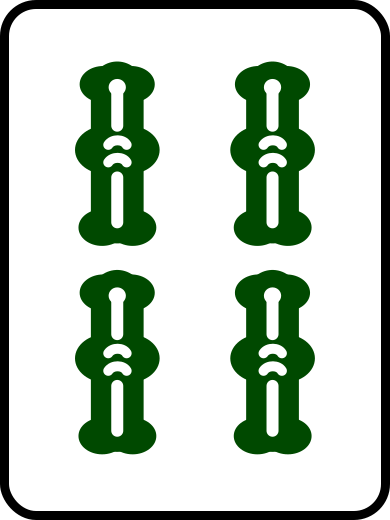
You declare riichi on this hand. It waits on 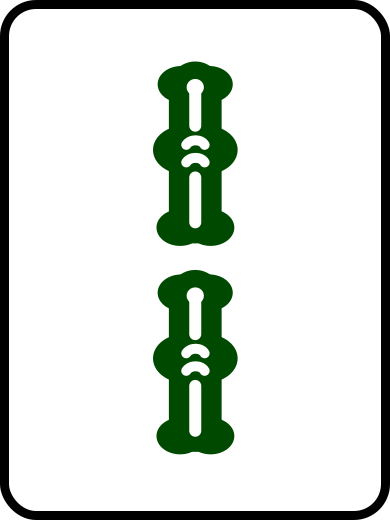 or
or 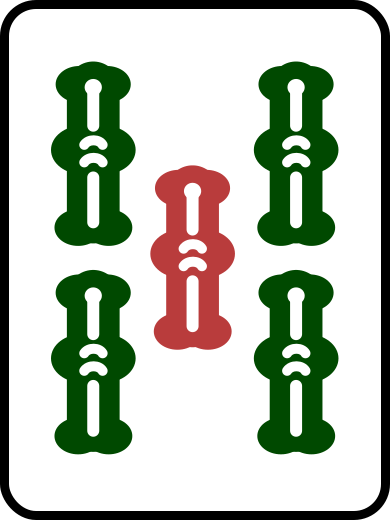 , from both sides. Four runs and a pair of 6 man make it pinfu as well.
An opponent discards before your next draw. That's riichi, ippatsu, and : 3 han 30 fu. A collects 3,900. The dealer collects 5,800.
Had anyone called a pon before that discard, the same ron would be riichi and pinfu: 2 han 30 fu. That pays 2,000, or 2,900 for the dealer.
Draw yourself instead. joins in, and a pinfu tsumo stays at 20 fu: 4 han 20 fu. A non-dealer collects 1,300 from each other non-dealer and 2,600 from the dealer, 5,200 in all. A dealer collects 2,600 from each player.
Ippatsu on a riichi-only hand
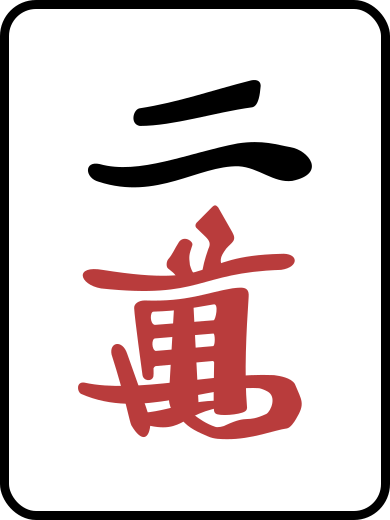
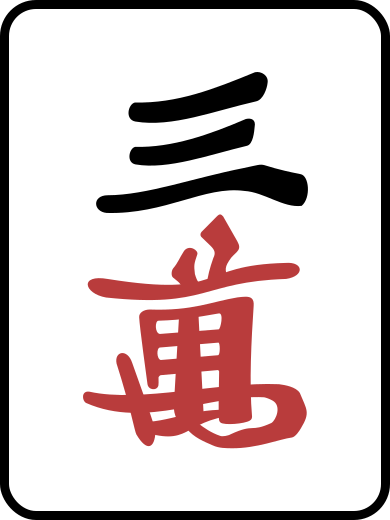
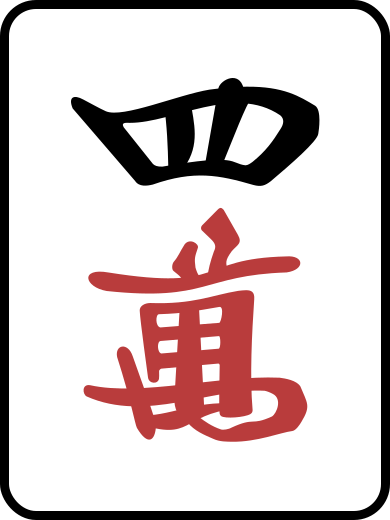
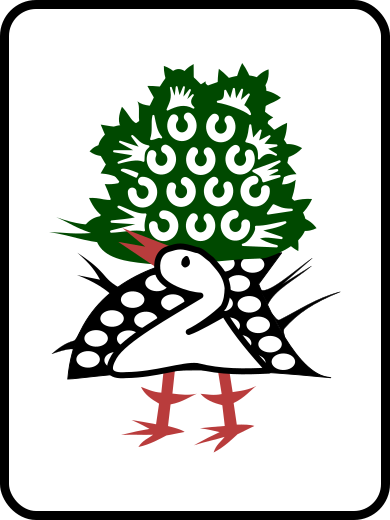
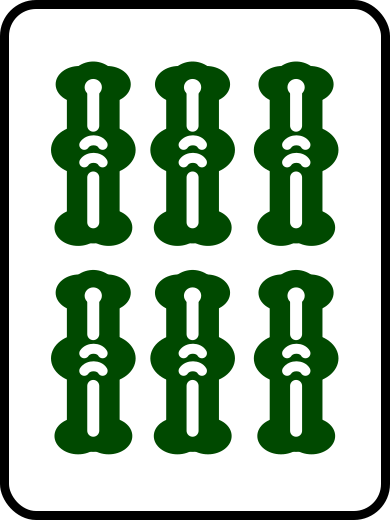
This riichi waits on only, a . Riichi is its only yaku. The 1s and 9s rule out , and the middle wait rules out pinfu.
A ron inside the window is riichi and ippatsu: 2 han. The fu are the base 20, plus 10 for a closed ron, plus 2 for the middle wait. 32 rounds up to 40. At 2 han 40 fu, a non-dealer collects 2,600. The dealer collects 3,900.
After the window, the same ron is 1 han 40 fu: 1,300, or 2,000 for the dealer. Ippatsu doubles the non-dealer's payment.
Those payments have no , no , and no riichi sticks. The scoring guide counts fu like these line by line.
Tenhou, Mahjong Soul, and EMA 2025
Tenhou's yaku list puts ippatsu under its bonus heading with dora, red fives, and ura dora, not among the yaku. It still adds 1 han, and riichi is always there to be the yaku. The same page clears the go-around on a kan before the replacement draw. On an , it waits until the other players have had their chance to rob the tile.
Mahjong Soul's Japanese FAQ defines ippatsu as a win within one go-around of riichi, with no pon, chi, or kan from anyone.
The EMA 2025 rules give the same window and count your next draw in it. A claimed tile or any declared quad breaks it, a closed one included.
In three-player games, pulling a north closes the window too. Tenhou treats the north as a call, and Mahjong Soul's English FAQ says a north call removes ippatsu.
The glossary entry is the short form: a win within one turn cycle after riichi, with no calls in between.
Common mistakes
- Keeping it after a call. Any player's chi or pon ends it, not only a call on your discard.
- Forgetting closed kans. Anyone's kan ends it, a closed one included.
- Keeping it after your own kan. A win after riichi has no ippatsu.
- Counting it after your next discard. Your next draw is the last chance.
- Scoring it without riichi. A with no declaration can't have it.
What sits with it
Riichi or double riichi, always. Menzen tsumo joins on a tsumo, and pinfu or tanyao when the tiles hold them. Chankan can stack with it, because a robbed kan never closes the window. Rinshan kaihou never does.
Price an ippatsu hand
The score calculator turns 3 han 30 fu, riichi, ippatsu, and pinfu on a ron, into 3,900 or 5,800. Without the ippatsu, the same ron is 2 han.
Open the score calculator