
is 1 , open or closed. You call a , draw the from the , and that tile completes your hand.
The Japanese is 嶺上開花. Players shorten it to rinshan. This site's glossary lists it as After a Kan, and the EMA 2025 rules call it After a Quad.
Which kans count
Any kan you make yourself: a closed kan, a you upgrade with the fourth tile, or an on a discard. Each one gives you a replacement tile, and rinshan kaihou is a win on that tile. Someone else's kan gives you nothing to draw.
The replacement tile is a draw, so the win is a tsumo. The EMA 2025 rules count it as a . A that wins on it also scores menzen tsumo. Tenhou and the EMA 2025 rules add the 2 tsumo fu as well. In a four-player game a rinshan hand always holds a quad, so it's never , and under those rules the 2 fu always count.
A closed kan
You hold three 4 man and draw the fourth. You call a closed kan: 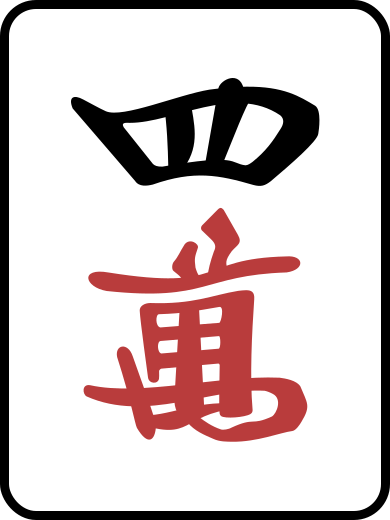 . At the table you turn two of the four face down, which marks the kan as closed. These ten tiles are in your hand.
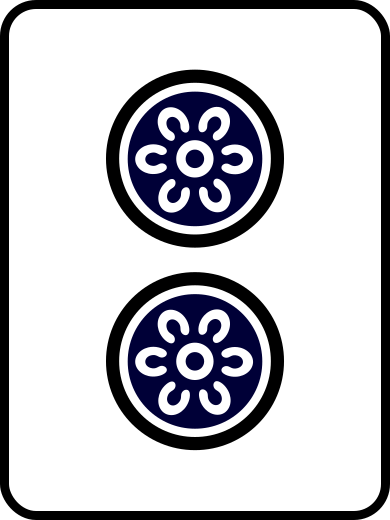
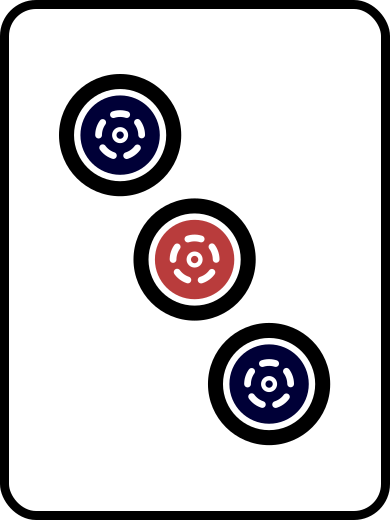
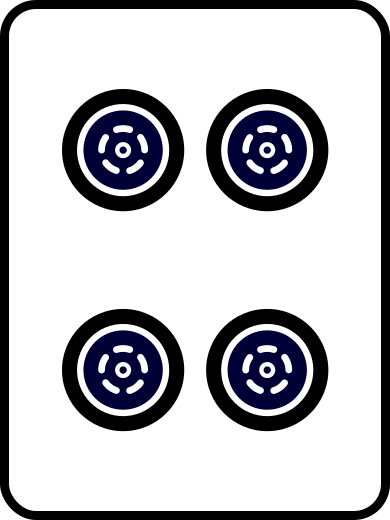
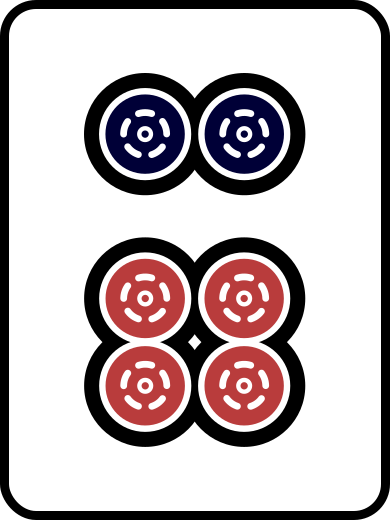
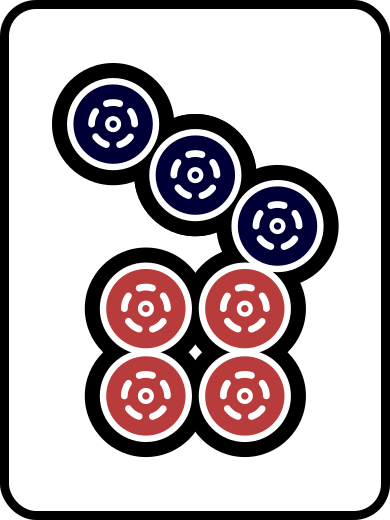
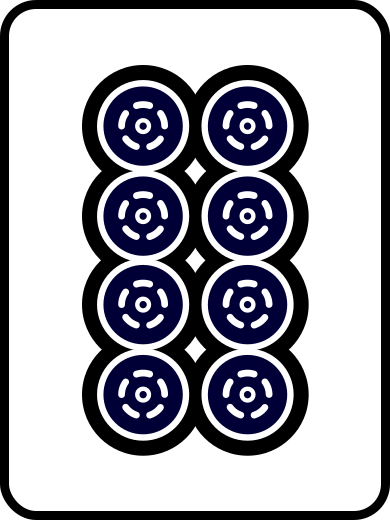
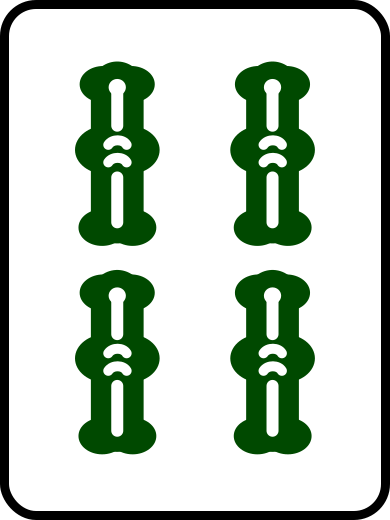
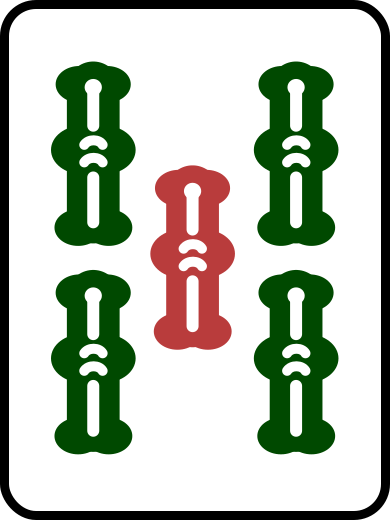
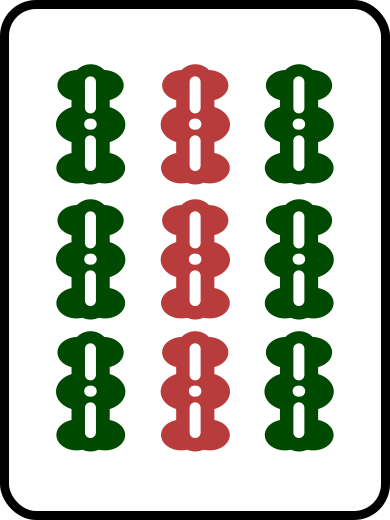
The hand waits on 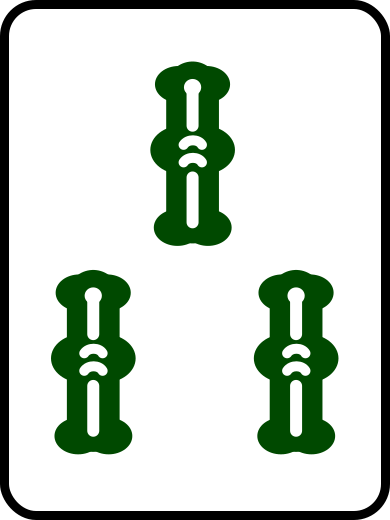 or
or 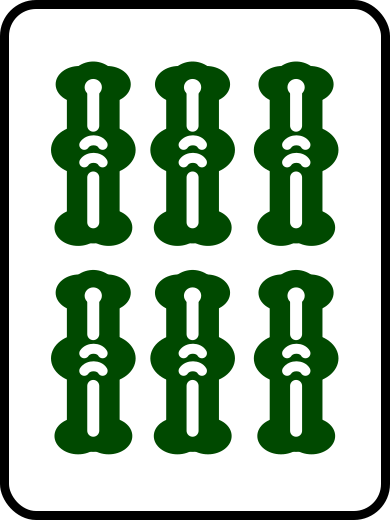 , from both sides. The replacement tile is one of them.
That's rinshan kaihou and menzen tsumo: 2 han. The pair of 9 sou keeps off, and the quad keeps pinfu off. The fu are the base 20, plus 2 for the tsumo, plus 16 for a closed quad of simples. 38 rounds up to 40. At 2 han 40 fu, a collects 700 from each other non-dealer and 1,300 from the dealer. A dealer collects 1,300 from each player.
Say you had declared before the kan. Riichi allows it, because the wait stays the same. The win is then riichi, menzen tsumo, and rinshan kaihou: 3 han 40 fu. A non-dealer collects 1,300 from each other non-dealer and 2,600 from the dealer. A dealer collects 2,600 from each player. Even inside the window, there's no ippatsu: your own kan closes it.
An open kan with no other yaku
You called kan on a discarded 7 pin: . These ten tiles are in your hand.
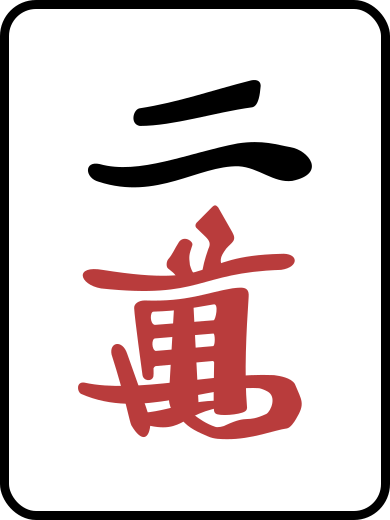
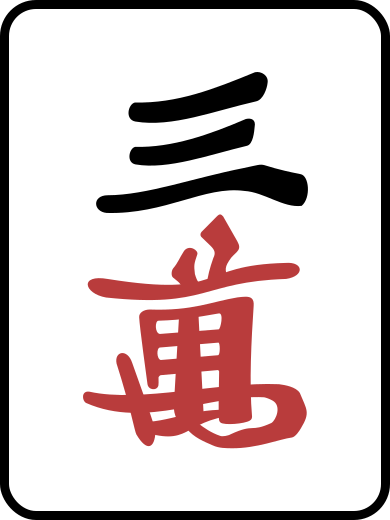

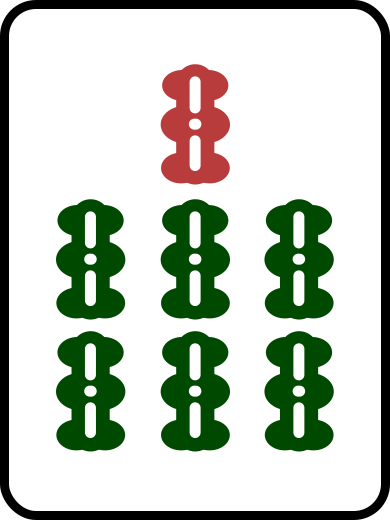
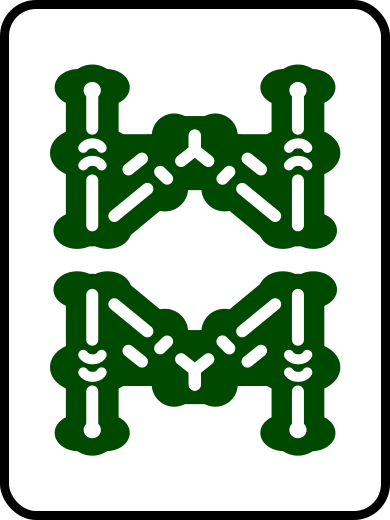
The hand waits on only, a . It has . The 1 pin rules out tanyao, and the open kan rules out every closed-only yaku. Without a yaku, a or a normal draw of can't win.
The replacement tile is . Rinshan kaihou is the yaku. The fu are 20, plus 2 for the tsumo, plus 8 for an open quad of simples, plus 2 for the middle wait. 32 rounds up to 40. At 1 han 40 fu, a non-dealer collects 400 from each other non-dealer and 700 from the dealer. A dealer collects 700 from each player.
Those payments have no , no , and no riichi sticks. The scoring guide lists the fu for every quad.
Kan dora on a rinshan win
A closed kan turns its indicator right away, so its new dora already counts when you win on the replacement tile. On Tenhou and Mahjong Soul, an open kan or an turns its indicator after the discard. A rinshan win comes before that discard, so the indicator for that kan is still face down when you win. The dora guide has the timing for each rule set.
What it doesn't combine with
. A kan on the second-to-last draw makes the replacement tile the last tile, but a win on it scores rinshan kaihou alone. Tenhou's rules and the EMA 2025 rules both say the two don't combine. The haitei and houtei page covers the last tile.
Ippatsu. Your kan ends the ippatsu window before you draw the replacement. Tenhou's rules list ippatsu and rinshan kaihou as a pair that never combines. The ippatsu page covers the window.
Tenhou, Mahjong Soul, and EMA 2025
Tenhou lists 嶺上開花 at 1 han with no mark for a closed hand. Its rules add the 2 tsumo fu on a win off the dead wall. After riichi, Tenhou allows a closed kan only when the wait doesn't change.
Mahjong Soul's Japanese FAQ defines rinshan kaihou as a win on the replacement tile. It allows a closed kan after riichi when the waiting tiles and their count stay the same.
The EMA 2025 rules have it at 1 han and count it as a self-draw.
In three-player games, Mahjong Soul gives a replacement tile after you pull a north as well. Its English FAQ says a tsumo on that tile scores After a Kan.
The glossary entry is the short form: a self-draw win on the replacement tile after your kan.
Common mistakes
- Thinking it needs a closed hand. Open kans and added kans count too.
- Forgetting menzen tsumo. A closed hand scores both.
- Skipping the 2 tsumo fu. The replacement tile is a self-draw.
- Adding haitei on the last tile. Rinshan kaihou stands alone there.
- Keeping ippatsu after your own kan. The kan ends it.
What sits with it
Menzen tsumo on a closed hand, and riichi when you declared before the kan. The quad is a triplet for toitoi, and a closed kan is a concealed triplet for sanankou. A kan of dragons, your , or the adds yakuhai.
Price a rinshan win
The score calculator turns 2 han 40 fu, a closed kan with rinshan kaihou and menzen tsumo, into 700 from each non-dealer and 1,300 from the dealer.
Open the score calculator