
is 2 , and the hand has to be closed. You hold seven pairs, and each pair is a different tile.
The name players use is chiitoitsu (七対子). This site's glossary also lists it as Seven Pairs. Players also call it seven pairs.
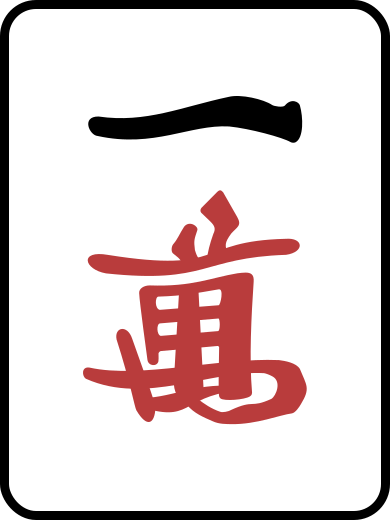
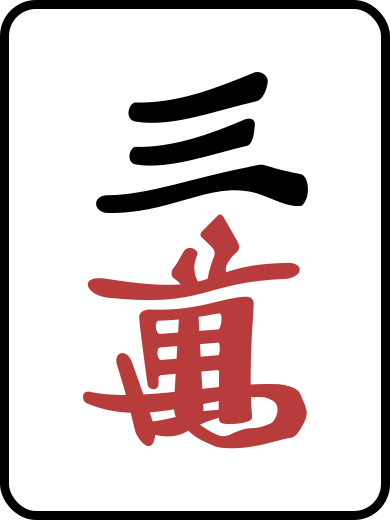
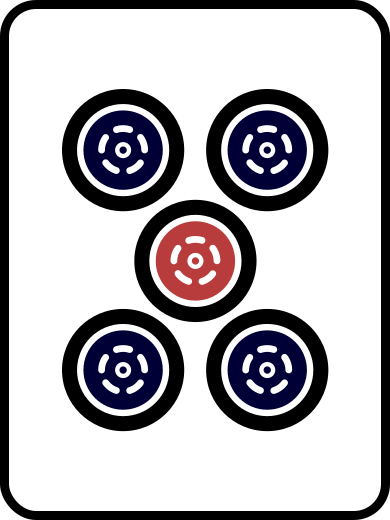
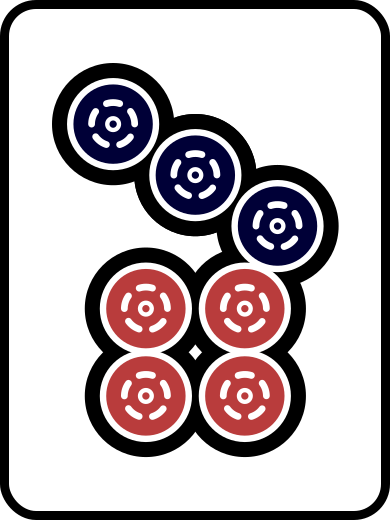
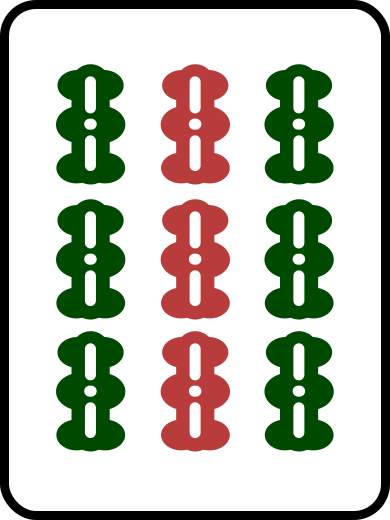
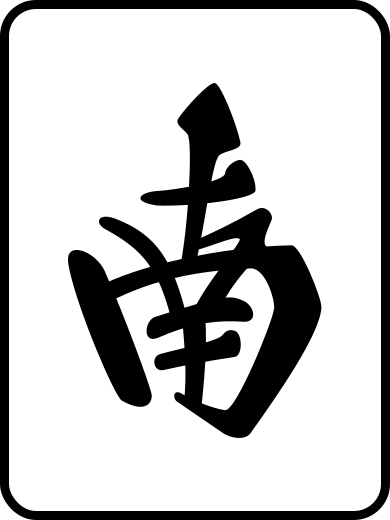
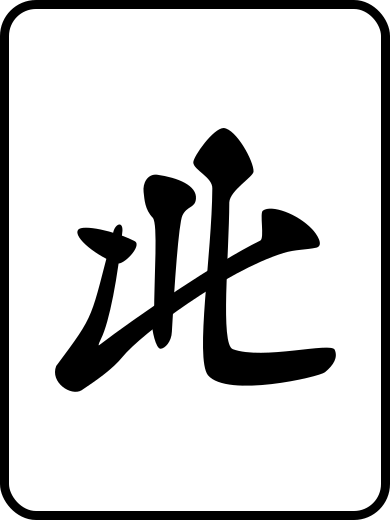
Six pairs are finished: 1 and 3 man, 5 and 7 pin, south, and north. The hand waits on . That tile makes the seventh pair.
Four copies of one tile are a quad. Seven pairs needs seven different tiles. A , a , or an breaks the hand. There is no open han for it.
The glossary entry says the same thing, and it states the fu: 25, whatever the tiles are.
25 fu
A dragon pair, a wind pair, and a add no fu on of the 25. The 25 is not rounded up to 30.
A is 2 han 25 fu. A collects 1,600. The dealer collects 2,400.
A tsumo also has menzen tsumo, so the hand is 3 han 25 fu. A non-dealer tsumo collects 800 from each other non-dealer and 1,600 from the dealer. A dealer tsumo collects 1,600 from each player.
Those payments have no and no sticks. Add riichi and a ron is 3 han, still at 25 fu.
A different reading
Two sets of identical sequences are ryanpeikou: 3 han, closed only. The same tiles can be split into seven pairs. Score the 3 han. Chiitoitsu stays off that hand.
Four triplets and a pair is toitoi, 2 han, and that hand can include calls. Seven pairs is pairs only, and the hand stays closed.
Price a seven-pairs hand
The score calculator turns 2 han 25 fu into 1,600 or 2,400 on a ron. A tsumo is 3 han 25 fu, because menzen tsumo adds a han.
Open the score calculator