
is 3 , and the hand has to be closed. You hold two iipeikou at once: four runs that match in two pairs.
The name players use is ryanpeikou (二盃口). This site's glossary also lists it as Twice , and the EMA 2025 rules use the same English name.
Two pairs of matching runs
234 man twice and 567 sou twice is ryanpeikou. Each pair has to match exactly: the same numbers in the same suit. The two pairs can sit in different suits or in one.
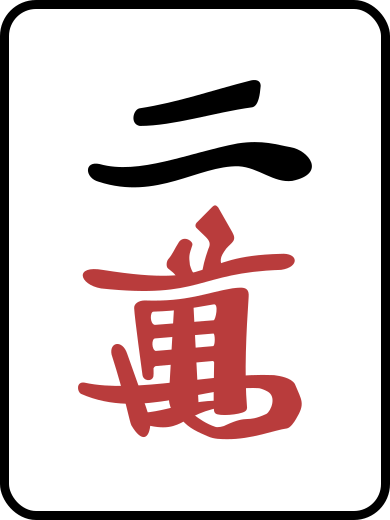
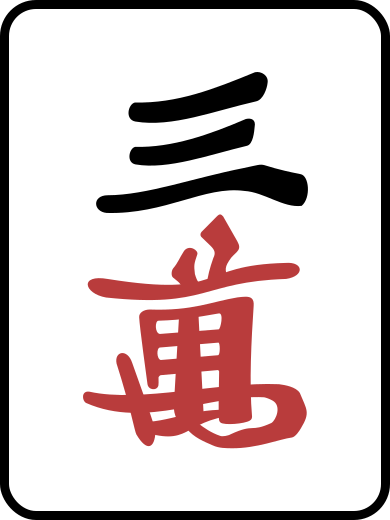
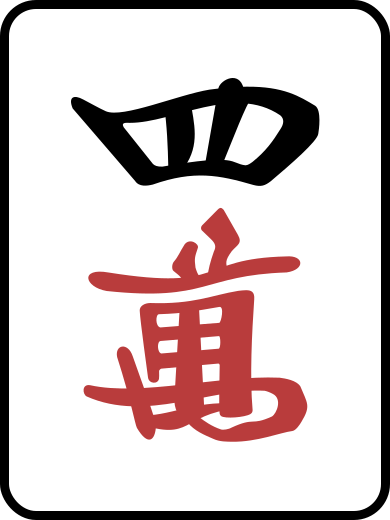
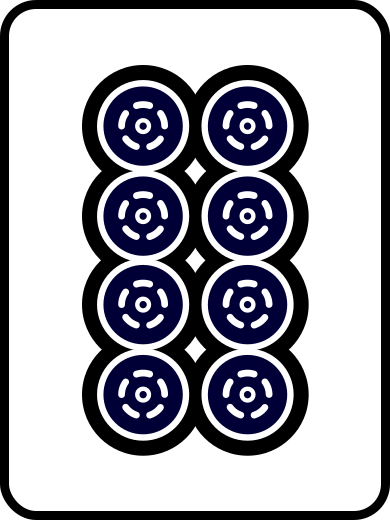
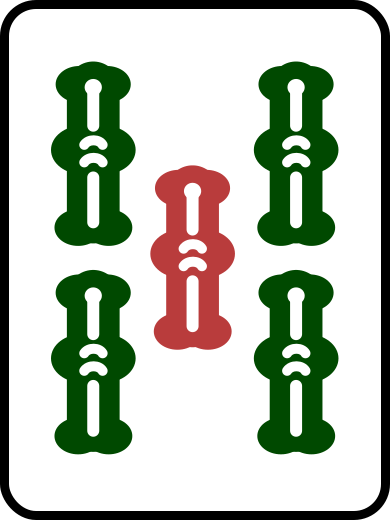
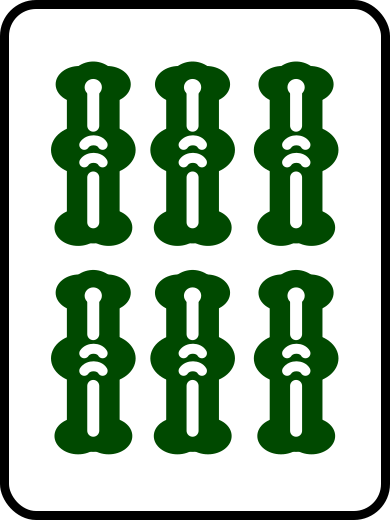
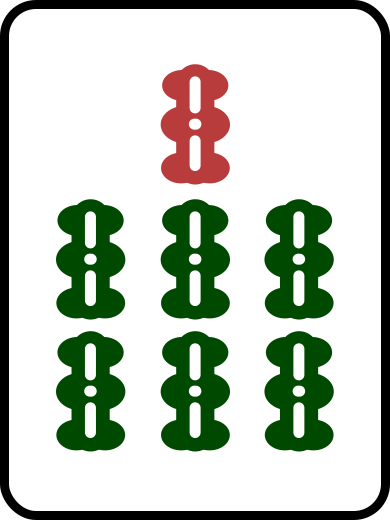
The hand waits on 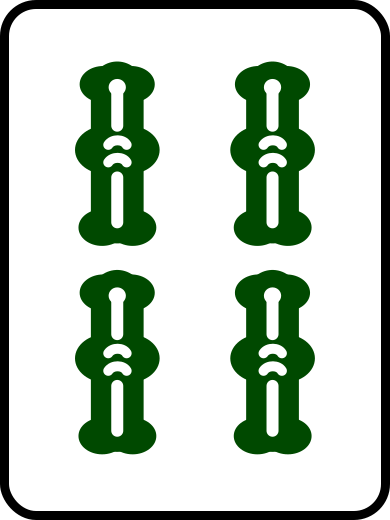 or . Every tile is 2 through 8, and the shape is closed, all runs, with a plain pair and a .
makes 567 sou twice. That's ryanpeikou, pinfu, and tanyao: 3 + 1 + 1 = 5 han, a . A collects 8,000. The dealer collects 12,000.
makes 456 and 567 sou. Only the 234 man pair still matches, so the hand is iipeikou, , and : 3 han 30 fu. A non-dealer ron collects 3,900. The dealer collects 5,800. Those payments have no , no , and no sticks.
The 7 sou hand also reads as : 22, 33, and 44 man, 55, 66, and 77 sou, and 88 pin. That reading is chiitoitsu and tanyao, 3 han 25 fu, and it pays 3,200. You score the reading that pays more, so the hand is ryanpeikou.
The glossary entry is the short form: two sets of iipeikou, only.
Closed only
A , a , or an removes it. There is no open han for it. Tenhou's rules mark ryanpeikou as closed only. The EMA 2025 rules define it as a concealed hand. That matches the row on this site: 3 han closed, and nothing open.
You don't add iipeikou on top. The EMA 2025 entry says no han for pure double sequence are counted, so ryanpeikou is 3 han, not 4.
Ryanpeikou or seven pairs
Many ryanpeikou hands also read as seven pairs, and one hand can't be both. The World Riichi Championship rules say ryanpeikou doesn't combine with seven pairs. The eighth scoring example in the EMA 2025 rules is that exact choice, and it scores the reading worth more.
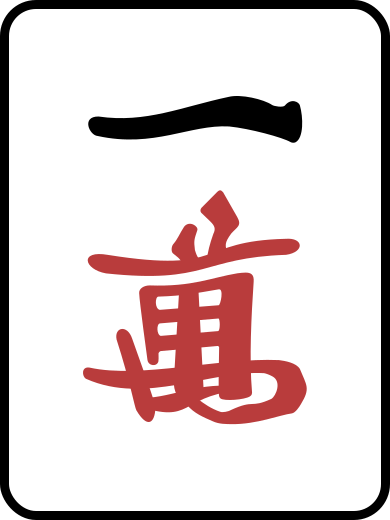
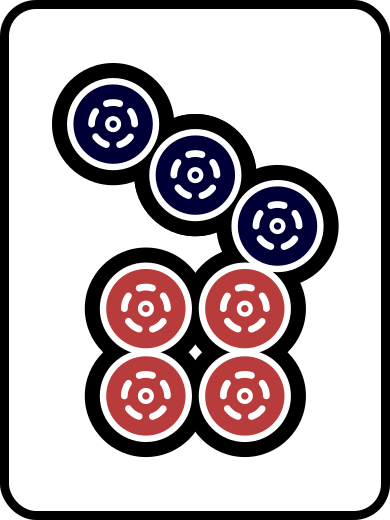
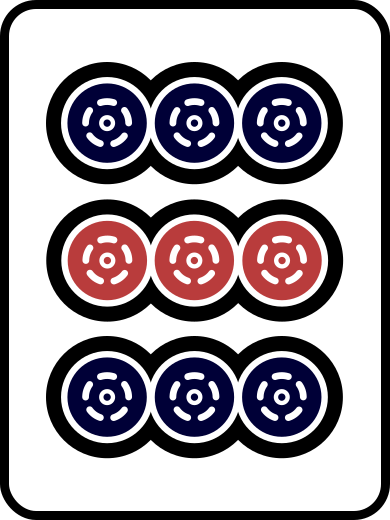
The hand waits on only, a . As four runs and a pair, it's ryanpeikou: 3 han. The fu are the base 20, plus 10 for a closed ron, plus 2 for the single wait. 32 rounds up to 40. At 3 han 40 fu, a non-dealer ron collects 5,200. The dealer collects 7,700.
As seven pairs, the same tiles are chiitoitsu: 2 han 25 fu, worth 1,600 on a non-dealer ron. Ryanpeikou pays more, so that's the score. The scoring guide has the full fu count.
A tsumo on the 5 sou adds menzen tsumo. The fu are 20, plus 2 for the tsumo, plus 2 for the single wait, and 24 rounds up to 30. At 4 han 30 fu, a non-dealer collects 2,000 from each other non-dealer and 3,900 from the dealer.
Common mistakes
- Calling a tile. An open hand scores nothing from either peikou.
- Adding iipeikou on top. Ryanpeikou is 3 han, not 4.
- Scoring the seven-pairs reading. When the tiles read both ways, ryanpeikou pays more.
- Pricing it at 25 fu. As four runs and a pair, the hand counts fu like any other.
What sits with it
Pinfu and tanyao, as in the first hand. Junchan when every run is 123 or 789 and the pair is a 1 or a 9. Honitsu and chinitsu when the runs share one suit. Riichi fits too, because the hand is already closed.
Price a ryanpeikou hand
The score calculator turns 3 han 40 fu, ryanpeikou on a single wait, into 5,200 or 7,700. With pinfu and tanyao, the hand reaches a mangan.
Open the score calculator