
is 2 , open or closed. You hold a triplet of the same number in man, pin, and sou.
The name is doukou (三色同刻). This site's glossary also lists it as Three Color Triplets. The EMA 2016 rules call it triple pung.
Three triplets, one number
555 man, 555 pin, and 555 sou is sanshoku doukou. The numbers have to match, so 555 man, 555 pin, and 666 sou is not. Honors have no suit, so a wind or dragon triplet never counts toward it. A quad counts as a triplet: Mahjong Soul's yaku list says triplets or quads, and the EMA entry reads pungs/kongs.
A triplet can be concealed or called. all three and the yaku stays at 2 han.
A closed hand
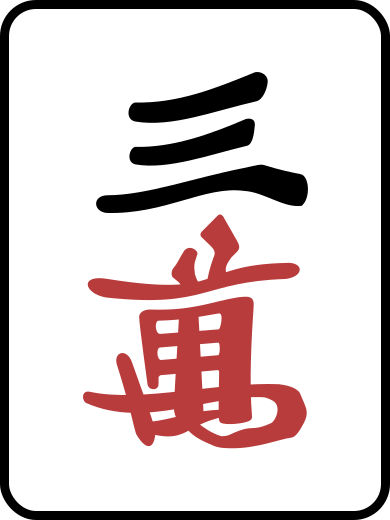
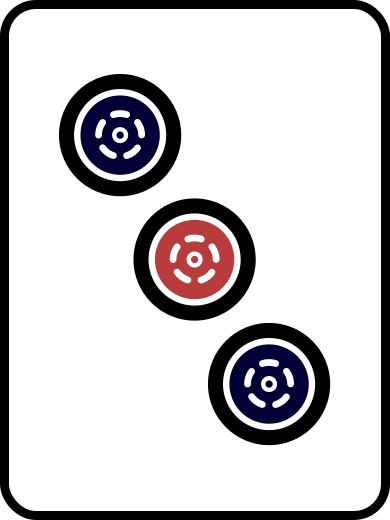
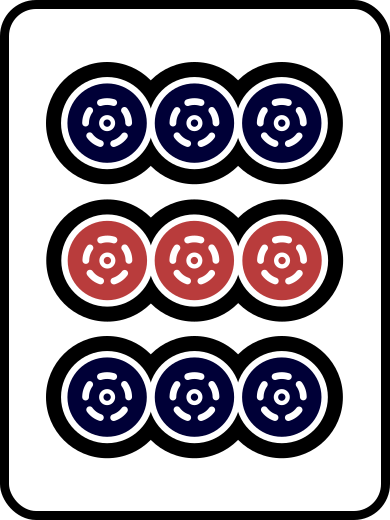
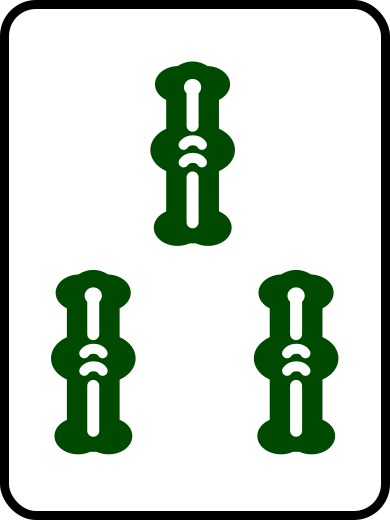
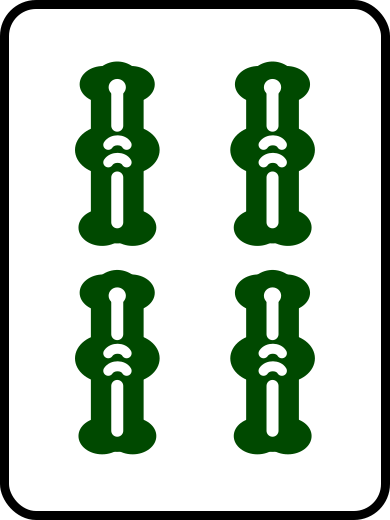
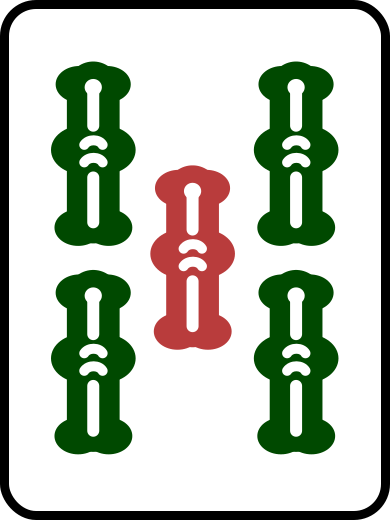
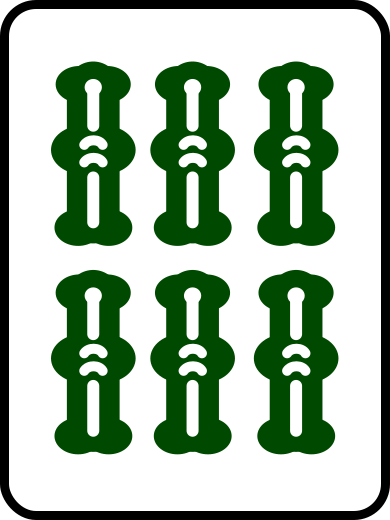
Two triplets are done: 3 man and 3 pin. The hand waits on or , a wait on two pairs. The 9 pin keeps tanyao off.
Draw yourself and all three triplets are concealed. That's sanshoku doukou, sanankou, and menzen tsumo: 5 han. The fu are the base 20, plus 2 for the tsumo, plus 4 for each closed simple triplet. 34 rounds up to 40, but 5 han is a anyway. A collects 2,000 from each other non-dealer and 4,000 from the dealer.
Win the same 3 sou by and the yaku stays. The triplet still has the right number in the right suit. What changes is . Tenhou's rules say a triplet completed by ron is an open triplet, so only two concealed triplets are left. The hand is sanshoku doukou alone: 2 han. The fu are 20, plus 10 for a closed ron, plus 4 and 4 for the closed triplets, plus 2 for the 3 sou: 40. At 2 han 40 fu, a non-dealer collects 2,600. The dealer collects 3,900.
Draw instead and the 3 sou become the pair. The hand is sanankou and : 3 han. The fu are 20, plus 2 for the tsumo, plus 4 and 4, plus 8 for a closed terminal triplet: 38, rounded up to 40. A non-dealer collects 1,300 from each other non-dealer and 2,600 from the dealer.
The 9 pin by ron has at all. The 9 pin triplet counts as open, so sanankou is gone, and the sanshoku needs the 3 sou. You can't win on that discard.
Those payments have no , no , and no sticks. The scoring guide lists every triplet's fu.
The glossary entry is the short form: triplets of the same number in all three suits, 2 han.
A hand with a pon
You called pon on 5 man: 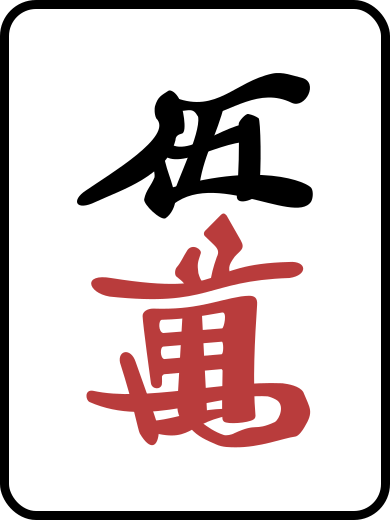 . These ten tiles are still in your hand.
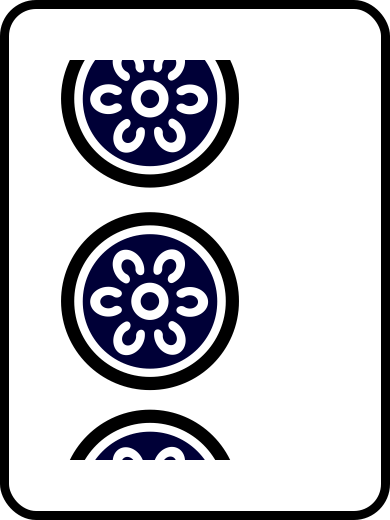
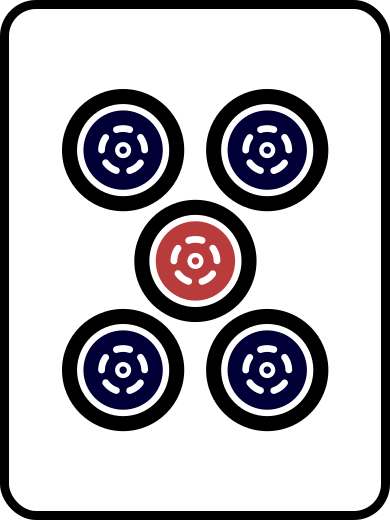
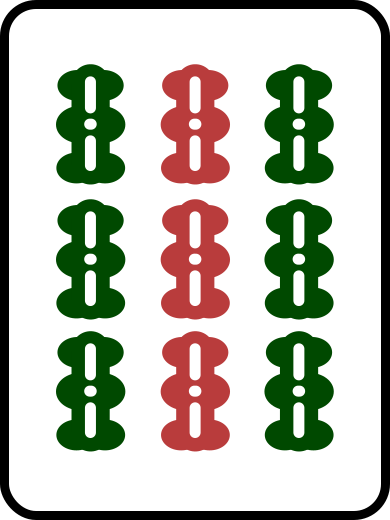
The 5 pin and 5 sou triplets are concealed. The hand waits on or , a wait on two pairs. Either tile makes a fourth triplet, so the hand is toitoi as well.
Win either tile by ron and the hand is sanshoku doukou and : 4 han. The call doesn't cost a han, because neither yaku drops after a call. The fu are the base 20, plus 2 for the open 5 man, plus 4 and 4 for the closed 5 pin and 5 sou. The triplet the ron finishes adds 2 on the 2 pin or 4 on the 9 sou. 32 or 34 rounds up to 40, and 4 han 40 fu is paid as a mangan. A non-dealer collects 8,000. The dealer collects 12,000.
Draw the tile yourself and the last triplet is concealed too. Three concealed triplets add sanankou: 6 han, a . A non-dealer collects 3,000 from each other non-dealer and 6,000 from the dealer. The hand is open, so tsumo doesn't apply.
It often comes with toitoi and sanankou
Three of your four sets are triplets already. Make the fourth one a triplet and the hand is toitoi. Keep the three matching triplets out of your calls and they are concealed, which is sanankou. Both hands on this page show it: the closed one scores sanankou on the tsumo, and the one with a pon scores toitoi on every win.
Remember the ron rule when you count. A triplet the discard finishes is open for sanankou and for fu. It still counts for sanshoku doukou and for toitoi, since neither cares whether a triplet is concealed.
Open or closed
Tenhou's yaku list puts sanshoku doukou at 2 han and doesn't mark it as losing a han after a call. Mahjong Soul's yaku list defines it as triplets or quads of the same number in man, sou, and pin, with no closed-hand condition. The EMA 2016 rules file triple pung with the 2 fan yaku in section 4.2.2 and add no extra fan for a concealed hand. All three agree: 2 han, open or closed. That's the row on this site.
Sanshoku is runs
Sanshoku doujun, the yaku players usually mean by sanshoku, is three runs: 345 man, 345 pin, and 345 sou. It is 2 han closed and 1 han after a call. Sanshoku doukou is three triplets, and it keeps its 2 han after a call. Same suits, same matching numbers, different sets.
Common mistakes
- Mixing the numbers. 555, 555, and 666 is three triplets, not sanshoku doukou.
- Dropping a han after a pon. An open sanshoku doukou is still 2 han.
- Losing the yaku on a ron. A triplet the discard finishes still counts for sanshoku doukou. It only stops counting for sanankou.
- Counting sanankou on that ron. The finished triplet is open, so the closed hand above has two concealed triplets, not three.
- Mixing it up with sanshoku doujun. Runs drop to 1 han after a call. Triplets don't.
What sits with it
Toitoi fits when the fourth set is a triplet too. Sanankou fits when three triplets stay concealed. Tanyao fits when the number is 2 through 8 and every other tile is simple. Three quads would add sankantsu.
Price a sanshoku doukou hand
The score calculator turns 2 han 40 fu, a closed sanshoku doukou won by ron, into 2,600 or 3,900. With a pon and toitoi, the ron is a mangan.
Open the score calculator