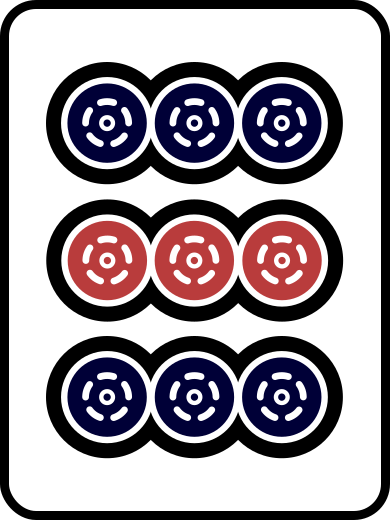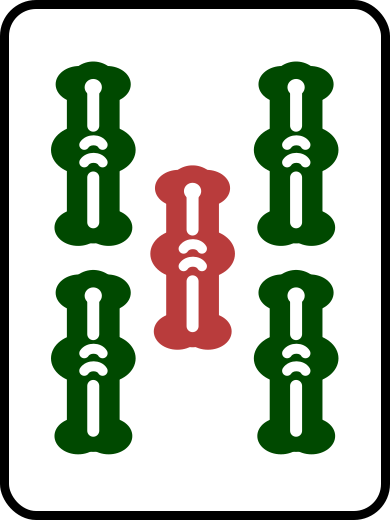
As a , this hand pays 1,000 points on a if you keep it quiet. Declare and it pays 2,000.
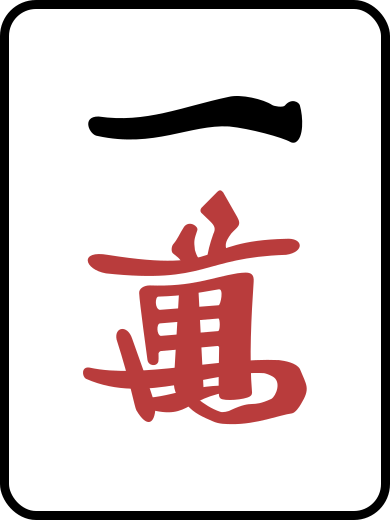
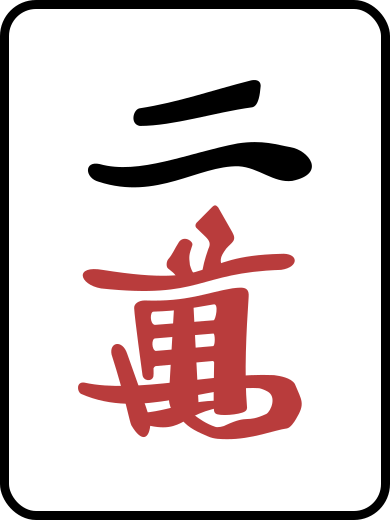
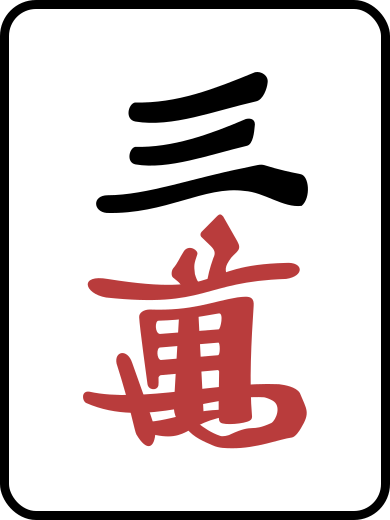
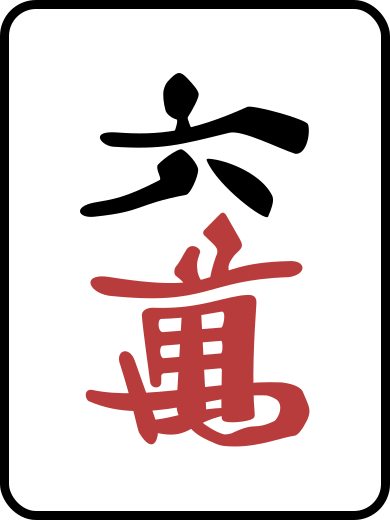
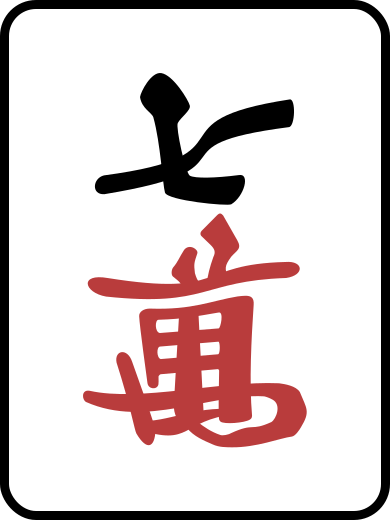
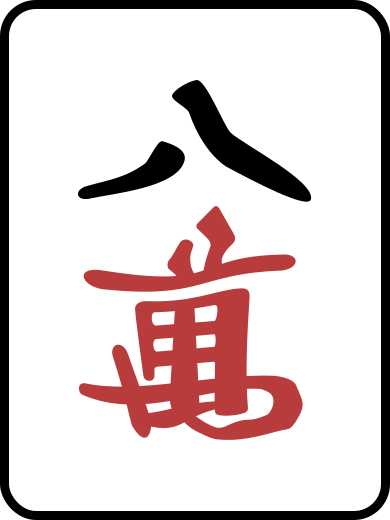
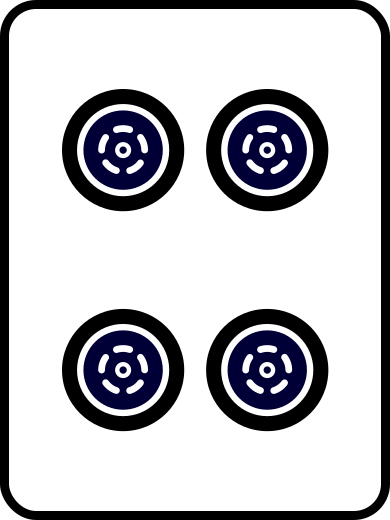
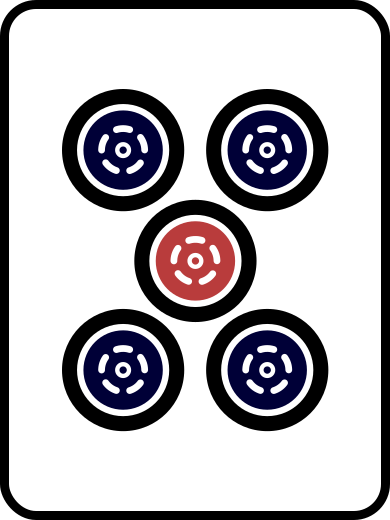
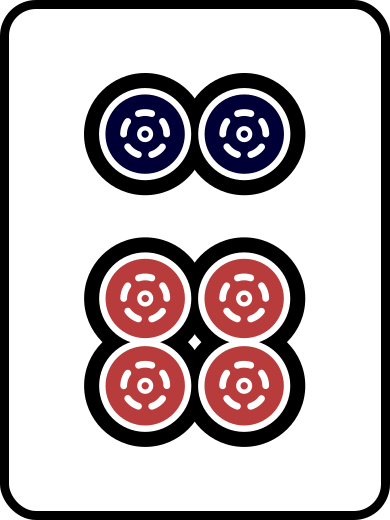
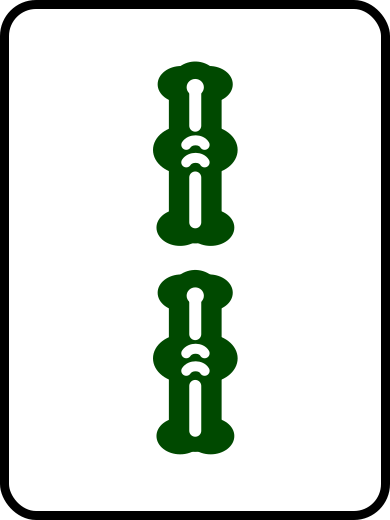
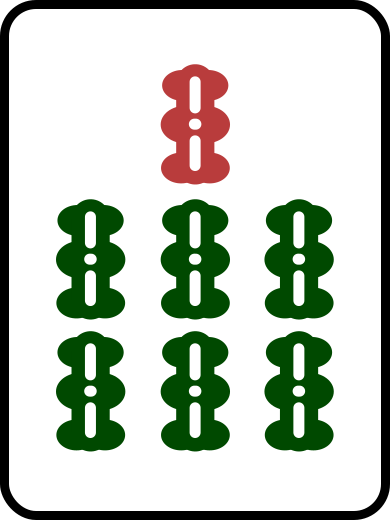
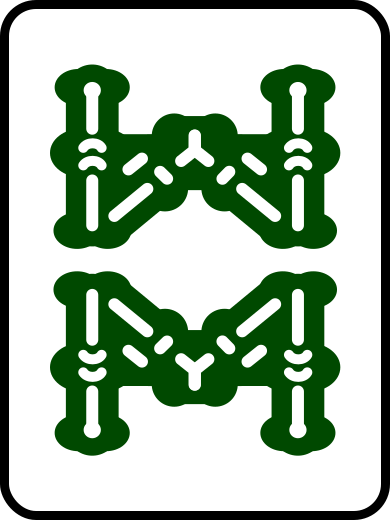
It's turn 8. The hand is closed and : on a , nothing else. One school of play keeps it quiet: nobody's warned, the 6s or 9s comes out, and if a better tile arrives first the hand can still grow. The other school puts the stick down without thinking about it. Over the last twenty years the second school won, and basketball fought the same fight at the same time.
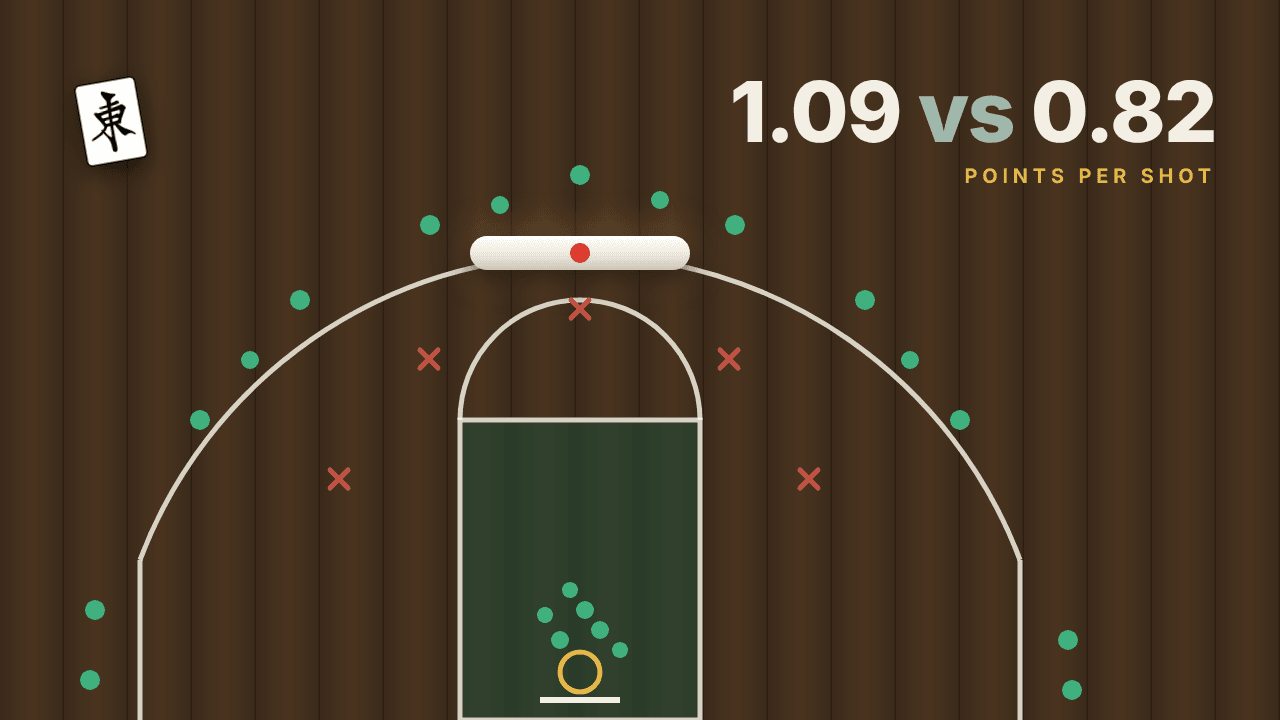
Daryl Morey ran the Houston Rockets from 2007 to 2020 on a simple idea: a three-pointer misses more often than a long two-pointer and is worth more anyway. His teams stopped shooting from just inside the line, and writers called the style Moreyball. is mahjong's three-pointer: it wins less often than and pays more, and Tenhou's logs show by how much.
Moreyball: miss more, score more
Wikipedia dates Morey's tenure from May 2007, when he became general manager, to his departure in November 2020. It describes a philosophy that "favors three-point field goals and layups over mid-range jumpers," a style "dubbed 'Moreyball'" after Michael Lewis's Moneyball. Morey also co-founded the MIT Sloan Sports Analytics Conference.
Basketball-Reference's 2007-08 shooting table makes the case. That season the average team took 23.5% of its shots as twos from 16 feet out to the line and made 40.9% of them: 0.409 × 2 = 0.82 points per attempt. It took 22.2% of its shots as threes and made 36.2%: 0.362 × 3 = 1.09. The three missed more and paid a third more per shot. By 2018-19 the Rockets attempted 3,721 threes and 3,442 twos, and only 2.5% of their shots were long twos. The league followed. Threes per game went from 18.1 in 2007-08 to 37.6 in 2024-25, according to Basketball-Reference's league averages, and long twos fell to 4.8% of shots.
The riichi version of the trade
This is the mahjong shooting chart. The rates come from chienshyong's analysis of Tenhou logs from 2016 to 2020, published in riichi wait win rates by turn. The analysis counts turns from zero.
| Wait | Riichi | Dama | Dama minus riichi |
|---|---|---|---|
| Two-sided 1-4 | 57% | 67% | +10 |
| Two-sided 3-6 | 52% | 62% | +10 |
| Three-sided 1-4-7 | 66% | 69% | +3 |
| Single-tile wait on 5 | 33% | 39% | +6 |
| Honor , fresh | 48% | 40% | -8 |
On number waits dama is the higher-percentage shot. A two-sided wait goes in 10 points more often when nobody knows it's there. That's the mid-range argument, and it's true: a long two did go in more often than a three.
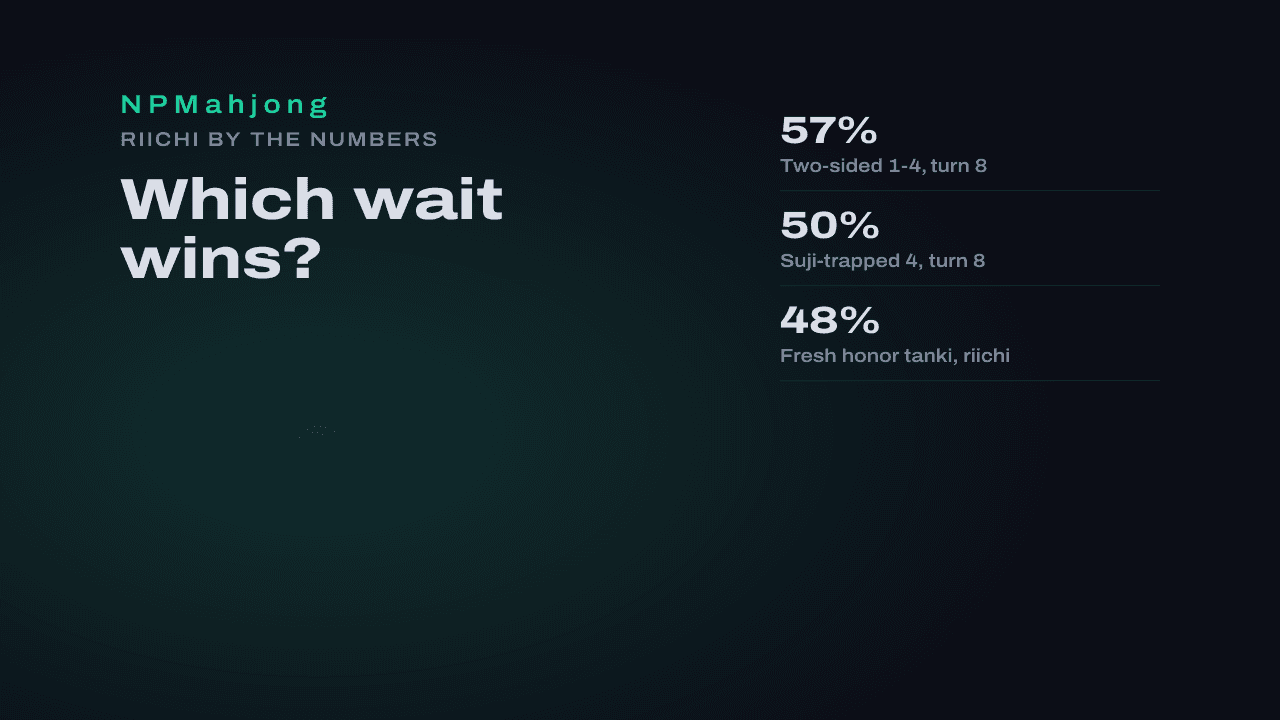
The other half is what a make is worth. Riichi adds one , and the Japanese Wikipedia entry on riichi spells it out: below , one more han amounts to doubling the score. The cap is the catch, since a 7,700 hand becomes 8,000, not 15,400. Then come and , which dama can't win at all.
Run the hand from the top. Its 6-9 wait tracks the 1-4 row. Per 100 hands at turn 8:
- Dama: 67 wins × 1,000 = 67,000 points.
- Riichi: 57 wins × 2,000 = 114,000 points. The stick comes back only when you win, so take off 43 × 1,000 for the hands that don't: 71,000.
Riichi comes out ahead before a single uradora or ippatsu, and those only add. With ippatsu, the average turn-8 non-dealer riichi in the same logs rises from 5,423 to 7,632.
Treat this as a sketch. It prices every win as a ron, and tsumo values give the same order. The dama sample comes from hands holding , not cheap , and the sketch leaves out what each side loses in deal-ins: a two-sided riichi deals in 10% to 11% at turn 8, while a dama hand can still fold. The trade still has the Rockets' shape: fewer makes, and bigger ones.
How mahjong found its three-point line
The Japanese shift has a book at its start. In 2004 Kodansha published Totsugeki Tohoku's Kagaku suru Mahjong ("Mahjong as science," とつげき東北『科学する麻雀』). The publisher's description says older strategy books argued from "reading," "overall judgment," and controlling luck, and promises instead to say concretely when you should riichi and when you should play dama, on mathematical and statistical grounds. One of the questions the page lists is whether a pinfu-only tenpai should riichi.
The Japanese Wikipedia page on the author collects what pros said afterward. Ishibashi Nobuhiro wrote in 2015 that data-based strategy books multiplied after it, that fixed ideas like prizing , prizing good shape, and were knocked down, and that speed and took their place. Higa Hidehito wrote that statistical push-and-fold judgment became common sense.
The holdouts confirm where the game went. Kurosawa Saki, a pro whose strategy book promises to win without calling, wrote in a 2022 Bunshun piece that she often plays pinfu-only hands dama, waiting for the hand to change into something bigger. In the same passage she writes that under M.League rules, the feeling that riichi is the standard play runs strong. Long twos never vanished from the NBA either.
The quiet hands the riichi style keeps
The Rockets didn't stop shooting twos. They stopped shooting the long ones and kept the layups: in 2018-19, 26.1% of their shots came from within three feet. The riichi-first style keeps its layups too.
The mangan cap is the reason. Above mangan, an extra han stops doubling the score, so riichi's bonus shrinks while the win-rate cost stays put. The wait post gives Nemata's turn lines from his comparison of dama and riichi win rates. With a two-sided wait and two or more dora in hand, a dama mangan stays dama from turn 12 on, and a dama 6,400 from turn 9. Earlier than that, riichi. A two-sided 3,900 or 5,200 is a riichi at any turn before the last few. The other layup is placement: when a 5,200 already passes the player above you and a mangan changes nothing, the quiet hand wins more often and keeps you free to fold.
Honor waits run the other way. The chart above has a fresh honor tanki at 48% as a riichi and 40% as dama, a three that also goes in more often. The edge likely comes from the folds a riichi forces, and riichi is sente prices those folds.
Why a riichi isn't a three
A three is always worth one more point than a two. A riichi han doubles a hand that stays under mangan, adds at most half to one above it, and adds nothing to a . The line moves with the hand, so the decision has to be made again every time.
A three also doesn't stop the other team from shooting. A riichi does. Three opponents start folding, which likely lowers your win rate on number waits and raises it on honors. Basketball has no shot that changes how the defense plays the rest of the possession.
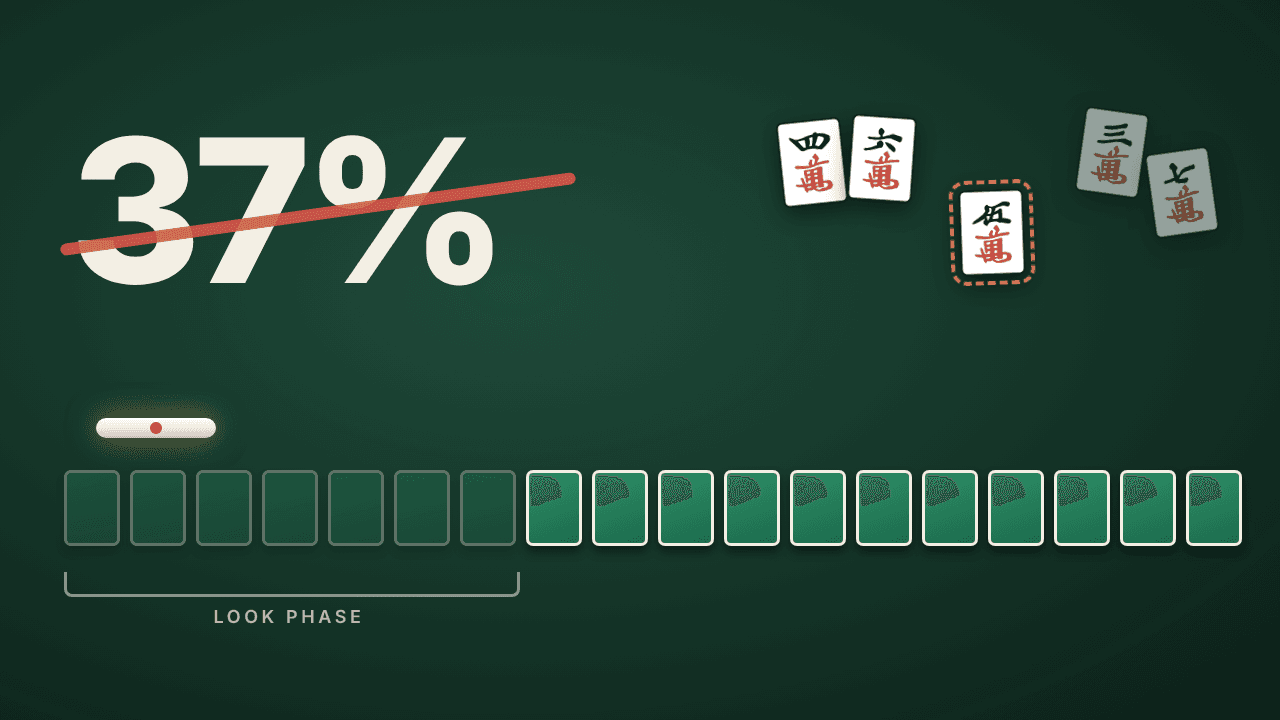
Timing works differently too. A shot doesn't lose value while the ball moves. A quiet tenpai on a bad wait loses win rate every turn you hold it, and the 37% rule works out when to stop waiting for a better one.
Log the quiet tenpais
Starting with your next session, write down every closed tenpai you didn't declare: the turn, the wait, the dama value, and the riichi value. After ten , put each one in a bucket.
| Bucket | What it looks like | Verdict |
|---|---|---|
| Layup | Two-sided dama mangan from turn 12 or 6,400 from turn 9, with two or more dora | Keep it quiet |
| Placement | The quiet value already does the job and the riichi value changes nothing | Keep it quiet |
| Mid-value dama | Two-sided 3,900 or 5,200 before the last few turns | Should have been a riichi |
| Long two | Cheap hand kept quiet, waiting for it to grow | Should have been a riichi |
Then pull your riichi rate from the Tenhou log stats tool. Path of Houou's 2020 analysis of 5,626 players with 100 or more Houou games put the middle 68% between 14.97% and 18.89%. A rate well under that can come from a high call rate, so don't read it alone. Read it next to the long-two bucket. If both point the same way, you're shooting from mid-range.

Put the pinfu from the top into the wait win rate tool and weigh its riichi number against 1,000 points quiet. Then declare it.
Was this article helpful?