Nobody has won anything yet, and three players have stopped playing for the hand. It's turn 6, East 2. You drew the tile that finished your last block, put a stick on the table, and said . The player on your right pulls a tile from the end of their hand: your own discard, . The does the same. The dealer looks at a two-sided shape for a long second, then throws a tile you've already cut.
Go has a word for the move you made. (先手) means playing first, and a sente move is one the opponent has to answer or lose something. Its opposite is (後手). Chess has the companion line: "The threat is stronger than the execution." A is the cleanest sente move in mahjong, and the logs show what it does before anyone wins.
What go and chess mean by a threat
Sensei's Library gives the root meaning of sente as "playing first." A move is sente "if the opponent has to answer it or suffer losses, so the player who plays it will have sente after the exchange." Gote, the same wiki says, is a move that "need not be answered by the opponent," which hands them the initiative. The page also offers a tighter definition that fits riichi almost too well: a sente move is "a move whose follow-up play is the largest on the board." The follow-up to a riichi is your win.
The chess line is usually credited to Aron Nimzowitsch. Edward Winter's history of the story shows how thin that credit is: the only instance Winter's page records of Nimzowitsch stating the principle himself is a 1933 Danish magazine note, and the German form was in print by 1908, credited to Karl Eisenbach. So the credit is custom more than record.
What the threat earns before you win
Answering your riichi has a price. The numbers come from Tenhou logs 2016 to 2020, chienshyong's analysis, as laid out in what folding costs. They count turns from zero, so turn 8 is the ninth discard.
| You fold as | Against | Fold price |
|---|---|---|
| A non-dealer | A non-dealer riichi | -1,120 |
| The dealer | A non-dealer riichi | -1,890 |
| A non-dealer | The dealer's riichi | -1,750 |
Declare as a non-dealer and your three opponents are two non-dealers and the dealer. If all three fold, they lose about 4,130 points between them on average (1,120 + 1,120 + 1,890). Those points leave mostly through tsumo payments and at the draw, and most of the loss comes from no longer playing to win. Read 4,130 as a size: the averages come from real tables where some players pushed, and a tsumo by another player bills the folders too.
The folding post shows where that loss comes from. A non-dealer who reaches turn 8 with no riichi and no calls on the table and then doesn't win loses 1,200 points on average, almost the same as a fold. So most of the price of folding is the win they surrendered. The Japanese Wikipedia entry on riichi lists the same effect among riichi's merits: opponents often fold, which lowers their chance of winning and of reaching .
Go has a proverb that cuts the other way: sente gains nothing. Sensei's Library explains that playing a sente move and getting the answer "normally leaves the count unchanged." In riichi the exchange isn't free. The answer costs the folders, mostly in chances to win, and that is the first thing your stick buys.

Riichi costs wins, except on honors
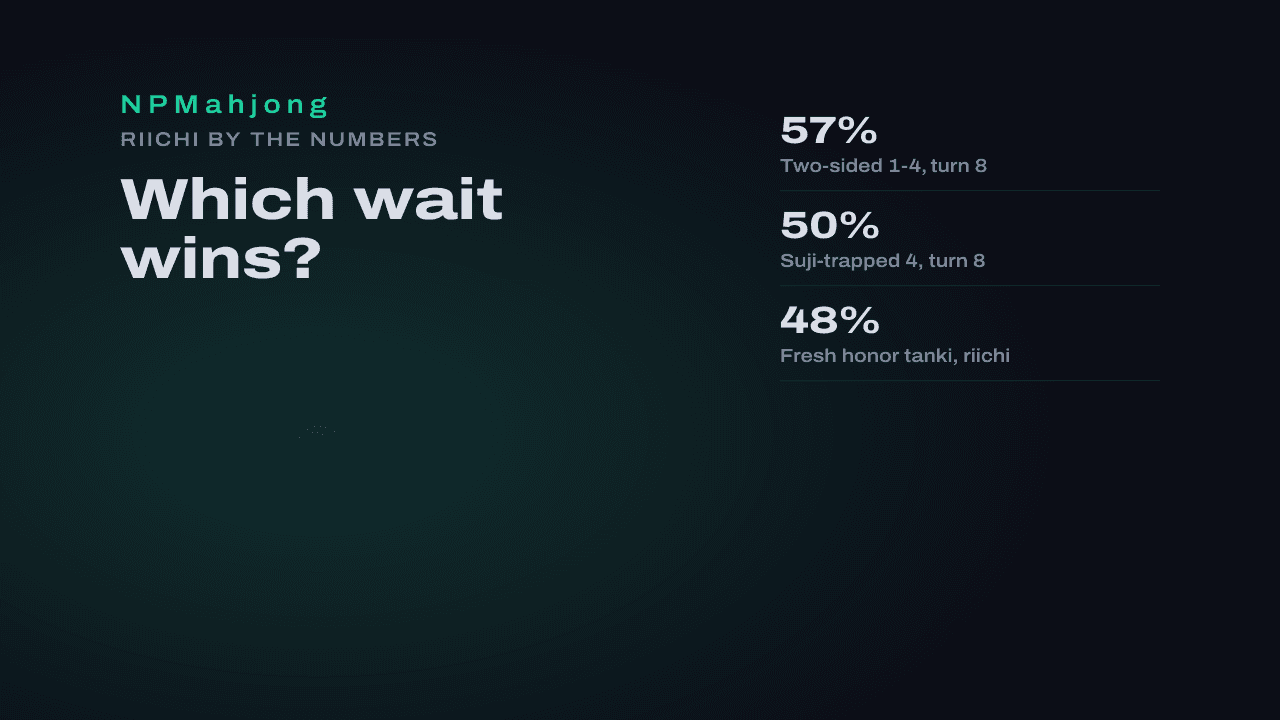
The chess line, read literally, is half wrong at the mahjong table. The threat makes the execution harder. Compare the same waits with and without the announcement, at turn 8 in the logs. A two-sided 1-4 wins 57% as a riichi and 67% as dama. A fresh honor tanki goes the other way: 48% as a riichi, 40% as dama. The dama hands in that sample hold and include waits, so the gap is rough. The riichi revolution has the full table by wait and weighs the trade hand by hand.
On a two-sided number wait, the riichi gives up 10 points of win rate. People stop throwing your tiles. The stick still pays for that in other currency: the extra , , , and three hands that went quiet.
Honor waits flip the trade. The likely reason: a folding player's first safe tiles are often honors, and a riichi on an honor wait turns those tiles into your winning tiles. Take this hand:
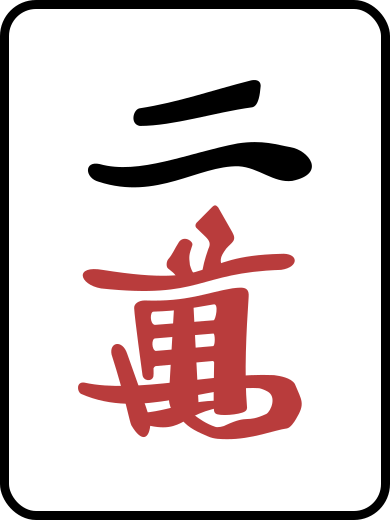
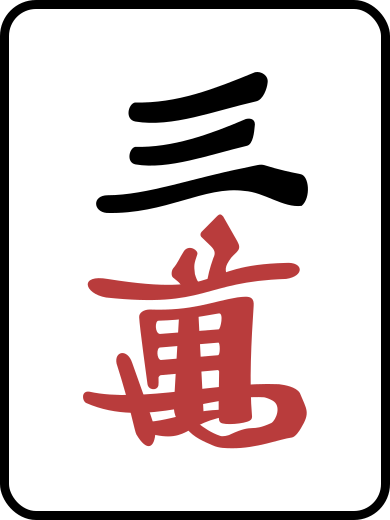
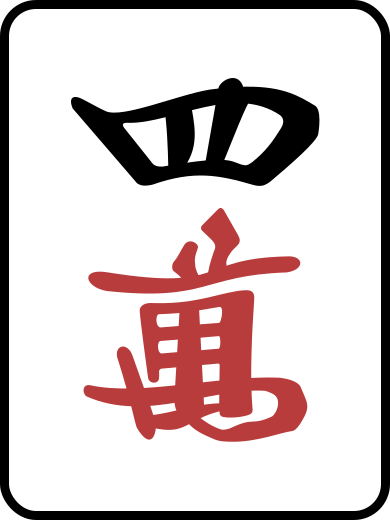
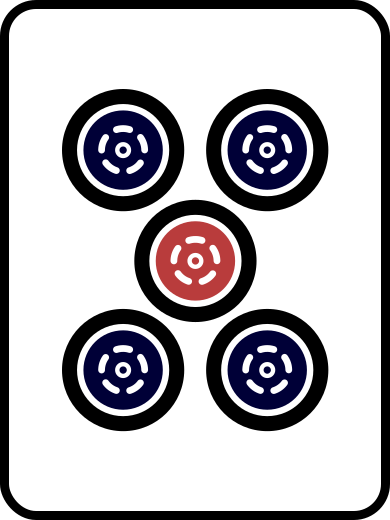
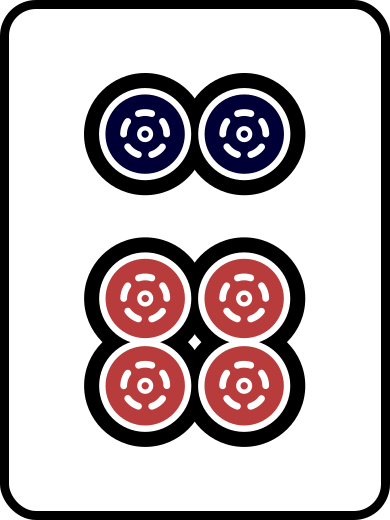
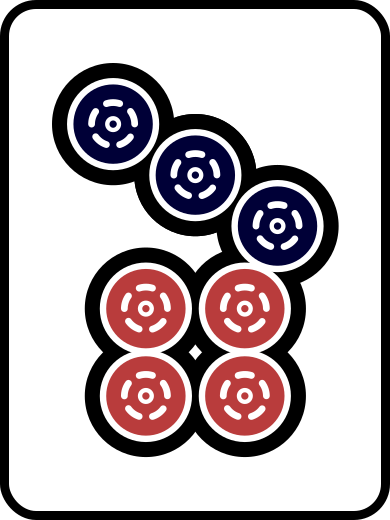
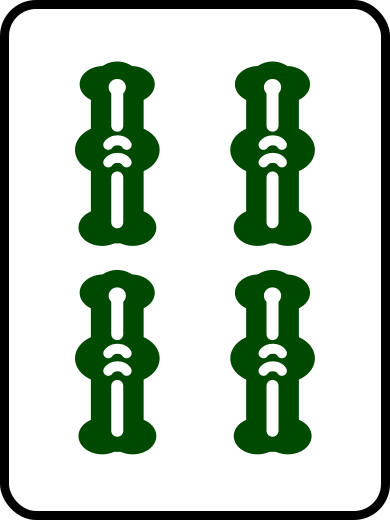
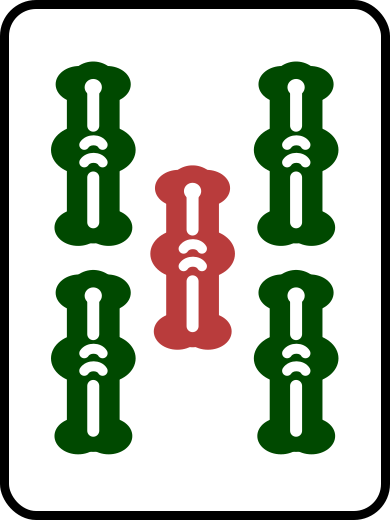
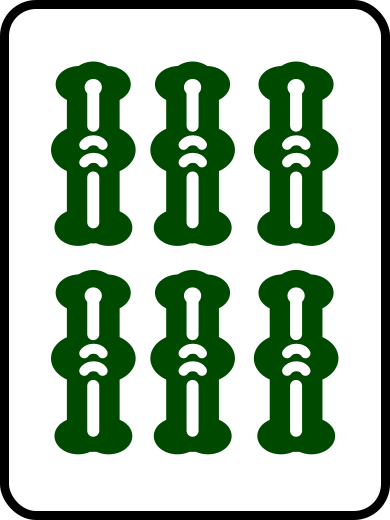

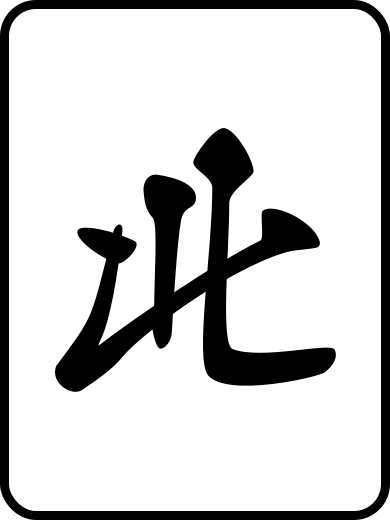
on a fresh , with a concealed triplet of white dragons for the . As dama it's 1 40 fu, 1,300 on a for a non-dealer who isn't sitting North. With riichi it's 2,600, and the wait goes from 40% to 48% at turn 8. The riichi doubled the hand and made it more likely to win. Honor waits are the one place in the data where riichi beats dama on both counts.
Going first is the point
Sente belongs to whoever plays first. In riichi that's the first declarer, and the chase-riichi analysis in the same logs shows what the second declarer pays. That analysis counts turns from 1.
| Your wait | First riichi: wins / deals in | Chase: wins / deals in |
|---|---|---|
| 5 to 8 tiles (two-sided) | 56% / 10% | 48% / 16% |
| 4 or fewer tiles (narrow) | 42% / 14% | 32% / 21% |
Going second costs a two-sided hand 8 points of win rate and adds 6 points of . The first declarer holds sente. The chaser plays in gote, answering a threat while making one. A two-sided chase still beats folding by about 3,300 points in the folding post's rough math. It's a worse version of the same hand.
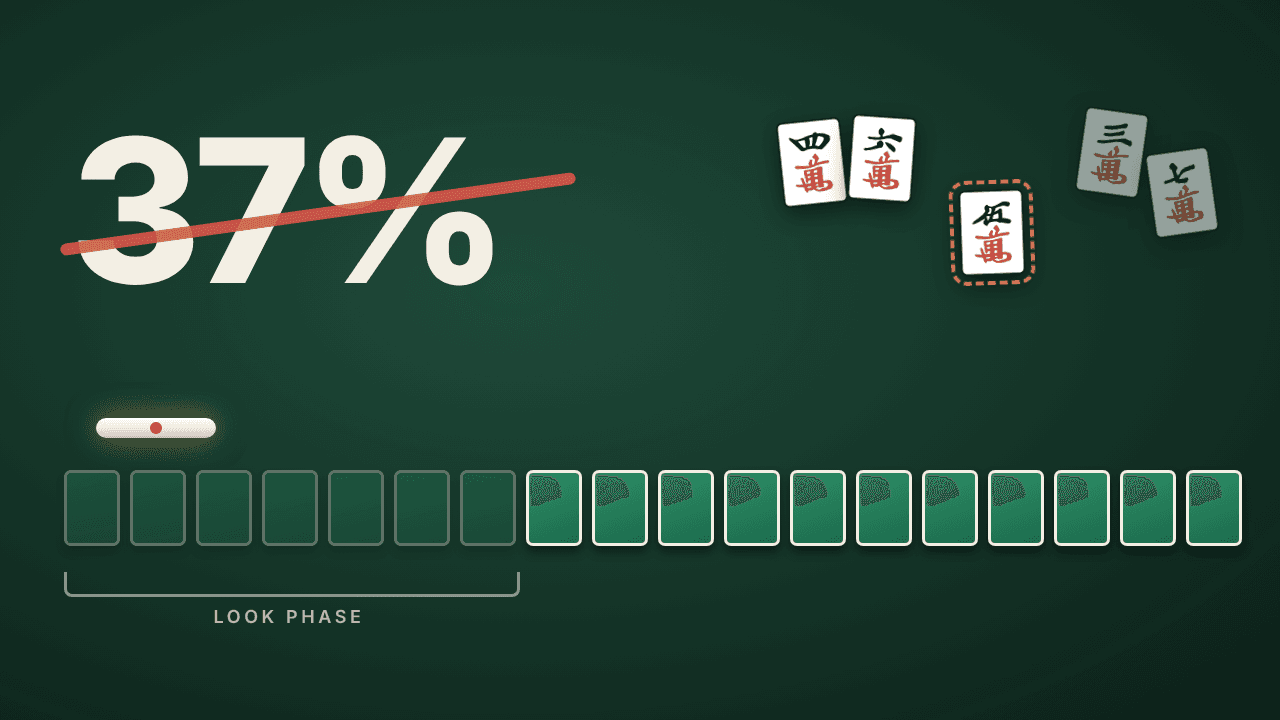
That's also why waiting has a cost the turn table alone doesn't show. Every turn you spend dama looking for a better shape is a turn someone else can declare first and flip you from sente to gote. The 37% rule post runs the win-rate side of that wait turn by turn.
The defender's side of this is tenuki: when your own hand is bigger than the threat, you don't answer it. A riichi is sente only for players whose move is smaller: no tenpai, or a narrow wait under 2,000 (under a when the riichi is the dealer's). Against a two-sided tenpai, your riichi gets a push back.
Sente for the table, gote for your hand
A go player who makes a sente move keeps the initiative. A riichi player spends theirs. Once the stick is down you can't change the wait, can't take a better hand, and can't fold.
That's the gote half of the move, and the wait sets its price. At turn 8 a three-sided riichi deals in about 8% of the time, a two-sided riichi 10% to 11%, and a single-tile wait 14% to 15%, per the wait win rate data. A slow wait also draws more: 21% to 26% of single-tile waits on 2 through 8 end in a draw, against 14% to 16% of two-sided riichis. A bad wait makes you hold the threat longer, with your hand open to every riichi that follows.
Go also says gote isn't always a mistake. Sensei's Library notes that a gote move can be the best move when it's worth enough more than any sente sequence on the board. The mahjong version is the late dama, and the riichi revolution gives the turn lines for it. Late in the hand the threat has few turns left to work, and the quiet hand's extra wins count for more, so the gote move is bigger.
The drill: count the answers
For your next ten , watch the go-around after every riichi you declare. For each opponent, mark one of three things: or (they answered), a fresh tile (they ignored you), or a call (they went to war). Then note the result of the hand.
Then sort the riichis. The ones with three answers were sente: three hands stopped trying to win before you drew another tile. The ones with a fresh tile or a call against them got no answer, and the player who ignored you thought their hand was bigger than your stick. Note their seat, the turn, and how the hand ended. That's where chases come from, and it's how you learn which riichis to expect an answer to.
An unanswered riichi comes back as a chase
Folds aren't guaranteed. In go, an unanswered sente move lets you cash the follow-up. In riichi an unanswered threat can come back as a chase, and the chaser's win is your deal-in.
A riichi exchange also moves points: the folders' prices, your 1,000-point stick, and the win rates in both directions. That's the version of the chess line the logs support.
Price your threat before you make it
When you're tenpai, the wait win rate tool shows how often your wait wins once the stick is down. Facing someone else's stick, run your hand through the push-or-fold calculator and decide whether you answer.

Book a coaching session and bring your riichi hands. I'll mark the tenpai you kept quiet that should have been sente, and the riichis that handed someone else the chase.
Was this article helpful?