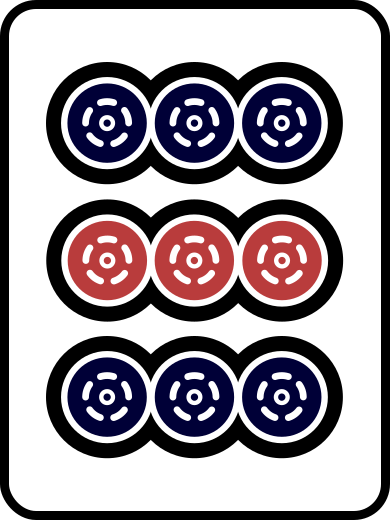
Turn 5. You're on a , waiting on  .



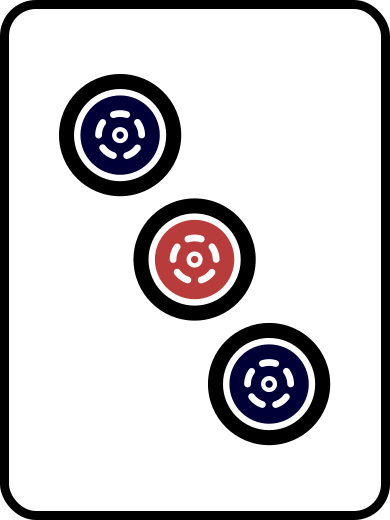
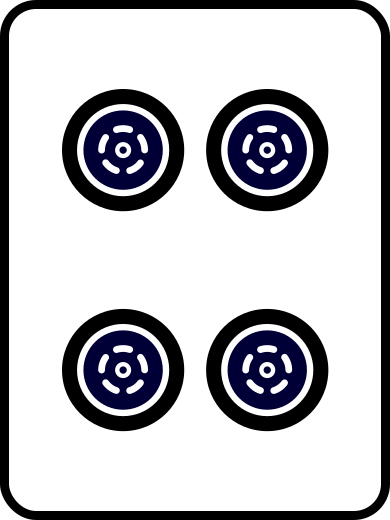
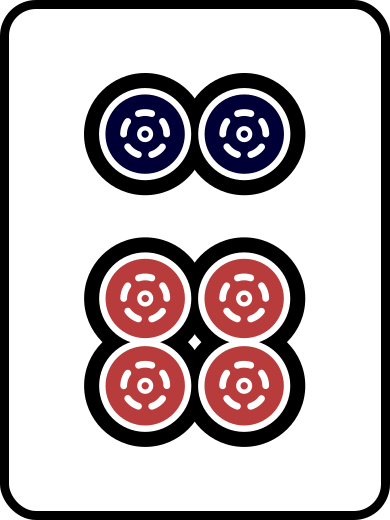

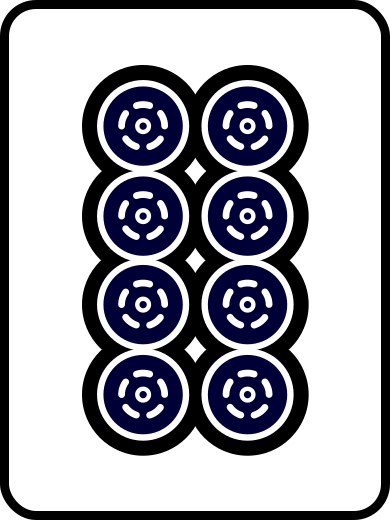
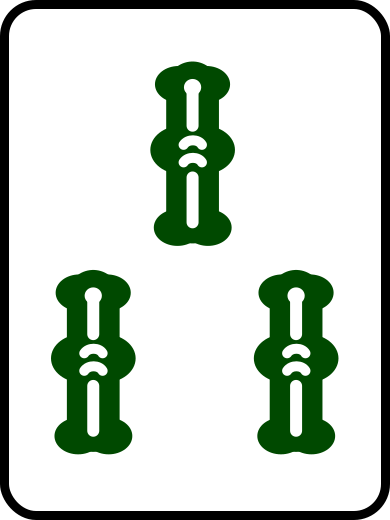
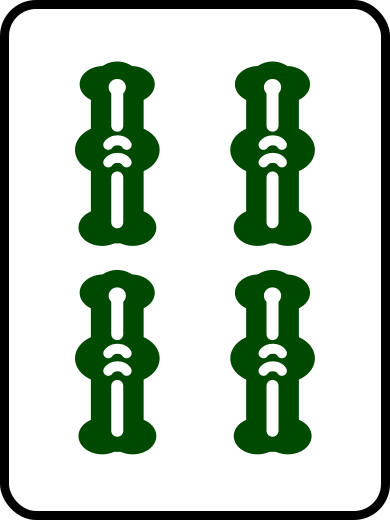
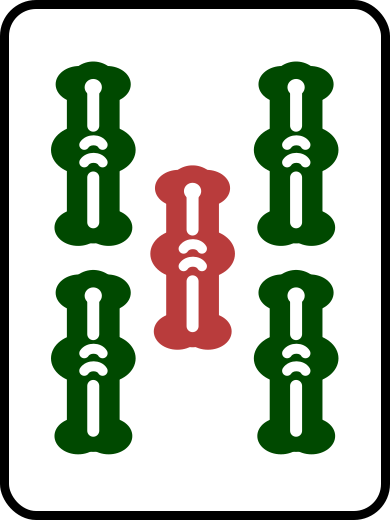
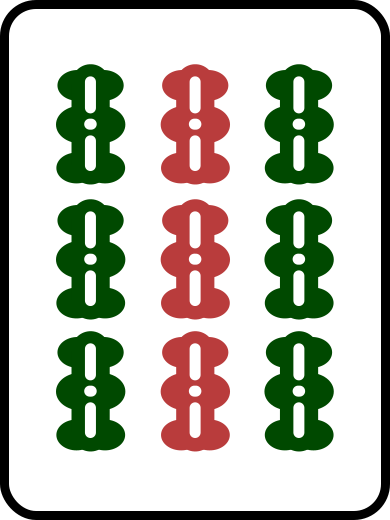
Draw a  or a
 and you can cut a tile for a with . Eight tiles would do it. Or you can put the stick down now. So how long do you wait for something better?
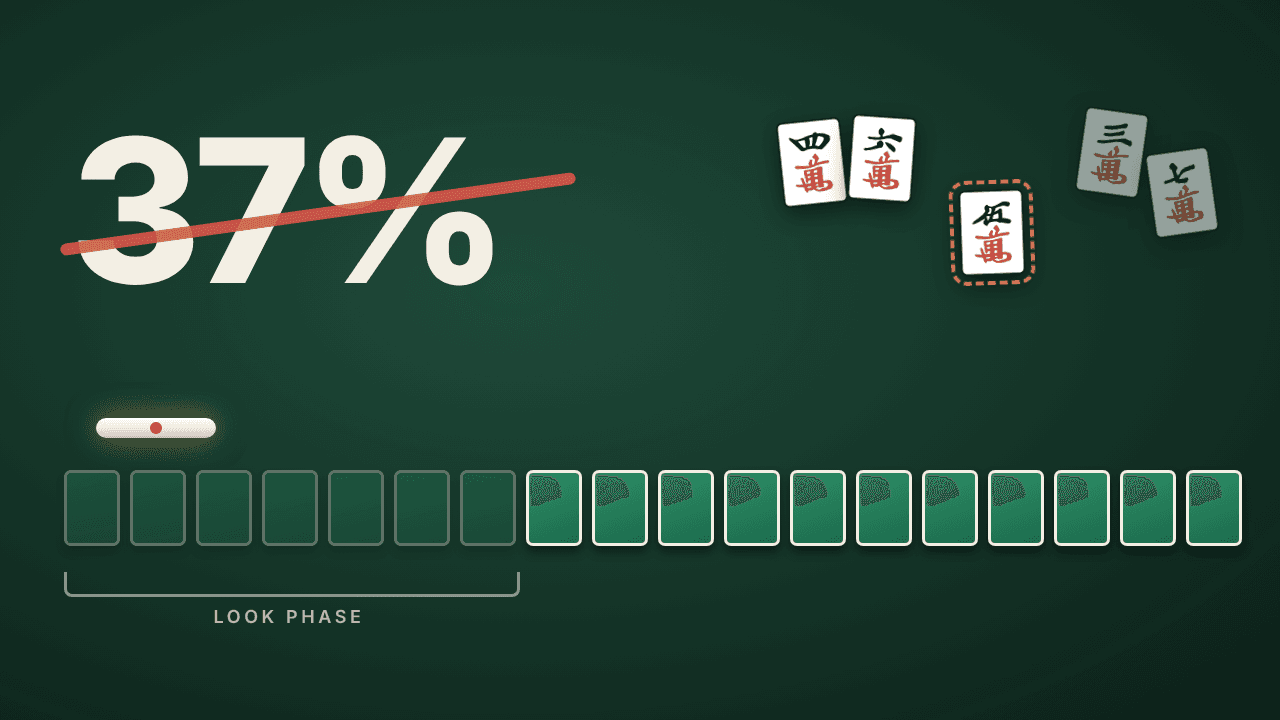
There's a famous answer to that question in general. It's called the 37% rule, and Brian Christian and Tom Griffiths made it the opening chapter of Algorithms to Live By (2016). It solves a problem that looks like yours. Yours is different, and the difference points to the right test.
The hiring problem behind 37%
Applicants arrive one at a time, you can rank each against the ones you've already seen, and you must hire or reject on the spot, with no going back. You win only if you hire the single best. The optimal strategy, as Wikipedia's entry on the secretary problem puts it, rejects roughly the first n/e applicants and then takes the first one better than all of them. That's 37% of the pool, and it finds the best applicant about 37% of the time, whether there are 100 applicants or 100 million. The page traces the first publication to Martin Gardner's column in Scientific American, February 1960. Christian and Griffiths credit Merrill Flood with the first known discovery of the rule in 1958.
The book doesn't stop there, and the next two cases matter more for mahjong. With full information, where you know each applicant's percentile and not just their rank, the look phase disappears. The book's advice is to "use the Threshold Rule, where we immediately accept an applicant if she is above a certain percentile," and the chance of landing the best rises to 58%. Selling a house is different again: offers keep coming, each one costs you time, and "our threshold depends only on the cost of search." Both quotes are the book's, as excerpted in reading notes at the Libarynth. The 58% comes from a reader's notes on Goodreads.
Why your wait isn't a secretary problem
Run the 37% rule on a mahjong hand and it says something strange. A hand gives each player about 17.5 draws: 136 tiles, minus 52 dealt, minus a 14-tile , leaves 70, split four ways. Thirty-seven percent of that is about six draws. So the rule says: whatever you're holding before turn 6, don't declare.
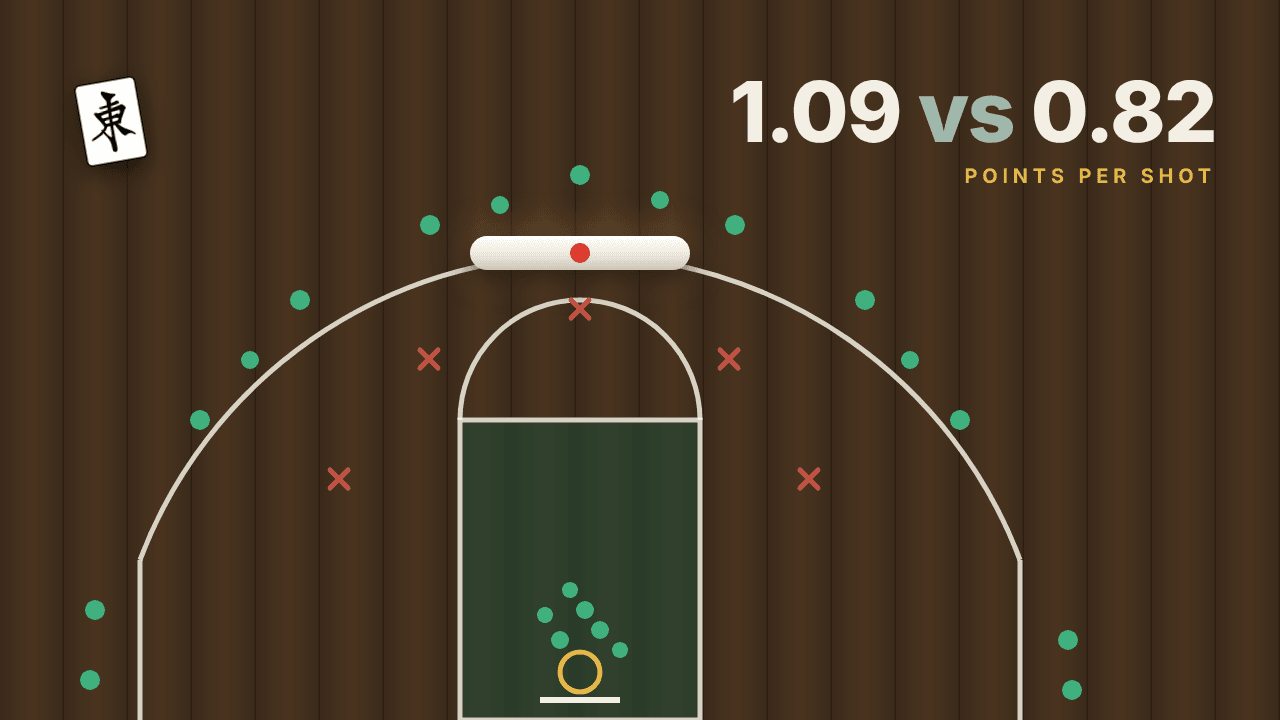
The data says that's expensive. In the Houou logs a two-sided 1-4 riichi wins 79% when declared on turn 2 and 67% on turn 5, as riichi wait win rates by turn shows. Drawing a straight line to turn 6 gives about 64%. Sit through a look phase holding the best common wait in the game and you've thrown away 15 points of win rate to learn nothing you didn't already know.
Four features of the hiring problem, checked against a riichi hand:
- You have full information. The secretary only knows rank. You know that a two-sided wait beats a kanchan before either shows up, and by how much, at every turn.
- You're not hunting for the best. The secretary problem pays only for the single best option. Mahjong pays in points, so a good wait now can beat a great wait later.
- Every option decays. An applicant is as good on day 30 as on day 1. A wait loses win rate every turn you hold it.
- You can go back, at a price. A rejected applicant is gone for good. A kanchan you didn't declare is still in your hand next turn, at a lower win rate. It only leaves when you take the upgrade: draw the 3m and cut the 6m. That's why the test below prices one turn's decay.
So the right tool is the book's house sale, not its hiring problem: a threshold set by what the search costs. One difference: in the house sale the cost never changes, so the threshold never moves. At the table, both sides of the scale move every turn.
The cost of one more draw
The test is one comparison. You hold wait A at turn t. Declare now and you get A's win rate at turn t. Wait one draw, and with chance p you upgrade to wait B and declare it a turn later; otherwise you declare A a turn later. Waiting is right when:
p × (B at t+1 − A at t+1) is bigger than A at t − A at t+1
The left side is what the upgrade is worth, times the chance you get it. The right side is what one turn costs the wait you already have.
The win rates come from the Houou table. A kanchan waiting on 5 sits in the "single-tile wait on 5" row. Both upgrades, 34m waiting on 2-5 and 67m waiting on 5-8, sit in the two-sided 2-5 row, since mirror waits match within about a point.
| Turn | Single-tile wait on 5 | Two-sided 2-5 |
|---|---|---|
| 2 | 48% | 73% |
| 5 | 39% | 64% |
| 8 | 33% | 54% |
| 11 | 25% | 44% |
| 14 | 17% | 30% |
Turns between the table's rows come from a straight line. The chance of an upgrade is live tiles over unseen tiles. At your turn 6 draw you've seen your own 13 tiles, the indicator, and about 24 discards, so 136 − 13 − 1 − 24 = 98 tiles are unseen. With all eight 3m and 7m live, p = 8 ÷ 98 = 8.2%.
Now the test at turn 5. The kanchan wins 39% now and about 37% a turn later, so waiting costs 2 points. A two-sided wait at turn 6 wins about 60.7%, so the upgrade is worth 60.7 − 37 = 23.7 points. Expected gain: 8.2% × 23.7 = 1.9 points. That's short of 2. Declare.
| Turn | Cost | Gain | Tiles needed |
|---|---|---|---|
| 2 | 3.0 | 1.8 | 13.2 |
| 5 | 2.0 | 1.9 | 8.3 |
| 6 | 2.0 | 1.9 | 8.4 |
| 7 | 2.0 | 1.9 | 8.6 |
| 8 | 2.7 | 1.9 | 11.3 |
| 11 | 2.7 | 1.8 | 11.6 |
| 13 | 2.7 | 1.6 | 13.5 |
A kanchan has at most eight upgrade tiles, and you'll often see one or two of them in the river. On win rate alone it never clears the bar. In turns 5 to 7 it comes within about a tenth of a point. Don't read a law into that dip: the table moves in three-turn steps, and the single-5 row happens to fall slower between turns 5 and 8 than on either side.
When the upgrade changes the price
Win rate isn't points. In this hand the upgrade also adds . As a kanchan riichi the is 20 fu, plus 10 for a closed ron, plus 2 for the kanchan: 32, rounded up to 40. One han at 40 fu pays 1,300. After the upgrade it's riichi and pinfu, 2 han 30 fu, 2,000.
Weight the same test by those values. At turn 5, declaring now is worth 0.39 × 1,300 = 507 points a hand. Waiting is worth 8.2% × (0.607 × 2,000) + 91.8% × (0.37 × 1,300) = 99 + 442 = 541. Waiting wins by 34 points. Across turns 2 to 13 the edge runs from 11 to 34 points. Count the 1,000-point stick you lose when the riichi doesn't win and it shrinks to between 0 and 33, still on the side of waiting.
Thirty points a hand is smaller than what this sketch leaves out, and the leftovers pull both ways:
- For waiting: the kanchan riichi deals in more. At turn 8 a single-tile wait deals in 14% to 15% against 10% to 11% for a two-sided one. And a quiet hand can still win by tsumo while it waits.
- For declaring: while you wait, someone else can declare. Then your riichi is a chase, and in the Houou logs a two-sided chase wins 48% where a first riichi wins 56% (that analysis counts turns from 1). The turn you spend looking can cost you sente, the initiative, and riichi is sente shows what going second costs. These values also assume a ron. On a tsumo the kanchan riichi already pays 2,000 and the upgrade takes it to 2,700, a smaller step in proportion.
Call it a tie. When the math ties, the first declarer gets the tiebreak: the folds and the initiative.
The rule for your next hanchan
Christian and Griffiths report that "about a dozen studies have produced the same result: people tend to stop early, leaving better applicants unseen" (Libarynth notes). At the mahjong table the early stopper is closer to right. For a riichi wait, use this instead of 37%:
- Price the turn. A bad wait loses 2 to 3 points of win rate a turn in the middle of the hand.
- Price the upgrade. Count live upgrade tiles, divide by about 100 early, 85 in the middle turns, or 70 late, and multiply by the gap between the two waits.
- If the upgrade adds no value, declare. A kanchan can't clear the bar on win rate alone.
- If it adds a han to a cheap hand, it's a coin flip. Take the coin flip that keeps sente.
The exception is a wait so poor, or an upgrade so wide, that the arithmetic isn't close. Run those through the same test. The riichi revolution covers the other half of the choice: when a finished hand should stay quiet at all.

Look up the wait you hold and the wait you'd upgrade to in the wait win rate tool, and subtract. The daily what would you discard problems keep the tile counting sharp.
Was this article helpful?