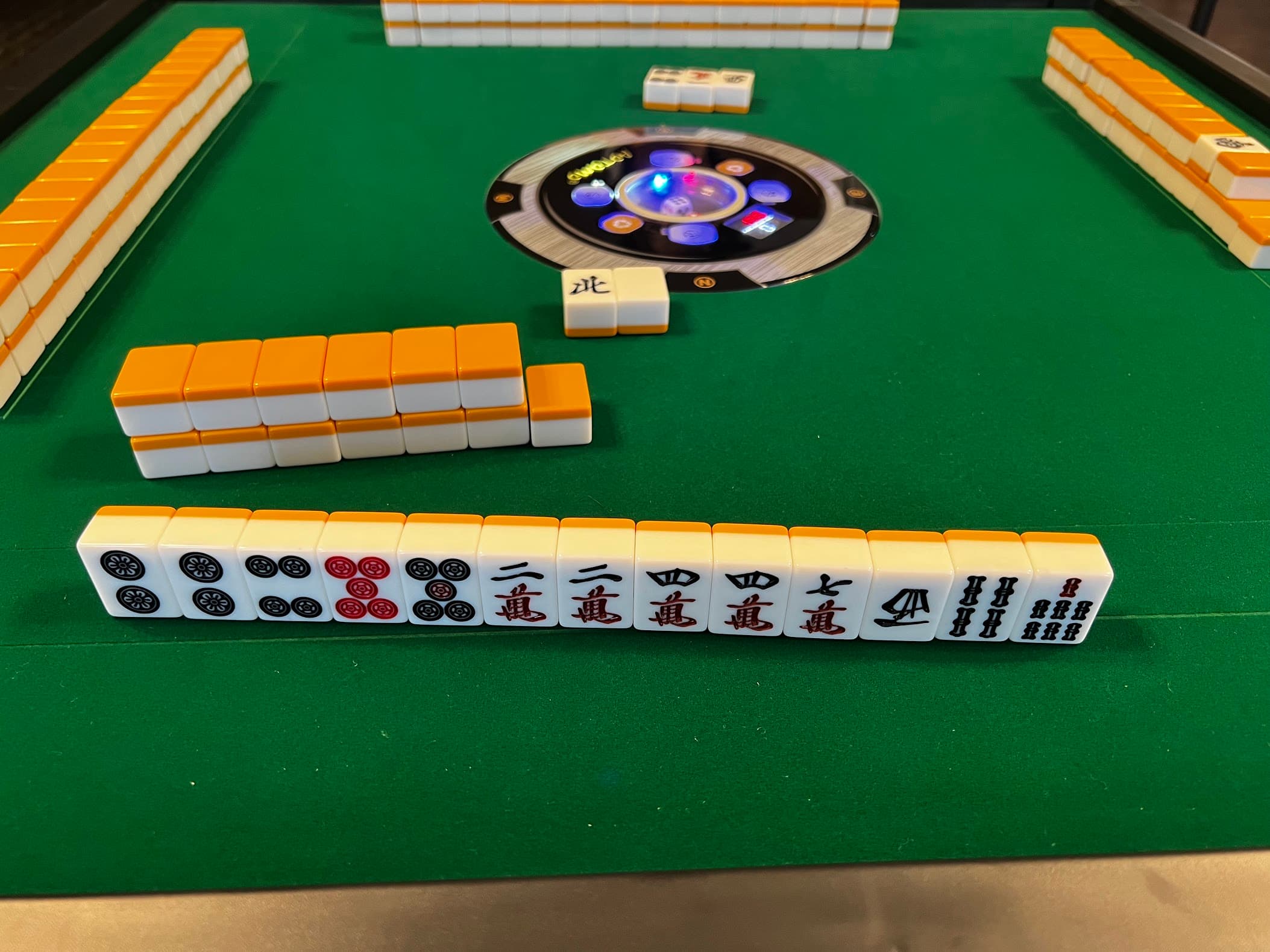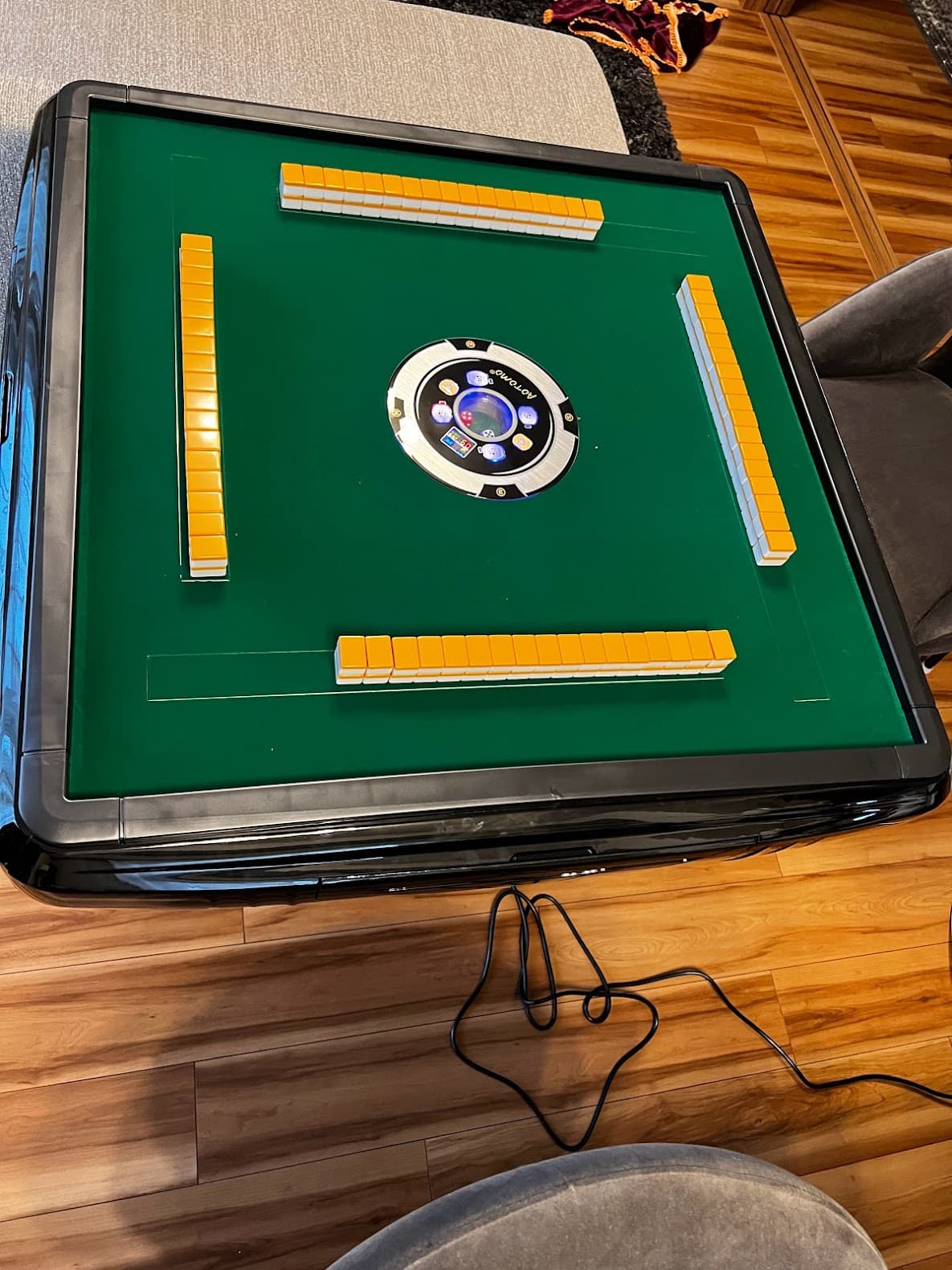
An automatic mahjong table shuffles the tiles and builds all four walls while you play the hand. For players, the choice comes down to three questions: where you live, which voltage your outlets give, and how far you are from someone who can fix it.
Here's the short version. Every number below links to the page it came from, and every price was checked on October 2, 2026.
In Japan, I'd buy the AMOS JP2 today. It lowers to the floor, and the official shop warrants it for a year when you buy it there. I own an Aotomo. I'd buy that one again if the table had to come from abroad.
How do automatic mahjong tables work?
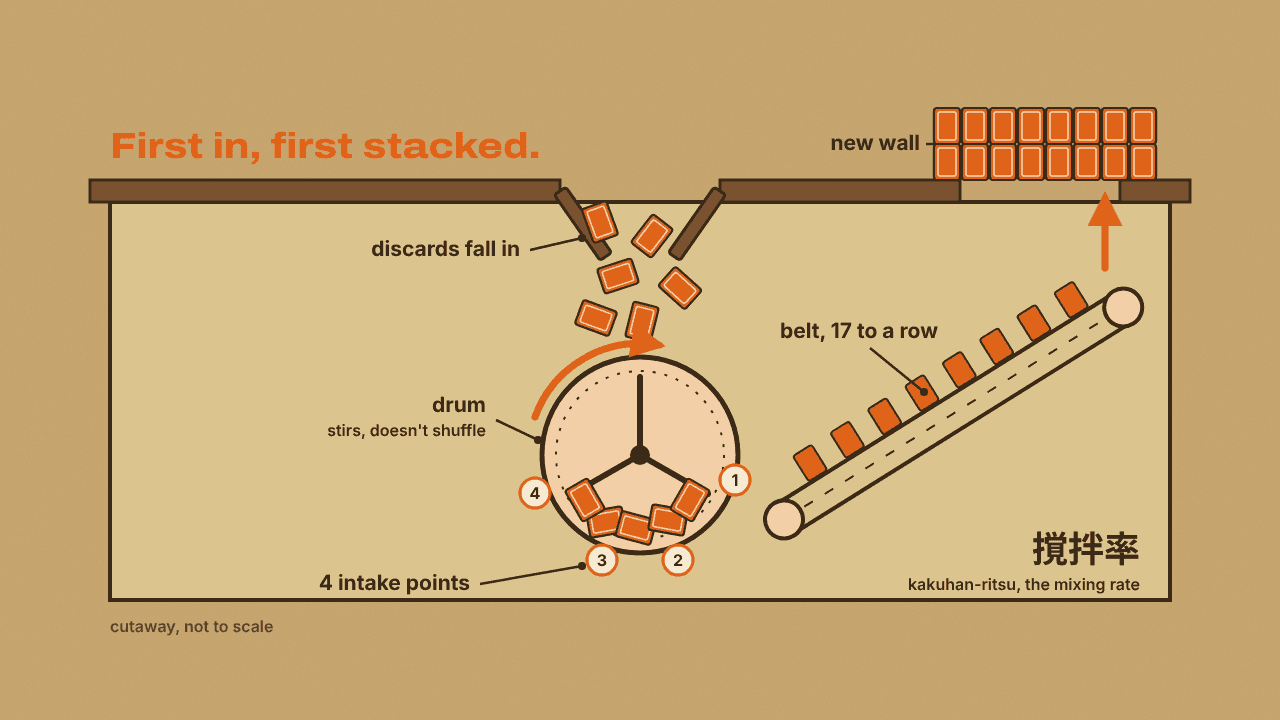
An automatic table plays with two full tile sets. Their backs are different colors. While you play a hand with one set, the machine shuffles and stacks the other one inside the table (Japanese Wikipedia).
When the hand ends:
- You push every tile into the opening in the middle of the table.
- Your finished walls rise up from below at the same time.
- Inside, the used tiles tumble in a drum, which AMOS compares to a washing machine.
- Magnets in each tile let the machine turn them face down. AMOS sets the magnet a few millimeters off center, so the machine can reject a tile that sits the wrong way up (AMOS blog).
- The machine stacks the walls and waits for the next hand. AMOS tables also reveal the indicator.
This is the cycle on video:
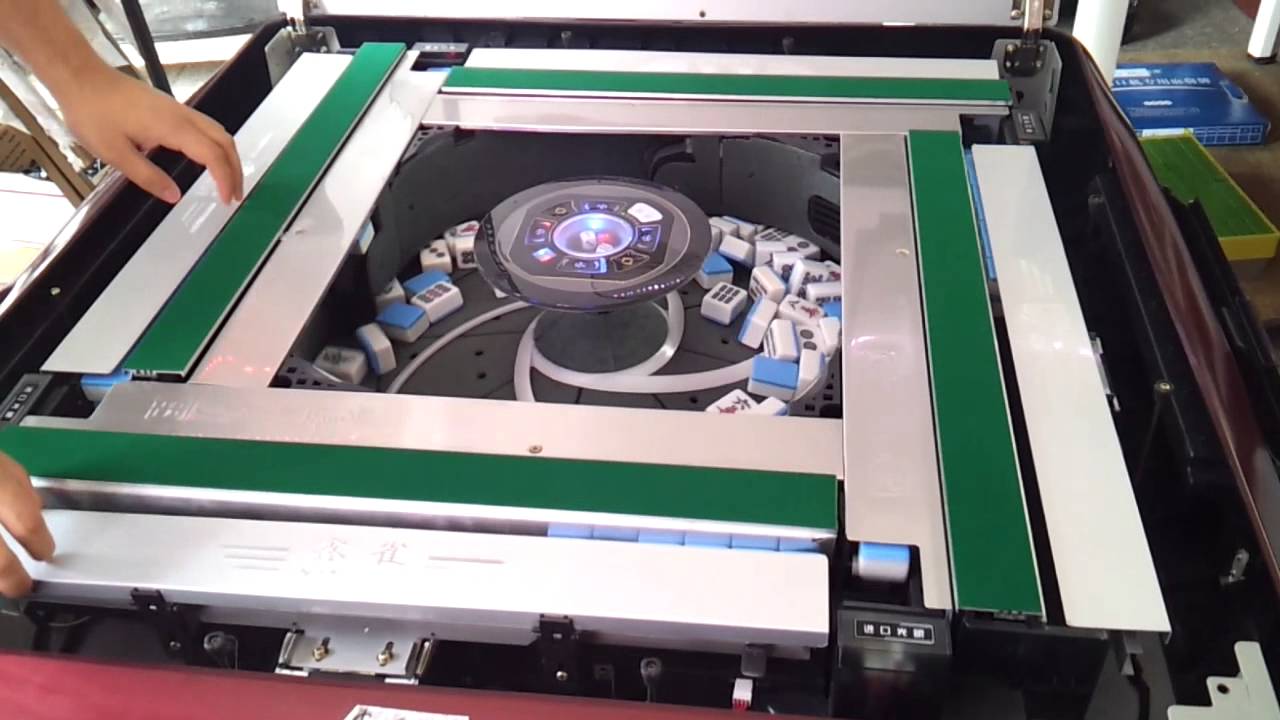
On my own Aotomo, one shuffle takes about 40 seconds for Japanese mahjong. I timed it in my Aotomo review.
Because of the magnets, an automatic table only works with tiles made for it. Your hand-play set won't go in the machine.
Japanese automatic mahjong tables compared
These are the riichi tables with published specs. The AMOS machines come from Taiyo Giken (大洋技研), the maker whose REXX III is sold in an M.League edition. Alban says it builds, assembles, and inspects every table itself (Alban).
| Model | Size (cm) | Weight | Power | Tiles | Score display | Price |
|---|---|---|---|---|---|---|
| AMOS JP2 | 83 × 83 × 76 | about 45 kg | AC100V, 180 W | 28 or 30 mm | No | ¥165,000 |
| AMOS JP-DG | 89 × 89 × 76 | 47 kg | AC100V, 135 W | 28 mm | Yes | ¥198,000 |
| AMOS JP-EX COLOR | 90 × 90 × 76 | about 47 kg | AC100V, 250 W | 28 mm (black model) | Yes, color LCD | ¥264,000 |
| Alban Slim SCORE28S | 88 × 88 × 75 | about 39 kg with table legs | AC100V, 80 W | 28 mm | Yes, backlit LCD | ¥276,100 (out of stock) |
| Alban Slim Voice SCORE 28 | 88 × 88 × 75 | see note below | AC100V, 80 W | 28 mm | Yes, plus 19 voice lines | ¥292,600 |
| Matsuoka Eager3CS | 92 × 92 × 77 with score frame | about 60 kg | AC100V, about 80 W | not published | Yes, 6 digits | ¥880,000 |
| AMOS REXX III | 94 × 94 × 76 | about 48 kg (cross legs), 59 kg (corner legs) | AC100V, 80 W | not published | CSP and M.League editions | ¥924,000 (CSP) |
Score display status for the JP2, JP-DG, and REXX III editions comes from Sasaki's comparison chart. Alban's Japanese page doesn't list a weight for the Slim Voice SCORE 28 separately, and Alban Global quotes about 51 kg "with legs" for it. The two pages likely describe different leg sets, so check with Alban before you book freight.
AMOS JP2, JP-DG, and JP-EX COLOR: the home tables
The JP2 and JP-EX COLOR convert into a low floor table (39 cm high) and fold on their side to 55 cm wide for storage (JP2, JP-EX COLOR). AMOS rates both at about 50 dB on average. Both play : you enter game number 04 instead of 01 (AMOS blog).
The JP-DG is the "no " model. The table tracks scores for you and has an LCD control panel.
The official shop gives a one-year warranty (JP2).
AMOS REXX III: the parlor table
The REXX III is the commercial machine you'll find in mahjong parlors. It weighs about 48 kg with cross legs, keeps a seven-stack , and adds a USB port. The CSP edition costs more than five times the JP2. Buy one only if you're opening a parlor or a club.
Alban: the Japanese table that ships abroad
Alban runs an English shop, Alban Global, with prices in US dollars: from $1,275 for the Slim Voice and from $2,100 for the Slim Voice SCORE (seen 2026-10-02). It ships worldwide after a quote. The FAQ is honest about the catch: there's no manufacturer warranty overseas, only a 7-day window for defects on arrival.
Aotomo: the one I bought
Aotomo tables come from Hangzhou Zhaofeng Entertainment Products in China. I imported mine to Osaka in 2022 and wrote up the whole purchase and assembly. From my own table:
- 80 × 80 × 76 cm, 75 kg, delivered on a 68 kg pallet
- Japanese tiles in 28 mm or 33 mm
- Japanese, international, and three-player wall settings
- Point-stick drawers, a counter, a USB port, and a silent shuffle mode
- 2 weeks from the factory to my door, and 70 dollars in customs
An archived 2021 copy of Aotomo's old spec page lists its Japanese model as 85 × 85 × 76 cm, 70 kg, 150 W, and 110–240 V at 50/60 Hz, with 33 mm tiles (Wayback Machine). That's the 2015 model, so confirm current specs with the seller.
It has proven durable since I bought it in 2022.
Aotomo set me back around $500~$600 dollars in total.
Prices today will vary wildly too.
The contact is Frank Du on Facebook. He can help you find the right model and the right shipping. Mention this blog if you write to him. Order from the factory's Alibaba store. Don't order from aotomo.com. That domain isn't the maker's site anymore.
Other Japanese brands
Japanese Wikipedia lists Century (), Radio System, and Adjust (GAZZ) as other active makers (source). I couldn't find English spec pages for them, so they're not in the table.
Riichi mahjong automatic table tiles: sizes and compatibility
Japanese tiles come in three common heights (AMOS):
- 26 mm: the standard for hand-shuffled play
- 28 mm: the standard for automatic tables
- 30 mm: a bigger, easier-to-read option on some home automatic tables, like the AMOS JP2
Pick the size when you order. The table is built around it, and each set is magnetic and matched to the machine. Buy a spare set from the same maker if you can, because lost or chipped tiles have to be replaced with compatible ones.
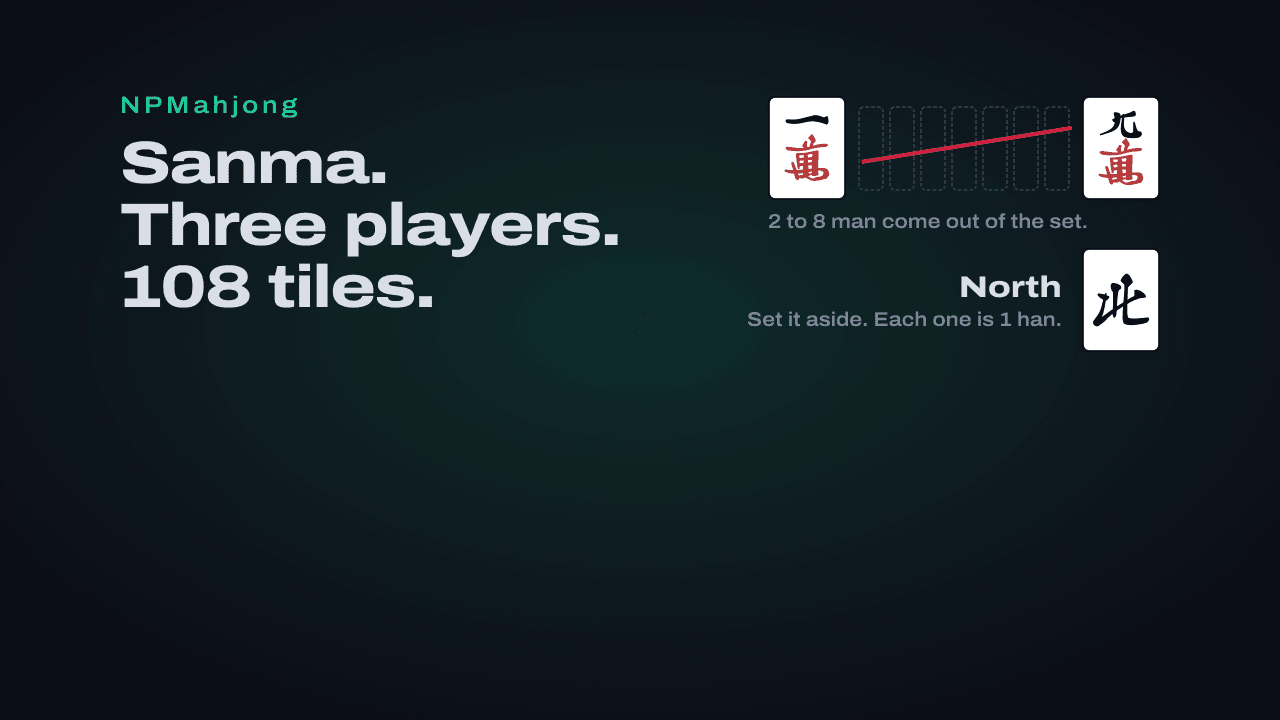
If you play sanma (three-player mahjong), check that the table has a three-player setting before you buy. The AMOS home tables and my Aotomo both do.
Voltage: 100V Japanese tables vs 110V and 220V outlets
Every AMOS and Alban table above is rated for AC100V, the Japanese standard. Japan runs at 50 Hz in the east and 60 Hz in the west, and the AMOS tables accept both. The US uses 120 V, and most of Europe uses 230 V (Wikipedia).
What that means for you:
- In North America: 120 V is close to 100 V but not the same. Ask the seller before you plug a Japanese table in directly.
- On 220–240 V: you need a step-down transformer rated for the table's wattage (Alban FAQ). The tables above draw 80–250 W.
- Alban Slim Voice SCORE: it has a universal power input, so it takes your local voltage.
- Aotomo: the archived spec lists 110–240 V. Check your plug type too. Mine had two straight pins and an earth pin.
How to buy an automatic mahjong table from abroad
Japanese makers sell mostly inside Japan. Neither AMOS site mentions export or an overseas dealer, and Alban's Japanese shop points overseas buyers to a forwarding service (Alban).
Your options, from least to most hassle:
- Buy from a local importer. You pay more, but you get a warranty in your country and someone to call.
- Order from a maker that ships abroad. Alban Global quotes shipping and handles documents. Aotomo's factory shipped mine door to door.
- Use a proxy or forwarding service. You can buy any Japanese model this way. You're on your own for repairs.
Plan for freight, not a parcel courier. The tables above weigh 39–75 kg before packaging. Customs fees depend on your country.
I wrote down the downsides of owning an automatic table, like noise, maintenance, and repairs, in my mahjong table guide. Read them before you spend this much.
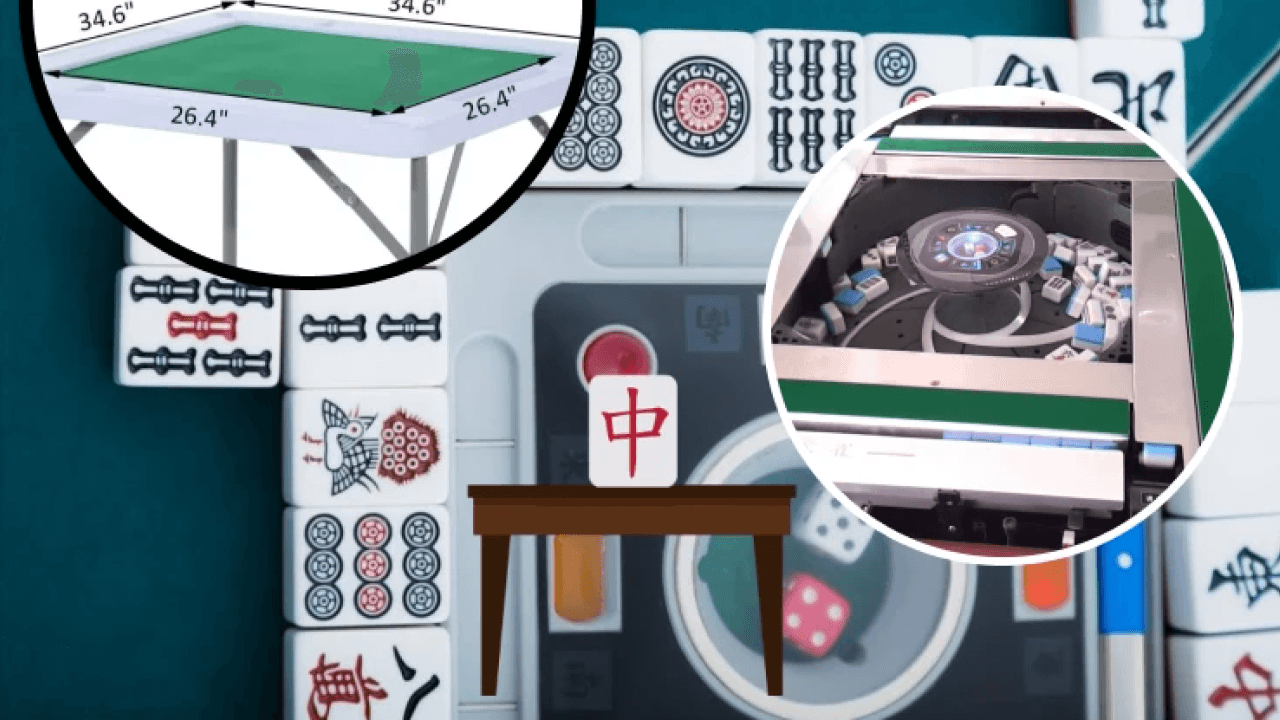
Use the factory's shipper, not a parcel courier. Mine handled the documents. The table reached Osaka in two weeks, the packaging arrived intact, and customs was 70 dollars. A courier has cost me more than that on much smaller boxes.
If you're in the US and want riichi tiles without importing anything, this mahjong autotable comes from a US importer with a one-year warranty. The listing says the tiles measure 28 × 21 × 16 mm.
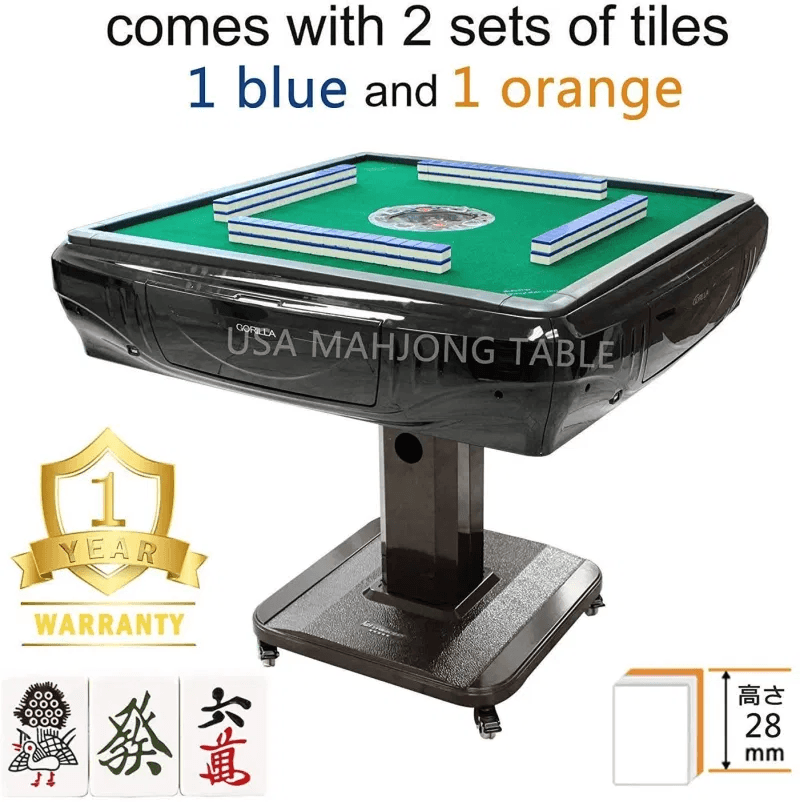
Japanese Style Automatic Mahjong Table Magnetic 28mm Mini Size Riichi Mahjong Tiles with 2 Sets of Japanese Tiles + One Year Warranty Easy Assembly in 30mins
One-year warranty in the USA. Comes with two sets of magnetic Japanese tiles in cream white and blue, including red fives. Made for automatic table use.
How much does an automatic mahjong table cost?
From the prices above, seen on October 2, 2026:
- Home tables in Japan: ¥108,900 to ¥292,600. The cheapest is the AQUA II on Sasaki's chart, which has no score display. I couldn't find a spec page for it.
- Parlor tables in Japan: ¥880,000 to ¥1,067,000 (the REXX III M.League edition)
- Shipped abroad by Alban Global: from $1,275 before shipping
Add shipping, customs, a transformer if you need one, and a spare tile set.
Which automatic mahjong table should you buy?
- You live in Japan and play at home: AMOS JP2. Get the JP-DG or JP-EX COLOR if you want scores on a display.
- You live abroad and want a Japanese-made table: Alban through Alban Global.
- You live abroad and want the lowest landed cost with riichi tiles: Aotomo, ordered from the factory.
- You're in the US and want a local warranty: the Amazon importer above.
That list is right. A player in Japan gets the AMOS JP2. A player importing riichi tiles on a budget gets the Aotomo.
New to the Japanese terms in table manuals, like dora and renchan? The riichi glossary covers them. And once the table's set up, I can help with the mahjong itself: I coach riichi players one on one.
Was this article helpful?