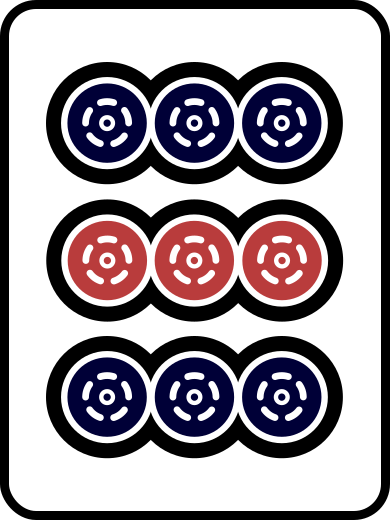
You reach . Your win rate and rate look like they did in . Your average placement slides back to 2.50 and stays there. You didn't get worse. You walked into a room where everything you know, everyone knows.
In 1970 Eugene Fama called a room like that an efficient market. In 1973 Leigh Van Valen named the race that keeps it that way: the Red Queen.
Fama: prices already hold what the public knows
Eugene Fama's 1970 review in the Journal of Finance, "Efficient Capital Markets: A Review of Theory and Empirical Work," opens with this definition.
A market in which prices always "fully reflect" available information is called "efficient."
He sorted the tests into three forms by the information they cover. The weak form asks whether past prices predict future ones. The semi-strong form asks whether prices adjust to public news, like earnings or stock splits. The strong form asks whether any investor or group has "monopolistic access" to information that moves prices. His verdict was that "with but a few exceptions, the efficient markets model stands up well."
Ten years later, Sanford Grossman and Joseph Stiglitz pointed at the catch. Their 1980 paper, "On the Impossibility of Informationally Efficient Markets", argued that a perfectly efficient market can't exist. If prices already held every piece of information, nobody would pay to gather it, and the prices would stop holding it. Information that costs effort to gather has to keep paying something.
Houou is priced in
Map the three forms onto a mahjong table.
Weak form: the shapes. Tile efficiency, the best wait, which tile to cut from a one-away hand. Houou regulars have this down, and the efficiency trainer can drill it into anyone.
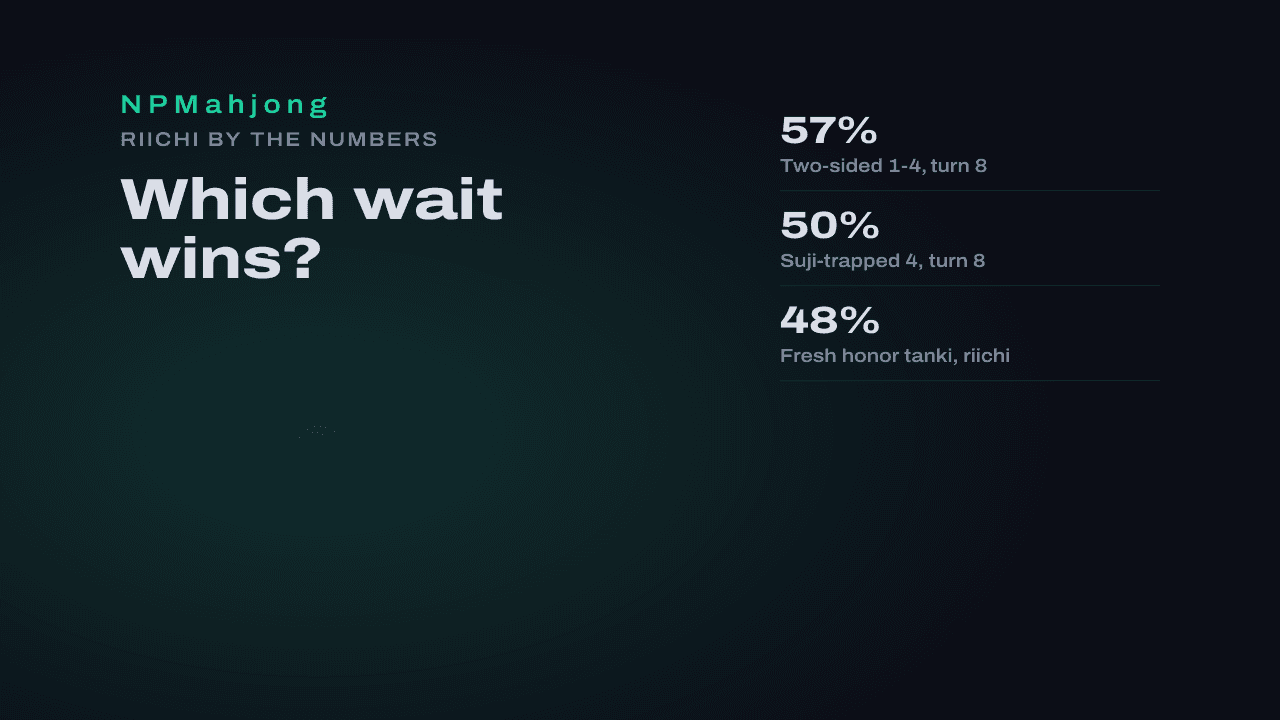
Semi-strong form: the public tables. How often a riichi wait wins and what a fold costs. Those numbers are public and come from Houou's own logs. A two-sided riichi on turn 8 wins 52% to 57% of the time.
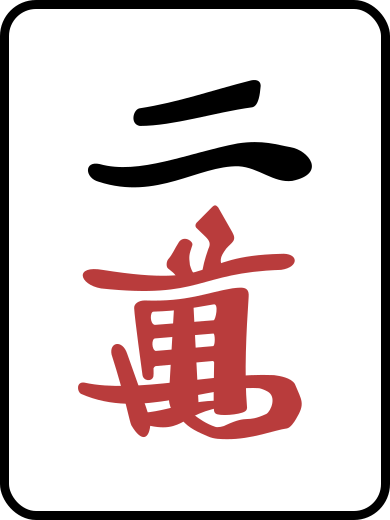
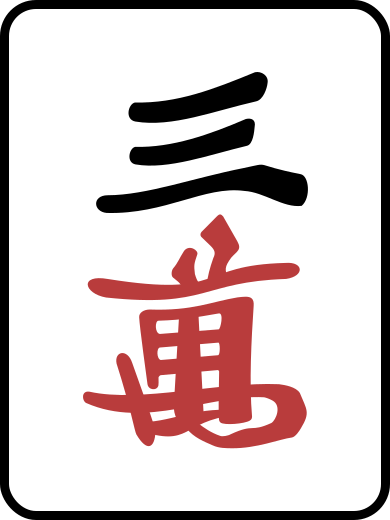
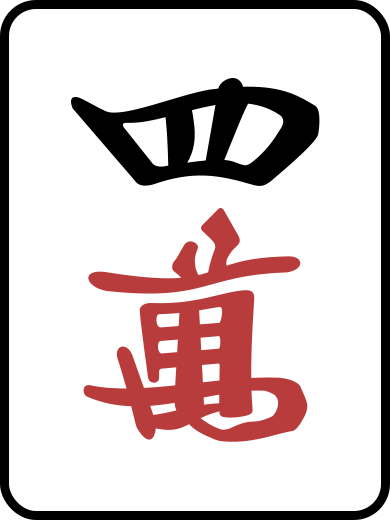
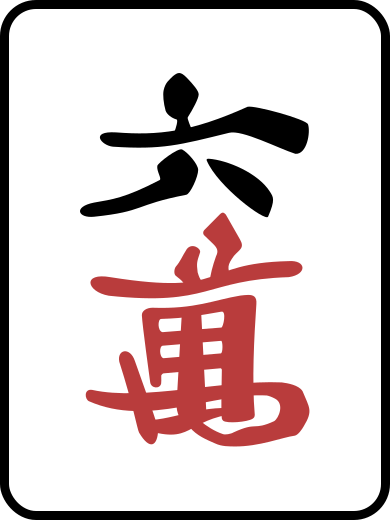
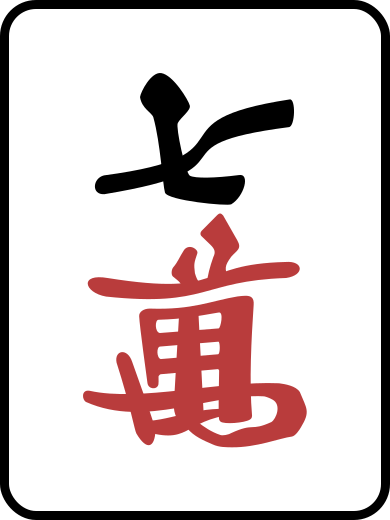
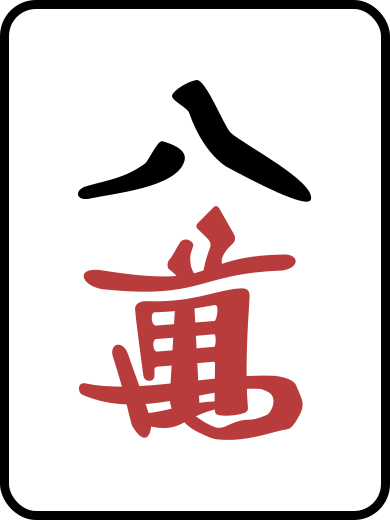
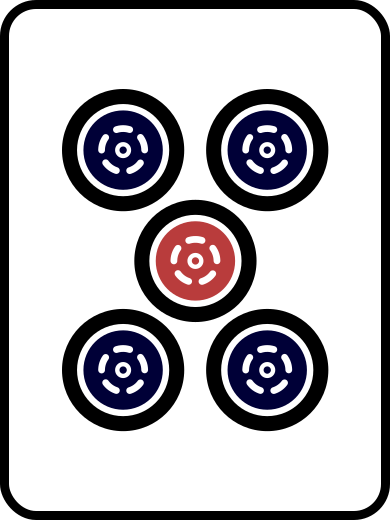
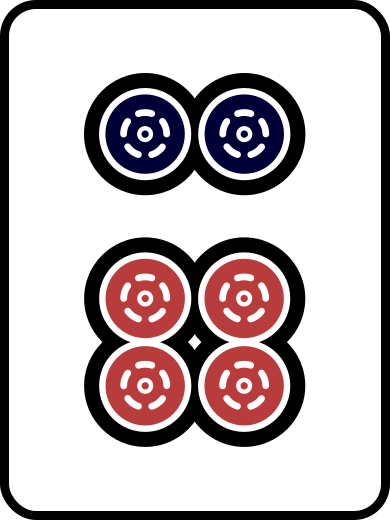
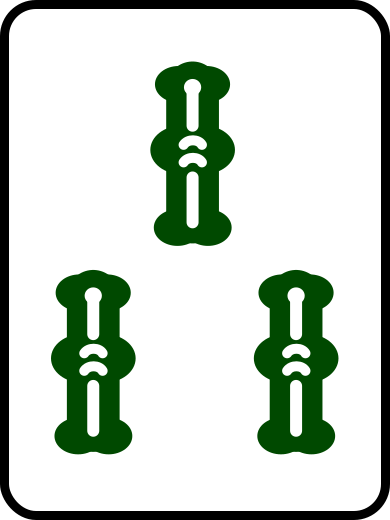
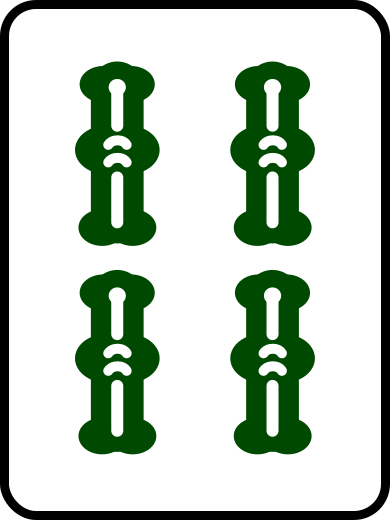
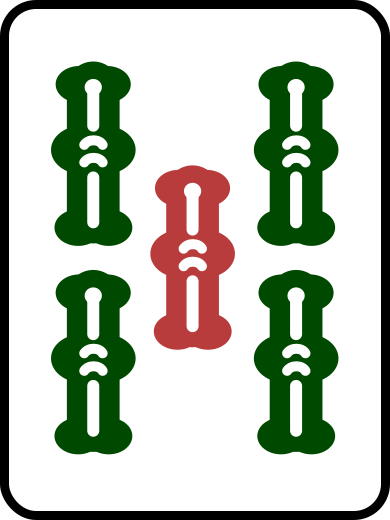

on 4p and 7p, and , turn 8, no score pressure. This is the textbook : the public tables say so, and so do the engines. Everyone at the table knows it, so it earns you nothing. Miss it and you pay.
Strong form: reads nobody tabulates. What this opponent does with two calls, or what this score needs in South 3. Fama's strong form asks about private information, and a mahjong table holds little of it: the river is public, and so is an opponent's record on Nodocchi. These reads cost effort to gather, and nobody has priced them for you. That's the edge Grossman and Stiglitz said has to survive.
Now look at the room. Among players with 500 or more Houou games on the Nodocchi Phoenix DB, the middle half wins 20.5 to 21.7% of hands and deals in 11.9 to 13.4%. The gap between those two rates, the number that's hardest to game, runs from 7.8 to 9.2 points. Average placement in the middle half runs from 2.48 to 2.53, and 2.45 to about 2.55 covers the 10th to the 90th percentile (read 2026-10-23).
Take a room of identical players, each with a true average of exactly 2.50 and an even 25% split across the four places. One game's placement has a standard deviation of √1.25, about 1.118. Over 1,000 games the average wanders with a standard deviation of 1.118 / √1,000, about 0.035. On luck alone, the middle half of that room lands between 2.48 and 2.52, and the 10th to 90th percentile between 2.45 and 2.55. At 500 games, the cut-off for those percentiles, the standard deviation is 1.118 / √500, about 0.050, and the same bands widen to 2.47 to 2.53 and 2.44 to 2.56. A simulation of 20,000 identical players at each length gives the same bands.
The Houou room sits between those two rows. That alone doesn't prove the players are equal. Players with several thousand games have a narrower luck band than these, and luck this size can hide real differences of a few hundredths. Players who lose also drop out of Houou before they reach 500 games, which narrows the band further. Most of what separates Houou regulars still fits inside a thousand games of luck.
The Red Queen keeps running
In 1973 the evolutionary biologist Leigh Van Valen published "A new evolutionary law" in Evolutionary Theory, a journal he had founded. He'd found that within a group, the chance that a species or genus went extinct didn't depend on how long it had already lasted. His explanation was that every species lives among competitors that keep evolving. Improve, and your rivals improve too. Your odds stay flat. He named the idea after the Red Queen in Lewis Carroll's Through the Looking-Glass, who explains the rules of her country to a breathless Alice.
Now, here, you see, it takes all the running you can do, to keep in the same place. If you want to get somewhere else, you must run at least twice as fast as that!
Placement makes mahjong a Red Queen game by construction. Average placement is always 2.50 for the room, and Tenhou pays only on placement. Learn a skill the whole room learns at the same time, and you gain nothing. Your hands improve. So do theirs. You keep your 2.50.
The fastest runners in this race are engines, and they never sit at a Houou table. Tenhou's manual tells bot makers to test against the room's own logs. It also caps a bot at the number of games a human could play, and keeps it out of Houou entirely. Then, through review engines like NAGA and Mortal, the room learns from the bots. Each review someone else studies closes a gap you had on them. Studying yours only keeps you level.

Decisions no public table settles
If the shapes and the public tables are priced in, what's left is judgment.
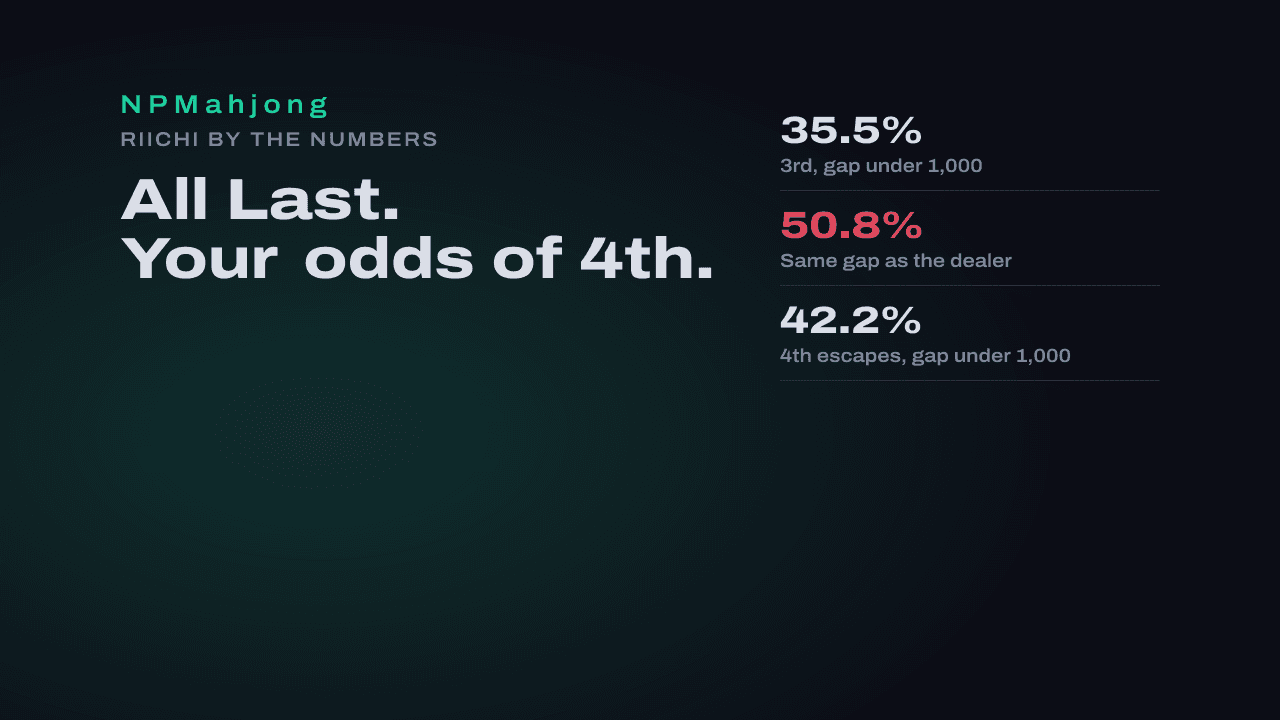
Placement reads. The tables in riichi wait win rates and what folding costs are averages over every score. is not average. A 1,000-point push that locks 2nd and a 1,000-point push that changes nothing are the same tile in the tables and opposite plays at the table. All Last math shows how much a few thousand points move the odds of finishing 4th. The engines price this too, so when Mortal disagrees with you at All Last, assume it's right until you can say why.
Opponent reads. An opponent's record is public, but few players read it on a five-second clock. Mortal doesn't read it at all: the mjai-reviewer FAQ lists "historical stats" and "game lobby type" among the inputs its engines leave out. Knowing your Tenhou opponents covers what the public record shows.
Close pushes. A one-away hand against two calls. A narrow-wait tenpai against a riichi, with a hand near the 2,000-point line where the fold-price math turns into a coin flip. At that line, the tile, the turn, and the score decide the push. Players at the same table play the same hand differently there.
This is also why Houou plays like a different game. Below it, fixing priced-in mistakes moves your rank fastest, and at Houou few of them are left.
A table has no price, and some answers stay settled
A market has a price. A mahjong table doesn't. In a stock market, the efficient price is one number everyone trades at. At a mahjong table, each player decides alone, and nothing forces the room's decisions to agree.
Some answers stay settled. Van Valen's law describes a race with no finish line. Houou's has one for a few decisions, like the turn-8 riichi above, and those stay settled.
Sort each disagreement into priced in or judgment
After each , pick the two or three hands that decided your placement. Write your own play and one line of reasoning for each, then open Mortal. Where you and the engine disagree by a clear margin, put the hand in one of two columns.
- Priced in. A question a public table answers: efficiency, a standard riichi, a push or fold with no score pressure. Those are mistakes the room doesn't make. Fix them first, with drills.
- Judgment. Score, opponent, or a close call the tables leave open. Those are where your edge lives. Keep the line you wrote, then try the same kind of call on the WWYD problems.
When most of your rows land in the second column, you've caught up with the market.
If you want someone to sort those rows with you, send your logs for a game review. I'll go through the judgment column with you, one row at a time.
Was this article helpful?