Think about your last 4th place. Somewhere in that game there's a tile. A fresh 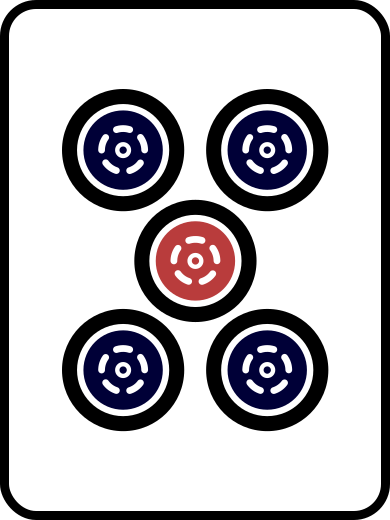 on turn 11, out of a 1,300-point hand still from , into a you'd already decided to respect. The hand that beat you wasn't a work of art. You handed it the points.
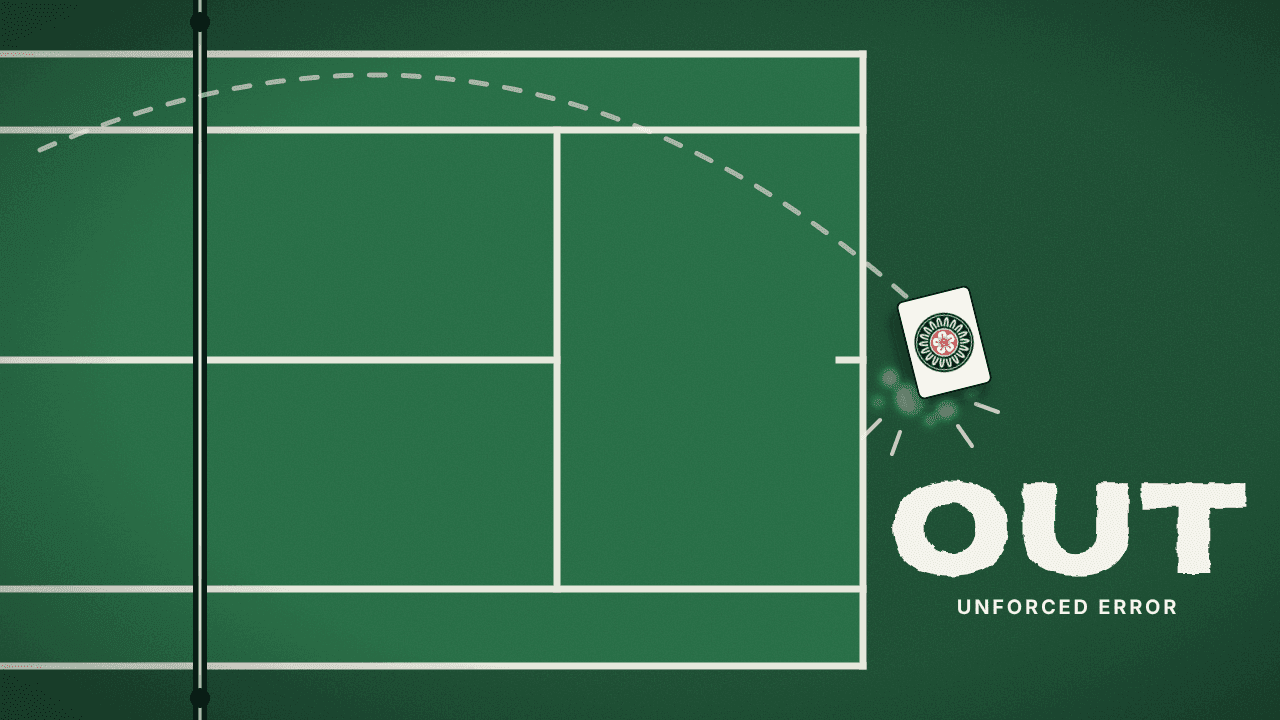
In 1975 Charles Ellis published an article in the Financial Analysts Journal called "The Loser's Game". His subject was fund management. The idea came from tennis, and it fits better than either. Some games are won by the winner's good shots. Others are lost by the loser's bad ones. Below the rooms, riichi is the second kind, and the is the bad shot.
Where the loser's game comes from
Simon Ramo was an engineer, sometimes called the father of the ICBM. In 1970 he published Extraordinary Tennis for the Ordinary Player, which scored matches by points won and lost instead of games and sets. By his count, professionals won about 80% of their points with a good shot. Amateurs lost about 80% of theirs with a bad one. Pros play a winner's game, where the winner's shots decide the match. Amateurs play a loser's game, where the loser's errors decide it. In a winner's game you hit winners. In a loser's game you keep the ball in and let the other player beat himself.
Ellis took the idea to money. By the mid-1970s professionals did about 90% of the trading, so the market was a court full of pros, and beating it with brilliance had stopped working. His advice was to stop trying to win points and start not losing them. He summed Ramo up in a line that's been quoted ever since.
Professionals win points, amateurs lose points.
The riichi version comes with a price list
A deal-in is the ball into the net. Not every deal-in: a two-sided worth 5,200 that pushes into a riichi and loses is a point the opponent won. The fresh middle tile from a 1,000-point hand two tiles from tenpai is the unforced error. Nobody made you throw it.
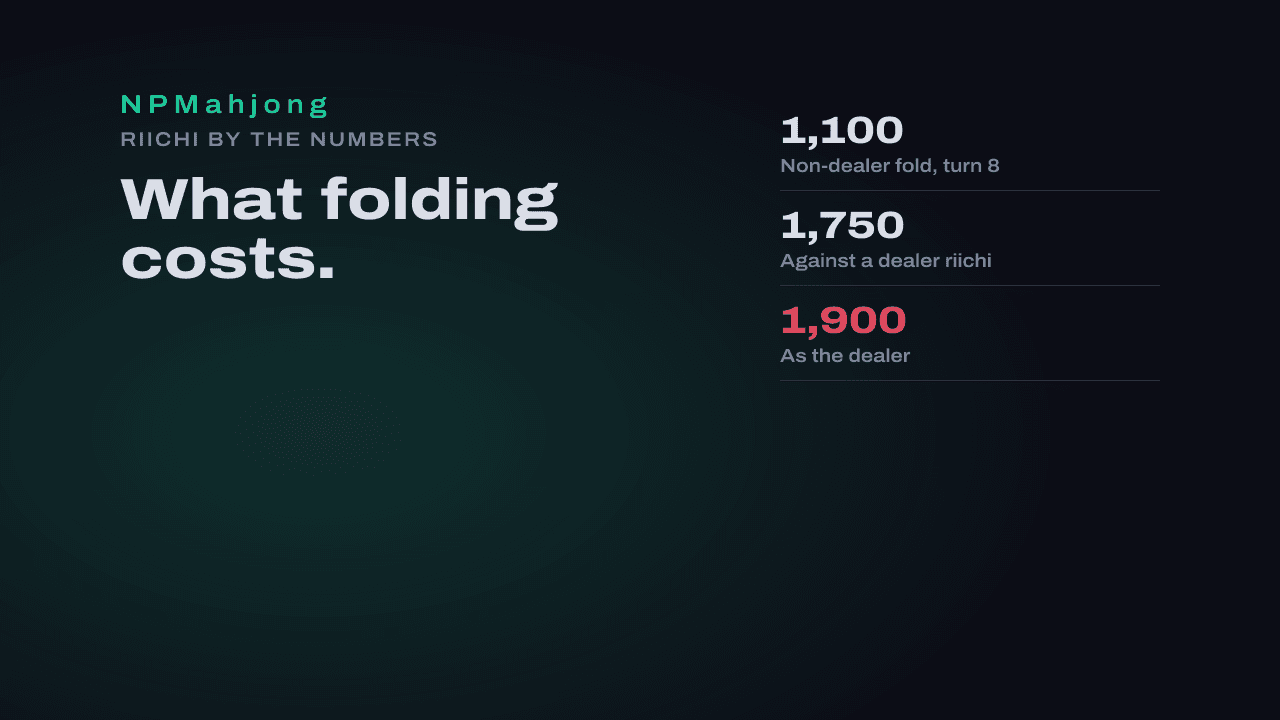
The difference is the price you knew you were paying. Here are those prices, from Tenhou logs 2016 to 2020, as worked out in what folding costs. The analysis counts turns from zero, so turn 8 is the ninth discard.
| The riichi is from | You are | Clean fold | Deal-in | Folds per deal-in |
|---|---|---|---|---|
| A | Non-dealer | -1,120 | -5,869 | 5.2 |
| The dealer | Non-dealer | -1,750 | -8,179 | 4.7 |
As the dealer your clean fold costs 1,890, because every tsumo bills you double. Either way the ratio holds: one deal-in costs about five clean folds. The fold is the rally ball: dull, and not free. The deal-in is the ball into the net, and it costs five rallies.
Here's the amateur point. South 2, you're a non-dealer sitting in 2nd, turn 11. The declared riichi on turn 9. Your hand is an open , the 678p called, tenpai on a and worth 1,000. You draw a 5m.
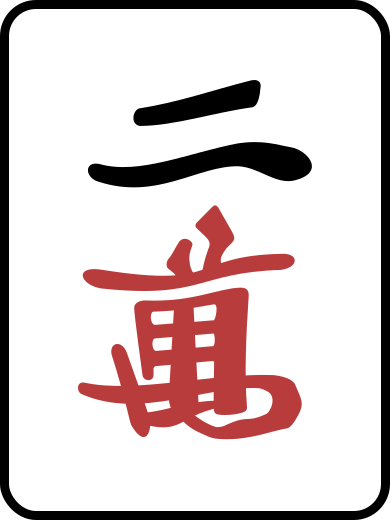
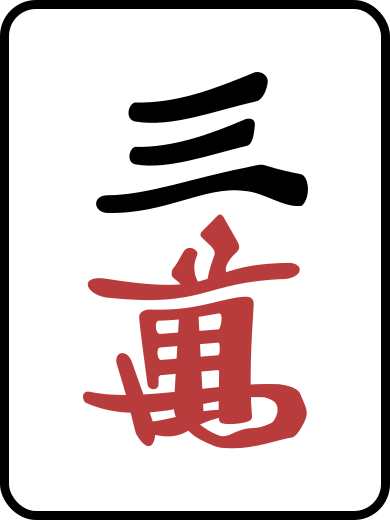
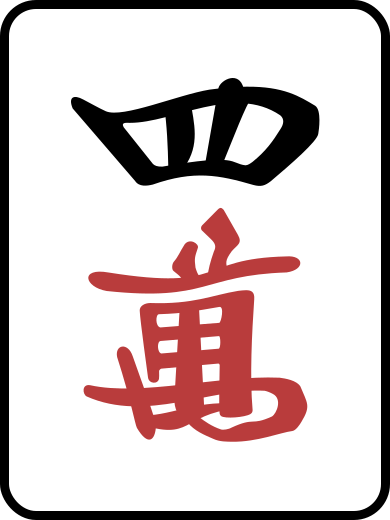
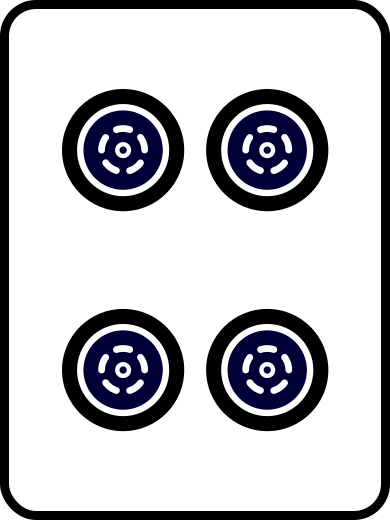
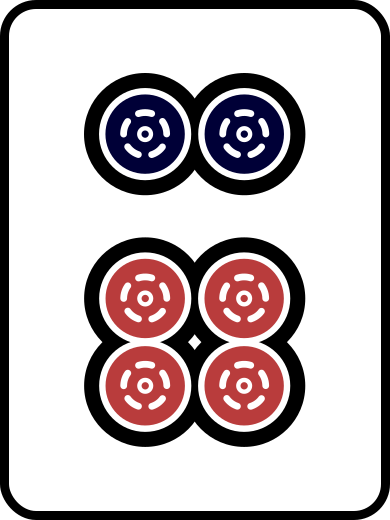
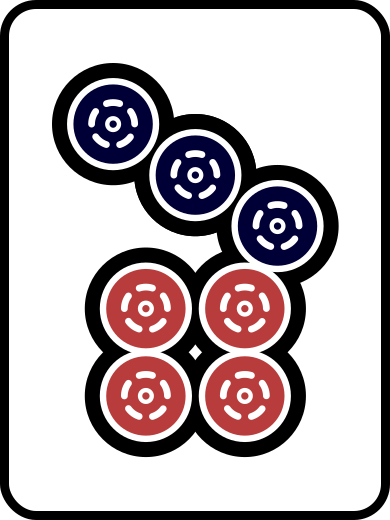
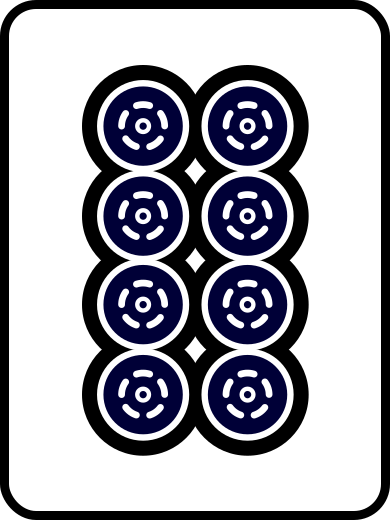
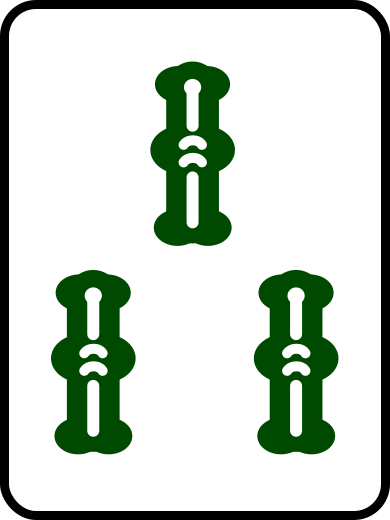
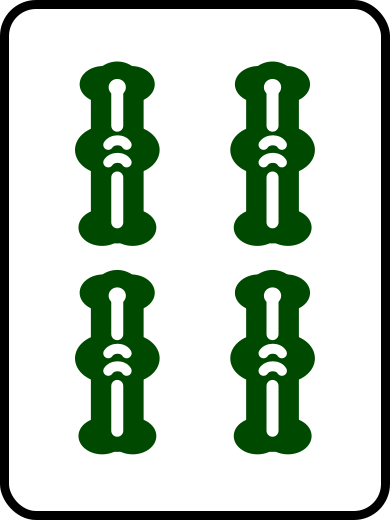
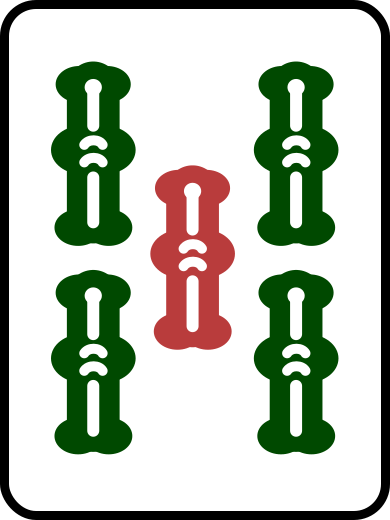
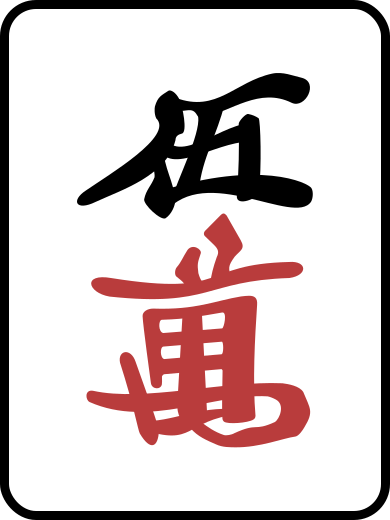
The 5m is fresh: no 2m or 8m in their river. Their river does hold a . Throw the 5m and you've pushed a one-tile wait worth 1,000 into a riichi. A narrow wait needs a hand worth about 2,000 before the push pays, so this one loses money before the tile lands. Throw the 2m, break the 234m, and you've paid the 1,120 and kept your 2nd place.
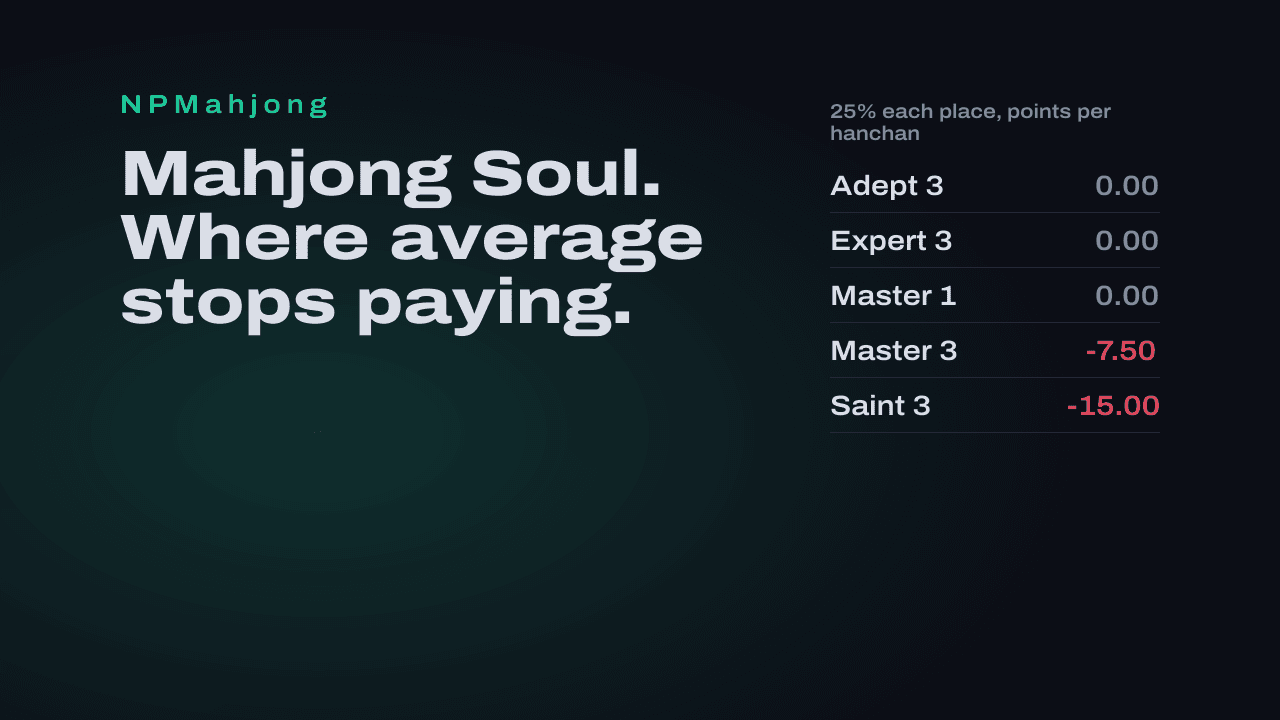
The ranking systems make sure this is the game you're playing. Tenhou's 4th-place penalty grows with every while the reward for 1st stays flat. At Master 1 in the Jade room, a 25/25/25/25 record earns exactly 0 rank points a hanchan. Turn four 4ths per hundred into 2nds and 3rds, a 25/27/27/21 record, and the same player earns +8.30 a game. Win four more games per hundred but take six more 4ths, 29/22/22/27, and the record loses 0.25. From Master 1 up, cutting 4ths is worth more than adding 1sts. The ladder pays you to stop losing points before it pays you to win them. That's Ellis's advice, written into the rulebook.
Where the loser's game ends
A loser's game ends when the errors run out. In tennis that's the pro tour. In riichi it's the top room, and the number has been measured.
The Nodocchi Phoenix database tracks every Houou game on Tenhou. Among players with 500 or more Houou games, the median deal-in rate is 12.6% and the median win rate is 21.1%. The middle half of the room deals in between 11.9 and 13.3% of hands and wins between 20.5 and 21.7%. Half the best players on the server fit inside a deal-in band 1.4 points wide. Path of Houou's 2020 analysis of 5,626 players with 100 or more Houou hanchan lands in the same place: 20.9% win rate, 12.9% deal-in rate.
That band is what a winner's-game player looks like. Once your deal-in rate sits in it, you've stopped handing out 5,869s at a rate the room punishes. So has everyone else at the table. The match is now decided by the points somebody wins. Hand value. Riichi timing. Wait choice. Whether to a . The placement read in South 3. The edge moves from defence to judgment. That's why Houou plays like a different game.
The trap: a deal-in rate you bought with folds
Here's the fastest way to a 10% deal-in rate. Fold every riichi from turn 6. Never chase, never push a 2,000-point tenpai. Your deal-in rate drops inside a month. So does everything else.
Folding has a price, and this player pays it every hand: 1,120 as a non-dealer, 1,750 against the dealer, in and tsumo losses, with no wins coming back. In tennis this is the player who pushes every ball back and loses to the first opponent who can hit a forehand. That player hasn't won the loser's game. They've stopped playing for points at all.
So the deal-in rate on its own is the wrong target. The number that holds up is the gap between win rate and deal-in rate. In Houou's middle half it's 7.8 to 9.2 points. A 10% deal-in rate next to a 16% win rate is a 6-point gap, below the band, and the folding is why. A 14% deal-in rate next to a 24% win rate is a 10-point gap. Pull your own two numbers from the Tenhou log stats tool and subtract.
The drill: ten hanchan of deal-ins, with the tile
For your next ten , log every deal-in. Five columns, written before the next hand starts.
| Column | Write down | Example |
|---|---|---|
| Hand and turn | Round, your seat, your discard number | S2, non-dealer, turn 11 |
| Your shape | Tenpai and the wait, or how many tiles from tenpai | Tenpai, |
| Hand value | What a win would have paid | 1,000 |
| Tile class | , , or fresh, against the hand that won | Fresh 5m |
| The decision | A push you chose, or a fold that wasn't one | Pushed |
The last column matters most. "A fold that wasn't one" is the deal-in on turn three of a fold you'd already decided on: you chose to fold, ran out of safe tiles, and threw a live middle tile from a dead hand. It's the ball into the net while trying to play safe.
When the ten games are done, sort the rows. Most will be fresh middle tiles, thrown from a hand worth less than 2,000, out of a shape that wasn't tenpai. Few will be two-sided tenpai pushes worth a mangan. The first kind is Ramo's amateur point. Each one cost about five folds, and each one came from a five-second decision: count your safe tiles before you decide, and if there aren't enough to reach the draw, make the push properly instead of pretending to fold.
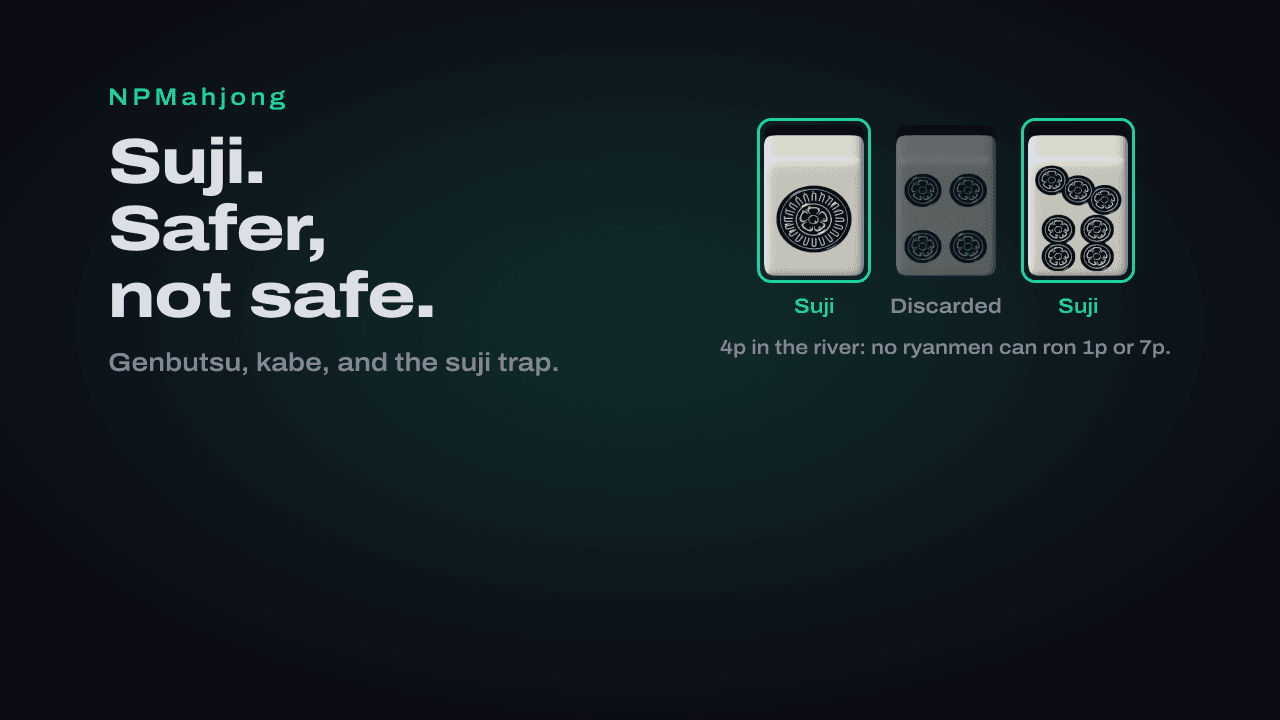
The classes come from the river. can't deal in. rules out two-sided waits, which in the Houou logs were 59% of riichi waits; another 37% sat on a , , , or , and that's where the suji traps live. A fresh tile has no read at all.
Where the tennis breaks down
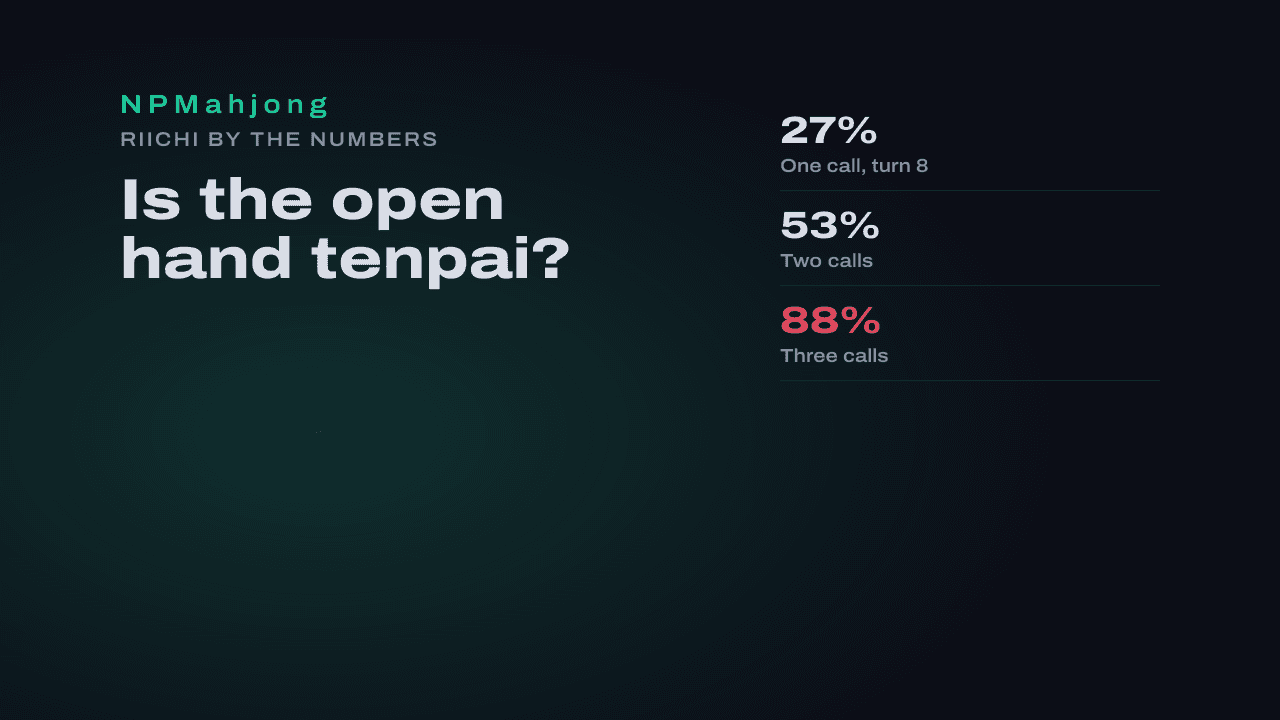
Tennis has one opponent. You have three, and the deal-in you never saw coming, into the quiet two-call hand on your left, is an unforced error too. At turn 8 a hand with three calls is tenpai 88% of the time. Keep the ball in against all three.
The rally ball isn't free. In riichi, folding costs 1,120 a hand and more as the dealer. That's why the loser's game in riichi has a floor. You cut the bad pushes, not every push. A two-sided tenpai against a non-dealer riichi wins about half the time and deals in about a fifth, and in the rough math it beats folding by about 3,300 points. That's a shot you hit.
Pros still miss. The Houou median deal-in rate is 12.6%, one hand in eight. The loser's game ends at a rate, not at zero.
And the error lives in the decision, never the result. A 5,200 two-sided push that dealt in was a point the other player won. A fresh 5m from a 1,000-point kanchan that happened to pass was still a ball into the net. The log only catches the ones that didn't pass. The habit behind them is the same.
Start the log tonight
Run every fresh tile in your log through the deal-in danger tool. It gives the number for every number tile, how much it climbs when the tile is the , and an honor dora by copies out.

Those ten logs are also the best thing you can send for a game review. I'll mark the habit behind the rows, and the two or three pushes you logged as errors that were points well played. Until your deal-in rate sits in the Houou band, every hanchan is an amateur match. Win it the way amateurs win: keep the ball in.
Was this article helpful?