In a game, the player on your left has called twice by turn 8, and you're holding a good one-away hand with a fresh 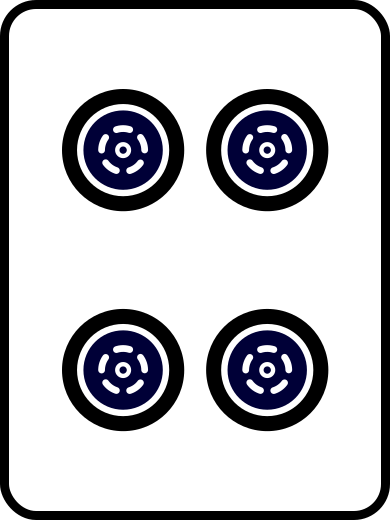 to cut. In the Houou logs, a two-call hand at turn 8 is tenpai 53% of the time. That's the average caller. This one has a name on the screen, and that name has a public record of every ranked game it has played.
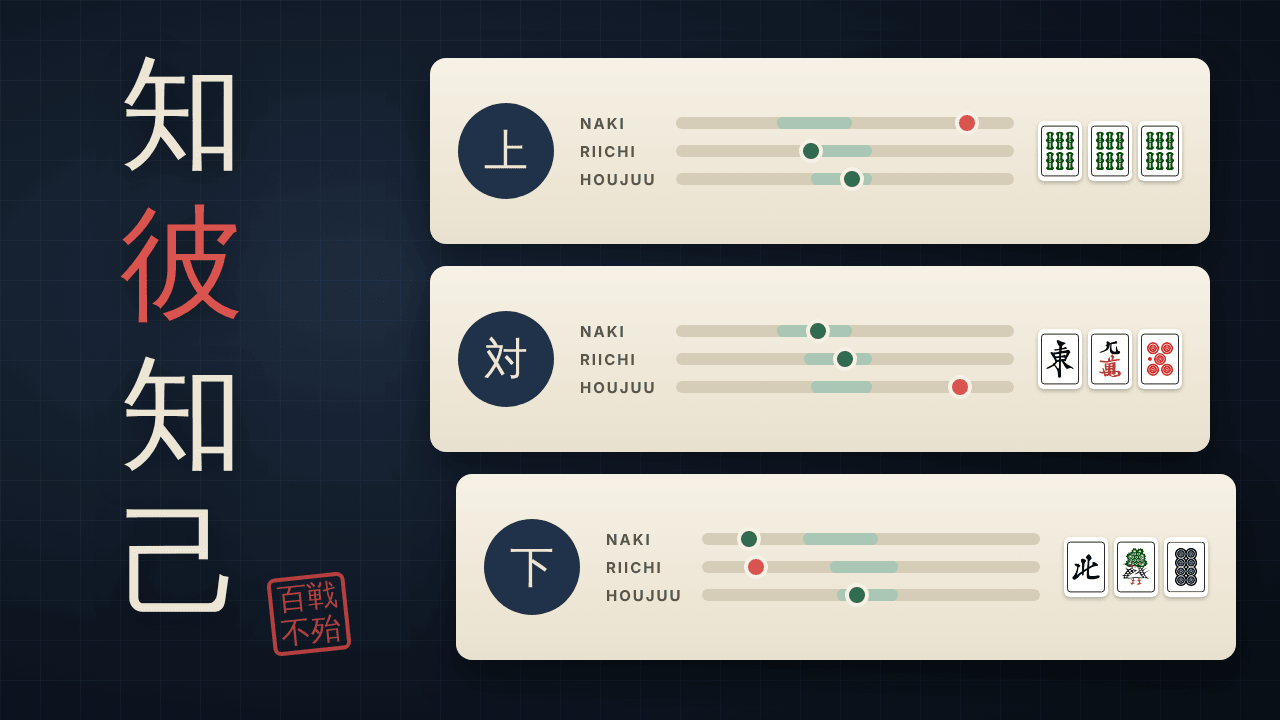
Chapter III of The Art of War, "Attack by Stratagem," ends with a saying that runs eight characters in the original. In pinyin it's zhī bǐ zhī jǐ, bǎi zhàn bù dài: know the other, know yourself, and a hundred battles hold no danger (知彼知己,百戰不殆). On Tenhou, both halves are free and take about a minute.
Sun Tzu wrote no line for knowing only the enemy
The Art of War is credited to Sun Tzu (孫子), a Chinese general. The standard free English version is the 1910 translation by Lionel Giles, public domain and on Project Gutenberg. His wording of verse 18 runs in three steps.
If you know the enemy and know yourself, you need not fear the result of a hundred battles. If you know yourself but not the enemy, for every victory gained you will also suffer a defeat. If you know neither the enemy nor yourself, you will succumb in every battle.
There's no fourth line for knowing the enemy but not yourself. Under the verse Giles prints a note from Chang Yu, one of the classical Chinese commentators he translates: "Knowing the enemy enables you to take the offensive, knowing yourself enables you to stand on the defensive." That order fits riichi. Your own numbers tell you what to study, and an opponent's numbers only tip the odd close tile.
Know yourself: your gap before their stats
Start with the half you control. Tenhou keeps your ranked stats on its own stats page, and its manual defines each one: win rate and deal-in rate are counts divided by hands dealt, call rate counts hands that ended with an open meld, and riichi rate counts hands that ended in riichi.
Then compare them with the room you want to reach. These are the Houou figures this site uses, from the Nodocchi Phoenix DB, players with 500 or more Houou games.
| Stat | Middle half | Median |
|---|---|---|
| Win rate | 20.5 to 21.7% | 21.1% |
| Deal-in rate | 11.9 to 13.4% | 12.6% |
| Win rate minus deal-in rate | 7.8 to 9.2 points | 8.5 points |
| Riichi rate | 16.4 to 18.9% | 17.6% |
| Call rate | 31.4 to 36.5% | 33.9% |
The gap is the number to read first. As riichi is a loser's game works out, below Houou placement is decided by deal-ins, and a low deal-in rate bought with folds shows up as a gap under the band. If your gap is 6 points, an opponent's call rate isn't your problem yet. Pull your numbers from Tenhou's stats page over 300 games or more.
Know your enemy: what Nodocchi shows
Nodocchi is a free third-party site that indexes Tenhou's public lists of ranked games. Type a Tenhou ID into the search box, or open nodocchi.moe/tenhoulog/#!&name= with the ID on the end. Any player with ranked games gets three things.
- Every ranked game, with the lobby, the rule, the start time, all four players, and the final scores.
- Rank and pt after each game, in Nodocchi's own reconstruction, plus an "Estimated rank," an "Estimated rate," and a "Stable rank."
- The record around it: an R overview chart and streak records (consecutive 1sts, consecutive 4ths).
What it doesn't show for most players is how they play a hand. Among Tenhou's ranked lobbies, the public archive carries full game records only for the Houou room, plus the paid Kohaku room. So Nodocchi's "Phoenix DB" panel, with win rate ("R/"), deal-in rate ("R/Houjuu"), riichi rate ("R/Riich"), call rate ("R/"), average points per win, and dozens more, appears only for players with Houou games. Each stat comes with where it ranks in the room, "Top 12%" or "Bottom 30%." Below Houou you get placements and pt only.
Which opponent stats change a decision
Most of a Houou profile is the room average with a little noise on top. Look at how far each stat spreads between players before you trust it to move a tile. In the Phoenix DB, the middle half of the room spans 1.2 points of win rate, 1.5 of deal-in rate, 2.5 of riichi rate, and 5.1 of call rate. In the middle half, average points per win runs from about 6,100 to 6,500. A deal-in into one Houou regular costs about the same as into another. What differs between them is style, and three rates carry it. A fourth number, pt, matters at every rank.
Call rate reads their calls. The open-hand table is the room's average: a two-call hand is tenpai 53.3% of the time at turn 8, a one-call hand 26.8%. That average mixes light callers and heavy ones. A player who calls in over 40% of hands, well above the middle half's 36.5% top, calls more than 94% of the room and opens hands the median player keeps closed. A player under 29%, below the 31.4% floor, sits in the bottom 9% and only calls hands that are going somewhere. The Houou tables don't split tenpai odds by the caller's call rate, and which hands a player opens matters more than how many, so treat this as a lean: the heavy caller's two calls sit nearer the slow end of the table, and the light caller's sit nearer the fast end.
Back to the opening hand. Their calls are a of 345s and a of 2m, with no among them, so it reads as a cheap hand. You're from tenpai, closed, on most wins, with two two-sided shapes, and the efficient cut is the 4p or the 6p, both fresh.
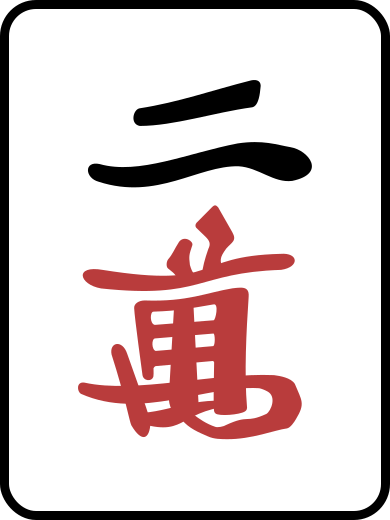
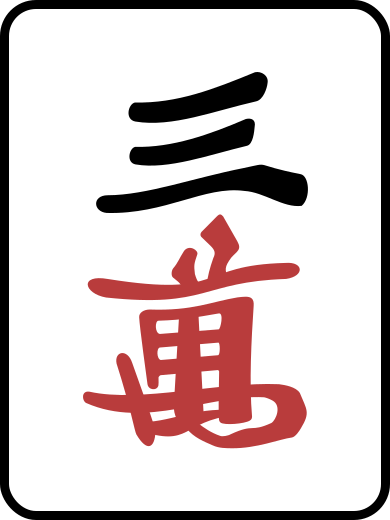
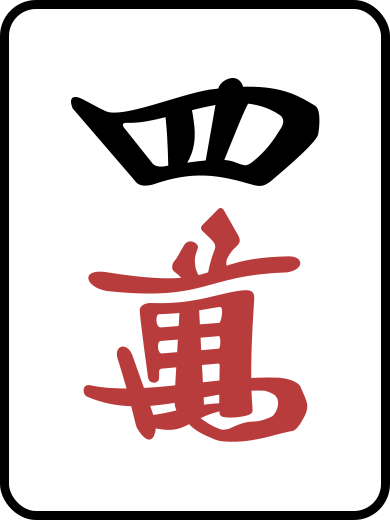
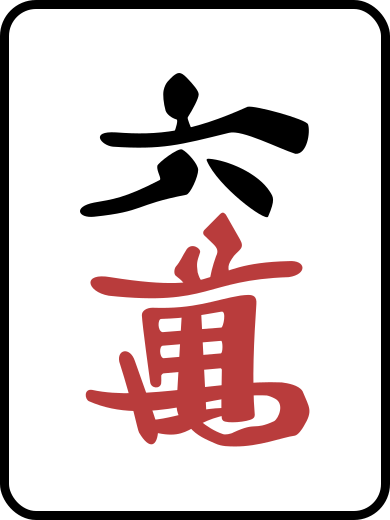
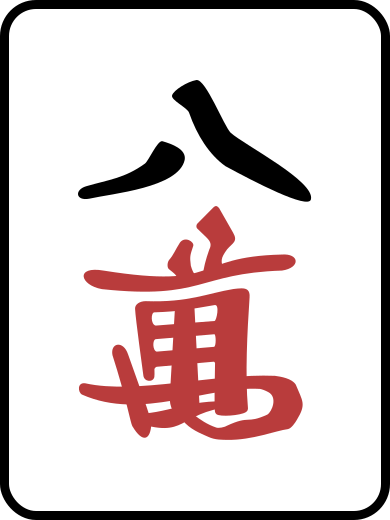
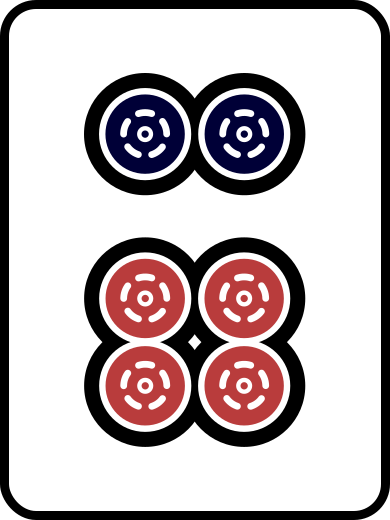
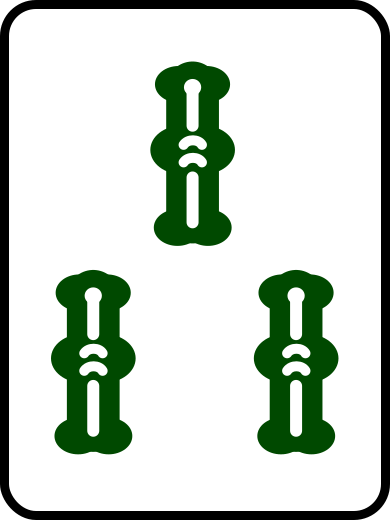
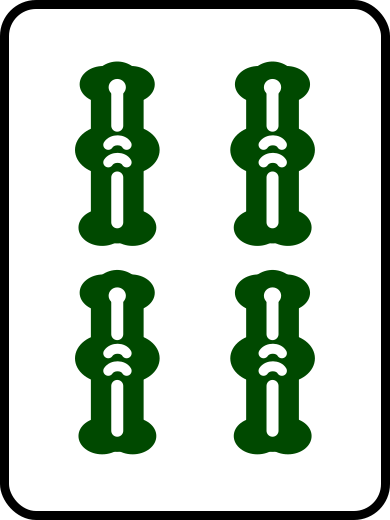
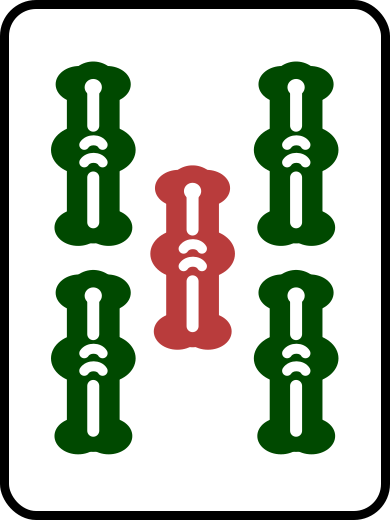
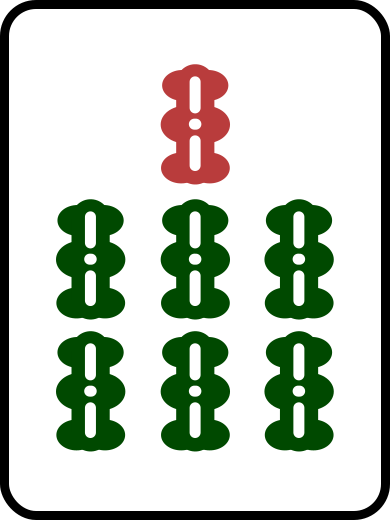

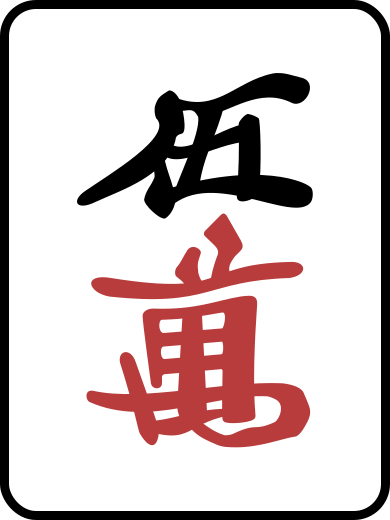
Against the 45% caller on your left, cut the 4p and keep building (the 6p is no safer). Against a 27% caller with the same two calls, the same tile is a closer decision, and holding a safe tile starts to look better.
Deal-in rate reads their pushes. A player above 14%, past the middle half's 13.4% top, deals in more often than 89% of the room. When that player keeps throwing fresh tiles into your , it tells you less about their hand than the same push from a player at 11%. They push hands the room folds. Riichi's cost is that it scares the table off your wait. A pusher doesn't scare, so against them a marginal hand leans a little further toward riichi than a quiet .
Riichi rate reads their silence. A that hasn't declared by turn 8 is tenpai 4.5% of the time, on the room's average. A player whose riichi rate sits under 15%, below the middle half's 16.4% floor and a rate only 8% of regulars fall under, while their win rate and call rate stay normal is winning those hands with quiet tenpai. Their quiet turn-10 deserves a second look.
Pt is the one read that works below Houou. Nodocchi shows rank and pt after every game, and Tenhou's manual sets the price of a 4th by : -135 in a 7-dan , and a dan is lost the moment pt drops below zero. A 7-dan sitting on 100 pt loses the dan on the next 4th. In , a 4th costs that player a dan, not 135 points. Expect them to fold hands the scoreboard says they should push, so check their pt before you plan a hand around them.
A thin record loses to the river and the clock
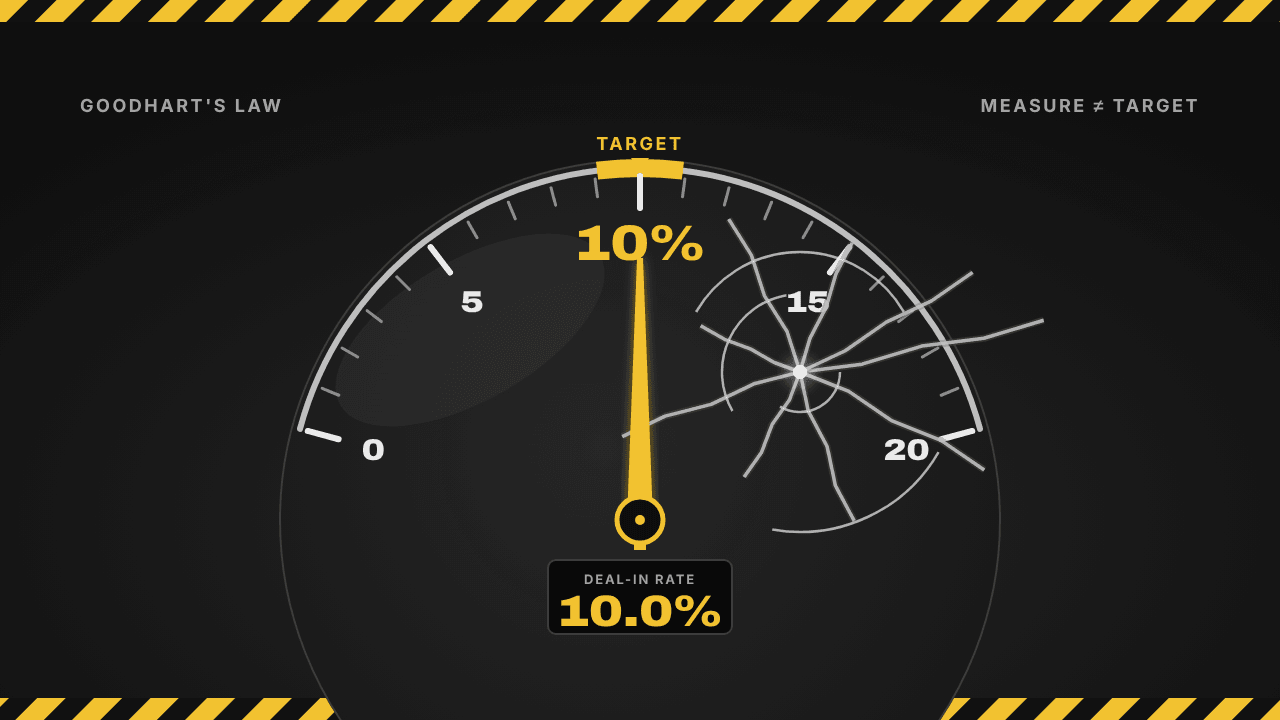
The sample is thin. A Houou hanchan runs about 10.7 hands, so 50 games give an opponent about 535 hands. At a 33.9% call rate, the 95% margin is 1.96 × √(0.339 × 0.661 / 535), about ±4.0 points. That's a 95% range about 8 points wide, wider than the whole Houou middle half. Deal-in rate at 12.6% carries ±2.8. As in Goodhart's law in mahjong, hands aren't independent, so the real margins are a little wider. Nodocchi prints the games and hands at the top of the Phoenix panel. Under 300 Houou games, read only the extremes.
The clock is short. Tenhou's standard clock is 5 seconds a turn plus a 10-second reserve that resets each hand. You don't have time to study a profile between draws. Keep Nodocchi open in a second window, look up one opponent per turn during East 1, write one word next to each (caller, pusher, quiet, or average) by East 2, and play.
The river outranks the record. A stat describes their average hand. Their discards describe this one. In the Houou data, a one-call hand that cuts a dora at turn 8 is tenpai 37.7% of the time, whoever is holding it. When the river and the profile disagree, the river wins.
The AI ignores all of this. The FAQ of mjai-reviewer, the tool that runs Mortal reviews, says the engines take in everything on the board "but not information such as each player's level, historical stats, thinking time of each move, game lobby type, etc." That's why its review can't grade your reads of the person. Everything the engine does read is on the board, so let an opponent's numbers tip only the close decisions.
One word per opponent, written by East 2
Run this for ten , starting in East 1.
- Keep Nodocchi open in a second window and look up one opponent per turn. If they have a Phoenix panel, note call rate, deal-in rate, and riichi rate against the band above, plus the game count.
- By East 2, give each one word. Caller, pusher, quiet, or average. With no panel, write average. Under 300 Houou games, write average unless a rate sits past the cut-offs above.
- Note anyone within one 4th of losing their dan.
- After the game, find one decision where the word changed your tile, and write it down.
Most rows will say average. That's normal. When a row says caller or pusher on 1,000 games, you've got a read the engine doesn't have.
Then turn the drill on yourself. Pull your lifetime win rate and deal-in rate from Tenhou's stats page and subtract. Paste your last five replays into the log stats tool too, and look at how wide its 95% bars are: that's how little five games say about anyone, you included. Read your gap before you read theirs. Every line of Sun Tzu's verse that wins anything includes knowing yourself.

Send me your numbers and a few logs for a game review. That half of the saying is the one I can help with.
Was this article helpful?