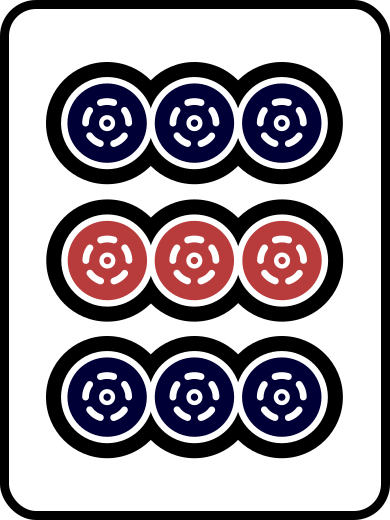
West declares and the tile they turn sideways is a 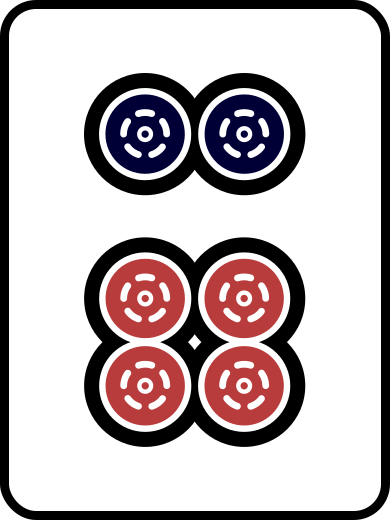 . You're folding. You have no , and you hold a
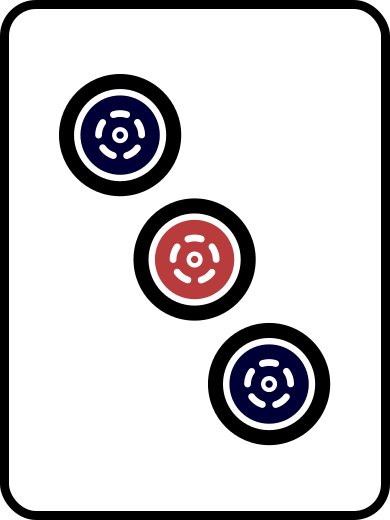 . A 6p in the river means no can the 3p. It's . You reach for it.
West held this.
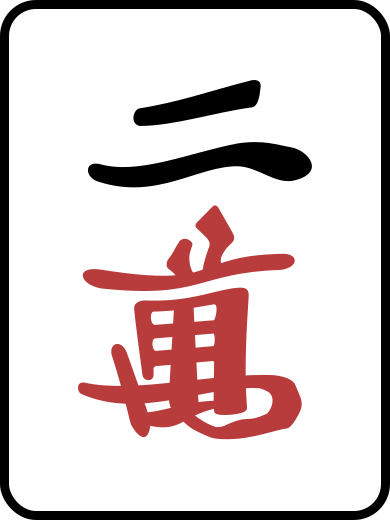
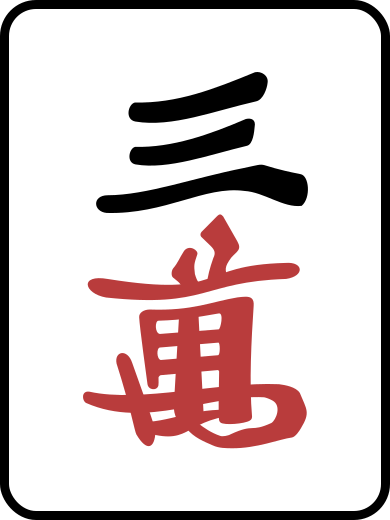
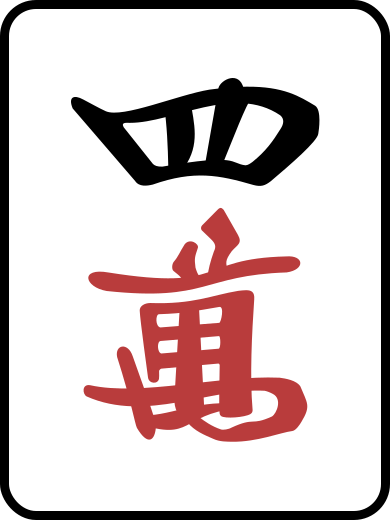
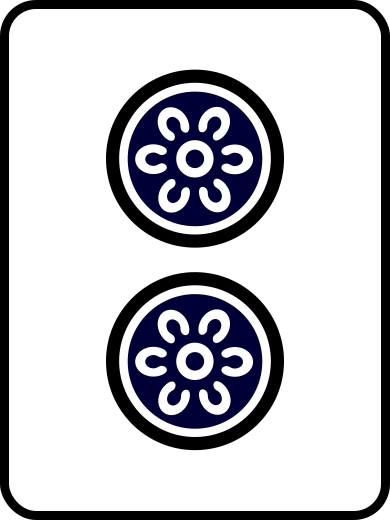
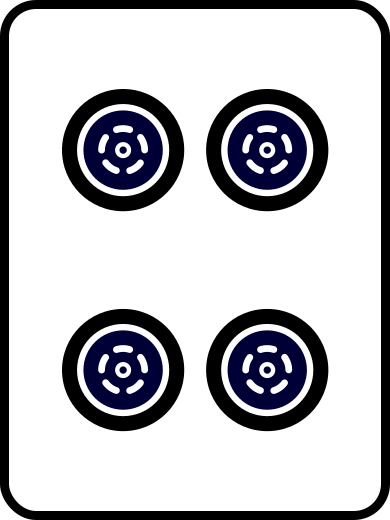
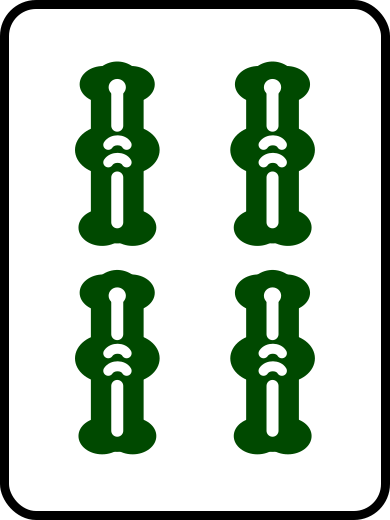
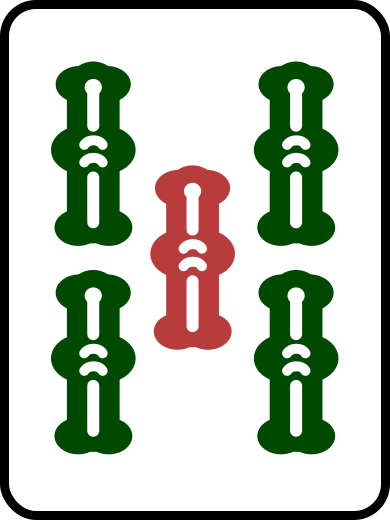
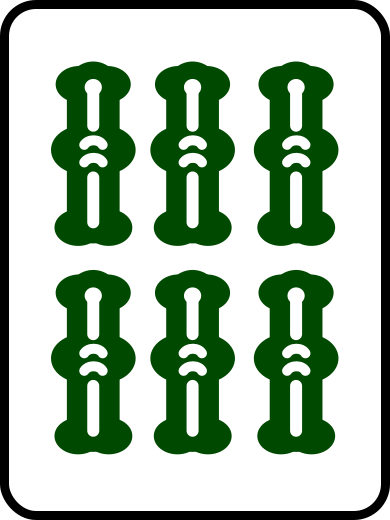
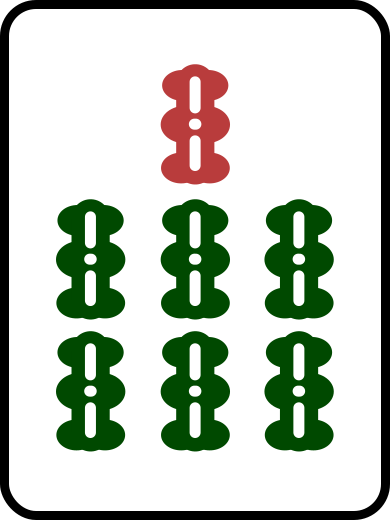
A on the 3p, and nothing else. The tile West chose to throw at was the one that made the 3p look safe. You thought "it's ." West thought "they'll think it's suji." West was one level ahead.
Marks: the consensus is already in the price
Howard Marks is an investor who writes memos to the clients of Oaktree Capital. In 2011 he published The Most Important Thing, and its first chapter was about something he labeled "second-level thinking." He returned to it in a 2015 memo, "It's Not Easy", quoting the book's examples.
First-level thinking says, "It's a good company; let's buy the stock." Second-level thinking says, "It's a good company, but everyone thinks it's a great company, and it's not. So the stock's overrated and overpriced; let's sell."
First-level thinking, Marks writes, "is simplistic and superficial, and just about everyone can do it." Second-level thinking asks what the consensus thinks, how your view differs, and how the price already reflects the consensus. His summary is three words: "Different and better." You'll also see the idea called second-order thinking. The memo leans on John Maynard Keynes, who in 1936 described a newspaper beauty contest where you win by picking the faces other readers pick, and wrote of "the third degree where we devote our intelligences to anticipating what average opinion expects the average opinion to be."
First level: suji is safe, and it mostly is
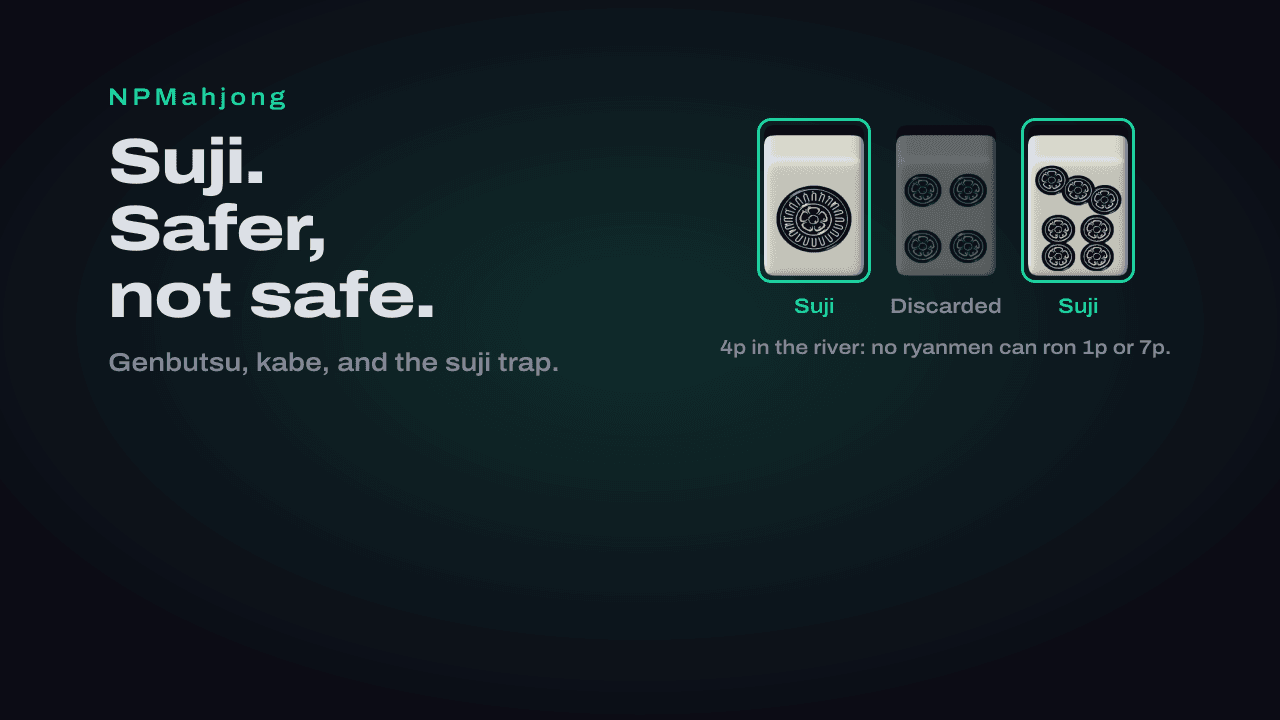
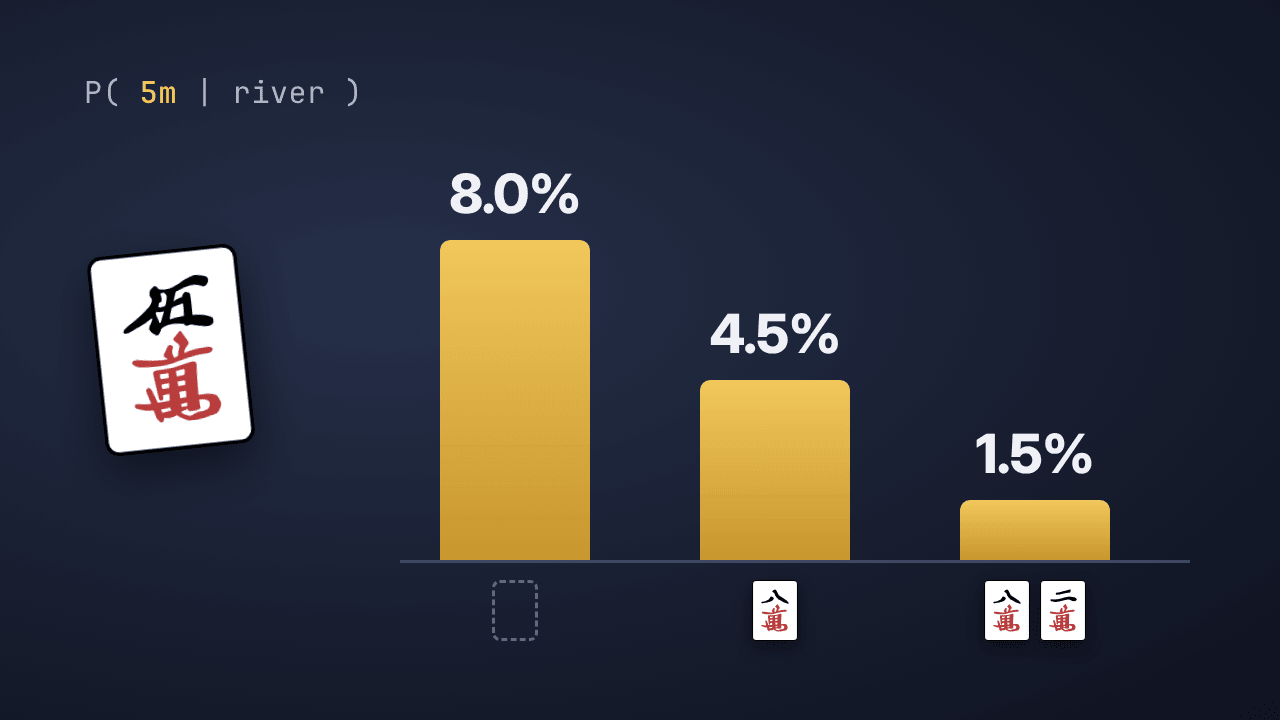
Start with what everyone knows, because it's mostly right. A tile is suji when the tile three away is in the riichi player's river (both tiles three away for a 4, 5, or 6). Any two-sided wait on it would be , so a or can't ron it. Most riichi hands, 59% in the Houou logs, wait two-sided. Suji rules all of those out.
What it doesn't rule out is the other 37%: , , , and . A suji 3 still loses to a 24, a 12, a , or a . In the Bayesian wait-reading post, a simplified model takes a 3 from 6.2% of riichi waits before any read to 2.4% at suji. Safer. Not safe.
That's the consensus. Every player above beginner level knows it. And a consensus that everyone acts on is exactly what Marks says to look at twice.
Second level: they know you think it's safe
The riichi player can read their own river. They know which tiles it makes look safe, and when their hand gives them a choice of single-tile waits, they can pick the one hiding behind a suji. That's a suji trap, in Japanese. Riichi wait win rates puts a price on it.
| Wait | Suji tiles already in your river | Plain / trapped | Gain |
|---|---|---|---|
| A 1 or 9 | The 4 for a 1, the 6 for a 9 | 47% / 57% | +10 |
| A 2 or 8 | The 5 | 41% / 52% | +11 |
| A 3 or 7 | The 6 for a 3, the 4 for a 7 | 38% / 47% | +9 |
| A 4 or 6 | The 1 and 7 for a 4, the 3 and 9 for a 6 | 36% / 50% | +14 |
| A 5 | The 2 and 8 | 33% / 46% | +13 |
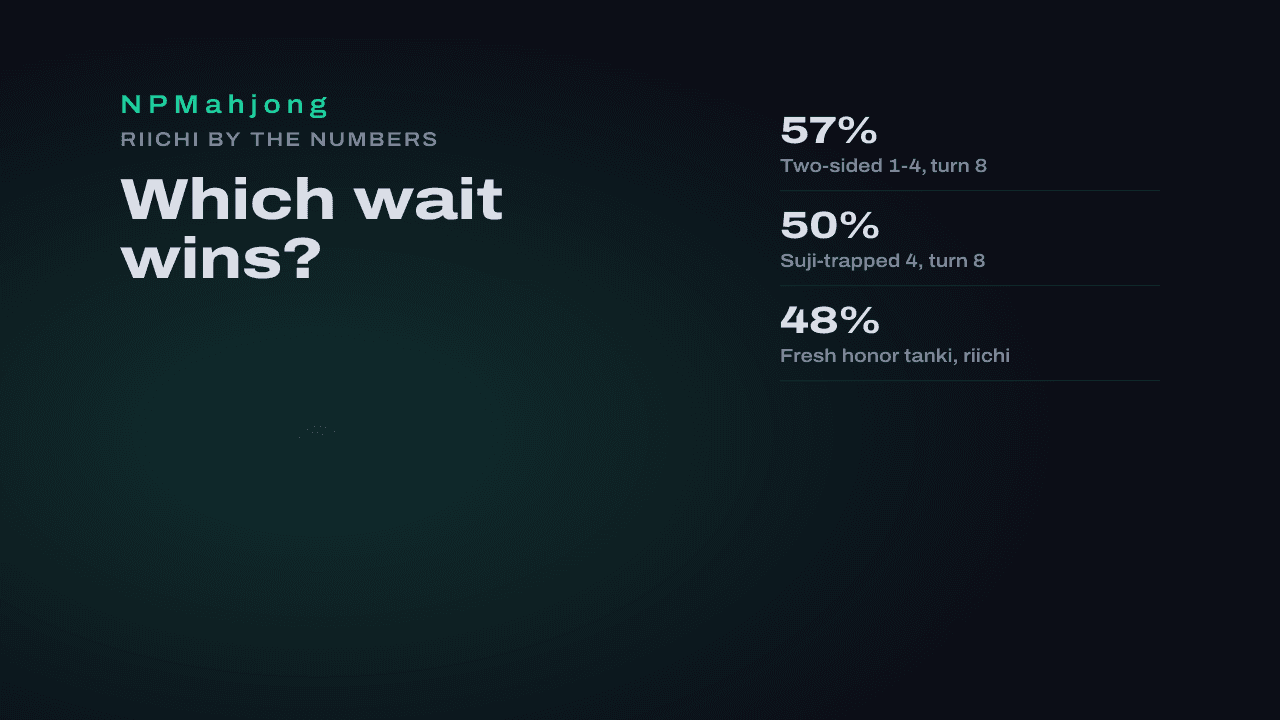
A trapped wait on 4 or 6 wins 50%. A two-sided 3-6 wins 52%. The trap turns a bad wait into nearly a good one, and the defenders pay for it. Most of that gain is ron: only 35% of a trapped 5's wins are tsumo, against 57% for a plain one.
Read that the way Marks reads a stock. The first-level crowd agrees the suji tile is cheap to throw, so it gets thrown. The trapper bets that you'll act on suji. The middle tiles likely get the biggest relief from a suji read, and they pay a trap the most: +14 on a 4 or 6, +13 on a 5.
The attacker's side: set the trap on purpose
Go back to West's hand, one draw earlier.
The pairs up, and you're choosing your riichi tile. It's the same choice the suji guide uses: cut the 2p for a 46p kanchan on the 5p, or the 6p for a 24p kanchan on the 3p. Both wait on four tiles. But the 6p in your river makes the 3p a suji, and the 2p cut leaves the 5p only half suji. By the turn-8 numbers, a trapped wait on 3 wins 47%. A plain wait on 5 wins 33%, and the table has no row for a half-suji 5. Same hand, same count, 14 points apart. About 5 of those points come from the 3 being an easier tile than the 5: a plain 3 wins 38%. The other 9 are the trap.
This is second-level thinking from the other chair. First level picks a wait by counting tiles, and the wait win rate tool does that count for you: the win rate of each wait, split by how many of its winning tiles you can already see. Second level asks which of the waits the table will feed.

Third level: they know you know
A defender who has read this far adds a rule: suji tiles from the riichi tile are suspect. The suji guide says the same: watch the riichi tile, because the trap sits on its suji.
So the trapper goes one level deeper. If the riichi tile's suji is the obvious trap, cut the trap tile earlier, before , so the suji sits quietly in the middle of the river. That's Keynes's third degree: anticipating what the defender expects the attacker to do.
Two things keep the levels from stacking forever.
The hand decides. A trap needs a single-tile wait, and it needs the shape to offer one next to a tile the player can afford to cut. Most riichi hands can't choose: 59% are two-sided and have no trap to set. A player can't build a trap their tiles don't allow.
Second-level thinking moves the price. Marks doesn't say "the company everyone likes is bad." He says it might be priced too high. At the table, a suji tile still beats a fresh tile with no read, because suji still rules out the two-sided waits: a 3 drops from 6.2% to 2.4%. That 2.4% comes from a model that assumes no one builds traps on purpose, so the real number sits higher. What the trap data changes is the order among your safe-looking tiles, and how far you trust them.
The defender's second-level version of the safety order:
- first. No level of thinking makes it deal in.
- Among suji tiles, prefer the ones that lose to fewer shapes: a suji 1 or 9 before a 2 or 8, a 2 or 8 before a 3 or 7. Full-suji 4, 5, and 6 sit a little below the 2 and 8 in the model, 1.3% to 1.5% against 1.7% to 1.8%, but they're also where traps gain the most. Treat that gap as a tie and let the next step break it.
- Among equal suji, prefer the one whose suji tile came out in the first three discards, from a hand that was still building. Distrust the suji of the riichi tile and of the last cuts before it. This step is a read: the logs don't split traps by when the suji tile was cut.
- A fresh tile with no read still goes after all of them.
Ask which tile made the suji, and when
Before you throw a suji tile into a riichi, ask one question: which tile made it suji, and when was it cut? Three answers.
- In the first three discards, before the hand had shape. A first-level read holds. Throw it with ordinary confidence.
- The riichi tile, or the cut right before it. This is where traps sit. Use it only after genbutsu and the safer suji.
- Mid-hand, from a shape the player broke. Ask what that cut could have left behind. A 6 cut from 246 leaves the 24 kanchan waiting on the 3.
When you're the one declaring, ask the mirror question. If two single-tile waits have the same count, which one has its suji already in your river? Take that one: a trap adds 9 to 14 points to a single-tile wait.
Three opponents are a consensus you can read
Marks writes about markets, where a price sums up millions of opinions you can't see. A mahjong table has three opponents, and you see every tile they've thrown. The consensus is small enough to read player by player.
Marks asks for different and better, and in a market being different is half the job. At the table, different on its own pays nothing. Throwing a fresh tile because "they'll expect me to throw suji" is different, and it's worse: a fresh tile can lose to every shape a suji tile can, plus the two-sided waits.
The Bayesian post gives you the first-level number, and the trap table tells you how far to mark it up.
If you want a second pair of eyes on the suji tiles you threw last week, send me the logs for a review.
Was this article helpful?