Kikuchi (菊池寛) founded the magazine Bungeishunju, and the Kikuchi Kan Prize carries his name. In 1929 he also became the first president of the Japan Mahjong League (日本麻雀連盟), a new national body that set out to unite Japan's mahjong clubs.
The league still exists. Its own rule page dates its founding to 1 October 1929 and says it united mahjong groups from all over Japan.
A league with a writer at the top
The league's list of past presidents starts with two writers. Kikuchi Kan, listed as a man of letters (文士), took office in 1929. Kume Masao, another writer, followed in 1932. Later came a member of the Diet, two viscounts, two presidents of Bungeishunju, and two chairmen of Keidanren, the national business federation.
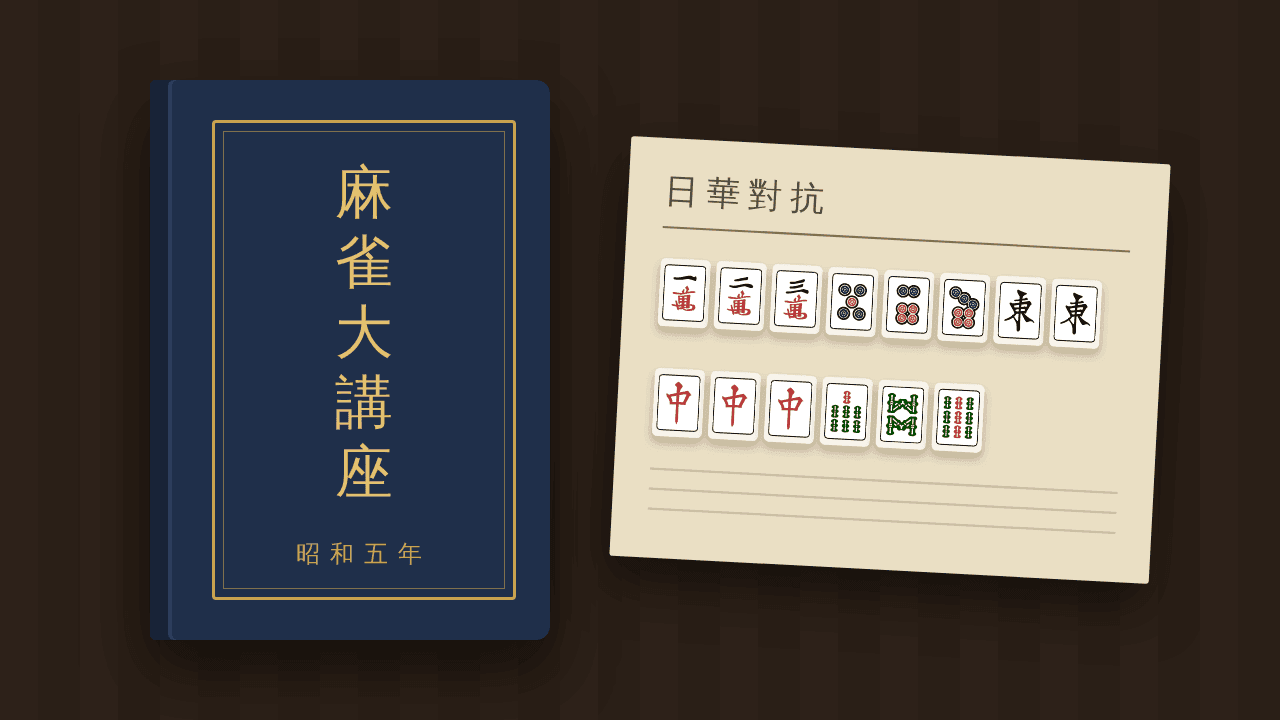
Kikuchi was the president. Japanese Wikipedia's article on the league credits the founding itself to another man, 空閑緑, and adds a second merger in 1932, when several other groups joined and the body became the Greater Japan Mahjong League. The league wasn't the first club, either. A 1930 table of contents, below, lists clubs from the game's early years in Japan. In the league's own telling, 1929 gave the clubs one national body and a famous president. The same 1930 course shows a rival Japan Mahjong Association still holding its own selection matches.
The famous name played. The Japanese Wikipedia article on Kikuchi says he took up mahjong in the middle of the Taisho era and was known for mahjong, horse racing, and shogi. It also keeps a joke. Shuffle the kana of his name, kikuchi kan, and you get kuchi kikan: "won't talk." When he lost at mahjong, the article says, he went silent and sulked, and the players across the table used the pun behind his back.
The 1930 course and the Japan-China match
The National Diet Library catalogue lists a mahjong course published by Shunyodo (春陽堂) in Tokyo in 1930, Showa 5: Mahjong Daikouza (麻雀大講座), "The Grand Mahjong Course." The catalogue record credits it to Kikuchi Kan and others as editors (菊池寛 [ほか]編). The library holds four volumes: an introduction (入門編, 151 pages), a volume of partial tactics (部分的戦術), and two volumes of game records (実戦講座).
The game-record volumes' tables of contents, in the old characters of the time, open with a Japan-China mahjong match (日華對抗麻雀競技 in volume one's heading). Volume one records two hands from each of rounds one to four, then a contest between four big clubs and a selection match of the Japan Mahjong Association (日本麻雀協會). Volume two carries rounds five to eight, then a Kansai league selection, an all-Kobe selection, and a match between representatives of three cities. The catalogue doesn't say who played or who won.
The introduction volume's contents add a history of the game in Japan that opens with its state in early summer 1930. The chapter titles sketch the decade. Mahjong in China and Manchuria. Early clubs, among them a Tokyo Mahjong Society. A chapter called Mahjong Boukokuron (麻雀亡國論), "mahjong will ruin the nation." The setting of a Japanese standard rule. And a section on the Japan-China match that credits the Yomiuri newspaper for its part.
One more link: the publisher. Shunyodo had distributed the first issue of Bungeishunju when Kikuchi launched the magazine in 1923, according to the Wikipedia article on him.
What Kikuchi thought the game was
Wikipedia quotes a letter Kikuchi sent to a group of players, titled Mahjong San (麻雀讃), "In praise of mahjong." One passage would fit on a statistics blog. A player who builds on probability, he wrote, and picks the path with the most "probability" to a ready hand can be called a master. He used the English word, written in katakana as プロバビリティ. Then he turned it. Anyone can reach the best technique with effort, he wrote, but past that point, winning and losing depend largely on a person's character, mind, resolve, and nerve.
In March 1934, according to a Tokyo Asahi report cited in the same article, Kikuchi himself was picked up by police on suspicion of gambling at mahjong. Betting on mahjong in Japan is still a crime today, at any stake.
The rule the league still plays
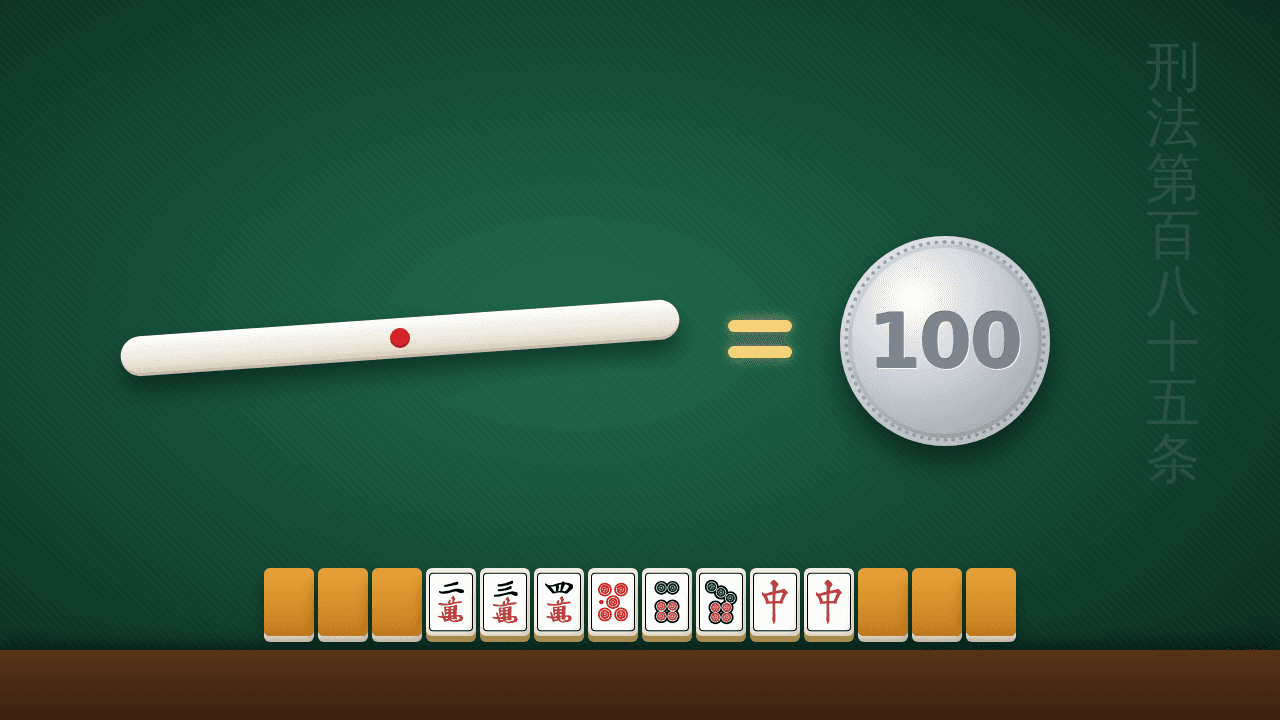
The league wrote its own rule set, arushiaru mahjong (アルシーアル麻雀), and still calls it its first rule. Riichi came later: the league adopted a riichi rule as its second rule in 2016. The Japanese Wikipedia article on the rule explains the name: the base of the smallest winning hand used to be 22 fu, and 22 in Chinese is "er shi er."
Set it beside a modern riichi rule and four things are missing.
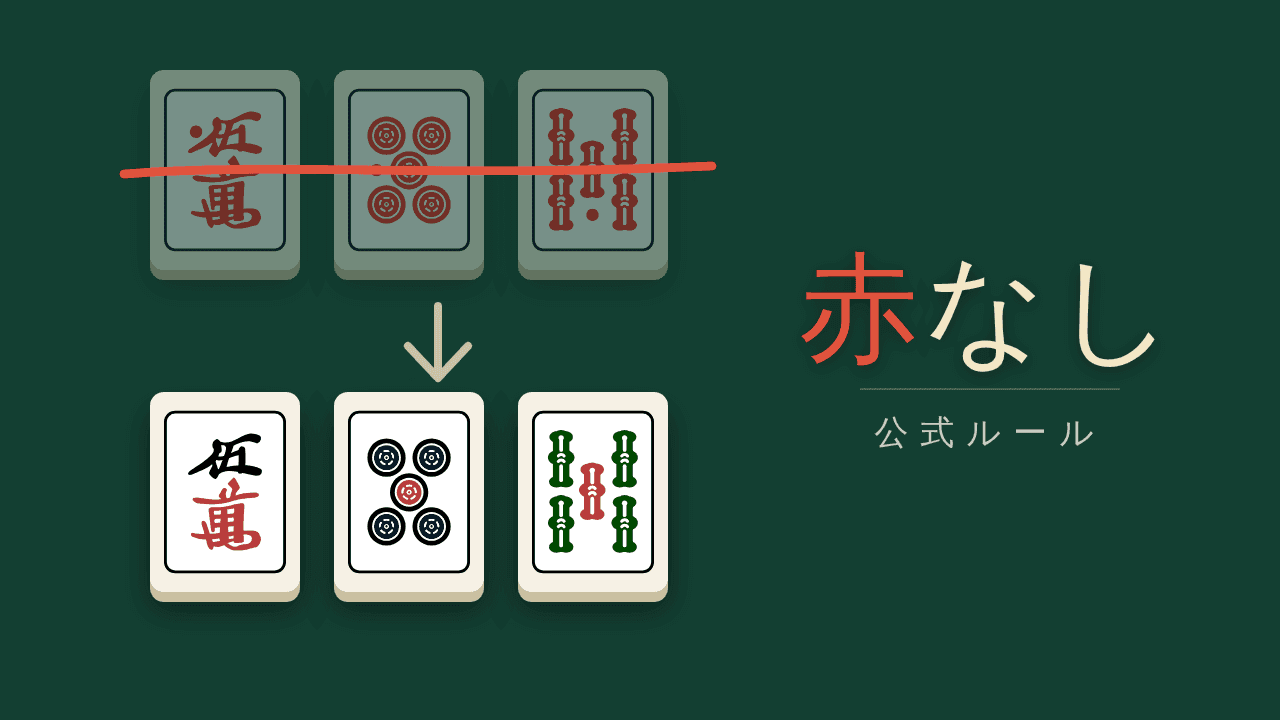
- No riichi, and no dora of any kind: no indicator, no ura, no red fives.
- No . The two invisible han post traces where those two free han came from.
- No one-han minimum. Any complete hand can win, so a yakuless 30-fu tsumo by a pays the minimum, 120 points.
- No , and nothing above a , which pays 2,000 to a non-dealer and 3,000 to the dealer.
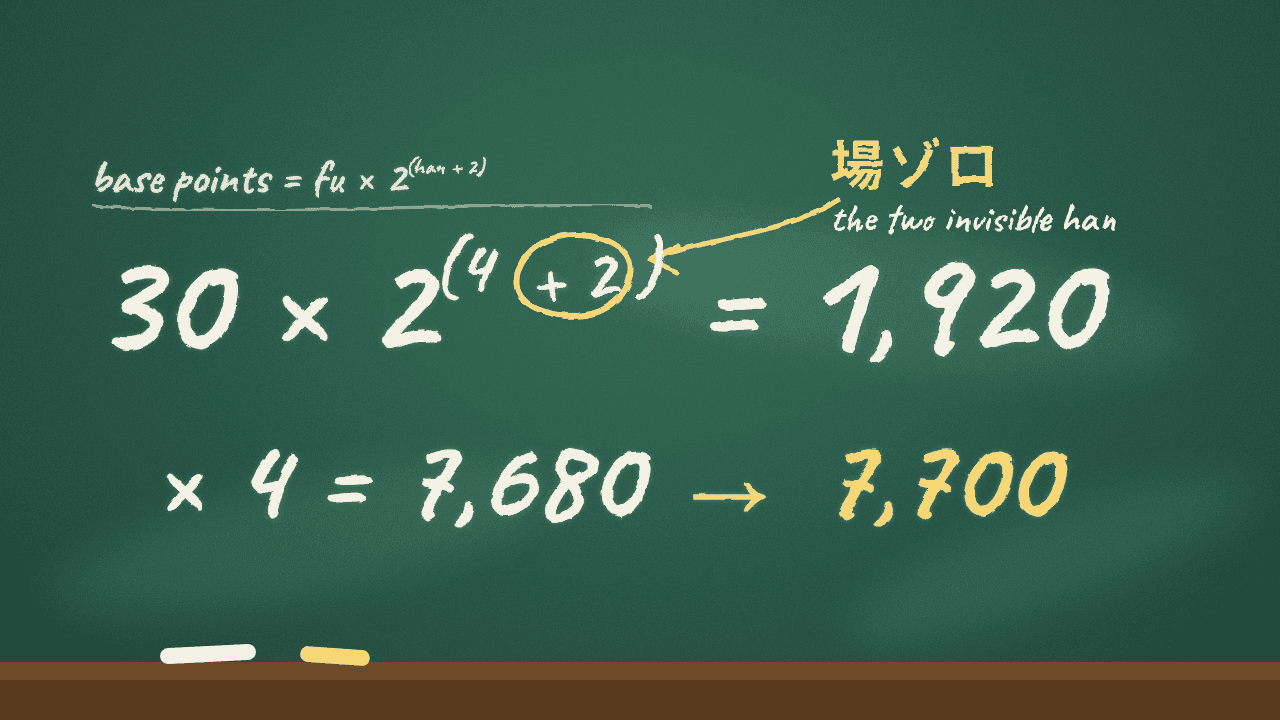
I play under the Kyoukai (協会) rule, which keeps riichi, ura dora, and . The league's first rule has none of the three.
A warning about names. The Japan Mahjong League is an amateur body. Its home page describes it as a competition group that doesn't bet, doesn't drink, doesn't smoke, and values courtesy, and it marks its 100th year in 2029. The Japan Professional Mahjong League (日本プロ麻雀連盟, JPML) is a different organization, one of the pro bodies whose rules are compared in pro mahjong's main rules.
Score a hand the old way
Score your next winning hand twice. Once as it stands, and once with riichi, every dora, and the two bazoro han taken out. The scoring guide has the formula. What's left isn't an arushiaru score, which comes off its own table, but it shows how much of a modern payout comes from rules the league's first rule leaves out.
Was this article helpful?