Before automatic tables, Japanese mahjong walls were built by hand, by the people about to play from them. Each player mixed the tiles, built 17 stacks of two in front of themselves, and trusted the other three to have done the same. ABEMA Times, writing about the AMOS tables in 2020, says building a wall takes some skill, and too much skill lets a player arrange it on purpose. In the extreme case, a player can deal themselves a one tile from a huge win.
The automatic table ended that. The first one appeared in 1976, the same piece says, and it helped prevent cheating.
What it replaced is harder to pin down. Japanese has a whole vocabulary of cheats, ikasama (イカサマ), almost none of it sourced. The Japanese Wikipedia page on mahjong cheating has carried a warning about missing sources since 2013. Many of the famous techniques are best known from Asada Tetsuya's novel Mahjong Hourouki (麻雀放浪記), "record of a mahjong wanderer", serialized from 1969, and the films and comics based on it. So read what follows as folklore with a mechanism: how each trick was supposed to work, and why the machine broke it.
Stacking the wall: tsumikomi
Stacking, tsumikomi (積み込み), is the base technique. The stacker builds a 17-stack wall with chosen tiles in chosen places, so they reach the stacker's hand at the deal or on the draws. The novel is full of gamblers who do it, and since automatic tables arrived it has mostly vanished outside fiction.
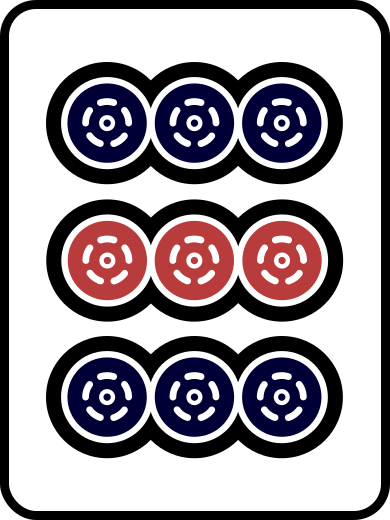
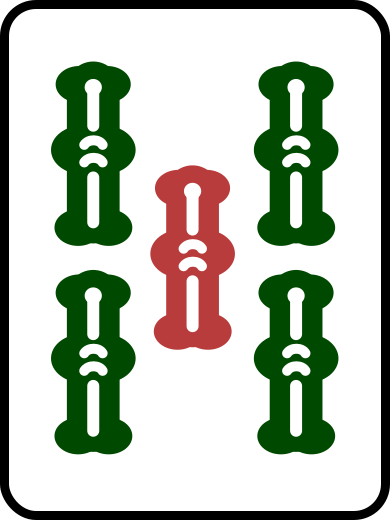
Two styles get names. A bomb, bakudan (爆弾), plants tiles where the stacker's starting hand comes from: eight dragons for a start, or a block of . Its other name, rokken-zumi (六間積み), comes from planting the tiles six stacks apart. Genroku (元禄積み), also called chidori (千鳥), uses the fixed draw order instead. Four players draw in turn from one wall, so each player's draws are every fourth tile, and a stacker who plants a flush or a set of dragons in those slots draws them one by one. A genroku wall holds eight or nine planted tiles.
Genroku has one weakness, and the novel uses it. Every or shifts the draw order, and the planted tiles go to someone else. In Japanese Wikipedia's notes on the characters, the gambler Dosa Ken (ドサ健) opens a mahjong class, tells the public it's to stop cheating, and pushes a new yaku called . A footnote gives the reason: pon and chi shift the draw order and spoil a genroku stack. rewards a . That's fiction. The real story of riichi has no inventor anyone can name.
The dice: why one roll wasn't enough
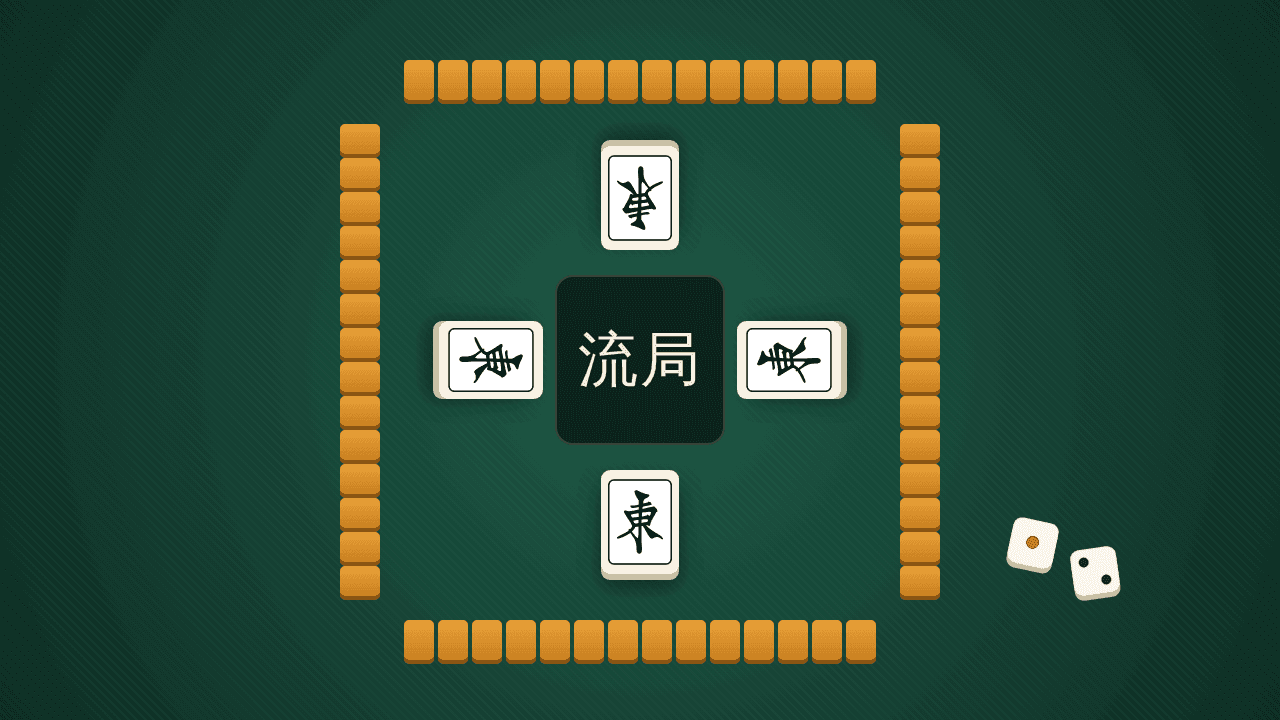
A stacked wall is useless unless it's broken in the right place. The dealer rolls two dice, counts seats, and breaks that player's wall the same number of stacks from the right. The abortive draws post covers the break and the .
With one roll, each wall can only break at fixed spots. The Japanese Wikipedia page on the deal lays them out: the South wall breaks 2, 6, or 10 stacks from its right end, the dealer's own wall at 5 or 9. Take the dealer's wall. Two fair dice show 5 in 4 of 36 rolls and 9 in another 4, so the break lands in front of the dealer 8 times in 36, 22% of hands, and always at one of two known spots. That was the opening a stacker worked from.
The fix was two rolls, nidofuri (二度振り). The dealer rolls to pick the wall, then the player behind that wall rolls again, and the break sits at the total of both rolls. That breaks the fixed link between wall and break point, which makes stacking harder to pull off. The same page says the custom faded once automatic tables drove stackers out, and cites Ide Yosuke's 1997 rulebook: with no worry about stacking, one roll is simpler.
The pro rulebooks went to one roll for the break. The NPM rule rolls twice to set seats and the first dealer and once to break the wall. The JPML's rules through 2024 made every roll a single roll, and its current table still lists single rolls for seats and the first dealer.
The 2 and 2 tenhou
The novel's gambler Deme-toku (出目徳) has a signature move that turns the defense around. The ni no ni no tenhou (「2の2の天和」) is a two-player trick: the dealer and the South player stack together, then both rolls come up 2. Two with two dice means double ones, 1 chance in 36. Two of them in a row is 1 in 1,296 with fair dice. That's why the legend needs a player who can throw the number they want. Wikipedia's page on the novel says its young hero, Boya Tetsu (坊や哲), learned it from Deme-toku, and that the boy says 7 was at first the number he could throw most easily. Seven is also the most common fair roll, 6 chances in 36, which is about the only part of the story you can check at home.
Tsubame gaeshi: swap the whole hand
The famous one is tsubame gaeshi (燕返し), "the swallow's return". The cheating page describes it as a bigger version of swapping tiles at the wall: the cheat builds a finished hand into their own wall, then trades their whole hand for those tiles in one motion. The usual target is , the dealer's for a hand complete on the deal.
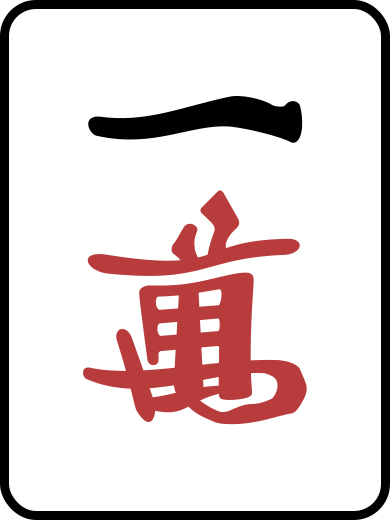
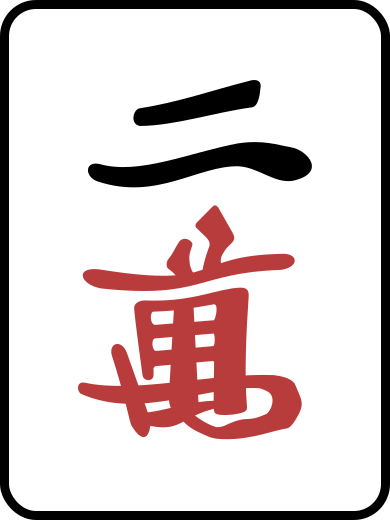
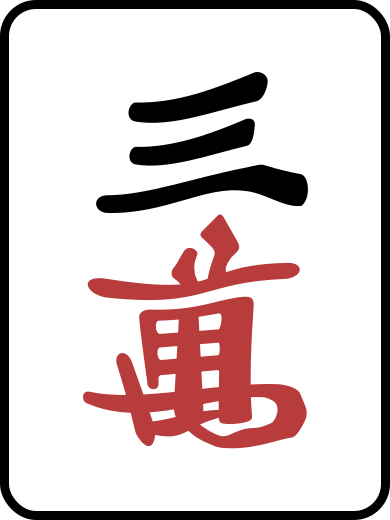
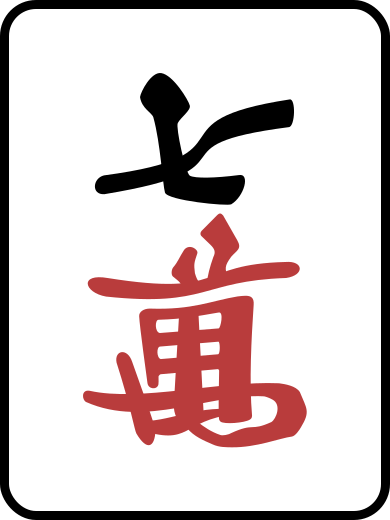
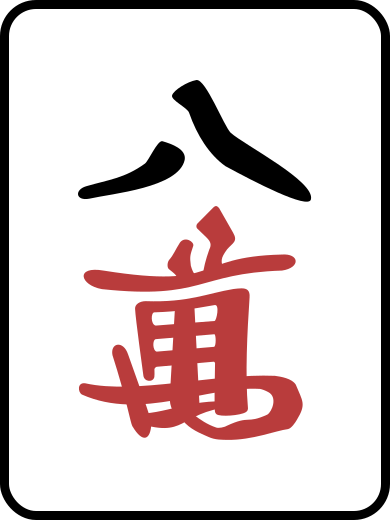
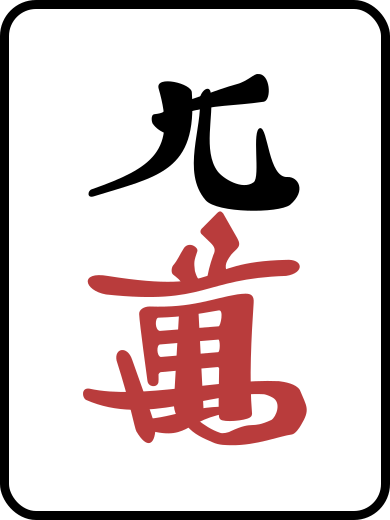
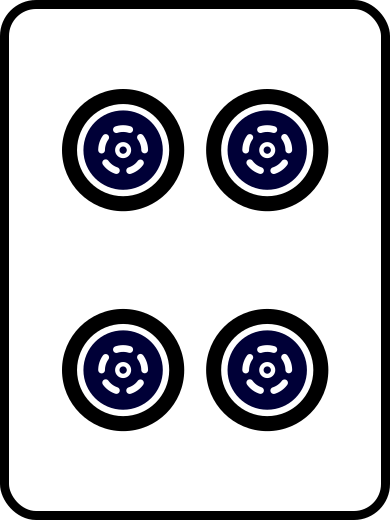
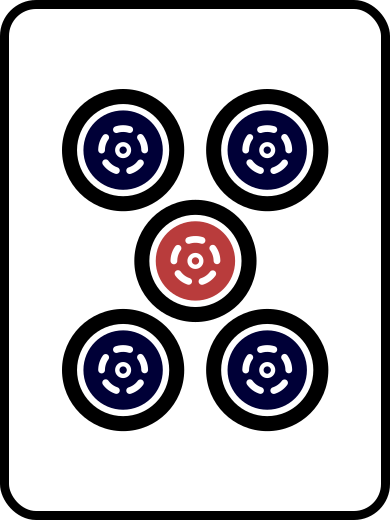
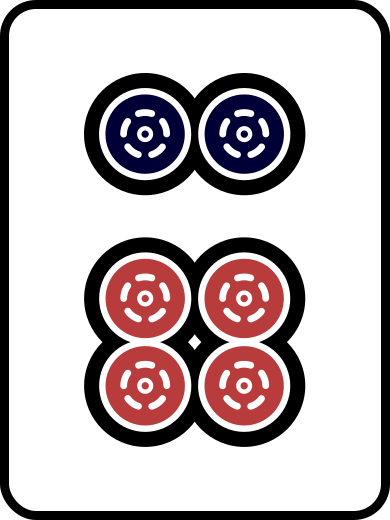
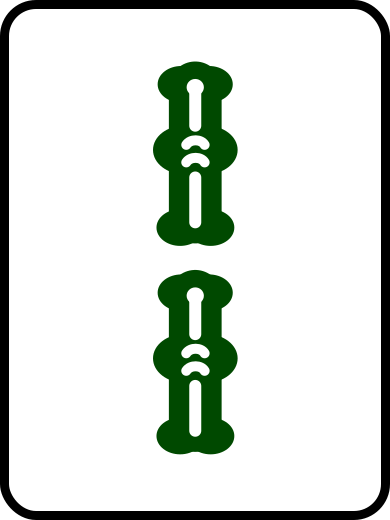
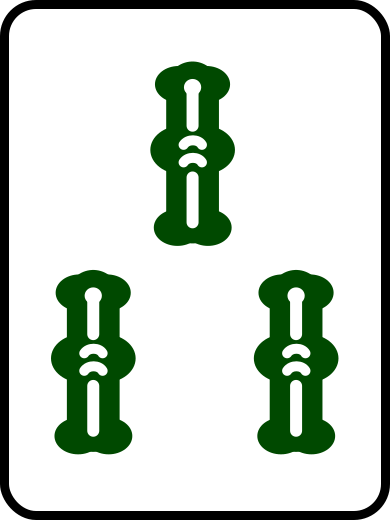
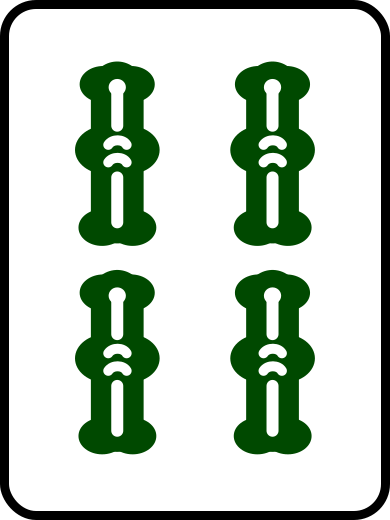

That's a complete 14-tile hand, and as the dealer's first 14 tiles it's a yakuman: 16,000 from each player, 48,000 in all. The tenhou and chiihou page has the rule.
The swallow swap has a screen credit. The novel's page says the 1984 film version shows cheats including tsubame gaeshi, with technique coaching by Sakurai Shoichi, the player the site's Sakurai post is about. The cheating page adds that the actor Sanada Hiroyuki performs it. Neither Wikipedia page cites a case of anyone pulling it off at a real table for money.
What the machine killed, and what it didn't
An automatic table takes the wall out of human hands. On my Aotomo, you push the tiles into the hole and the next walls rise from inside the table. Nobody stacks, so there's nothing to aim the dice at.
Swapping at the wall's edge survives. Bukkonuki (ぶっこ抜き), nicknamed hidarite-gei (左手芸), "left-hand art", trades a few tiles from the end of the wall for tiles in the hand. Wikipedia calls it the easiest cheat to do and among the hardest to catch in the act. It advises telling the staff, the parlor's members, rather than grabbing anyone's hand. The parlor post covers what members do on the floor. The rulebooks write it in too. Both the M.League rules and the NPM regulations say a player may not draw or discard while holding another tile in the palm, and M.League gives a yellow card for repeated kotegaeshi (小手返し): slipping the drawn tile into the hand and discarding another in one motion.
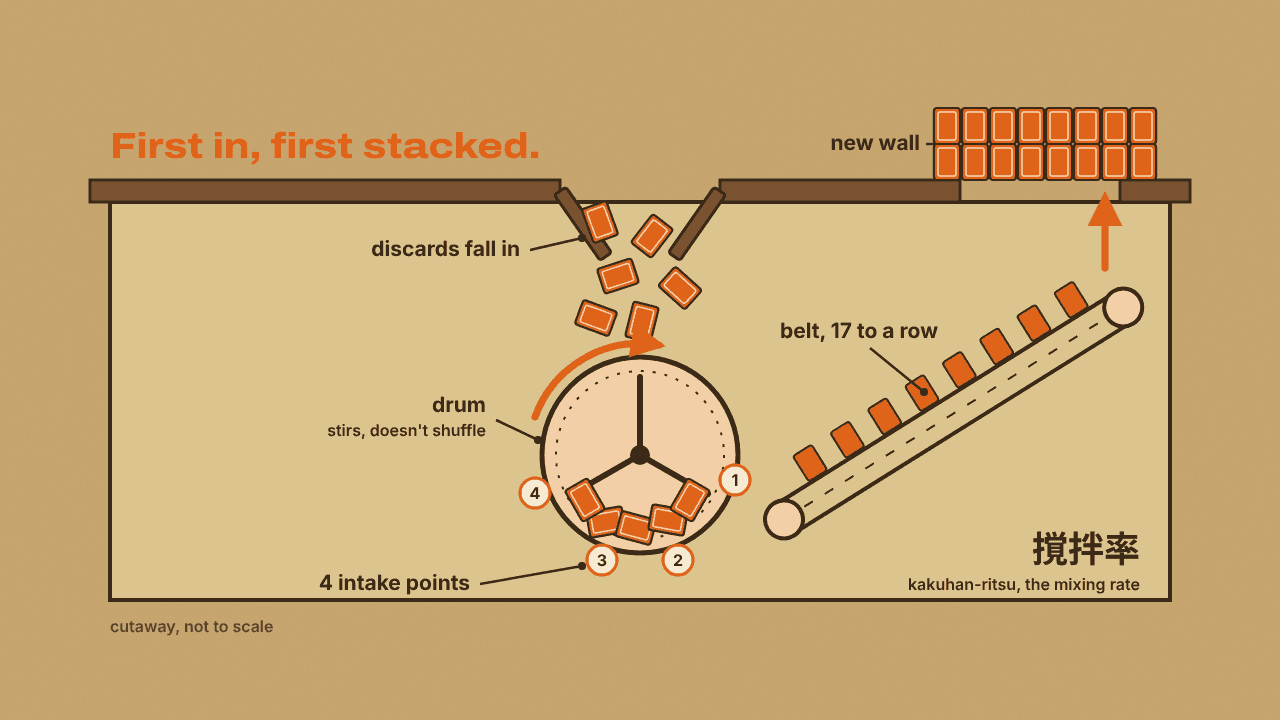
The machine's own bias survives too. ABEMA's piece explains that a table that stacks tiles in the order they fall into the drum makes a deliberate bias easier to create, and the mixing rate post covers that and Taiyo Giken's 2 mm magnet fix in the AMOS REXX III. Wikipedia adds folk claims that the feeding order can be gamed on a poorly mixing table. It also repeats a legend: the first time someone installed an automatic table, came up straight away, and they went back to building walls by hand.
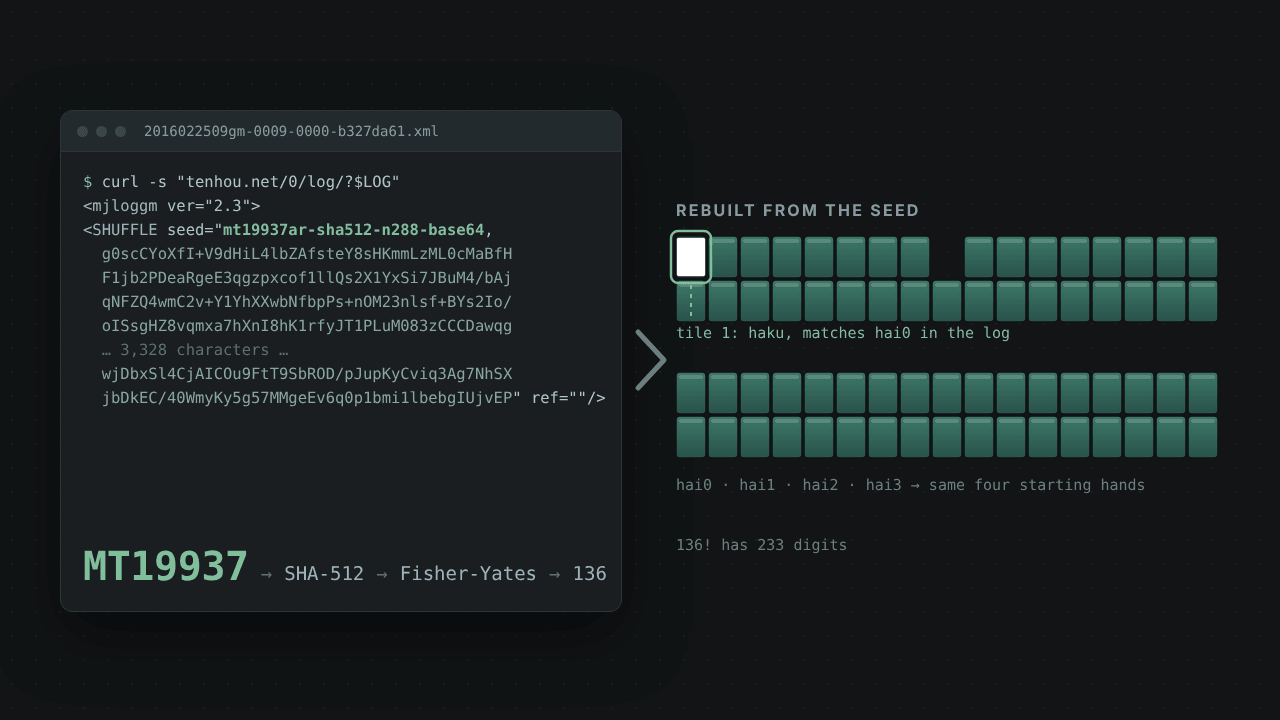
Online, nobody can stack a server's wall. Tenhou publishes the seed for every game and the recipe that turns it into tiles, and you can rebuild a wall yourself. What's left online sits with the players: signals passed over chat, or one person in two seats or watching the game they're playing in. The cheating page calls watching your own game the only cheat online mahjong invented.
After the machine
The stacking tricks on this page control which tiles arrive. The machine took most of that away, which leaves what you do with them. The WWYD problems train that part.
Was this article helpful?