You pick up your first draw and count. East, South, white, red, 1m, 9m, 1p, 9p, 1s. Nine different , and almost nothing that connects. On Tenhou or Mahjong Soul you can show the tiles and it's over. Nobody wins or pays, and the dealer deals again.
(), nine terminals, is one of five abortive draws, tochuu (途中流局): rules that end a hand before the wall runs out. Whether your game has any of them depends on where you sit. The rule of the Japan Pro Mahjong Association (NPM, 日本プロ麻雀協会), the one I play under as a pro, has none.
What each rulebook says
Tenhou's rules page lists them in one line: 途中流局(九種九牌//三家和了//)あり。すべて連荘. All five, and all of them a repeat hand for the dealer. Mahjong Soul's ranked rules list four of the five for four players, also as dealer repeats, and add one more line, 、トリプルロンあり: double and triple ron both pay.
| Draw | Tenhou | Mahjong Soul |
|---|---|---|
| Repeat | Repeat | |
| Repeat | Repeat | |
| Repeat | Repeat | |
| Repeat | Repeat | |
| Repeat | All three win |
M.League, the NPM, and the EMA 2025 rules play none of the five. On a triple ron, M.League and the NPM give the win to the first player in turn, and the EMA lets all three win. Sources: Tenhou, Mahjong Soul, M.League, NPM, and the EMA 2025 rules.
M.League's rulebook says it twice: there is no abortive draw (途中流局はない), and a hand never ends partway for any reason (「いかなる場合でも、局の途中で流局はしない」). Its ron rule gives one tile to one winner, the first player after the discarder, which it calls . The NPM summary is as short: no abortive draws, naming four winds, four riichi, and nine terminals, and no double or triple ron. The Saikouisen rules say the same: no abortive draws (途中流局 無し).
The Japan Professional Mahjong League (JPML) played four of them until April 2023, when its official rule dropped them (Fukuchi Makoto lists the changes). The JPML's current rule table marks all five as none (なし). The EMA's 2025 rulebook has no abortive draws at all: section 3.4 says a hand ends in an exhaustive draw or a win. The WRC rules have none either, as the kan guide notes.
Three-player games trim the list. Mahjong Soul's keeps only nine terminals and four kans. Both Tenhou and Mahjong Soul treat pulling a North like a call, so a North pulled before your first draw ends your nine-terminals chance.
Nine terminals is the only one you choose
Tenhou's condition is precise: on your first draw, with no , , , or closed kan by anyone yet, you hold nine or more kinds of terminals and honors. The dealer checks the 14 tiles of the deal. Declaring is optional. You can keep the hand and play it.
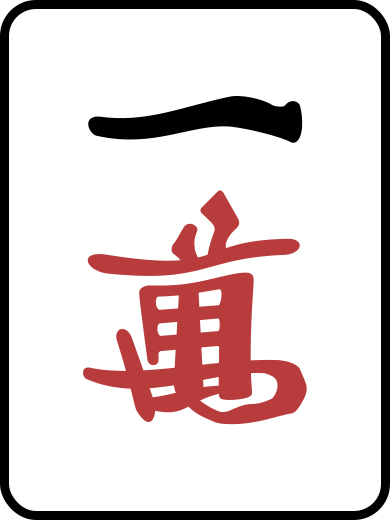
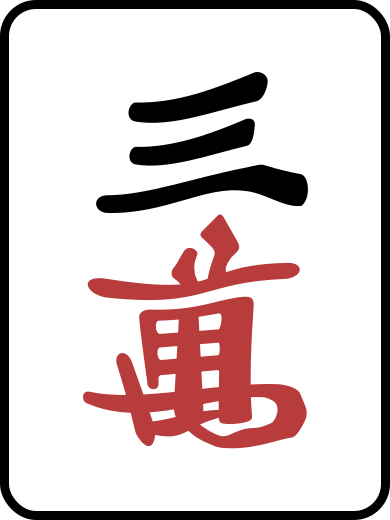
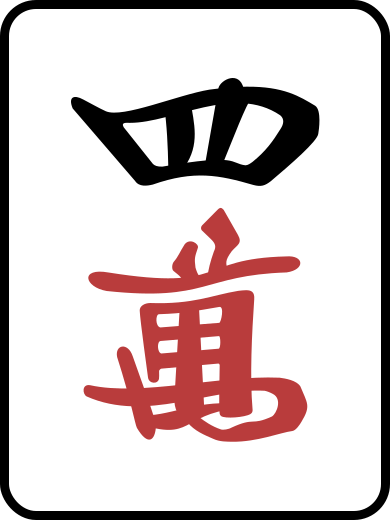
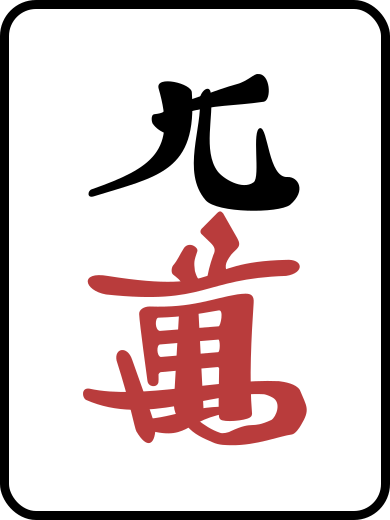

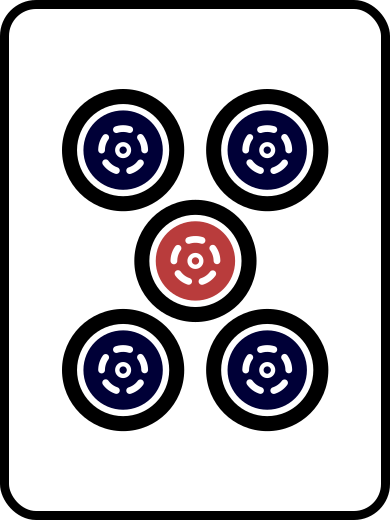
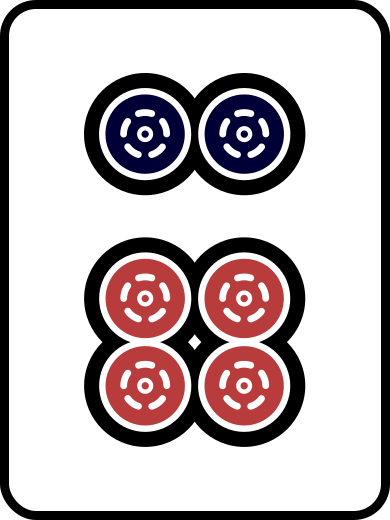
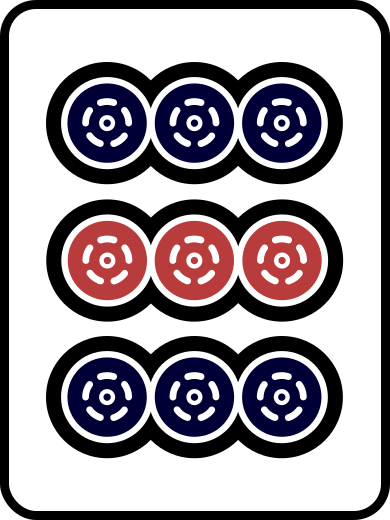

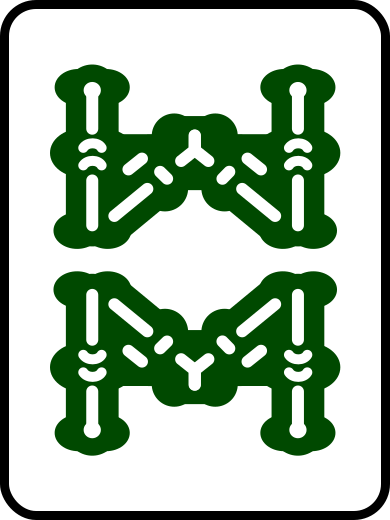
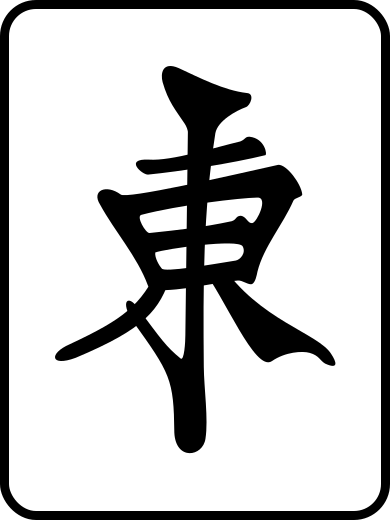
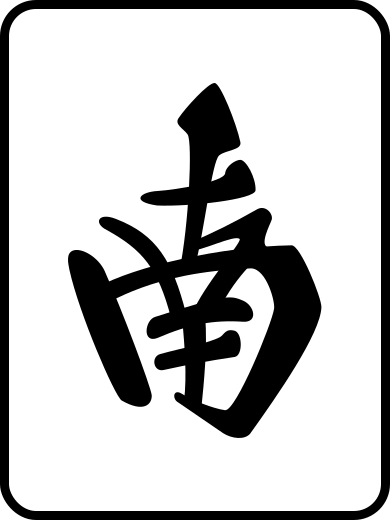

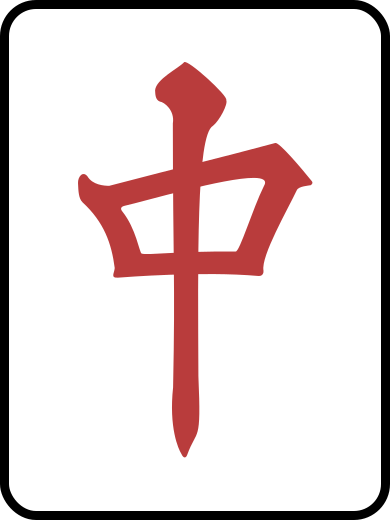
That's nine kinds: 1m, 9m, 1p, 9p, 1s, East, South, white, and red. The site's hand analyzer puts it six tiles from as a normal hand. Its best route is , , and that's four tiles from tenpai, toward a .
An exact count gives the rate. There are 13 kinds of terminals and honors, four copies each, and 84 other tiles. Sum the ways to draw 14 tiles from 136 that hit at least nine of those 13 kinds, divide by all the ways to draw 14, and you get:
| Kinds | Probability | About 1 in |
|---|---|---|
| 9 or more | 0.323% | 309 |
| 10 or more | 0.028% | 3,563 |
| 11 or more | 0.0013% | 77,190 |
Ten kinds is over ten times rarer than nine. Four players get the chance each hand, so a table sees one roughly once in 80 hands, a little less often, because an early call cancels it. The dealer strategy post counted a week of Tenhou dealer hands, and 1.3% of them ended in an abortive draw of any kind.
Japanese Wikipedia's page on draws traces it to a 1914 Shanghai rulebook (繪圖麻雀牌譜), which let a player whose starting tiles were nine terminals and honors with no pair call for a reshuffle, but only under a deal without 17-stack walls. The book says the rule didn't apply when each player built 17 stacks. The page carries a warning that its sourcing is thin, so treat the lineage as plausible rather than settled.
Four winds, four riichi, four kans
Four winds. All four players discard the same wind on their first turn, with no calls. The Wikipedia page says the rule began as a West-only rule in China: four Wests in a row read as ichiro kisei (一路帰西), the souls of the dead heading west, a bad omen. By 1929, it says, citing a book from that year, the rule covered any wind.
Four riichi. All four players declare and nobody rons the fourth declaration tile. The hand ends there. The page dates the first written version to the 1957 Tokyo rules, under the name yonin riichi (四人立直). Mahjong Soul adds a detail for this one and for four kans: no and no settlement of any kind. The nagashi mangan page covers that exception.
Four kans. Four kans declared in one hand by more than one player end it. If one player holds all four, play goes on, because that player is tenpai for suukantsu, and nobody may declare a fifth. The EMA rules, with no abortive draws, still stop at four: section 3.3.5 lets play continue after a fourth kan and bans any further one.
The four-kans rule has the best origin of the five. Wikipedia quotes a 1930 beginner's book by Konoe Naomaro (近衛直麿): 14 tiles at the tail of the wall are buried and never played, and under one rule each kan adds a stack to them: one kan seven, two kans eight, nine (一槓七、兩槓八、三槓九). At four kans the hand ends, a rule the book says exists to prevent big wins. The same page dismisses the popular story that suukan (四槓, four kans) sounds like shikan (死棺, a coffin). In Mandarin the two words don't sound alike.
Triple ron splits the rule sets
Three players call on one discard, and the table above shows the split.
Two callers split the same way. Tenhou and Mahjong Soul pay a . The head-bump rules pay one winner.
The 14 tiles nobody draws, and the dice
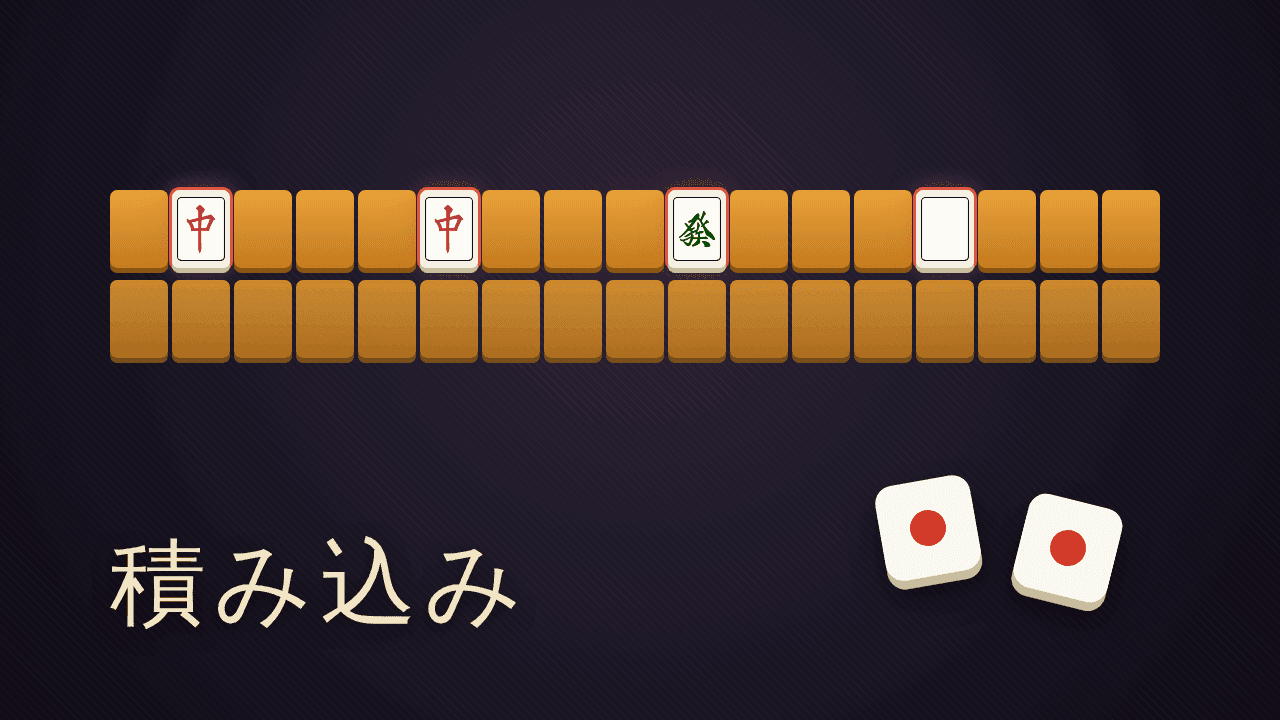
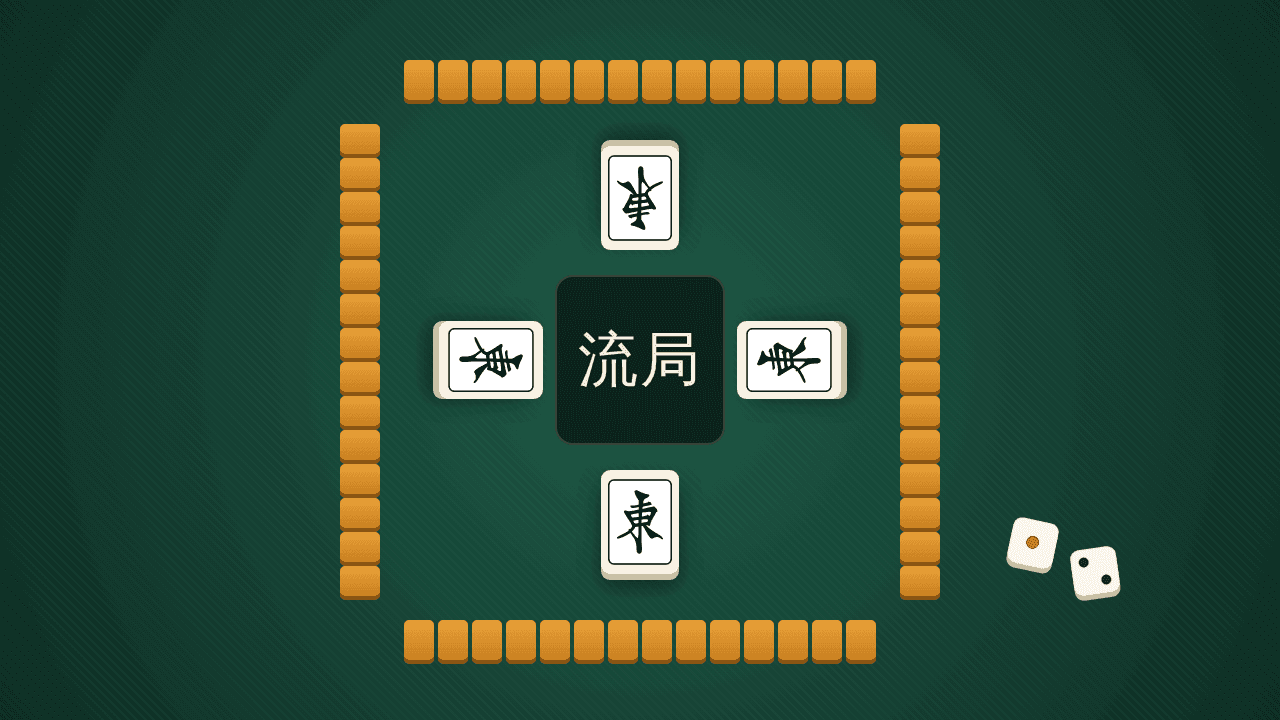
The , the dead wall, is seven stacks: 14 tiles. It holds the indicators and the replacement tiles for kans. When a kan takes a replacement, the last tile of the live wall joins it, so the dead wall stays at 14. The EMA rules say "The dead wall always comprises fourteen tiles", and the M.League rules and the NPM regulations both define it as 14 tiles counted from the tail of the wall.
At a hand-built table, the dice decide where it starts. The EMA procedure: the dealer rolls two dice, counts that many seats counterclockwise starting from themselves, and that player breaks their wall that many stacks from the right. The dead wall is the seven stacks to the right of the break.
That ritual exists because humans built the walls. A player who stacked their own wall needed to know where the break would land. One roll limited it to a few fixed spots, and a second roll broke that link. On an automatic table, like the Aotomo I own, the walls rise from inside the machine, and nobody at the table built them.
Online, the break is a formality. Tenhou's rules page says the wall and the dead wall are arranged at random before the hand and then consumed in order. Its published sample code still rolls two dice from the shuffle's random numbers, and the logs record them. They decide nothing, because when every position in the wall is equally random, it doesn't matter where you start counting.
Declare or chase
Read your room's rule line first. If abortive draws are on, nine terminals is a decision: declare, or chase a kokushi four . At a pro-rule table, nothing stops early, so every hand plays to a win or to a tenpai count at an empty wall.

Was this article helpful?