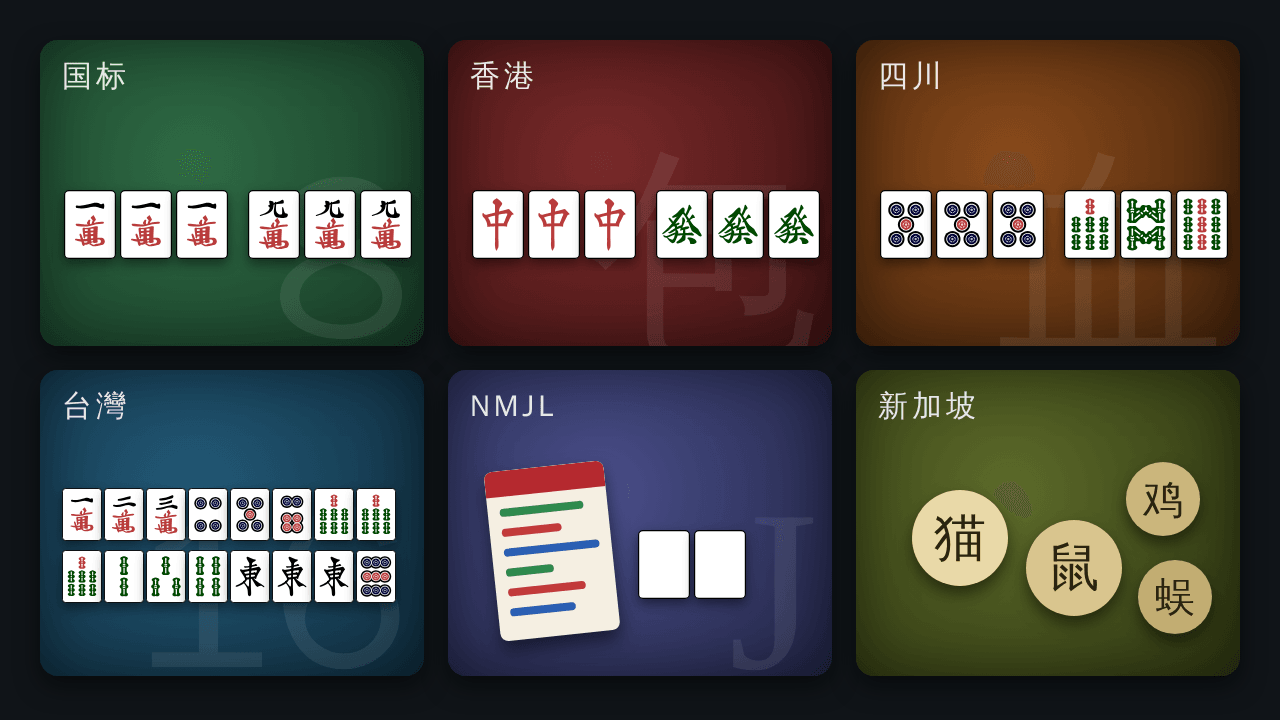
Sit down at the wrong mahjong table and the hand you'd win at home isn't legal. The historian Annelise Heinz told OPB in July 2026 that there are "more than 40 variations of mahjong around the world," and that what keeps them recognizable is "a shared tiles design." The rules don't travel. Here are six of those games: Chinese Official, Hong Kong, Sichuan, Taiwanese, American, and Singapore.
I'm a pro in Osaka, and my game is . Each of the six has a rule a player won't see coming, and each rule below links to the rulebook or guide it comes from.
| Rule set | Hand / set | Runs | The strange rule |
|---|---|---|---|
| Riichi | 13 / 136 | Yes | Your own discards can block a win |
| Chinese Official | 13 / 144 | Yes | Bystanders pay 8 when someone else deals in |
| Hong Kong | 13 / 144 or 136 | Yes | Feed a fourth meld, pay for the whole hand |
| Sichuan bloody | 13 / 108 | No | The hand goes on after a win |
| Taiwanese | 16 / 144 | Yes | All eight flowers win by themselves |
| American | 13 / 152 | No | Only hands on this year's card win |
| Singapore | 13 / 148 | Yes | Draw the cat and the rat, get paid at once |
Chinese Official: everyone pays
China's State Sports Commission published these rules in 1998, and they're now an international competition standard, usually called MCR or Guobiao. Wikipedia's mahjong article counts 81 scoring patterns in the rulebook. Tom Sloper's MCR FAQ sets the floor: a hand needs at least 8 points to win, and flowers don't count toward the 8. , in riichi, is worth 88.
Win on a discard and the discarder pays the hand's score plus 8. The other two pay 8 each, though they threw nothing. Win by self-draw and all three pay the score plus 8. Take a minimum 8-point hand: on a discard it collects 16 + 8 + 8 = 32, and by self-draw 16 × 3 = 48.
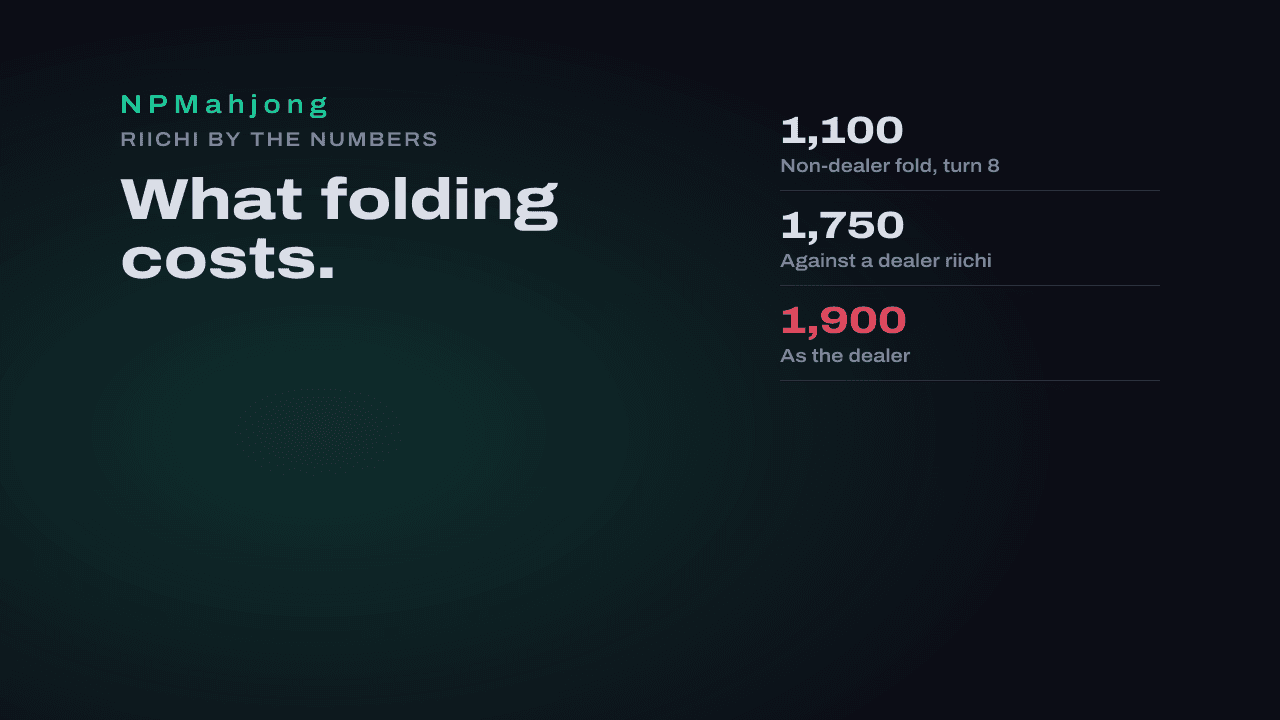
In riichi only the discarder pays for a . Bystanders pay only when the winner draws the tile. That's part of why a clean fold still has a price, and why the price is small. In MCR, every opponent's win costs you at least 8, whatever you threw.
Hong Kong: pay for the fourth meld
The Hong Kong Mahjong Association publishes rulebooks for three games: Hong Kong, a Hong Kong 16-tile game, and riichi. Its Hong Kong rulebook sets a 3- minimum to win and caps hands at 10 faan. The discarder pays the whole hand.
Its liability rule is called "." When a player already has three melds, whoever discards the tile that gives them a fourth takes on Pao. If the winner then draws the winning tile, the player who fed the meld pays the whole hand alone. If the winner takes a discard instead, whoever threw it pays as usual. A fourth meld made by concealed kong triggers nothing. The reasoning holds up: four melds out leaves one tile in hand, and the player is one draw from winning.
Tenhou and Mahjong Soul use only for and , as the big three dragons guide explains. My federation's rules have no pao at all. Outside those two , feeding a riichi player their fourth call costs you nothing extra.
In Sichuan the hand doesn't stop
Sichuan's "bloody" rules are named xuèzhàn dàodǐ (血战到底), a bloody battle to the end. The Mahjong International League publishes a short English rulebook beside its MCR and riichi rules. The set is the 108 suit tiles, with no winds or dragons. You can pong and kong but not chow.
Two rules make it bloody. First, after the deal each player picks a suit to drop, sets one tile of it face down, and discards it on the first turn. You can't throw other suits while you hold that one, and a winning hand must be missing it. Second, a win doesn't end the hand. "Others keep playing after someone wins," the rulebook says, until three players have won or the wall runs out. Several players can win on one discard.
When the wall runs out, anyone who hasn't won and still holds all three suits is a "flower pig" and pays a 48-point penalty. Hands cap at 3 fan, which is 2³ = 8 points, so the penalty equals six capped wins on a discard.
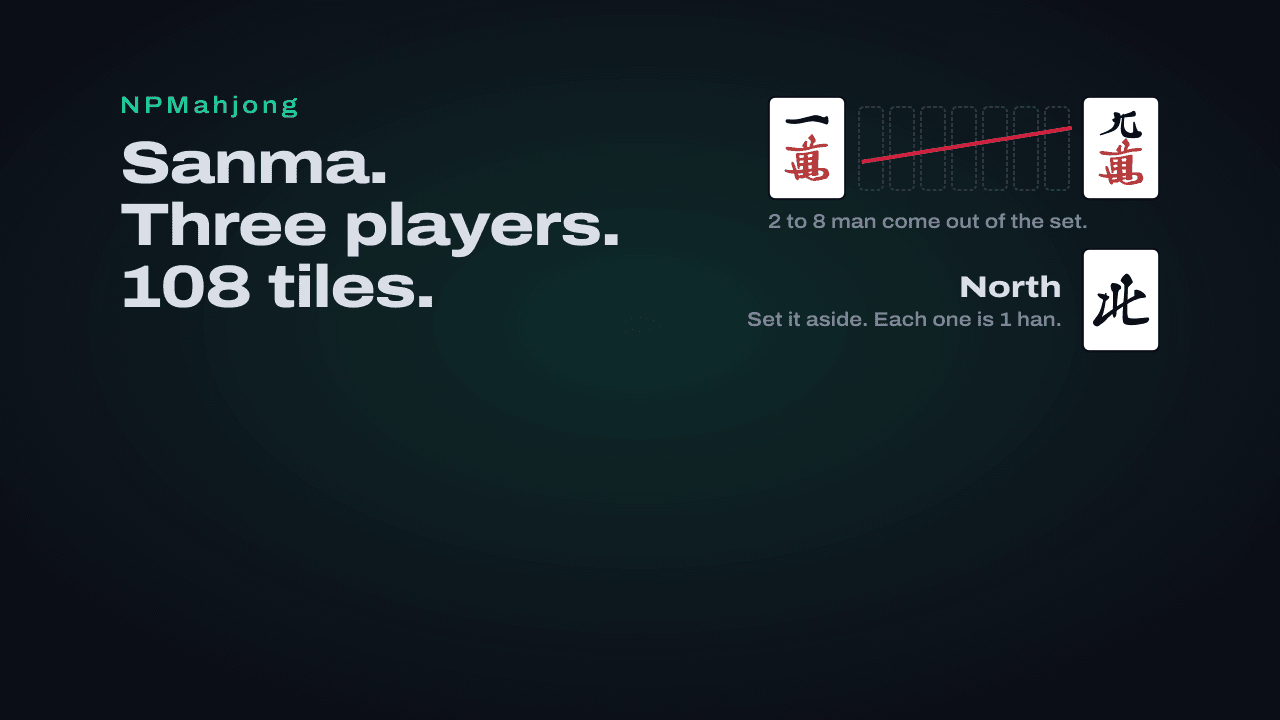
One rule will look familiar: pass a win on a discard and you can't win again until your next draw, unless the new win would score differently. That's close to riichi's temporary . Sanma, three-player riichi, also plays with 108 tiles and no , though it keeps the honors and drops 2 through 8 of characters.
Taiwanese: sixteen tiles and eight flowers
Taiwan deals bigger hands. The Taipei Times describes a deal that gives every player 16 tiles, and a winning hand of five sets plus a pair. The set is 144 tiles with eight flowers. Scoring counts , and Wikipedia's scoring page describes it as linear: base plus a factor times tai. With a base of 3 and a factor of 2, a 5-tai hand pays 3 + 2 × 5 = 13.
Eight flowers can win a hand by themselves. A Taiwanese rules guide on KiKi Note calls it bāxiān guòhǎi (八仙過海), the eight immortals crossing the sea: draw all eight flowers, take your , and you may declare a win, whatever the rest of your hand looks like. All three opponents pay one base plus 8 tai. MahJongo's Taiwan rules list the same hand, All Flowers, as an 8-tai win. Riichi has no flowers at all.
The KiKi guide also adds a tai for the dealer, whether they win or deal in, and more for each hand they keep the seat. Riichi's version is : the dealer stays on, and each repeat adds a worth 300 points to the next win, whoever takes it.
American mahjong runs on a card
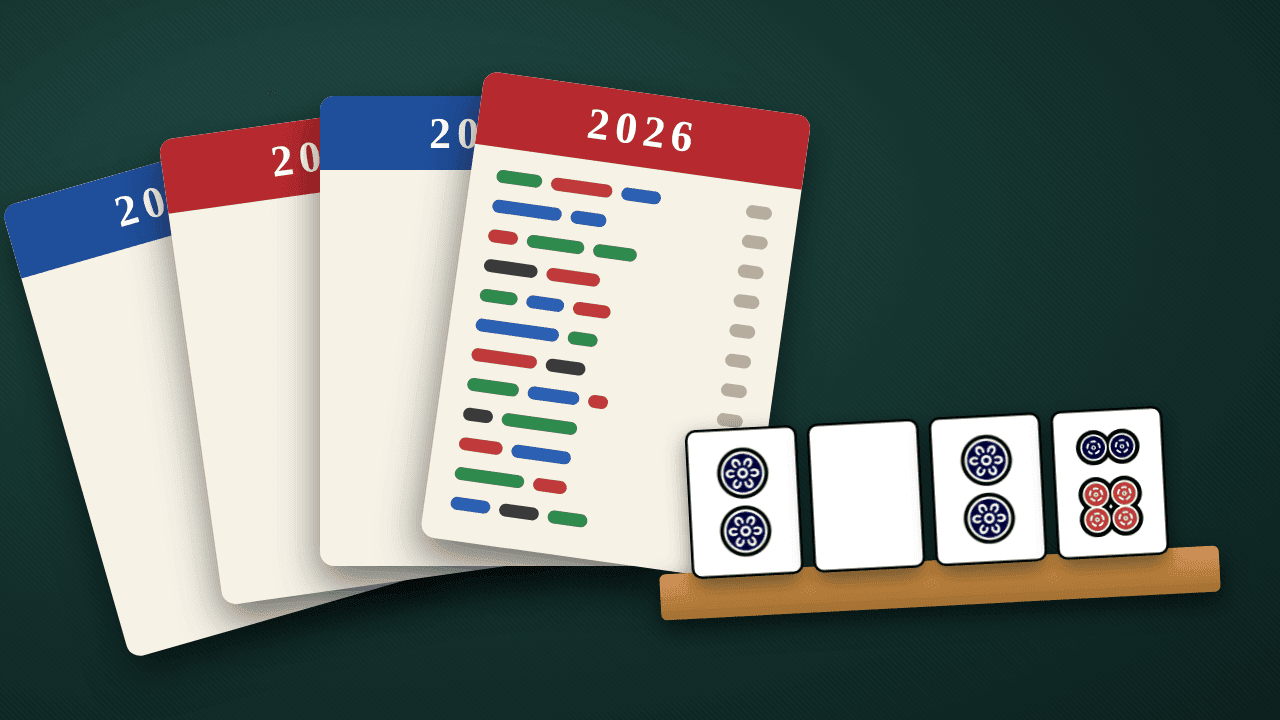
The National Mah Jongg League prints a card of legal winning hands, and it changes every year. No other game on this list needs one. The set has 152 tiles with 8 jokers, there's no calling a run, and before play the players pass tiles to each other in the Charleston. The 1937 founding and the joker rules are in the American mahjong card.
Singapore: the cat eats the rat
Singapore and Malaysia add four animal tiles. TheSmartLocal's guide counts 148 tiles in all, including a Cat, Rat, Rooster, and Centipede. Like flowers, they go face up in front of you and you draw a replacement. Draw the Cat and the Rat, or the Rooster and the Centipede ("predator and prey," the guide explains), and you collect money on the spot, before anyone wins. Draw all four animals and you get an extra tai. Declaring a kong pays instantly too.
Nobody in riichi gets paid mid-hand. The nearest riichi rule is sanma's North: on Tenhou and Mahjong Soul you set it aside and draw a replacement, like a flower, but it only counts as a , worth something if you win.
Riichi binds you to your discards
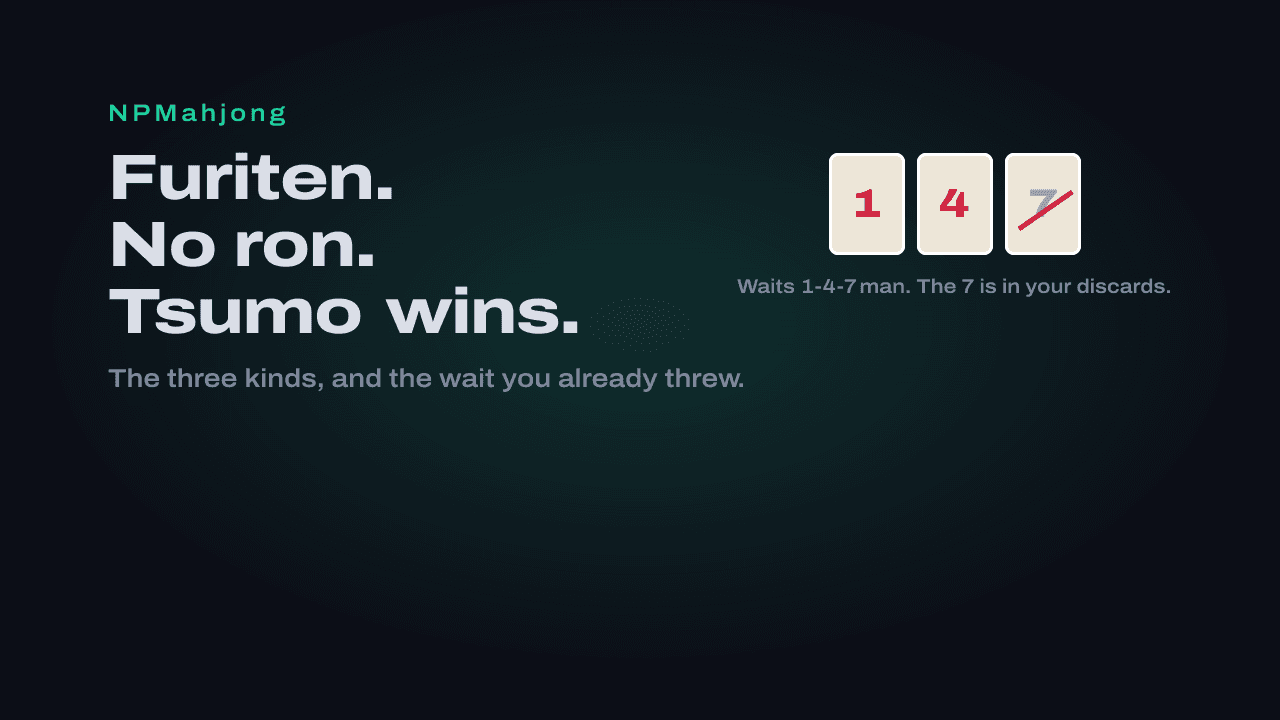
In riichi your discards sit in rows in front of you, in order, and they bind you: once you've discarded one of your own winning tiles, you can't win on anyone's discard. On the variant chart in Wikipedia's mahjong article, that rule, "sacred discard," appears only under the Japanese rule sets and Korean three-player. The furiten guide covers all three kinds.
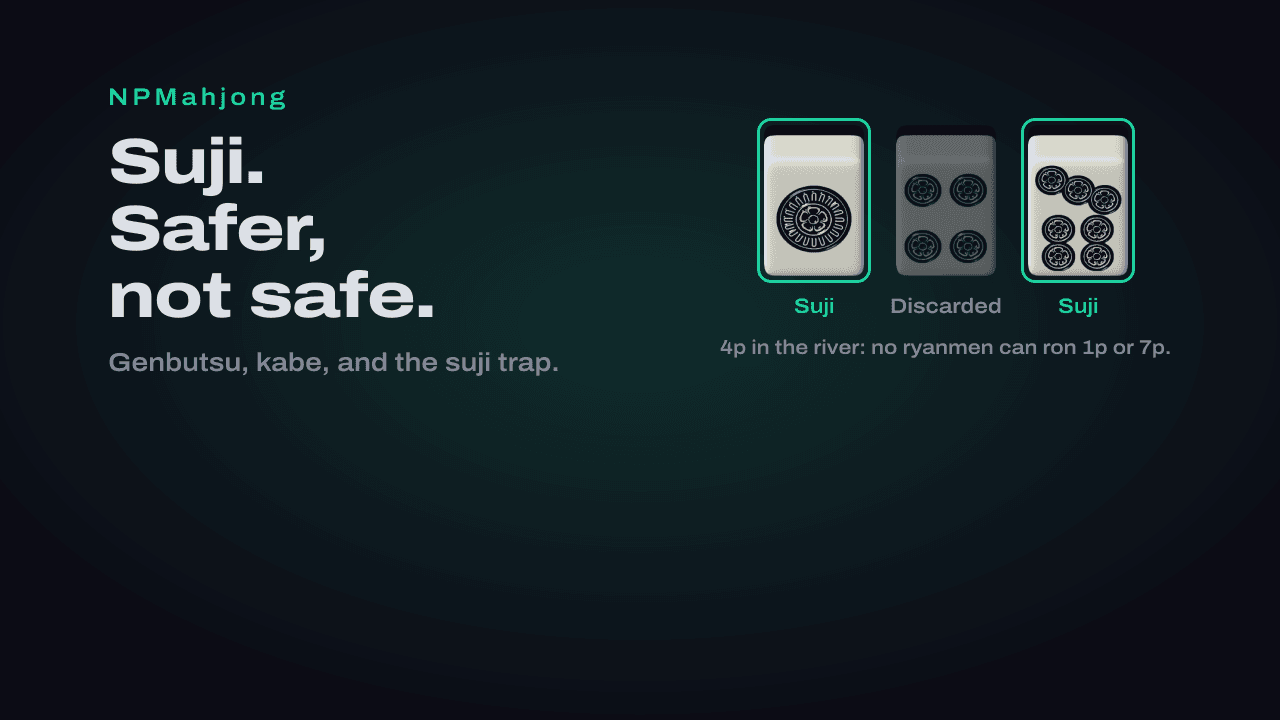
Because of furiten, your river tells everyone what you can't win on, and reading it is most of defense. The free riichi course runs in order from the rules to defense. Then try a real decision on the what would you discard page.
Was this article helpful?