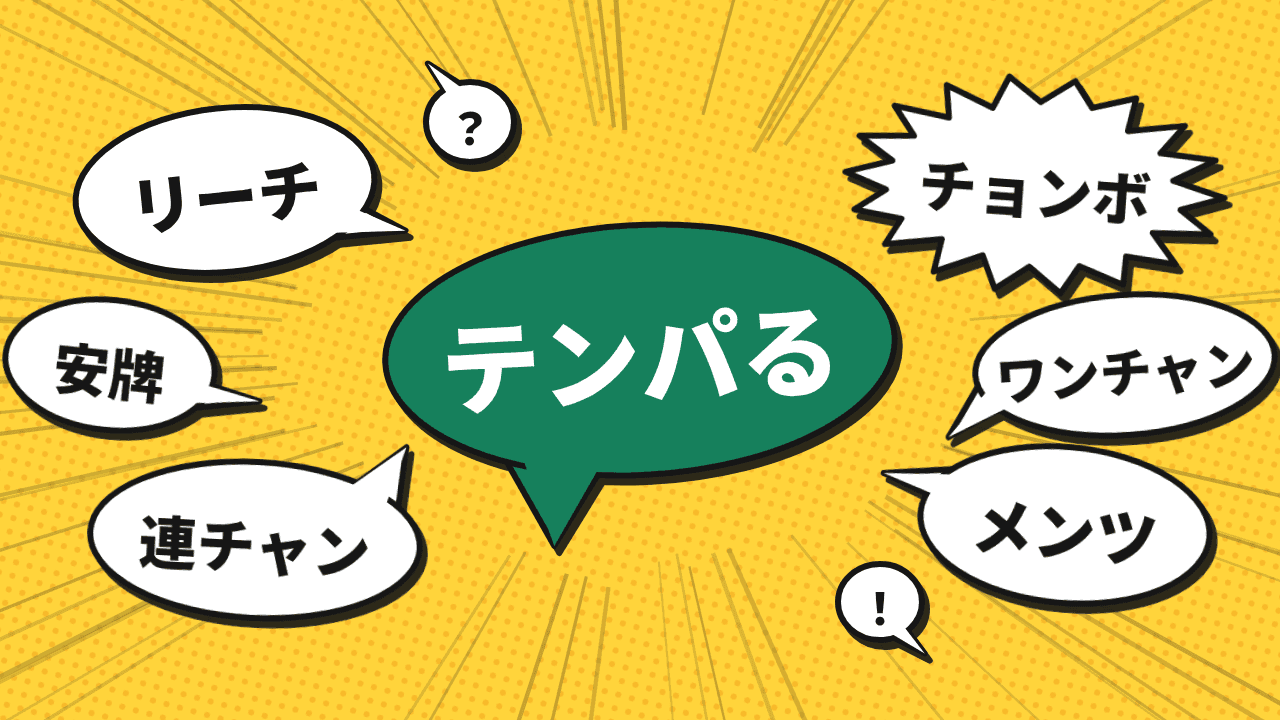
Someone in a Japanese office says 「もうテンパってる」 and nobody looks up. Across town a pachinko machine flashes リーチ. Nobody in either place is holding a tile, and both words walked out of a mahjong parlor.
Japanese dictionaries now print the street meaning under the table meaning, and the table meaning is often the surprise. テンパる is the famous case. At the table it means you're one tile from winning. In the office it means you're falling apart. All About wrote up three of the words below for 麻雀の日, Mahjong Day, which falls on 1 August because 8 and 1 read as "pa-i", 牌, the word for tile. Shogakukan's デジタル大辞泉 and 精選版 日本国語大辞典 (the 日国 below), both on kotobank, cover the rest.
Three words that mean "almost"
テンパる (tenparu)
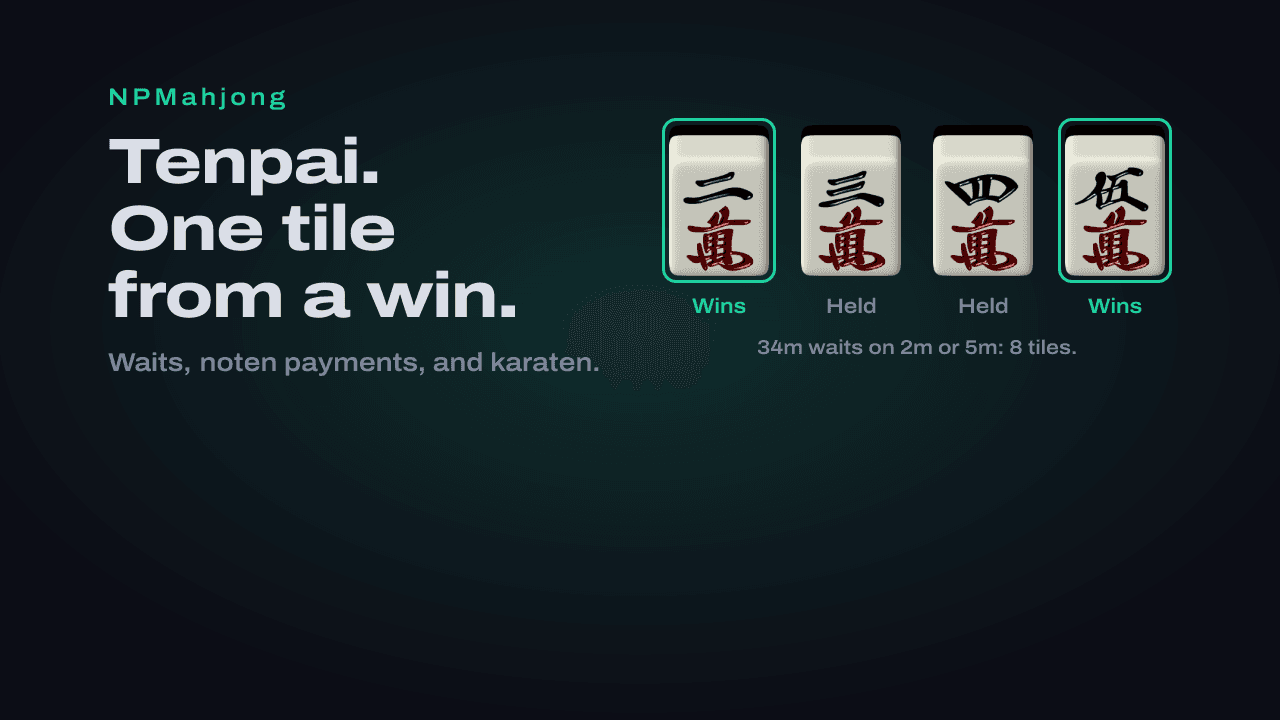
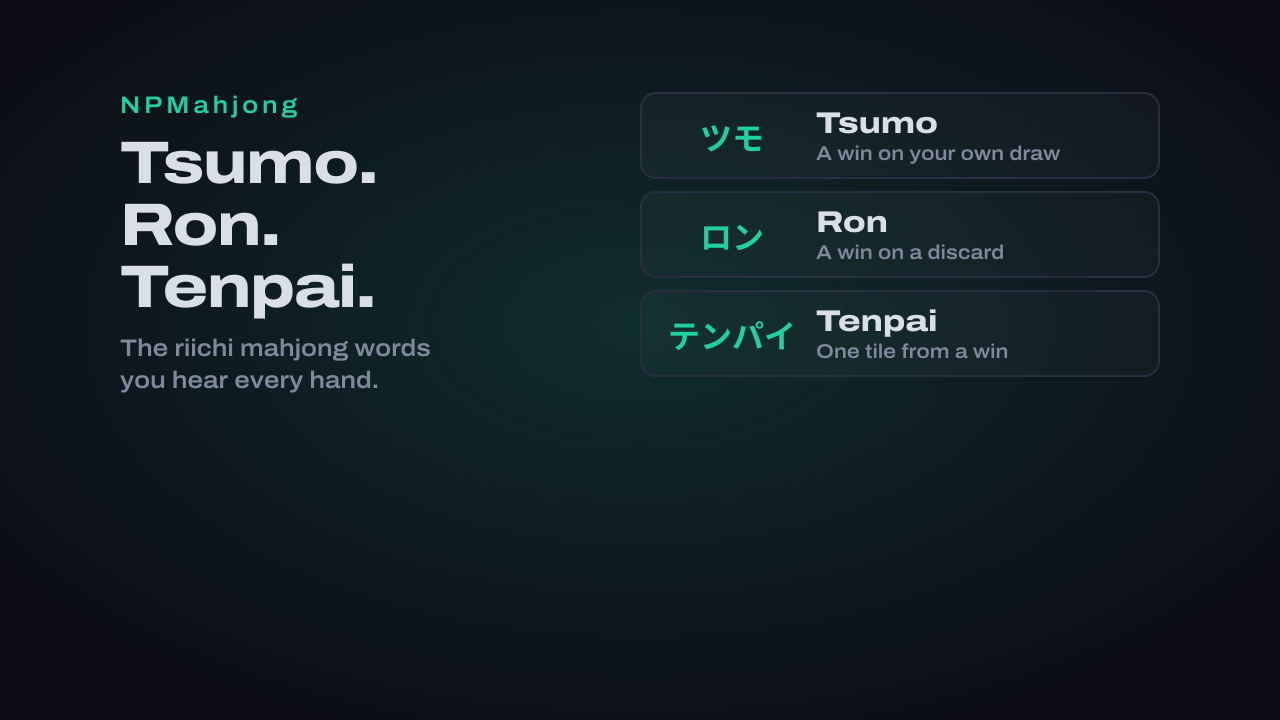
, , is a hand one tile from a win. Add る and you have a verb. The 日国 lists the two senses in order: to reach the state where one more tile completes the hand, then the colloquial one: cornered, no way out.
Japan uses the second sense now. An Oggi piece from 2022 traces the drift: being on the verge of something became being pushed to the edge, and from there having no room left. A ダ・ヴィンチ column adds a theory about why. Players get restless the moment they reach tenpai, so people who don't know the rules read the fidgeting, not the hand.
「急な予定変更にテンパる。」 A sudden change of plans and I'm losing it. (DIME's example.)
リーチ (riichi)
, , is the declaration that your is tenpai. You put 1,000 points on the table and lock the hand. デジタル大辞泉 adds a note most players outside Japan never hear: Chinese mahjong has no riichi, the rule spread in Japan after the Second World War, and it's thought to come from a regional rule in northeast China.
Off the table, 大辞泉 defines it as one step from victory or success, example 「優勝に立直がかかる」. You'll see it on a bingo card one number short of a line, on a pachinko reel with two symbols lined up, and in a sports headline the day before a team can clinch.
「優勝にリーチがかかった。」 One more win and the title is theirs.
ワンチャン (wanchan)
ワンチャン is younger Japan's word for "maybe", the long shot that isn't zero. The 実用日本語表現辞典 glosses it as "almost no hope, but it might work", and the Wikipedia entry on the same page says it's used mainly by the young.
It's a cut-down , one chance, and that's a defensive read. All About's Mahjong Day piece spells it out: three of the four copies of a number tile are visible from your seat, so a wait running through that tile is less likely, and the tiles next to it are safer to throw. Safer, not safe. The fourth copy can sit in a hand, and a or wait on the tile itself ignores the whole idea. "One chance" names the risk you're taking, and the slang kept that flavor.
「カフェもいいけど、ファストフードもワンチャンある。」 A cafe's fine, but fast food could happen too. (DIME.)
Two words about people
メンツ (mentsu)
At the table a , , is a set: three tiles in sequence or three of a kind. Four sets and a pair make a hand. 大辞泉 gives the word three senses: face or standing, the players a mahjong game needs, and the tile set. The first came straight from Chinese, and 面子を立てる, to save someone's face, has nothing to do with the game. The second came from the table. A game needs four, and a night with three is a night without mahjong. From there メンツ spread to the lineup of any gathering, with the dictionary example 「面子がそろう」: the lineup is complete.
「土曜のメンツ、あと一人足りない。」 Saturday's game is one player short.
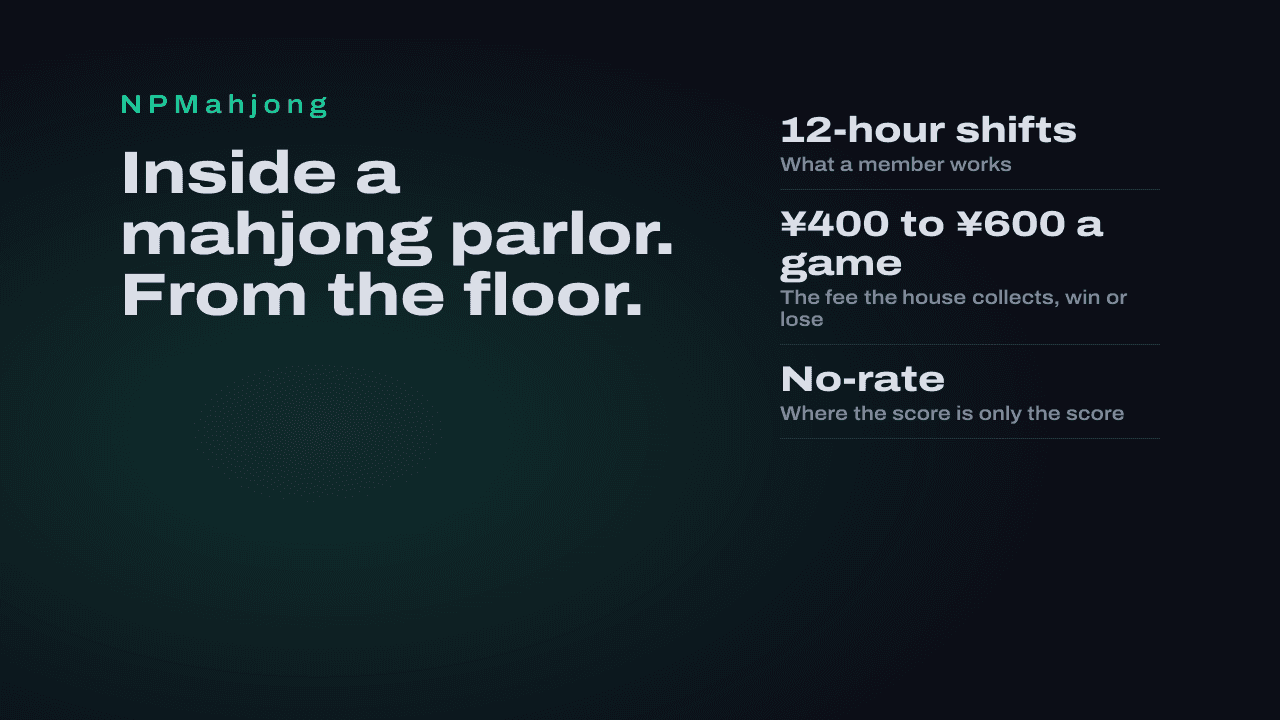
That missing fourth is why Japanese parlors keep staff who sit down and play.
安牌 (anpai)
安牌 is short for 安全牌, the safe tile. 大辞泉 defines it as a tile you can discard without anyone winning on it, then gives the extended sense: something, or someone, that carries no danger and is easy to handle, with the example 「彼は安全牌だよ」. The 日国 puts it less kindly: a person or thing that brings neither profit nor harm.
The street dropped one part. At the table the only true safe tile is , a tile the riichi player has already discarded. Everything else is a degree of risk. Off the table, 安牌 is the zero-risk option, the plan nobody will argue with. DIME's example is 「リーダー候補として、彼は安牌だ」, as a leadership candidate he's the safe pick, and that's no compliment.
「今回は挑戦せず、安牌なプランを採用しよう。」 No gambles this time. Go with the safe plan.
Two words off the scoresheet
チョンボ (chombo)
A is a foul: calling a win on a hand that isn't one, or wrecking the wall, and most rule sets charge a -sized penalty. The 日国 traces the word to the mahjong term 錯和, read ツォーホー, and DIME spells out the parts: 錯 means wrong, 和 is from , the win. A wrong win.
The dictionary's earliest citation for the everyday sense is a 阿川弘之 novel from 1959 to 1960, and 大辞泉's definition is the modern one: a careless mistake, a slip made from lack of attention. Nobody calls a disaster a . It's the wrong attachment or the misread date.
「発注でゼロを一つ多く打つチョンボをやらかした。」 I typed one zero too many on the order. A chombo.
連チャン (renchan)
, , is the dealer repeating. Win as the dealer and you deal again. 大辞泉 gives the extended sense as the same thing happening over and over, with the example 「朝から連チャンで会議だ」. The 日国's earliest citation for the mahjong sense is a 広津和郎 novel from 1933 to 1934, and it labels the everyday use slang, with 「連荘で飲む」: drinking several nights running.
The number goes in front, 2連チャン, 3連チャン, and pachinko borrowed it for bonus rounds that chain together.
「朝から連チャンで会議だ。」 Meetings back to back since this morning.
Two more, closer to the table
is "", the final hand, South 4 in a . 大辞泉 calls it a Japanese coinage from the two English words, the 日国 adds that it's used for the last stage of anything, and DIME has it on tour posters as a concert run's final show. , , is the player across from you, and the 日国 extends it to any seat directly opposite, with a 1950 citation from 坂口安吾.
The seven on one card
| Word | Reading | At the table | On the street |
|---|---|---|---|
| テンパる | tenparu | Reach tenpai, one tile from a win | Panic, lose your composure |
| リーチ | riichi | Declare a closed tenpai for 1,000 points | One step from the goal |
| ワンチャン | wanchan | Three copies showing, so the wait is less likely | Maybe, a long shot |
| メンツ | mentsu | A set of three tiles, or the four players a game needs | The lineup for a gathering |
| 安牌 | anpai | A tile that can't deal in | The safe choice, the safe person |
| チョンボ | chombo | A foul, paid at | A careless slip |
| 連チャン | renchan | The dealer repeats | Back to back, in a row |
Where to hear them for real
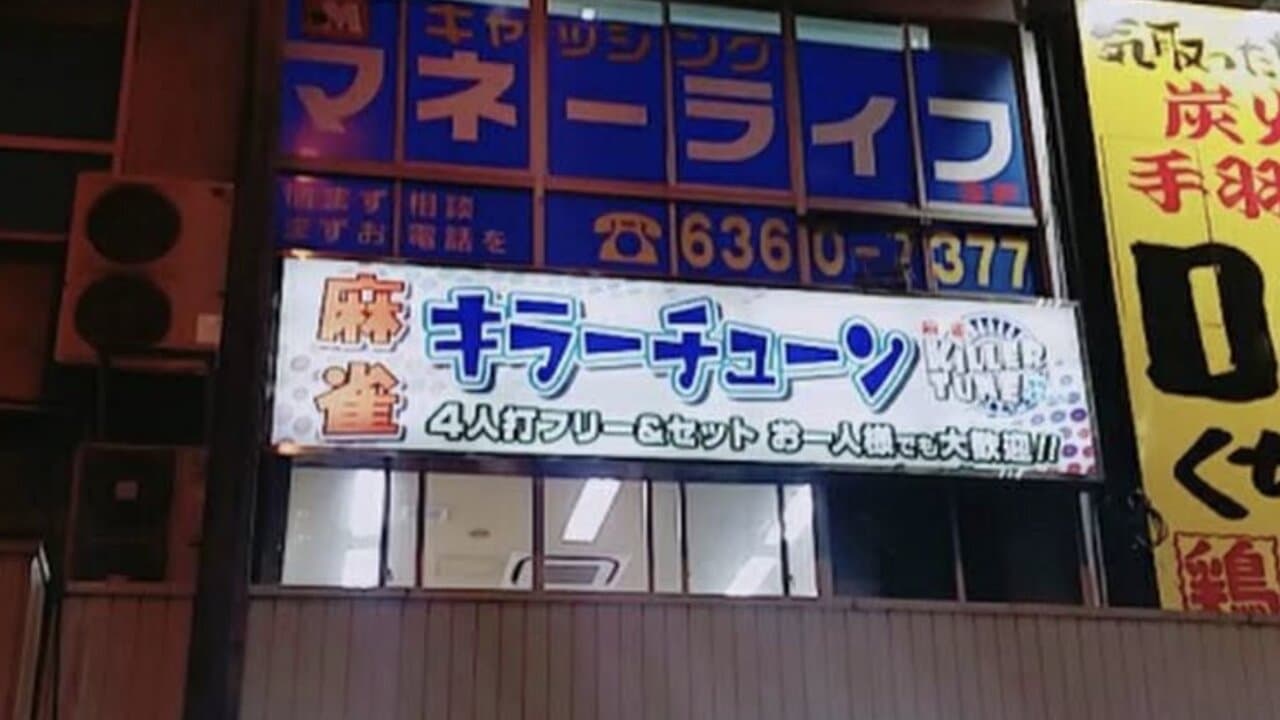
A no-rate parlor is the place. Staff explain the house rules, nobody wins or loses money, and the seven words come at you in their original sense all evening: メンツ at the door when they ask how many you are, リーチ every few hands, チョンボ when someone knocks over the wall, and 連チャン when the dealer won't give up the seat. Osaka has no-rate parlors in Umeda, Namba, and Shinsaibashi.
Every table meaning above sits in the glossary with its kanji and a one-line definition, alongside the rest of the 216 terms. Learn the seven table meanings first. The next time a coworker says 「テンパってる」, you'll know they're one tile from winning, and that they don't know it.
Was this article helpful?