You push a fresh 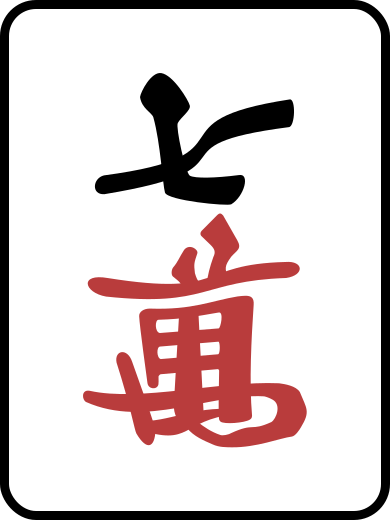 into a on turn 9 and pay the hand. You'll remember that tile tomorrow. You'll remember it next week, and it'll be the first thing you mention when someone asks how the game went.
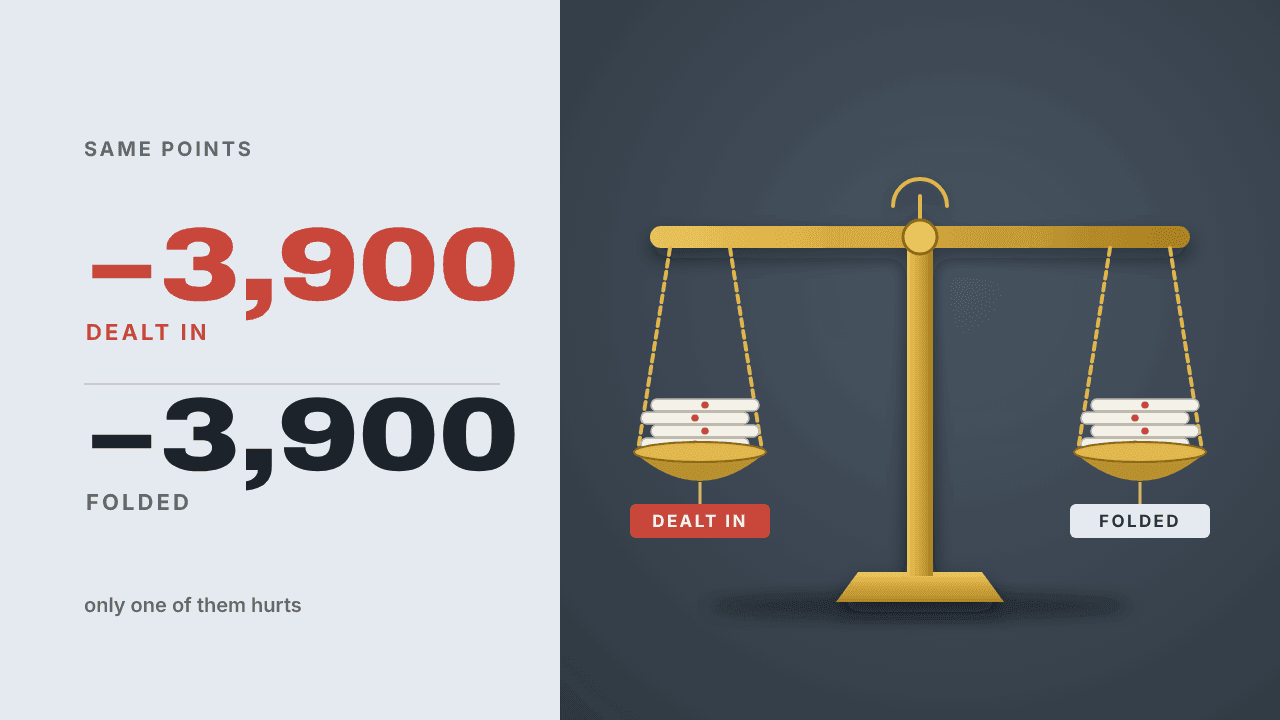
Two deals later you're on a with 3,900 behind it. A riichi comes from across the table. You break the hand, throw safe tiles until the draw, and pay the . Nobody looks up. By the time the tiles are back in the wall, the hand is gone from your head too.
Both hands cost you points, and a point lost is a point lost. One of them you'll carry for a week. The other never happened. The gap has a name: omission bias, the finding that harm you cause by acting weighs more on you than the same harm you cause by doing nothing. Ritov and Baron measured it in 1990, and it sits at the table every time a riichi comes and you reach for a .
Where omission bias comes from
The study behind it is Ilana Ritov and Jonathan Baron's "Reluctance to vaccinate: Omission bias and ambiguity", published in the Journal of Behavioral Decision Making in 1990. They asked people to choose between vaccinating a child, with a vaccine that can itself kill, and doing nothing. Even when the disease was the bigger danger, people held back. The disease's death rate had to be about ten times the vaccine's before they'd choose the shot. A death from a shot they ordered felt worse than a death from a disease they let through.
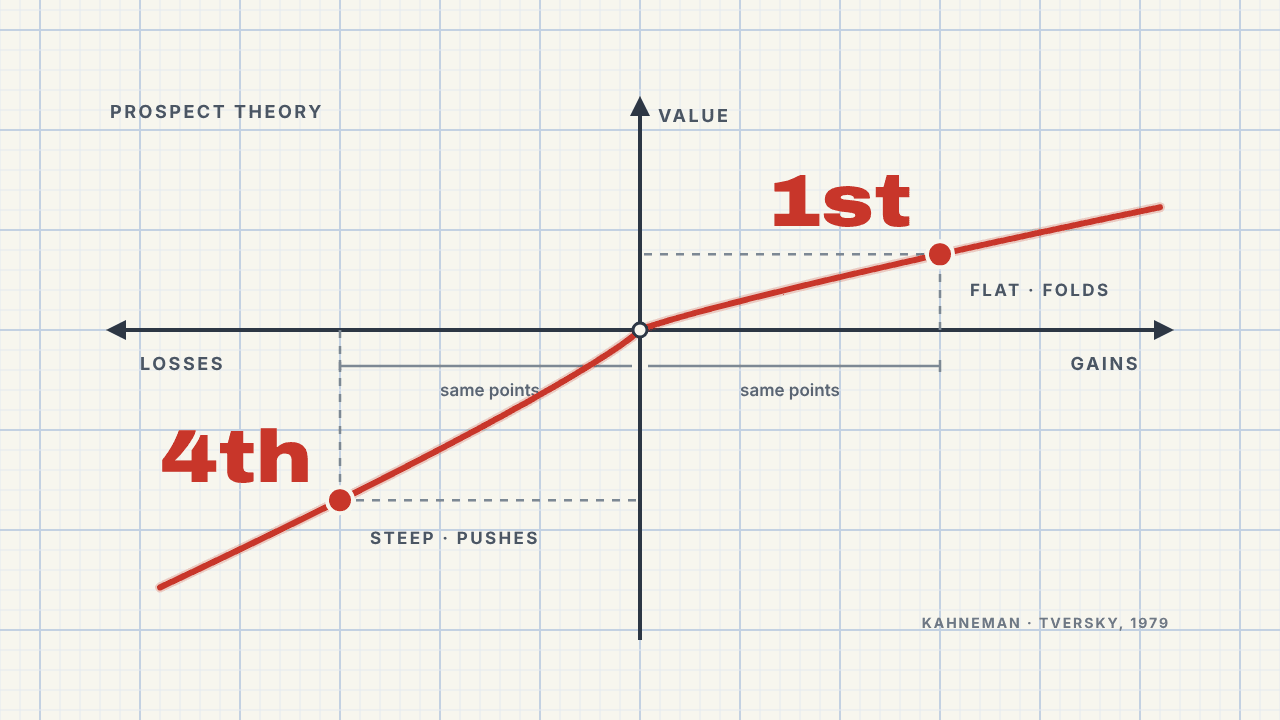
The mechanism matters more for mahjong than the lab result. Kahneman and Miller's norm theory says people treat doing nothing as the neutral reference point and doing something as the abnormal event. Add loss aversion, the rule that a loss weighs more than a gain of the same size, and you get an accounting trick. A loss from inaction gets filed as a "forgone gain". A loss from action gets filed as a "pure loss". Same money, two labels, and only the second one hurts.
Why the deal-in hurts and the fold doesn't
A has everything the bias needs. You chose the tile. You put it in the river. Someone said , turned the hand over, and you counted sticks across the table. The log records it, your stats page adds it to your deal-in rate, and three people watched.
A fold has none of that. You broke tenpai, cut , and the hand ended somewhere else. No line in any log says "was tenpai, folded". Tenhou shows you a deal-in rate and no fold rate. Nobody at the table knows what you held. Whatever the fold cost went out as a share of someone's tsumo or a penalty, the small leaks that also happen in hands you never had a chance in. So your memory files it under weather.
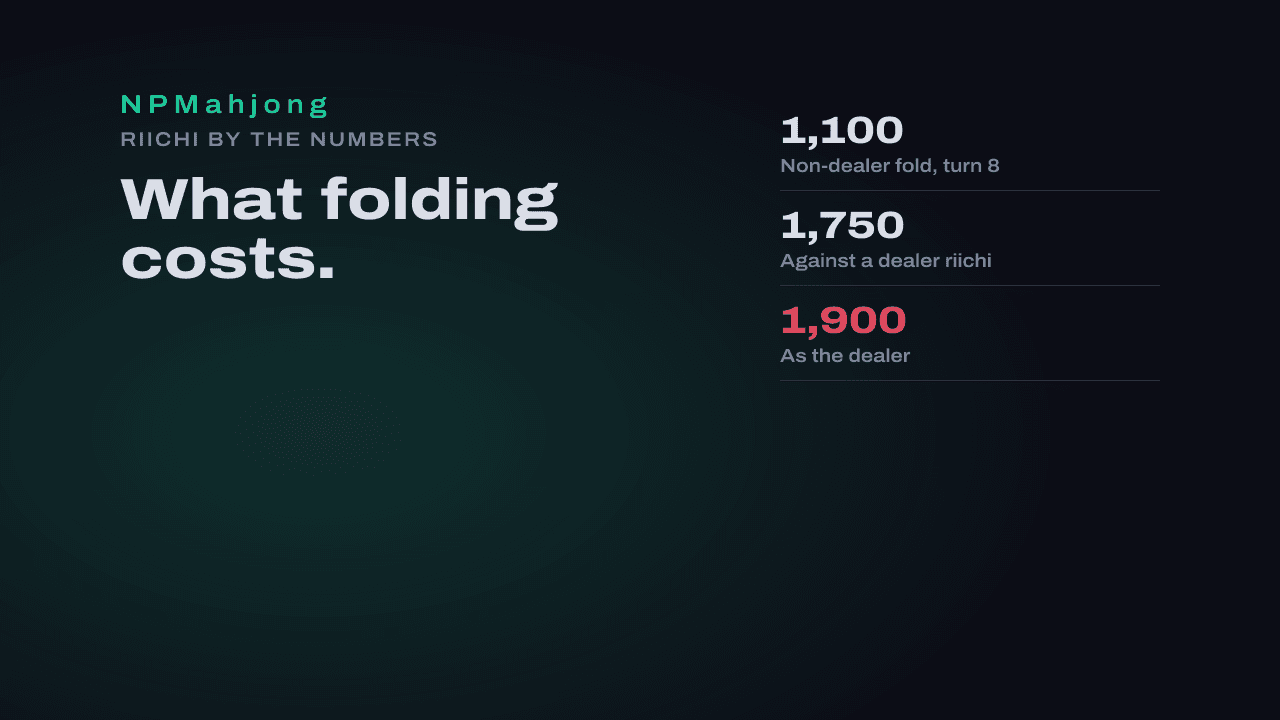
Here's what the weather costs. The fold-price analysis of Tenhou Houou logs takes every player who neither declared riichi, won, dealt in, nor stayed tenpai to the draw, and averages what they lost. That's the result a clean fold gets you. Against one non-dealer riichi it runs 1,090 to 1,250 points a hand for a non-dealer, depending on the turn, and 1,450 to 1,950 for the dealer.
| Result | How it feels | What it costs |
|---|---|---|
| Deal into a non-dealer riichi | A pure loss, with an audience | about five clean folds |
| Clean fold, non-dealer vs a non-dealer riichi | Nothing happened | 1,120 |
| Clean fold, non-dealer vs the dealer's riichi | Nothing happened | 1,750 |
| Clean fold, dealer vs a non-dealer riichi | Nothing happened | 1,890 |
| Fold a two-sided tenpai that should have pushed | Nothing happened | about 3,300 more than pushing |
Those are the prices for folding well: safe tiles, no ron. Fold badly and the bill goes up.
Five folds feel like nothing
The same logs price the other side. A non-dealer riichi declared on turn 8 that won by ron took 5,869 points on average, wins weighted in. Divide by the fold price and one deal-in into a non-dealer riichi costs about 5.2 clean folds. Into the dealer's riichi, about 4.7. Call it five.
That ratio is why the bias survives contact with the table. Five folds happen in five different hands, each one a forgone gain, none of them felt. The deal-in happens once, as a pure loss, and you feel the whole weight in one go. After a your gut holds a ledger that says deal-ins cost points and folds cost nothing. The score sheet says five of one equals one of the other. The bias doesn't only misfile the fold. It misfiles the exchange rate.
It's also the engine behind a complaint every player has made at least once: "I didn't deal in all game and still finished 4th." You didn't deal in. You paid the fold price all evening, and nobody, you included, wrote it down.
The 3,900 that leaves no trace
You're South in East 3, turn 8. West, a non-dealer, has just declared riichi. is 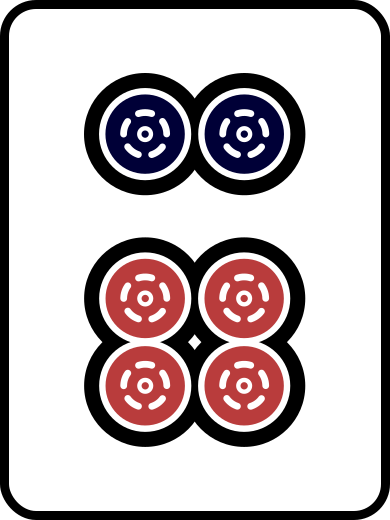 . Your hand:
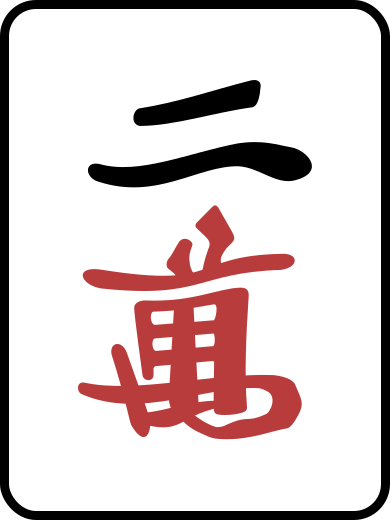
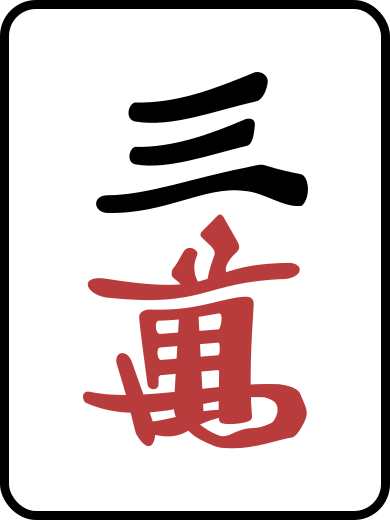
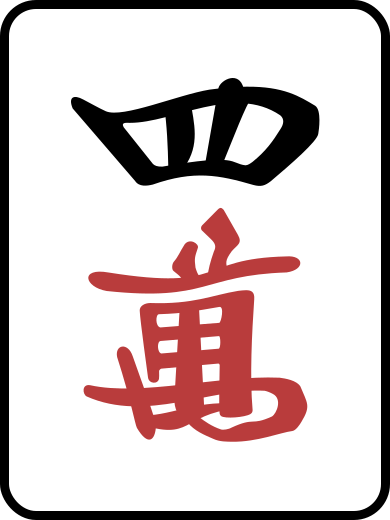
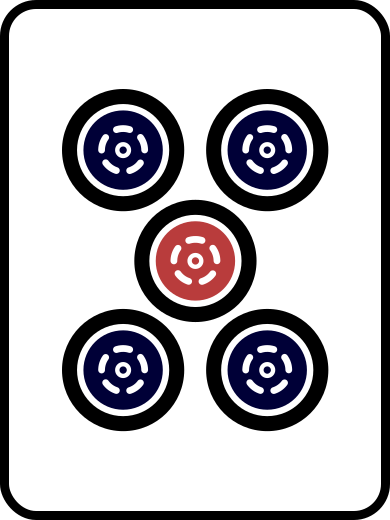
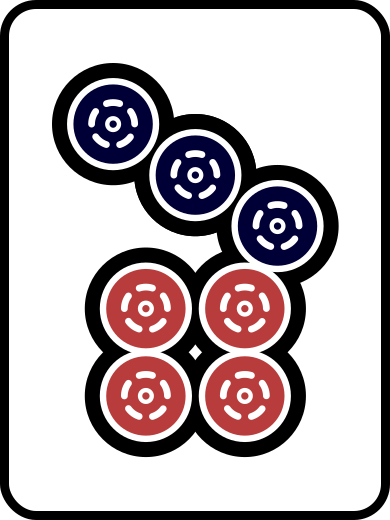
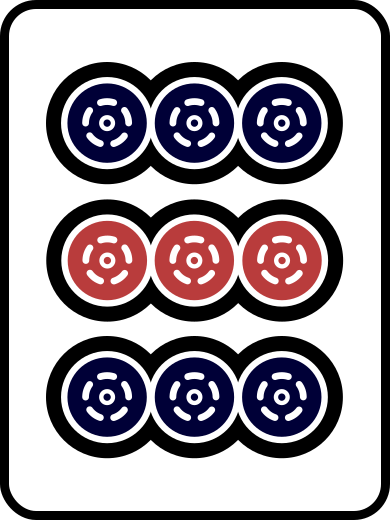
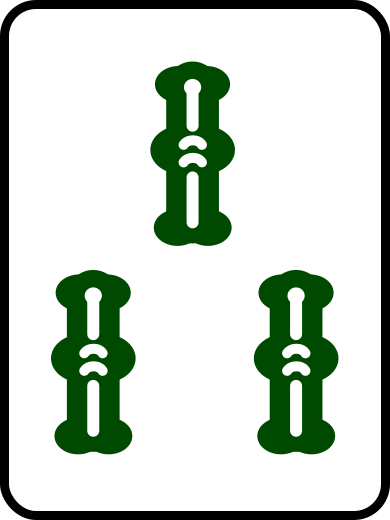
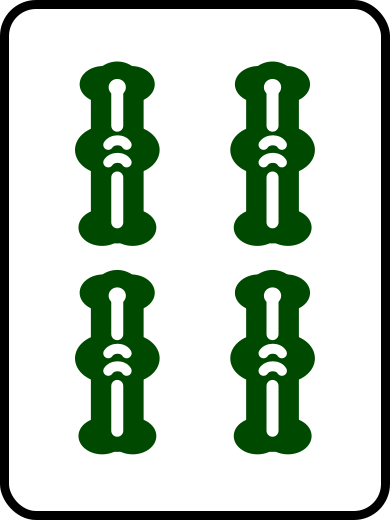
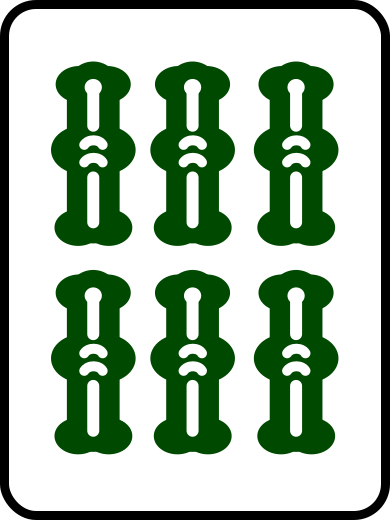
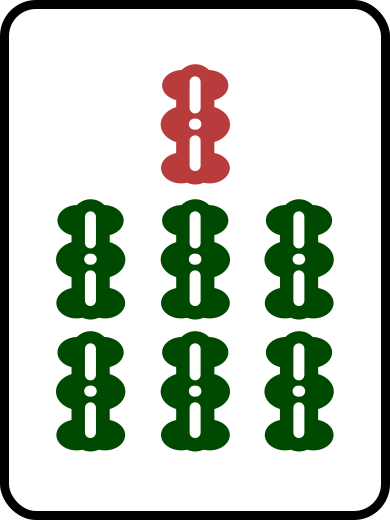
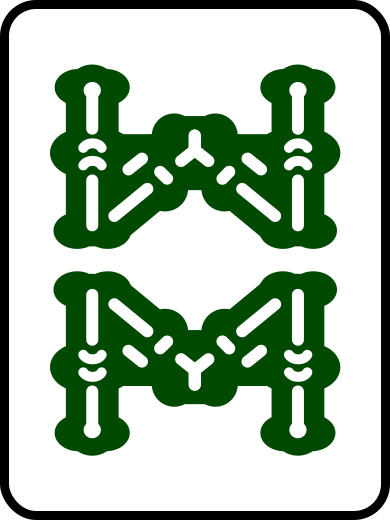
You're tenpai on 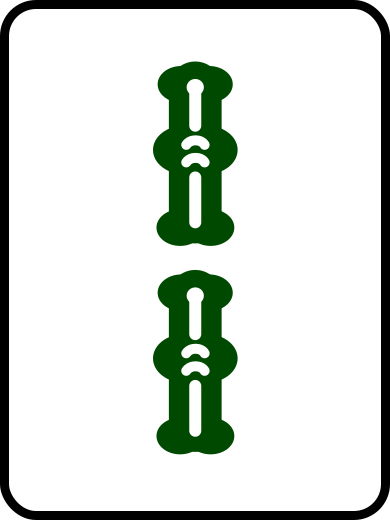 and
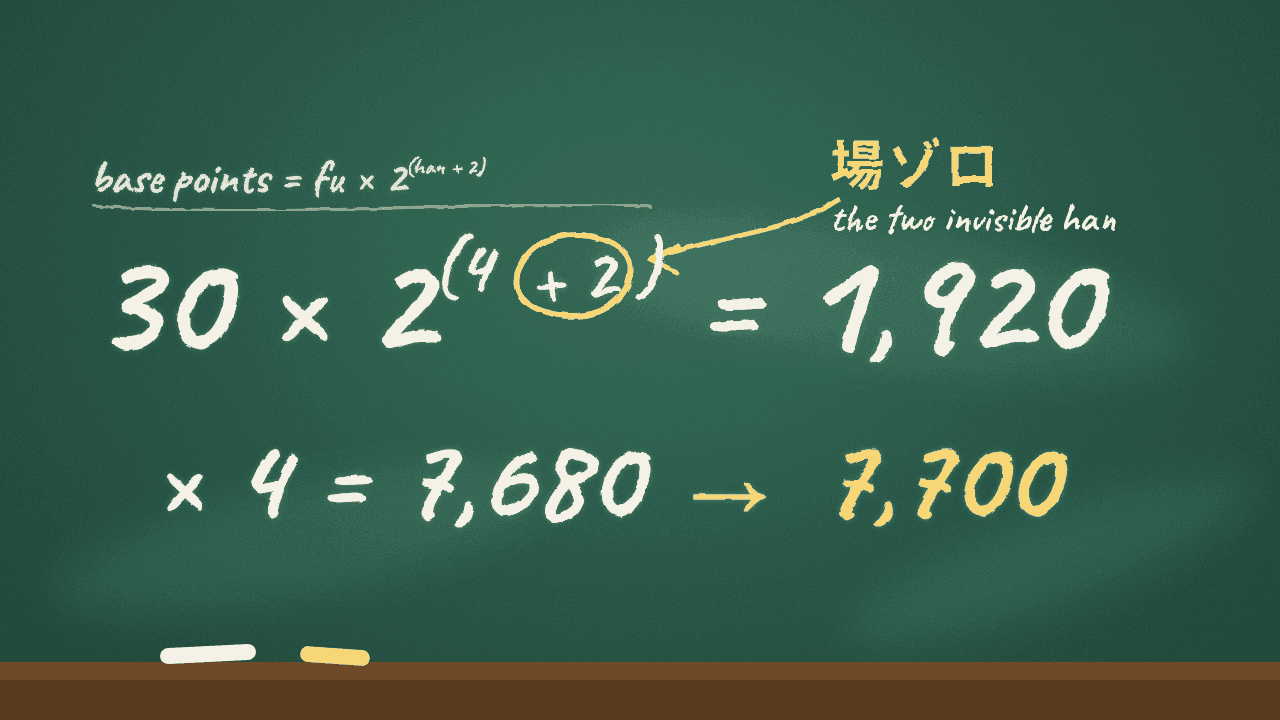
and 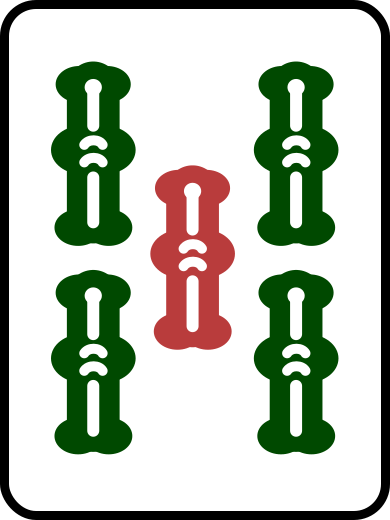 , a , and the hand is riichi, , 1: 3,900 on a ron before . The draw is a , a fresh middle tile West hasn't shown a for. West cut on turn 2.
Push means cutting the 7m and declaring riichi. Fold means cutting a 9p, which West can't ron, and the hand is over. The genbutsu sits right there in your pair, and that's what makes the fold feel so reasonable.
Run the numbers instead of the feeling. In the Houou logs a two-sided tenpai chasing a non-dealer riichi wins about half the time and deals in about a fifth. With 3,900 in the hand and a riichi stick already on the table, the rough math in the fold-price post puts pushing about 3,300 points ahead of folding. Cutting the 9p here is a 3,300-point mistake, and nothing will ever flag it. No ron, no sticks, no stat. The hand drains out through a noten penalty or a tsumo share, and you remember it as "the one I folded safely".
Now play it the other way and lose. You cut the 7m, West rons, you pay. For a week it's "the time I pushed the 7m", and the next time a fresh 7 shows up in your hand against a riichi, your fingers will remember. The right push that lost gets a story. The wrong fold that cost more on average gets silence. Every pro will tell you to judge the decision and not the result. Omission bias is the reason that's hard.
Tenhou doesn't ask how you got to 4th
Your memory punishes the visible error. Tenhou's ladder punishes placement. The 4th-place penalty grows with every while the reward for 1st stays flat: +30 in , +60 in , +75 in , +90 in Houou. For a 5 dan, the gap from 2nd to 3rd is 30 points and the gap from 3rd to 4th is 105. That design is deliberate, and it has no omission bias in it. A 4th you reach with one deal-in and a 4th you reach by folding five tenpai hands take the same points off your rank.
Where the fold is still right
None of this says push. Most of your folds are correct, and the bias doesn't change that. A narrow wait, , , or , needs a hand worth about 2,000 to break even against a non-dealer riichi. Under that, fold. Against the dealer's riichi the bar is higher, because a dealer's hand pays 1.5 times as much. A hand still one tile short of tenpai is a different problem, and the fold-price post covers it.
The bias isn't in folding a 1,000-point . It's in what you do with a 3,900 ryanmen, and in the fact that you'll audit the deal-in by reflex and never audit the fold. That's why the fix is a piece of paper, not a rule.
The one-week fold log
For one week, write one line for every hand where a riichi came and you had something worth deciding about. Round and turn, your wait shape, your hand's value, what you did, and what it cost. A deal-in gets the points you paid. A fold gets the value of the hand you gave up, in the same column. The format is yours; this works:
E2, turn 9, ryanmen, 3,900, folded, paid 1,500 noten
S3, turn 7, kanchan, 1,300, pushed, dealt in 5,200
At the end of the week add up the fold column. You already know the deal-in column by heart; that's the whole point. The fold column is the one that will surprise you, and the two-sided tenpai hands in it are the ones to check. Open the push or fold calculator for each one, pick the seat, the shape, the value, the turn, and the tile you'd have cut, and read the verdict. Expect "push" next to some of your proudest folds.

Where the analogy breaks
The lab result is shakier than the table. Connolly and Reb failed to replicate the vaccination finding in 2003 and read their subjects as avoiding regret rather than avoiding action. Mahjong doesn't need the questionnaire: the fold price is an average over Houou logs, not a survey answer.
Omission bias is a finding about moral judgment, about harm done to someone else. At the table the only person you harm is yourself, so what carries over is the accounting, the reference point and the two labels, not the ethics.
Omission bias is defined on equal harms. Mahjong's harms aren't equal. One deal-in is about five folds, so your gut is right that the single deal-in is the bigger event. Where it's wrong is the sum, and the sum is the only thing a keeps.
And a fold isn't inaction. It's a run of tile choices, and a fold that deals in on its third "safe" tile is the worst of both ledgers: hand gone, points paid, and this time with an audience.
Next time the riichi comes and you're tenpai on two sides with 3,900 behind it, say the fold price out loud before you reach for the genbutsu. Then write the hand down whichever way it goes. If you'd rather have someone else read the week's log and mark the folds that cost more than your deal-ins, send me your games for a review.
Was this article helpful?