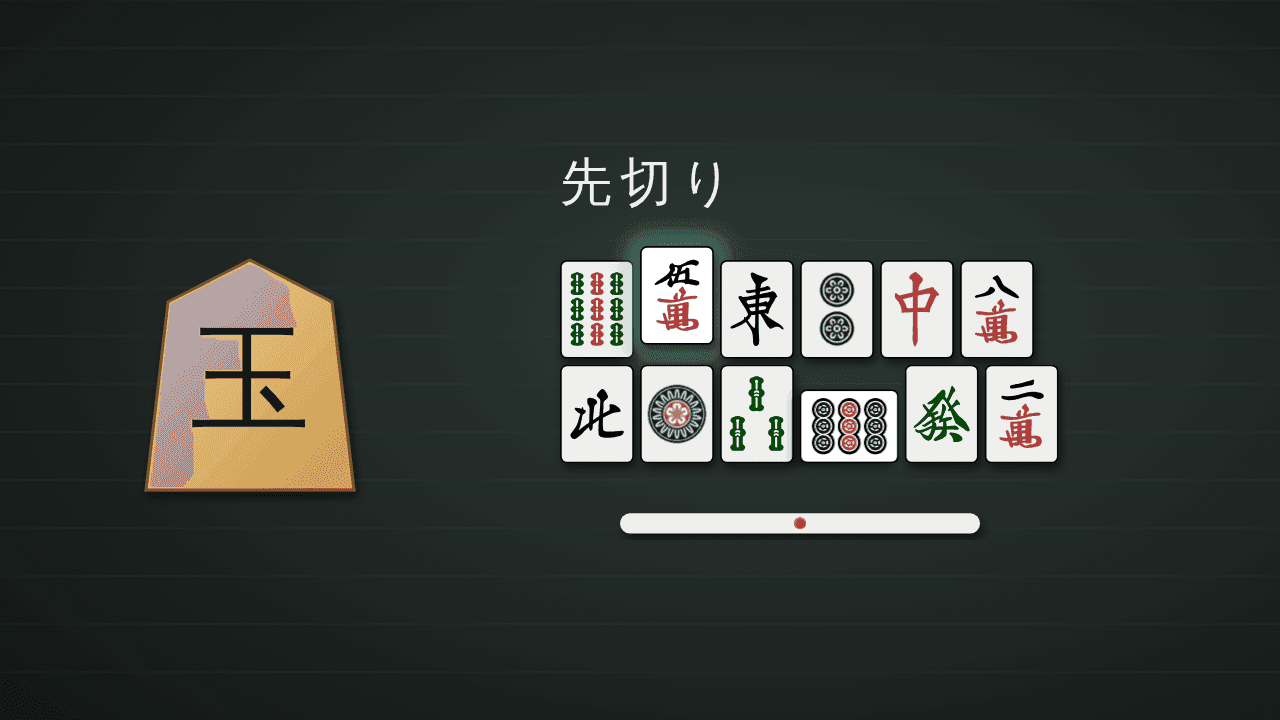
You've carried a fresh 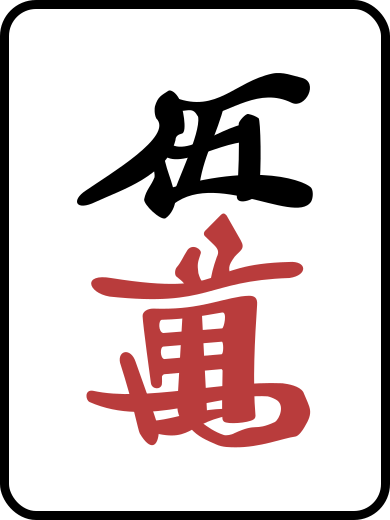 since turn 4. It was a spare the whole time, and on turn 5 it was free to let go. Now it's turn 11, the declared two turns ago, and you've just drawn the tile that puts you in . To declare, the 5m has to go, and it's the most dangerous tile in your hand.
Cutting it on turn 5 is what chess players call prophylaxis. players call it , the (先切り). Both mean dealing with the threat before it exists, while that's still cheap.
Nimzowitsch made prevention a system
Aron Nimzowitsch's My System came out in German in 1925, as the first of five brochures that ran to 1927, and in English in 1929. Its Wikipedia entry cites the International Master John Watson, who noted that the book popularized ideas like prophylaxis that are commonplace today. The entry on Nimzowitsch sums up his system as one idea: reach your own goals by stopping the other player's plans.
The word is Greek, prophylaxis, "guarding or preventing beforehand." In chess it means a move that stops the opponent from doing something, and also improves your own position. The textbook case is the Najdorf Sicilian, where Black's 5...a6 exists to keep a white knight or bishop off b5. No white piece is on b5 yet. That's the point.
The shogi version puts a price on it
Shogi has a proverb for the same habit: gyoku no hayanige hatte no toku (玉の早逃げ八手の得). Word for word: "the king's early escape, an eight-move gain." Japanese Wikipedia's list of shogi proverbs explains it: when the opponent's attack is hard to stop, moving the king to safety gains more tempo than defending with captured pieces dropped back onto the board. For a moment the king is out of any mating threat, and you can attack in the meantime. The list of shogi terms defines the early escape, hayanige (早逃げ), as moving the king to a safe square just before check arrives.
The same article is honest about the number. A footnote cites a proverb book that calls the eight moves an exaggeration, and the shogi champion Yonenaga Kunio saying one or two moves are certain. Another note reads hachi, eight (八), as "many," as in the everyday phrase for trying everything, so the proverb might once have meant the early escape has many benefits. Either way, the advice holds: move the king before the check.
Sakigiri has three meanings
Japanese Wikipedia's mahjong glossary gives sakigiri three senses. The first is fixing a shape early: from 778, cutting a 7 or an 8 early. The second is the one this post is about: processing dangerous or unneeded tiles before they become someone's winning tile. The third is a breach of manners, drawing and discarding before the player on your left has discarded, and has nothing to do with strategy. The glossary lists it as the early cut.
The second sense does what prophylaxis does. You make a move with no visible threat on the board, because you can see where the threat will come from.
With two equal spares, cut the middle one
Turn 5, nobody has called or declared. You hold this:
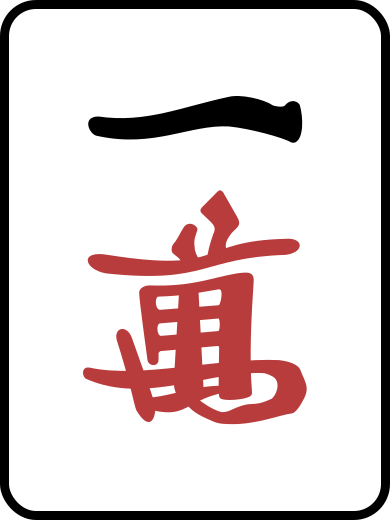
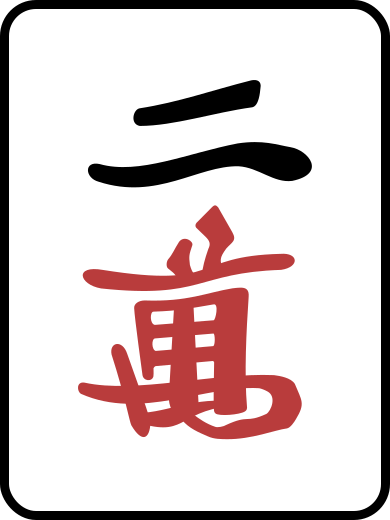
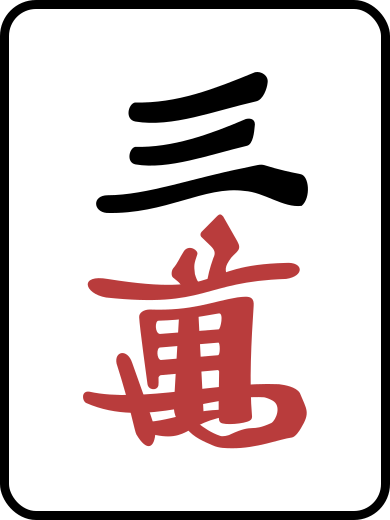
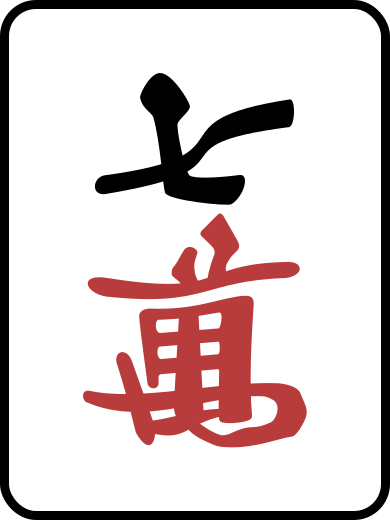
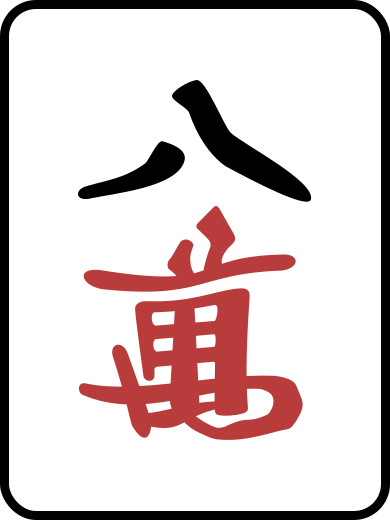
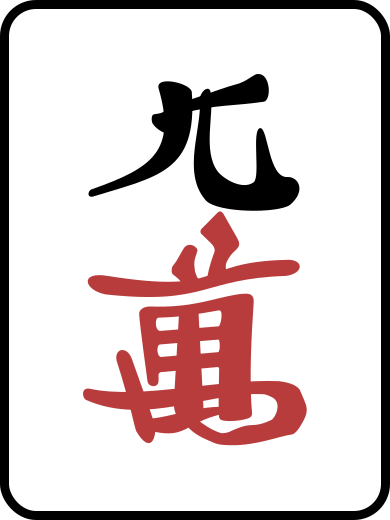
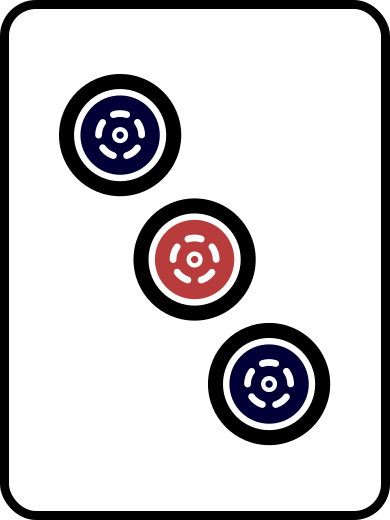
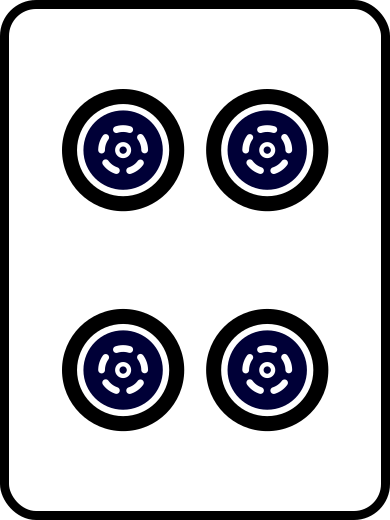
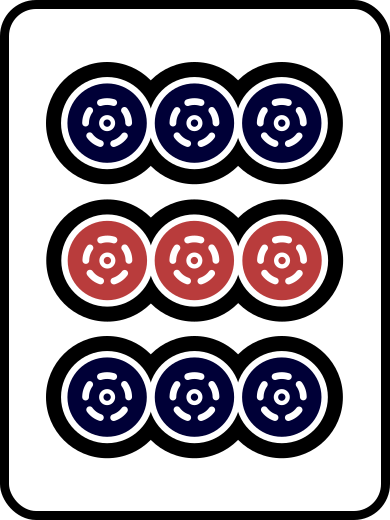
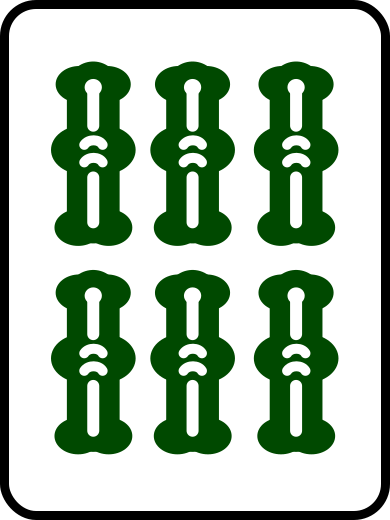
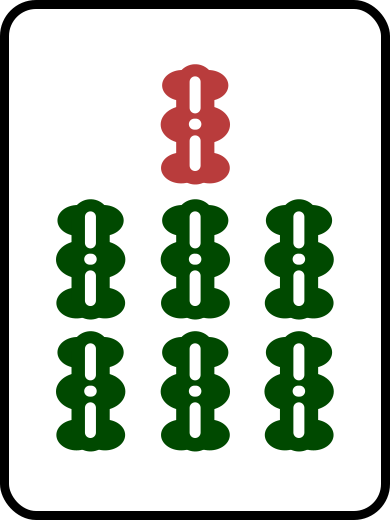

Two sets, a pair, a , a , and two spare tiles: the and the . The engine behind the hand analyzer can't tell them apart. Cut either one and you're with the same 16 tiles: 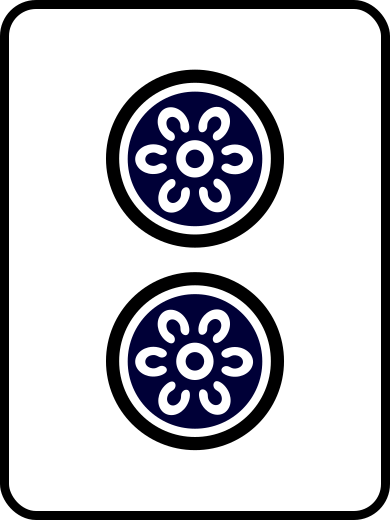 ,
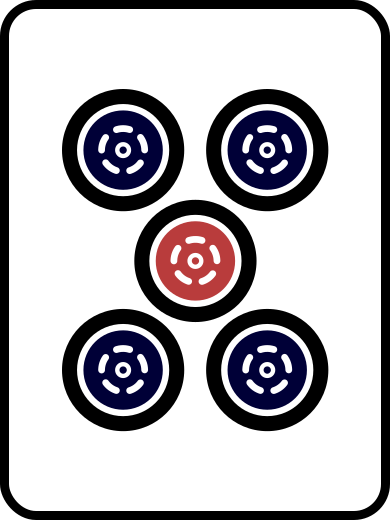 ,
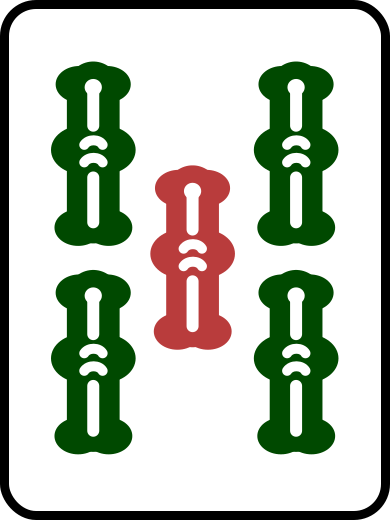 , and
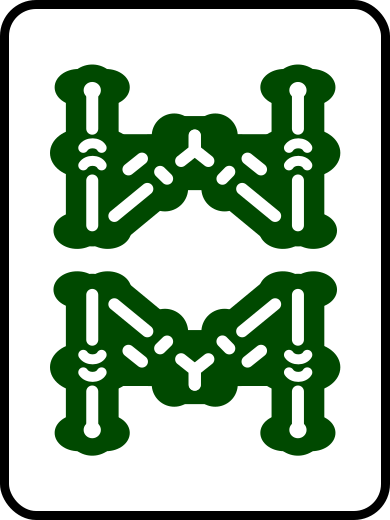 , four of each before you count the rivers, every tenpai two-sided. Every draw that would widen the hand widens it the same way whichever spare you kept.
So the hand gives you a free choice, and time decides it. Whichever spare you keep is the tile you'll throw at tenpai. If a riichi lands first, it's the tile you'll throw into it. In Tenhou logs 2016 to 2020 (analysis by chienshyong), a 5 with no read sits in 8.0% of riichi waits and a 9 in 4.1%, per the dora danger baseline. Cut the 5m now.
What it buys, roughly: 3.9 points of chance on the tile you throw into a riichi. At 5,869, the average Houou of a riichi from turn 8, that's 0.039 × 5,869, about 230 points every time you'd have thrown that spare into a riichi.
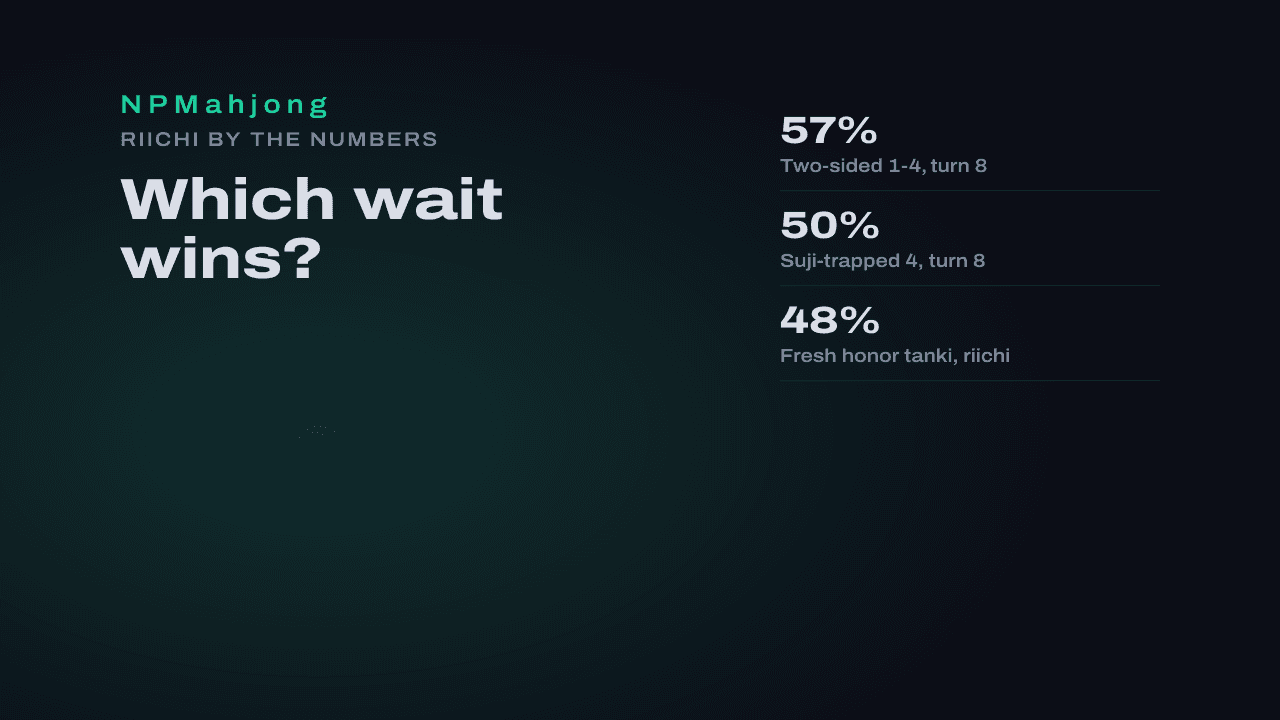
A 5m in your river also makes the 2m and 8m look safe by . If your hand later lands on a single-tile wait on a 2 or 8 of that suit, the wait data has a trap there winning 52% at turn 8 against 41% for the plain wait.
Sakigiri also has a cost chess doesn't charge: information. An early 5m tells everyone reading your river something about your , the characters suit, and a sharp reader can use that. In a against three strangers online, take the 230 points.
The dora: prophylaxis with a timetable
The dora is the tile that most needs an early decision, and the one where "early" means something precise. In the Houou logs a riichi waits on the dora 1.3 to 1.7 times as often as on the same tile when it isn't dora. A middle dora sits in 10.9% to 11.5% of riichi waits. Against an open hand, a fresh honor dora is in 14.4% of waits, most of it a on the pair.
The dora danger post gives the rule: a dora leaves your hand on the first discard or at tenpai, almost never in between. On the first discard nobody is close to tenpai, so even a leaves them a long way from winning. At tenpai it buys you a wait. Cut it on turn 7 to be safe and you get neither benefit: you held the risk for six turns and still gave up the . A hand with no shape around the dora, one that was never going to use it, is the exception. That one goes early and clean.
Prophylaxis runs on a schedule. A chess player plays 5...a6 on move 5, not move 25. A sakigiri on turn 2 costs a han you weren't going to use, while on turn 8 it's a dangerous tile thrown in a hurry.
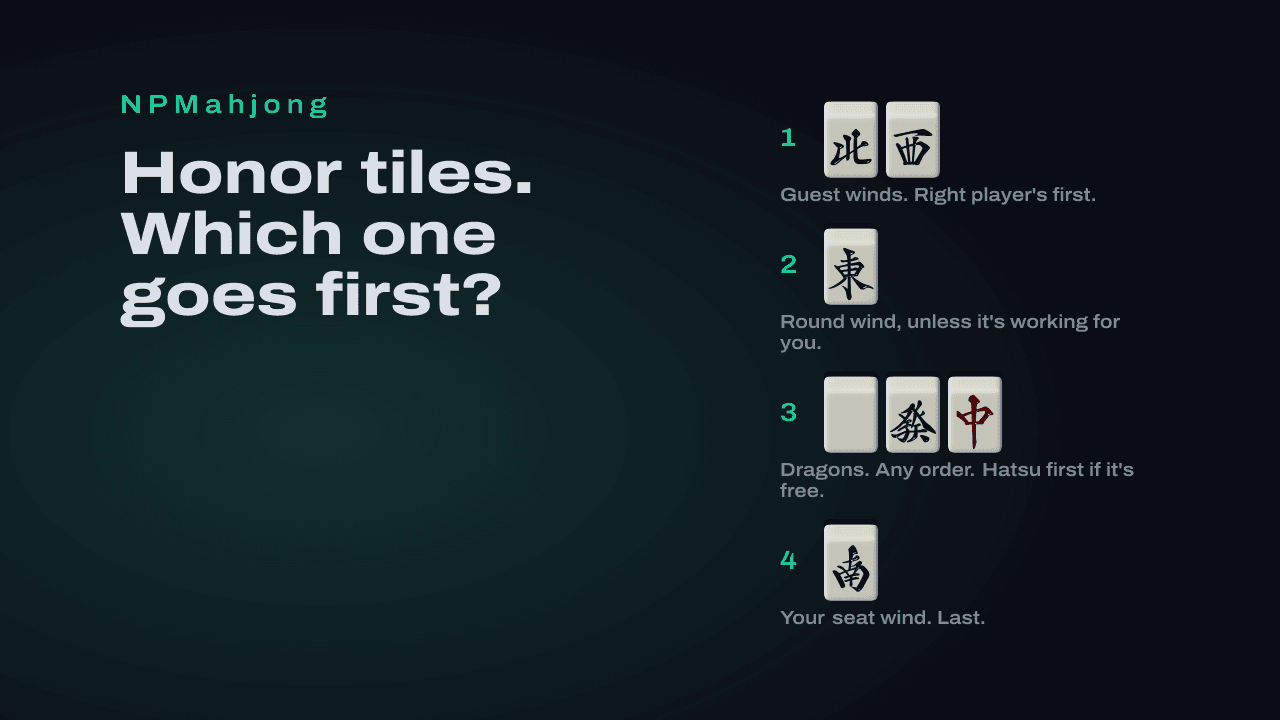
The honors work the same way. The honor discard post makes the point about a live dragon: nearly free on turn 2, and a tile that can lose the game on turn 12 into an open hand.
Past the free version, every early cut is a bet on a riichi that may never come. Sometimes nobody declares, and the tile you cut would have made a better shape. So the costly version needs a reason: a dora the hand won't use, a dragon nobody has paired yet, a caller on their first meld.
The early escape: before the third call
The shogi proverb adds the timing for defense. Don't wait for the check.
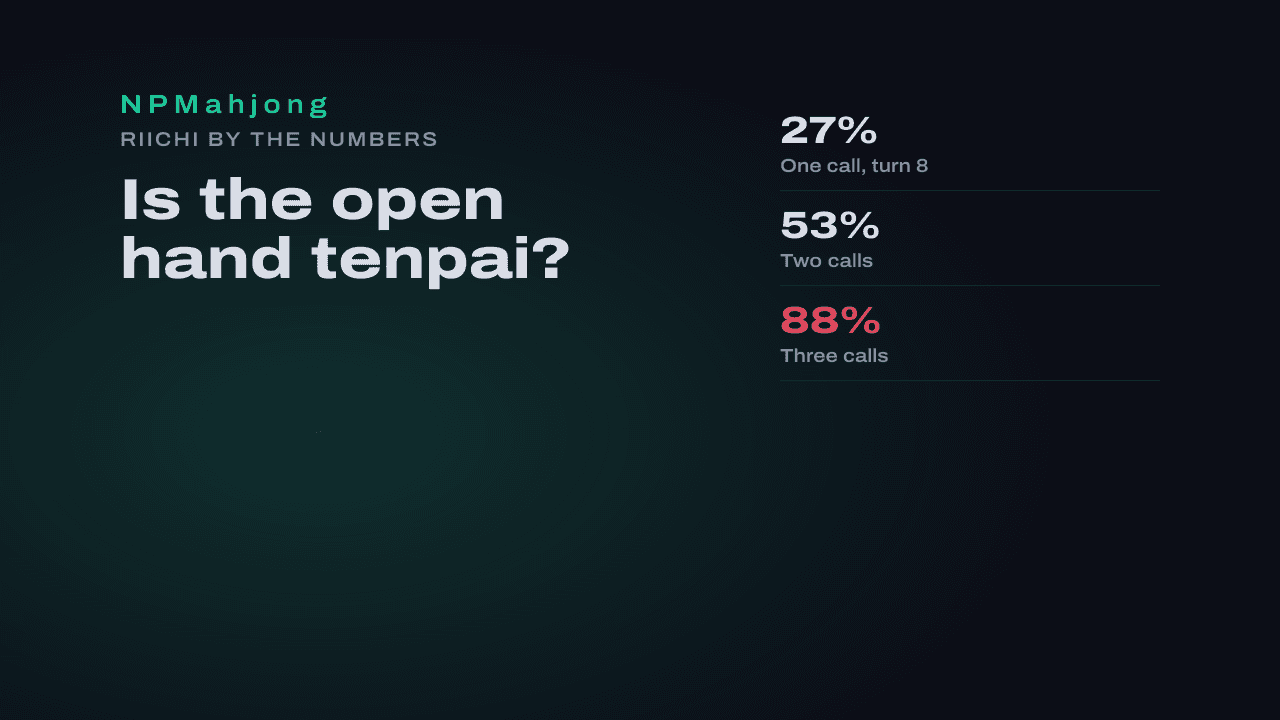
In the Houou logs, an open hand at turn 8 is tenpai 27% of the time with one call, 53% with two, and 88% with three, per the open hand data. The third call is the check. The first call is the last cheap moment for sakigiri: the spare middle tile you were saving goes now, while that player is tenpai only 27% of the time. The second call, with the hand tenpai about half the time, is the moment for the early escape.
The early escape at the second call means two small changes while you keep building. Stop cutting tiles that player hasn't shown you are safe. And keep a tile that's safe against them, even if it costs a tile of acceptance somewhere else. When the third call comes, you still have a safe tile and a hand.
Name your tenpai discard now
At every , before you discard, ask one question: which tile will I throw when I'm tenpai? If the answer is a fresh middle tile and another spare is just as good for the hand, cut the middle one now. Every time an opponent makes their second call, count your safe tiles against them before your next discard.
Then check the habit in the numbers. Open the deal-in danger tool, pick riichi, and look up each tile you threw at tenpai in your last few logs next to the spare you cut earlier in the same hand.
To find the turns where the early cut was free and you skipped it, send me a log for a game review.
Was this article helpful?