
Close discards usually get settled by feel, and feel misses overlaps. Two (two-sided partial sets) that want the same tile look like 16 tiles and hold 12, so the block that looks strongest can be the one to break. Counting the tiles each discard keeps shows that in a few seconds, and that count is .
Count the kinds, then the tiles
counts the useful draws you still need before , as the shanten lesson showed. Tile acceptance, or ukeire (受け入れ), is the list of those draws: every tile that would lower your shanten right now. It comes as two numbers. Kinds are the different tiles on the list. Tiles are the copies of them still out there: four of each kind, minus the ones in your hand.
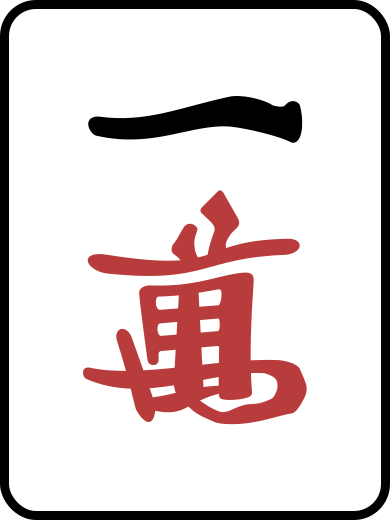
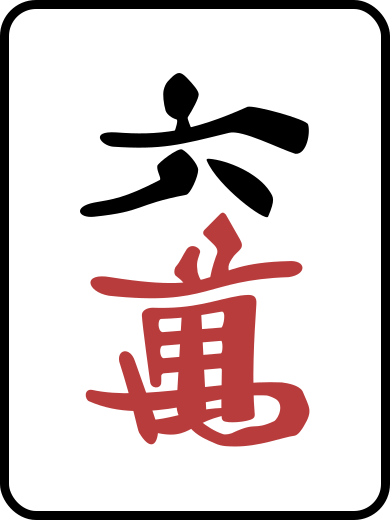
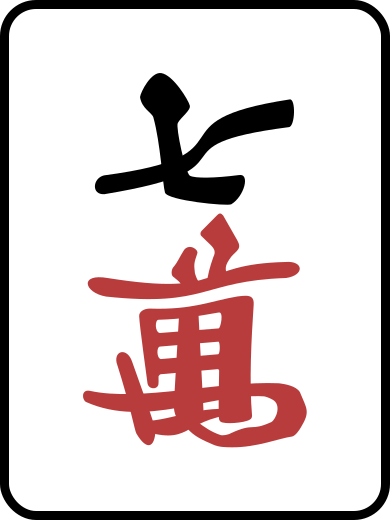
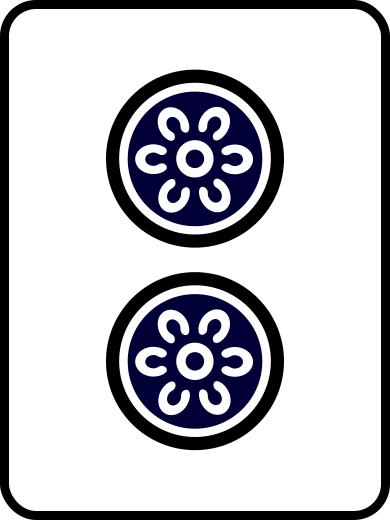
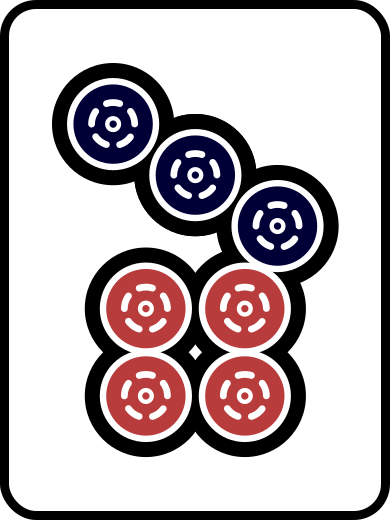
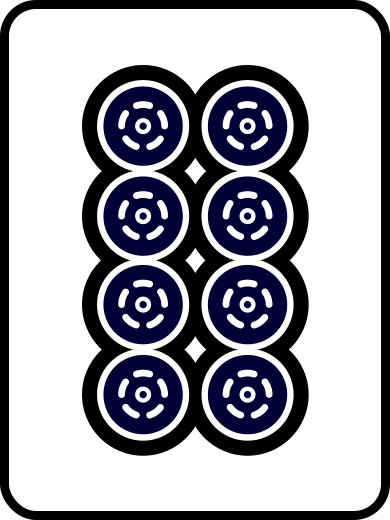
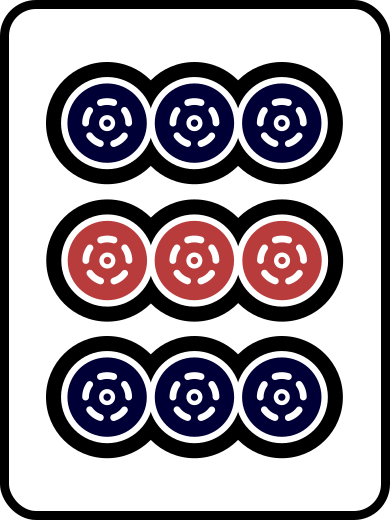

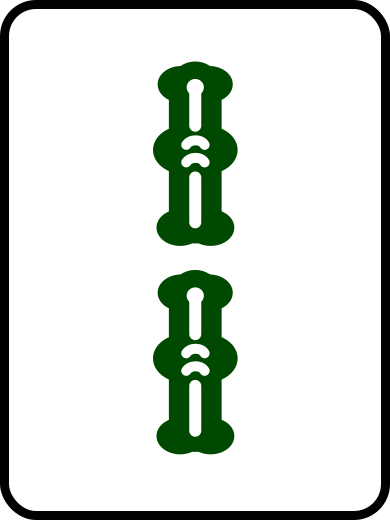
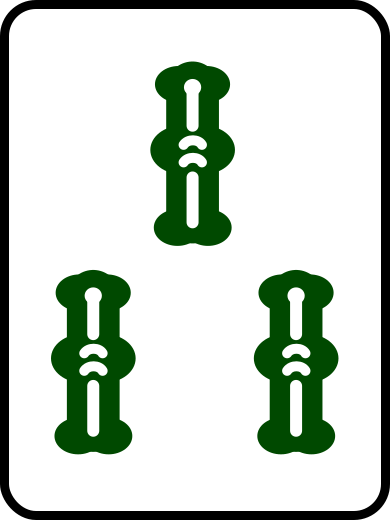
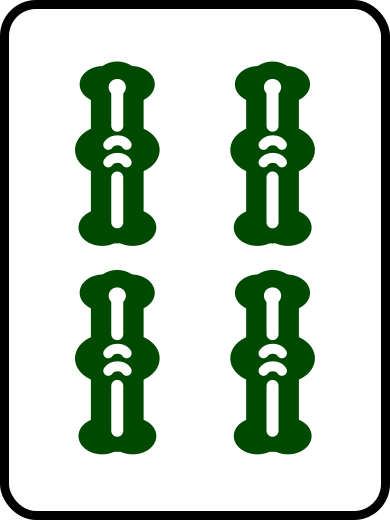
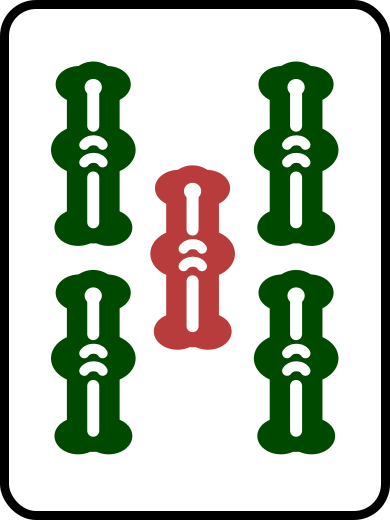
This hand is 1-shanten. It holds two sets (789p and 123s), the 22p pair, a loose (isolated) 1m, and two ryanmen. Count them one at a time.
- takes a
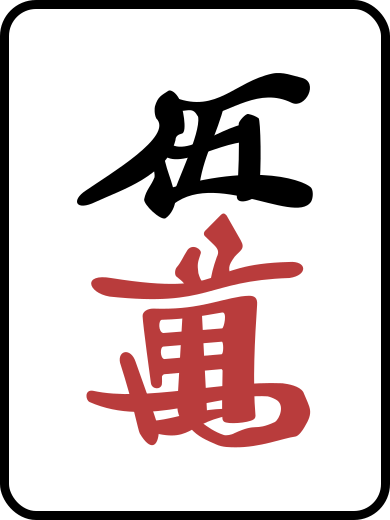 or an
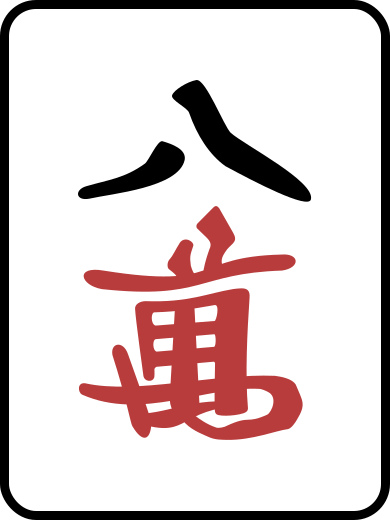 . You hold neither, so 4 tiles each.
- takes a or a
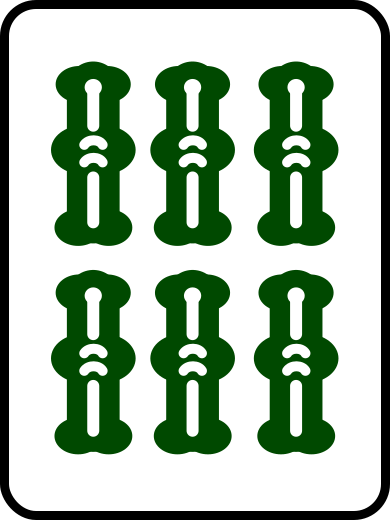 . One 3s already sits in your 123s, so the 3s has 3 tiles left and the 6s has 4.
That's 4 kinds and 15 tiles, and every one of them makes you tenpai. Say both numbers, but let the tiles decide, because a kind with 4 copies left and a kind with 1 left each count as one kind.
Only a draw that lowers your shanten goes on the list. A 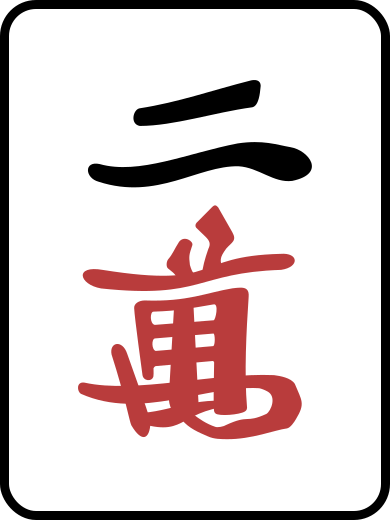 looks useful, since it turns the loose 1m into a (edge shape). But this hand needs two more sets and already has a for each, both ryanmen. After the 2m you'd throw the 1m or the 2m straight back and hold the same 15 tiles. That's the test for any draw: if your best discard afterwards leaves you where you were, the draw wasn't acceptance.
The hand analyzer prints this same list. Count a few of your own hands first, then check yourself against it.
Compare two discards by writing both lists
With 14 tiles, each discard leaves a different 13-tile hand with its own list. Compare the discards you're weighing in two steps.
- Shanten first. As a rule, a discard that leaves you farther from tenpai loses, however long its list.
- Then tiles. At the same shanten, the most tiles wins. Equal counts are a tie on the count, and shape can still split them, as a later section shows.
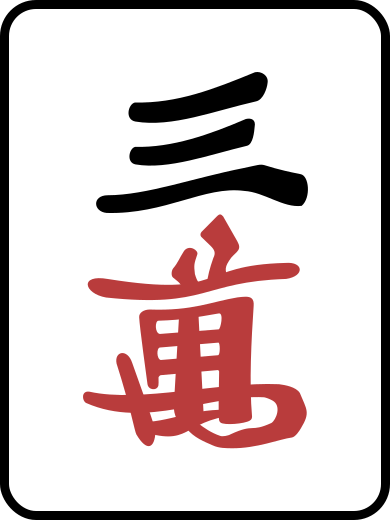
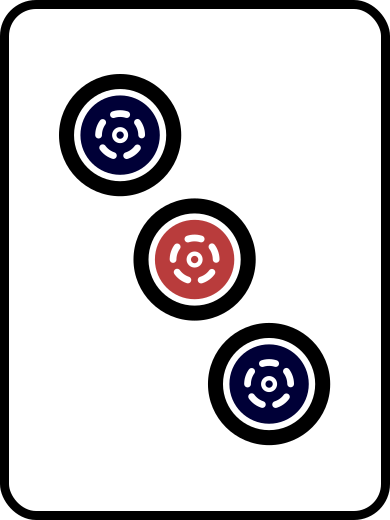
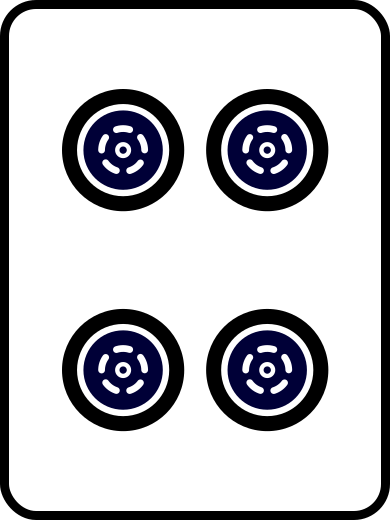
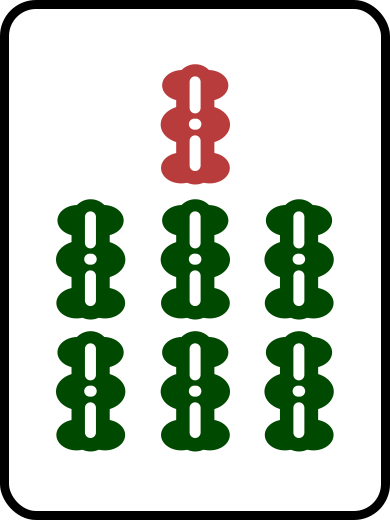
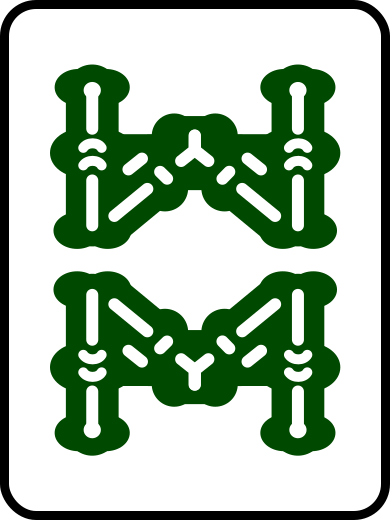
Two sets (234p and 678s), the 22s pair, and three ryanmen: 23m, 56m, and 78p. With two sets and a pair already in hand, there's room for two partial sets, so one ryanmen is extra. The 78p sits alone and the four look like a strong block, so breaking the 78p feels right. Write the lists.
- Cut the 8p: 1m, 4m, and 7m. 3 kinds, 12 tiles.
- Cut the 2m: 4m, 7m, 6p, and 9p. 4 kinds, 16 tiles.
The 23m and the 56m both want the 4m, and a kind counts once however many shapes need it. So the four manzu hold 12 tiles between them, not 16. Breaking the 23m costs only the 1m, and breaking the 56m only the 7m: 4 tiles either way. Breaking the 78p costs 8. The 2m, 3m, 5m, and 6m all keep 16, and 16 tiles against 12 makes every draw a third more likely to bring tenpai.
Step one matters too. Run this hand through the analyzer and the longest list belongs to the 2s: 40 tiles. Cutting it breaks your only pair and drops you to 2-shanten, so those 40 tiles only bring you back to 1-shanten.
What do you discard?
Tap the tile you would cut.
Show the answerHide the answer
Cut
The now hold two ryanmen, 45s and 78s, and both want the 6s. Together they take the 3s, 6s, and 9s: 12 tiles, not 16. Cut the 4s, 5s, 7s, or 8s and you keep 16: the 2m and 5m for the 34m, plus the 6s and a 3s or 9s. Break the 34m to keep both souzu ryanmen and you keep only 12, because the 6s counts once.
Take off every copy you can see
Four copies minus your own is the count before anyone has discarded. Once the hand is moving, take off every copy you can see: every discard on the table, called sets, and the dora indicator. Count the tile you cut as gone too, since it sits face up in your discards. The analyzer does the same.
Go back to the hand with three ryanmen, 23m, 56m, and 78p, and say three 6p and two 9p are already in the discards. The 78p is still two-sided, but it has 3 tiles left: one 6p and two 9p.
- Cut the 8p: 1m, 4m, and 7m. Still 12 tiles.
- Cut the 2m: 4m, 7m, one 6p, and two 9p. Now 11 tiles.
The answer flips. A ryanmen with 3 tiles left is worth less than the 4 tiles of the 1m. The hand analyzer takes visible tiles in a second field, and that link opens this hand with the five of them entered.
Unless a problem lists visible tiles, the discard problems in this course and the efficiency trainer count every copy as live except the ones in your hand and the tile you cut. At the table, recount.
The dora indicator is a 5s. Two more 5s and three 2s are in the discards.Dora
Count what's left. Which tile do you cut?
Tap the tile you would choose.
Show the answerHide the answer
Break the 34s
Break the 34s. It waits on the 2s and 5s, and only one of each is left: 2 tiles. Cut the 3s or 4s, and the 57m (middle shape) and the 89p penchan keep 8: four 6m and four 7p. Keep the 34s and break the kanchan or the penchan instead, and you keep 6 tiles: the 2 left for the 34s plus the 4 for the one-sided shape you kept. With nothing visible the order reverses, 12 tiles against 8, which is why a tool that can't see the discards cuts the 5m, 7m, 8p, or 9p.
Acceptance first, shape second
Some draws don't lower your shanten but still help. The partial sets lesson showed the common one: a next to a kanchan lets you cut the 6p and keep the ryanmen 34p. You're no closer to tenpai, but your shape is better. Call these shape draws. They break ties on the count. They never add to acceptance.
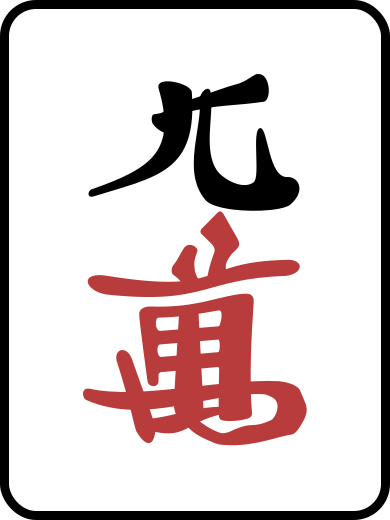
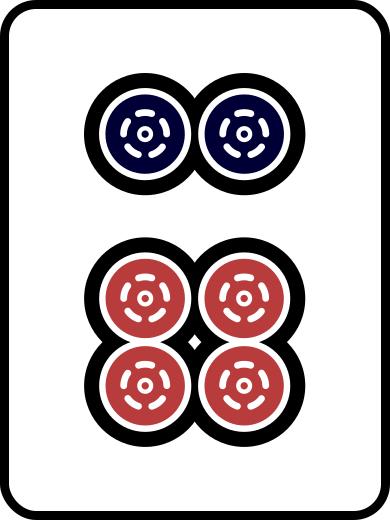
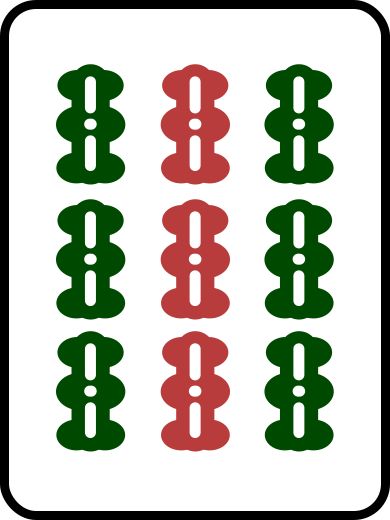
Two sets (789m and 999s), the 99p pair, the 23m ryanmen, and two kanchans, 46p and 35s. One partial set has to go.
- Break a kanchan (cut the 4p, 6p, 3s, or 5s): 12 tiles. The kanchan you keep turns two-sided on 8 draws.
- Break the 23m: the two kanchans keep 8 tiles. A 3p or 7p, or a 2s or 6s, turns one of them two-sided: 16 draws.
Add the counts and keeping the kanchans looks better, 24 to 20. Don't add them. An acceptance draw puts you in tenpai. A shape draw keeps you at 1-shanten and only improves your list. Here, each of those 16 shape draws turns a kanchan into a ryanmen. That leaves you holding a ryanmen and a kanchan, 12 tiles, which is the hand you'd have right now if you broke a kanchan instead. Keep the 23m and you start from that hand, and the 8 draws that turn its kanchan two-sided lift it to 16.
So the order is shanten, then acceptance, then shape. Shape is the step that put a kanchan above a penchan in the partial sets lesson: the same 4 tiles, but one draw can turn the kanchan two-sided. In this hand the four kanchan cuts tie on 12 tiles, and each kanchan grows on 8, so all four are right.
That order is the default, not a law. When two counts sit a tile or two apart, a much better shape can be worth the gap, and value or safety can overrule the count. Later lessons show when.
Breaking either kanchan keeps 12 tiles. Which tile do you cut?
Tap the tile you would choose.
Show the answerHide the answer
Cut the 9s
Cut the 9s. Breaking the 79s keeps 12 tiles (4m, 7m, and 4p), and breaking the 35p also keeps 12 (4m, 7m, and 8s), so shape decides: the inner 35p turns two-sided on a 2p or 6p, and the outer 79s only on a 6s, the order the partial sets lesson gave. Cut the 9s rather than the 7s, because the 7s you keep can still become 67s or 78s, while a 9s left behind can't grow. Breaking the 56m ryanmen drops you to 8 tiles, however well both kanchans could grow.
Practice
Write both lists before you open the answer.
What do you discard?
Tap the tile you would cut.
Show the answerHide the answer
Cut
Three ryanmen, room for two, and they aren't equal: your 789m holds a 7m, so the 56m has 7 tiles. Cut the 5m, 6m, 8m, or 9m and the 23p and 67s keep 4 kinds, 16 tiles. Break the 23p or the 67s instead and you also keep 4 kinds, but only 15 tiles, so the tiles decide. All four manzu cuts are right, and I'd take the 9m, since the 5678m it leaves can still grow on a 4m and the other three can't.
The tile efficiency trainer grades exactly this count. It deals a 1-, 2-, or 3-shanten hand, you cut a tile, and every discard comes back ranked by acceptance. Ties count as right, and value and safety stay out of the grade, as the trainer guide explains. Switch to Easy first: it deals 1-shanten hands like the ones here. Normal, where the trainer opens, and Hard deal 2- and 3-shanten hands: longer lists, counted the same way.
Count it on random hands
The tile efficiency trainer deals a 1- to 3-shanten hand and ranks every discard by acceptance. Ties count as right. Switch to Easy for 1-shanten hands like these.
Open the efficiency trainer