
Two hands can look equally messy while one needs a single good draw to reach and the other needs four. is the number that tells them apart. Count it before you discard and you'll see which cuts cost you a step and which cost nothing.
What shanten counts
Tenpai, as the tenpai and furiten lesson showed, is the point where one tile wins. Shanten (向聴) is how many useful tiles your hand still needs to get there. A useful tile is one that brings the hand a step closer, whether you draw it or call it. The scale counts down:
- 2-shanten: two useful tiles from tenpai. A 3-shanten hand needs three, and so on.
- 1-shanten: one useful tile from tenpai, also called iishanten.
- Tenpai: 0. One tile wins.
The win itself sits one step past tenpai, so a complete hand counts as −1.
One tile lowers your shanten by one step at most, so the number is also the fewest draws or calls you need to reach tenpai.
You count shanten on 13 tiles, the hand you hold between turns. After a draw you hold 14, and each possible discard leaves a 13-tile hand with its own count.
Count your shanten from five blocks
A standard winning hand is five blocks: four sets and a pair, the head. You met the parts in the partial-sets lesson. A (taatsu) is two tiles one draw from a set: a (two-sided), a (middle), a (edge), or a pair. A loose (isolated) tile has nothing within two of it in its suit, or it's an honor with no partner.
Picture 13 tiles where nothing touches. Each set takes two useful draws, one to give a loose tile a partner and one to finish the partial set. The head takes one draw. That's 4 × 2 + 1 = 9 draws to a complete hand, so tenpai, the step before, sits 8 away. Every block you already hold takes some of those draws off.
| Block | Takes off |
|---|---|
| Set | 2 |
| Partial set, including a second pair | 1 |
| One pair used as the head | 1 |
Two limits keep the count honest.
- Four sets and partial sets at most. The hand has room for four of them plus the head. A fifth partial set has no slot, so it takes nothing off.
- Each tile counts once. When a group splits two ways, try both readings and keep the lower count. 22345s can be the 22s head plus 345s, or 234s with the 2s and 5s left over. The first takes off 3 and the second only 2, so the first one counts.
Count this hand.
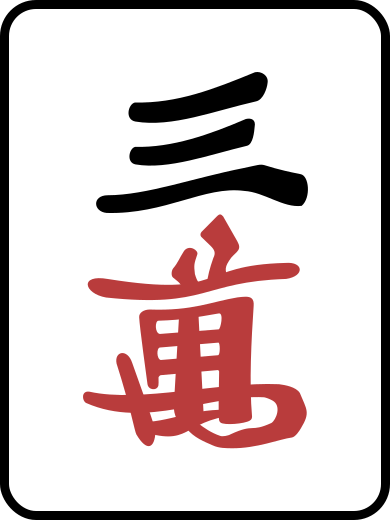
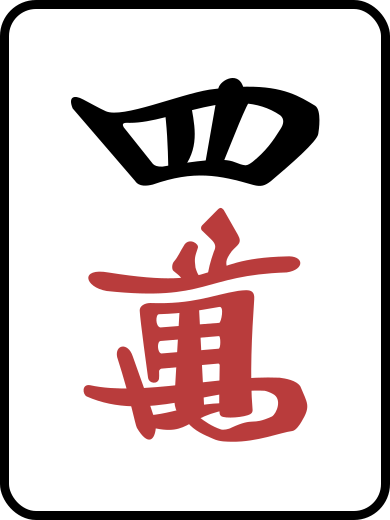
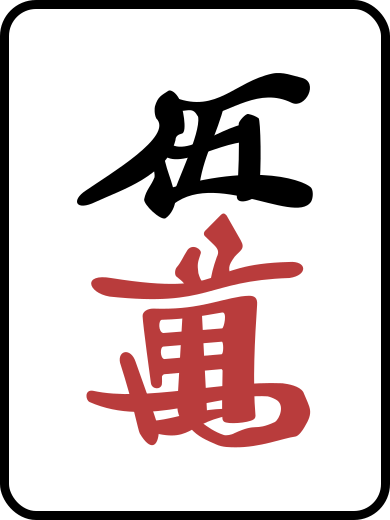
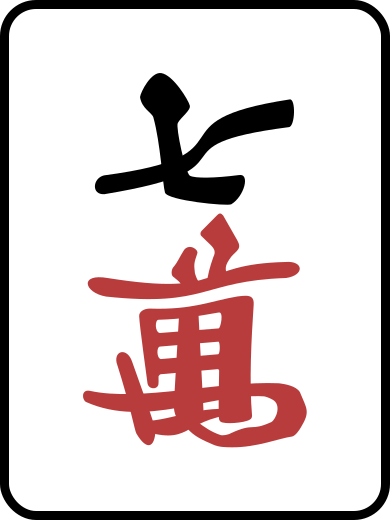
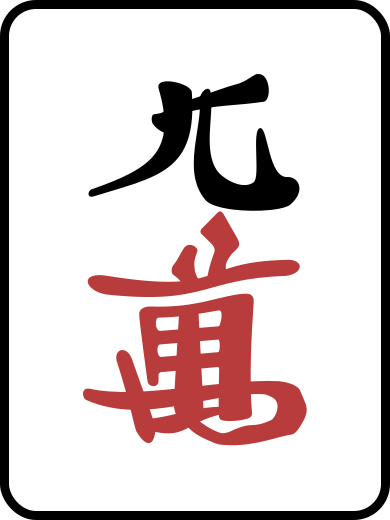
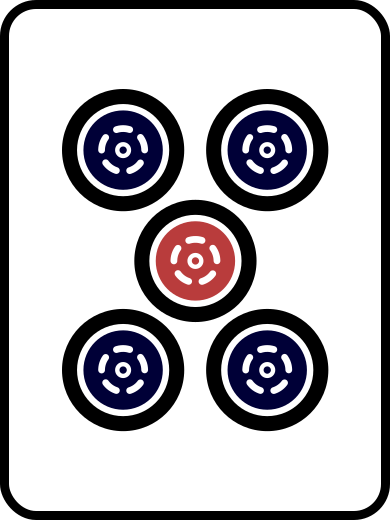
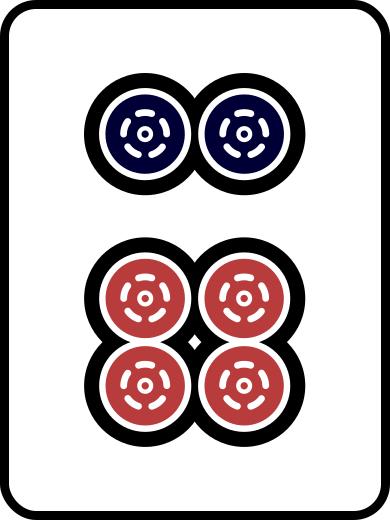
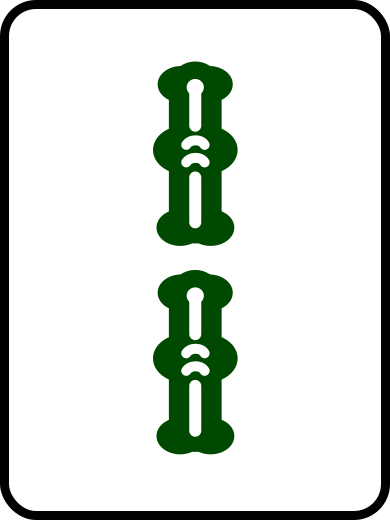
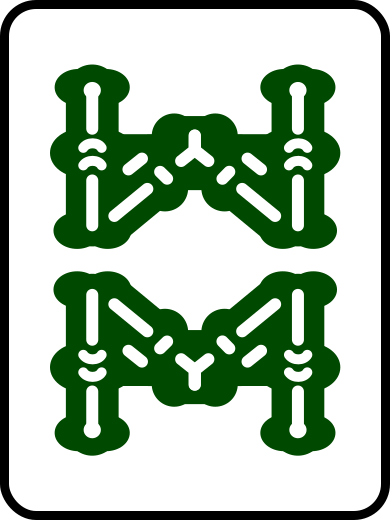

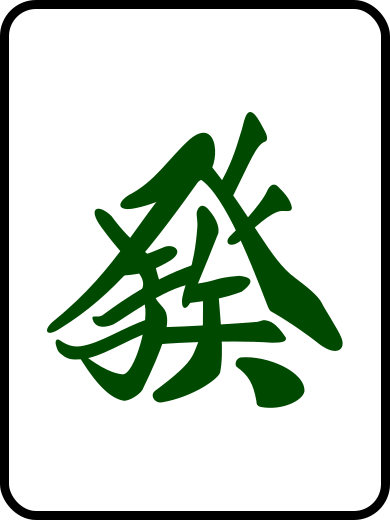
- Start at 8.
- One set, 345m: down to 6.
- Three partial sets, the 79m kanchan, the 56p ryanmen, and the 88s pair: down to 3.
- The 22s pair as the head: down to 2.
The West wind and the are loose, so they take nothing off. The hand is 2-shanten.
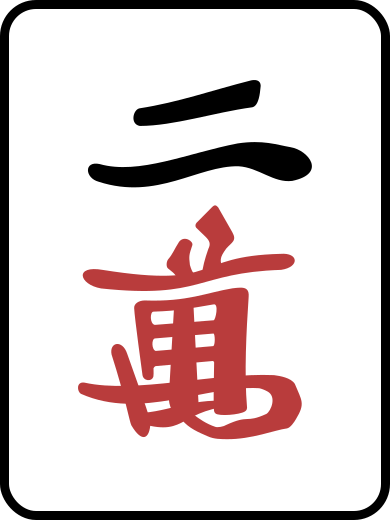
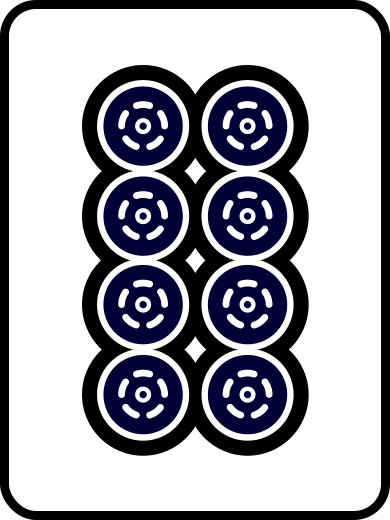
How many tiles from tenpai is this hand?
Show the answerHide the answer
1-shanten
1-shanten. Split 23456m into 234m and 56m, or 23m and 456m: a set and a partial set either way. Add the 789p set, the 45s ryanmen, and the 99s head, and the count is 8 − 4 − 2 − 1 = 1. Read 23456m as 23m, 45m, and a leftover 6m and you'd count 2. The reading with a set counts lower, so it wins. The West is loose and takes nothing off.
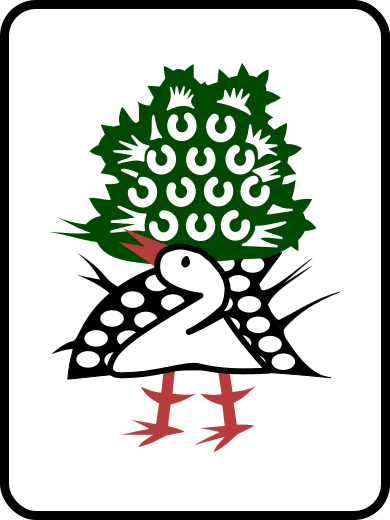
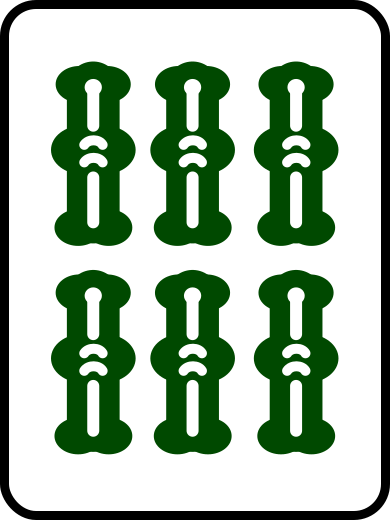
How many tiles from tenpai is this hand?
Show the answerHide the answer
2-shanten
2-shanten. You have one set (345p), four partial sets (23m, 79m, 67s, and 13s), and the 88p head. Only three partial sets fit beside the one set, so the count is 8 − 2 − 3 − 1 = 2. Count all four and you'd get 1, but a hand has room for five blocks, and this one holds six.
Watch the count fall, one draw at a time
Here's a hand at the start of a deal.
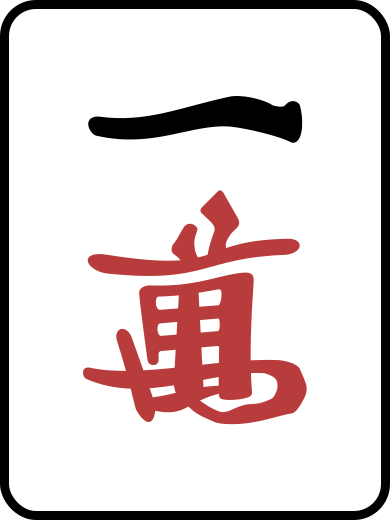
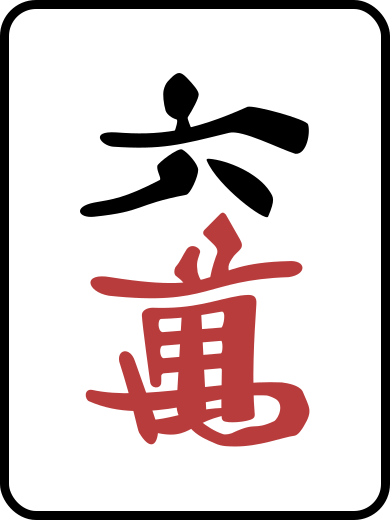
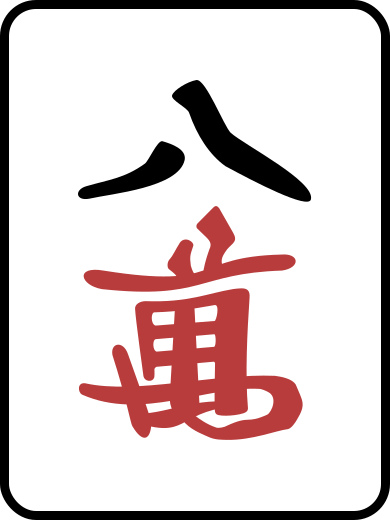
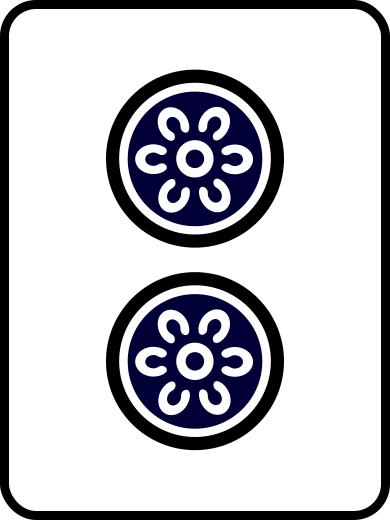
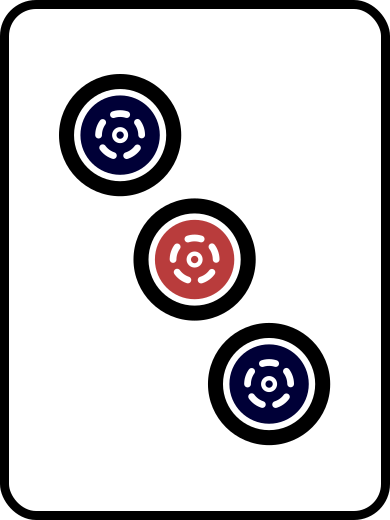
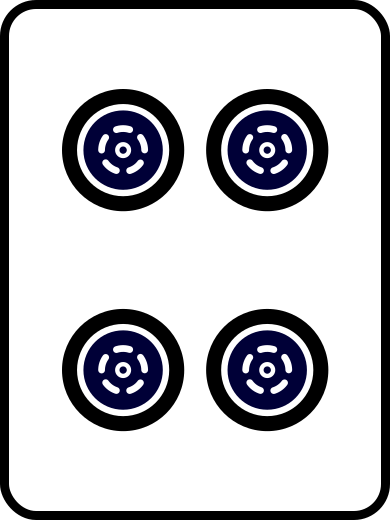
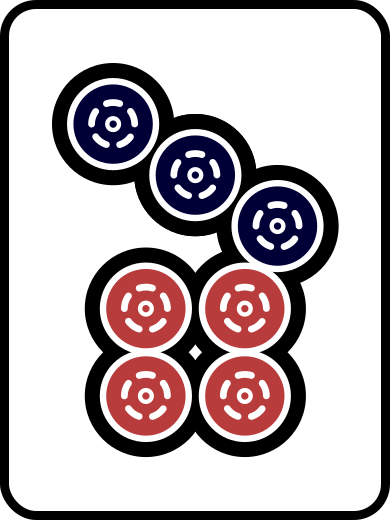
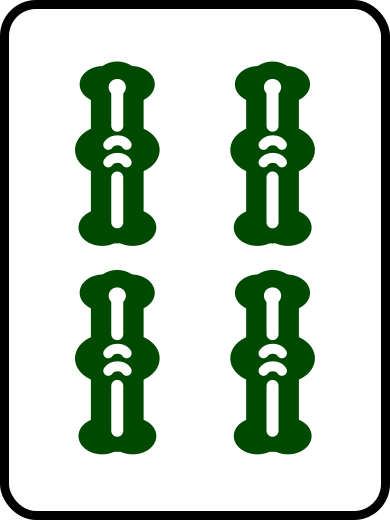
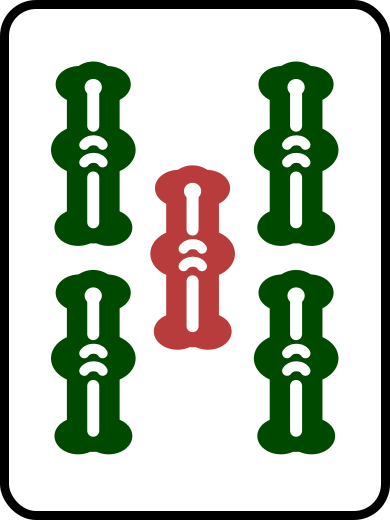
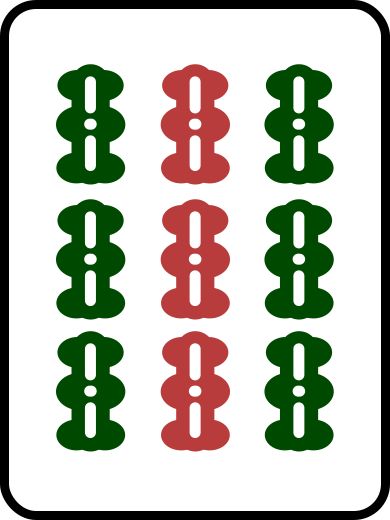

The set is 234p. The partial sets are the 68m kanchan and the 45s ryanmen, and 77p is the head. The 1m, the 9s, the West, and the North are loose. That's 8 − 2 − 2 − 1 = 3: 3-shanten. Say your next three draws all help.
| Draw | Cut | Blocks after the cut | Count |
|---|---|---|---|
| | 2 sets, 1 partial set, head | 8 − 4 − 1 − 1 = 2 |
| | 2 sets, 2 partial sets, head | 8 − 4 − 2 − 1 = 1 |
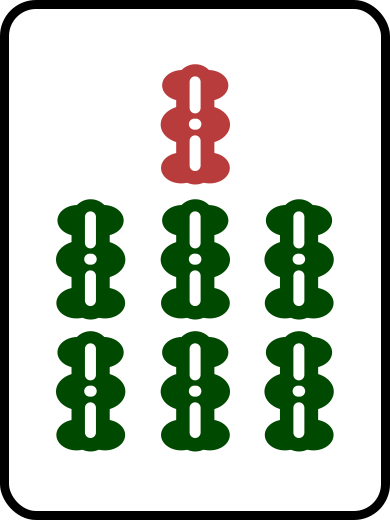 | | 3 sets, 1 partial set, head | 8 − 6 − 1 − 1 = 0 |
The 7m finishes the 68m kanchan into 678m. The 8s gives the loose 9s a partner, an 89s penchan. The 7s finishes that penchan into 789s. Every cut is a loose tile, so none of them costs anything. Any other loose tile would have kept the count too, and What to discard first puts them in order. The hand ends tenpai on the 3s and the 6s, 8 tiles:
Those are two of the three jobs a useful draw can do: finish a partial set, or give a loose tile a partner while you're short of blocks. The third is making a head when you have none, by pairing a loose tile, or a tile from a partial set when you have one to spare. Most draws do none of the three, which is why shanten is the fewest draws you need, not the number you'll take.
Seven pairs and thirteen orphans count too
The two exceptions from How to play riichi mahjong, seven pairs and thirteen orphans, have counts of their own.
- : 6 minus the pairs you hold. The pairs must be different tiles, so three or four of one tile count as one pair. You also need seven different kinds, so six pairs with one of them a triplet are 1-shanten, not tenpai.
- : 13 minus the different you hold, minus 1 more if one of them is paired.
Your hand's shanten is the lowest of the three counts. This hand shows why.
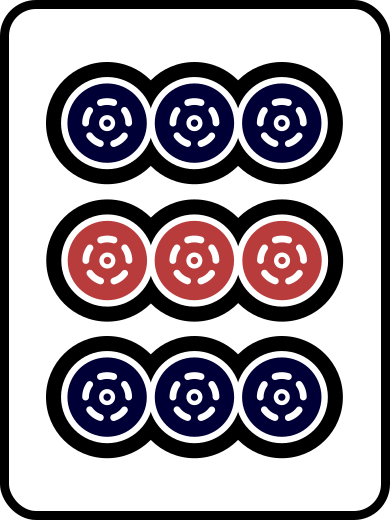
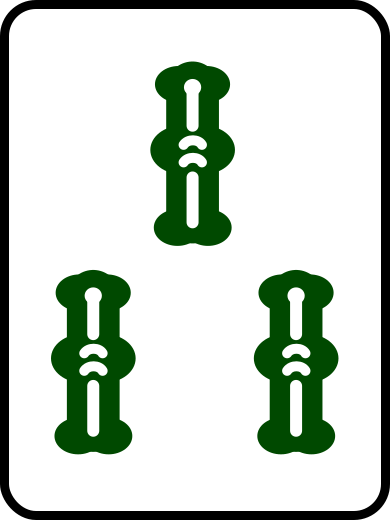
As four sets and a pair, it's 3-shanten: one pair as the head and four more as partial sets, with no set anywhere. As seven pairs it's 6 − 6 = 0. The hand is tenpai, waiting on a second North.
The seven pairs count also limits how far any hand can be. Thirteen tiles with no pair are 6 − 0 = 6 from a seven pairs tenpai, so no hand is worse than 6-shanten, even though the standard count can reach 8. Thirteen orphans only wins the count when a hand is mostly 1s, 9s, and honors.

How many tiles from tenpai is this hand?
Show the answerHide the answer
2-shanten
2-shanten, through seven pairs. As four sets and a pair it's 3-shanten: one pair as the head, the other three pairs and the 56p as partial sets, so 8 − 4 − 1 = 3. You hold four pairs, though, and 6 − 4 = 2. The lower count is the hand's shanten.
The hand analyzer shows all three counts and reports the lowest. Count by hand first, then check.
Why shanten comes before every other choice
A useful draw lowers your shanten by one. A discard can raise it by one. So the first test of any discard is the count: cut a tile that leaves your shanten as low as it can go.
Cutting a loose tile costs nothing. Breaking a set usually costs a step. Breaking a partial set or your head usually costs a step too. The common exception is a surplus block the count left out: a fifth partial set can fill a partial set's slot, but only a second pair can take over as the head. That's why you label the blocks before you choose.
Often several cuts keep the same shanten. Then the tiles that would help each version of the hand decide, and Tile acceptance shows how to count them. Now and then value, a much better shape, or safety overrules the count, and later lessons show when. Without a clear reason, keep the lower shanten.
You draw a third green dragon. What do you discard?
Tap the tile you would cut.
Show the answerHide the answer
Cut
Cut the 5s. The green dragons are now a set and the 5s is the only loose tile, so cutting it leaves you tenpai on the 5m and the 8m, 8 tiles. The 1m, the 9p, and the 9s look like terminals to throw first, but each sits in a block the count uses: the 1m in 123m, the 9p in 789p, and the 9s in your only pair. Cut any of them and you drop back to 1-shanten.
Practice: say the number
How many tiles from tenpai is this hand?
Show the answerHide the answer
Tenpai
Tenpai. Four sets are done: 234m, 567m, 345s, and 666s. That's 8 − 8 = 0 before you look for a head. The 2p is all that's left, and a second 2p makes the pair and wins. That's a (tanki): a hand doesn't need a finished pair to be tenpai.

How many tiles from tenpai is this hand?
Show the answerHide the answer
3-shanten
3-shanten. There's no finished set, but four partial sets fill every slot: 46m, 23p, 78p, and 13s. The West pair is the head, so the count is 8 − 4 − 1 = 3. The 9m, the 7s, and the are loose. While there's room for them, two partial sets take off as much as one set, so this hand sits level with the start of the three-draw example, which holds a set.
Check your count
Type any 13 tiles into the hand analyzer. It shows the four-sets-and-a-pair, seven pairs, and thirteen orphans counts side by side and reports the lowest, so you can check every count you make by hand.
Open the hand analyzer