
Your first hand looks like 13 random pictures: Chinese characters, circles, bamboo sticks, and a few tiles with one large character or none at all. It isn't random. Each picture is one of 34 kinds of tile, and your 13 tiles are the parts of a shape you're trying to finish with a 14th.
Each win scores points. A game runs over several deals, which players also call hands, and at the end the player with the most points finishes first. Your final place is the result that counts, and How a game works covers that ranking.
Name the 34 kinds of tile
The game uses 34 kinds of tile, four copies of each. Of the 34 kinds, 27 are number tiles, 1 to 9 in three suits. The other 7 are honors (), which carry no number.
| Group | Tiles |
|---|---|
| Man (characters) | 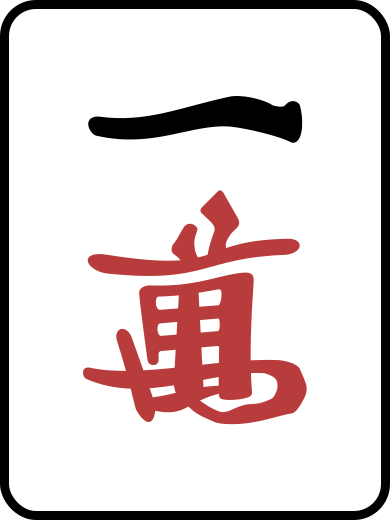 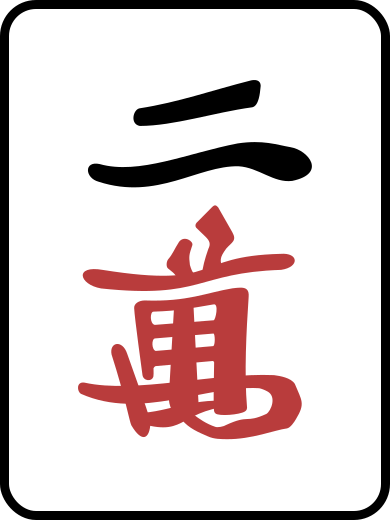 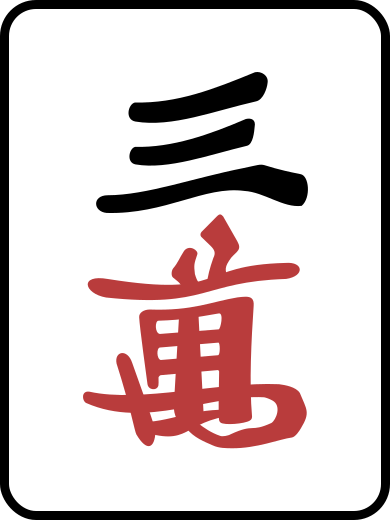 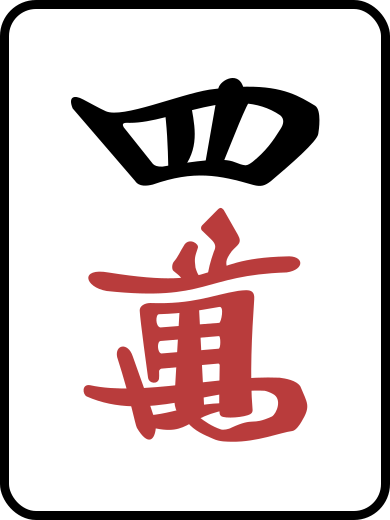 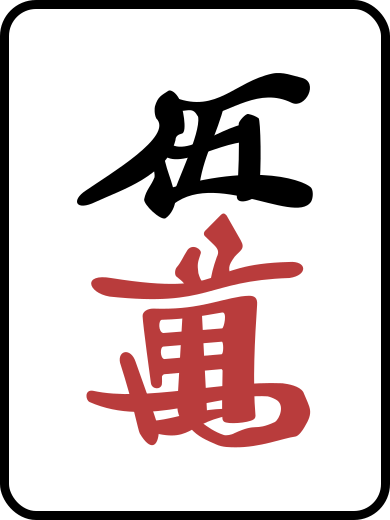 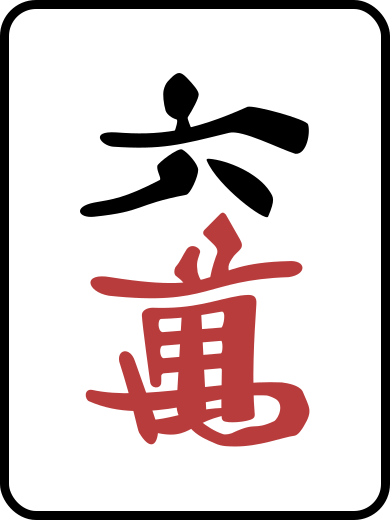 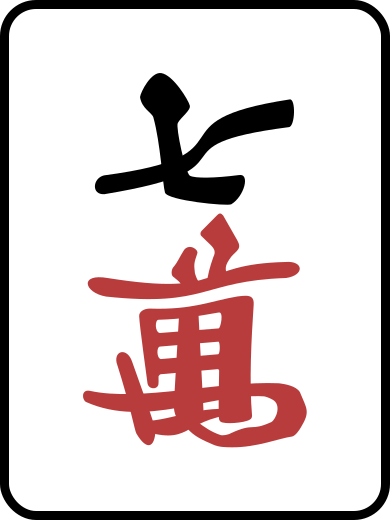 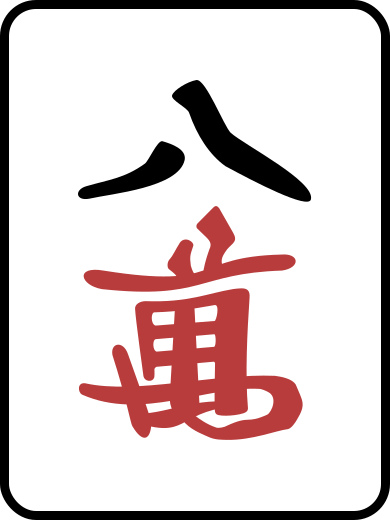 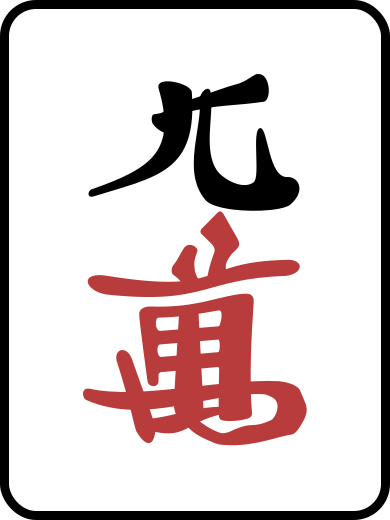 |
| Pin (circles) |  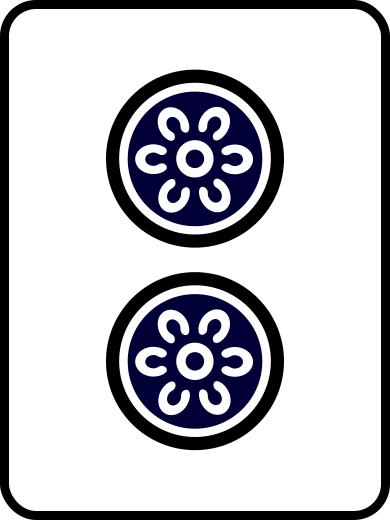 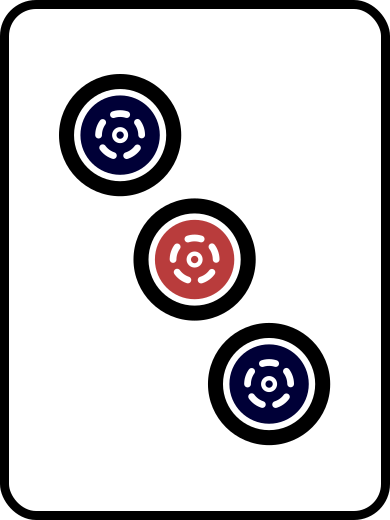 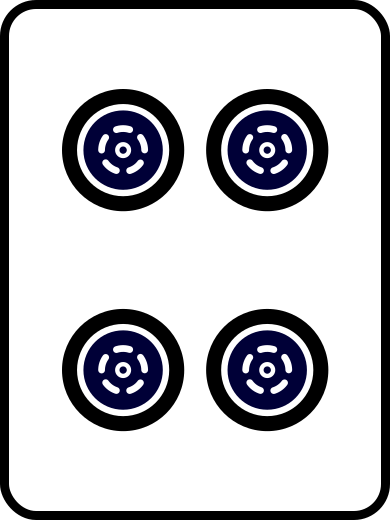 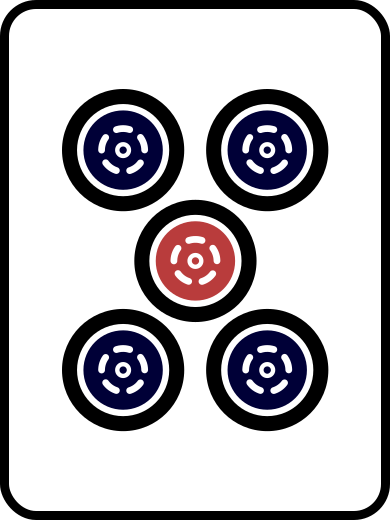 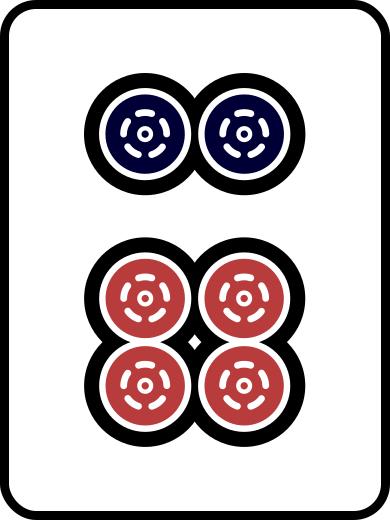 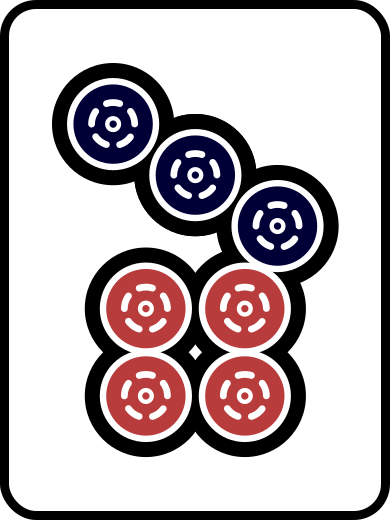 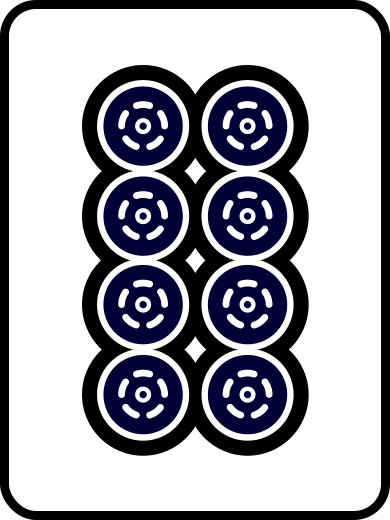 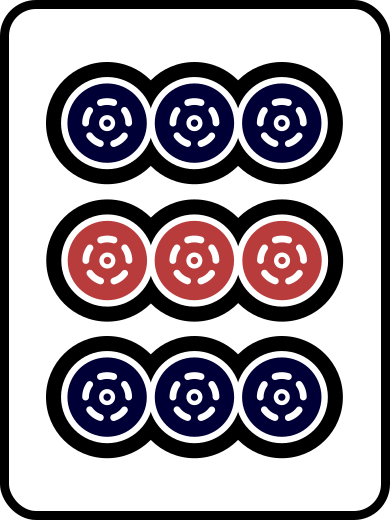 |
| Sou (bamboo) | 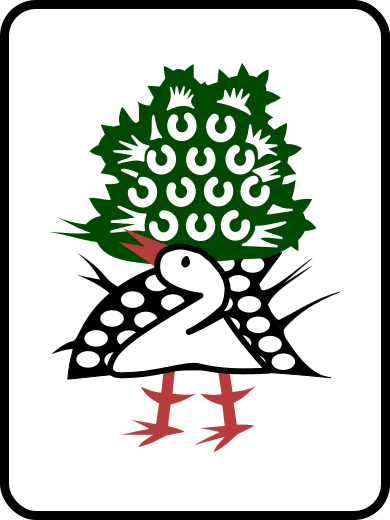   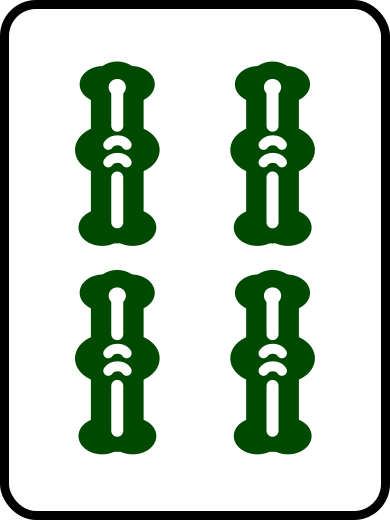 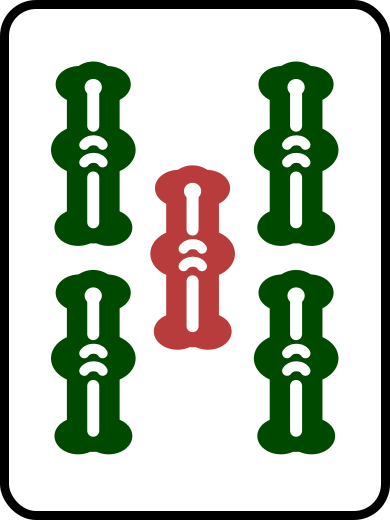 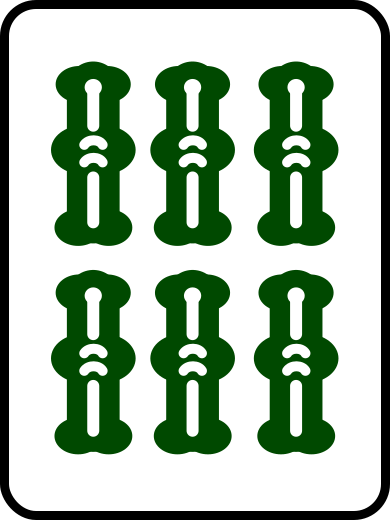 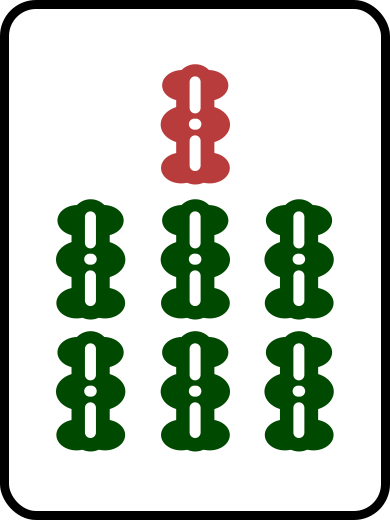 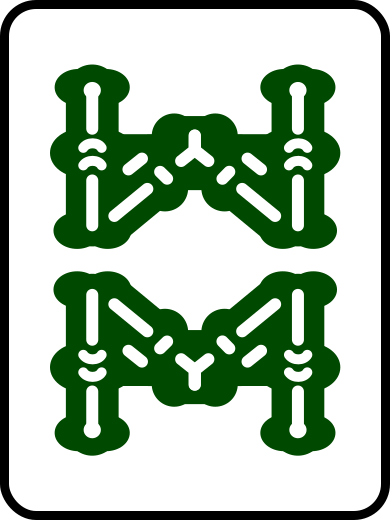 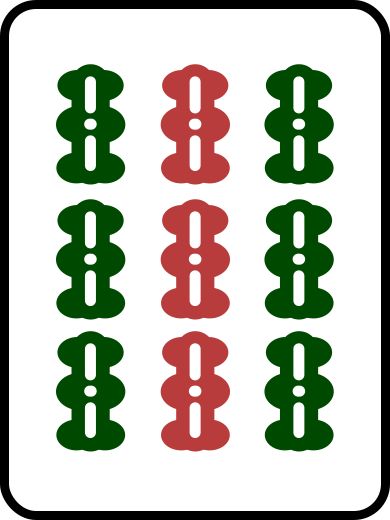 |
| Winds: East, South, West, North | 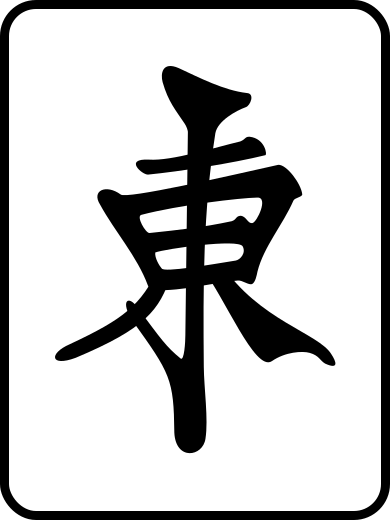 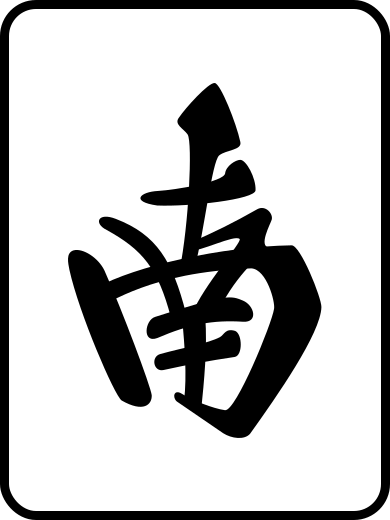 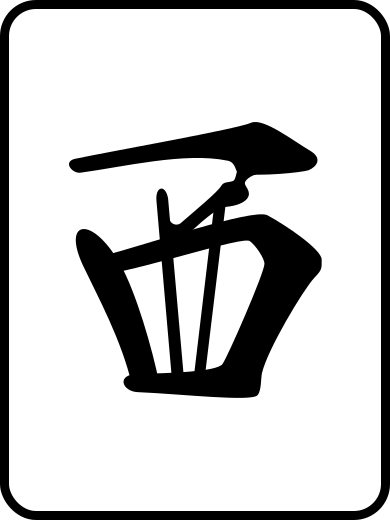 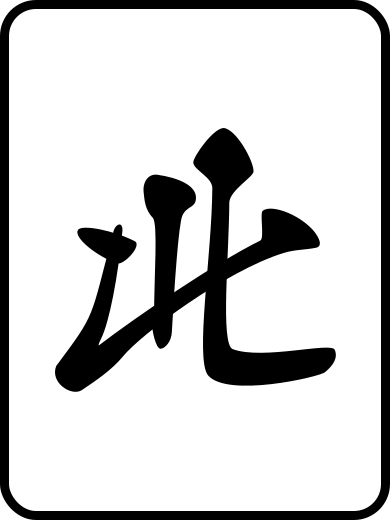 |
| Dragons: White, Green, Red |  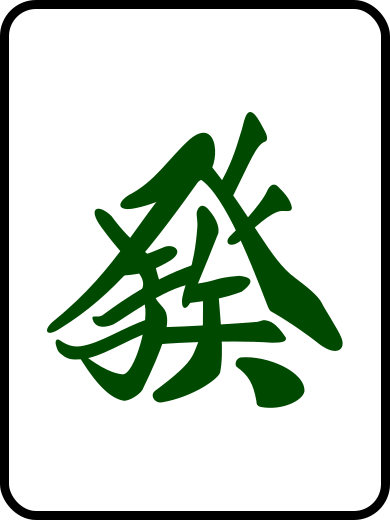 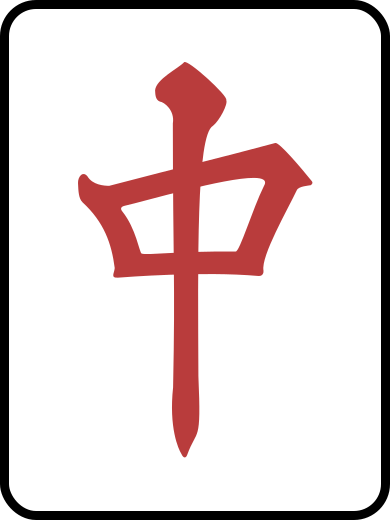 |
Players name the suits in Japanese: man (manzu), pin (), and sou (). A man tile shows a Chinese numeral above the character 萬. Pin tiles count circles and sou tiles count bamboo sticks, except the 1 of sou, which shows a bird.
The winds show Chinese characters: East , South , West , and North . Of the dragons, Green shows and Red shows . White is a blank tile, framed in some designs.
On Tenhou and Mahjong Soul, one of the four 5s in each suit is red: 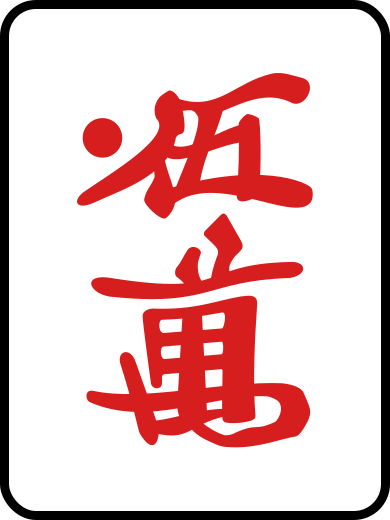
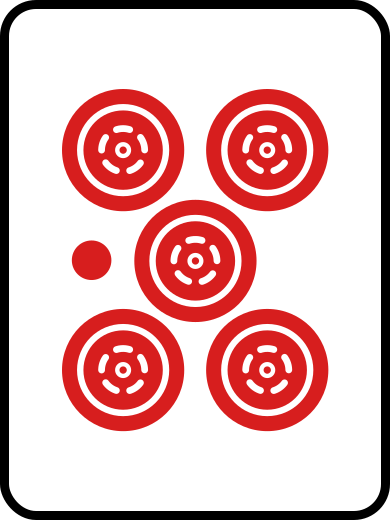
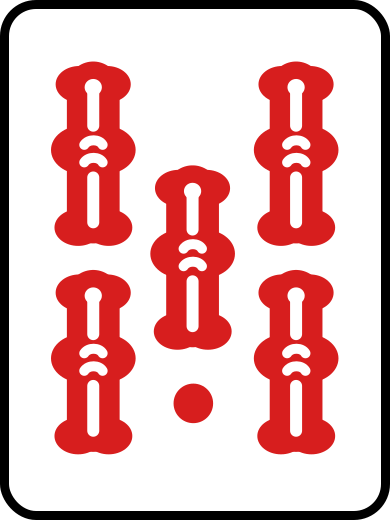 . A red five plays as an ordinary five in every set. It also counts as a , a bonus that raises the score of any hand that wins with it. What is a yaku? covers dora.
Read the code: 123m, 4z, 0p
The course writes tiles as a short code, the same one the site's hand analyzer reads: the numbers first, then one letter for the suit. The letter is m for man, p for pin, s for sou, and z for honors.
- 7p is the 7 of pin, .
- One letter covers every number before it in that suit. 123m is , and 4467s is .
- Honors run from 1z to 7z in the order East, South, West, North, White, Green, Red. 4z is the North wind, , and 7z is the red dragon, .
- 0 is a red five: 0m, 0p, or 0s.
A whole hand strings the suits together, man first, then pin, sou, and honors. This one is 234m067p2279s666z:
Read it suit by suit: the 2, 3, and 4 of man; a red 5, a 6, and a 7 of pin; two 2s, a 7, and a 9 of sou; three green dragons. That's 13 tiles, the number you hold between turns. Type any code from the course into the hand analyzer and it shows the tiles and what the hand still needs.
Four sets and a pair make a winning hand
A set () is three tiles that belong together. It comes in two kinds, and one pair finishes the hand.
- Sequence (): three numbers in a row in one suit, like . Sequences stop at 9, so is not one, and honors never make one.
- Triplet (): three of the same tile, like or three red dragons. Any tile can make one.
- Pair (, the head): two of the same tile. A standard hand has exactly one.
Four of a kind can count as a set too, a quad (), but only once you declare it as a .
Four sets of three and a pair make 14 tiles. Between turns you hold 13, one short. The 14th, the tile that wins, is either one you draw or one another player discards. How a hand is played covers both ways to win and how to declare a kan. Here's the hand from the code section with an 8s added:
Now it's complete: 234m, 567p with the red five, 789s, three green dragons, and the 22s pair.
Any mix of sequences and triplets works, from four sequences to four triplets. Most hands lean on sequences because they're easier to collect. A triplet of 6p needs three of the four 6p that exist. A 456p sequence can use any of the four 4p, any of the four 5p, and any of the four 6p.
The shape isn't the whole rule. A complete hand also needs a yaku, a scoring pattern, before it can win, and What is a yaku? shows why some complete hands can't. , practice spotting the shape. The first three problems show 13 tiles and ask which tiles finish them. The fourth adds a drawn tile.
Which tiles complete this hand?
Show the answerHide the answer
Waits
The 6s and the 9s. Three sets are done: 234m, 567m, and three East winds, with 99p as the pair. That leaves 78s, which a 6s turns into 678s and a 9s into 789s. A 7s or an 8s only gives you a second pair next to 99p, and the hand is still a set short. You hold no 6s or 9s, so 8 of the 136 tiles finish this hand.
Which tiles complete this hand?
Show the answerHide the answer
Waits
Only the 7m, for 789m. A 1m does nothing, because sequences stop at 9 and 891m isn't a set. The rest is done: 123p, 567p, 678s, and the White pair. Four copies of the 7m exist, so 4 tiles finish this hand, half as many as in the problem above.
Which tiles complete this hand?
Show the answerHide the answer
Waits
The 8s and the green dragon. You have three sets, 123m, 789p, and 345s, plus two pairs, 88s and the green dragons. A third copy of either pair makes a triplet, and the other pair stays as the head. A 2s or a 6s stretches 345s to four tiles, and one tile is left over. Each pair already holds two of its four copies, so 4 tiles finish the hand.
You draw the 3m. Is the hand complete?
Show the answerHide the answer
Complete
Complete. Split the man tiles into 123m and 345m, one 3m in each sequence. Add 678p, 789s, and the 22s pair, and that's four sets and a pair. If you try the two 3m as the pair instead, the 1245m left over makes no set, so keep looking for the split that uses every tile.
Why a 5 fits more sets than a 1 or an honor
Number tiles split into two groups, and the honors make a third. Many rules lean on these three groups.
- Simples (): the 2 to 8 of each suit.
- Terminals (): the 1 and the 9 of each suit.
- Honors: the four winds and the three dragons.
The groups matter first when you build. A 5 fits into three sequences: 345, 456, and 567. A 2 fits into two, 123 and 234. A 1 fits only into 123, a 9 only into 789, and an honor into none, since honors make only triplets and pairs.
A loose (isolated) tile has no other tile within two of it in its suit, or it's an honor with no match. Each turn you draw a tile and then discard one, so you're back to 13 (How a hand is played walks through a turn). A loose 1, 9, or honor is the hardest tile to build with, so it's usually among your first discards. Here you've drawn the North wind:
The 9m sits five away from the 4m, and the North has no partner, so either one can go without slowing the hand. The 9s looks as lonely, but it sits two from the 7s, and an 8s turns 79s into 789s, so it stays. What to discard first puts loose tiles in order.
The groups matter for scoring and defense too. Tanyao, one of the everyday yaku, takes simples only. Chanta needs a terminal or an honor in every set and in the pair. Later in the course, when you play defense (choosing discards that won't give another player the win), a 1, a 9, or an honor is often safer than a 5, because it fits fewer of their sets.
Seven pairs and thirteen orphans break the shape
Two hands win without four sets and a pair.
(chiitoitsu) is what the name says: seven pairs, each a different kind. It's a yaku in its own right, so it never needs another one.
The second red dragon makes the seventh pair. Four copies of one tile don't count as two pairs, so seven pairs always uses seven different kinds. Seven pairs or toitoi covers when to aim for it.
(kokushi musou) is one of each of the 13 kinds of terminal and honor, plus a second copy of any one of them.
Here the second 9s is the pair, and the red dragon fills the last gap. It's a rare hand, and it pays a , the top tier of score.
You draw the fourth 2p. Is the hand complete?
Show the answerHide the answer
Not complete
Not complete. The four 2p count as one pair, not two, so your pairs cover only six kinds: 11m, 77m, 22p, 99s, West, and Green. Seven pairs needs a seventh kind. Four sets and a pair fails too, because the only set here is three of the 2p.
Check hands in the analyzer
Type any hand from the lesson in the 123m code. The hand analyzer tells you whether 14 tiles are complete, and which tiles finish a 13-tile hand that's one tile from complete.
Open the hand analyzer